The Ghost Forest in Silver Lake Dunes

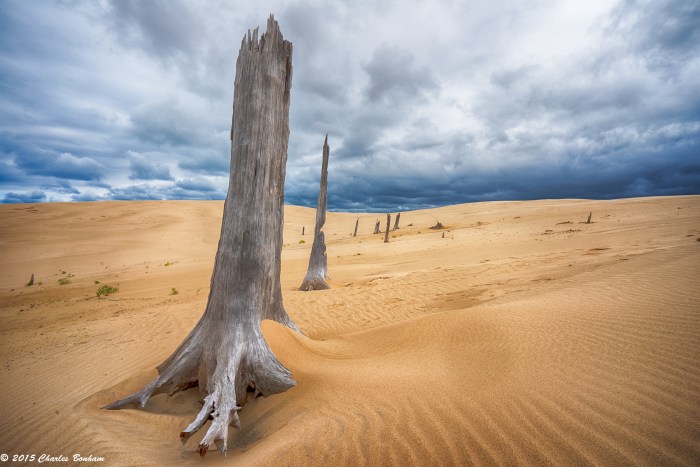
Ghost Forest

Ghost Forest, photo by Charles Bohnam

The Silver Lake State Park page at Michigan Trail Maps says in part:

Not all of Michigan’s great hikes are trails. This trek is a journey through Silver Lake State Park’s trailless backcountry, a mile-wide strip of dunes between Silver Lake and Lake Michigan. There’s not another hike like this in Michigan or even the Midwest because no other stretch of dunes are so barren.

Perched on a plateau and rising more than 100 feet high above Silver Lake, the heart of these dunes are totally devoid of any vegetation, even dune grass. The only thing besides sand are the stumps and trunks of ghost forests, ancient trees that the migrating dunes had buried and killed. Almost half of the hike is in this Sahara Desert-like terrain, the other half is spent strolling a stretch of Lake Michigan that is free of cottages and frozen custard stands.

A rare hike indeed.

View Charles’ photo background bigilicious and see more in his slideshow.

More dunes and more summer wallpaper on Michigan in Pictures.

Happy 2016 … plus Scratch Circles and the Sands of Time

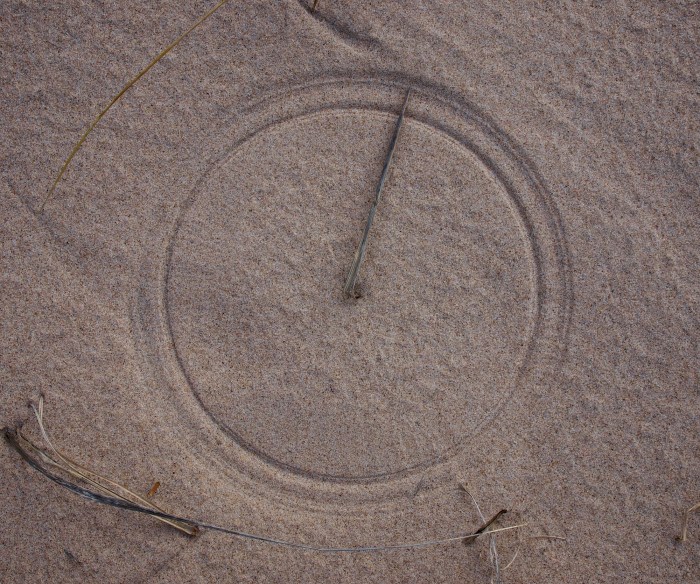
The Sands of Time

The Sands of Time, photo by David Marvin

The Wheel of Time has rolled into another year. It might be my increasing age talking, but it seems as if the world has gotten harder over the last couple of decades. I hope that 2016 treats everyone more kindly, including you!

Apparently I can’t even post a simple metaphor without learning something new. David writes:

Scratch Circles or “Scharrkreise” form when plant matter is blown around by the wind, etching circular designs in the sand.

If you want to get all geeky on sand circles, scratch circles & Scharrkreise – a term coined by R. Richter in 1926 – those links are just the thing for you!

View David’s photo background bigtacular and see more in his slideshow.

Ten Years of Michigan in Pictures

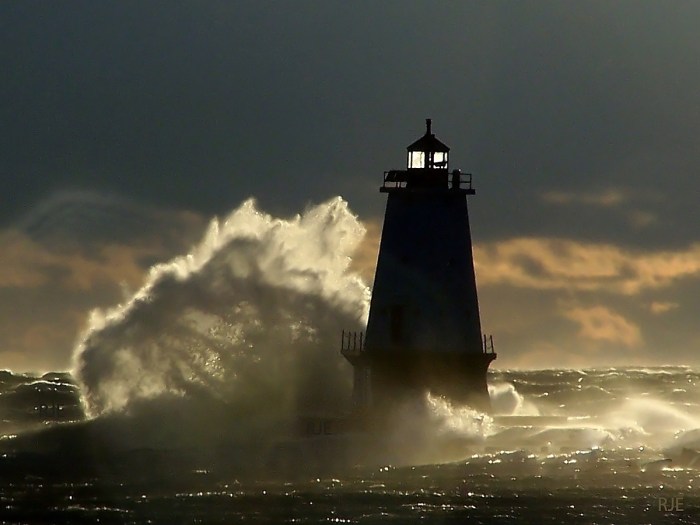
Ludington Lighthouse by RJE

Ludington Lighthouse, photo by RJE

10 years ago today, I posted “A Pond in Bald Mountain” as the very first photo on Michigan in Pictures. 3000+ posts later, I’m still at it. RJE has been sharing photos with me for almost all of those 10 years – thanks to him and everyone else who helps make Michigan in Pictures something that is fun and exciting for me and to all of you for staying with me for so long!

View the photo from November of 2005 background big and see more of RJE’s lighthouse shots on Flickr.


Jtomic

Jtomic

Jtomic, photo by farlane

This is where I’d normally post something about what most readers are thinking about today – Christmas Eve. Instead I’m going to wish a very happy 18th birthday to my high-flying son Jamie!

Here’s hoping you’re never too old for fun like this … and multiple takes to get the shot right!

View my photo background big on Flickr.

Might as well JUMP! with Michigan in Pictures.

Christmas Full Moon and the Metonic Cycle

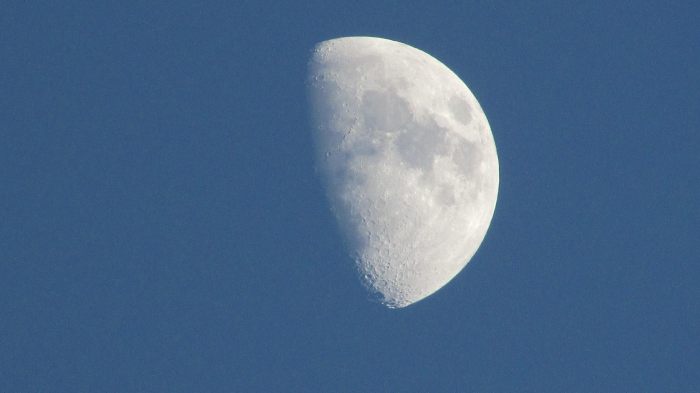
Moon December 18 2015

Moon December 18 2015, photo by Dave in Michigan

EarthSky notes that the December full moon will be the first on Christmas since 1977:

This month, the December full moon falls on Friday, December 25, 2015. For Earth’s Western Hemisphere, it’s the first full moon on Christmas Day since 1977.We won’t have another full moon on a Christmas Day until 2034.

A 19-year cycle of the moon is the reason. Amazingly, the moon’s phases recur on (or near) the same calendar dates every 19 years. This cycle – known as the Metonic cycle – happens because 235 returns to full moon almost exactly equal 19 years. So, in other words, the phases of the moon realign (or nearly realign) with the same calendar dates every 19 years. We just missed a full moon on Christmas 19 years ago; instead, the full moon fell on Christmas Eve. It was December 24, 1996 at 20:41 Universal Time, or UT.

…In any year, the phases of the moon take place about 11 days earlier than in the previous year. For instance, the December 2016 full moon will happen on December 14, 2016, and the December 2017 full moon will fall on December 3, 2017.

View Dave’s photo big as the moon and see more in his moon & moon shots slideshow.

More about December’s full moon in Christmas Moon, Snow Moon, Cold Moon, Oak Moon, December Moon on Michigan in Pictures!

Waterfall Wednesday: Quartzite Falls on the Slate River

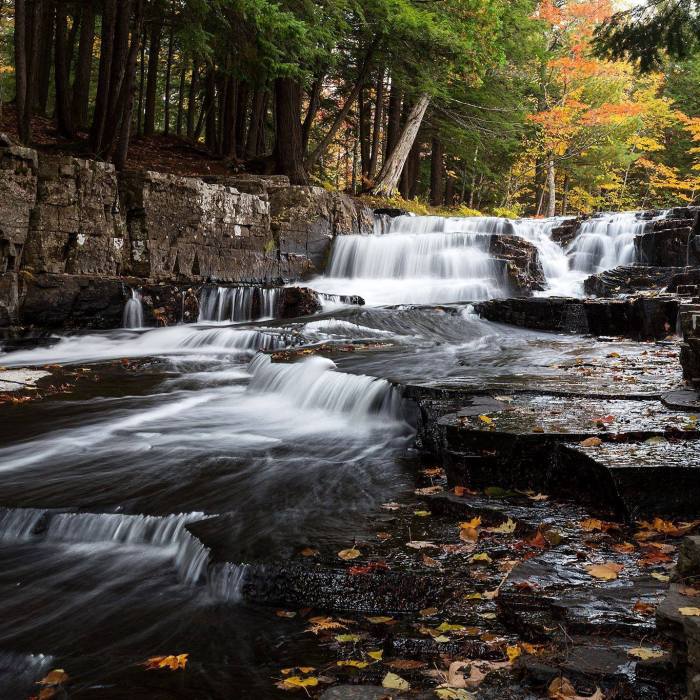
Quartzite Falls on the Slate River

Quartzite Falls on the Slate River, photo by Amie Lucas

Waterfalls of the Keewenaw’s page on Quartzite Falls says:

Quartzite Falls is a perfect little waterfall high above the rugged gorge on Slate River. The river drops in a sudden crescent onto a large, flat slide of slate before flowing into a deep pool surrounded by cedars. Quartzite Falls may be small, but it’s shape and scenic area makes for an amazing waterfall experience.

This waterfall is a short distance downstream of Black Slate Falls, easy walking distance from the road and about a mile from the slate quarries of Arvon. These three areas make for an excellent little adventure that is fairly accessible for all ages.

You can click through for directions and some pics. Amie took this back in October and writes:

The Slate River is magnificent. I spent an entire day traversing over rough, steep terrain & wading through cold water on slippery rocks to visit places that felt like no one had ever been before. Quartzite Falls, one of the many beauties on this river, is one of the easier waterfalls to access.

View her photo background bigilicious, follow her on Facebook and definitely check out her waterfall gallery and others at her photography website!

Many more Michigan waterfalls and (if you can’t let go of autumn) more fall wallpaper on Michigan in Pictures!

Michigan Holly or Winterberry

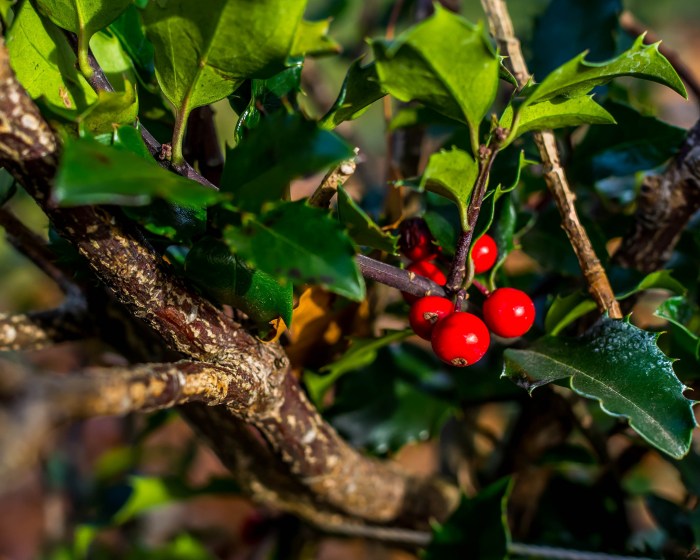
Holly

Holly, photo by Third Son

How like the holly in deep winter time
How like the star in the dark night shine
How like a path on the snow driven plain
How like the candle — how like the flame
How like the winter that promises spring
How like the carol we sing.
~Joel Mabus (How Like the Holly)

The Hope College Biology Nature Preserve has this to say about Michigan Holly (Ilex verticillata: Aquifoliaceae):

Michigan Holly is a medium sized shrub not normally growing taller than 12 feet and usually about 6 to 8 feet tall and 3 to 5 feet wide. It has densely branched stems that grow into a round crown and flower in May and June with small yellow-white flowers. The fruits are highly distinguishable and grows in bright red clusters of small berries, forming in September and October and persisting into mid-winter. Michigan Holly (also known as Winterberry) is dioecious, so both male and female plants are needed for fruit production and only females bear fruits.

Michigan Holly is found throughout Eastern and Central North America, but does not grow well in the West, Southwest, or Lower Midwest because of dry winds and heat. It is found naturally in wetlands and will tolerate standing water or swamps, however, it prefers to grow in well-drained, acidic, damp, loamy or sandy soils and full or partial sun.

Click through for photos and a little more information.

View Third Son’s photo background bigtacular and see more in his Early Winter 2015 slideshow.

More winter wallpaper on Michigan in Pictures. Also, definitely check out Michigan sonwriter Joel Mabus’s CD How Like the Holly – one of my favorite holiday albums ever!

When did summer end?

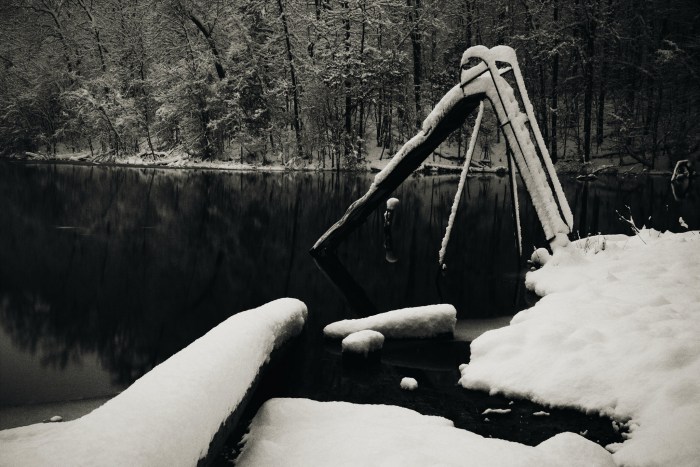
When Did Summer End

When did summer end?, photo by Cameron

Cameron took this 30 second exposure in heavy snowfall last week at Upland Hills Farm, which looks like a pretty cool place.

View the photo background bigtacular and see more in his Upland Hills Farm slideshow.

More winter wallpaper on Michigan in Pictures.

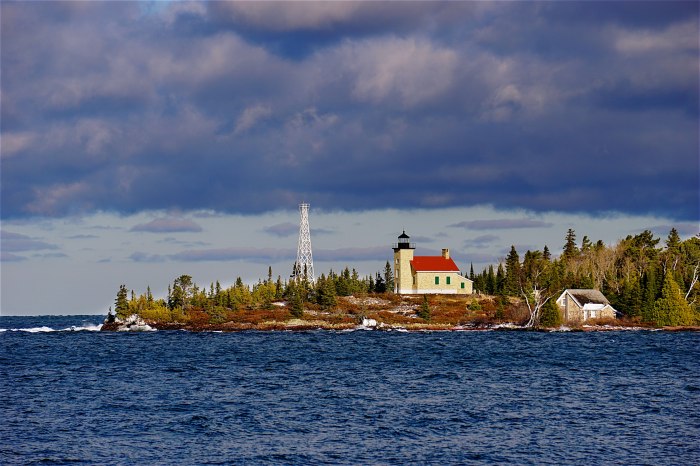
Old School Efficiency at Copper Harbor Lighthouse

Copper Harbor Lighthouse

Copper Harbor Lighthouse, photo by Frank Wulfers

Terry Pepper’s Seeing the Light has an extensive article on Copper Harbor Lighthouse that shines a light on some solid planning from back in the day … and some that was less so:

As was the case with virtually all of the lighthouses built on the Great Lakes during the Pleasonton administration, the true costs of inferior materials and shoddy workmanship began to show. After his 1864 visit to the station, the Eleventh District Inspector remarked that the Copper Harbor lighthouse required “extensive repairs.” On subsequent investigation, the condition of the tower was determined to be beyond repair, and the following year the decision was made to raze the old tower and erect a completely new structure. With old Pleasonton-era stations needing replacement at both Marquette and Ontonagon, and new stations planned for Gull Rock, Huron and Granite Islands, the decision was made to build all six lights to the same plan. Specifying a simple brick two-story dwelling with a tower integrated into the center of one of the gable end walls, this design would eventually become known as the “schoolhouse” style, as a result of its similarity to the design of rural nineteenth century one room schoolhouses.

The lighthouse tender HAZE returned to Copper Harbor in early 1866 and deposited a working crew and materials on lighthouse point to begin construction of the new main lighthouse. Work began with the demolishing of the old rubble stone tower, and excavating the foundation for the new structure. Under normal circumstances one would assume that the old tower would have been left standing until the new station was complete. However, an archeological survey conducted by the Michigan Technological University in 1994 showed that a large portion of the stone from the old tower was reused in building the foundation of the new building. Thus it is evident that the old tower must have been demolished first. What steps were put in place to allow the continued display of a light at the station for the time period between the demolishing of the old tower and the completion of the new structure are unrecorded. However, it is almost certain that some arrangement for the display of a temporary light would have been made.

Atop the rubble stone foundation, a team of masons erected a Cream City brick building, and its 42-foot tall tower capped with a square gallery with iron safety railing. A spiral cast iron stairway within the tower provided the only means of passing between the first and second floors in addition to providing access to the lantern. Centered atop the gallery, a decagonal prefabricated cast iron lantern was installed, and the Fourth Order lens from the old tower reassembled atop a cast iron pedestal at the center of the new lantern.

Seeing the Light has much more including old photos and an account of the Pleasanton Administration’s first draft of the Copper Harbor lighthouse. Before you judge Stephen Pleasanton too harshly, however, click over to his Wikipedia entry where you will learn how this James Monroe appointee helped to save the Declaration of Independence during the War of 1812!

View Frank’s photo background big and see more in his Michigan Upper Peninsula slideshow.

More Michigan lighthouses and more Copper Harbor on Michigan in Pictures.

December 1st … Back into the Woods Day

Sit for a Spell

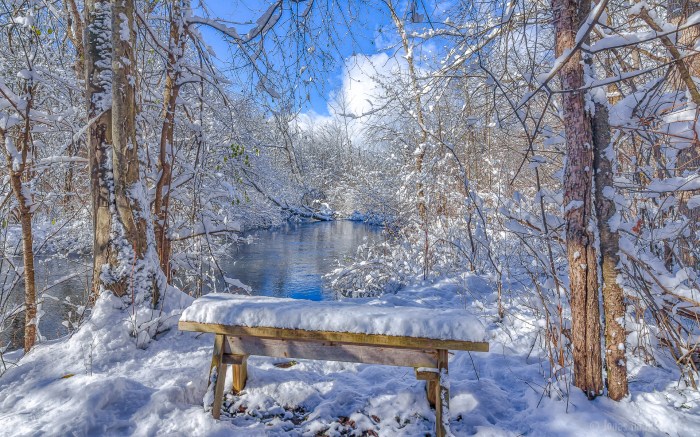
sit for a spell, photo by Doug Jonas

Longtime readers may know that I celebrate December 1st as “Back into the Woods Day” because for my money, the hardest 15 days for the year for the non-hunting lover of the outdoors in Michigan are November 15-30th. Enjoy as you will – orange clothing not required!

The photo was taken in Michigan State University’s W.K. Kellogg Experimental Forest in Augusta, midway between Kalamazoo & Battle Creek:

Established on abandoned agricultural land, the 716-acre Kellogg Experimental Forest is known worldwide for research on tree breeding and genetics, planting techniques, and plantation establishment and management. Much of the research that developed the Spartan spruce, a hybrid that combines the color and drought resistance of a blue spruce and the softer needles and rapid growth rate of the white spruce, was done at the Kellogg Forest. The forest is open to the public for biking, hiking, horseback riding and cross-country skiing, and has several interpretive trails.

Click for visitor information and there’s also some videos of what researchers are up to that show some of this beautiful spot.

Doug says this was an enchanted afternoon in the woods, with sun, shadow, snow and reflected sky. View his photo background bigilicious and click for more of his great Michigan photos.

More winter wallpaper and lots more parks & trails on Michigan in Pictures!