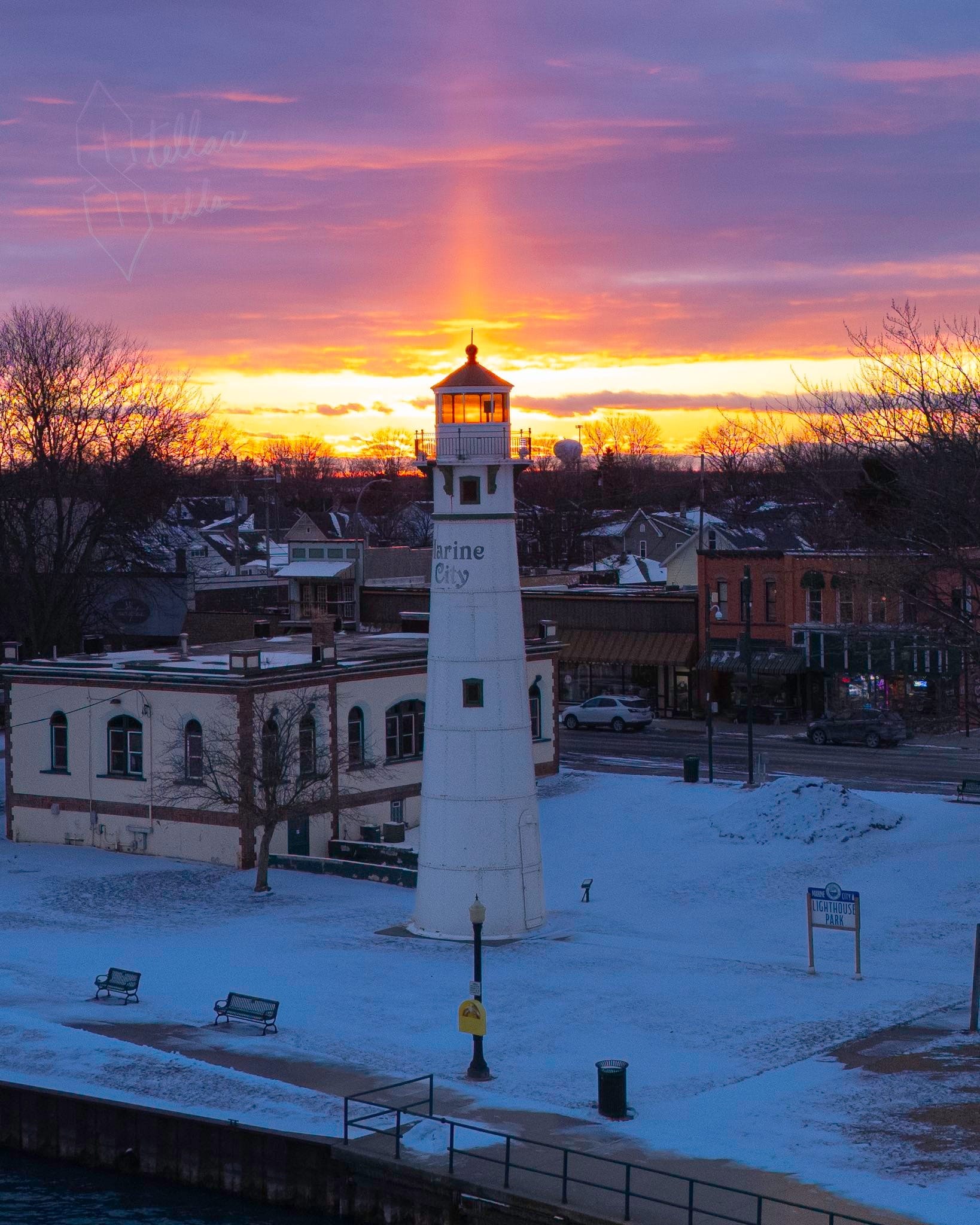
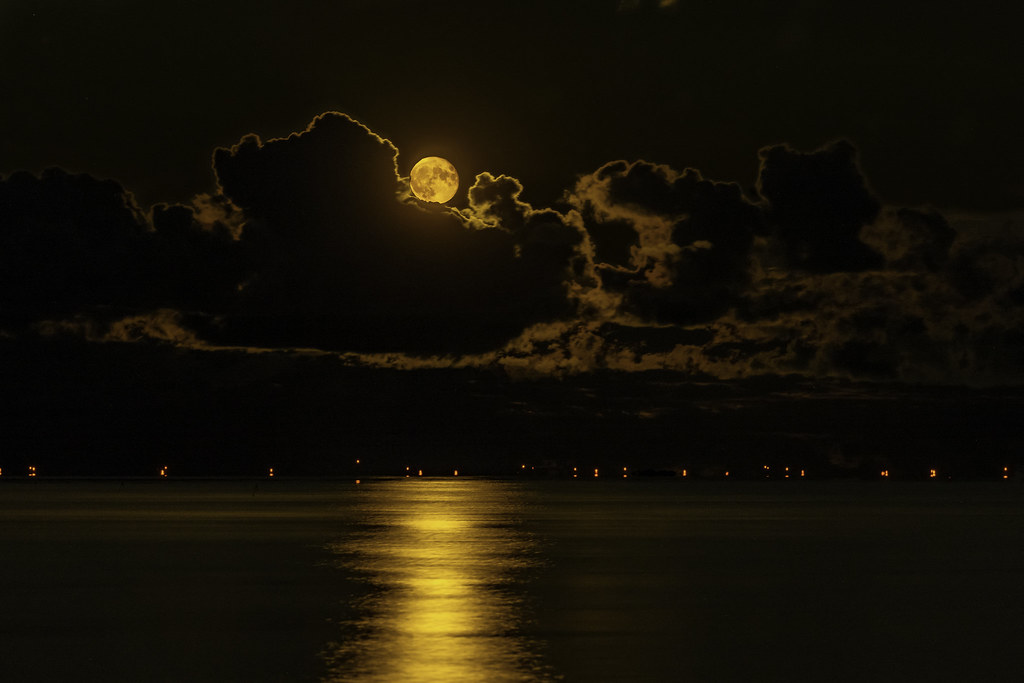
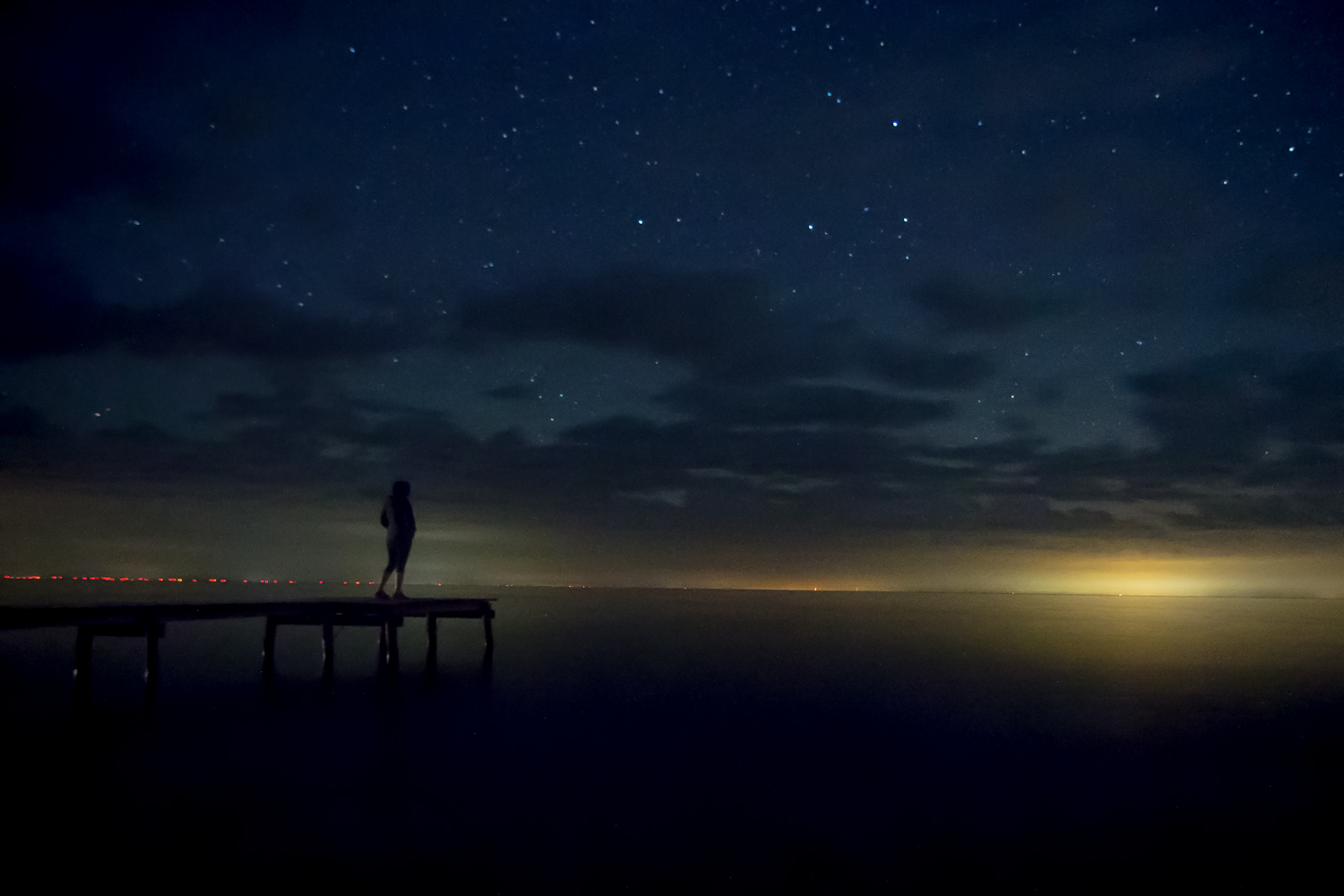
Ludington photographer Brad Reed shared a selection of absolutely incredible shots of the skies over Ludington & Lake Michigan on Wednesday. Click either pic to view them all!
…Typically visible near sunset or sunrise, pillars can reach heights of 5 to 10 degrees, and occasionally even higher. While they may appear as vertical rays, they are actually the collective glints of millions of ice crystals. When it comes to colors, pillars are truly a sight to behold. They take on hues that reflect the sun and surrounding clouds, ranging from brilliant white to various shades of yellow, red, or purple. Depending on the locations of the cloud crystals, pillars can even manifest as several vertically strung patches of light. As the light interacts with the ice crystals in the atmosphere, it creates a stunning display that captivates observers.
Yesterday morning, I came across this photo by Stephen right before I saw him making a positive comment on a photo that Sean – the photographer I featured yesterday – had taken. This was soon after I had seen photos Neil Weaver had taken at an ice cave photography workshop along with fellow Michpics photographer Aubrieta Hope. It made me realize that a huge and underrated part of Michigan in Pictures is the community of real live human beings that are as passionate about their fellow photographers as they are about introducing people to their favorite parts of Michigan. That’s a long way of saying that I am going to be working on ways to showcase the people out there clicking the shutter. One way will be to revive the Michigan Photographer Profiles with a focus on the photographers on my Michigan Photographers page. Stay tuned!!
Thanks to Stephen for allowing me to share both of these awesome sun pillar shots. He’s facing a problem that many photographers face: figuring out which of these two photos is the best to submit for a photography contest? Have a vote? Share it in the comments below or on his Facebook post and for sure view & purchase his work on his website!
I got a lot of enjoyment from walking around the house yesterday saying “Super Beaver Moon” so it is with sadness & regret I share that EarthSky’s Deborah Byrd explains that if a full moon of November falls after November 7, it’s the Beaver Moon but if it’s before the 7th, it’s the Hunter’s Moon. Deborah writes:
Nature is particularly cooperative around the time of the autumnal equinox to make the fall full moonrises special. On average, the moon rises about 50 minutes later each day. But when a full moon happens close to the autumnal equinox – either a Harvest or a Hunter’s Moon – the moon (at mid-northern latitudes) rises about 30 minutes later daily for several days before and after the full moon … The result is that there’s a short-than-usual lag time between successive moonrises around the Hunter’s Moon adding to the brightness of evening twilight.
The moon has for sure been looking huge when it’s risen the last couple of nights! To add to the fun, EarthSky shares that the South Taurid & North Taurid meteor showers are both happening right now! While they aren’t a very active shower with just 5-10 meteors per hour, they can produce really intense fireballs like this one from Monday night over Glen Lake in the Sleeping Bear Dunes National Lakeshore.
This moon is neither Hunter nor Beaver: it’s the August 2020 Sturgeon Moon as seen over Lake Huron. See more in kare hav’s Point Lookout / Au Gres gallery on Flickr including the first pic I ever shared from this awesome photographer on Night and Light.
To have rainbows, we need rain and sun at the same time. What weather pattern is classic for rain and sun at the same time? The current lake-effect rain shower situation is perfect for rainbows. The rain showers are small, maybe only five miles wide. There is a lot of clear sky around the rain showers.
…So we know why we have had and currently have a lot of rainbows in Michigan in the past few days- the spotty lake-effect showers combined with sunshine. But why have there been numerous double rainbows? It has to do with the angle of the sun, combined with the daily weather pattern.
For a double rainbow, the sun has to be fairly low on the horizon, lower than 40 degrees above the horizon. It just so happens the lake-effect showers reach their peak intensity and coverage during the late afternoon heating of the day, when the sun is low on the horizon.
The good folks at EarthSky inform us that today (September 12, 2025) is International Cloud Appreciation Day. The Cloud Appreciation Society shares that it’s a day when people all around the world look up to appreciate the beauty of the clouds and contribute a photo of their sky to the Memory Cloud Atlas. The Atlas is an enduring and unifying record of people coming together from different locations and cultures in appreciation of our shared world and the most dynamic, evocative, and poetic nature of clouds.
I took this photo in August in Detroit’s Midtown neighborhood looking east over Woodward & Barlum Apartments, about 2 blocks from the Detroit Institute of Arts. If you would like to support me, please feel welcome to do so through Patreon or just sharing this blog with your friends & family!
There were hopes that Comet C/2023 A3 Tsuchinshan–ATLAS aka Comet A3 would be the comet of the century. While it is not quite that, it does appear that it will be visible for the next couple of weeks just after sunset, even to the naked eye! The good folks at EarthSky offer a helpful checklist to spot Comet A3:
Be sure you’re looking at the correct direction and time. Comet A3 will be visible low in the west after sunset beginning around October 14.
You need a dark, unobstructed sky. Start looking when the sky is dark, but close to sunrise or sunset. Make sure there aren’t hills, trees or buildings blocking your view.
If you can’t see the comet with your eye, try your phone. Most cell phone cameras provide a night or low-light mode. But capturing an image of the comet will require that you hold the camera firmly – or lean against a fixed object like a tree – to avoid shaky or blurred image.
AFTER you’ve located the comet, use binoculars or your eyes to sweep in that area in the sky.
… “the comet of the century.” They say it will outshine everything but the Moon in the night sky and that it will stretch its tail over a huge portion of the sky. In that case, people around the world would be able to see the comet without trying at all. On the other hand, some people, like astronomer Dr. Zdeněk Sekanina, have predicted that the comet will break apart around the closest point in its orbit to the Sun, or “perihelion.” Comet Tsuchinshan-Atlas shows no clear signs of fragmenting right now, but that could always change.
…During late September and the first few days of October, you can find Comet Tsuchinshan-Atlas in the constellation Sextans. Look to the east, where the comet will rise about an hour before the Sun if you’re in the Northern Hemisphere. If you’re in a Southern Hemisphere, the comet will rise a bit earlier and be easier to see.
For most of early October, Tsuchinshan-Atlas will be too close to the Sun to be easily visible. Then, starting around Oct. 10 — if all goes well — the comet should be visible after sunset near the horizon in the west. With every passing day, Tsuchinshan-Atlas will start the evening higher in the sky and be easier to spot, unless it gets too dim.
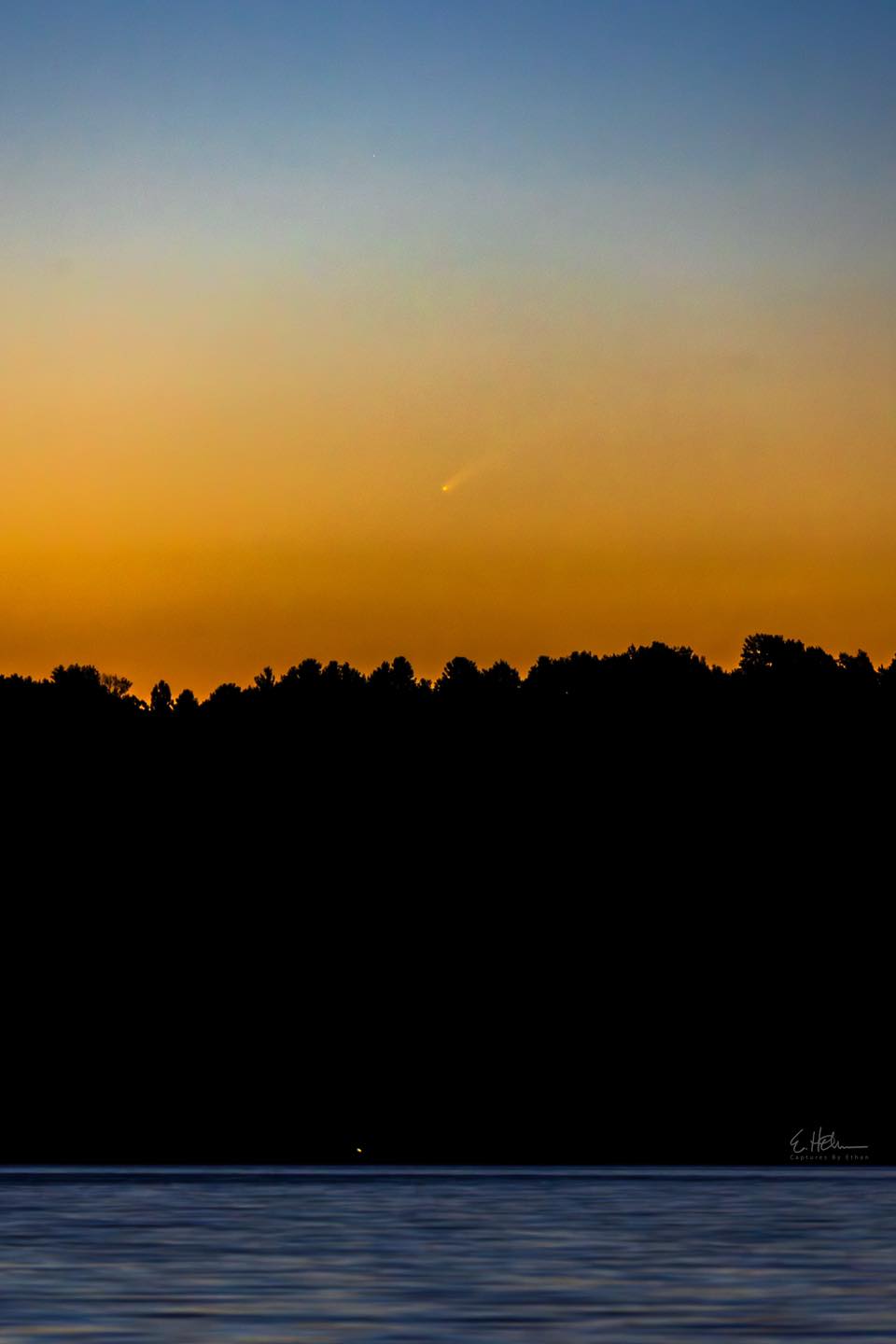
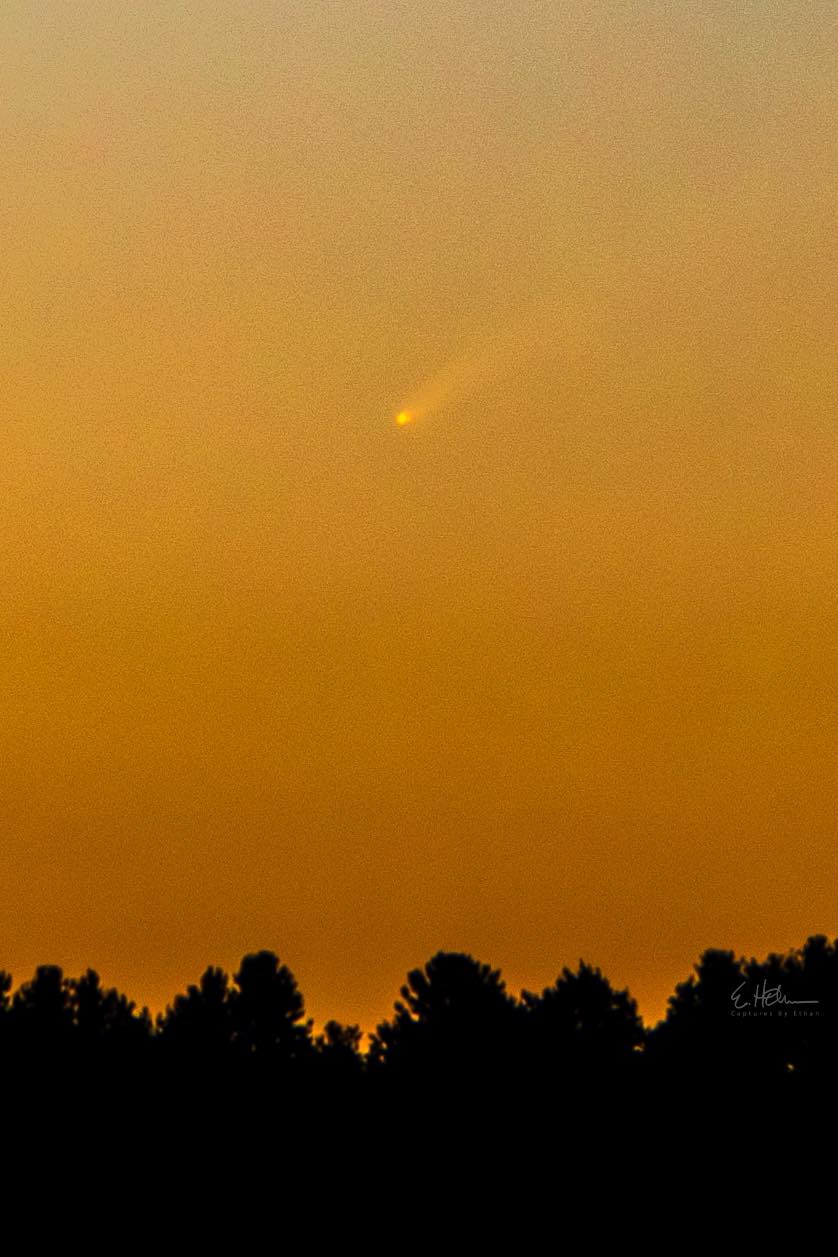
Ethan shares that he captures this sweet shot of Comet Tsuchinshan-ATLAS rising over Lake Leelanau early morning on Sunday. For more follow him on Facebook. View & purchase his work at capturesbyethan.com.
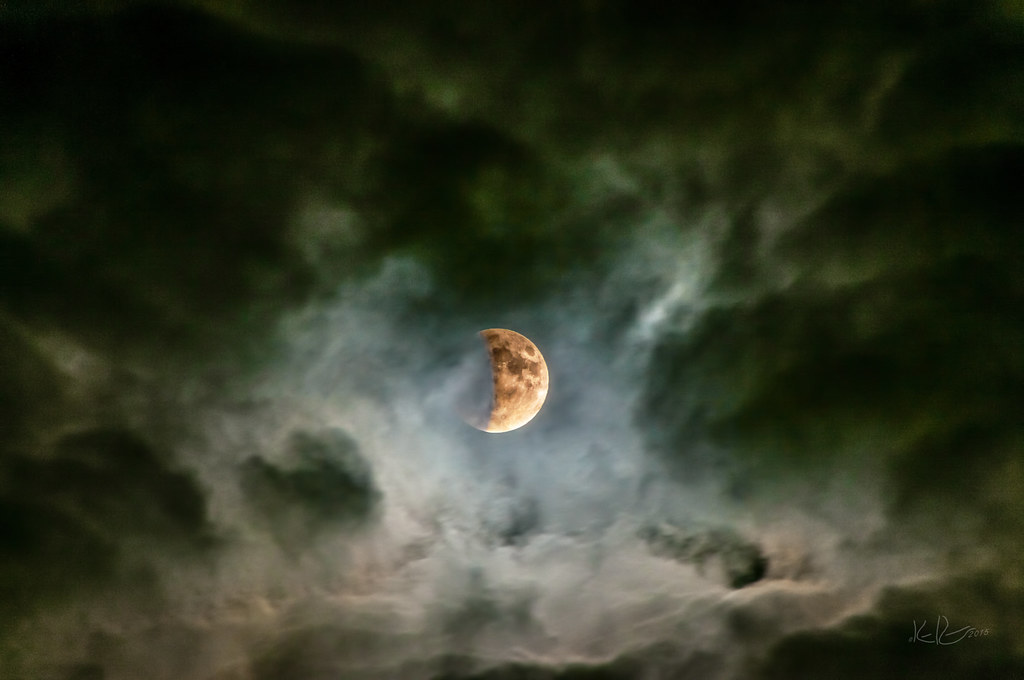
Full moons are likely every month, but supermoons, which occur when the moon is closest to Earth, are rarer. Only 25% of all full moons are supermoons, according to NASA. The next ones are Oct. 17 and Nov. 15. But the September supermoon will be brighter and red because of the partial lunar eclipse, which is when the Earth passes between the sun and the moon, and casts its shadow on the moon.
“Supermoon is a popular science term for when full moons occur close to the perigee of the moon’s orbit about Earth,” said Seth Jacobson, natural science professor at Michigan State University.
“Lunar eclipses occur at full moons when the sun, Earth and moon are all in the same plane and in that order. In this case, the moon will simultaneously be closer and in almost the exact same plane, so we get a partial lunar eclipse and a supermoon at the same time. The chance of both occurring during the same full moon cycle is about 5% or once every one-and-a-half years,” Jacobson said.
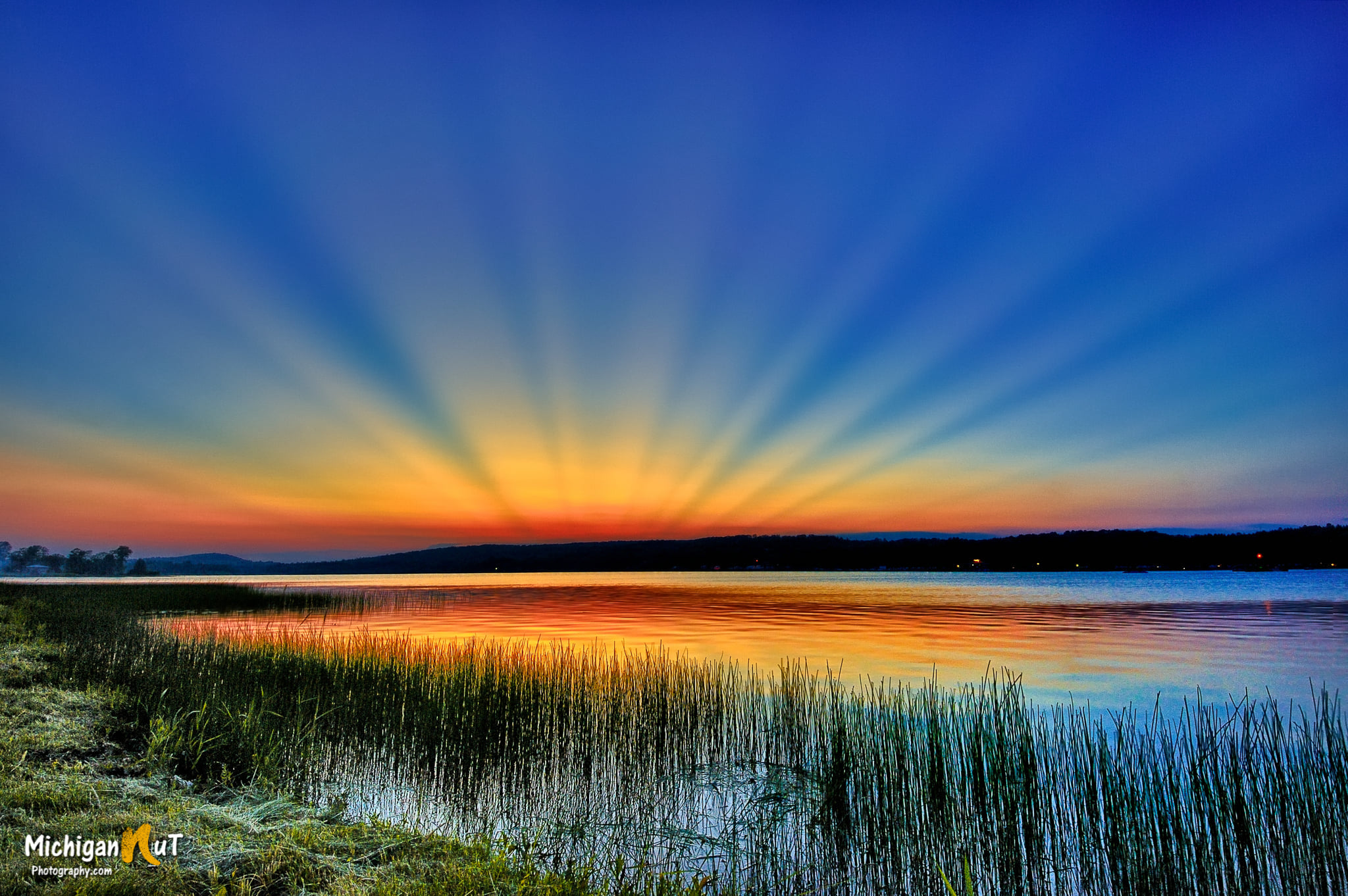
…also known as sun rays, are a mesmerizing atmospheric optics phenomenon that captivates the imagination. These ethereal beams of light, streaming through gaps in clouds, create a breathtaking display of nature’s beauty. The parallel columns of sunlit air, separated by darker cloud-shadowed regions, give the impression of diverging rays, much like the parallel furrows of freshly ploughed fields or a road that appears to narrow with distance.
The visibility of crepuscular rays is made possible by the scattering of sunlight by various atmospheric components. Airborne dust, inorganic salts, organic aerosols, small water droplets, and even the air molecules themselves all play a role in scattering the sunlight and making the rays visible.
I shared this photo several years ago and I’m not gonna say I won’t share it again! 😅 John took the pic at Sunday Lake in Wakefield. For more, follow him on Facebook & view and purchase his work at michigannutphotography.com.