If you can’t share your vision for the future of this iconic Detroit landmark in person, you can fill out the survey online.
When I read about the call for input on the Ren Cen, I knew exactly which photo of Sean’s I was gonna select! I’m featuring another he took in early August and also one from a vivid colored night on Hart Plaza earlier this week! Follow Snappd By Sean Photography on Facebook or Instagram for his latest!
Stargazers on the night side of Earth (that’s us!) will catch their first glimpse of our planet’s umbra (the darkest, innermost part of its shadow) creeping onto the moon’s surface at 10:33 p.m. EDT on Aug. 27. The vast shadow will continue its advance across the crater-scarred landscape in the hours that follow, until it hits the point of maximum eclipse at 12:12 a.m. EDT on Aug. 28.
Around this time, you may notice the shadowed region of the moon take on a reddish-orange color, as sunlight filtered through Earth’s atmosphere is bent onto the lunar surface — a phenomenon often referred to as a “Blood Moon” during a total eclipse.
I first shared this amazing shot of a partial lunar eclipse over the Detroit skyline way back in 2015. See more great photos from Tom on Flickr.
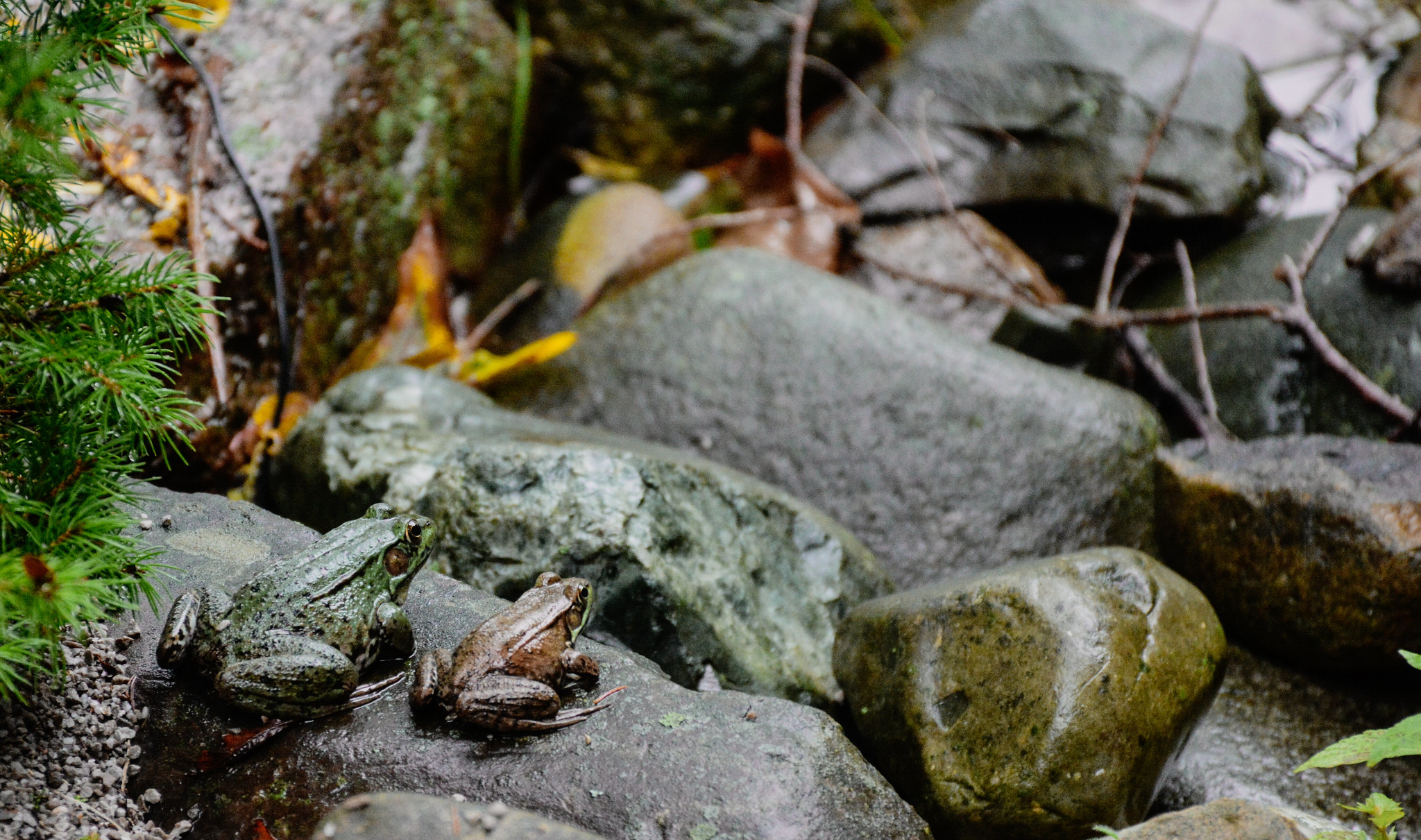
While it may be stressful for human beings to exist in a state where their head is perpetually just above the water, Dan writes that it’s a perfectly normal thing for a frog.
If you need to unwind from an increasingly stressful & chaotic world but can’t make it to an actual pond where you can watch frogs doing frog stuff, I highly recommend Dan’s Pond Life gallery on Flickr for relatable pics that make you feel like you’re right there with him!
PS: The last photo in the gallery is one of Dan’s that I shared back in 2021 with the title “Some day, all of this will be yours”, a title amused me to no end ;)
“Yesterday, the Michigan Supreme Court ruled that state regulators failed to fully consider the environmental impacts of Enbridge’s Line 5 tunnel. This was a landmark victory for Tribal nations across the area thanks to the hard work of Earthjustice and the Native American Rights Fund along with the Bay Mills Indian Community, the Little Traverse Bay Bands of Odawa Indians, Grand Traverse Band of Ottawa and Chippewa Indians, and Nottawaseppi Huron Band of the Potawatomi.
“The Sault Tribe firmly believes that culturally and environmentally, there should be no oil pipeline underneath the Straits of Mackinac. We applaud our sister tribes for challenging the state’s permitting system.” -Sault Ste. Marie Tribe of Chippewa Indians Chairman Austin Lowes
I would like to applaud all five Tribal nations for standing up on behalf of the waters & people of Michigan. You can read about the details of the 58-page ruling by the Michigan Supreme Court to vacate a key permit for the Line 5 pipeline across the Straits of Mackinac on environmental grounds in Bridge Magazine. I’ve also included some informative images & a simulation of a spill from the good people at Oil & Water Don’t Mix who have been fighting this extremely risky pipeline.
Today’s photo is one that I took of my daughter on Pyramid Point in the Sleeping Bear Dunes National Lakeshore back in 2005. You can see Lake Michigan & North Manitou Island in the background. I decided to use my own photo because this issue is intensely personal for me given how much of my life has revolved around the Lake Michigan half of the world’s greatest lake. Relaxation, wonder, income, peace – I love this mighty lake and feel so blessed to have the Native people of this land standing strong to fight for it. Feel free to share a photo in the comments below of why you love Lake Michigan/Huron!
I shared this photo back in 2021 with the news that Michigan’s top baby names were Oliver & Charlotte. Although Charlotte remains atop the Social Security Administration Baby Name List five years later (followed by Amelia, Sophia, Eleanor & Evelyn), Oliver has been passed on the 2025 most popular baby name list by Theodore & Noah with Henry & James rounding out the top 5. Andrew is down at 62 – 20+ spots below when I was born. How is your name faring these days?
Our air quality begins to dip across the majority of the state as we head into the mid-afternoon hours today, July 15th, 2026. By sunset tonight, nearly the entire state will see 150+ μg/m³ AQI concentration, which translates to very unhealthy on the air quality index. Overnight, those winds out of the northwest do not stop, bumping parts of our area into the hazardous to everyone category at 250.5-500 μg/m³ AQI concentration if recent short-term model trends are correct.
Dangerous air quality levels like these are rare, so please take your respiratory health very seriously. Smoke concerns mixed with the already excessive heat concerns both today and tomorrow will also be a factor for higher mortality rates amongst all age/health groups, per research collected by the National Library of Medicine (NLM). All data shown is for fine particulate matter (PM2.5).
For sure follow Michigan Storm Chasers on Facebook and the MiStormChasers YouTube channel that often includes live reporting on Michigan weather events. You can also check out the smoke tag on Michigan in Pictures for a reminder of what last summer’s wildfire smoke was like.
The top pic from the Mackinac Bridge Authority webcam is a view looking north from Mackinaw City while the other is looking south across the Mighty Mac from St. Ignace.
Livestream from the Riviera Motel in Mackinaw City
Here’s what the webcam view looked like when I posted this…
We’ve all heard of f-stops, but look at this fawn f-GO!! I shared this photo eleven Julys ago but wanted to update it with even more Fun Fawn Facts:
Fawns average 6-8 lbs. at birth
Fawns are capable of walking within a few hours
Does usually remain within 100 yards of their fawns
A 3-week-old fawn can outrun most danger
The average number of spots on a fawn is 300 (gotta love scientists!)
The whitetail fawn loses its spots by the end of October of the same year it was born, or within 3 to 4 months after birth.
As the spots disappear, the fawn’s coat also changes from its reddish color to a grayish winter coat. The buck fawn’s face grows a bit darker in color but the belly remains white
Deer tend to live in female-led family groups of up to 25 deer and may live to ten years or more
When playing together, fawn games are suggestive of children’s games like tag. Mock fighting, aggressive postures, and scent marking helps fawns refine social behaviors
Young males leave their mother after one year, but young females usually stay with their mother for two years.
The area where the fawn is born normally becomes its adult habitat
Male fawns grow pedicles (the attachment point for antlers) that are typically about one inch in length
Fawns that live past the first week have a good chance of surviving to adulthood
Red-headed Woodpeckers don’t act like most other woodpeckers. You will find them in open woodlands with mature trees and at the fringes of parks and golf courses catching insects in the air, snacking on acorns and beech nuts, and stashing extra food in tree crevices for later. I also just learned today that they are one of one of EIGHT woodpecker species in Michigan, so expect more on that in the days to come.
Lee got some amazing shots of this Red-headed Woodpecker (melanerpes erythrocephalus) on a Northern Red Oak in Mecosta County. Be sure to subscribe to Lee’s excellent blog for his latest and view & purchase his work from his website!
In a post the other day I included a photo of a frog that someone had captioned as a toad. I will always use your captions when I share your photos because it’s your photo so you can call it whatever you want, but for some reason that upset a reader. For that grumpy reader, and also for all of you, here’s a little more about the difference between frogs & toads thanks to this Michigan State University article:
Frogs and toads (also collectively called anurans, referring to the tailless frogs and toads of the Order Anura) are members of the class Amphibia … Renowned Michigan Herpetologist James H. Harding describes the distinction, in general, in the following manner: Toads are warty skinned, short-legged, hopping anurans. Due to their short hind legs, toads get around by short hops or walk rather than long leaps. Toads are also commonly described as having thicker skin, possibly because they are adapted to drier conditions than frogs. Frogs are smoother-skinned, long-legged, leaping anurans.
While there are over 3,500 anuran species around the world, there are only 13 species in Michigan. They are organized into three groups:
True Toads: terrestrial or burrowing with relatively thick, warty skin and short legs like the Eastern American Toad pictured.
Treefrogs and relatives: many like the Gray Treefrog have expanded sticky toe pads that allow them to climb trees and shrubs. Others like the ubiquitous Northern Spring Peeper stick to the surface.
Typical or “True” Frogs: are what many consider “normal” frogs, typically with long legs, smooth skin on their backs, and low-pitched “croaking” calls like the Green Frog (often confused for a Bullfrog) and the Northern Leopard Frog.
Bill shared this photo he took yesterday in the Michigan in Pictures group on Facebook. Follow Bill’s Pictures for his latest!