What’s in a name: Petoskey Stone Edition

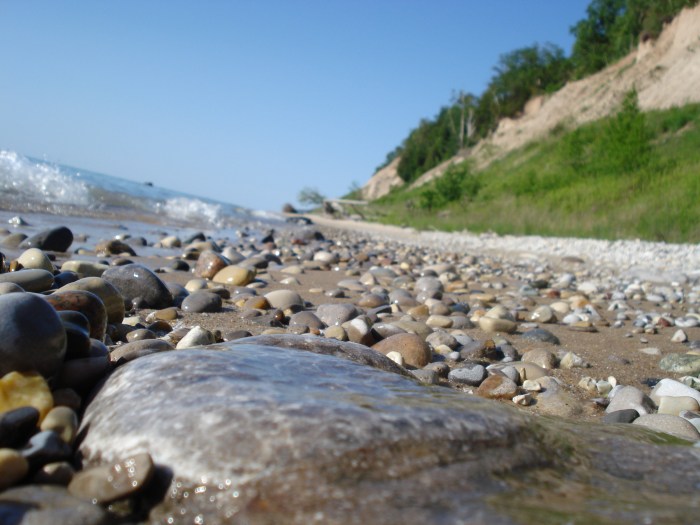
petoskey-stone-on-the-lake-michigan-waterline

Waterline, photo by Andrew McFarlane

This is one of my photos that I dug up for another project that I wanted to share. Apparently this was taken during in my “tilty” phase. ;)

Here’s something beautiful that a young woman I know named Rose Petoskey wrote about Petoskey stones several years ago.

My name is Noozeen (Rose) Nimkiins (Little Thunder) Petoskey (Rising Sun) and I am Anishinaabek.

Many people would associate the word Petoskey with the souvenir stone found on the northern Lake Michigan shorelines. However, to my family, the word Petoskey represents much more than a souvenir.

In the Odawa language, the word Petoskey (Bii-daa-si-ga) means the rising sun, the day’s first light, or the sun’s first rays moving across the water. The Petoskey stone is a fossilized coral created by impressions made in limestone during the last Michigan ice age. These stones were named “Petoskey” because the impressions resembled the rising sun coming up over the water. Just as the image of the rising sun is implanted within the Petoskey stone, the archaeology of a person’s names is implanted within. All names within our Anishinaabek culture reflect an individual’s personal history. Rocks go deep, but names go much deeper to reveal the stories of the past.

Read on for more of Rose’s thoughts the power and beauty of the Odawa language!

View my photo from 9 years ago background bigilicious and see more in my Leland, Michigan slideshow.

More summer wallpaper and more from the beach on Michigan in Pictures

PS: The other project was for a stone path that a friend is building this year at the Earthwork Harvest Gathering held next weekend near Lake City (September 16-18). It’s a wonderful festival packed with Michigan musicians!
Sometimes the stars align…

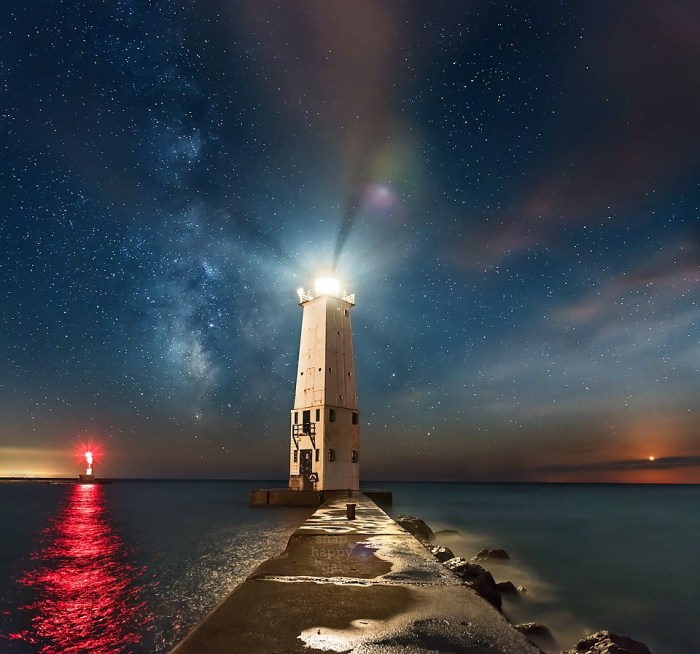
Sometimes the the stars align Frankfort Lighthouse

Sometimes the stars align…, photo by Snap Happy Gal Photography

What can you say about an astonishing photo like this? Heather writes:

I went to Frankfort a couple nights ago to shoot the Milky Way at the lighthouse. As I walked out the long pier in the darkness, I passed two groups of swimmers heading home (at 11:30), and then had the entire thing to myself for over an hour. Just enough haze hung in the air to create the light rays from the lighthouse, and the waves splashed just high enough to douse the outside edge of the wall. The setting crescent moon balancing out the south breakwall light was a nice bonus.

View the photo bigger, view & purchase photos at snaphappygal.com, and be sure to follow Snap Happy Gal Photography on Facebook!

UPDATE: Here’s a link to purchase this photo!

More about the Frankfort North Breakwater Light including another nighttime shot by Heather on Michigan in Pictures.

Stroll through Lake Michigan

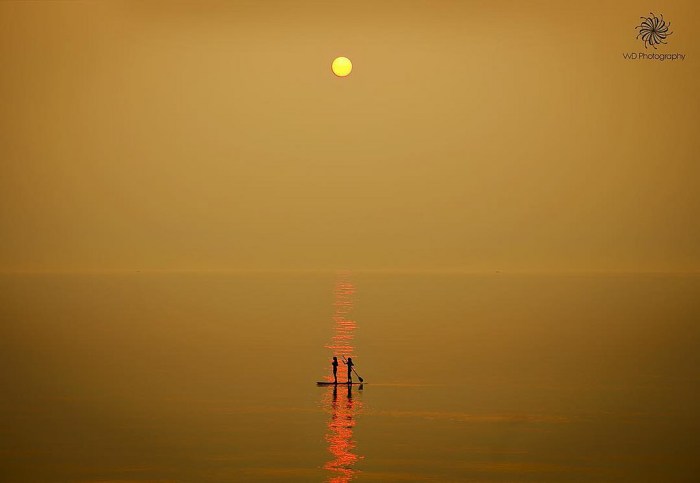
Lake Michigan Paddleboarding

Stroll thru Michigan Lake, photo by Vesy Valcheva

View Vesy’s photo bigger and see more in her slideshow.

North Manitou Shoal Light and 3 other Michigan lighthouses for sale

via leelanau.com

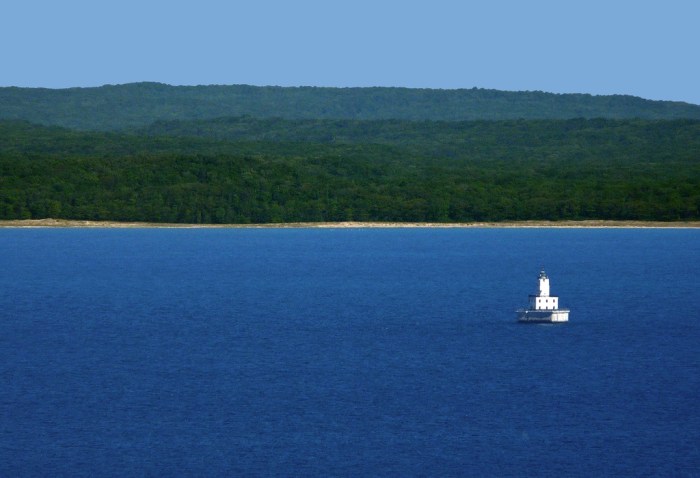
Tales of the Crib - North Manitou Shoal Lighthouse

Tales of the Crib, photo by Jim

“To pass time, the men watched television, read books and magazines, played board games, and chatted with passing ship captains by radio. One coastguardsman perfected his rappelling skills by using ropes to descend from the gallery outside the lantern room to the concrete deck below.”
~Life on North Manitou Shoal

The last Coast Guard crew left the North Manitou Shoal Light in 1980. It’s located 8 miles off the the Lake Michigan shore from Leland, and growing up I could hear the station’s fog horn from my bedroom. When I was a kid, my parents and their friends would take steaks and beer out to the light and have dinner with the guardsmen.

Now mLive reports that the light is one of four Michigan lighthouses are up for sale to the public: North Manitou Shoal Light, White Shoal Lighthouse, Gray’s Reef Light, and Minneapolis Shoal Light. The auction page explains that proceeds from the public sales go back into the US Coast Guard’s aid to navigation fund for equipment, maintenance, and resources to continue preservation and maintenance of lighthouses that are still active.  On Tuesday, August 30, registered bidders who have paid the $10K deposit can tour the light along with their contractor and they haven’t yet set a closing date for the auction.

Lighthouse Friends notes that the North Manitou Shoal Light was built in 1933 to replace the North Manitou Shoal Lightship:

…anchored two miles off Dimmick’s Point. In 1909, the Lighthouse Board noted that a shoal had developed southeast of Manitou Island in recent years and requested a lightship be placed on the easterly end of the shoal to help mark the six-mile-wide channel between Dimmick’s Point and Pyramid Point on the mainland.

This light station replaces the North Manitou Lightship No. 103 and North Manitou Island Light Station, and serves as an improved mark for the outer end of the shoal projecting southerly from the south end of North Manitou Islands. A substantial saving in annual maintenance cost will be effected. The crib on which the structure is built stands in 22 feet of water, on a hard sand and coarse stone bottom. The crib is 65 feet square by 22 feet deep, and is filled with conveyor stone. The voids around the stone in the 20 outer pockets were pumped full of Portland cement grout. Arch web steel sheet piling driven 24 feet into lake bottom encloses and protects the crib.

The crib supports a hollow pier of reinforced concrete 62 feet square and 20 feet above water, with deck overhanging 2 feet on all sides. This hollow space is occupied by the steam heating plant, coal and oil storage, laundry, etc. Above the pier rises the steel building 37 feet square, two stories high, surmounted by a square tower of three stories additional height. On the top of the tower is a third-order lantern, with its focal plane 79 feet above water. The building and tower are constructed of steel channels 12 and 15 inches wide, standing vertically with flanges turned in and bolted together on the inside.

View Jim’s photo background big and see more in his slideshow.

North Breakwater

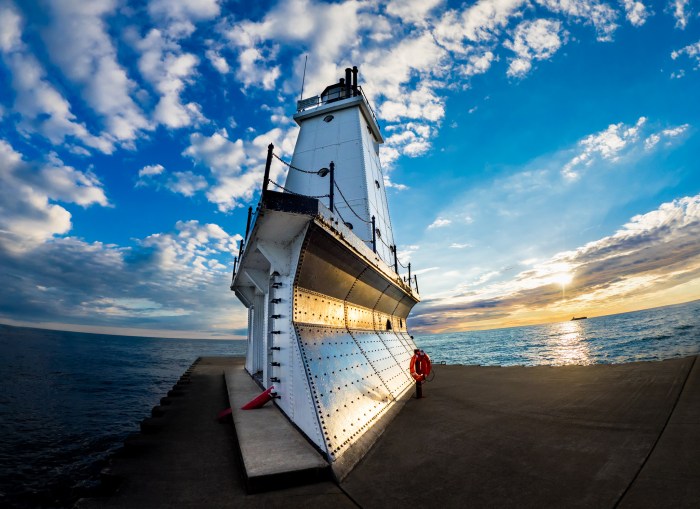
Ludington North Breakwater Light

North Breakwater Light, photo by Mark Miller

The entry for Ludington North Breakwater Light at Terry Pepper’s Seeing the Light details a ton of the history of this lighthouse including the reason for its interesting appearance:

Over the summer of 1924, a unique structure took shape at the end of the North Breakwater. The main tower, fabricated of steel plates over an internal steel skeleton, took the form of a four-sided pyramidal tower with four round porthole windows on each of the three decks within. With plans calling for the installation of an air diaphragm fog signal operated by an electrically powered compressor, there was no need for a large fog signal building, and thus the signal building took the form of a relatively small structure integrated into the base of the landward side of the main tower. In order to help protect the structure from the force of waves crashing across the breakwater, the concrete foundation at the base of the structure was formed with angled surfaces designed to deflect the force of wave action up and away from the building.

The white painted tower was capped by a square gallery and an octagonal iron lantern installed at its center. Since the standard lantern design being used by the Lighthouse Service in new construction at this time was of circular conformation with diagonal astragals, it is likely (but unconfirmed) that the lantern used on this new light was transferred from the South Pierhead beacon which the new light was designed to replace.

Click through for more including a number of old photos.

View Mark’s photo background bigtacular and see more in his slideshow.

More lighthouses and more summer wallpaper on Michigan in Pictures.

Steps of the Sun at Sleeping Bear Dunes

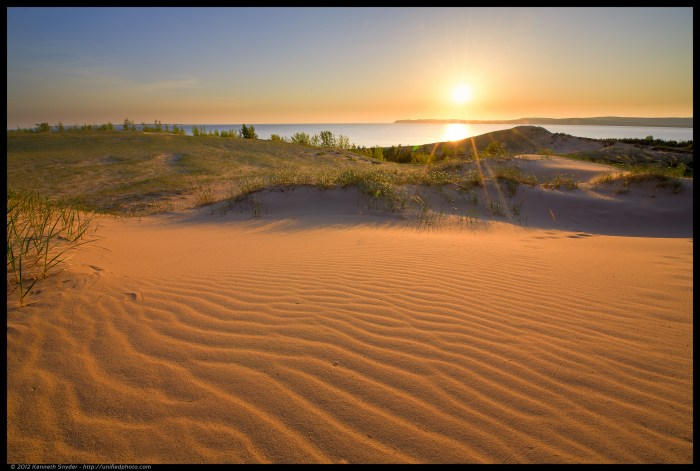
Steps of the Sun

Steps of the Sun, photo by Kenneth Snyder

Here’s a shot from high atop one of the many dunes in the Sleeping Bear Dunes National Lakeshore from August 1, 2012.

View Kenneth’s photo background bigilicious and see more in his Sleeping Bear Dunes slideshow that includes some awesome northern lights pics!

More dunes and more summer wallpaper on Michigan in Pictures.


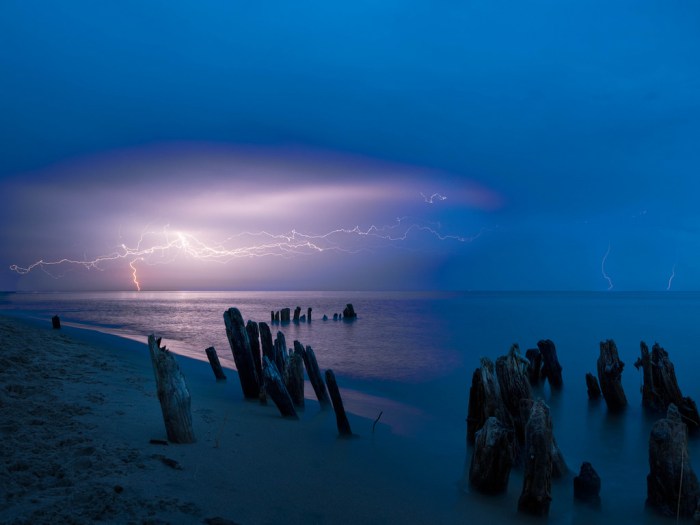
Fury Approaches

Fury Approaches

Fury Approaches, photo by Jamie MacDonald

Pow!

View Jamie’s photo from Kirk Park Beach in West Olive bigger, see more in his Stormy Weather slideshow, and visit jmacdonaldphoto.com for more of his work.

Come Sail Away

Come Sail Away

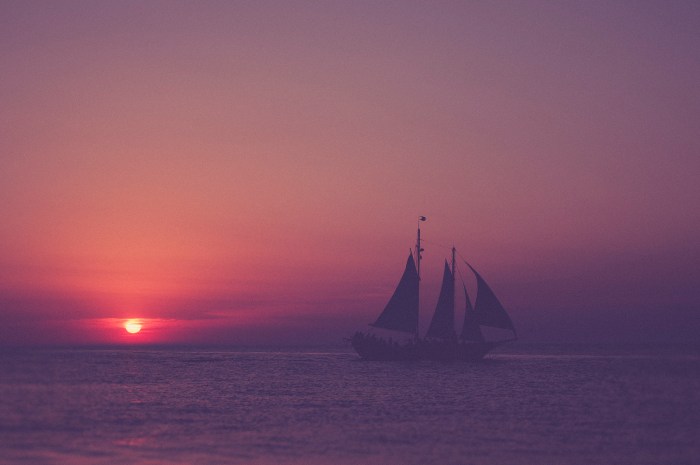
Come Sail Away…, photo by Mike Millspaugh

What a gorgeous photo of a tall ship under sail off Grand Haven. I looked around for a while trying to figure out what ship this is until I remembered that I can just ask all of you. Let me know in the comments!

View Mike’s photo bigger, see more in his slideshow, and view more of his work on his website.

You know I can’t resist…

Pure Michigan’s Lake Effect Gallery

Holland, Mi  Sailboat City by Cyndie M

Holland, MI – Sailboat City, photo by Cyndie M

Over the weekend, Pure Michigan rolled out a new hashtag on Instagram, Twitter and Vine. You can click those links to check out #PureMichiganLakeEffect on each of the services or head over to the Pure Michigan Lake Effect Gallery to see how to share yours and what kind of summer fun people are up to in the Great Lakes State!

View Cyndie’s photo background big and see more in her slideshow.

Summer Solstice and a Strawberry Moon

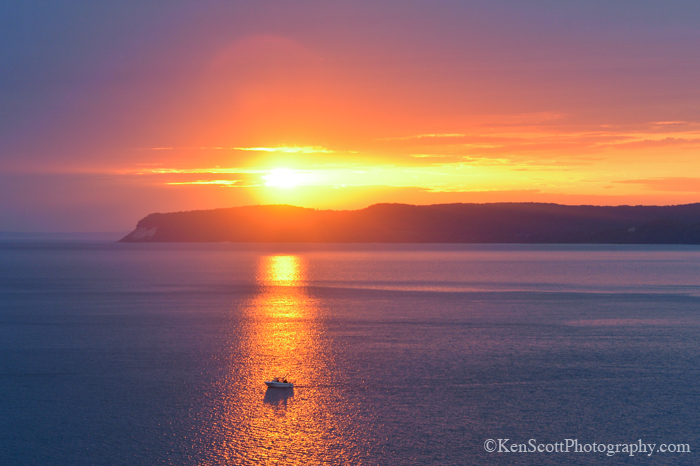
Summer Solstice 2013 by Ken Scott

Summer Solstice … 2013, photo by Ken Scott

Today at 6:34 PM EDT, the summer solstice officially ushers in summer. EarthSky shares that the full Strawberry moon tonight for the solstice is the first full moon to fall on the summer solstice since June of 1967 and the Summer of Love.

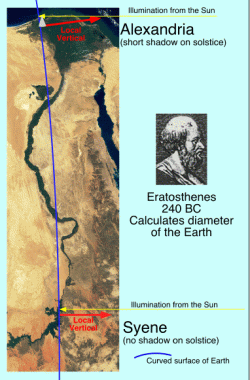
Back in 2001, NASA’s Earth Science Picture of the Day (<–my favorite photo blog – subscribe!) shared the tale of Eratosthenes, the Solstice and the Size of the Earth:

Calculating the SolsticeIt was near the summer solstice of 240 BC that Eratosthenes, curator of the famed Library of Alexandria and renowned mathematician and geographer, performed his famous experiment in Egypt to calculate the diameter of the Earth. The bottom of a deep well in the city of Syene, Egypt (near the present day Aswan Dam and very near the Tropic of Cancer) was known to be illuminated by the sun directly at mid-day on the longest day of the year (the solstice). But on the same day, a vertical pole in Alexandria, some 800 km to the north, cast a distinct shadow. By measuring the shadow and applying the geometry of a sphere, Eratosthenes calculated the Earth’s diameter with remarkable accuracy. Sadly, the concept of a spherical Earth was lost from common thought for over a thousand years until Christopher Columbus and others proved the fact by sailing west to go east. The background reference image of Egypt and the Nile River is provided by the NASA MODIS instrument.

Sep 5, 2006 – Donald Etz notes: “From reading Jeffrey Burton Russell’s book, Inventing the Flat Earth (1991), I was persuaded that most educated Europeans of Columbus’ time believed the earth is round. The main debate seems to have been over its dimensions. Columbus ventured on his voyage because he believed the earth was much smaller than it is.” -ed

View Ken’s photo of the sunrise on the 2013 summer solstice bigger, see more in his Boat(s) slideshow, and definitely check out kenscottphotography.com to view and purchase his work.

More science on Michigan in Pictures.