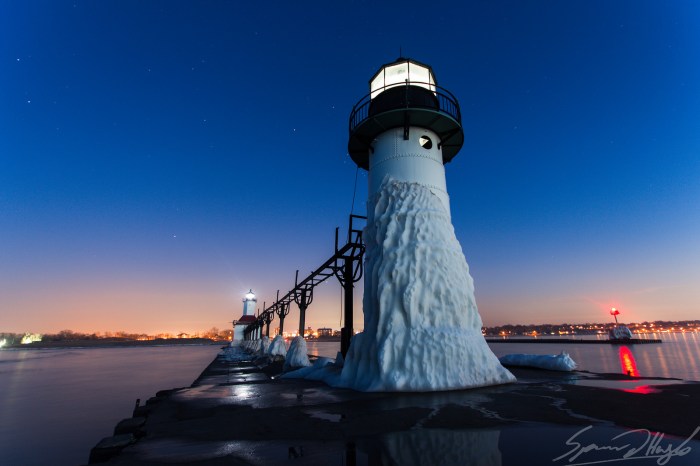
Blue Hour at the St Joseph Pier

Blue Hour at the St Joseph Pier

Untitled, photo by Spencer D Hughes

If you want to take a look at the Pier from the beach, check out the St Joseph webcam. Have a great weekend everyone!!

View Spencer’s photo bigger and see more of his awesome St Joseph photos. Some seriously cool ice shots in there.

PS: Here’s a link to more information and a photo of the St. Joseph North Pier Outer & Inner Lights from almost exactly a year ago – lots more ice.

PPS: I’d love it if you’d become a patron of Michigan in Pictures. Thanks to all who have so far – I really appreciate it!

A Tale of Two Bridges: History of Port Huron’s Blue Water Bridge

Freighter Saginaw Under the Blue Water Bridge

Untitled, photo by Diane

The website Michigan History was produced by someone at MSU. While I have no idea who or why they gave up on what was shaping up to be a cool website, the history checks out. The page on Port Huron’s Blue Water Bridge says:

Perhaps Port Huron’s greatest claim to fame is the Blue Water Bridge, a historic arcing bridge that serves as a means of transportation between Canada and the United States. The bridge is located over the St. Clair River, and connects Port Huron, Michigan, to Sarnia, Ontario. In 2013 the Blue Water Bridge celebrated its 75th anniversary, and a closer look at its history show why Port Huron residents take pride in the structure.

The original Blue Water Bridge was constructed in 1938, and was built by the American Bridge Company of New York, and the Hamilton Bridge Company of Ontario. The original bridge is an arch cantilever bridge, which was designed to not only support large amounts of traffic, but also to have an aesthetic arching look. In the late 1980s the border crossing became so popular that plans for a new bridge were brought up. However, instead of demolishing the old bridge, a new one was built in 1997 beside the old bridge, to support eastbound traffic.

The Michigan cost for building the new bridge, and renovating the old one was $62.6 million dollars. (Michigan Department of Transportation) The project was considered an enormous success and won awards from the American Society of Civil Engineers, the Ontario Institution of Steel Construction, and the Federal Highway Administration. For Port Huron residents the bridge signifies the close connection with Canada, and the willingness of the two sides to work closely together.

Click for more about the history of Port Huron. If you want to get really in depth, The Construction History of the Blue Water Bridge (pdf) is an excellent account that details the political maneuverings and construction challenges of both bridges.

View Diane’s photo of the freighter Saginaw passing under the Blue Water Bridge background bigtacular and see more in her Freighters and the St. Clair River slideshow.

There’s more Michigan bridges on Michigan in Pictures, and since you’ve read this far, Boatnerd’s page on the Saginaw has everything you’ll want to know about the self-unloading bulk carrier that was launched May 9th, 1953 as the John J. Boland. It’s one of three near sister vessels built by this shipyard: The John G. Munson which is still plying the lakes and the Detroit Edison that suffered a career-ending grounding in Lake Michigan in December of 1980.

#TBT: Winter Comes to Michigan

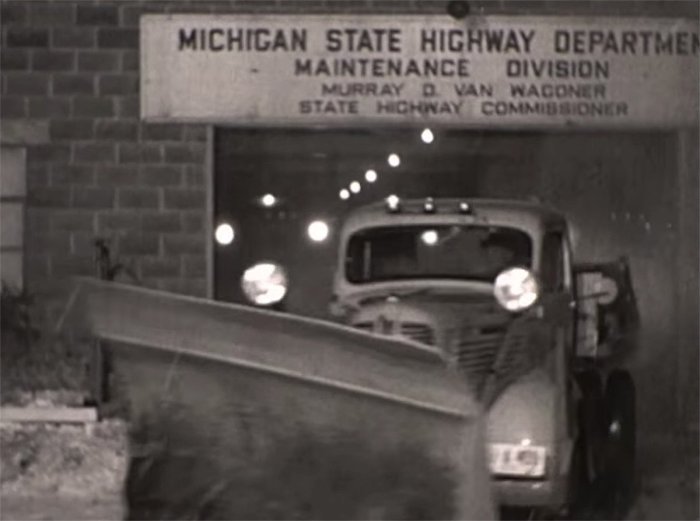
1930s Michigan Snowplow

1930s Snowplow, via Michigan Highway Department (now MDOT)

The Michigan Department of Transportation shared this awesome newsreel from the 1930s featuring all kinds of winter fun including ski jumping. Their predecessor, the Michigan Highway Department also used the video to talk up Michigan’s road system and winter road maintenance.

It was discovered by Nancy and Barbara Sleeper of Newberry, daughters of former Luce County Road Commission superintendent Sanborn Sleeper, and it’s super awesome!

A Snowflake’s Life: How Snowflakes Get Their Shape

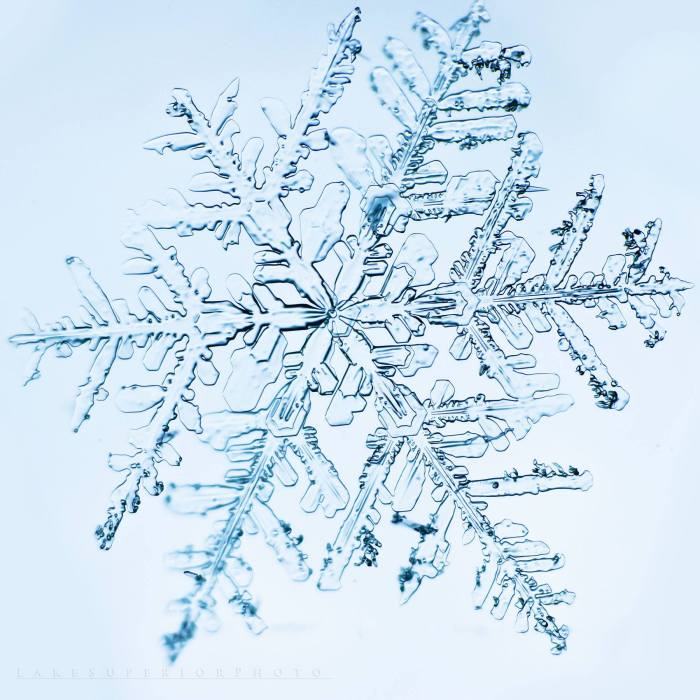
A Snowflakes Life

A Snowflake’s Life, photo by Shawn Malone/Lake Superior Photo

“Lives are snowflakes – unique in detail, forming patterns we have seen before, but as like one another as peas in a pod (and have you ever looked at peas in a pod? I mean, really looked at them? There’s not a chance you’d mistake one for another, after a minute’s close inspection.)”
Neil Gaiman, American Gods

One of my favorite websites is EarthSky, and they explain how snowflakes get their shape:

The shape of snowflakes is influenced by the temperature and humidity of the atmosphere. Snowflakes form in the atmosphere when cold water droplets freeze onto dust particles. Depending on the temperature and humidity of the air where the snowflakes form, the resulting ice crystals will grow into a myriad of different shapes.

…Kenneth Libbrecht, Professor of Physics at the California Institute of Technology, has made extensive observations of how water molecules get incorporated into snow crystals. In his research, he has observed that the most intricate snowflake patterns are formed when there is moisture in the air. Snowflakes produced in drier conditions tend to have simpler shapes.

Temperature also has a large effect on the formation of snowflakes according to Libbrecht’s research. Snowflakes formed in temperatures below – 22 degrees Celsius (- 7.6 degrees Fahrenheit) consist primarily of simple crystal plates and columns whereas snowflakes with extensive branching patterns are formed in warmer temperatures.

Bottom line: Temperature and humidity influence snowflake formation. The most intricate snowflake patterns are typically formed during warm and wet conditions.

Read on for more including some links & photos!

Shawn writes that she can totally relate to this snowflake’s imperfect life. View it background big on Facebook, check out more including a kickin’ video of the Northern Lights at the Mackinac Bridge on her Lake Superior Photo page, and view and purchase photos from LakeSuperiorPhoto.com.

More winter wallpaper and more snow on Michigan in Pictures.

PS: Congrats to Shawn for passing 200,000 subscribers on her Facebook page – wowzas!!

PPS: Neil Gaiman‘s American Gods is an incredible work of modern day fantasy.

Groundhog Warning!

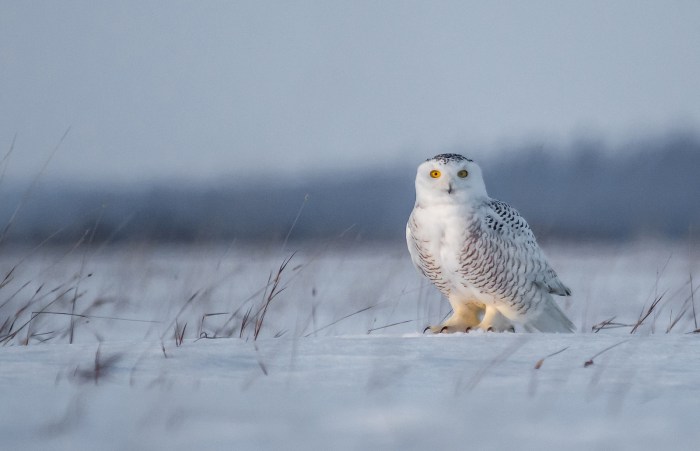
Snowy Owl

Snowy Owl, photo by Kevin Povenz

Any Michigan groundhogs out there probably better just stay inside and check to see what Woody the Woodchuck from the Howell Nature Center predicts. Word is already in from Punxsutawney Phil that we’re in for an early Spring!

You can learn all about Michigan groundhogs/woodchucks and Woody, Michigan’s official groundhog and snowy owls on Michigan in Pictures. One thing about snowy owls that you may not know is that due to their remote existence, they typically don’t have the same fear of humans that other owls exhibit.

Kevin took this gorgeous photo on Saturday near Sault Ste Marie and writes:

Yes I was laying down on my belly in the snow to get this shot. Not the sharpest of shots as there were weeds between me and this snowy and was hard to focus. Should of used manual focus, but I loved the moment. He just kept looking at me probably thinking “what the…?”

View his photo bigger and see more in his Birds of Prey slideshow.

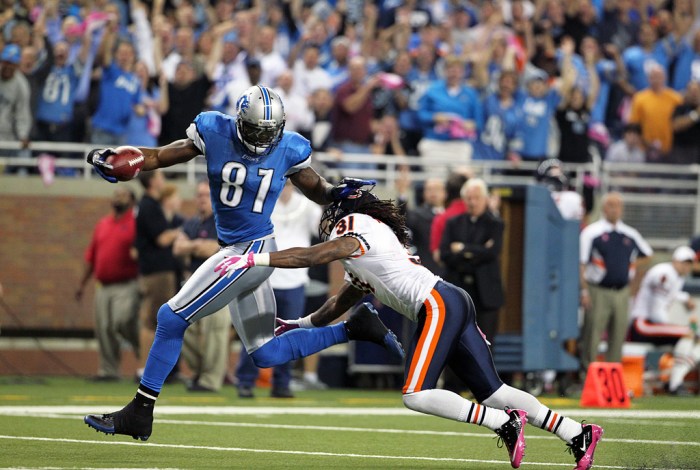
Farewell Megatron? Detroit Lion Great Calvin Johnson to Retire. Maybe.

Megatron Calvin Johnson by Chris Arace

Megatron. Calvin Johnson., photo by Chris Arace

ESPN’s Adam Schefter reports that the Detroit Lions all-time greatest receiver Calvin Johnson is apparently headed for retirement. He reportedly told his family and close friends the 2015-16 season would be the last, and told gave coach Jim Caldwell the same message the day after the season ended.  If he does follow through, he will join Barry Sanders in retiring at 30 and in having a Hall of Fame career while never making it to a Super Bowl.

Should we put an asterisk on that retirement for now? The NFL has released this awesome highlight video with the somewhat cryptic title of “Top 10 Calvin Johnson Career Highlights…So Far” – do they know something we don’t?

Back in October of 2011, Chris Arace had the opportunity to work Monday Night football for the Lions, who won 24-13 to move to 5-0. View his photo bigger, see more of his work on his website, and definitely follow him on Instagram at instagram.com/thereason.

More Detroit Lions on Michigan in Pictures!

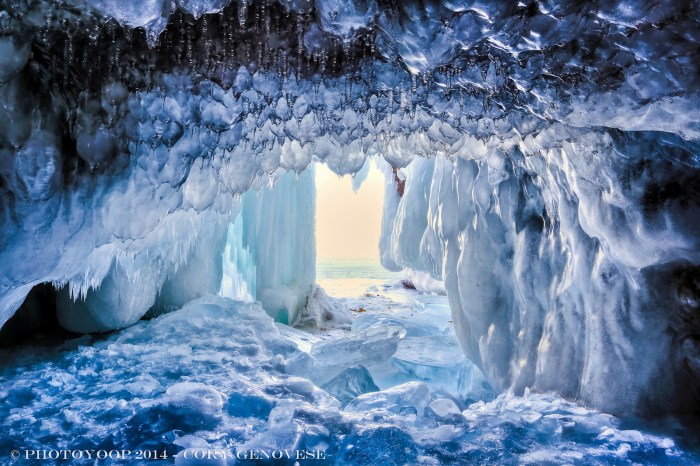
The Soul of the Yoop

The Soul of the Yoop

Soul of the Yoop, photo by Cory Genovese

While our Great Lakes shoreline still holds some cool formations this winter, unlike the last two years this winter hasn’t had the very cold days coupled with high winds that combine to form truly spectacular ice caves. Thankfully, we can look back … and hope for a wintry turn in the weather!

Cory took this photo of one of his favorite little Lake Superior ice caves in a spring thaw in April of 2014. View the photo bigger, see more in his Yoop Life slideshow, and definitely follow him on Facebook at PhotoYoop for more great shots of life on the edge in Michigan’s Upper Peninsula!

More ice caves on Michigan in Pictures, and please consider becoming a patron of Michigan in Pictures.

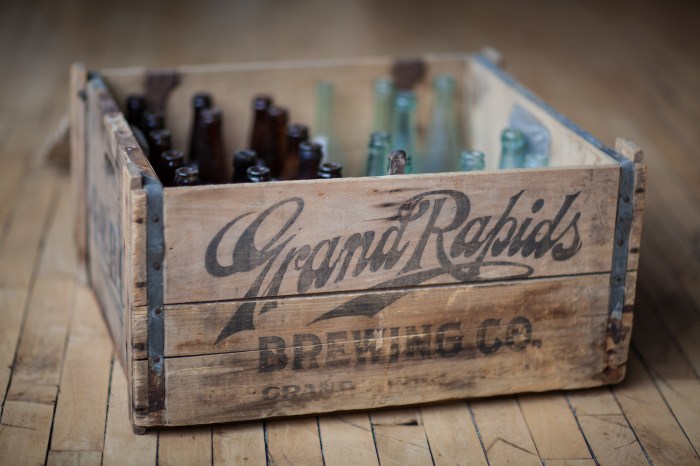
A toast to Beer City USA … and tourism in West Michigan

Grand Rapids Brewing Co

Beer City USA, photo by Rudy Malmquist

“Being Beer City USA has definitely helped out our business. We got a lot more tourist people than we did the first year. It’s unbelievable how many people you start talking to and they’re from out of town.
~Eric Karns, Elk Brewing

WZZM TV 13 reports that 2015 was “best year ever” for tourism in West Michigan, and folks are crediting local beer, the booming art scene, and the Pure Michigan campaign for the growth in tourism:

The year 2015 was a record-breaking year for tourism across West Michigan, which means more money into the local economy.

In 2014, 113 million visitors to Michigan generated $37.8 billion dollars — and tourism supported 326,000 jobs in the state. Now, newly released numbers show that 2015 was an even better year for attracting visitors to places like Grand Rapids and the Lakeshore.

Click for more about Grand Rapids’ Beer City nod along with information about GR Beer Week (February 17- 28) which includes the sure to sell out Grand Rapids Winter Beer Fest.

View Rudy’s photo background bigilicious and click for more of his beer photos.

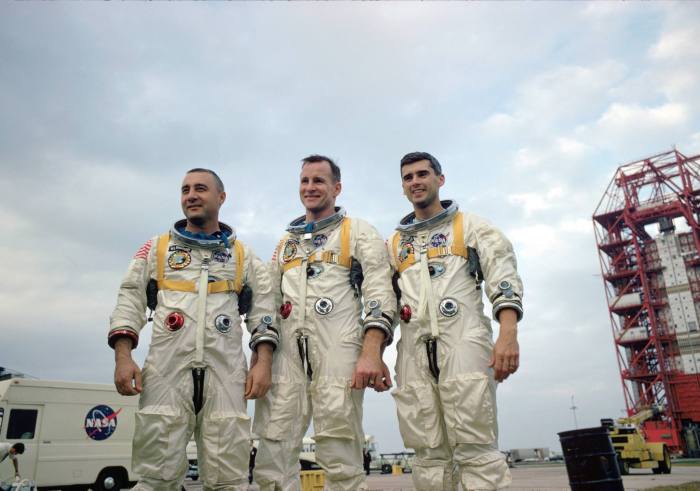
#TBT: Remembering the Crew of Apollo 1

Remembering the Crew of Apollo 1

Remembering the Crew of Apollo 1, photo by NASA

“You’ll be flying along some nights with a full moon. You’re up at 45,000 feet. Up there you can see it like you can’t see it down here. It’s just the big, bright, clear moon. You look up there and just say to yourself: I’ve got to get up there. I’ve just got to get one of those flights.”
-Roger Chaffee (The New York Times, January 29, 1967, p. 48.)

Thanks to longtime Michigan in Pictures contributor Rudy Malmquist for the find on this. By total coincidence, Rudy will be back tomorrow with a photo!!

The National Air & Space Museum at the Smithsonian shared this photo yesterday, saying:

Remembering the crew of Apollo 1. On January 27, 1967, astronauts Virgil I. “Gus” Grissom, Edward H. White II, and Roger B. Chaffee perished in a fire during a pre-launch test for what was to be the first crewed Apollo mission.

Rudy pointed out that Chaffee was from Grand Rapids, and you can read a very detailed biography on Roger B. Chaffee from NASA’s History Office.  Here’s a few choice bits about his early life … and here’s hoping that Michigan in Pictures readers can do their best to instill a love of service, science and following ones dreams in the young folk in their lives:

“On my honor, I will do my best…” are the first eight words of the Scout Oath for the Boy Scouts of America. Individually, the words are short and simple. Collectively, however, they speak volumes and serve to inspire millions of boys to strive for excellence. Lieutenant Commander Roger Bruce Chaffee was a Scout for whom the Oath was more than just mere words. He took the pledge to heart and accepted the challenge to fully live the words of the Oath. Whether he was meticulously hand crafting items from wood or training to be the youngest man ever to fly in space, Chaffee always did his best by putting one hundred percent of himself into the effort.

…Earlier in his career, Don Chaffee had been a barnstorming pilot who flew a Waco 10 biplane. He was a regular sight at fairgrounds and made a bit of extra money on the side by transporting passengers. He also piloted planes for parachute jumpers. Later, Don worked for Army Ordnance in Greenville and in 1942, he was transferred to the Doehler-Jarvis plant in Grand Rapids, Michigan where he served as Chief Inspector of Army Ordnance.

Don shared his love of flying with his son and at the age of seven, Roger enjoyed his first ride in an airplane when the family went on a short excursion over Lake Michigan. Although it was a relatively brief flight, Roger was absolutely thrilled. To satisfy his continued interested in planes, Don set up a card table in the living room where he and Roger would create model airplanes piece by piece. By the time he was nine, Roger would point to a plane flying overhead and predict, “I’ll be up there flying in one of those someday”.

…By the time Roger was fourteen, he had developed an interest in electronics engineering and tinkered with various radio projects in his spare time. In high school, he received excellent grades and maintained a 92 average. Vocational tests showed that Roger’s strongest abilities were in the area of science. He also scored high mechanically and artistically. Mathematics and science were his favorite subjects, with chemistry being particularly appealing. Once the family switched to a gas heating system, Roger transformed the outdated coal bin area into his own private workshop where he spent countless hours experimenting with his chemistry set. By the time he was a junior in high school, he was leaning toward a career as a nuclear physicist. As a senior, he established a lofty goal for himself: he wanted to someday have his name written in history books. Before the world’s super powers took their first halting steps into space, Roger Chaffee had shared his dream of being the first man on the moon with his closest friends.

Here’s an article about the fire, and if you’re in Grand Rapids, check out the Roger B Chaffee Planetarium at the Grand Rapids Museum.

A fond farewell to Michigan Radio’s Tamar Charney and the importance of local news

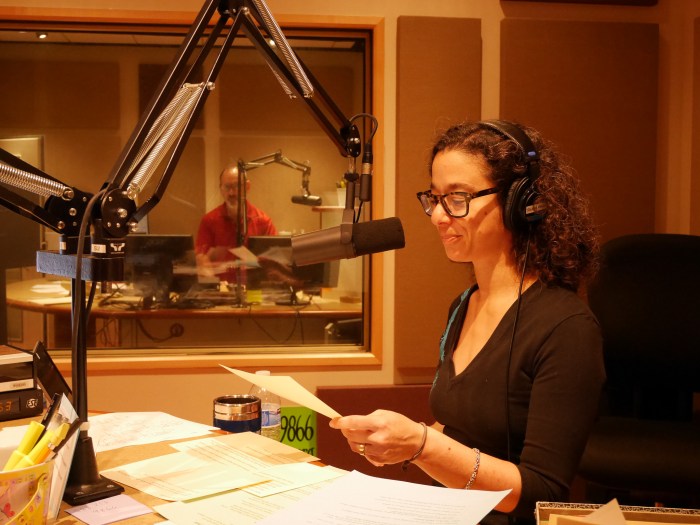
Tamar Charney On the Mic

On the mic, everyone pitches in, photo by Michigan Radio

“I’ve heard many people dismiss local news as parochial ‘not in my backyard’ disputes or worse, merely coverage of the latest house fires. But there are many local stories that should, and do, become national and even international news when they are told right.
~Tamar Charney, Michigan Radio

I’ve been telling the stories of Michigan for over a decade, and one person who’s always been there digging deeper on the stories of our state that matter is Michigan Radio’s Tamar Charney. No longer, as she announced that she’s moving on to work for NPR One. Her column A farewell reflection on Flint, local news, and Michigan Radio tells why she believes that local news still matters:

…The water crisis in Flint is an example.

Michigan Radio reporters have been toiling away on this story for months. It’s taken a while for it to get traction as revelation after damning revelation came out. But eventually this ‘local’ Flint story has become international news. The problems with the drinking water have roots in racism, poverty, failures of government oversight, and our country’s aging infrastructure. These are problems shared by communities all across the nation. It’s an incident that taps into our fears about the safety of our water and of our children. It calls into question whether we can trust our government.

We look down our noses at developing countries with unsafe water. We scoff at places weighed down by corrupt and incompetent governments. We pride ourselves on our American technological know how. But here is a city, right here in the US of A, where you can’t drink the water, where government failed the people, and the technical knowledge about how to keep lead out of the water wasn’t employed.

Telling this kind of story is what Michigan Radio does. It is what local news can and should be.

There’s all kinds of cynicism about journalists. But I have to tell you, the journalists at Michigan Radio are some of the most idealistic kind hearted people I know. They got in the business because they think the world will be a better place and our democracy will work better when citizens have information. These are people committed to finding out the truth and getting answers. It saddens me that society undervalues the work journalists do and even worse, blames them for causing the problems they cover.

The Flint water problems were being swept under the rug and nothing might have been done if it weren’t for a mom, a researcher, a pediatrician, and yes, reporters. It’s a story I’m proud to say Michigan Radio has been at the forefront of telling.

In this era of vanishing local journalism, it’s good to have people like Tamar and outlets like Michigan Radio still working hard. I urge you to consider a donation to Michigan Radio.

View this photo of Tamar bigger and see more in Michigan Radio’s A Day in the Life of a Pledge Drive slideshow. You can share your photos in the Michigan Radio Photo Group as well!