A fond farewell to Michigan Radio’s Tamar Charney and the importance of local news

Tamar Charney On the Mic

On the mic, everyone pitches in, photo by Michigan Radio

“I’ve heard many people dismiss local news as parochial ‘not in my backyard’ disputes or worse, merely coverage of the latest house fires. But there are many local stories that should, and do, become national and even international news when they are told right.
~Tamar Charney, Michigan Radio

I’ve been telling the stories of Michigan for over a decade, and one person who’s always been there digging deeper on the stories of our state that matter is Michigan Radio’s Tamar Charney. No longer, as she announced that she’s moving on to work for NPR One. Her column A farewell reflection on Flint, local news, and Michigan Radio tells why she believes that local news still matters:

…The water crisis in Flint is an example.

Michigan Radio reporters have been toiling away on this story for months. It’s taken a while for it to get traction as revelation after damning revelation came out. But eventually this ‘local’ Flint story has become international news. The problems with the drinking water have roots in racism, poverty, failures of government oversight, and our country’s aging infrastructure. These are problems shared by communities all across the nation. It’s an incident that taps into our fears about the safety of our water and of our children. It calls into question whether we can trust our government.

We look down our noses at developing countries with unsafe water. We scoff at places weighed down by corrupt and incompetent governments. We pride ourselves on our American technological know how. But here is a city, right here in the US of A, where you can’t drink the water, where government failed the people, and the technical knowledge about how to keep lead out of the water wasn’t employed.

Telling this kind of story is what Michigan Radio does. It is what local news can and should be.

There’s all kinds of cynicism about journalists. But I have to tell you, the journalists at Michigan Radio are some of the most idealistic kind hearted people I know. They got in the business because they think the world will be a better place and our democracy will work better when citizens have information. These are people committed to finding out the truth and getting answers. It saddens me that society undervalues the work journalists do and even worse, blames them for causing the problems they cover.

The Flint water problems were being swept under the rug and nothing might have been done if it weren’t for a mom, a researcher, a pediatrician, and yes, reporters. It’s a story I’m proud to say Michigan Radio has been at the forefront of telling.

In this era of vanishing local journalism, it’s good to have people like Tamar and outlets like Michigan Radio still working hard. I urge you to consider a donation to Michigan Radio.

View this photo of Tamar bigger and see more in Michigan Radio’s A Day in the Life of a Pledge Drive slideshow. You can share your photos in the Michigan Radio Photo Group as well!
Remembering the Michigan Blizzard of 1978

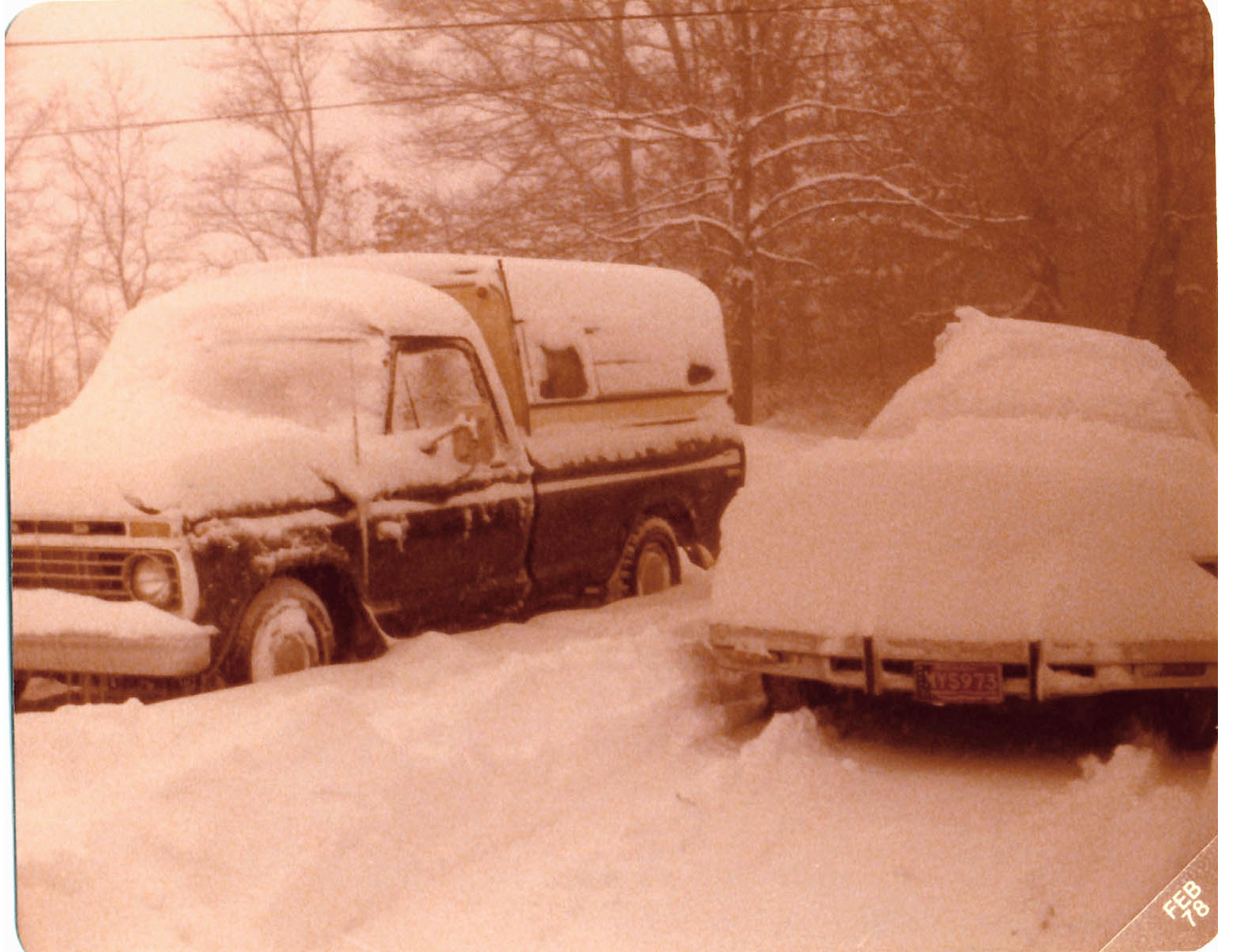
Michigan Blizzard 1978

Blizzard of ’78 – Somerset, MI, photo by Bill

The most extensive and very nearly the most severe blizzard in Michigan history raged January 26, 1978 and into part of Friday January 27. About 20 people died as a direct or indirect result of the storm, most due to heart attacks or traffic accidents. At least one person died of exposure in a stranded automobile. Many were hospitalized for exposure, mostly from homes that lost power and heat. About 100,000 cars were abandoned on Michigan highways, most of them in the southeast part of the state.
~C. R. Snider, National Weather Service Meteorologist in Ann Arbor, Michigan

Today is Michigan’s 179th birthday, but it’s also the anniversary of one of the most significant storms to ever hit the state, the Great Blizzard of 1978. William Deedler’s article A Great Storm is Upon Michigan says in part:

While there are several contenders for the worst blizzard ever to hit the Great Lakes in relatively modern times (since 1870 when records began in Detroit), the immense and intense Blizzard of January 26-27th 1978 must rank at or near the top along with the Great White Hurricane of 1913 (my link) with its similar track and powerfulness.

…As the Arctic air circulated throughout the storm while it made its way over Lake Huron, the lowest pressure was reached around 950 millibars or a hurricane-like 28.05 inches! “A Great Storm is Upon Michigan” read the headline of the 800 AM EST Special Weather Statement issued by the National Weather Service Forecast Office in Ann Arbor that Thursday /26th/ morning. Heavy snow and blizzard conditions were extensive as wind gusts in excess of 35 mph whipped the snow into huge drifts across much of Southeast Lower Michigan. Other areas of Eastern Michigan, Indiana and Ohio reported near hurricane-force winds, heavy snow and temperatures hovering between zero and 10 above, resulting in extreme blizzard conditions. These conditions later expanded further east into Pennsylvania and West Virginia and prevailed into the night (26-27th) across much of the Eastern Great Lakes, Southern Ontario and the Upper Ohio Valley. With the storm generating copious amounts of snow and very strong winds, whiteout conditions were widespread. All land and air traffic came to a stand still in the affected regions. Several major roads were closed for at least two to three days, if not longer, while clean up got underway. Numerous NWS employees were stranded at work, home, or on the road somewhere between the two. Several employees worked double shifts into at least Friday (some longer) because of the impassable roads with others simply unable to get to work.

The Blizzard Warnings were allowed to die across Michigan during the forenoon hours of Friday, the 27th. Record 24 hour snowfall totals from the storm included, 16.1 inches at Grand Rapids, 15.4 inches at Houghton Lake and 12.2 at Dayton, OH. Snowfalls for the entire storm (25-27th) included a whopping 30.0 inches at Muskegon (some of which was Lake Michigan enhanced), 19.3 inches at Lansing and 19.2 at Grand Rapids. Snowfalls were less over Southeast Lower Michigan (mainly because of the rain that fell for a period) and included 9.9 inches at Flint and 8.2 inches at Detroit.

Read on for more about the storm.

View Bill’s photo background big and see more in his Kelso: The Wonder Years slideshow.

Support Michigan in Pictures with Patreon


Baltimore River Ice Curtains

Ice Curtains on the Baltimore River

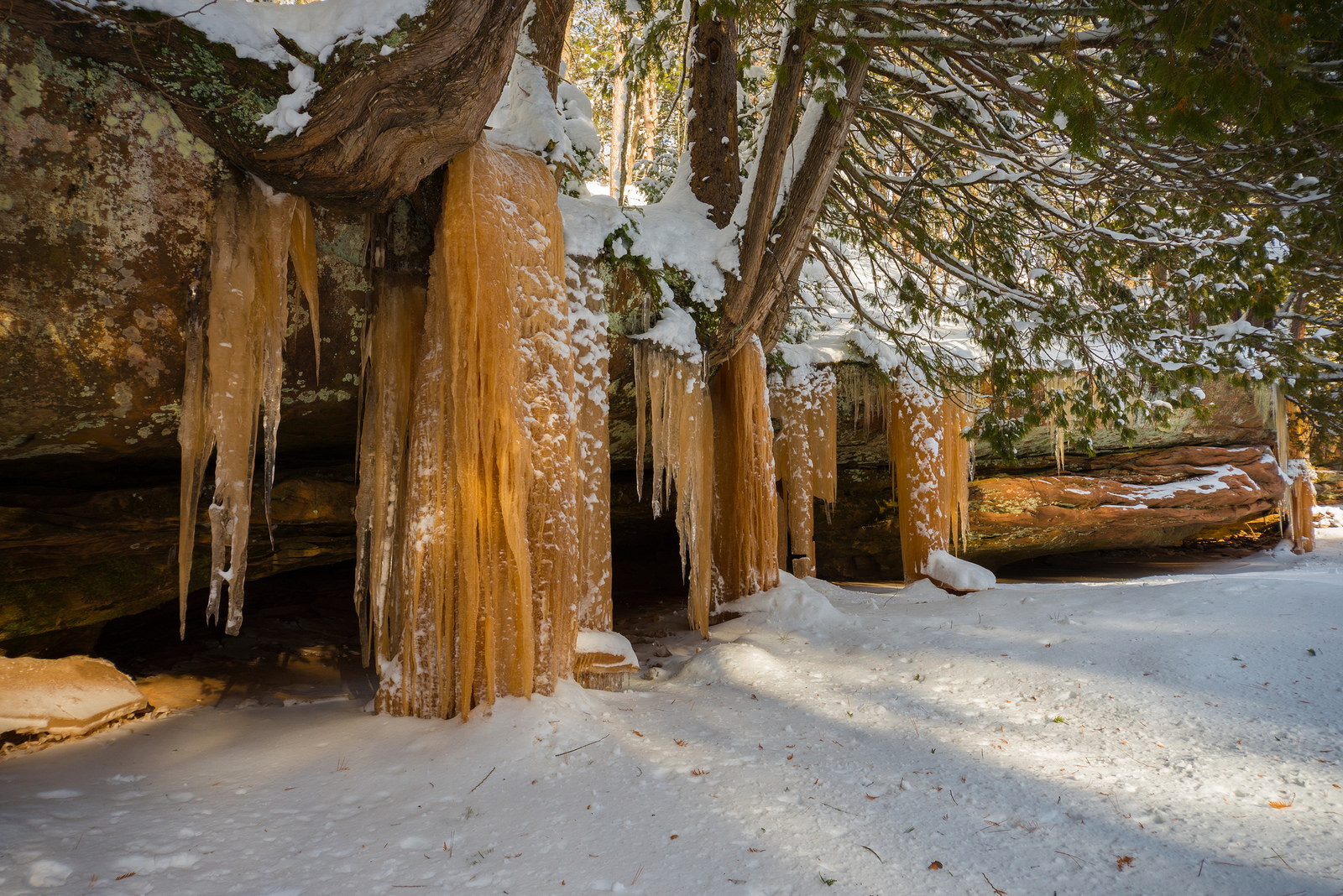
Baltimore River Ice Curtains, photo by Eric Hackney

Eric took this photo on the Baltimore River, just upriver from O Kun De Kun Falls. Although it takes place about 6 miles away in Munising, this is a good opportunity to remind you about the upcoming Michigan Ice Fest (Feb 10-14, 2016). Climbers & climbing enthusiasts from around the world converge to climb, socialize and learn about this winter sport. There’s plenty of fun for newbies too including guided climbs!

View his photo bigger, check out more in his Ontanogon County Adventures III slideshow, and follow Eric Hackney Photography on Facebook.

More about O Kun De Kun Falls on Michigan in Pictures.

Point Betsie Lighthouse: Ice Station Zebra Edition

Point Betsie Lighthouse- Ice Station Zebra Edition

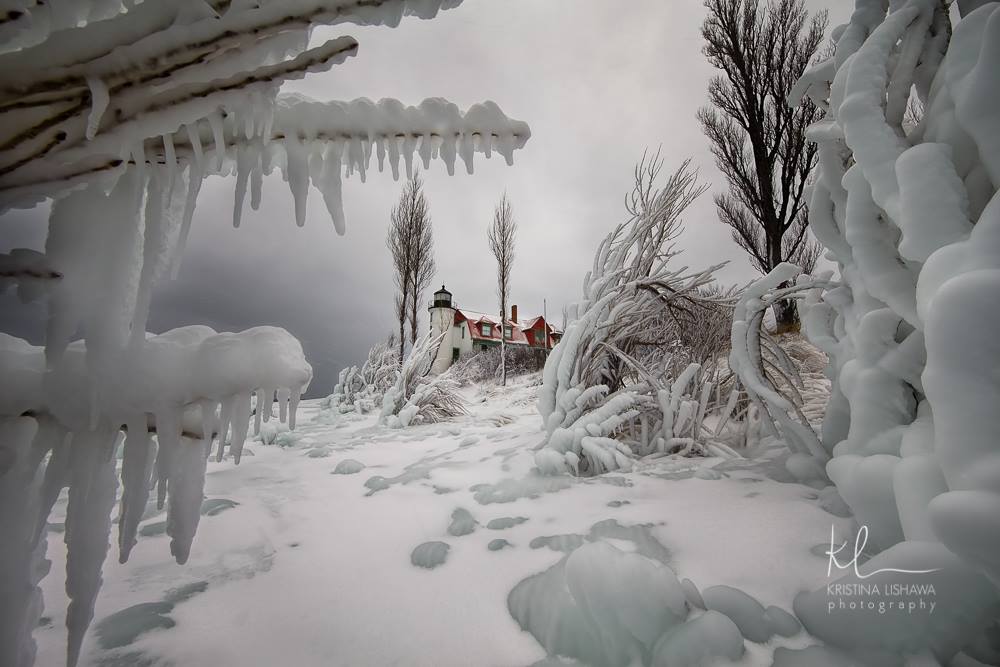
Enchanted Point Betsie, photo by Kristina Lishawa

The winds howl, the snow falls, and the waves crash, yet Betsie stands more beautiful and enchanting than ever. ~Kristina Lishawa

View Kristina’s photo bigger and be sure to follow her at Kristina Lishawa Photography on Facebook!

More about Point Betsie Lighthouse (with another cool winter view) on Michigan in Pictures.

Niciclez

Nicicles

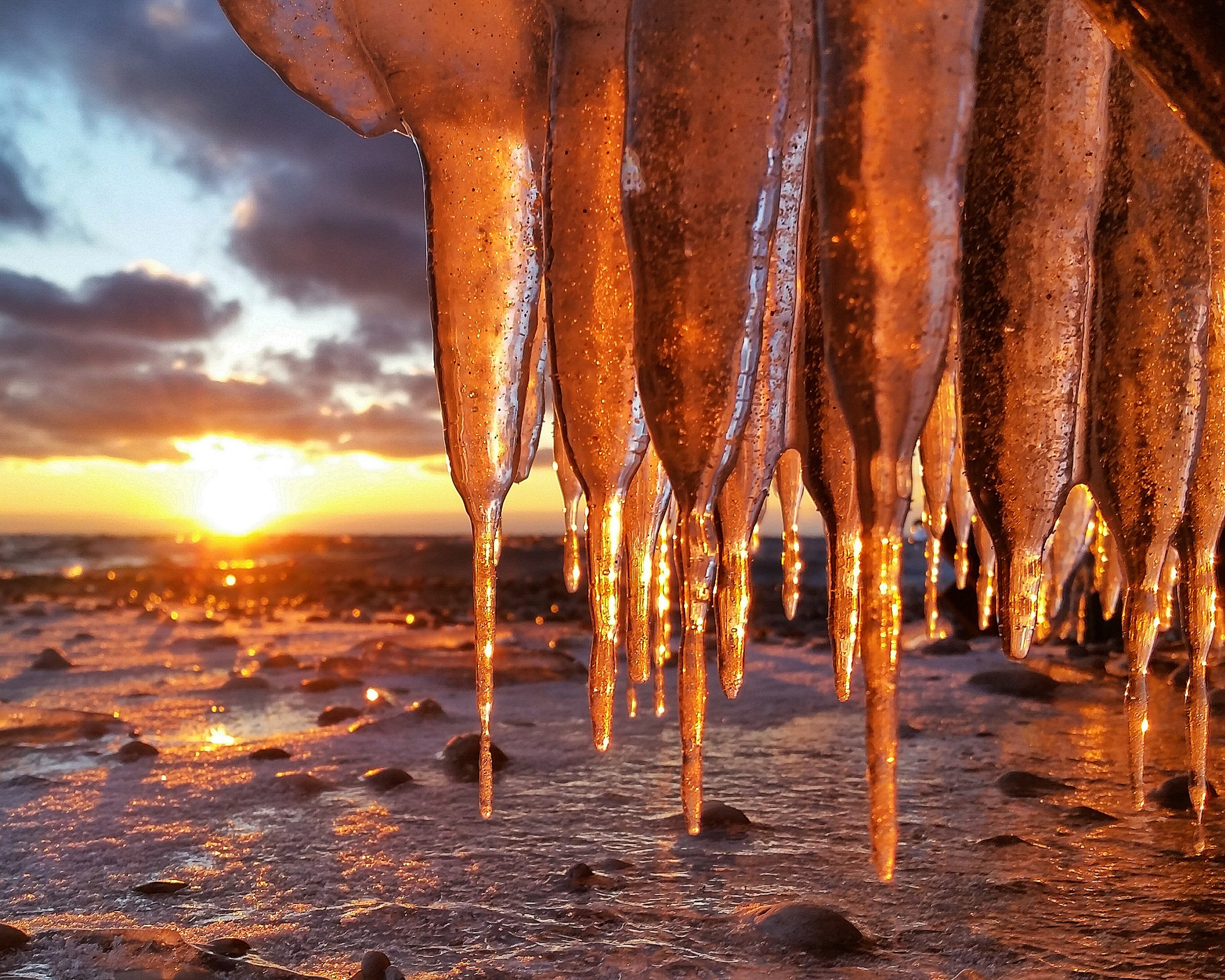
Niciclez, photo by Noah Soreson

Beautiful scene on the Lake Michigan shore. Here’s hoping you have a chance to get out there and have some fun this weekend!

View Noah’s photo background bigilicious, see more in his slideshow. and be sure to follow him on Instagram.

More winter wallpaper on Michigan in Pictures.

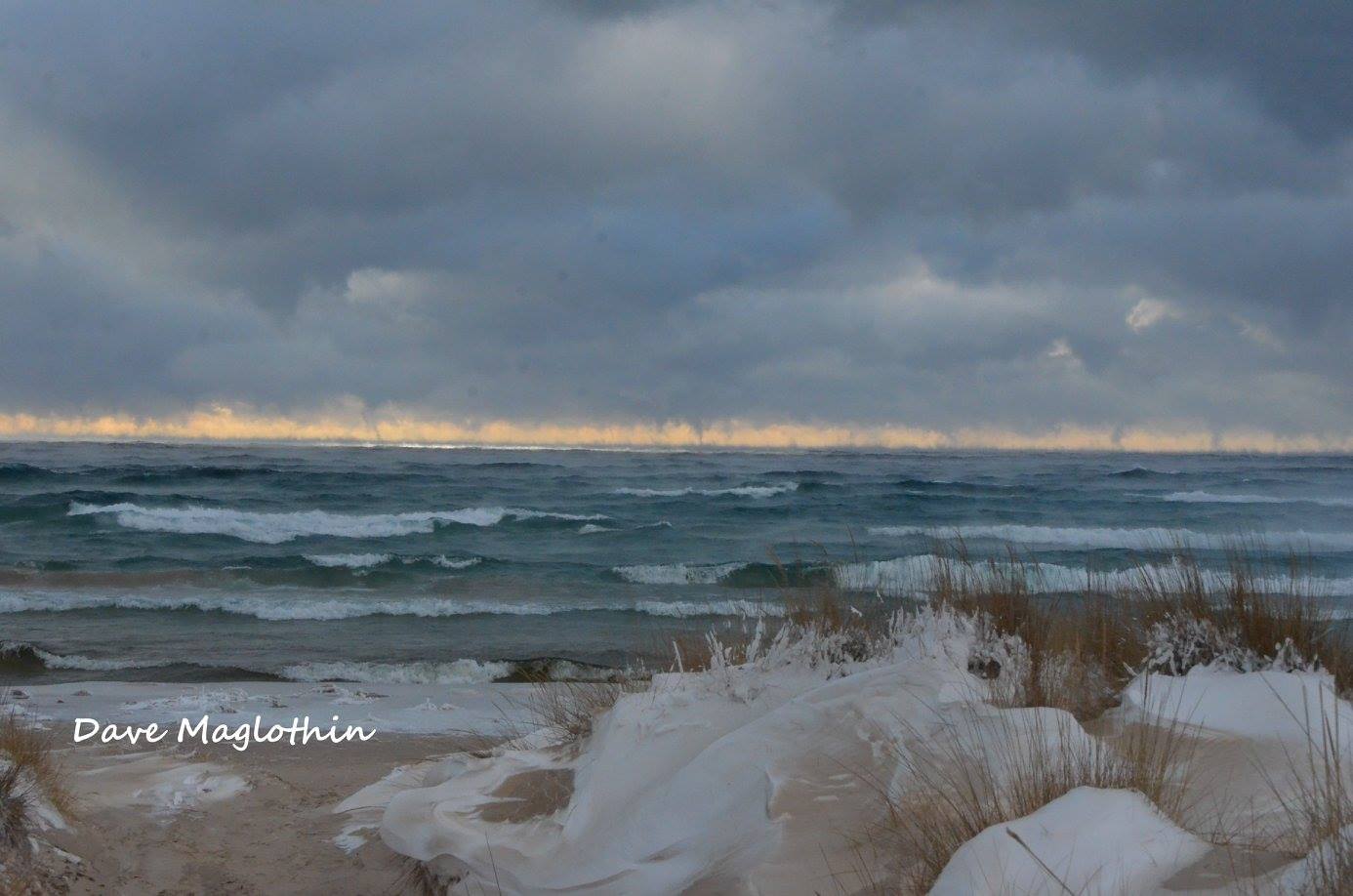
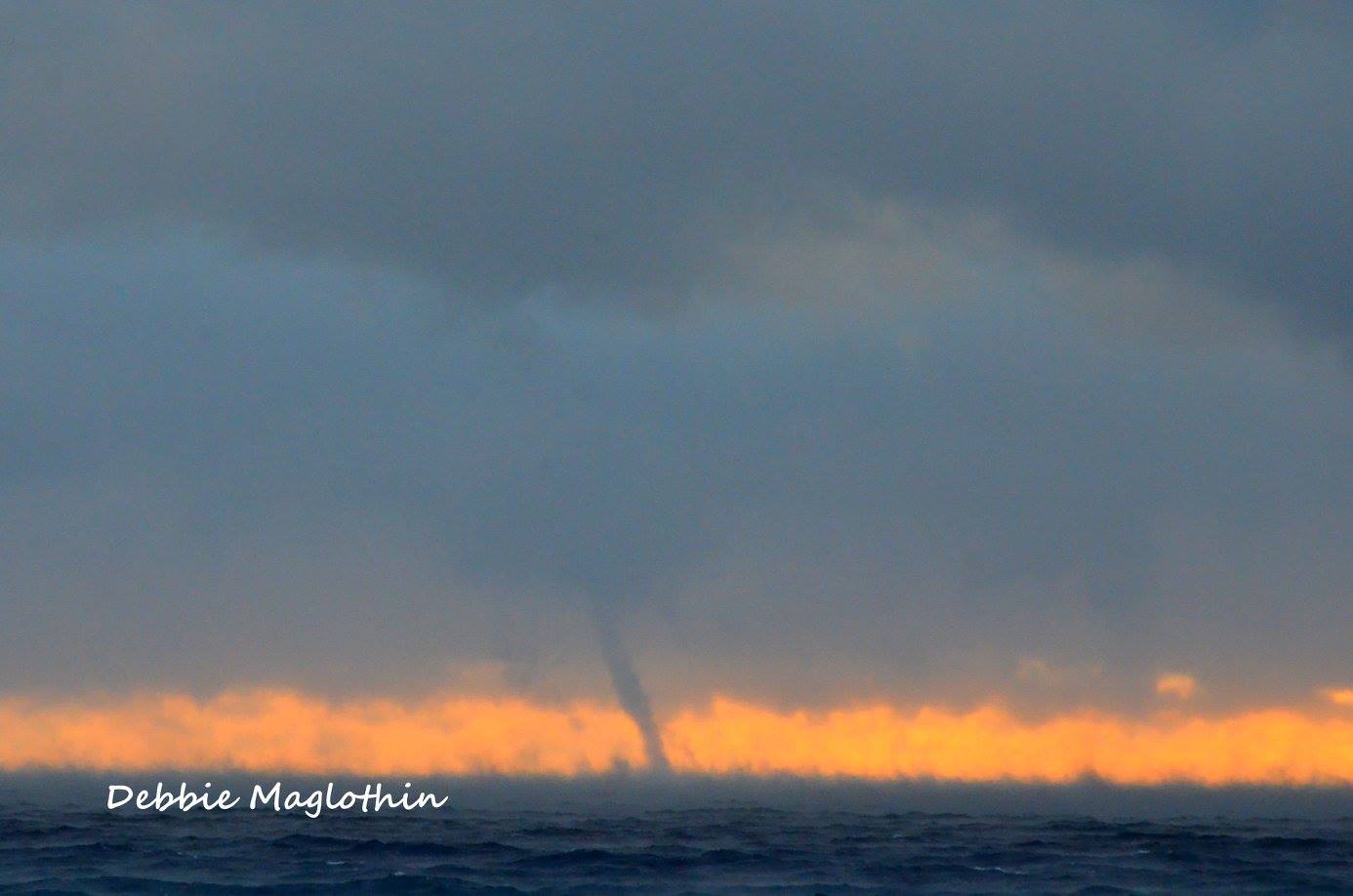
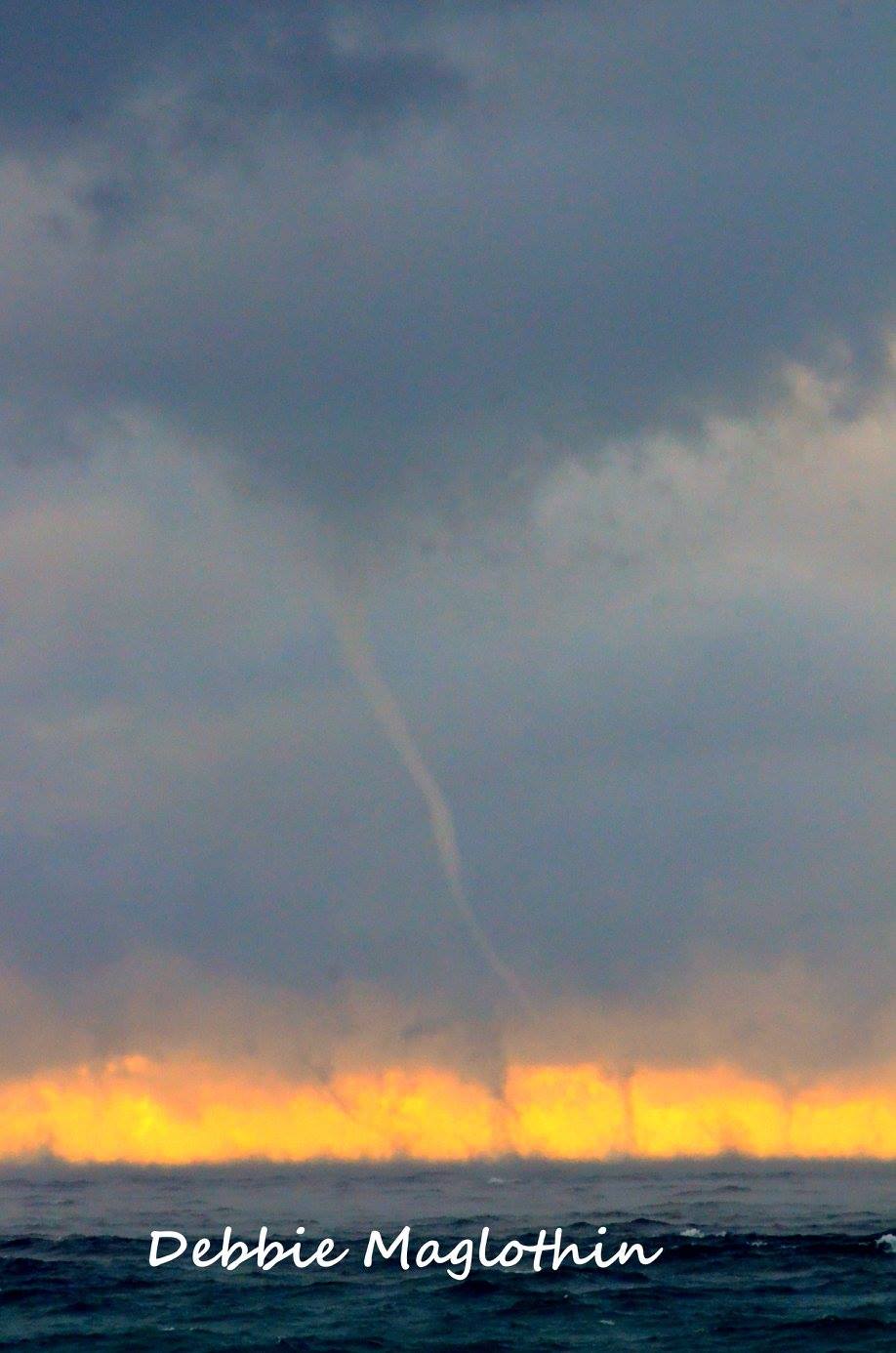
Cold Air Waterspouts

Cold Air Funnel Cloud III

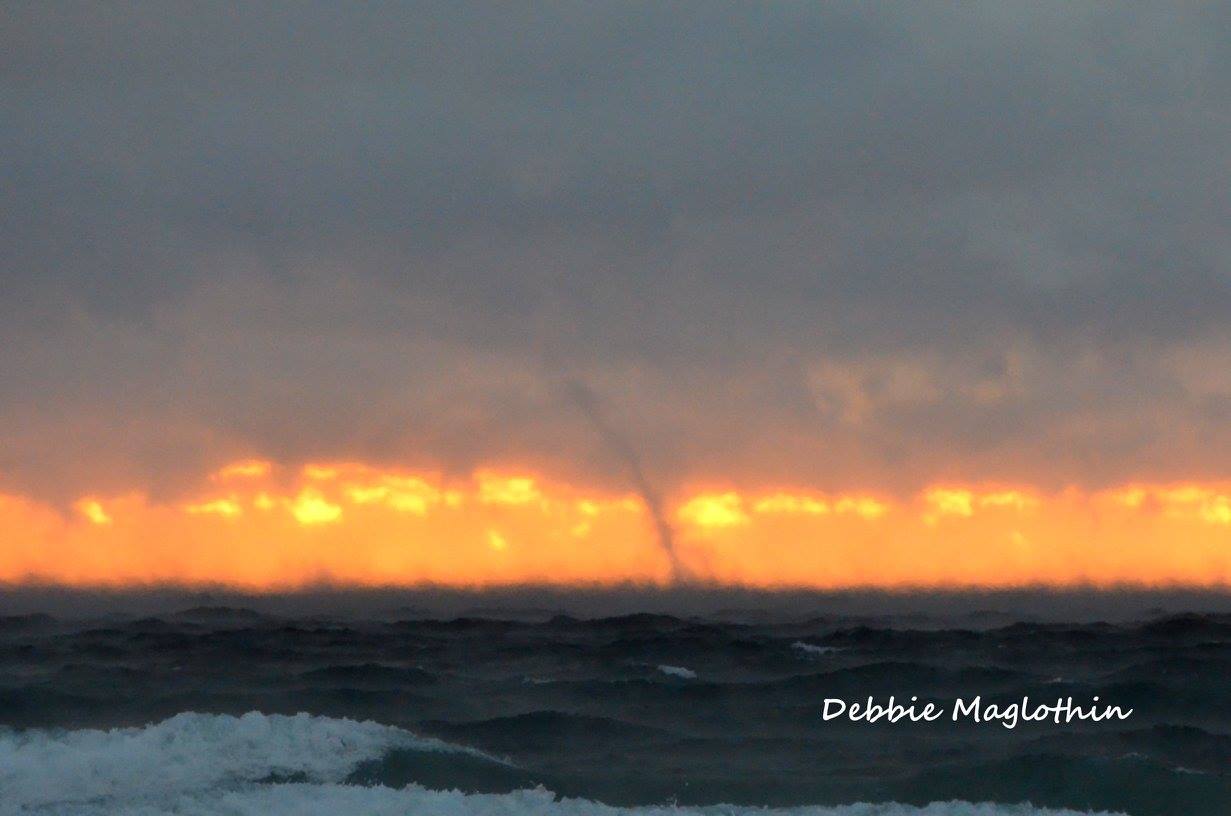
Cold Air Waterspouts, photos by Debbie Maglothin

If you live along the Great Lakes, chances are you’ve seen a waterspout from time to time. While waterspouts are typically formed when cold air moves over warm water in late summer or early fall, occasionally the reverse can happen.

Debbie Maglothin took several photos of cold air waterspouts over Lake Michigan off the Ludington State Park beach. WZZM 13 meteorologist Alana Nehring explains how they form:

A drastic temperature difference between the air an water is required. In the most recent event, water temperatures were near 32 degrees while air temperatures were closer to 10 degrees.

A steady breeze needs to be present to jump-start the process of evaporation.

In most cases, this is also how lake-effect snow is produced but in some unique situations, a slight twisting motion will occur in the steam above the water. If it is maintained long enough, eventually weak funnels will develop.

Click the pics to view them bigger and follow Debbie on Facebook at Cha Bella Photography.

Cold Air Funnel Cloud II Cold Air Funnel Cloud

More Michigan weather on Michigan in Pictures.

January 20, 1985: The Michigan Moose Lift

Upper Peninsula of Michigan moose

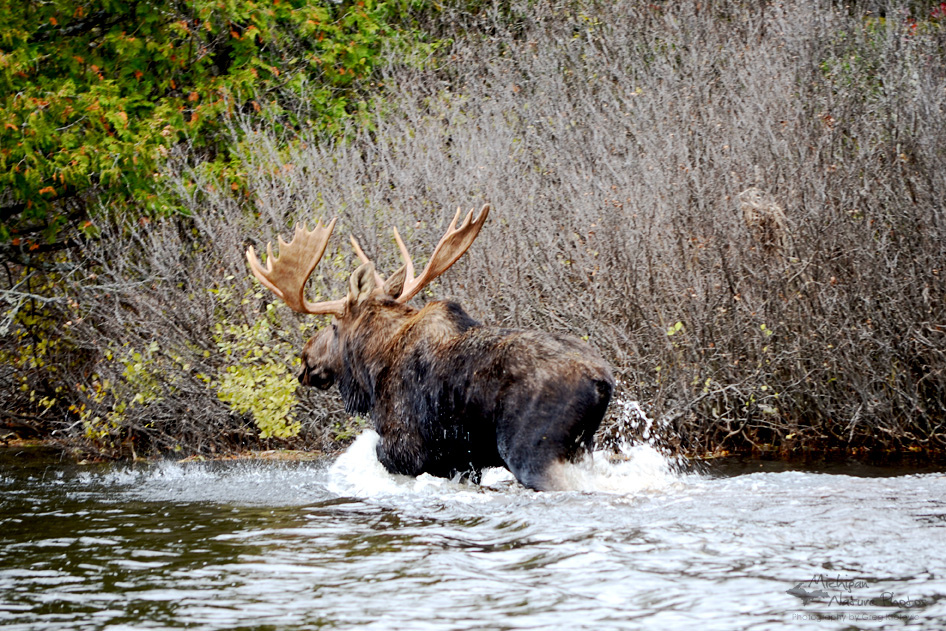
Upper Peninsula of Michigan moose, photo by Greg Kretovic

Every so often, something I have featured on Michigan in Pictures will vanish from the internet, leaving whatever I shared as the only remaining source. Such is the case with one of my favorite modern Michigan stories, The Michigan Moose Lift of January 20, 1985. Click that link to read about this historic operation that relocated 59 moose from the Algonquin Provincial Park in Ontario and led to the re-establishment of moose in Michigan’s Upper Peninsula – somewhere north of 400 at last estimate*.

Here’s a very cool video from the DNR that does a great job of telling the story. Enjoy!

Greg took this photo of a large bull moose exploring the shoreline of an inland lake in Baraga County in October of 2012. View his photo bigger, see more in his slideshow, and definitely follow him at Michigan Nature Photos on Facebook.

* From the Detroit Free Press article on the latest biennial survey of Michigan’s moose population:

The latest biennial survey by the Department of Natural Resources produced an estimate of 323 moose in their primary Michigan range, which includes Baraga, Iron and Marquette counties. If correct, that would be a decline there of about 28 percent from 2013, when the estimate was 451.

Chad Stewart, a deer, elk and moose management specialist with the DNR, said the population could have held steady since the 2013 count but that the findings, including a decrease in the number of calves spotted with adult females, suggest a decline is the likelier scenario.

It is “quite possible that we’re looking at a considerable drop in numbers,” Stewart said Monday.

A smaller moose herd wanders the eastern U.P. Biologists have long estimated their number at around 100.

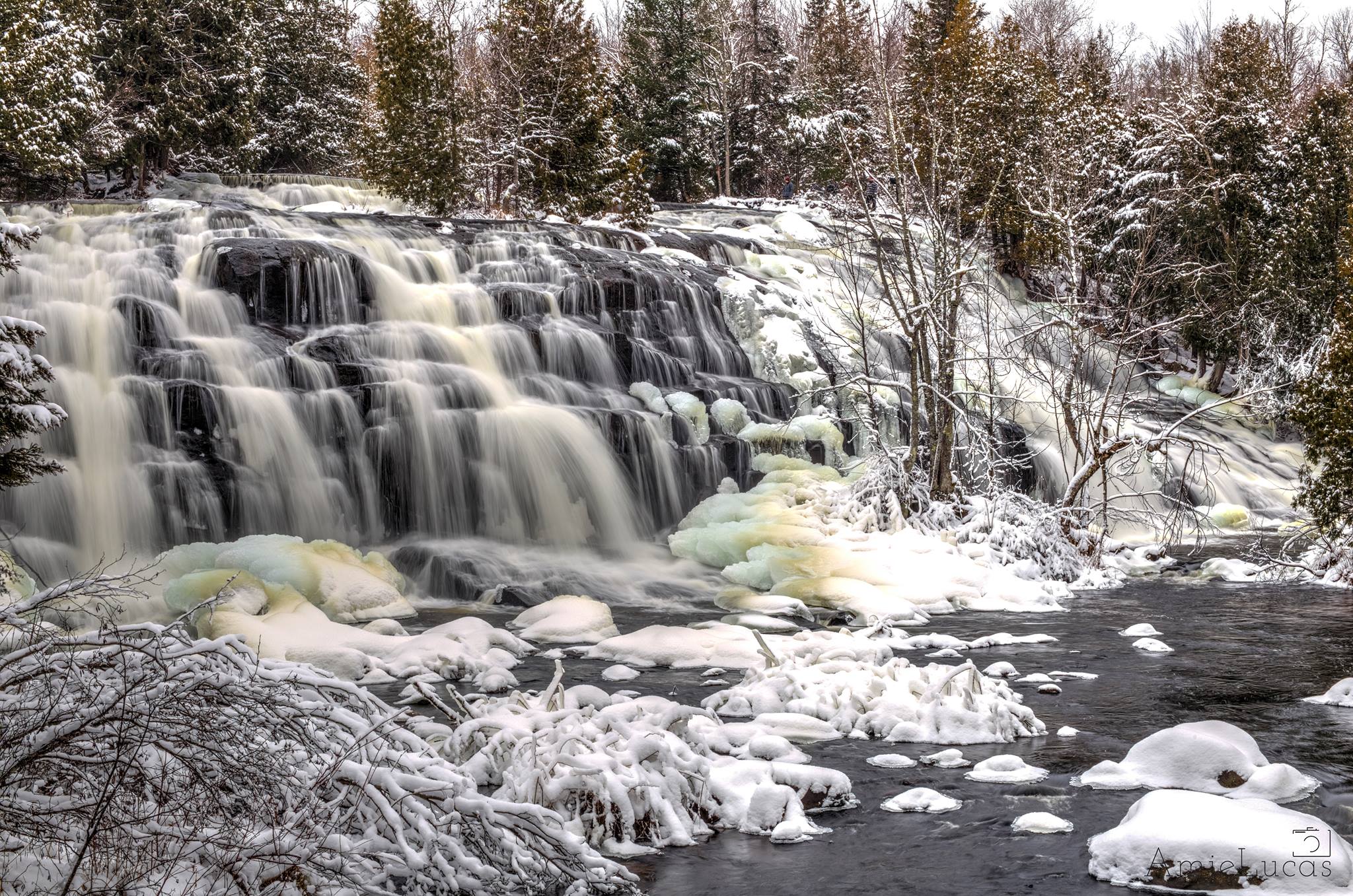
Winter at Bond Falls

Winter at Bond Falls

Winter at Bond Falls, photo by Aime Lucas Photography

The Bond Falls entry at GoWaterfalling.com says:

Bond Falls is in the western U.P. on Bond Falls Rd, east of Pauding MI. This is the most impressive waterfall in Michigan with the possible exception of Tahquamenon Falls. The main drop is 40 feet high and 100+ feet wide. Above the main falls are a series of cascades and rapids that must drop a total of 20 feet.

The water level is controlled by a dam, and a steady flow over the falls is maintained for scenic reasons. Of course during the spring melt the flow is much higher.

Bond Fall is a Michigan State Scenic Site. The site was renovated around 2003. The old parking area was upstream of the falls, and a steep concrete stairway led to the base of the falls. The new parking area is near the base of the falls, and a level boardwalk leads you to prime views of the falls.

Read on for more including directions to the falls.

Aime writes: The majestic Bond Falls. Normally a short, easy walk but in the winter a very hazardous one. The steep steps were covered with a few layers of ice and the path was extremely slippery. It was totally worth it.

View her photo bigger, follow her on Facebook, and purchase prints and see more work on her website!

Many more Michigan waterfalls on Michigan in Pictures.

Support Michigan in Pictures with Patreon

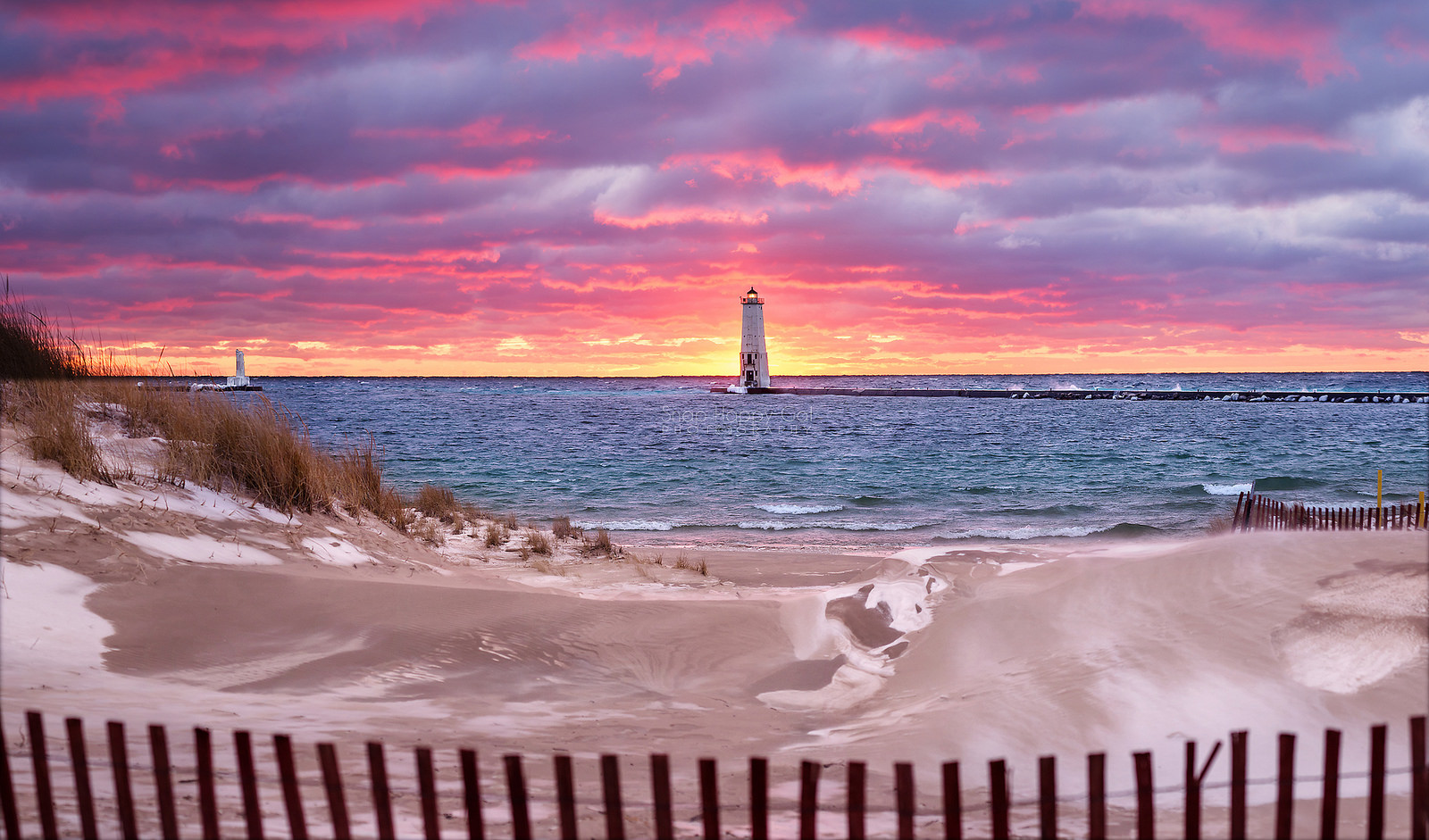
Promise Fulfilled

Promise Fulfilled

Promise Fulfilled, photo by Heather Higham

Although I just featured a sunset photo by Heather … Wow!

She took this last night and writes: A break at the horizon that spouted god rays all afternoon hinted a the potential for a lightshow at sundown. We were not disappointed, though we were very cold.

View the photo bigger, see more in her Sunsets slideshow, and follow Heather at Snap Happy Gal Photography on Facebook.

Click for more about the Frankfort Pier Lights and a super cool winter photo by Jason Lome.


Pistons Ringing the Bell for Big Ben Wallace tonight!

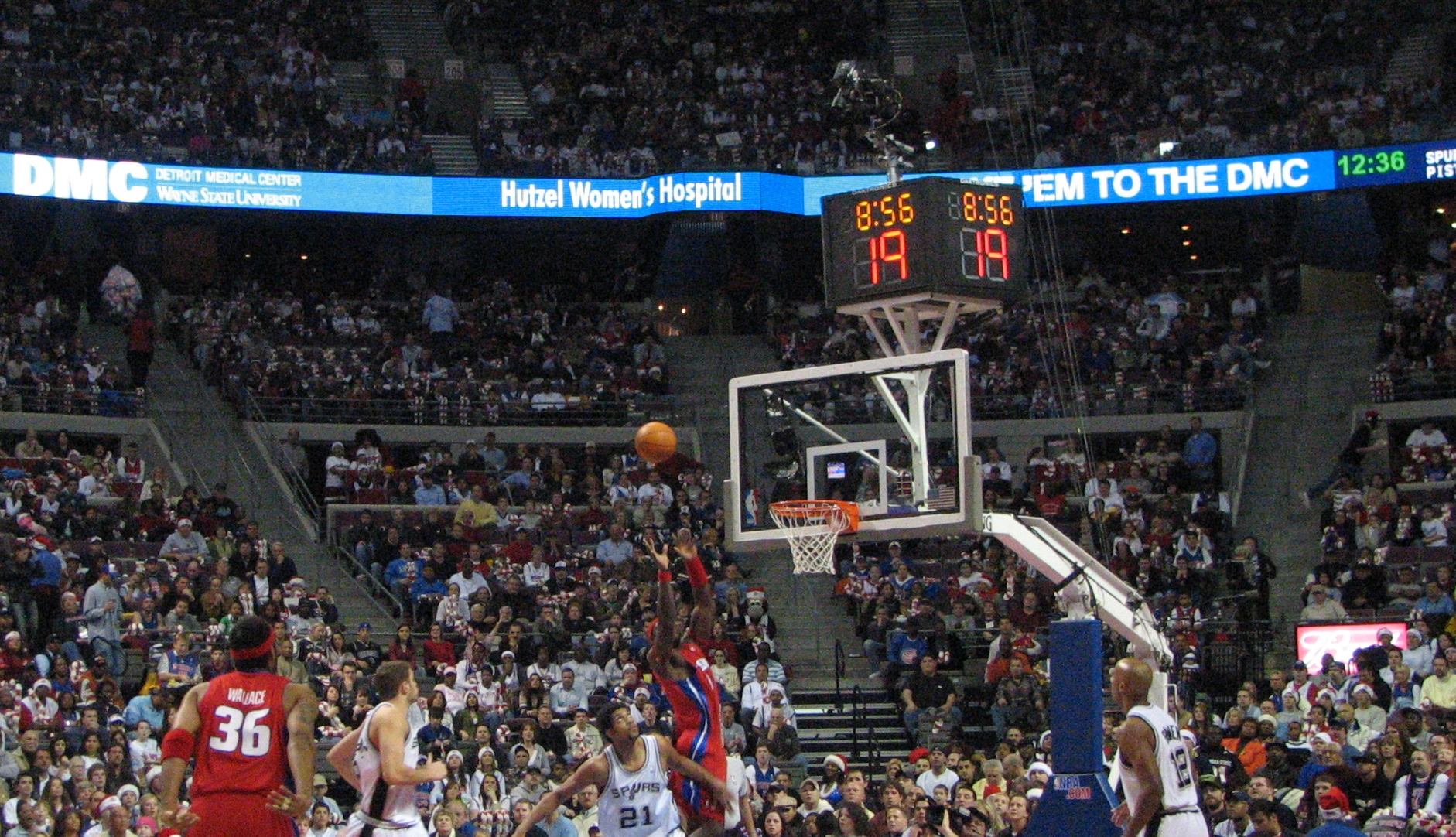
Rasheed Wallace to Ben Wallace Alley Oop

Alley Oop, photo by Dave Hogg

In 2016, the Detroit Pistons are retiring the jerseys for Piston greats Ben Wallace (#3) and Chauncey Billups (#1). Big Ben Wallace kicks it off tonight with Rip Hamilton and Chauncey on hand.

Wallace, acquired by Detroit from the Orlando Magic in 2000, spent nine seasons with the Pistons collecting NBA Defensive Player of the Year honors four times (2002, 2003, 2005, 2006) and was named a NBA All-Star four times (2003-06). Wallace was an All-NBA Second Team selection three times (2003, 2004, 2006), All-NBA Third Team selection twice (2002 and 2005) and an NBA All-Defensive First Team selection five times (2002, 2003, 2004, 2005 and 2006). During his first stint with Detroit (2000-06), the Pistons made the playoffs in five of the seven years, winning Eastern Conference Championships in 2004 and 2005 and the NBA Championship in 2004. Wallace is the franchise’s all-time leader in regular-season and playoff blocks (1,486 and 215, respectively) and ranks first among Pistons’ all-time playoff leaders in rebounds (1,237). He holds franchise single-game records for blocks in a game (10 – twice), defensive rebounds in a quarter (10) and blocks in a quarter (6). In 655 games with the Pistons, Wallace averaged 6.6 points, 11.1 rebounds, 2.3 blocks, 1.4 steals and 1.5 assists in 32.6 minutes per game.

“We celebrated many great accomplishments during my years in Detroit and to be recognized for my contributions in this way, I’m honored,” said Wallace. “I look forward to sharing this experience with all the fans who supported me throughout my years as a Piston.”

Wallace, a 6’9″, 240-pound center went undrafted in the 1996 NBA Draft and spent time with Washington, Orlando, Detroit, Chicago and Cleveland. Wallace recorded 10,482 rebounds during his career, becoming one of only 37 players and the only undrafted player (Moses Malone was drafted in the 1974 American Basketball Association Draft by the Portland Trail Blazers in the ABA Dispersal Draft in 1976) in NBA history to record 10,000 rebounds. He is also one of only 10 players in NBA history to record 10,000 rebounds and 2,000 blocks and is the shortest player at 6’9″ to record 2,000 career blocks. Overall, in 1,088 career NBA games, Wallace averaged 5.7 points, 9.6 rebounds, 2.0 blocks, 1.3 steals and 1.3 assists in 29.5 minutes per game.

View Dave’s photo of a (Rasheed) Wallace to Wallace alley oop from Christmas Day, 2005 big as Big Ben and click for more of his Detroit Pistons photos.

More Detroit Pistons on Michigan in Pictures.

PS: Here’s a bonus photo by Dave that previously appeared on Michigan in Pictures because it’s so awesome.

Pistons_starting_5