Flower Friday: Yellow Lady’s Slippers

Yikes! I got the link for the Michigan Wildflowers database wrong!

Yellow Slippers

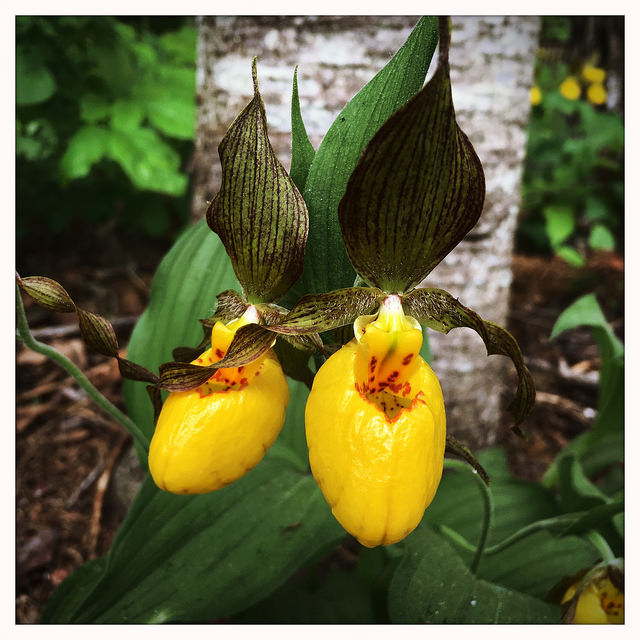
Yellow Lady’s Slippers, photo by Rick Lanting

While I was gathering info for today’s post I came across a really cool resource! MichiganWildflowers.com michwildflowers.com is an online photo database of Michigan’s wildflowers curated by Charles and Diane Peirce that lists 545 Michigan wildflowers and lets you (very quickly) click among them. With multiple photos for each wildflower, it’s pretty darn useful.

The Ladybird Johnson Wildflower Center says that the Yellow Lady’s-slipper Orchid (Cypripedium parviflorum):

…is easily distinguished from others by its large yellow lip, or slipper. It grows up to 2 feet tall and has large, strongly veined leaves 6–8 inches long and half as wide. It has a flower, sometimes 2, at the end of the stem, cream-colored to golden-yellow. Flowers have 3 sepals, greenish-yellow to brownish-purple, the upper sepal larger, usually erect, and hanging over the blossom.

Rick took this photo last weekend at Mill Creek State Park using the Hipstamatic app. View it bigger and see more in his Michigan wildflowers slideshow.

Know Your Michigan Fish: Northern Pike (Esox lucius)

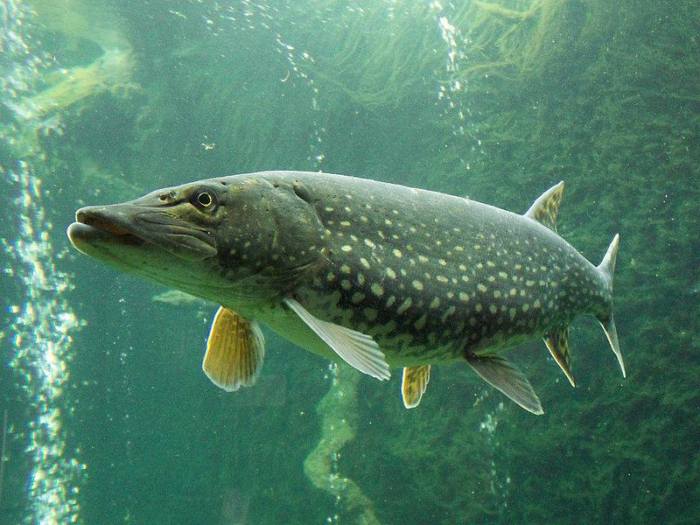
Michigan Northern Pike Esox lucius

Northern Pike (Esox lucius), photo by Isle Royale National Park

The Michigan DNR’s Northern Pike page has this to say about this apex predator of the Great Lakes and Michigan’s inland lakes:

As predators, northern pike can have significant impact on their prey species. As with muskies, pike lurk in the cover of vegetation in the lake’s clear, shallow, warm waters near shore, although they retreat somewhat deeper in midsummer. Pike consume large numbers of smaller fish – about 90 percent of their diet – but seem willing to supplement their diet with any living creature their huge jaws can surround, including frogs, crayfish, waterfowl, rodents, and other small mammals. Their preferred food size is approximately one third to one half the size of the pike itself.

Great Lakes pike spawn in the shallows in April or May, right after the ice leaves, and before muskies reproduce. As a result of their eating habits, young pike grow rapidly in both length and weight. Females become sexually mature at age three or four years, and males at two to three years. Beyond sexual maturity, pike continue to gain weight, although more slowly. Great Lakes pike have an average life span of 10 to 12 years.

Pike eggs and new hatchlings (which stay inactive, attached to vegetation for their first few days of life) fall prey in large numbers to larger pike, perch, minnows, waterfowl, water mammals, and even some insects. Larger pike have two primary enemies – lampreys, and man. Spawning adult northern pike, exposing themselves recklessly in the shallows, are vulnerable to bears, dogs, and other large carnivores.

Northern pike flesh excels in flavor, thus making them a doubly rewarding game fish. Since their skin has heavy pigmentation and an unappetizing mucous coating, most people skin them or scale them carefully.

This photo was one of Isle Royale National Park’s “Wildlife Wonders of the Week.” They noted that a five pound female pike will lay about 60,000 eggs. Two weeks later fertilized eggs hatch, hungry for microscopic morsels. Once to the fingerling stage, food scarcity may force them to eat their own siblings for nourishment.

View it bigger on Facebook and definitely follow their page for the latest from one of Michigan’s coolest parks!

More Michigan fish on Michigan in Pictures.

Port Crescent in Michigan’s Thumb

The Port Crescent Smokestack

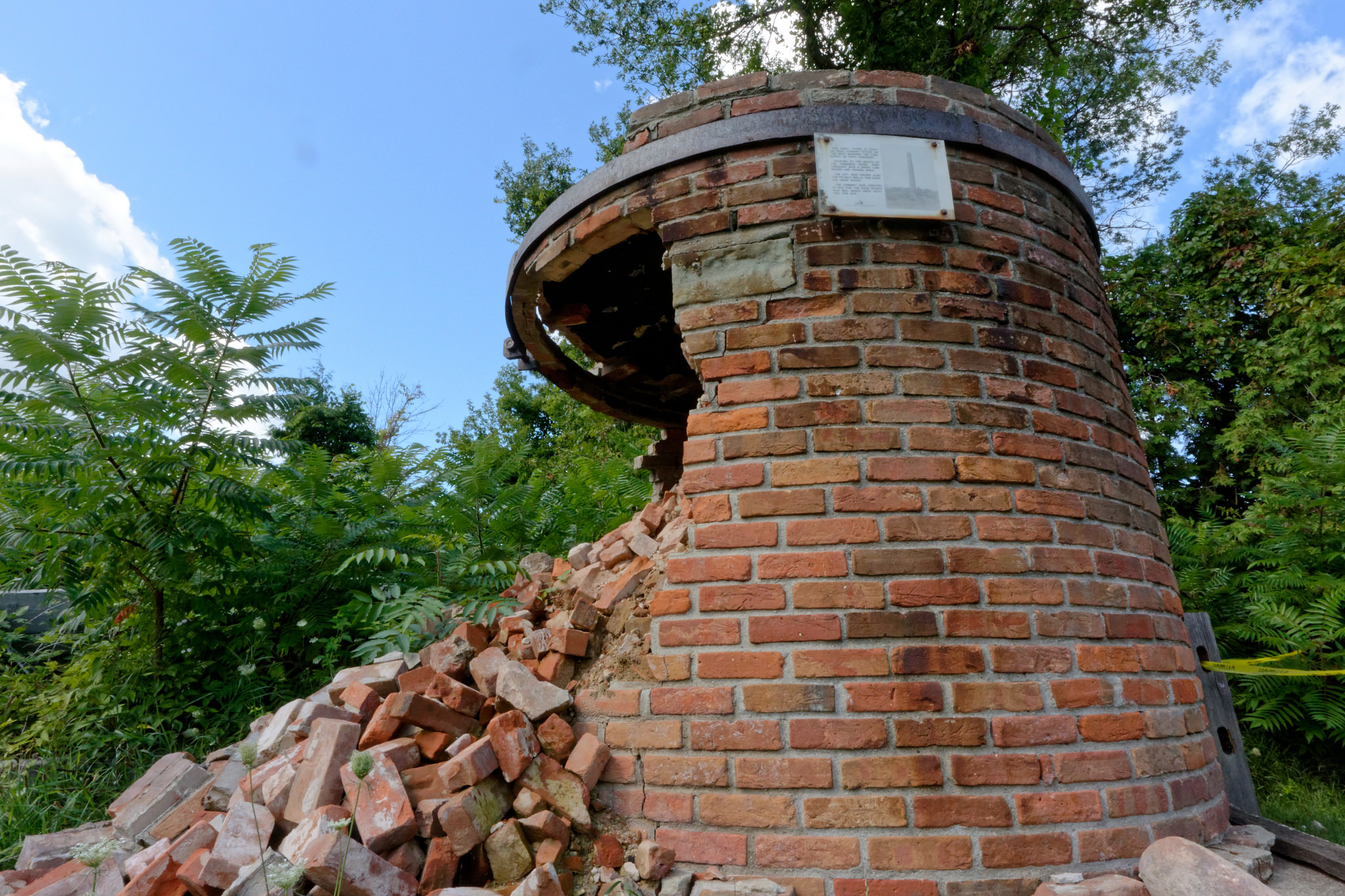
The Port Crescent Smokestack, photo by Joel Dinda

One of the blogs I enjoy reading is ThumbWind, a blog about (you guessed it) Michigan’s Thumb. In A Ghost Town in the Thumb they tell the story of the town of Port Crescent that was within what is now Port Crescent State Park:

Walter Hume established a trading post and hotel near the mouth of the Pinnebog River in 1844. From these humble beginnings the area took the name of Pinnebog, taking its name from the river of which it was located. However, a post office established some five miles upstream also took its name from the river. To avoid confusion the town changed its name to Port Crescent for the crescent-shaped harbor along which it was built.

Port Crescent had two steam-powered sawmills, two salt plants, a cooperage whichPort Cresent manufactured barrels for shipping fish and salt, a gristmill, a wagon factory, a boot and shoe factory, a pump factory, a brewery, several stores, two hotels, two blacksmith shops, a post office, a depot and telegraph office, and a roller rink. Pinnebog employed hundreds of area residents. Others worked at blockhouses where they extracted brine from evaporated water to produce salt. At one time a this 17 block village boasted of a population of more than 500.

Read on for more and click for more about Port Crescent State Park.

View Joel’s photo background big and see more in his Port Crescent Vacation slideshow.

Houghton’s Keweenaw Upper Entrance Lighthouse

Keweenaw Upper Entrance Lighthouse Houghton Michigan

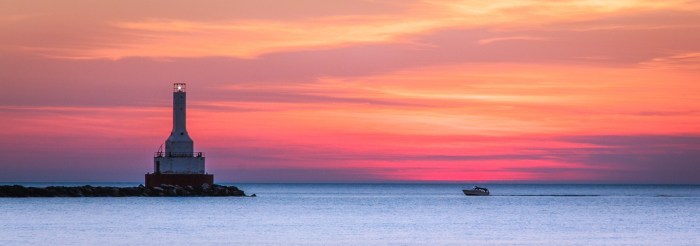
Homeward Bound, photo by Bobby Palosaari

Terry Pepper’s Seeing the Light is my go-to for Michigan lighthouse lore. His entry for the Keweenaw Upper Entrance Lighthouse says in part:

With the meteoric growth of copper mining in the Keweenaw between 1843 and 1968, increased shipping access to the twin cities of Houghton and Hancock became increasingly important. To this end, the Portage River Canal was cut through a tamarack swamp at its western end in 1860, creating a channel 10 feet deep and 80 feet wide, opening full Portage River navigation for the largest vessels of the day from western Lake Superior.

In 1874, to assist in safely guiding ships into this cut, a large gabled two-story brick dwelling with attached square 33 foot high brick tower was constructed on the west bank at the entrance to the canal. With increasing use of the canal, silting became a major problem, and tolls were levied for its use in order to cover the continuing expenses for repairs and dredging.

For reasons as yet undetermined, the original lighthouse was replaced with the existing fifty foot square steel Art Deco style tower at the end of the breakwater in 1950.

View Bobby’s photo background bigtacular and view & purchase more of his photos including this one at palosaariphotography.com.

Summer Solstice and a Strawberry Moon

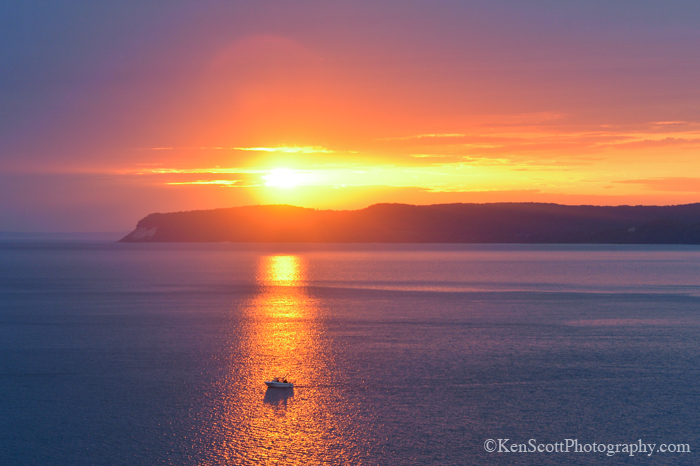
Summer Solstice 2013 by Ken Scott

Summer Solstice … 2013, photo by Ken Scott

Today at 6:34 PM EDT, the summer solstice officially ushers in summer. EarthSky shares that the full Strawberry moon tonight for the solstice is the first full moon to fall on the summer solstice since June of 1967 and the Summer of Love.

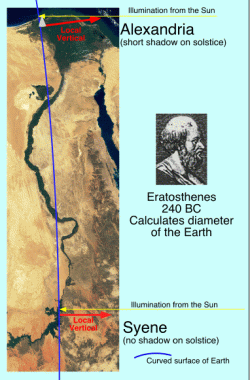
Back in 2001, NASA’s Earth Science Picture of the Day (<–my favorite photo blog – subscribe!) shared the tale of Eratosthenes, the Solstice and the Size of the Earth:

Calculating the SolsticeIt was near the summer solstice of 240 BC that Eratosthenes, curator of the famed Library of Alexandria and renowned mathematician and geographer, performed his famous experiment in Egypt to calculate the diameter of the Earth. The bottom of a deep well in the city of Syene, Egypt (near the present day Aswan Dam and very near the Tropic of Cancer) was known to be illuminated by the sun directly at mid-day on the longest day of the year (the solstice). But on the same day, a vertical pole in Alexandria, some 800 km to the north, cast a distinct shadow. By measuring the shadow and applying the geometry of a sphere, Eratosthenes calculated the Earth’s diameter with remarkable accuracy. Sadly, the concept of a spherical Earth was lost from common thought for over a thousand years until Christopher Columbus and others proved the fact by sailing west to go east. The background reference image of Egypt and the Nile River is provided by the NASA MODIS instrument.
Sep 5, 2006 – Donald Etz notes: “From reading Jeffrey Burton Russell’s book, Inventing the Flat Earth (1991), I was persuaded that most educated Europeans of Columbus’ time believed the earth is round. The main debate seems to have been over its dimensions. Columbus ventured on his voyage because he believed the earth was much smaller than it is.” -ed

View Ken’s photo of the sunrise on the 2013 summer solstice bigger, see more in his Boat(s) slideshow, and definitely check out kenscottphotography.com to view and purchase his work.

More science on Michigan in Pictures.


Michigan Summer Resolution #23: Watch More Sunsets

Sunset on Grand Traverse Bay

Untitled, photo by Thomas DB

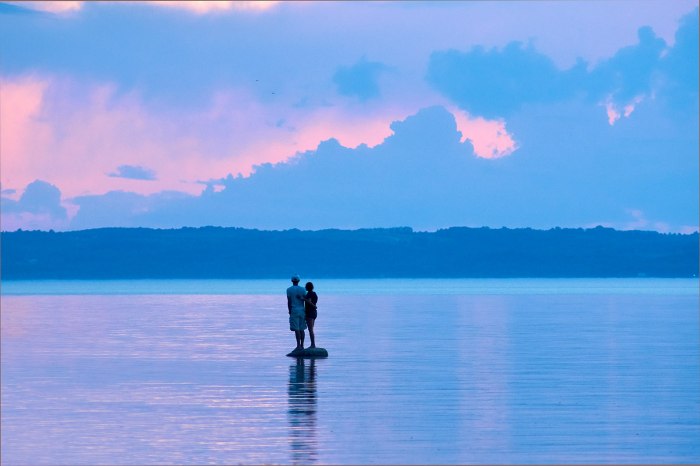
I was thinking the other evening that I need to watch more sunsets this summer. What Michigan summer resolution would you make?

Thomas caught this great photo of a young couple watching the sunset on Grand Traverse Bay. View it bigger and see more in his 6/1/16-6/3/16: Grand Traverse & Leelanau slideshow.

Inspiration Point, Arcadia

Inspiration Point Arcadia

Inspiration Point, Arcadia, photo by Swapnil

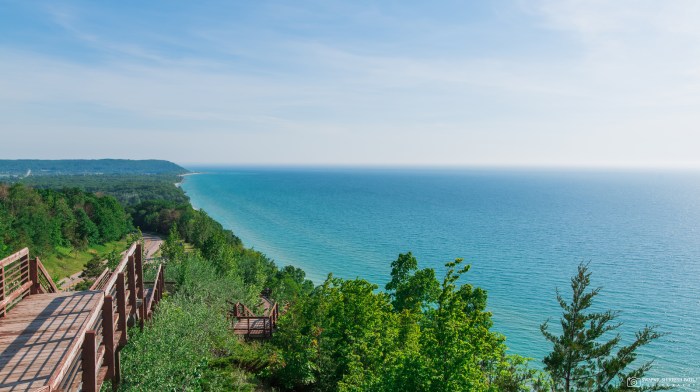
Pure Michigan relates that the Arcadia Overlook aka Inspiration Point is the highest point on Lake Michigan’s western shore. This TripAdvisor review says it all I think:

The view of Lake Michigan is perhaps the loveliest for the Eastern shore of the Lake. High above the Lake and even higher when you climb well-constructed stairs. Some people drive up every night to watch the sunset. We know of scores of marriage proposals that transpired there. Very near the C. S. Mott Nature Preserve, which we know as the blow-out and others call Old Baldy. On Highway M-22, one of the most beautiful roads in the Midwest. by all means, stop for awhile and watch the breakers (whitecaps) on a windy day.

View Swapnil’s photo bigger and see more in his Pure Michigan slideshow.

Return of the Grayling to Michigan?

michigan-grayling

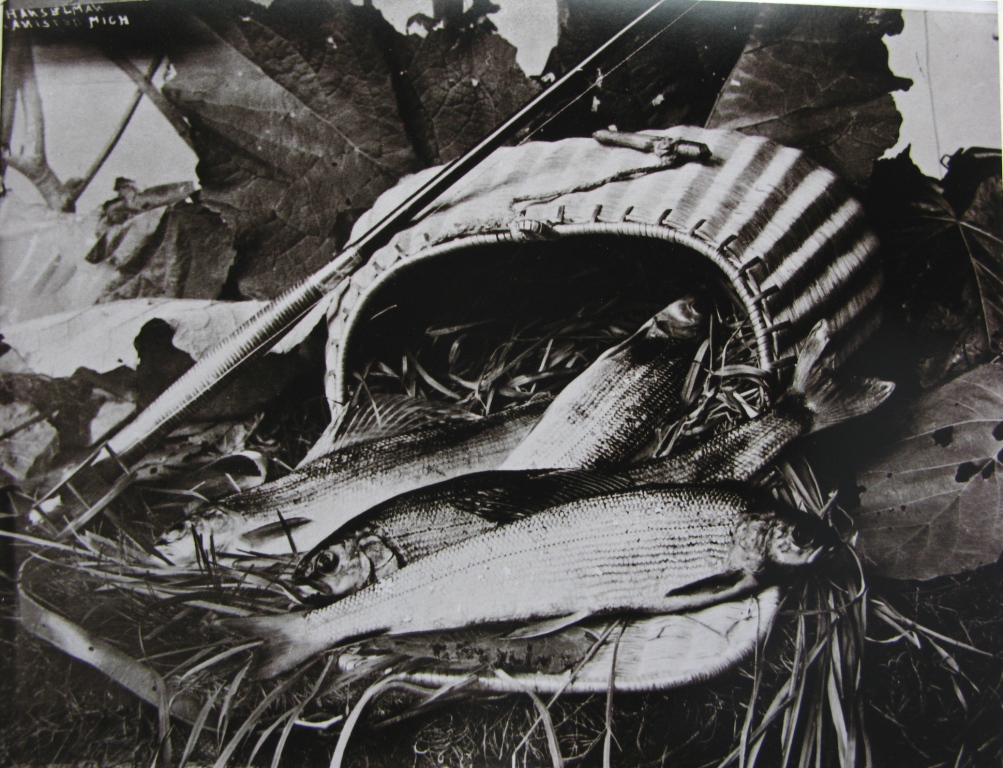
Michigan Grayling, photo courtesy Old Au Sable Fly Shop

The Michigan Department of Natural Resources is partnering with the Little River Band of Ottawa Indians to bring back the Arctic grayling. Grayling were native to Michigan but are long vanished from our waters. Slate blue in color with a sail-like dorsal fin, they are of the salmon family and efforts will begin in the Manistee River watershed.

Regarding the grayling, the Old Au Sable Fly shop says in part:

According to William J. Mantague, “One spring the Grayling were running up the Hersey. We noted they had some difficulty passing an obstruction in the stream, so we placed a canoe crosswise at that point and caught over seven hundred one afternoon.”

The Grayling were eaten. They were packed in ice, loaded onto railway cars, and shipped by the thousands of tons per year to the larger metropolitan areas. In some instances, they were tossed on the banks and buried in mounds.

At the same time, the lumbermen came and cut down centuries-old growth of virgin white pine. The land leading to the rivers was stripped as well, slashed and burned, and the logs floated downstream to the large mills and cities during the spring run-off. The rivers were cleared of logs and debris, places were the Grayling flourished. Shallow riffles were trenched out and deepened, and dams were built so that the flow of the river could be better controlled. Vegetation on the banks of the rivers was cleared as well, and the river slowly filled with sand. The sand filled the deepest pools and covered the Grayling’s spawning beds. By 1885, the Grayling had disappeared from the AuSable River. And in a period of ten to twenty years, a land unrivaled for its fishing and beauty, became a barren wasteland of stumps and empty pools.

More about graylings at the Old Au Sable Fly Shop where you can pick up gear and learn about fish & fishing on Michigan’s most storied fishing river.

More fish & fishing on Michigan in Pictures!

Support Michigan in Pictures with Patreon

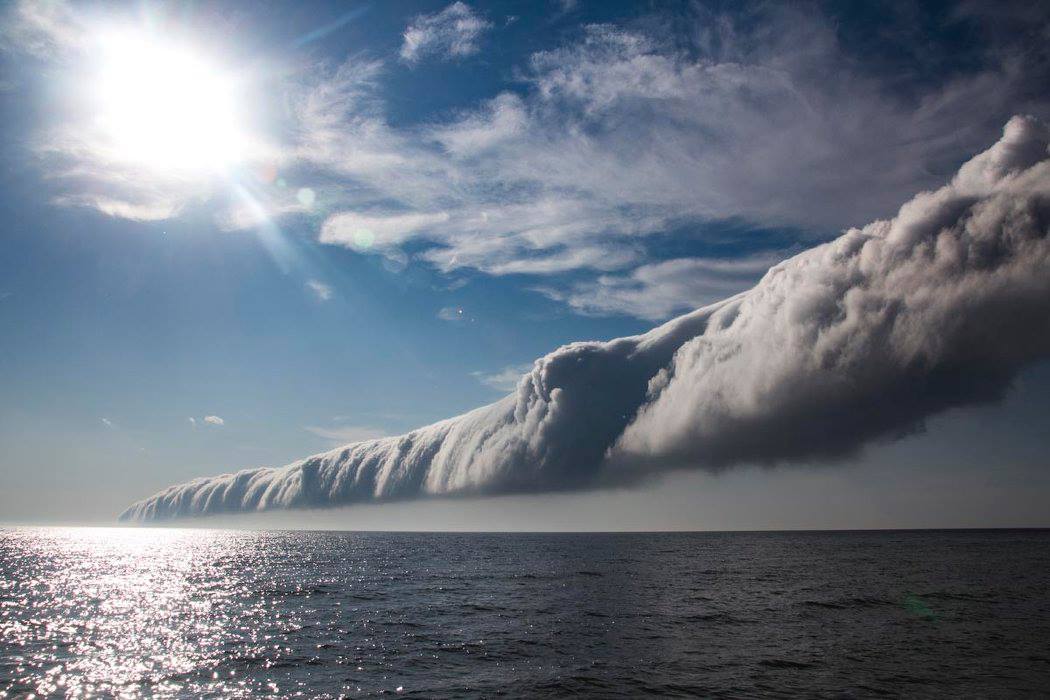
The Vortex: Roll cloud over Lake Michigan

Vortex Cloud

The Vortex, photo by Nick Nerbonne

My corner of Northern Michigan was all abuzz last weekend due to a relatively rare meteorological phenomenon known as a “roll cloud.” Wikipedia’s entry on Arcus clouds explains:

An arcus cloud is a low, horizontal cloud formation. Roll clouds and shelf clouds are the two types of arcus clouds. A shelf cloud is usually associated with the leading edge of thunderstorm outflow; roll clouds are usually formed by outflows of cold air from sea breezes or cold fronts in the absence of thunderstorms.

…A roll cloud is a low, horizontal, tube-shaped, and relatively rare type of arcus cloud. They differ from shelf clouds by being completely detached from other cloud features. Roll clouds usually appear to be “rolling” about a horizontal axis. They are a solitary wave called a soliton, which is a wave that has a single crest and moves without changing speed or shape.

View Nick’s photo background bigscroll through his pictures on Facebook, and watch this time-lapse of the cloud…

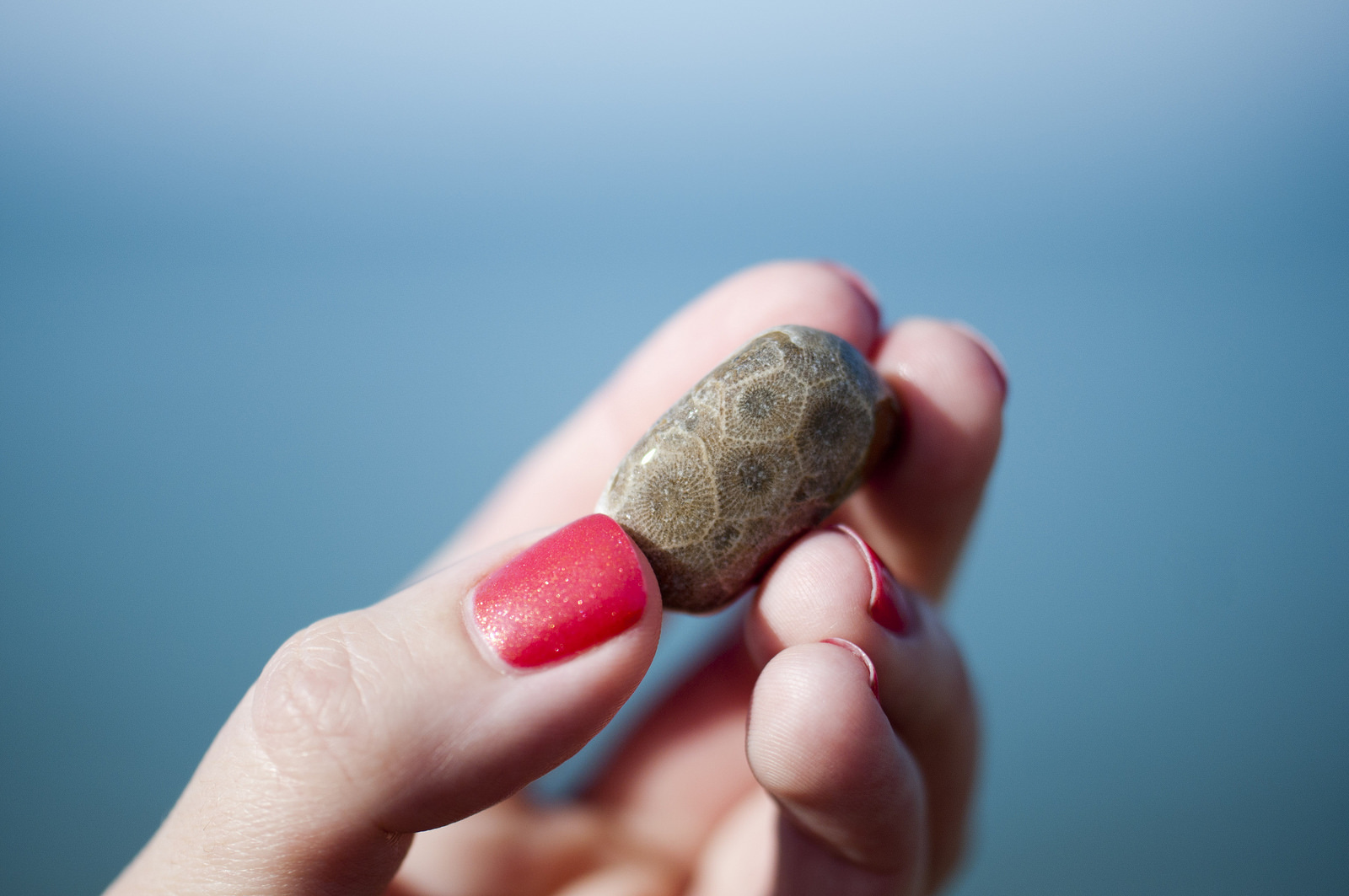
Up close with Michigan’s state stone: Hexagonaria percarinata, the Petoskey stone

Michigan State Stone Petoskey Stone

Untitled, photo by Anna Lysa

The Michigan Tech Geology Department explains that Michigan’s state stone is the Hexagonaria percarinata, the Petoskey stone. It is a fossil colonial coral that lived in the warm Michigan seas during the Devonian time around 350 million years ago. They can be found from Traverse City area across the state to Alpena in gravel pits, road beds, and of course beaches, with the largest concentration found on and around Lake Michigan’s Little Traverse Bay near the town of Petoskey. In June of 1965 the Petoskey Stone was named Michigan’s official State Stone and Miss Ella Jane Petoskey, the only living grandchild of Chief Petoskey, attended the formal signing.

Several years ago I shared the story behind the name as told by a young woman I know, Rose Petoskey:

My name is Noozeen (Rose) Nimkiins (Little Thunder) Petoskey (Rising Sun) and I am Anishinaabek.

Many people would associate the word Petoskey with the souvenir stone found on the northern Lake Michigan shorelines. However, to my family, the word Petoskey represents much more than a souvenir.

In the Odawa language, the word Petoskey (Bii-daa-si-ga) means the rising sun, the day’s first light, or the sun’s first rays moving across the water. The Petoskey stone is a fossilized coral created by impressions made in limestone during the last Michigan ice age. These stones were named “Petoskey” because the impressions resembled the rising sun coming up over the water. Just as the image of the rising sun is implanted within the Petoskey stone, the archaeology of a person’s names is implanted within. All names within our Anishinaabek culture reflect an individual’s personal history. Rocks go deep, but names go much deeper to reveal the stories of the past.

View Anna Lysa’s photo bigger and see more in her Michigan slideshow.

Speaking of Michigan, there’s many more Michigan state symbols on Michigan in Pictures!

Support Michigan in Pictures with Patreon