One Moment

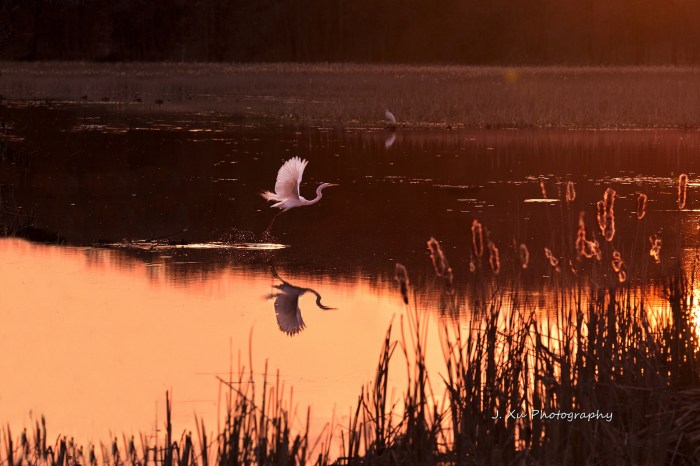
Untitled, photo by Jiafan (John) Xu

I’m pretty sure that the bird John has captured so perfectly is a Great Egret. Fittingly, the egret tag on Michigan in Pictures includes another stunning photo by John of Great Egrets in flight along with all kinds of info about this beautiful bird.

View his photo bigger and see more in his slideshow.

#TBT Happy 100th Birthday to the Michigan State Police

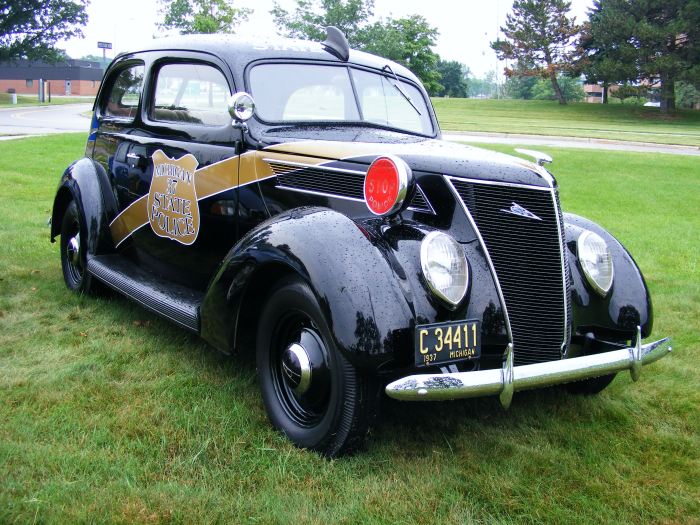
State of Michigan State Police, photo by glory be me


A belated happy 100th birthday to the Michigan State police, who are 100 years and a day old today:

Since April 19, 1917, the Michigan State Police has proudly served the citizens of Michigan. From a cavalry of 300 men to a full-service police agency of more than 2,900 members, the Michigan State Police has proven itself as a world-class leader in law enforcement.

The Michigan Department of State Police began as a temporary, wartime emergency force for the purpose of domestic security during World War I. On April 19, 1917, Governor Albert Sleeper created the Michigan State Troops Permanent Force, (also known as the Michigan State Constabulary). With Colonel Roy C. Vandercook as the first commanding officer, this new force consisted of five Troops of mounted, dismounted and motorized units, totaling 300 men. On March 26, 1919, Public Act 26 reorganized the Constabulary as the permanent, peace-time Michigan State Police.

Michigan adopted a new Constitution in 1963, authorizing up to 20 departments. Public Act 380 of 1965 reorganized the Michigan Department of State Police as one of these departments. The Director holds the rank of Colonel and is appointed by the Governor.

Today, the Michigan State Police consists of a modern-day force of law enforcement professionals, using the latest up-to-date training and technology to protect the citizens of Michigan. What was once a cavalry of 300 men now has evolved into one of the leading police agencies of the United States.

View the photo of what I believe is a 1937 Ford Model 74 patrol car background big and see more in glory be me’s Untitled Set slideshow.

More #TBT (Throwback Thursdays) on Michigan in Pictures.

April 16-22 is Severe Weather Awareness Week in Michigan

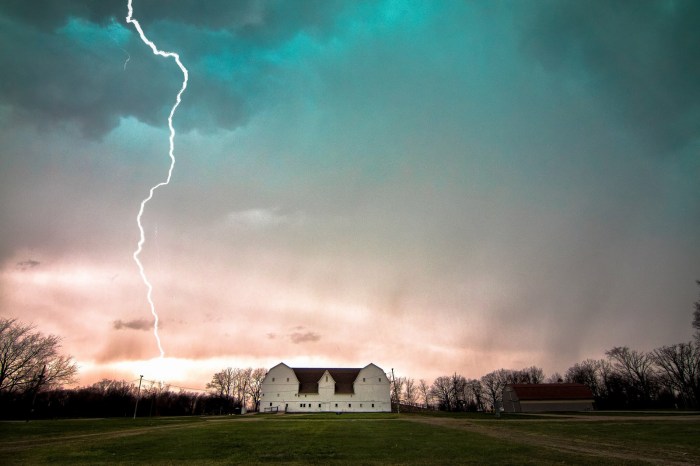
Storm’s Coming, photo by Tom Hughes Photo

This week (April 16-22) is Severe Weather Awareness Week in Michigan. mLive reports:

The Michigan State Police are asking residents to take part in a voluntary statewide tornado drill as part of the state’s Severe Weather Awareness Week. The drill is scheduled for 1 p.m. Wednesday, April 19. Gov. Rick Snyder had declared Michigan’s Severe Weather Awareness Week from April 16-22. If severe weather occurs on April 19, the statewide tornado drill will be rescheduled for 1 p.m. Thursday, April 20.

Nearly all state of Michigan facilities are expected to participate, and businesses, organizations and individual residents and their families are encouraged to join in as well.


“Tornadoes can develop rapidly, with little or no warning,” said Capt. Chris A. Kelenske, Deputy State Director of Emergency Management and Homeland Security and commander of the MSP/EMHSD. “Due to their unpredictable nature, we must be ready well in advance. We’re asking residents and businesses to take a few extra steps during the week to ensure they’re prepared.”

Tornadoes are especially prevalent in late spring and early summer, and the average lead time for tornadoes to develop is 10 to 15 minutes. In the event of a tornado, state officials recommend residents find the lowest place to take cover, take shelter under something sturdy, stay tuned to local weather broadcasts and watch for signs of a tornado, including dark skies, large hail, a large low-lying cloud and a loud roar.

Tom caught this spring storm rolling through last week at the Springfield Oaks Ellis Barn. View it bigger, see more in his Thunderstorms slideshow, and view & purchase work at Tom Hughes Photo.

More wild weather on Michigan in Pictures!


A Blaze of Green at Pictured Rocks

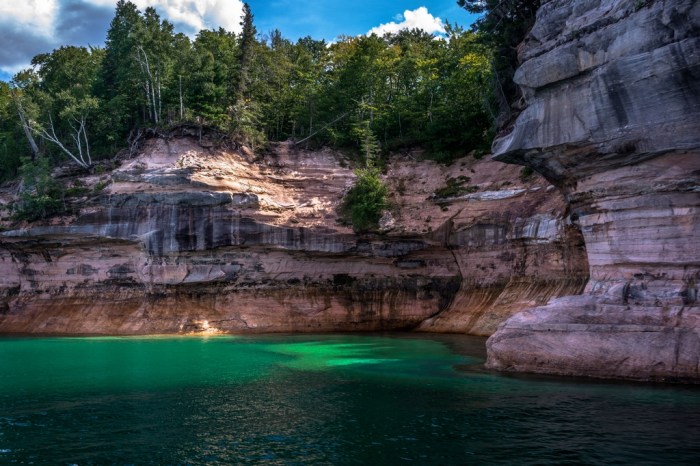
Untitled, photo by Steve Nowakowski

It’s hard to convey the unique beauty of the Pictured Rocks National Lakeshore in a single photo, but the stunning green of this picture really triggered memories for me of some of my best and brightest days in one of Michigan’s crown jewels.

Steve took this on a boat tour in August of 2016 with nearly perfect conditions, likely with Pictured Rocks Cruises. View the photo background big and see more in his 2016 Pictured Rocks National Lake Shore slideshow.

There’s a whole lot more goodness from the Pictured Rocks on Michigan in Pictures.

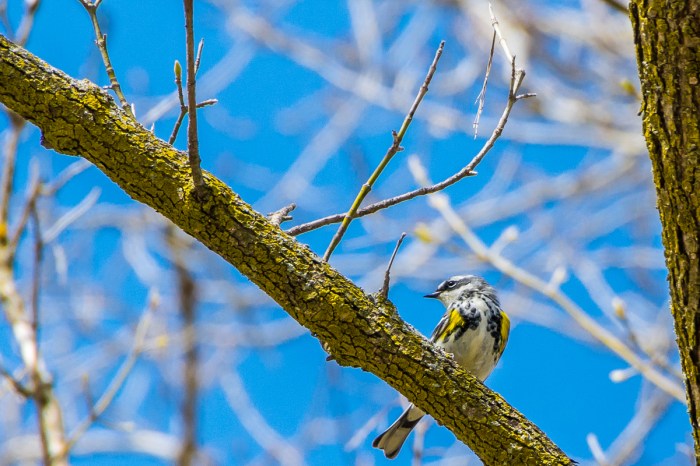
Yellow Rumped Warbler

Yellow Rumped Warbler, photo by Jeff Dehmel

Jeff’s back with another bird everyone! I couldn’t resist – the colors on this are so perfectly April!! Here’s a couple of facts on the Yellow-rumped Warbler from All About Birds:

Yellow-rumped Warblers are impressive in the sheer numbers with which they flood the continent each fall. Shrubs and trees fill with the streaky brown-and-yellow birds and their distinctive, sharp chips. Though the color palette is subdued all winter, you owe it to yourself to seek these birds out on their spring migration or on their breeding grounds. Spring molt brings a transformation, leaving them a dazzling mix of bright yellow, charcoal gray and black, and bold white.

The Yellow-rumped Warbler is the only warbler able to digest the waxes found in bayberries and wax myrtles. Its ability to use these fruits allows it to winter farther north than other warblers, sometimes as far north as Newfoundland.

They’re the warbler you’re most likely to see fluttering out from a tree to catch a flying insect, and they’re also quick to switch over to eating berries in fall. Other places Yellow-rumped Warblers have been spotted foraging include picking at insects on washed-up seaweed at the beach, skimming insects from the surface of rivers and the ocean, picking them out of spiderwebs, and grabbing them off piles of manure.

The oldest recorded Yellow-rumped Warbler was at least 7 years old.

View the photo background big and see more in Jeff’s Holloway Reservoir slideshow (where you’ll see his photo of a bald eagle from not long ago).

More spring wallpaper and more birds on Michigan in Pictures.

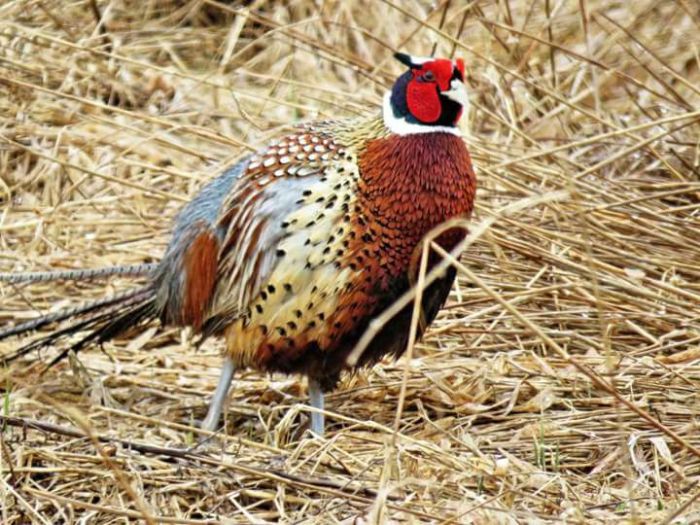
Pheasant Friday: Ring-necked Pheasant Breeding Habits

Ringnecked Pheasant, photo by Tim Carter

This pheasant is ready for the weekend, Ladies! All About Birds has all the details on the very colorful Ring-necked Pheasant including information about their breeding season which is going on right now:

Male Ring-necked Pheasants establish breeding territories in early spring. A male maintains sovereignty over his acreage by crowing and calling; he approaches intruders with head and tail erect, and may tear up grass that he then tosses. Competitors sometimes resort to physical combat. After a series of escalating threat displays, fighting cocks flutter upward, breast to breast, and bite at each other’s wattles. They may take turns leaping at each other with bill, claws, and spurs deployed. Usually the challenger runs away before long, and these fights are rarely fatal. Females assemble in breeding groups focused on a single male and his territory.

The cock courts the hen with a variety of displays—strutting or running; spreading his tail and the wing closest to her while erecting the red wattles around his eyes and the feather-tufts behind his ears. He also “tidbits”—poses with head low while calling her to a morsel of food. A female may flee at first, leading the male on a chase punctuated by courtship displays. Males guard their groups of females from the advances of other males.

Like many birds, Ring-necked Pheasants take frequent dust baths, raking their bills and scratching at the ground, shaking their wings to sweep dust and sand into their feathers, lying on their sides and rubbing their heads. Dust-bathing probably removes oil, dirt, parasites, dead skin cells, old feathers, and the sheaths of new feathers.

View the photo from near Attica, Michigan bigger on Facebook.

More birds on Michigan in Pictures.

Thomas Jefferson & Good Government

Detail: Hand and Globe, “Spirit of Detroit”–Detroit MI, photo by pinehurst19475

The care of human life and happiness, and not their destruction, is the first and only object of good government.
-Thomas Jefferson

Happy 274th birthday to the principle author of our Constitution, Thomas Jefferson.

As we head into a recess where we all have a chance to speak with our elected officials, my personal hope is that many voices will be raised in support of this Jeffersonian ideal of good government that seeks to uplift and preserve our health and well-being, particularly in regards to our preserving & expanding access to health care, rebuilding our crumbling infrastructure, and ensuring that efforts to protect the Great Lakes aren’t defunded. You may want something different, so you probably should show up and share your thoughts as well! ;)

View the photo background bigtacular and see more in pinehurst19475’s massive Statues & Sculpture slideshow.

PS: This is the detail of the hand on the Spirit of Detroit by noted sculptor Marshall Fredericks and you can click that link for much more!

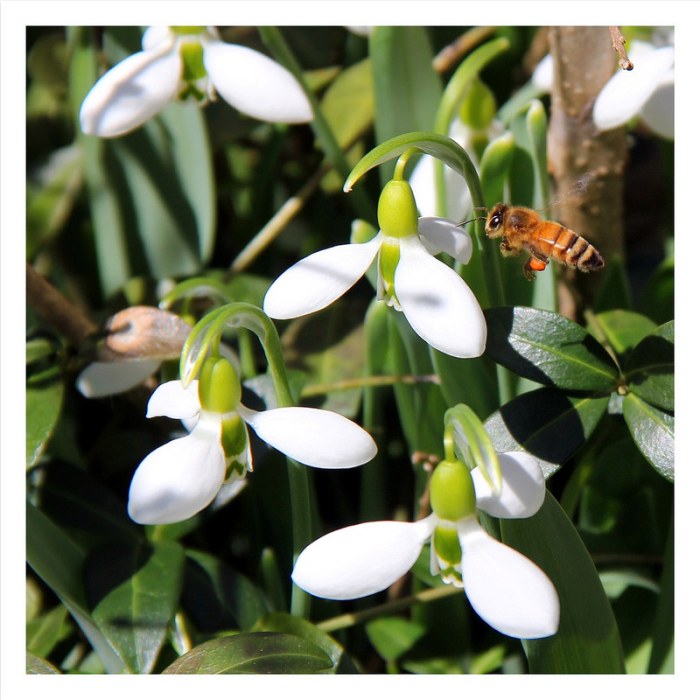
Snowdrops and a Bee

Snowdrops and a Bee, photo by Trish P.

Trish took this Saturday on the Leelanau Peninsula. View the photo bigger, see more of the same in Trish’s In the Garden slideshow, and follow her at trishy_p on Instagram!

More flowers and more from the garden on Michigan in Pictures.

Ecorse, Little Venice of the West End

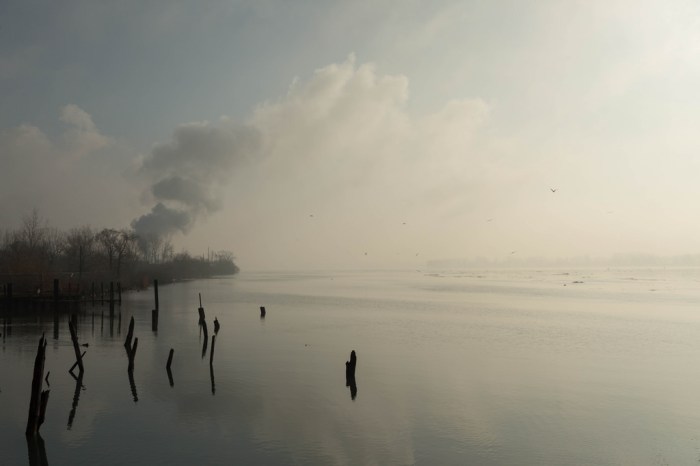
Morning, Ecorse, MI, March, 2017, photo by Norm Powell

It’s always cool to discover new websites about Michigan, and my search for more on the history of Ecorse led me to Mr. Cosbey’s History of Ecorse at the website Along the Detroit River. It was written by  Ecorse High School history teacher John Howard Cosbey and is very comprehensive – here’s a slice:

The River Aux Ecorces appears in history as early as 1763 as the retreat of Pontiac and allied chiefs in the famous plot to rid the mid-west of the encroaching white settlers. It was known also as a favorite burying ground of the Indian tribes in the locality.

It appears, however, on the evidence of birth records and of the statements of sworn witnesses in court that the first white settlements at the River Aux Ecorces were made during the period between 1784 and 1797, probably about 1785.

…The Detroit Free Press for July 2, 1905, tells of the “Little Venice of the West End”:

“All along the river shores from Fort Wayne to the Village of Ecorse, some hardier folks of Detroit who like to keep cool cheaply have boat houses in which they live during the summer. “The Little Venice of the West End,” they call it, and it is truly a colony of resorters distinct in itself.

“The rich may go to Grosse Point, to the mountains or to the sea shore, those of limited means, such as skilled mechanics, clerks, and other small salaried men with families may easily afford to rent a cottage built out upon the piers of Ecorse’s “Little Venice.” There they may have the air and the cool of the river, in fact, all of the real luxuries of a more exclusive colony, and at much less cost.

“Every day the resorters of Ecorse, who have business in the city, travel back and forth on the trolley. And every evening fish, boat and bathe with the women and children before the very doors of their summer homes.”

View Norm’s photo bigger and see more in his slideshow.

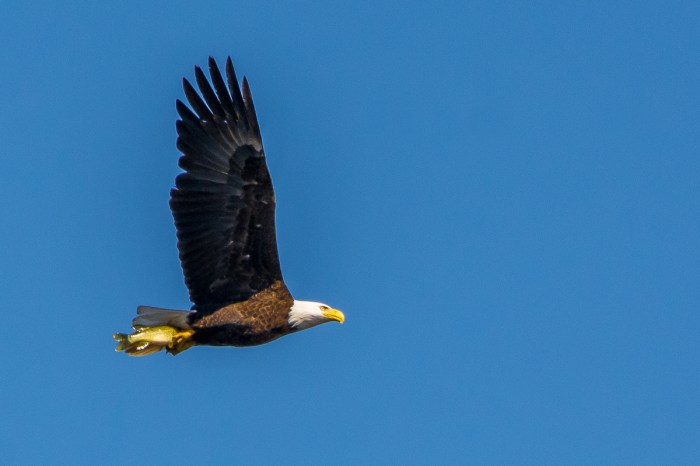
Brunching with Bald Eagles

Bald Eagle with Cargo, photo by Jeff Dehmel

Jeff took this shot last weekend in Milford’s Kensington Metropark.

If you’re looking for an alternative to Saturday morning cartoons for kids & adults alike, the CarbonTV Eagle Cam at the Platte River Fish Hatchery in Benzie County has returned for 2017. While it’s a lot of sitting on eggs right now, before too long there will be all kinds of fun as the eaglets hatch and grow!

View the photo background bigilicious and see more in Jeff’s Kensington Metropark 4.1.17 slideshow.

More bald eagles on Michigan in Pictures.