Summer of ’16

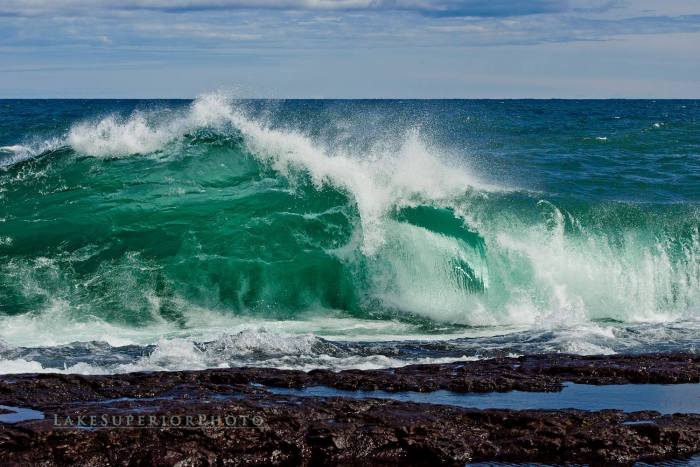
Black Rocks Summer of 16

Black Rocks, #1, Summer of ’16, photo by Lake Superior Photo

I don’t want to alarm anyone, but Labor Day Weekend is next weekend so if you haven’t gotten everything you want from the Summer of 2016, this might be a good time to work on that!

Shawn took this on Thursday at Black Rocks in Marquette. View her photo background bigtacular and definitely get yourself over to the Lake Superior Photo Facebook page for all kinds of Upper Peninsula goodness including this video of the Northern Lights from earlier this week!

PS: I feel I should link to Blackrocks Brewery as well so you don’t get confused and also because they brew some really wonderful beer!

PPS: Sorry this went out late – failed to mash the buttons in the proper order!!

PPPS: More waves, Marquette, summer wallpaper, and Lake Superior on Michigan in Pictures!


Get away from it all at Alder Falls

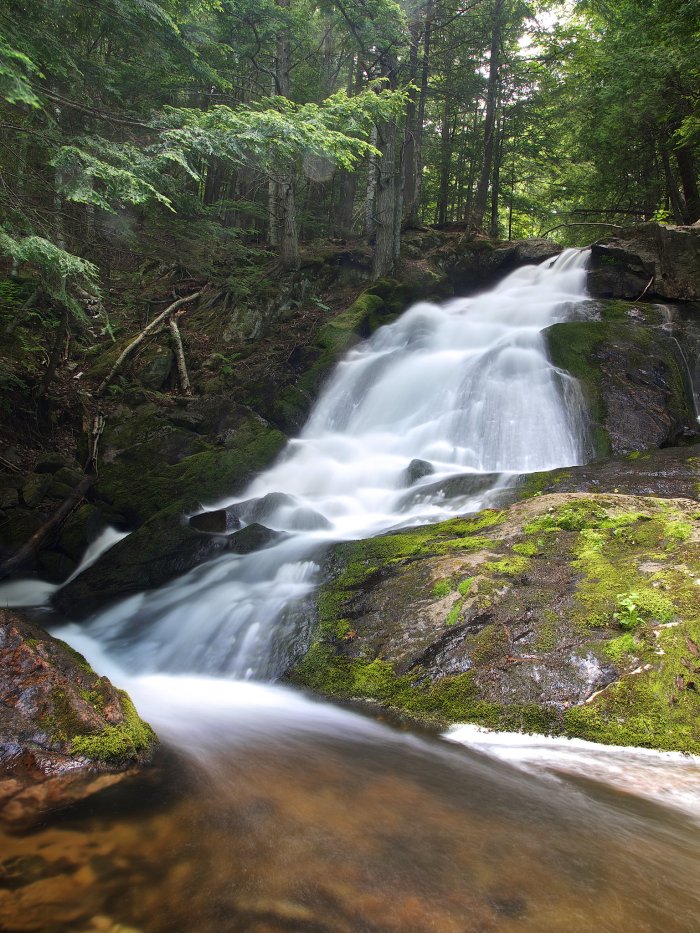
Alder Falls Marquette Michigan

Alder Falls, photo by David Marvin

GoWaterfalling’s page on Alder Falls says this waterfall:

…is located about 20 miles north of Marquette on County Road 550. This is Canadian Shield country and the falls is typical of the falls found there. The falls is a slide about 30 feet high cascading down at a 45 degree angle. It falls into a deep, secluded and well shaded gorge. The gorge adds to the sense of wildness and isolation of the falls, even though it is only a mile from the main road.

Finding this waterfall is not trivial because Marquette does not seem big on marking their waterfalls or their rivers and creeks…

Upstream of the main falls are three more drops each around 5 feet high. The first of these is a short distance above the main falls and easy to reach from the north side of the creek. Upstream of that the creek has carved its way through an enormous rock, creating a narrow gorge. A second, not easily seen, drop is in the gorge. A third drop is beyond that.

Read more including detailed directions to what appears to be one of the more difficult waterfalls to get to at Go Waterfalling.

View David’s photo background bigtacular and see a bunch more shots from Alder Falls in his slideshow.

More Michigan waterfalls on Michigan in Pictures!

#TBT: Marquette’s Chief Kawbawgam

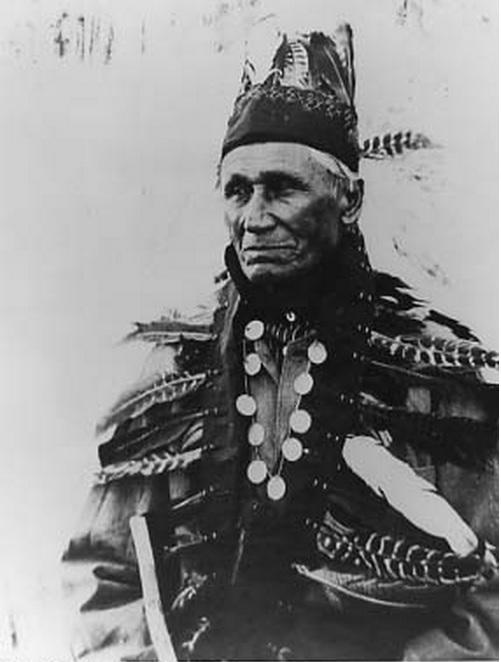
Chief Kawbawgam

Chief Kawbawgam, photo via Michigan’s Past & Superior View Gallery

Michigan’s Past shares all kinds of great old photos on Twitter. This one shows Chief Kawbawgam, a Chippewa who was reportedly over 100 years old when he died in Marquette in 1903.  According to the January 1903 edition of the The Lake Superior Journal:

Charley Kaw-baw-gam’s long life was brought to a close about 2 o’clock Sunday afternoon, when the old chief passed peacefully away at St. Mary’s hospital at Marquette, where he had been lying ill for the past couple of months.

Charley was one of the best known figures in Marquette, and he enjoyed this distinction from the first day when white men began to frequent the spot where the city was to grow. Charley’s reputation was not local alone. He was known throughout the upper peninsula and even below the straits his name and fame were familiar to many people.

He was an excellent type of the original owners of the soil, and an unusually creditable specimen. He was a full blooded Chippewa and a chief by blood. What is more he was a good Indian, and he lived a good life, according to his lights.

Kaw-baw-gam was also remarked upon time and again for his great age. It is believed that he was over 100 years old at the time of his death.

In 1849 when Peter White first landed on the shores of Iron bay it is well known that the first Indian to greet him and the party of which he was a member was the same chieftain. In the same year 1849, Mr. White, in carrying on a conversation in Chippewa with Charley asked him, for the sake of having something to say, “How old are you, Bawgam?” Charley replying said: “I am fifty. I spent twenty at the Soo; twenty years on the Tonquomenon bay and ten years on the Canadian side.” If Charley spoke the truth on that occasion he was about 103 years of age when he died, and there was no reason to doubt that this was the case. The Indians of his day were a notoriously long lived race and Charley was a find Indian physically, strong, tireless and healthy. Furthermore his countenance was that of a patriarch.

You can see Chief Kawbawgam’s grave in Marquette’s Presque Isle Park.

View the photo bigger and definitely follow @MichiganHist on Twitter for lots more great photos.

More Throwback Thursdays and more portraits on Michigan in Pictures.

Marquette Lower Harbor Ore Dock

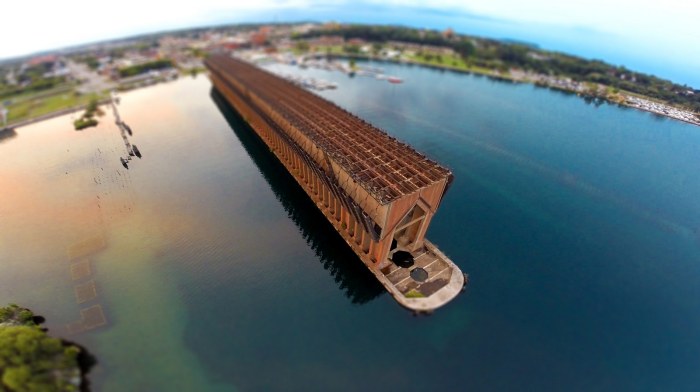
Marquette Lower Harbor Ore Dock

Lower Harbor Ore Dock, photo by Rudy Malmquist

Travel Marquette shares the story of the Iron Ore Dock in Marquette’s Upper Harbor is also known as the Presque Isle Dock.

The dock was built in 1911 and is still commercially active. Each year approximately 9.5 to 10 million tons of ore are shipped from this dock. The dock is owned and operated by the Cliffs Natural Resources. This steel-framed dock is 1,250 feet long and 60 feet wide, with the top deck sitting 75 feet above the water level. It contains 200 pockets, each of which has a capacity of 250 tons of ore, for a total storage capacity of 50,000 tons. Supporting the dock is a foundation of 10,000 wooden piles enclosed by a 12-inch thick timber sheet plank wall filled with sand.

After being mined the ore is crushed and the iron separated out with either a chemical or magnetic process. The iron is combined with a binding agent (a glorified cornstarch) and rolled into small balls roughly an inch in diameter. The balls are fed through a kiln and fired by temperatures exceeding 2,000 degrees F. The result is Taconite Pellets which are loaded on the ore boats and shipped. Most of the pellets shipped from the Presque Isle dock go to Algoma Steel in Sault Ste. Marie, Ontario the largest integrated steel mill. These pellets, which are roughly 70% iron, will be combined with coke and limestone at the mill to make steel.

The ore comes to the dock via railcars and is dumped into steel “pockets” or bins beneath the tracks. To load the boat, the chute is lowered to the open cargo hatch and a door at the bottom of the pocket opens, allowing the pellets to run into the boat shown in the picture. Loading time is variable, depending on the size of the boat and how prepared the dock is to load. Four hours is typical. Loading is the responsibility of the First Mate. It is important to load the ore in a proper sequence to avoid over-stressing the boat unevenly. Each chute (or drop of ore) is about 20 tons.

View Rudy’s photo big as the sky and see more in his slideshow.

More Marquette and more aerial photography on Michigan in Pictures.

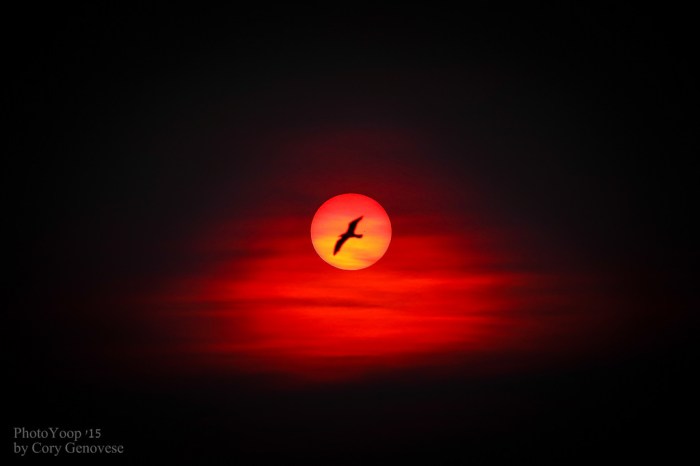
The Seagull Signal

Independence Sunset

Independence Sunset, photo by Cory Genovese

These amazing sunsets we’ve been seeing lately are the result of smoke from Canadian & Alaskan wildfires – perhaps that’s what the mayor of Marquette trying to signal Seagull Man about!

View Cory’s photo from before the Marquette fireworks bigger and definitely follow him on Facebook.

More from Marquette and lots more sunsets on Michigan in Pictures.

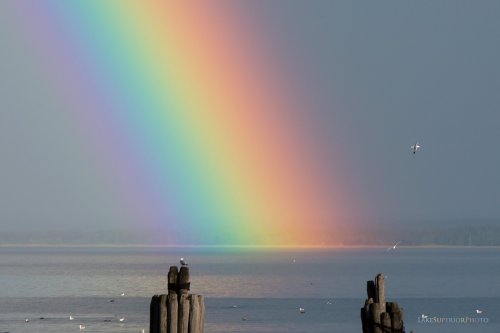
Prismatic

Lower Harbor Massive Rainbow

lower harbor massive rainbow, photo by Lake Superior Photo

I’ve featured a photo of a rainbow and one of Marquette’s harbor in the last couple of days, but I haven’t featured a photo of both! Have a great weekend folks.

Shawn writes: prismatic is on the mind right now, recalling one of the most brilliant rainbows I’ve ever witnessed. View the photo background bigtacular and head over to Lake Superior Photo to view and purchase photos (including a stunning double rainbow) in her Lake Superior Landscapes gallery.

More rainbows & rainbow science on Michigan in Pictures.

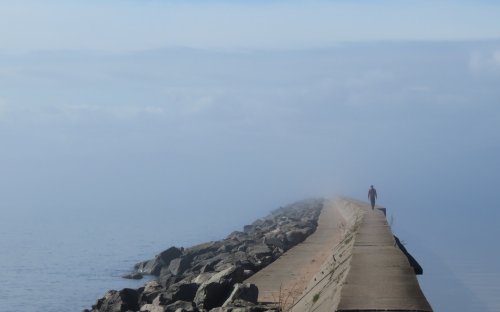
Out of the fog

Walking the breakwater in the fog

Walking the breakwater in the fog, photo by Ann Fisher

View Ann’s photo of the Marquette breakwater background bigtacular and see more in her 2015 UP slideshow.

There’s more spring wallpaperfog & mist & Marquette on Michigan in Pictures.

Halo, Sundog & Circumzenithal Arc over Marquette

Solar Halo over Marquette Lighthouse

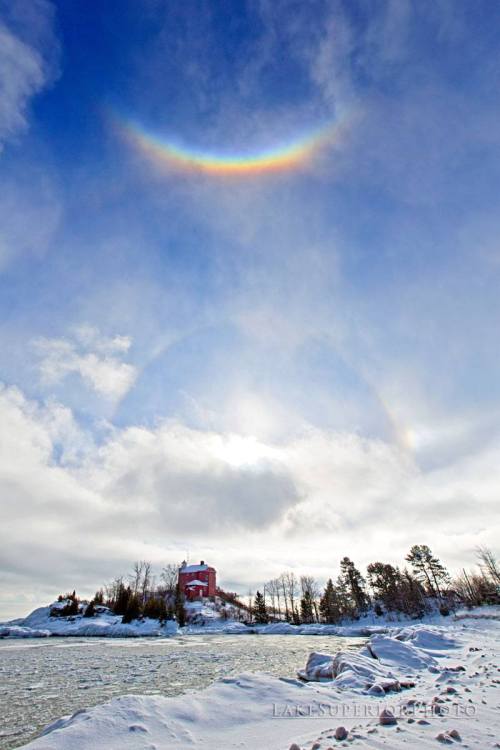
Welcome to the Smile High Club, photo by Lake Superior Photo

Today’s photo is one of the most incredible pictures I’ve seen. In addition to the Marquette Harbor Light and the frozen Superior shore, there’s a cornucopia of solar optics that fairly defies imagination.

Atmospheric Optics is a wonderful website, certainly the best I’ve found for describing solar phenomena in a clear and inspiring manner. Here’s a bit of decoding of what’s happening in the skies of Marquette yesterday, but definitely follow the links to explore. There’s so much information and some great photos too!

First, above the lighthouse, there’s a 22º radius halo:

…visible all over the world and throughout the year. Look out for them (eye care!) whenever the sky is wisped or hazed with thin cirrus clouds. These clouds are cold and contain ice crystals in even the hottest climes.

The halo is large. Stretch out the fingers of your hand at arms length. The tips of the thumb and little finger then subtend roughly 20°. Place your thumb over the the sun and the halo will be near the little finger tip.

The halo is always the same diameter regardless of its position in the sky. Sometimes only parts of the complete circle are visible.

There’s also a sundog, known also as parhelia or mock sun. These appear in the 22º halo, even when you can’t see the halo. You can see one at the visible base of the halo on the right:

They are most easily seen when the sun is low. Look about 22° (outstretched hand at arm’s length) to its left and right and at the same height. When the sun is higher they are further away. Each ‘dog’ is red coloured towards the sun and sometimes has greens and blues beyond. Sundogs can be blindingly bright, at other times they are a mere coloured smudge on the sky.

They advise you’ll see one or two a week if you look and if you click over you can learn about how they form & moon dogs.

Finally, we come to the circumzenithal arc (CZA), the upside down rainbow at the top:

…the most beautiful of all the halos. The first sighting is always a surprise, an ethereal rainbow fled from its watery origins and wrapped improbably about the zenith. It is often described as an “upside down rainbow” by first timers. Someone also charmingly likened it to “a grin in the sky”.

Look straight up near to the zenith when the sun if fairly low and especially if sundogs are visible. The centre of the bow always sunwards and red is on the outside.

The CZA is never a complete circle around the zenith, that is the exceptionally rare and only recently photographed Kern arc.

Read on for more, and definitely be sure to check atoptics.co.uk when you see solar & lunar phenonmena you’d like to know more about.

View Shawn’s photo bigger and join thousands of others in following Lake Superior Photo on Facebook … and on the Twitters. You can purchase this photo on the Lake Superior Photo website.

PS: Check out Dominic B. Davis’s photo of the solar halo in the morning too!

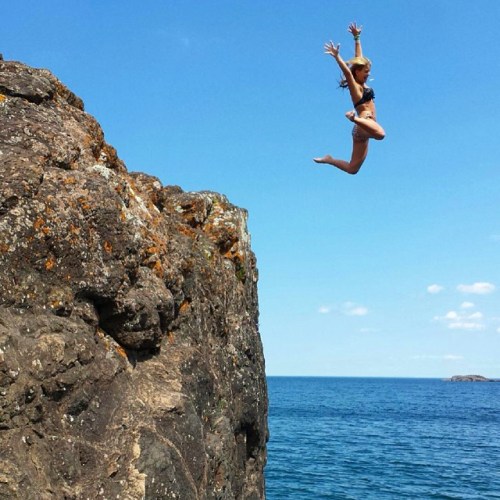
When in Doubt, Jump off a Cliff

When in Doubt Jump off a Cliff

When in Doubt, Jump off a Cliff, photo by shaleewanders

Through the magic of Twitter, I came across the website Shalee Wanders the other day. Created by Shalee Blackmer, it’s a really engaging site she created to inspire people (especially young people) to get out and enjoy traveling on a budget.

The post that drew me in was her Michigan Bucket List, a compilation with some photos of a lot of very fun things to do from to hiking the Porcupine Mountains to exploring the Detroit Packard Plant. Even better, there’s 250+ comments from people with more ideas for getting the most out of Michigan.

View Shalee’s photo from last summer near Marquette bigger and see more on her Instagram.

PS: I do feel that I need to point out that last summer Lake Superior was ice cold, making this leap especially impressive!

Tis the season … to Surf Michigan

Marquette MI Surf 04-12-2013

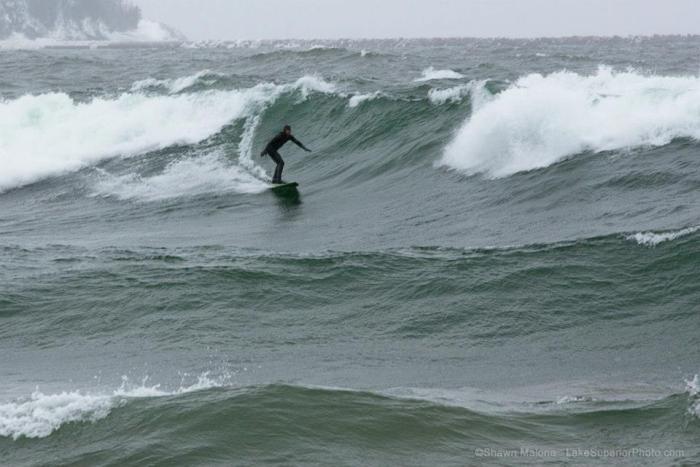
Marquette MI Surf 04-12-2013, photo by Shawn Malone/Lake Superior Photo

The Great Lakes Echo has a great WKAR Current State feature produced by April Van Buren that I encourage you to check out to get a real feel for Michigan surfing. It’s titled Can’t get to California? Surf the Great Lakes and features Bob Beaton, president of the Great Lakes Surfing Association and Joe Matulis, owner of East Lansing-based paddleboard and surfboard company Matuli.

The story of surfing the 25 foot waves at Grand Haven the night the Fitz went down is reason alone to check it out, and this 15 minute feature takes you from the birth of Michigan surfing in the 70s when they tore the masts off of sailboats and made their own boards, to the recent past when they … well … still made their own boards while learning to surf to be more employable as ocean lifeguards, and all the way up to the present day with heated wetsuits that let you surf two hours in the dead of winter without a break. Except for the winter waves because this is Michigan, so of course the best waves are found in winter!

If you’re talking about cold weather surfing, it doesn’t get much colder than Lake Superior in April! Check out Shawn’s photo bigger and get many more from this April surfing session on Lake Superior in Marquette in her Marquette MI Surf 04-12-2013 album on Facebook. Shawn also has a gallery of some long period Superior winter waves at lakesuperiorphoto.com that was featured in Surfer’s Journal.

Lots more surfing on Michigan in Pictures.