Farlane Friday: Fall Color from Sugar Loaf

Fall Color from Sugar Loaf

Fall Color from Sugar Loaf by Andrew McFarlane

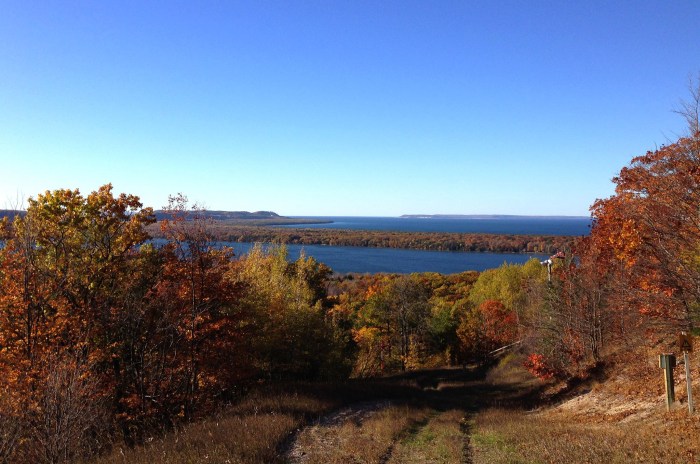
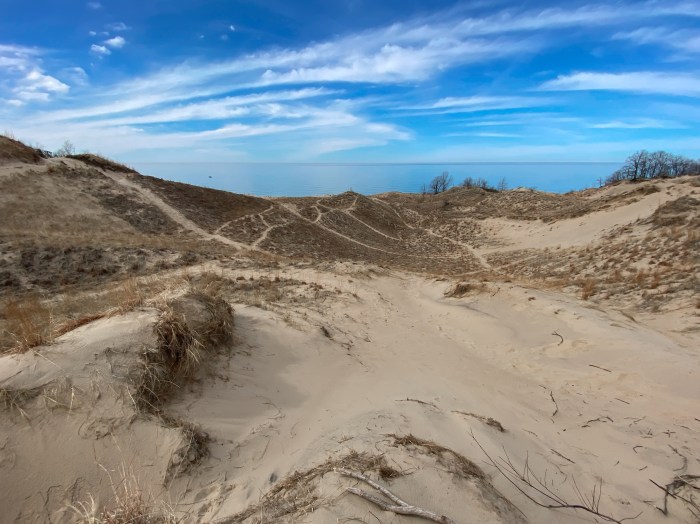
Every so often I like to sprinkle in one of my own photos on Michigan in Pictures, and today is one of those days! I took this photo on October, 22, 2018 at the long-shuttered Sugar Loaf Resort on the Leelanau Peninsula. The ski run was called Devil’s Elbow, and you can see Little Traverse Lake, Lake Michigan, and South Manitou Island & Pyramid Point in the Sleeping Bear Dunes National Lakeshore (shout out to the Lakeshore for yesterday’s 51st birthday!)

While the color isn’t as spectacular this year as 2018, it’s still pretty nice. Also, fun fact: when I was 11 years old an out of control man ran me off the left side of the Elbow. I slid over 100′ down a very steep hill, broke my arm & had to be pulled out by a rope with a snowmobile by the Ski Patrol. You know I was right back at it as soon as the arm healed!!

If you want to read the long & depressing saga of the ski area, head over to Sugar Loaf Resort on Leelanau.com!

Support Michigan in Pictures with Patreon

The Magic Of That Day Was Written In The Sky

The Magic Of That Day Was Written In The Sky by David Hoffman

The Magic Of That Day Was Written In The Sky by David Hoffman

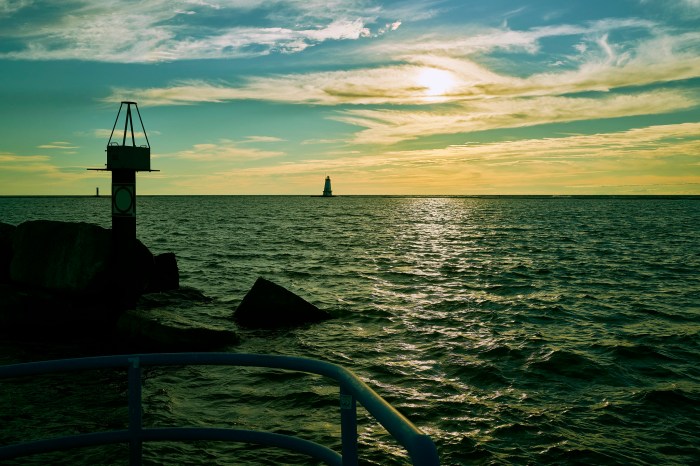
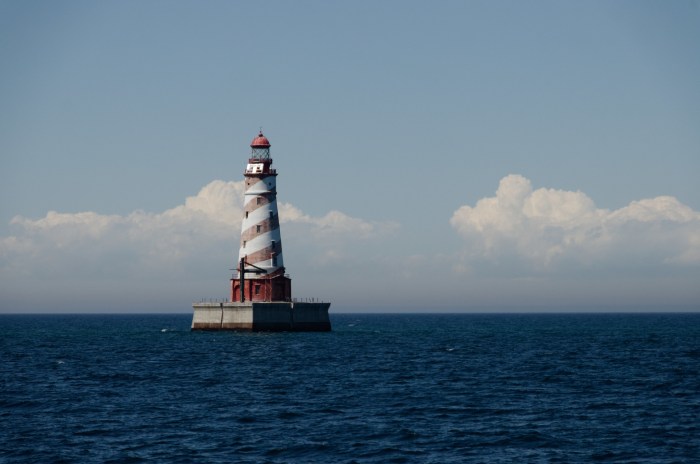
Sweet shot of the view of Lake Michigan from Ludington. See more in David’s Lighthouses gallery on Flickr

Have a great weekend everyone & see more lighthouses on Michigan in Pictures.  

Support Michigan in Pictures with Patreon

Sleeping Bear Dunes National Lakeshore turns 51 today!

Sleeping Bear Dunes National Lakeshore by Thomas DB

Sleeping Bear Dunes National Lakeshore by Thomas DB

(via leelanau.com) On October 21st, 1970 the Sleeping Bear Dunes National Lakeshore became the third US National Lakeshore. The online book A Nationalized Lakeshore: The Creation & Administration of the Sleeping Bear Dunes National Lakeshore has a good overview of what was a remarkably contentious issue back in the day:

A Nationalized Lakeshore: The Creation & Administration of the Sleeping Bear Dunes National Lakeshore Beginning in 1919 a small portion of what is now the national lakeshore was set aside as a state park. The idea of a national park in northwestern Michigan did not surface until the National Park Service’s Great Lakes Shoreline Survey visited the area in 1958. Between 1959 and 1970 there was a continuous and controversial effort in Congress to create a park unit around the Sleeping Bear Dune. The legislative leader of the Sleeping Bear park proposal was United States Senator Philip A. Hart. The senator’s persistence and patience in the end led to the creation of Sleeping Bear Dunes National Lakeshore on October 21, 1970.

Opposition to the creation of the lakeshore was very strong among local summer homeowners. More than 1,400 tracts of private land had to be acquired to create the lakeshore. A heavy-handed, poorly planned land acquisition program reinforced the bitterness that surfaced during the decade of struggle that preceded authorization. The legacy of those actions has been twofold. On one hand the National Park Service has been vilified by many local property owners and the park staff have had to work in an environment that is unnecessarily confrontational. On the other hand, the presence of an organized local populace wary of National Park Service policy has influenced for the better the development of the national lakeshore. Local sentiments played an important role toning-down the agency’s initial plans to intensively develop the area’s recreational assets. More recently local sentiment has influenced the agency’s approach to the lakeshore’s rural cultural landscapes. Unfortunately, resistance to the National Park Service in the region has also hindered opportunities to bring more land under protection and to develop scenic drives for park visitors.

The National Park Service conceived the Sleeping Bear Dunes lakeshore at a time when the shores of Lake Michigan were rapidly undergoing privatization. Subdivisions of vacation and year round homes threatened to keep ordinary citizens from enjoying Michigan’s broad, sandy shoreline. A nationalized lakeshore along the beaches and bluffs of the Sleeping Bear made available for all what might have been enjoyed only by a select few. The cost was millions of dollars of federal funds and the hopes and dreams of hundreds of small property owners. Sleeping Bear Dunes was a tragedy for the latter and a wise investment of the former.

Indeed. You can read lots more in A Nationalized Lakeshore.

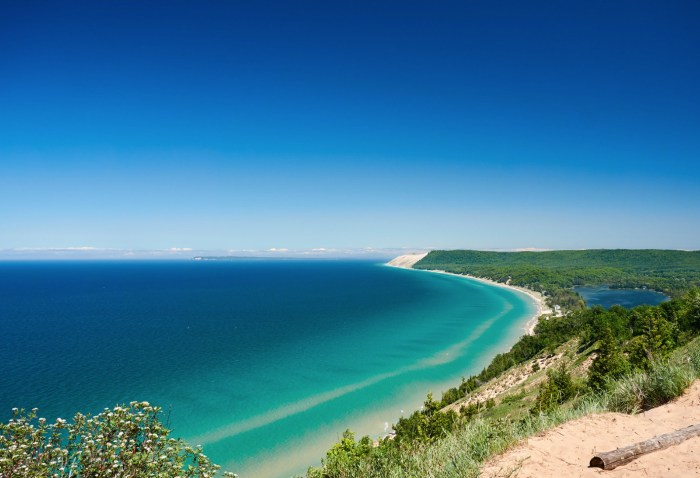
It was hard to pick a photo for this post, but I ended up going with Thomas’s beautiful shot from June of 2016 of my favorite view in the Lakeshore atop the Empire Bluffs where you can see South Bar Lake, the southern end of the main dune complex, and the Manitou Islands in the distance. See more in Thomas’s 6/1-6/3/16 Grand Traverse & Leelanau gallery on Flickr.

Support Michigan in Pictures with Patreon

Good to the last drop

Good to the Last drop by Rudy Malmquist

Good to the Last Drop by Rudy Malmquist

Rudy got a stunning shot of the view from the Pierce Stocking Overlook in the Sleeping Bear Dunes National Lakeshore. Head over to his Flickr for more!

Support Michigan in Pictures with Patreon

The Great Lake Michigan

The Great Lake Michigan by Kate Dailey

The Great Lake Michigan by Kate Dailey

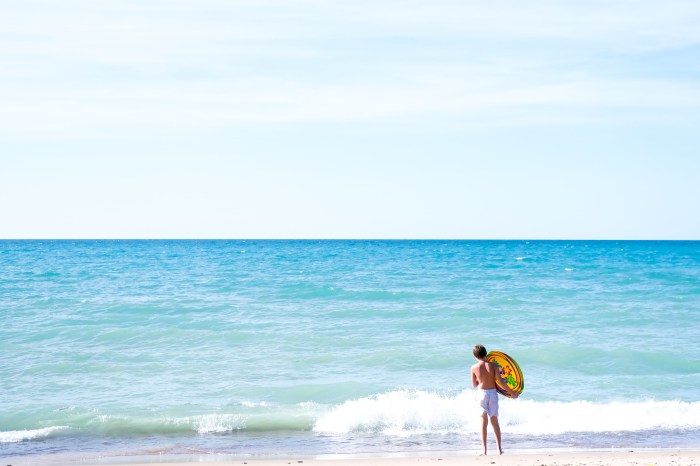
Michigan has 3,288 miles of coastal shoreline, more than any other state except Alaska, and this weekend is the perfect time to get yourself to the Great Lakes coast before summer is gone!

Kate took this photo earlier in August. See more on her Flickr!

PS: With 1640 miles of shoreline, Lake Michigan has just about half of that coastline! See much more of Lake Michigan on Michigan in Pictures!

Support Michigan in Pictures with Patreon

Riders on the Great Lakes Storm

via leelanau.com…

Riders on the Storm by Mark Smith

Riders on the Storm by Mark Smith

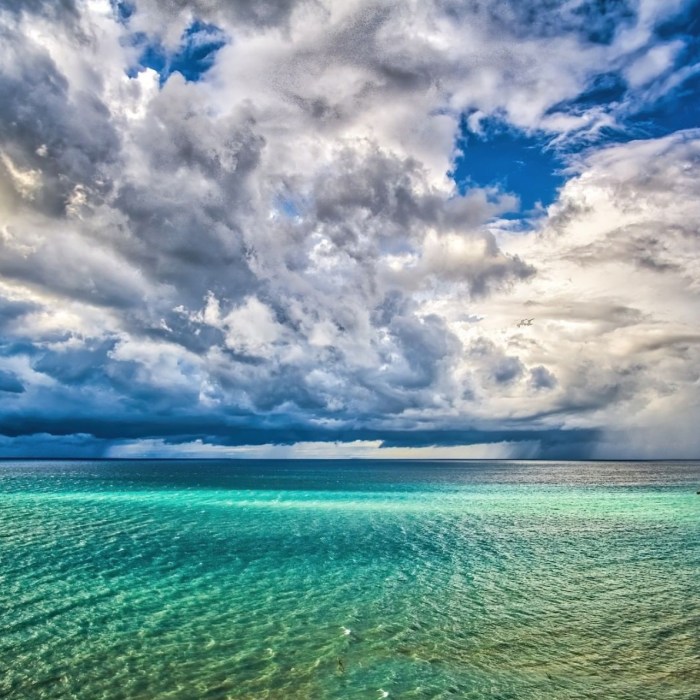
Here’s a simply stunning shot by Mark Smith of a stormfront rolling over the Manitou Islands. Follow Mark on Instagram @downstreamer7 for more & view & purchase his work at Leelanau Landscapes Photography.

Support Michigan in Pictures with Patreon

White Shoal Light & Terry Pepper

White Shoal Light by Joel Dinda

White Shoal Light by Joel Dinda

Terry Pepper was almost certainly the greatest champion ever for the lighthouses of the Great Lakes. Although he passed in 2019, his Seeing the Light website remains as a fantastic resource for the lighthouses of the western Great Lakes. The White Shoal Lighthouse entry says (in part, because these are VERY thorough):

Located approximately 20 miles east of Mackinac Point and 2.6 miles northwest of Waugoshance Island, the shallows around White Shoal had long presented a hazard for vessels entering the Straits from the either the North Shore or the Manitou Passage. Lying in an east/west orientation, and almost two miles long, the shoal was so shallow that its west end broke the water’s surface. With the dramatic increase in vessel traffic in the late 1880’s, the Lighthouse Board specifically identified White Shoal, Simmons Reef and Gray’s Reef as three Straits-area navigational hazards requiring immediate demarcation.

…Spring of 1908 saw work begin on the White Shoal light on two separate fronts. While a crew at the site leveled a one hundred and two-foot square area on the shoal through the addition and careful placement of loads of stone, a second crew worked on building a timber crib on shore at St. Ignace. Seventy-two feet square and eighteen and a half feet high, the huge crib contained 400,000 square feet of lumber, and on completion was slowly towed out to the shoal and centered over the leveled lake bottom. Once in location, the crib was filled with 4,000 tons of stone until it sank to a point at which its’ uppermost surface was level and two feet below the water’s surface.

…As work on the tower continued, the nine decks took shape within the tower. The first deck mechanical room housed the oil engine powered fog signal, heating plant, and storage for the station’s powerboat. The second deck housed a tool room, bathroom and food storage area. A kitchen, living room and one bedroom made up the third deck, with two more bedrooms and a toilet located on the fourth. A living area and another bedroom were found on the fifth deck, and the sixth and seventh contained a single open room on each. The service room made up the eighth level, and the watchroom topped the living quarters on the ninth.

Work at the station continued through the end of the shipping season in 1909, when once again the station was abandoned until work could resume with the receding ice in the spring of 1910.

Work crews returned to the station on the opening of the 1910 navigation season, and the the tower was capped with a circular watch room and lantern room, both of twelve and a half feet in diameter. The aluminum lantern featured helical astragals, which the Board had recently begun incorporating in new construction, since it was believed that they offered less light interference than the vertical astragals that had been prevalently used for the past sixty years. As construction of the tower wound to completion, the entire structure from the crib deck to lantern ventilator was given a coat of bright white paint, designed to improves the structure’s visibility during daylight hours.

More from Seeing the Light & definitely check out the tribute to Terry Pepper from the Great Lakes Shipwreck Museum

Joel took this photo from Shepler’s ferry Hope during a Great Lakes Lighthouse Keepers Association lighthouse cruise in June of 2014. See more in his Lighthouse Cruise 6/16/2014 gallery on Flickr.

Support Michigan in Pictures with Patreon

Sail into the sunset … and weekend

Sunset Sailing by TP Mann

Sunset Sailing by TP Mann

TP shares: 

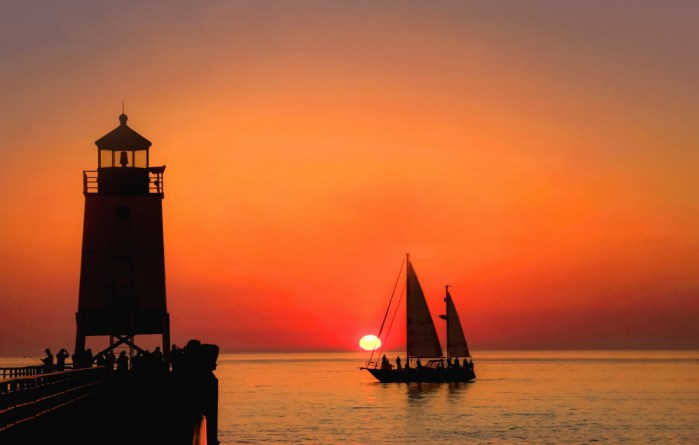
This shot was taken at one of my favorite places for photos, the lighthouse in Charlevoix Michigan along Lake Michigan. This is a case of perfect time and place.

Indeed!! Hope you get some of those “perfect time & place” moments this weekend & this summer.

Check out more stunning shots in TP’s Explored gallery on Flickr.

Support Michigan in Pictures with Patreon

Get all the stars at Wilderness State Park

The Milky Way over Lake Michigan at Wilderness State Park by Diana Robinson

The Milky Way over Lake Michigan at Wilderness State Park by Diana Robinson

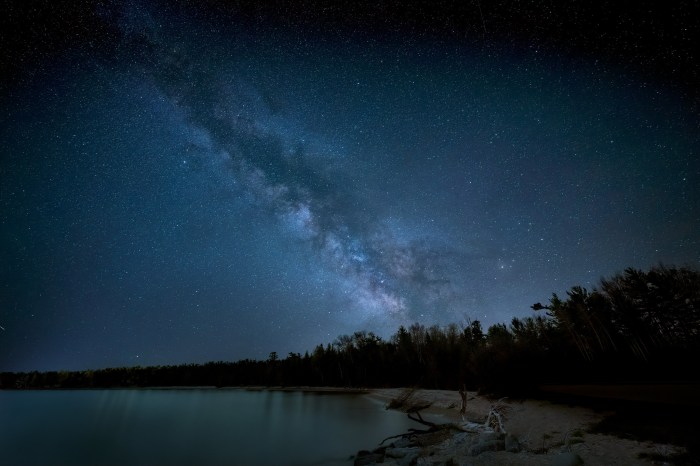
The Michigan DNR explains that Wilderness State Park is one of Michigan’s Dark Sky Preserves:

Michigan is lucky to play host to both dark sky preserves and parks that offer stellar celestial landscapes. These locations are specially designated because they have qualities that complement nighttime viewing, such as the ability to limit the amount of artificial light. There are also plenty of excellent night-sky viewing opportunities across more than 15,000 square miles in Michigan’s Upper Peninsula.

Diana took this photo earlier in May & you can see more in her Night Photography gallery on Flickr.

More great night photography on Michigan in Pictures!

Support Michigan in Pictures with Patreon

Beautiful Grand Mere Dunes

Beautiful Grand Mere Dunes by Mark Swanson

Beautiful Grand Mere Dunes by Mark Swanson

Michigan Trail Maps says that Grand Mere State Park:

…is a 985-acre unit in Berrien County that lacks the amenities found in most other state parks along Lake Michigan, including a campground and even direct access to its mile of Lake Michigan shoreline. It attracts only a fraction of the visitors that flock to parks such as Warren Dunes or Hoffmaster. Yet from a naturalist’s point of view Grand Mere is one of the most inquiring set of dunes in the state, an area so ecologically diverse that it 1976 it was designated a National Natural Landmark by the U.S. Congress.

The glaciers that scooped out the Great Lakes 10,000 years ago also carved out a number of smaller depressions along the western edge of the state, which evolved into interdunal lakes, ponds, and wetlands. At one time, this area contained a chain of five such lakes that were protected ecologically by a line of windblown sand dunes between them and Lake Michigan. Now there are only three, a result of aquatic succession. Today Grand Mere is a textbook example of the various stages of succession from aquatic communities to terrestrial. Beginning at North Lake, you can see how each lake is progressively disappearing, with open water first turning into marsh and then woodland swamps and closed bog forests, the fate of the former two lakes that lie south of the park.

Almost 4 miles of trails form a loop through open dunes and the wooded areas of the park, but the only designated trail is a half-mile Nature Trail. The paved, handicapped accessible trail extends from the picnic shelter around South Lake, passing 10 interpretive posts that correspond to back of the park map. The rest of the trails are neither posted nor maintained. The most distinguishable trail extends almost a mile from a small parking area off Wishart Road to the west end of the Nature Trail.

Mark took this photo a couple months ago & you can see more in his Spring gallery on Flickr.

Support Michigan in Pictures with Patreon