Ice is Nice at the Menominee Light Lighthouse

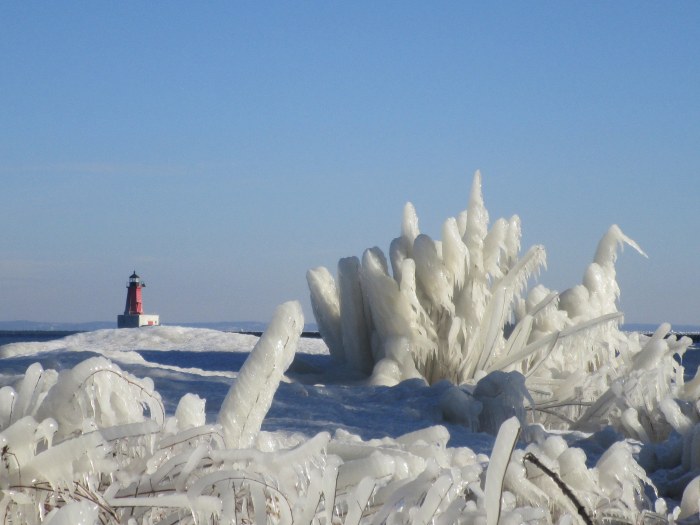
Ice is Nice Menominee Light Lighthouse

Ice is Nice, photo by cohodas208c

I’ll never miss a chance to tout Terry Pepper’s Seeing the Light as one of the premier resources for information about Michigan’s lighthouses, as well as others on the Great Lakes. He packs them full of the history including the political maneuverings and economic reasons for lighthouse development and closure and peppers in (sorry – couldn’t resist) historical photos and pictures from his own visits.

The entry on the Menominee North Pier Light details the lumber boom that led to the construction of the first lighthouse in 1877 and the development of the iron ore rich Menominee Range. He continues:

The town of Menominee continued to reap the benefits of the Range, and as a result significant harbor improvements were undertaken in the 1920’s, At their completion in 1927, a prefabricated octagonal cast iron tower was delivered by vessel, and lowered onto the pier.

The thirty-four foot tower was painted white, and integrated with an attached fog signal building. An elevated wooden catwalk stretched along the wooden pier to provide the keepers with safe access to the light during periods when waves crashed across the surface of the pier. The octagonal cast iron lantern room was outfitted with a Fourth Order Fresnel lens of unknown manufacture.

At some point thereafter, the wooden pier was replaced by a concrete structure with a forty-foot diameter circular crib at its offshore end. At this time, the fog signal was eliminated with the inclusion of an automated electrically operated signal in the tower. With automation of the light in 1972, the need for daily maintenance of the light was also eliminated, and the iron catwalk was removed from the pier.

The tower was painted bright red, and relocated to a white painted concrete platform in the center of the crib. Its elevated position on the pier provided a focal plane of forty-six feet.

While the catwalk no longer snakes its way along the pier, the iron tower still stands guard over the harbor entrance, its jewel-like Fresnel lens replaced by a stark modern 300mm plastic lens.

Read on for more at Seeing the Light.

View the photo background bigilicious and see more in cohodas208c’s Big City Breakout – Dec 2015 slideshow.

Lots more Michigan lighthouses and more winter wallpaper on Michigan in Pictures!
Help Keep Michigan in Pictures Rockin’

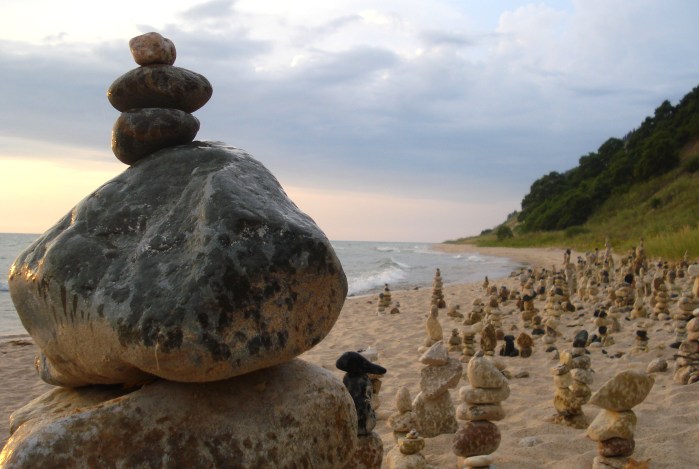
Frankfort Rock Gallery 2008

Rain Comes (Frankfort Rock Gallery), photo by Andrew McFarlane

As you may know, 2016 is my 11th year of making Michigan in Pictures. I really love doing it and am certainly going to keep it up as long as I am able. It does take a bunch of my time that might otherwise be spent working or getting out to see some of Michigan’s beauty, so I’ve been looking for a way to subsidize it that doesn’t involve ads, paywalls, or other annoyances.

Yesterday, I was reading a blog and saw they had a button to support them using a web service called Patreon. I checked it out, and it basically allows readers to become patrons of blogs they enjoy. Seemed like a great idea to me so I have set it up. If you’d like to donate a buck or more a month, I would very much appreciate it! Click here for my Patreon donations.

OK, on to today’s photo. Back in August of 2007, I was out walking with my friend Ken Lake on Frankfort beach. About a mile north of town we rounded a point and came upon a wondrous site – hundreds of balanced rock sculptures comprised of thousands of rocks. It remains one of the coolest works of art I’ve ever seen, and also a total mystery. I’ve still never heard who built these or why.

You can view this photo background bigtacular and see more in my Rock Gallery slideshow.

PS: Here’s a video I shot of these scene. The audio on this is kind of loud and crappy – sorry. ;)

Put it all on red

RED cardinal in fence

RED, photo by Sandy Hansen Photography

What an awesome capture. View Sandy’s photo bigger and see more in her Traverse City Area slideshow.

Michigan Castles: Meadow Brook Hall in Rochester

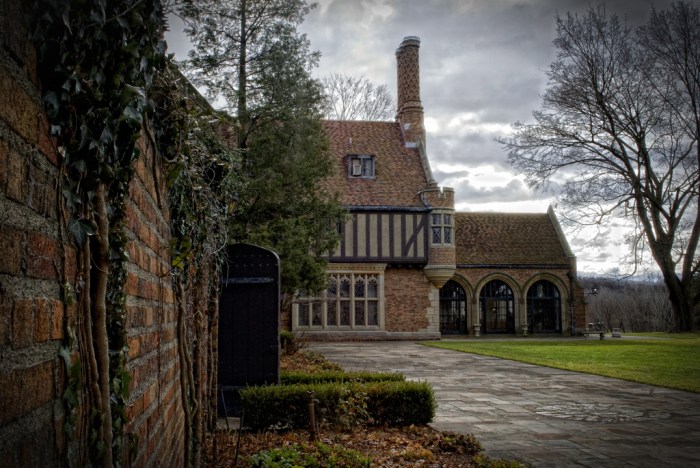
Meadowbrook Castle by Anna Lysa

Meadow Brook Hall, photo by Anna Lysa

The Lansing State Journal had a recent feature about Five Michigan Castles that includes Michigan’s largest castle, Meadow Brook Hall in Rochester:

Meadow Brook Hall was built between 1926 and 1929 by Matilda Dodge Wilson, widow of early auto magnate John Dodge, and her second husband, lumber baron Alfred Wilson. The 110-room home features carved wood and stone details and plaster ceilings and is modeled after the great country estates of England, which they toured on their honeymoon. During construction of the home in 1927, they went on a second architectural tour of England with their architect in tow. The house cost $4 million to build (more than $54 million in today’s dollars), and the Wilsons hosted a gala housewarming party for 850 people in November 1929.

Matilda died in 1967, bequeathing the estate and $2 million in seed money to create Oakland University. The house opened to the public in 1971.

Tours are available and you can get more info about those along with photos and info about four more castles in the LSJ. The Meadow Brook Hall history page has a lot more information, and adds that the castle:

…represents one of the finest examples of Tudor-revival architecture in America and is especially renowned for its superb craftsmanship, architectural detailing and grand scale of 88,000 square feet. Inspired by the country manor homes in England, it was designed and built by the Detroit architectural firm of Smith, Hinchman and Grylls between 1926 and1929, at a cost of nearly $4 million.

The exterior combines various textures and patterns using American materials of brick, sandstone, wood timbers and a roof of clay shingle tile. The house also features 39 uniquely designed brick chimneys that distinguish the picturesque roofline.

….The exterior and most of the interior rooms at Meadow Brook Hall were designed in the Tudor-revival style. However, a few rooms were decorated in other period-revival styles: the dining room and Matilda’s study are 18th-century Neo-classical, Matilda’s room and the French bedroom are 18th-century French Rococo, and Frances’ bedroom is American Colonial.

View Anna Lysa’s photo bigger and see more in her Michigan slideshow.

PS: There’s features on Owosso’s Curwood Castle and Kalamazoo’s Henderson Castle (now a B&B) as well as lots more Michigan architecture on Michigan in Pictures!

Check ignition, and may God’s love be with you

photo date/id to order a print: click the pic to view on black
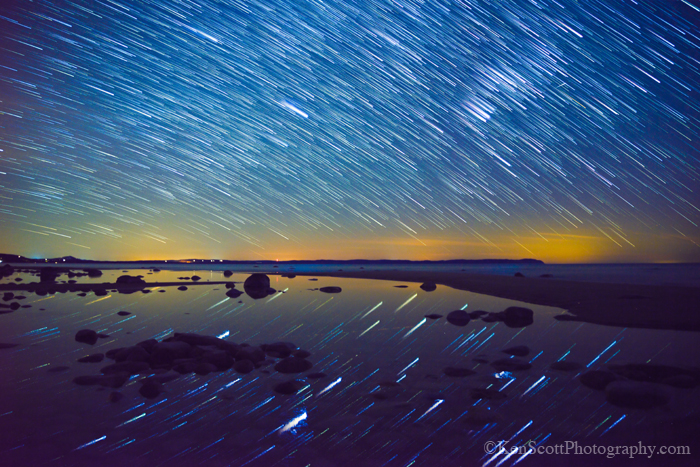
Good Harbor Bay starry night, photo by Ken Scott Photography

“If you’re ever sad, just remember the world is 4.543 billion years old and you somehow managed to exist at the same time as David Bowie.”
~Dean Podestá

When I was a kid my parents had a kicking stereo, and the album we decided was the most rocking was Space Oddity. We would turn the title track up to 11, turning the windows of the old farmhouse into a crazy bass reverberator and dance around and sing. Probably because of the science fiction/fantasy feel of the album, Bowie was my first rock idol, and he’s always remained a favorite for giving voice to the struggle of fitting into a world that doesn’t always fit you and the need reinvent yourself again and again.

View Ken’s photo bigger, see more in his massive Skies Above slideshow and be sure to follow him on Facebook.

Now here’s a video of Space Oddity … I find I don’t care that he’s probably lip synching.

The Ghost Forest in Silver Lake Dunes

Ghost Forest

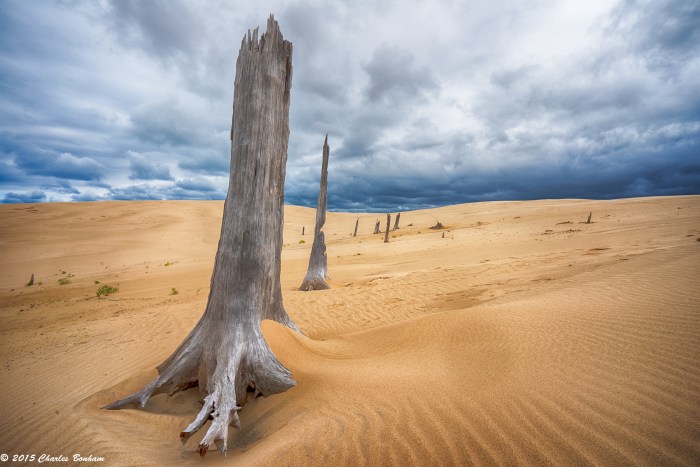
Ghost Forest, photo by Charles Bohnam

The Silver Lake State Park page at Michigan Trail Maps says in part:

Not all of Michigan’s great hikes are trails. This trek is a journey through Silver Lake State Park’s trailless backcountry, a mile-wide strip of dunes between Silver Lake and Lake Michigan. There’s not another hike like this in Michigan or even the Midwest because no other stretch of dunes are so barren.

Perched on a plateau and rising more than 100 feet high above Silver Lake, the heart of these dunes are totally devoid of any vegetation, even dune grass. The only thing besides sand are the stumps and trunks of ghost forests, ancient trees that the migrating dunes had buried and killed. Almost half of the hike is in this Sahara Desert-like terrain, the other half is spent strolling a stretch of Lake Michigan that is free of cottages and frozen custard stands.

A rare hike indeed.

View Charles’ photo background bigilicious and see more in his slideshow.

More dunes and more summer wallpaper on Michigan in Pictures.

O Tree, Live Forever

Kalamazoo Tree

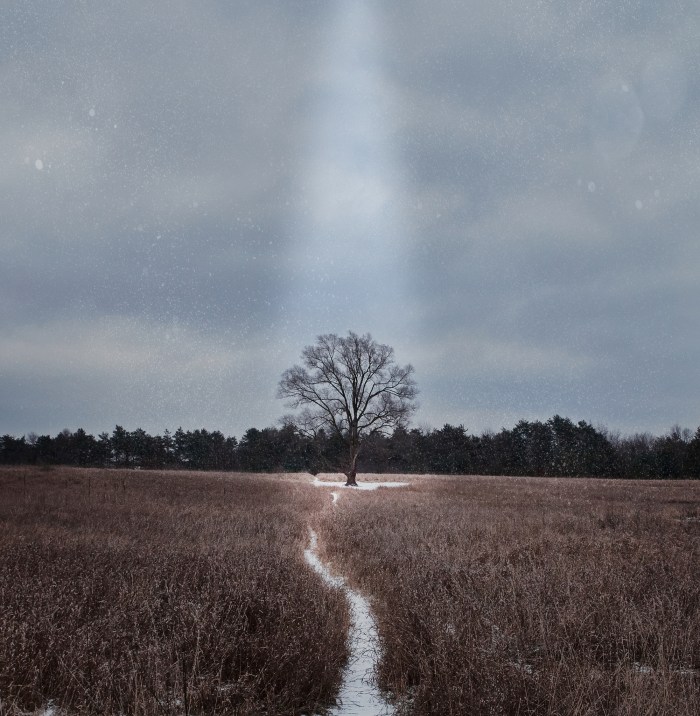
O, tree, live forever, photo by Bill Dolak

Bill writes:

This tree in the Al Sabo Preserve in Kalamazoo County is a frequent subject and accessory for local photographers. I have images of it from the days I was still putting film into my SLR.

Regarding the Al Sabo Preserve, the Texas Charter Township Parks & Rec page says:

The Al Sabo Land Preserve was established in the early 1970’s in order to protect the groundwater supply of the Atwater wellfield. The 741 acres were purchased in the late 1960’s and a master plan was developed for its use as a passive recreation nature preserve. The City of Kalamazoo passed an ordinance that would ensure its protection as a water resource. The wetlands and sandy soils serve as a recharge area for the area’s groundwater.

View Bill’s photo background big and see more in his Al Sabo, Michigan slideshow.

#TBT: Rephotographing Michigan, Baraga Edition

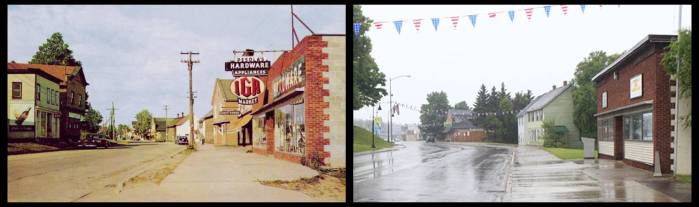
Downtown Baraga Michigan

Downtown Baraga, photo by Rephotographing Michigan

Paul started Rephotographing Michigan a few months ago. It’s a project to take old postcards of Michigan and photograph what the scene looks like today.

This photo shows downtown Baraga – check it out bigger and see lots more on the Rephotographing Michigan Facebook page!

Yellow Dog Falls and Michigan’s Water

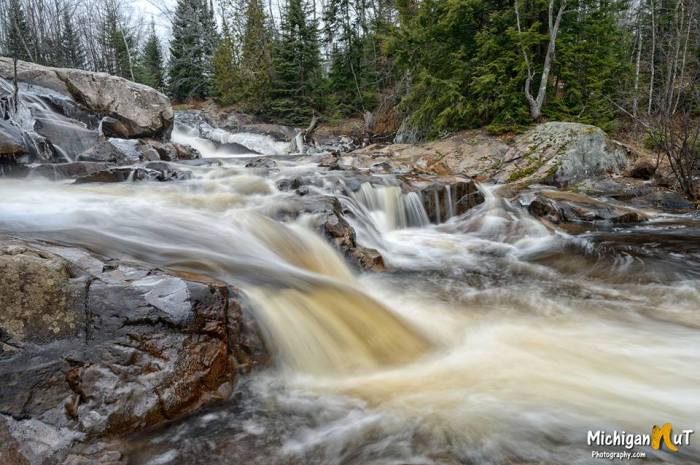
Yellow Dog Falls near Big Bay

Yellow Dog Falls near Big Bay, photo by Michigan Nut Photography

Have I said lately how great Go Waterfalling is? It’s the best! There’s comprehensive and informative listing with solid advice for visiting waterfalls in Michigan, neighboring Ontario & Wisconsin and the rest of the nation from California to West Virginia.

The Go Waterfalling page on Yellow Dog Falls says (in part):

Yellow Dog Falls is the name given to the main drop on the Yellow Dog River east of Country Road 510. The river steadily descends on it way down to Lake Superior, and there are at least seven drops of varying sizes. Many are only a few feet in height. At Yellow Dog Falls the river drops over 20 feet in a short distance. This feature is distinctive because of the large boulder that splits the falls in two.

The falls is located off of County Road 510. Just south of the bridge over the Yellow Dog River there is a small parking area on the east side. There is a trail to the main falls, which are about 1 mile downstream. The trail continues, but becomes increasingly faint for another mile or so, taking you past half a dozen rapids and small falls.

More including directions, maps and photos at Go Waterfalling.

Full disclosure: I can’t talk about the without thinking about the Eagle Mine, a ticking time bomb that sits at the headwaters of this beautiful river. I’ll let you draw your own conclusions on this mine, pro and con. I will say that acid sulfide mines have done this to rivers in the West and that acid mines from a hundred years ago in Colorado and two thousand years ago in the Roman Empire continue to seep pollution.

A decade ago I worked with a group of local citizens, business owners, and organizations on Save the Wild UP, an organization dedicated to keeping sulfide mining out of Michigan.The mine was ultimately established and more are planned, including uranium mines. Sulfide mines, and any project that carries a significant risk of pollution are not Pure Michigan in any way, and I will always call to reject threats like this to the water that is our economic and spiritual lifeblood.

John aka Michigan Nut writes: Yellow Dog Falls near Big Bay, Michigan. It was really quite remarkable what little snow and ice there was on Christmas Day. The road to this falls is normally part of a designated snowmobile trail this time of year.

View the photo bigger and see lots more on the Michigan Nut Photography Facebook page.

More mighty Michigan waterfalls on Michigan in Pictures.

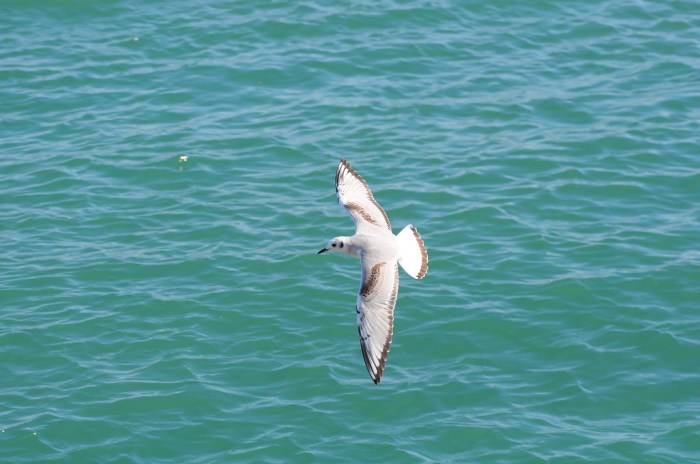
Bonaparte’s Gull (Chroicocephalus philadelphia)

Bonapartes Gull

Bonaparte’s Gull, photo by James Salinas

All About Birds has this to say about Bonaparte’s Gull (Chroicocephalus philadelphia):

A small, graceful gull with bright white patches in its wings, the Bonaparte’s Gull winters near people, but breeds in the isolated taiga and boreal forest.

  • The Bonaparte’s Gull is the only gull that regularly nests in trees.
  • The English name of the Bonaparte’s Gull honors Charles Lucien Bonaparte, who made important contributions to American ornithology while an active member of the Academy of Natural Sciences of Philadelphia during the 1820s. The scientific name philadelphia was given in 1815 by the describer of the species, George Ord of Philadelphia, presumably because he collected his specimen there.
  • During the breeding season, the Bonaparte’s Gull feeds mainly on insects, often catching them on the wing.
  • Breeds around lakes and marshes in boreal forest. Winters along lakes, rivers, marshes, bays, and beaches along coasts.
  • Eats small fish and large invertebrates, including insects. Does not eat garbage or carrion.

Read on for more and some photos and the gull’s distinctive call.

James took this photo in Port Huron. View it bigger and see more in his slideshow.

Lots more Michigan birds on Michigan in Pictures!