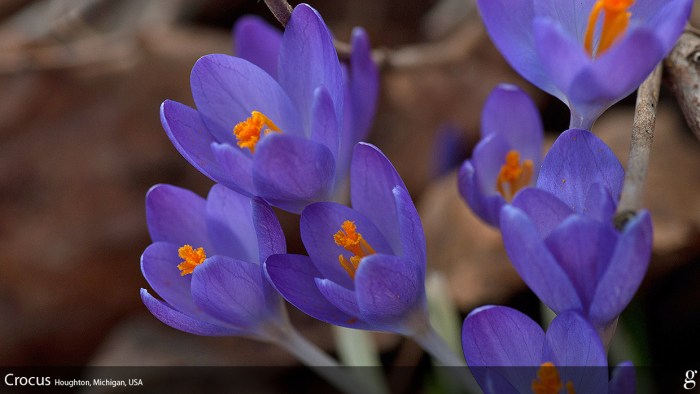
Yesterday afternoon I came across some crocus shoots while walking in Leland, and last night my friend Carrie reported hearing spring peepers from her house in Kewadin near the north end of Elk Lake. Wow!
My post on Tuesday generated a little controversy because I stated who I was supporting in Michigan’s primary and also that I’d continue to share my personal opinions here on Michigan in Pictures. Most readers who commented agreed, including Jim Schaefer who shared the most powerful comment I’ve ever read on my work:
Dear Farlane…I’m so glad you posted item #4 today along with the great photo. I had to move to Sheboygan, WI in 2014 for health reasons, leaving behind 45-yrs of life in Flint, MI. I’ve been saving your photos and their accompanying stories on a daily basis for several years now in their own special folder on my laptop. They are my daily reminder about all of the good things about Michigan that some Michigan residents seem to take for granted.
Unfortunately, some of these same people have conveniently forgotten about your 1st Amendment rights to editorialize on your own website. Shame on them! I am also a 72-yr old Army veteran who served a 13-month tour in a combat zone in Korea in 1966. That’s why I’m so glad that you reminded people to vote today. I was drafted against my will back in 1966 but I served my country and did my job over there and I’ll be damned if I’m going to let anyone take away my right to vote. So you keep right on posting all of those great photos along with the Michigan history behind them.
May God bless you always…Jim Schaefer
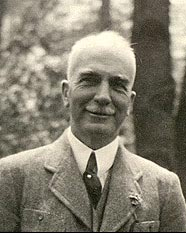
God bless you too Jim, and here’s something for your desktop folder from Flint! The Charles Stewart Mott Foundation shares this about their founder:
Charles Stewart Mott
Charles Stewart Mott established the C.S. Mott Foundation in 1926, in response to his deep concern about the welfare of Flint, Mich., as well as his abiding affection for his adopted community.
An automotive pioneer, Mr. Mott was an original partner in the creation of the General Motors Corporation, founded in Flint in 1908. As one of the city’s leading industrialists, Mr. Mott was elected mayor, serving three terms (1912–13, 1918) during periods of overwhelming and turbulent growth in the city. As mayor he was responsible for instituting fair property assessments, orderly accounting audits, health and safety ordinances, building codes and a house numbering system.
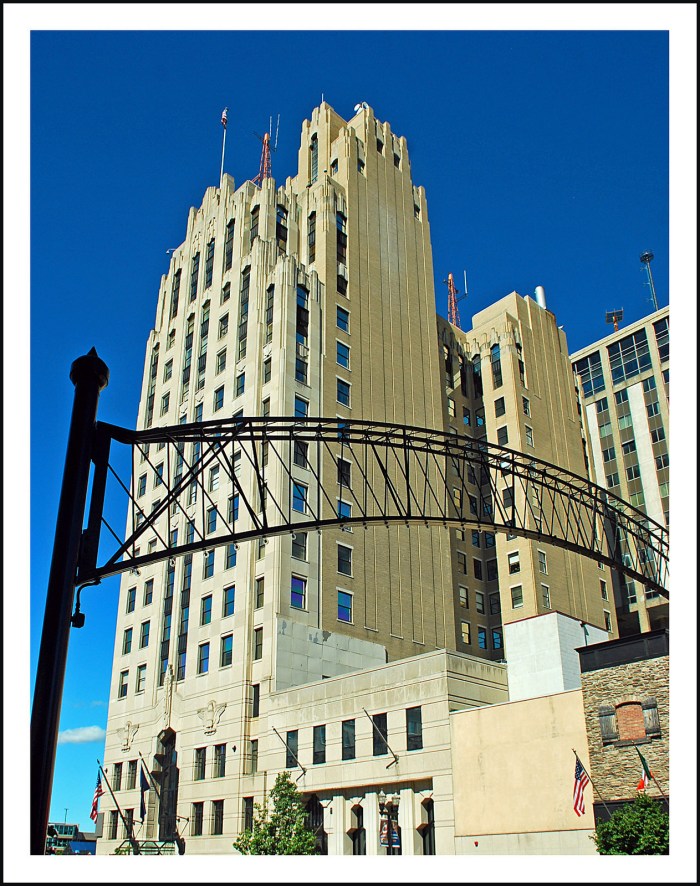
Read more about Mott in Autos not Apples. Here’s a few facts about the 16-story Art Deco building that bears his name and houses the Mott Foundation:
Flint’s first skyscraper with a total height of 226 feet to the top of the passenger elevator penthouse.
Designed by Smith, Hunchman & Grylls (SmithGroup) the oldest practicing architectural firm in the US.
Construction took one year to complete at a cost of approximately $2,000,000.
Original design included seven retail stores on the first floor. There were also originally men’s rooms on every floor, but women’s restrooms only on every other floor.
The Freight elevator is still operated with the vintage 1930 controls.
Building name was changed to the Mott Foundation Building on January 1, 1945.
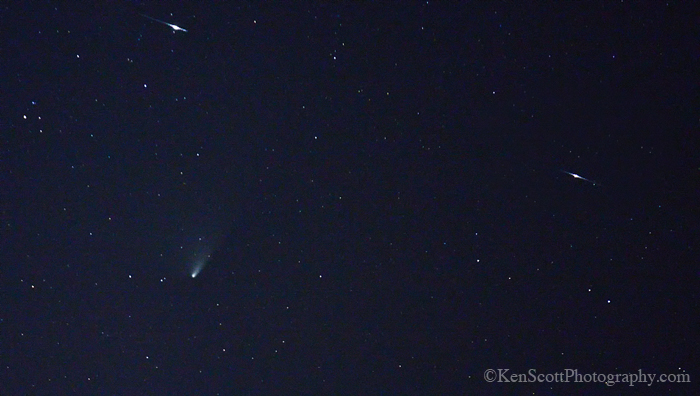
A pair of comets showing very similar orbits are approaching Earth, and astronomers will use radio-telescopes to obtain radar images, while advanced amateurs may capture images of each of the twin comets. While both will pass at a safe distance, one of them will have a record-breakingly close flyby. Comet s was already known to be passing by Earth on March 21, 2016 at a distance of 3,290,000 miles (5.3 million km). This is about 14 times the Earth-Moon distance, and, taken by itself, sets no record.
Comet P/2016 BA14 (Pan-STARRS) will safely pass Earth on March 22,2016, passing even closer than comet 252P. Comet P/2016 BA14 flyby will be at just 2,199,933 miles (3.5 million km) or about 9 lunar distances, which is very close for a comet. In fact, this comet – P/2016 BA14 – will set a record as the third-closest known comet to pass our planet in recorded history.
…First place goes to Comet D/1770 L1 (Lexell). Comet Lexell went at just 5.9 lunar distances on July, 1770. That was about 1,410,100 miles (2.3 million km), so close that Charles Messier noted the comet’s coma looked about the size of four times the apparent size of a full moon.
Read on for lots more and do yourself a favor and subscribe to their email newsletter!
On my Absolute Michigan website, I have a favorite feature called Five Things you need to know about Michigan.
Please go out and vote in the Michigan primaries today. I am going to vote for Bernie Sanders because I feel that in Michigan and elsewhere working folks, retirees, students, and many more who have ended up on the short end of a globalizing, transforming world are hurting. It seems to me that many of those we have elected to represent us have forgotten that government can be a powerful force for the betterment of society and that when profits come at the expense of others, we all suffer. Please vote for whoever you want to, and I’d love it if you took some time today to remember that you are a part of your government.
Wow. I had the chance to drive across Michigan yesterday, windows down, basking in near 60 degree temperatures and knowing that spring is on the way. Here’s hoping that the mercury stays moderate and our farmers, orchardists & vintners have a great growing season.
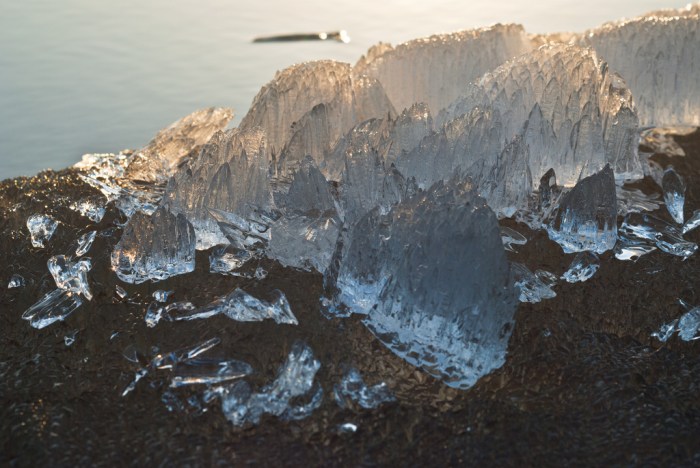
Liz Glass took today’s photo. You can visit her at the Lake Street Market in Boyne City. She shared today’s photo back in 2012 in the Absolute Michigan pool (where I get most of the photos for Michigan in Pictures). Liz wrote:
I’ve been saving some ice shots to sprinkle in during the warmer months. This is from March 15, when the ice on Lake Charlevoix had melted into a pack of splinters that could then be pushed into piles by the moving water. The color here is real. The low sun is bouncing the golden brown of the sandy lake bottom up through the ice mound, and the looser shards on top are picking up the shimmering silvers and blues of the water and sky.
If you have a problem with me being myself, please consider not telling me to “stick to the photos” and instead follow another blog/person/path that doesn’t bother you. I love Michigan, I love Michigan in Pictures, but I am an actual person who believes as I believe and does what I do. I will continue to do this, and telling me not to will just upset us both.
Congratulations! By making it to here, you can send me an idea for something about Michigan to feature. I can’t promise that I will be able to, but I can promise you that I will try and reply in any case. Just email me or post a comment below.
“If one place is as good as any other, it’s high time we decided. Otherwise when we get there, we won’t know we’ve arrived.”
~Dr. Doolittle
I swear that John Heintz is a direct descendent of Dr. Doolittle – gets the best nature photos! View his photo bigger and definitely watch his slideshow for the whole story.
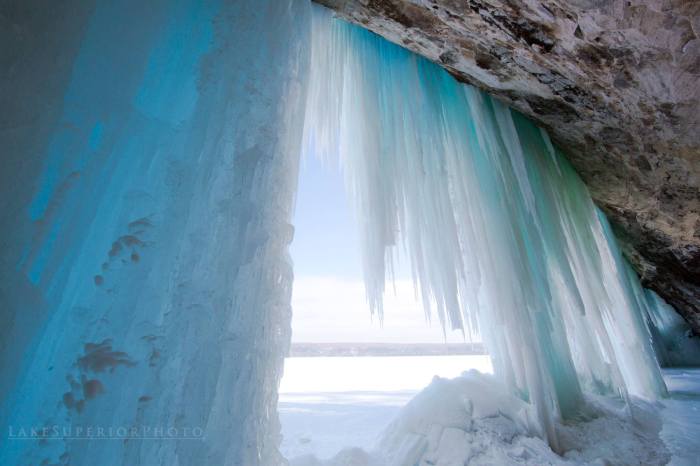
On March 1st, Shawn shared this shot from last March on Grand Island. We’ve had nowhere near the ice buildup this year – a year can really make a difference.
Also, I’d like to congratulate her on having (as far as I know) the most popular Facebook page for a Michigan photographer – 201,000+ fans for Lake Superior Photo! If you’re not one of those, I urge you to change that right now.
One of the coolest things for me about making Michigan in Pictures is when I come across something in Michigan that there’s little to no information about online.
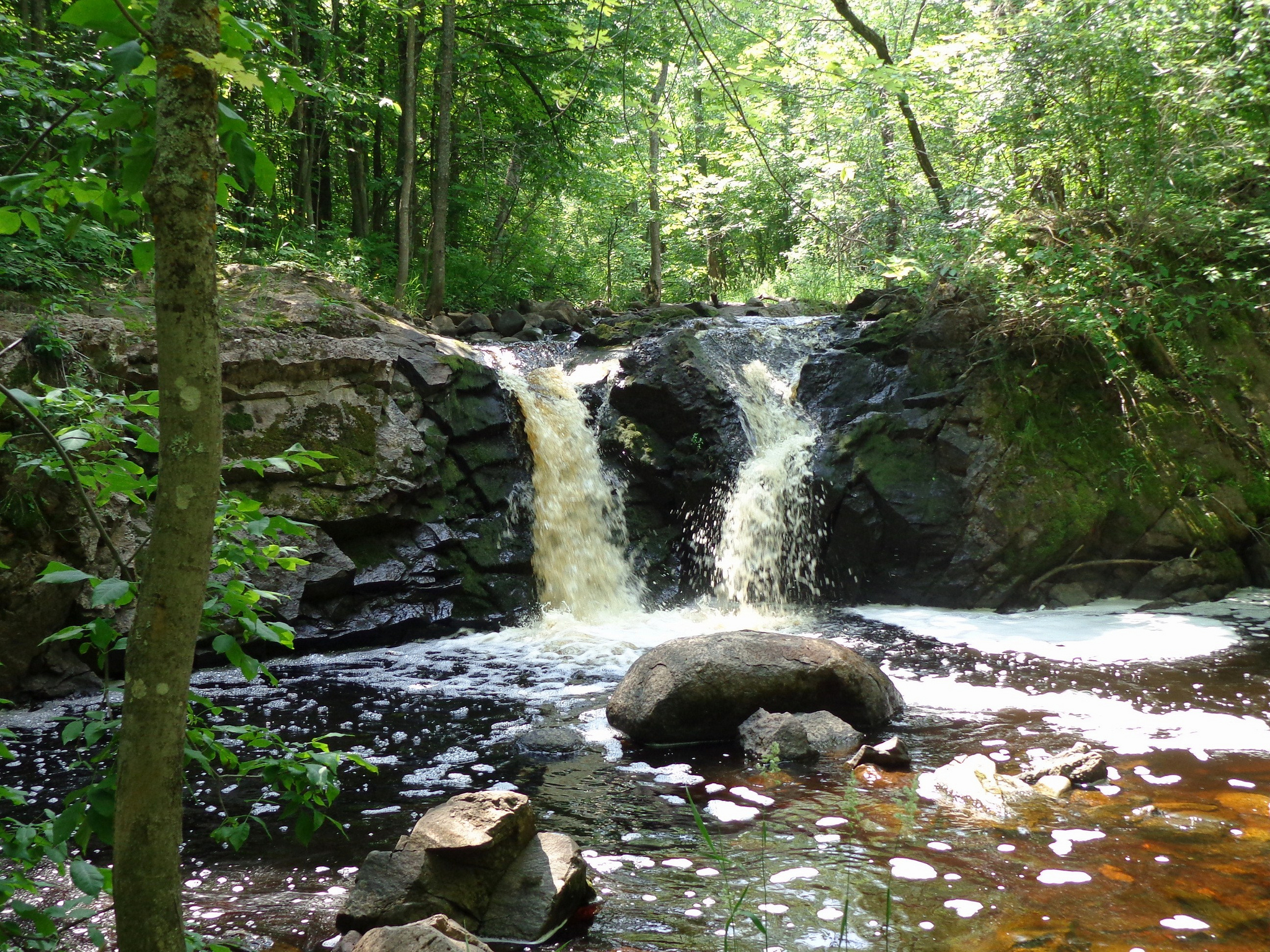
Such is the case with Root Beer Falls (map), a roughly 8′ waterfall that is located a couple of miles north of Wakefield in Gogebic County. “Rootbeer Falls” is also a name for the Tahquamenon Falls, and one would assume that the same tannins that give Tahquamenon their rich, brown color are at work here.
Douglas Feltman posted this sweet time-lapse video from Root Beer Falls last fall, saying that this small drop on Planter Creek is fed by overflow from Sunday Lake in Wakefield, just a quick walk through the woods from Wertanen Road. He has 49 more Michigan waterfall videos as well!
The photographer, David Hedquist, is the author of Waterfalling in Wisconsin and has told me he’s working on a Michigan book, so stay tuned! Sorry- I misremembered. David is NOT working on a new book. He did share that Phil Stagg of Waterfalls of Michiganis writing books though!
Hey Motor City cats & kittens – I’m visiting Detroit this Friday & Saturday. If you have thoughts about what I should be doing, please email me or hit me up through Facebook.
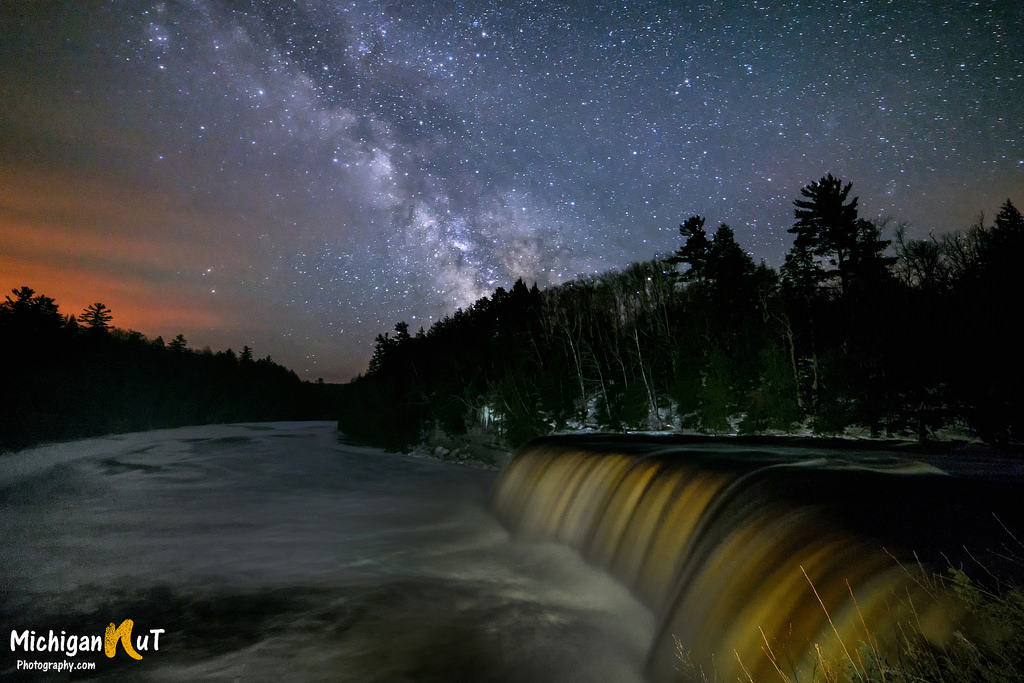
Tahquamenon Falls State Park encompasses close to 50,000 acres stretching over 13 miles. Most of this is undeveloped woodland without roads, buildings or power lines. The centerpiece of the park, and the very reason for its existence, is the Tahquamenon River with its waterfalls. The Upper Falls is one the largest waterfalls east of the Mississippi. It has a drop of nearly 50 feet and is more than 200 feet across. A maximum flow of more than 50,000 gallons of water per second has been recorded cascading over these falls.
…This is the land of Longfellow’s Hiawatha – “by the rushing Tahquamenaw” Hiawatha built his canoe. Long before the white man set eyes on the river, the abundance of fish in its waters and animals along its shores attracted the Ojibwa Indians, who camped, farmed, fished and trapped along its banks. In the late 1800’s came the lumber barons and the river carried their logs by the millions to the mills. Lumberjacks, who harvested the tall timber, were among the first permanent white settlers in the area.
Rising from springs north of McMillan, the Tahquamenon River drains the watershed of an area of more than 790 square miles. From its source, it meanders 94 miles before emptying into Whitefish Bay. The amber color of the water is caused by tannins leached from the Cedar, Spruce and Hemlock in the swamps drained by the river. The extremely soft water churned by the action of the falls causes the large amounts of foam, which has been the trademark of the Tahquamenon since the days of the voyager.


 Please go out and vote in the Michigan primaries today. I am going to vote for Bernie Sanders because I feel that in Michigan and elsewhere working folks, retirees, students, and many more who have ended up on the short end of a globalizing, transforming world are hurting. It seems to me that many of those we have elected to represent us have forgotten that government can be a powerful force for the betterment of society and that when profits come at the expense of others, we all suffer. Please vote for whoever you want to, and I’d love it if you took some time today to remember that you are a part of your government.
 Wow. I had the chance to drive across Michigan yesterday, windows down, basking in near 60 degree temperatures and knowing that spring is on the way. Here’s hoping that the mercury stays moderate and our farmers, orchardists & vintners have a great growing season.
 Liz Glass took today’s photo. You can visit her at the Lake Street Market in Boyne City. She shared today’s photo back in 2012 in the Absolute Michigan pool (where I get most of the photos for Michigan in Pictures). Liz wrote:
 If you have a problem with me being myself, please consider not telling me to “stick to the photos” and instead follow another blog/person/path that doesn’t bother you. I love Michigan, I love Michigan in Pictures, but I am an actual person who believes as I believe and does what I do. I will continue to do this, and telling me not to will just upset us both.
 Congratulations! By making it to here, you can send me an idea for something about Michigan to feature. I can’t promise that I will be able to, but I can promise you that I will try and reply in any case. Just email me or post a comment below.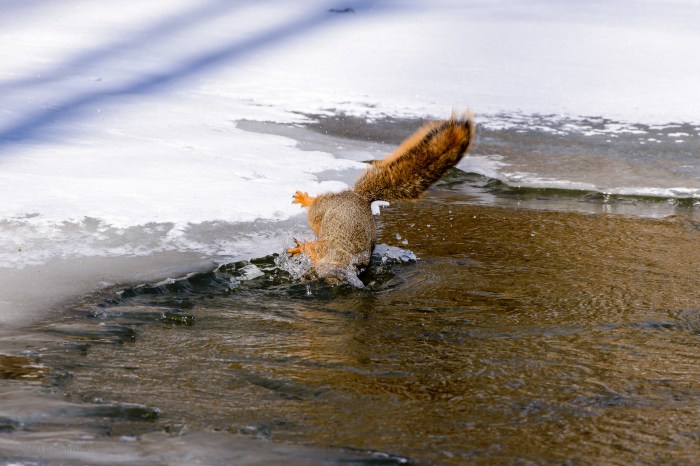


 Michigan in Pictures