The USS Michigan

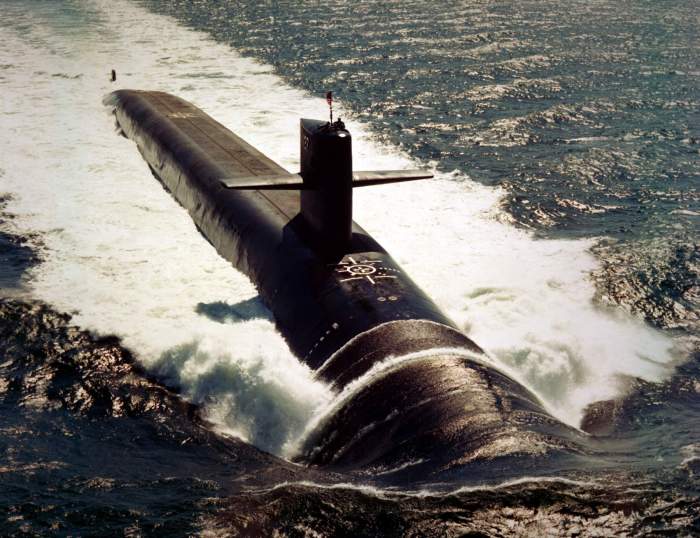
USS Michigan, photo by US Navy/Steven F LeBlanc

We move from a Coast Guard photo yesterday to a Navy photo today. While this photo showing a starboard bow view of the nuclear-powered strategic missile submarine USS Michigan (SSBN-727) was taken sometime before June of 1982 in the north Pacific, I’m going to allow it. mLive reports that the USS Michigan nuclear submarine is now operating in Korean waters:

The USS Michigan is more than 560 feet long and weighs more than 18,000 tons when submerged and is regularly deployed throughout the Western Pacific from its home port of Bremerton, Wash.

It was first launched in 1980 and commissioned two years later. It was built to carry the Navy’s third generation submarine-launched ballistic missile, the Trident C-4. The Michigan carried out its primary mission of deterrence for nearly two decades in over 60 missions.

At the end of the Cold War, it was spared from decommission and converted with two other ships to the Ohio-class sea frame. In 2007, it followed the USS Ohio, Florida and Georgia as a guided missile submarine.

The vessel is capable of hitting speeds of over 20 knots while submerged and can drop over 800 feet below sea level. It also contains 22 tubes that carry seven Tomahawks each.

…The Michigan is the third ship to bear the name in the U.S. Navy’s history. The original Michigan was the first iron warship in the U.S. Navy and likely the first iron or steel warship of its size in the world, according to a biography on the Navy’s website.

Read on more more at mLive and also see the Navy’s page on the USS Michigan.

View the photo bigger and see more pictures at the USS Michigan photo archive from the Navy.
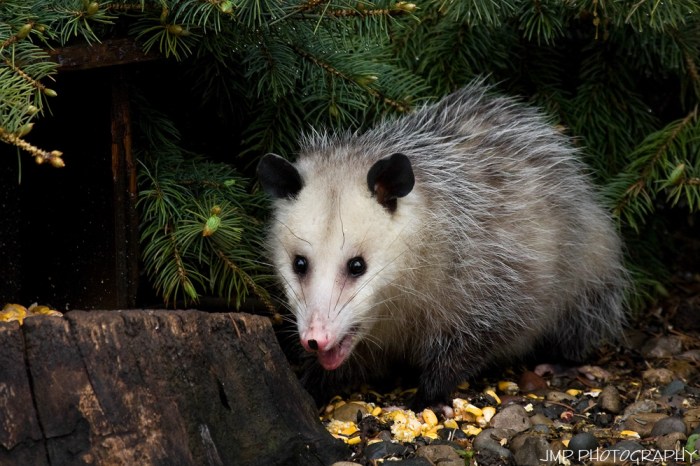
Possum Power!

Caught In The Headlights, photo by James Marvin Phelps

Tick season is upon us, and with the added threat of Lyme disease, it’s serious business here in Michigan. My friend Tara with the Leelanau Conservation District shared some information about opossums from Opossum Awareness & Advocacy (opossum facts image below that you can share):

Did you know that opossums eat up to 5000 ticks per season thereby reducing our risk of contracting Lyme Disease and other tick-born diseases? They kill vermin, including mice, and garden pests. They are not dirty; they are very clean animals and groom and clean as much as cats. Better still, most opossums cannot contract or spread rabies. Opossums are the United States and Canada’s only marsupials.

They may look a little scary to the uninitiated, but they are actually timid and do so much good for humans compared to most other creatures. If you see an opossum consider yourself lucky, leave it alone and please do not harm it. They have a hard time surviving in cold climates because they don’t have very thick coats. Sometimes opossums play dead because they are afraid. Please don’t hit them with your car. Spread the word and please help protect opossums!

View the photo background big and see more in James’ massive Michigan slideshow, and follow James Marvin Phelps Photography on Facebook.

Six Degrees from the White Shoal Lighthouse

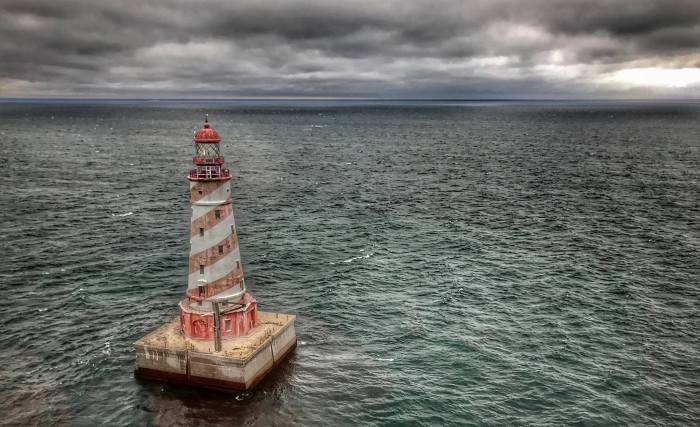
White Shoal Lighthouse Aerial, photo by US Coast Guard Air Station Traverse City

A reader shared a link to this photo with me, and this weekend I met a woman whose husband is a mechanic for the helicopter that took this photo. I thought that was pretty cool, but I also was putting groceries in my car at the local Meijer and a van pulled in a couple of slots down with a “White Shoal Light Historical Preservation Society” logo on it! I talked for a bit with Brent who’s heading up the group, and I expect to have updates and photos as they get going with their renovation!

I also noticed that the photo from back in 2009 I had of this light has been removed by the photographer, so here’s the skinny on one of Michigan’s most recognizablelight houses.  White Shoals are located 20 miles east of Mackinac Point and just northwest of Waugoshance Island. So shallow that they break the surface in places, they long presented a hazard to navigation for ships entering the Straits of Mackinac. On his White Shoal Lighthouse page, Terry Pepper relates that beginning in October of 1891, the Lightship LV56 anchored at White Shoal during the shipping season for 19 years. Finally in 1907 funds were appropriated for a permanent lighthouse:

Spring of 1908 saw work begin on the White Shoal light on two separate fronts. While a crew at the site leveled a one hundred and two-foot square area on the shoal through the addition and careful placement of loads of stone, a second crew worked on building a timber crib on shore at St. Ignace. Seventy-two feet square and eighteen and a half feet high, the huge crib contained 400,000 square feet of lumber, and on completion was slowly towed out to the shoal and centered over the leveled lake bottom. Once in location, the crib was filled with 4,000 tons of stone until it sank to a point at which its uppermost surface was level and two feet below the water’s surface.

On top of this crib, a seventy-foot square stone block base was constructed to a total height of four feet, with the remainder of the pier being of poured concrete atop the block base. With the base complete, an acetylene-powered lens lantern was installed atop a temporary steel skeletal tower on December 5th, and with the onset of winter storms, work at the shoal ended for the season.

Seeing the Light has much more about the construction and history of White Shoal Light including shots of the tower and crib under construction and information about lighthouse tours offered by Shepler’s Ferry, on which you can see White Shoal, Waugoshance and Gray’s Reef Lights.

Wikipedia’s entry for the White Shoal Light notes that White Shoal is the only aluminum-topped lighthouse on the Great Lakes, the only ‘barber pole’ lighthouse in the United States and is the lighthouse featured on Michigan’s Save Our Lights license plate. There’s also a link to really cool Google Map of lighthouses in northern Lake Michigan. There’s a few more pics of White Shoal at boatnerd.

View the photo bigger and follow the US Coast Guard Traverse City on Facebook for lots more cool photos from their missions!

More aerial photos & more lighthouses on Michigan in Pictures.

Blue Monday

blue, photo by Curt Saunier

View Curt’s photo bigger and see more in his Flowers slideshow.

Dance of Light, March of Science

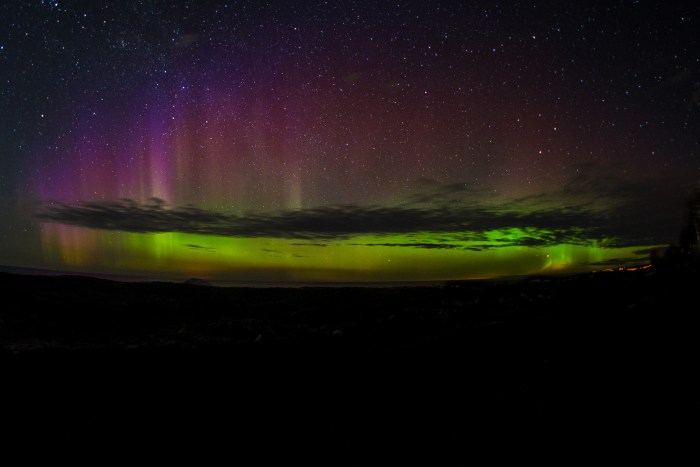
Dance of Light, photo by Eric Hackney

“Nothing in life is to be feared, it is only to be understood. Now is the time to understand more, so that we may fear less.”
― Marie Curie

The NOAA/NWS Space Weather Prediction Center (SWPC) has forecast a G2 level storm for tonight, which may very well produce Northern Lights! The SWPC is an invaluable scientific resource that is wholly produced by our tax dollars. In addition to letting us know when northern lights are possible, the SWPC helps to maintain our modern communication grid when the Sun gets a little extra exuberant.

It’s my heartfelt belief that one of the duties of our government is to work to make our country the leader in scientific advancement. As threats in public health, the environment, and a host of other realms increase, we need to be investing much more in science, not less.

To any who are participating in any of the 15 local Science Marches in Michigan today, the March for Science in Washington DC, or anywhere else, I salute you.

View Eric’s photo bigger and see more in his Personal Favorites slideshow.

PS: Happy Earth Day everyone.

One Moment

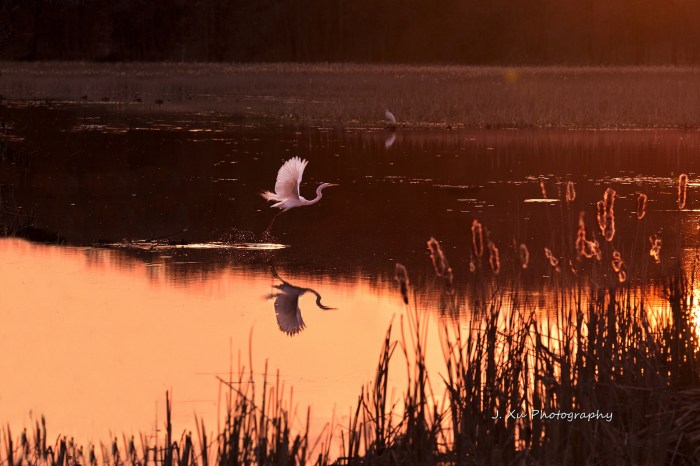
Untitled, photo by Jiafan (John) Xu

I’m pretty sure that the bird John has captured so perfectly is a Great Egret. Fittingly, the egret tag on Michigan in Pictures includes another stunning photo by John of Great Egrets in flight along with all kinds of info about this beautiful bird.

View his photo bigger and see more in his slideshow.

#TBT Happy 100th Birthday to the Michigan State Police

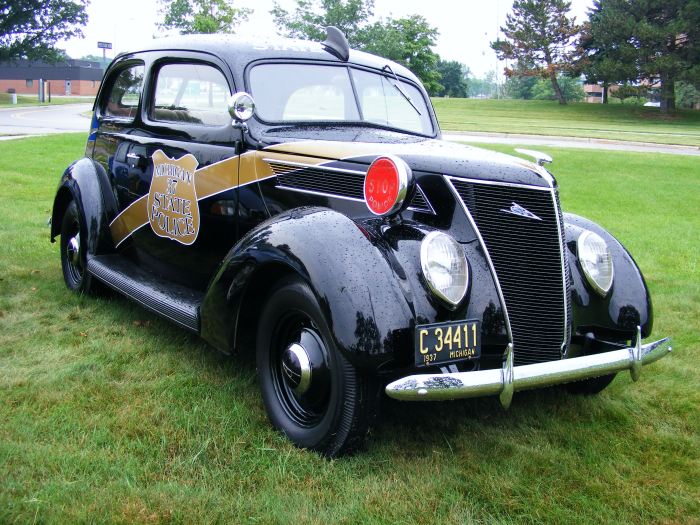
State of Michigan State Police, photo by glory be me


A belated happy 100th birthday to the Michigan State police, who are 100 years and a day old today:

Since April 19, 1917, the Michigan State Police has proudly served the citizens of Michigan. From a cavalry of 300 men to a full-service police agency of more than 2,900 members, the Michigan State Police has proven itself as a world-class leader in law enforcement.

The Michigan Department of State Police began as a temporary, wartime emergency force for the purpose of domestic security during World War I. On April 19, 1917, Governor Albert Sleeper created the Michigan State Troops Permanent Force, (also known as the Michigan State Constabulary). With Colonel Roy C. Vandercook as the first commanding officer, this new force consisted of five Troops of mounted, dismounted and motorized units, totaling 300 men. On March 26, 1919, Public Act 26 reorganized the Constabulary as the permanent, peace-time Michigan State Police.

Michigan adopted a new Constitution in 1963, authorizing up to 20 departments. Public Act 380 of 1965 reorganized the Michigan Department of State Police as one of these departments. The Director holds the rank of Colonel and is appointed by the Governor.

Today, the Michigan State Police consists of a modern-day force of law enforcement professionals, using the latest up-to-date training and technology to protect the citizens of Michigan. What was once a cavalry of 300 men now has evolved into one of the leading police agencies of the United States.

View the photo of what I believe is a 1937 Ford Model 74 patrol car background big and see more in glory be me’s Untitled Set slideshow.

More #TBT (Throwback Thursdays) on Michigan in Pictures.

April 16-22 is Severe Weather Awareness Week in Michigan

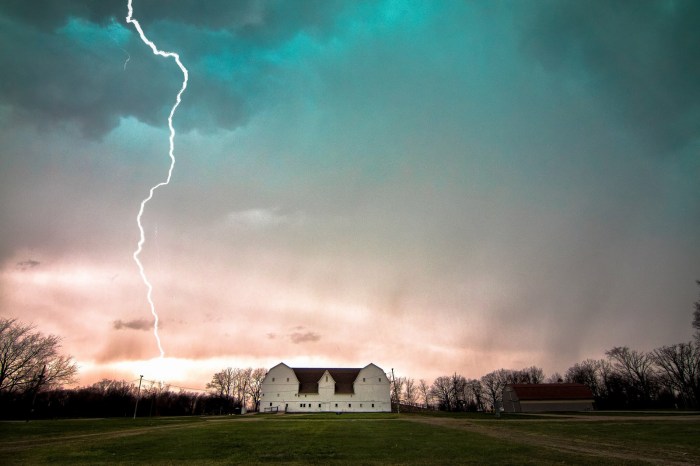
Storm’s Coming, photo by Tom Hughes Photo

This week (April 16-22) is Severe Weather Awareness Week in Michigan. mLive reports:

The Michigan State Police are asking residents to take part in a voluntary statewide tornado drill as part of the state’s Severe Weather Awareness Week. The drill is scheduled for 1 p.m. Wednesday, April 19. Gov. Rick Snyder had declared Michigan’s Severe Weather Awareness Week from April 16-22. If severe weather occurs on April 19, the statewide tornado drill will be rescheduled for 1 p.m. Thursday, April 20.

Nearly all state of Michigan facilities are expected to participate, and businesses, organizations and individual residents and their families are encouraged to join in as well.


“Tornadoes can develop rapidly, with little or no warning,” said Capt. Chris A. Kelenske, Deputy State Director of Emergency Management and Homeland Security and commander of the MSP/EMHSD. “Due to their unpredictable nature, we must be ready well in advance. We’re asking residents and businesses to take a few extra steps during the week to ensure they’re prepared.”

Tornadoes are especially prevalent in late spring and early summer, and the average lead time for tornadoes to develop is 10 to 15 minutes. In the event of a tornado, state officials recommend residents find the lowest place to take cover, take shelter under something sturdy, stay tuned to local weather broadcasts and watch for signs of a tornado, including dark skies, large hail, a large low-lying cloud and a loud roar.

Tom caught this spring storm rolling through last week at the Springfield Oaks Ellis Barn. View it bigger, see more in his Thunderstorms slideshow, and view & purchase work at Tom Hughes Photo.

More wild weather on Michigan in Pictures!


A Blaze of Green at Pictured Rocks

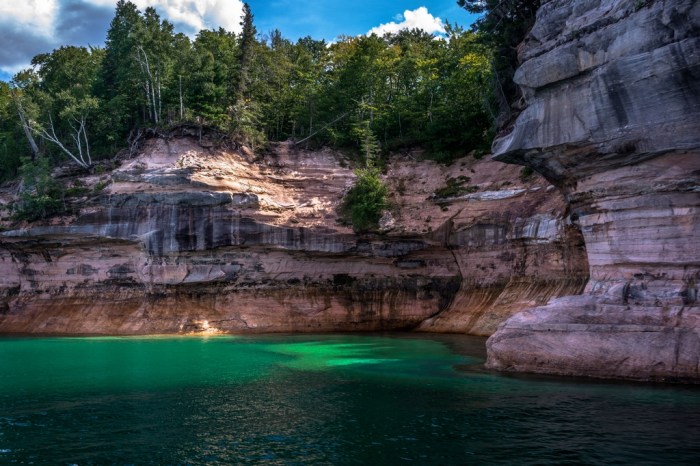
Untitled, photo by Steve Nowakowski

It’s hard to convey the unique beauty of the Pictured Rocks National Lakeshore in a single photo, but the stunning green of this picture really triggered memories for me of some of my best and brightest days in one of Michigan’s crown jewels.

Steve took this on a boat tour in August of 2016 with nearly perfect conditions, likely with Pictured Rocks Cruises. View the photo background big and see more in his 2016 Pictured Rocks National Lake Shore slideshow.

There’s a whole lot more goodness from the Pictured Rocks on Michigan in Pictures.

Yellow Rumped Warbler

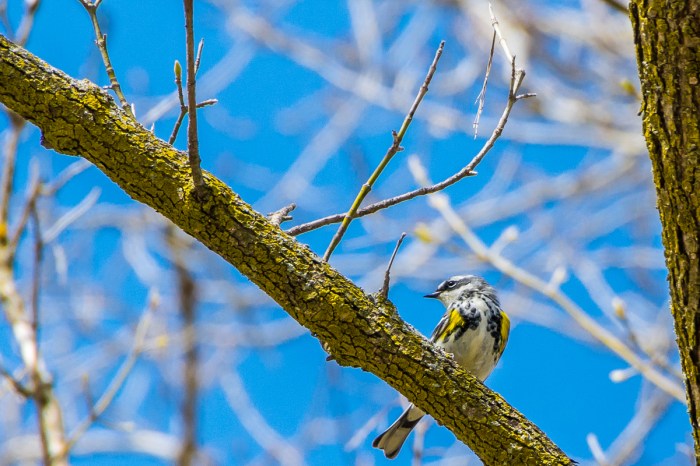
Yellow Rumped Warbler, photo by Jeff Dehmel

Jeff’s back with another bird everyone! I couldn’t resist – the colors on this are so perfectly April!! Here’s a couple of facts on the Yellow-rumped Warbler from All About Birds:

Yellow-rumped Warblers are impressive in the sheer numbers with which they flood the continent each fall. Shrubs and trees fill with the streaky brown-and-yellow birds and their distinctive, sharp chips. Though the color palette is subdued all winter, you owe it to yourself to seek these birds out on their spring migration or on their breeding grounds. Spring molt brings a transformation, leaving them a dazzling mix of bright yellow, charcoal gray and black, and bold white.

The Yellow-rumped Warbler is the only warbler able to digest the waxes found in bayberries and wax myrtles. Its ability to use these fruits allows it to winter farther north than other warblers, sometimes as far north as Newfoundland.

They’re the warbler you’re most likely to see fluttering out from a tree to catch a flying insect, and they’re also quick to switch over to eating berries in fall. Other places Yellow-rumped Warblers have been spotted foraging include picking at insects on washed-up seaweed at the beach, skimming insects from the surface of rivers and the ocean, picking them out of spiderwebs, and grabbing them off piles of manure.

The oldest recorded Yellow-rumped Warbler was at least 7 years old.

View the photo background big and see more in Jeff’s Holloway Reservoir slideshow (where you’ll see his photo of a bald eagle from not long ago).

More spring wallpaper and more birds on Michigan in Pictures.