

The definition of intensity…, photo by Dr. Farnsworth
View Dale’s photo from last weekend’s Kalkaska winterfest background big and see more in his winter slideshow.
More winter wallpaper on Michigan in Pictures.
The definition of intensity…, photo by Dr. Farnsworth
View Dale’s photo from last weekend’s Kalkaska winterfest background big and see more in his winter slideshow.
More winter wallpaper on Michigan in Pictures.
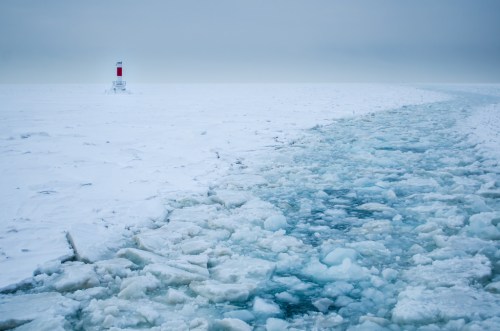
Shipping Lane, photo by rellet17
Winter 2014 has been a big challenge to keep up with for road crews and homeowners, and it’s a challenge that doesn’t end at the shoreline!
On Friday, Ross got a chance ride aboard the US Coast Guard Icebreaker Bristol Bay as it opened a path for shipping traffic on Lake Saint Clair. The captain told him the ice has only been this dense one other time in the past 30 years! The Coast Guard says:
The USCGC BRISTOL BAY is one of just two Bay-class cutters that work in conjunction with a special barge. BRISTOL BAY the second of the U.S. Coast Guard’s 140-foot icebreaking tugs. She is named after the body of water formed by the Alaskan peninsula which empties into the Bering Sea. BRISTOL BAY was built by the Tacoma Boatbuilding Co. in 1978. She was commissioned in Detroit in 1979.
Designed by U.S. Coast Guard engineers, the BRISTOL BAY’s primary responsibility is opening and maintaining icebound shipping lanes in the Great Lakes. Bay-class tugs are designed to continuously break at least 20 inches of hard, freshwater ice. The ships can break more than 3 feet of ice by backing and ramming. The Bay tugs have a special hull air lubrication system that helps extract the ship from thick ice and improves ice breaking ability at slower speeds.
View Ross’s photo background bigtacular and see more in his ice breaking slideshow.
PS: A few weeks ago I came across this video of more Great Lakes icebreaking action, showing the Icebreaker Mackinaw and others clearing a path from Sault Ste Marie down the St Marys River that you might enjoy. It was shot from the wheelhouse of the CSL Assiniboine.
There’s more ice and more winter wallpaper to be found on Michigan in Pictures!
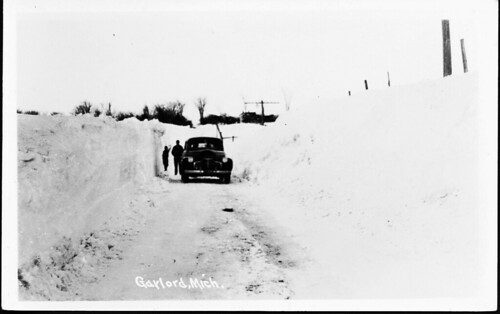
Otsego Gaylord Mi Winter Drifts in the 1940s, photo by UpNorth Memories – Donald (Don) Harrison
Winter 2014 has been a real throwback with many school districts already past the maximum number of snow days and no sign that winter is slowing down. Seeking Michigan has a feature on two large snowstorms in recent memory—the blizzard of January 1967 and the one in 1978 about which they say:
On January 26-27, 1978, snowstorms with fifty-to-seventy-mile per hour winds pummeled much of Michigan. Snowfall totals ranged from eighteen inches in Lansing to an incredible fifty-one inches in Traverse City. More than 100,000 cars were abandoned on roads and highways, and travel was impossible for days. Governor William G. Milliken declared a state of emergency on January 26 (See the image below.) and activated the National Guard to assist with the cleanup. The governor also requested financial assistance from the federal government and estimated damage totals to be more than $25 million, not including lost productivity from workers who were unable to get to their jobs.
Seeking Michigan is the website of the Archives of Michigan. If you’re interested in the wild & wooly side of Michigan, the Michigan Historical Museum has a special exhibit “Lake Effects: Exploring Michigan Weather” where you can learn about winters past and share stories of your winter memories. They ask that you share a favorite winter photograph on the Michigan Historical Center’s Flickr page by e-mailing it to icy27ran@photos.flickr.com with the photo title in the subject line.
View the photo background big and see more snow photos from Don & UpNorth Memories.
Winter wallpaper? We have it if winter hasn’t beaten you yet!
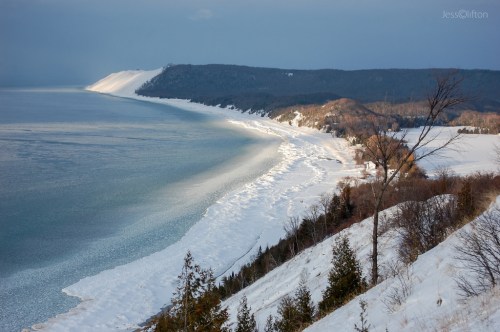
Sun Spill, Empire Beach, photo by jess_clifton
Recently Michigan in Pictures regular Jess Clifton and her family made a wintertime excursion to Empire in the heart of the Sleeping Bear Dunes National Lakeshore. She writes (in part):
At Empire, the beach was already sprinkled with about 10-15 other folks and the scene was surreal. Kids were crawling in and out of caves carved into the thick, massive ice formations built up along the water’s edge. Clouds intermittently descended and receded, offering up dramatic skies that beckoned you out.
…Once I finally convinced myself the beach was “safe” to venture out onto after watching about 14 other people successfully make the trek, I was off cresting mini ice mountains at a snails pace until I could finally peer into the water.
It was there that I finally got a sense of just how still the water was. Pancake ice floated gently on the barely breathing lake. The revelation of something so calm in such a harsh environment was almost jarring. (In a really good way.)
Read on for more and lots of stunning photos in her Why Michigan? blog.
View Jess’s photo background bigtacular and see more in her Winter in Northern Michigan slideshow. She also has a comparison photo from last year.
Lots more winter wallpaper on Michigan in Pictures.
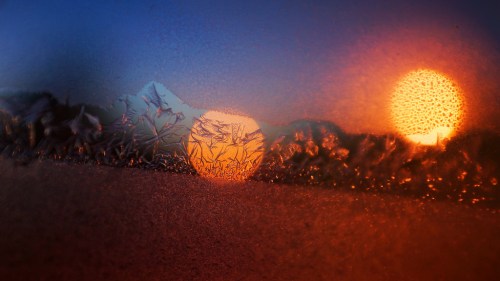
Iced Light in Polar Vortex Night @ -20 °C (-4 °F), photo by C.T.Yeh
Here in Traverse City, schools are closed for (I think) the 5th time since January 1st. With 4 degree temps and the wind howling at 20-30 mph, our wind chill is near 20 below. The temps across Michigan show much the same with few places in the Lower Peninsula above single digits and most of the Upper Peninsula below zero. Marquette takes the (frozen) cake with -10 before any windchill is calculated.
What big teeth you have, Winter 2014.
Check Jimmy’s photo out background bigtacular and see more in his Nature slideshow.
There’s more winter wallpaper on Michigan in Pictures, but nobody’s going to blame you if you try on something a little more summery!
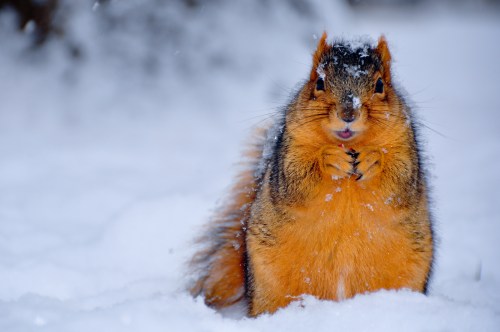
Fox Squirrel, Eastern Fox Squirrel, photo by AndrewH324
Jonathan Schechter of Earth’s Almanac marks Squirrel Appreciation Day, saying:
Squirrel Appreciation Day is here; like them or not. January 21st is the day to look at America’s favorite rodent as something other than pancake-flat road kill, a clever feeder-robber or free entertainment for a frustrated window watching cat. Take time today to appreciate their adaptability and ability to not just survive but thrive in our midst. This slightly nutty ‘holiday’ is saluted by the National Wildlife Federation and was founded in 2001 by Christy Hargrove, a wildlife rehabilitator in North Carolina. Despite the fact that many fail to look both ways before crossing a highway even squirrel haters should salute these creatures that bury nuts; helping to spread trees to areas where the nut did not fall.
In Oakland County the squirrels seen in winter are the evergreen tree loving red squirrels, the rusty orange colored fox squirrel and the gray squirrel, a squirrel of the great American hardwood forests that is sometimes jet black. We are also home to the northern flying squirrel; a nocturnal creature that is more common than many realize! Chipmunks are seldom seen in winter and our 13 lined ground squirrel are under ground snoozing until spring thaw.
Andrew took this photo at the University of Michigan. Due to the high degree of squirrel activity on campus, there’s a Squirrel Club at UM. View Andrew’s photo background bigtacular and see more of this little guy in his Squirrel slideshow.
More squirrels on Michigan in Pictures.
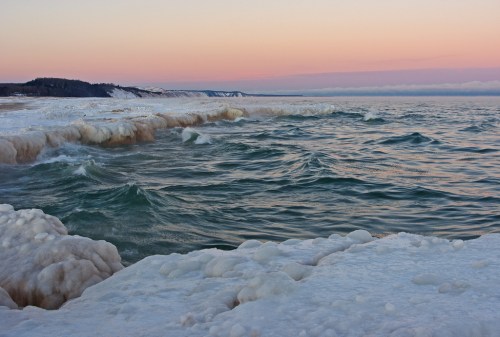
Winter morning on Agate Beach, photo by Gary of the North(Footsore Fotography)
Ernest W. Marshall talks about a common winter feature along considerable stretches of Great Lakes shorelines, the Icefoot:
Air and water temperatures must be sufficiently low before an icefoot begins to form. The conditions favorable for icefoot formation are broad open shorelines gradually sloping below water level, and facing so that wind-blown spray is carried inland toward the shore to freeze. The character of growth of an icefoot differs during different periods of the winter. During the course of the winter the icefoot may suffer periods of denudation alternating with periods of accretion. The development of an icefoot can be held at one stage by the early freezing of fast ice offshore. An icefoot can be composed of any combination of frozen spray or lake water, snow accumulations, brash, stranded icefloes, and sand which is either thrown up on the icefoot by wave action or is blown out from the exposed beaches.
Observations of the icefoot along the shorelines of Lakes Superior and Erie indicated that the moderately steep portions of the shore were characterized by narrow terraces composed of frozen slush and brash thrown up by storm winds. The outer edge of this icefoot was often cusp-like in form, resulting from the mechanical and melting action of the waves. The inner portions of the cusps acted to concentrate the wave action, forming blowholes which threw spray back on the icefoot.
You can click to read more.
Gary took this photo at one of my favorite places in Michigan: Agate Beach on Lake Superior in Grand Marais, Michigan. In the distance is Grand Sable Dunes and the Pictured Rocks National Lakeshore. View his photo big as Lake Superior and see more in his Grand Marais Michigan slideshow including a shot of a staggeringly huge ice mound!
Lots more Grand Sable Dunes, Pictured Rocks National Lakeshore & winter wallpaper on Michigan in Pictures!
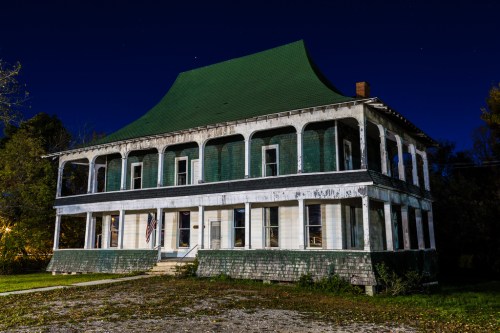
nightfall, photo by Marty Hogan
The Onaway Historical Museum has an article on the Lobdell Fire that begins:
On the morning of Thursday, January 14, 1926 fire broke out in the company’s sanding machine and spread spontaneously through the blowers to different parts of the room.
In the few hours that followed, Onaway’s main means of livelihood went up in smoke and although the city still exists, it has never reached the proportion it was on that historical day. With the presence of the American Wood Rim Co. and its sister company, the Lobdell Emerey Manufacturing Co., Onaway experienced tremendous growth in its early year. The big industry, along with the profitable timber business made Onaway the biggest little town in northern Michigan.
According to one report, Onaway had two newspapers, three lawyers, four doctors, three large hotels, 17 saloons, nine churches, two bakeries, a fairgrounds, racetrack and an opera house in the pre-fire days. The figure varies, but Onaway’s population was approximately 4,000 and the two huge industries employed anywhere from 1200 to 1500 persons.
The Lobdell Emery Manufacturing co. was involved in lumbering, sawmill operations and the making of such products as dowels, broom handles, and coat hanger stock. The American Wood Rim Co., was the world’s largest and finest producer of automobile steering wheels and bicycle rims. For a number of years the company made all the steering wheels with either malleable iron or aluminum spiders. The aluminum spiders were all molded and finished in the plant while the malleable iron castings were purchased from outside sources.
During its last few years in Onaway, the American Wood Rim Co. introduced the all-wood steering wheel with only the hub made of steel. Some of the automobile rims were made of maple or beech, but the better ones were of black walnut with a black walnut or mahogany finish. The bicycle rims were made of hard rock maple or beech. All the wood used in manufacturing the wheels and rims was from the surrounding forests owned by Lobdell-Emery.
Read on for more and here’s a map to Onaway.
View Marty’s photo background big and see more in his September 2012 Road Trip slideshow.
If you like this sort of thing, Michigan in Pictures has lots more of Marty’s up north historical explorations!

2013 North American International Auto Show – Hot Wheels Camaro, photo by memories_by_mike
The 2014 North American International Auto Show takes place January 13-26th in downtown Detroit (consumer show Jan 18-26) and features the new models and a whole lot of sizzle and creativity as manufacturers seek to make the biggest splash. The NAIAS site includes Detroit Auto Show history page that takes you all the way back to the first Detroit Auto Show in 1907!
The first Detroit Area Dealer Association (DADA)-managed Detroit Auto Show was held in December 1907, at Riverview Park after the formation of the DADA in the same year. Since then, the show has grown from a regional event with 17 exhibitors to a world-class showcase featuring more than 60 exhibitors.
As the years passed, the show became increasingly popular as the demand and interest for automobiles grew. The show grew and moved to several new locations, including the Light Guard Armory on Eight Mile, the Wayne Gardens Pavilion and the Michigan State Fairgrounds.
Check Mike’s Photo out background big and see more in his 2013 North American International Auto Show-Detroit, MI slideshow.
More Detroit Auto Show and more cars on Michigan in Pictures.
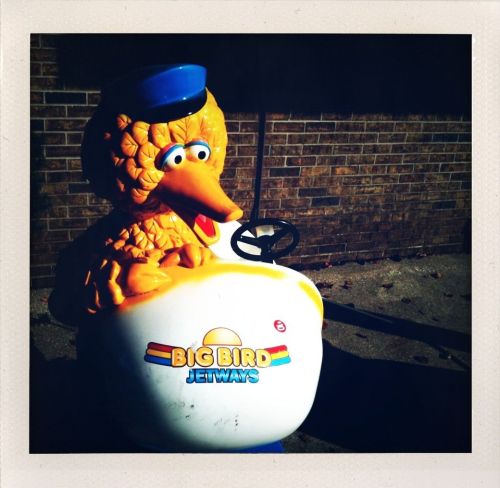
Today’s Photo is Brought to You by the Letter J (for Jetsetter), photo by Matt Burrows
On January 9, 2007 Steve Jobs announced the iPhone. Within months, photography apps for Apple’s pocket computer with a crappy digital camera began showing up. Apps like Hipstamatic and Shake It made the phone’s resolution weakness tolerable and spawned a resurgent interest in the lomo ethic.
Here’s a nice article on apps to trick your iPhone out for a new year of photography.
Check Matt’s photo out big as Big Bird and see more in his iPhoneography slideshow.
 Michigan in Pictures