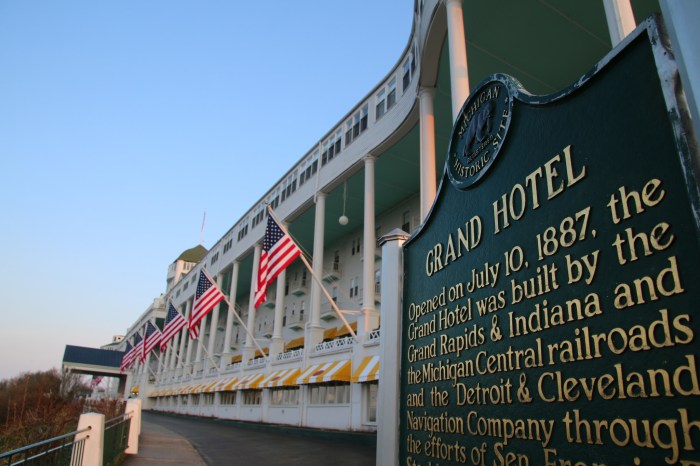
The Grand Hotel opened on Mackinac Island in the summer of 1887. At 660 feet, Grand Hotel’s Front Porch is the world’s largest. They note that early on the porch became the principal meeting place for all of Mackinac Island, a promenade for the elderly, and a “Flirtation Walk” for island romantics. Their History photo gallery has a couple of cool photos of the porch from back in the day.
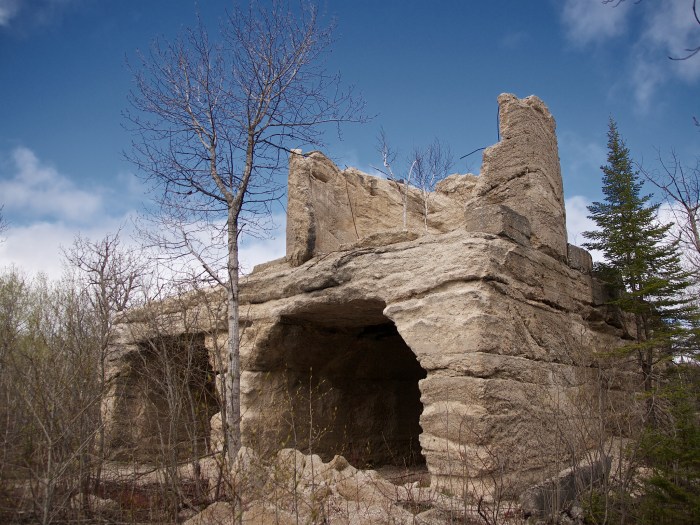
The Michigan Karst Conservancy’s page on Fiborn Quarry begins:
The unusually pure limestone found in what is now the Fiborn Karst Preserve led to development of Fiborn Quarry, which operated from early 1905 until January 1936. The quarry mined, crushed and shipped limestone for use mostly in steelmaking, but also calcium carbide manufacturing and road building.
A small town grew up next to the quarry, which included an elementary school, a boarding house, a company store and housing for employees and their families.
“You just felt like you were living in a little world all of your own. Just like there was no other place,” recalled one former resident who was 13 years old in 1930. “You had your grocery store. You had your post office. You had your school. You had your minister that came in there and gave services. And it just seemed like it was real private.”
Workers broke up the limestone with dynamite, steam shovels loaded the rock into cars which hauled it to a crusher. Crushed limestone was sorted into different sizes hauled on the railroad spur 3-4 miles north to Fiborn Junction and the main rail line to Sault Ste. Marie.
The Wizard of Oz rolled off the presses May 17, 1900. It’s one of my all-time favorite books. What you may not know is that L. Frank Baum, author of the beloved series, purchased a large, multi-story Victorian summer home on the southern end of the Macatawa peninsula on Lake Michigan.
“The Wonderful Wizard of Oz” supposedly was written in Chicago, but some of the forest scenes look just like the pathways that run through the dunes, the younger Baum said.
He assumes Macatawa was where part of the book had been worked on or written, as Baum might have found inspiration from the castle in Castle Park for the yellow brick road, some say, or even based some of the characters in the book on personalities he encountered in the small lakeshore community.
“Especially in the Oz stories, a lot of characters and situations that we may not recognize … he drew lots of inspiration from Macatawa for the book.”
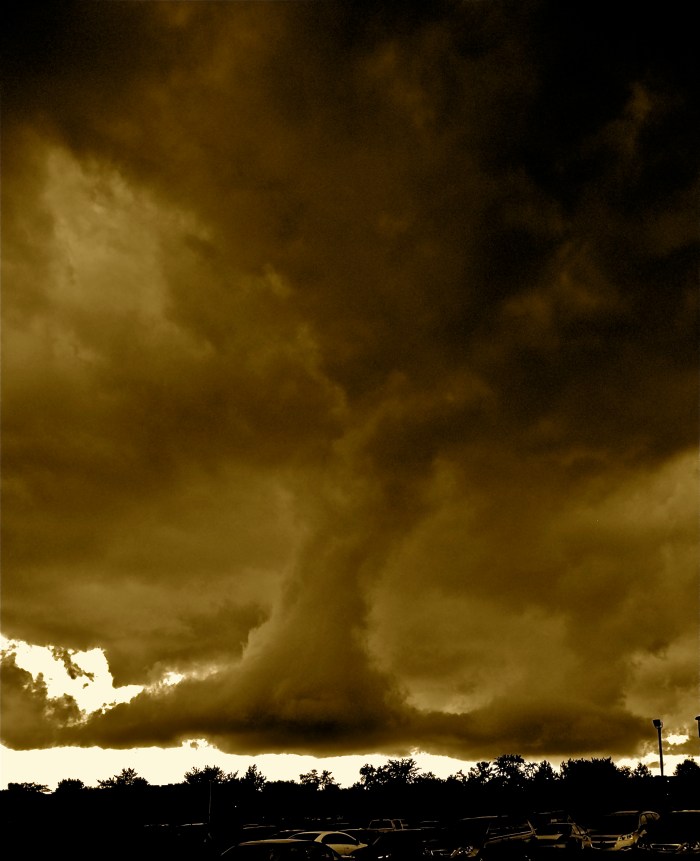
This freakie cloud formation started at the end of our wedding photo shoot. There were clouds swirling all over us but luckily no tornados formed. I added some sepia for a little Wizard Of Oz effect.
Amie took this last year in late May, and I’m posting this to let Mother Nature know that “35 degrees in May” is not what we’re looking for out of the month of May!
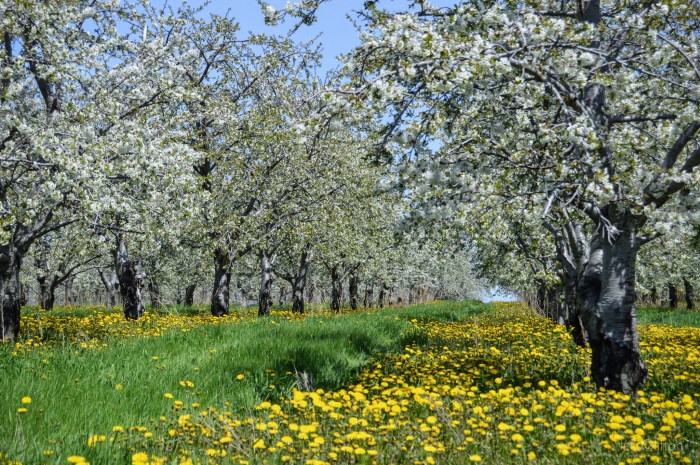
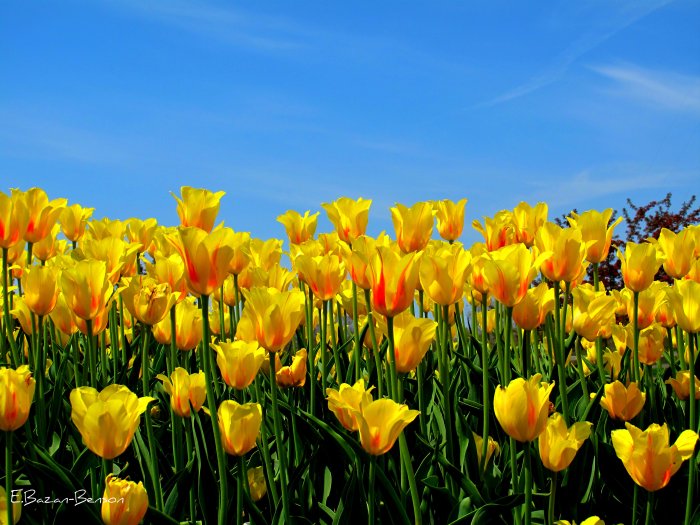
Tulip Time runs from Saturday, May 7, to May 14 in downtown Holland. The Traverse City area cherry blossoms are also about to erupt with color.
Cool nights and near normal temperature days are just what we want for a long display of color from these two spring performers.
Gwen Auwerda, Executive Director of Tulip Time in Holland, MI says tulip blossoms can last up to 21 days if high heat is avoided. Auwerda says most of the tulips in Holland, MI are at peak right now, with some of the late bloomers expected to peak next week.
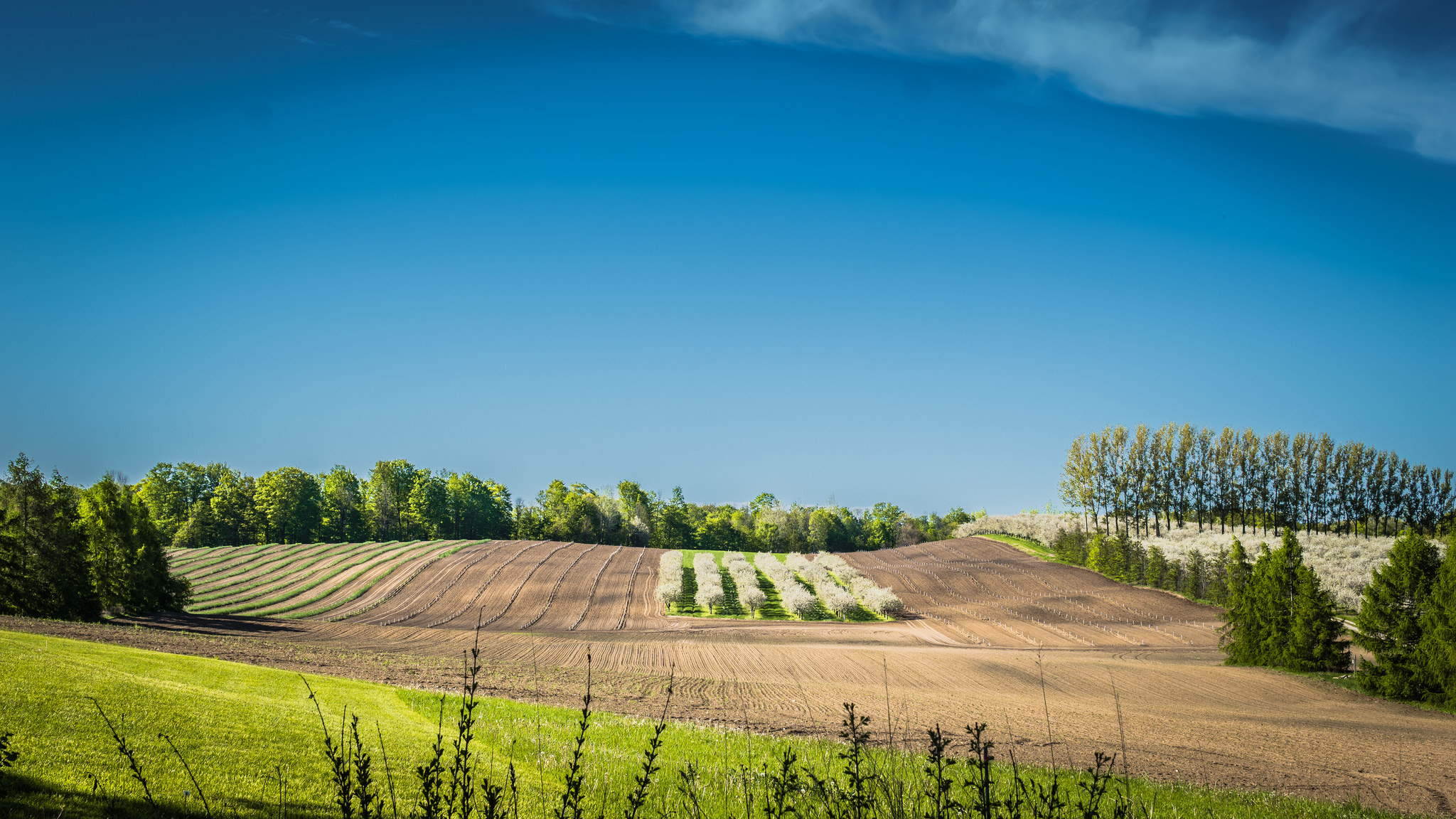
The cooler weather has slowed down the cherry blossoms in northwest Lower Michigan. Nikki Rothwell, MSU Extension educator, says now the cherries are right on track to blossom at the typical time.
Rothwell says sweet cherries are only days away from blooming, with peak bloom in northwest Lower Michigan possibly on Mother’s Day. Tart cherries, which make up most of northwest Lower Michigan’s cherry crop, should start blooming May 11 or May 12, and peak around May 14.
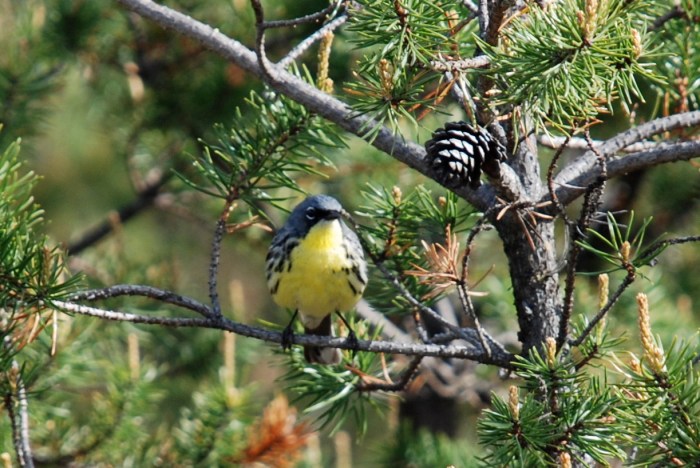
On June 3-4, northeast Michigan will celebrate a Michigan conservation success story with the annual Kirtland’s Warbler Weekend that includes an Au Sable River Kayak Tour. You can also lend a hand this Saturday with the annual jack pine planting day through the Kirtland’s Warbler Initiative!
More than 60 years ago, scientists realized that the Kirtland’s warbler was in trouble. A 1951 census found fewer than 500 breeding pairs. The bird was among the first species ever listed as endangered and was the first species to ever have a “recovery team.”
Kirtland’s warblers will only nest in young jack pine forest. Jack pine requires fire to open its cones and spread its seeds — hence the nickname, “bird of fire.” Fire suppression policies last century led to the decline of the Kirtland’s warbler, as did parasitism from brown-headed cowbirds. The recovery team had to figure out a way to overcome these challenges to save the species.
Since 1974, the Kirtland’s Warbler Recovery Team has worked to save the species, even when the outlook for recovery was bleak. The recovery team brought together federal, state, academic, nonprofit, and even international partners.
Today, scientists estimate there are more than 4,000 Kirtland’s warblers in Michigan. The population has more than doubled its recovery goal, so the recovery team is no longer needed. Through years of hard work the partners figured out how to provide the conditions necessary for the warblers to survive, and the birds have flourished.
Up here in the Traverse City area we don’t have cherry blossoms yet, but I’ve been seeing reports that cherries and other fruit crops are in bloom in southwest Michigan. Expect the TC area to bloom in a week or two and please share what you’re seeing in the comments!
Holland’s annual Tulip Time festivalreturns May 7-14, 2016. They have 4.5 MILLION tulips in Holland and are reporting about 30% of tulip bloom right now – just about perfect. Stay tuned through their Tulip Tracker.
Here’s a cool video showing how they plant Windmill Island with 55,000 tulips in a matter of hours.
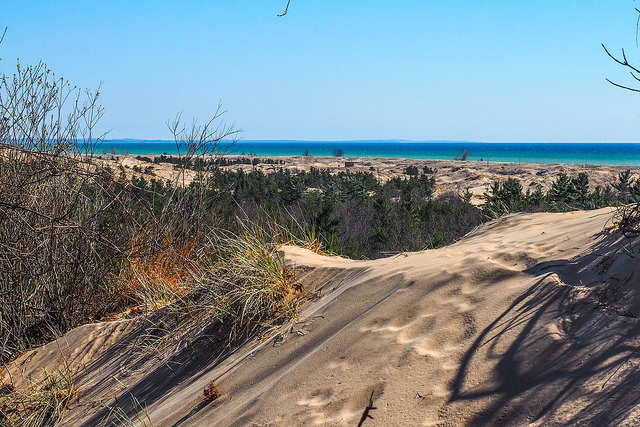
The Skyline Trail runs along a tall sand dune ridge, on the south side of the river between the footbridge and Hamlin Dam. The trail begins at the west end of the parking lot and exits onto the Sable River Trail. This trail is completely elevated, made even higher by an extensive wooden boardwalk system. Several vistas let you look out over miles of sand dunes and Lake Michigan. On a clear day, you can see 20 miles to the Silver Lake State Park Sand Dunes. On the back side is an area where you can leave the boardwalk and run up and down the steep slope of this sand dune.
Music is music, ultimately. If it makes you feel good, cool. ~Prince
Prince was a musician who had a huge effect on my life. I went to school near Minneapolis when he was transforming music through his own work and what he did with a host of artists. I’m very sad at his passing. Down at the bottom I have one of my favorite clips of Prince.
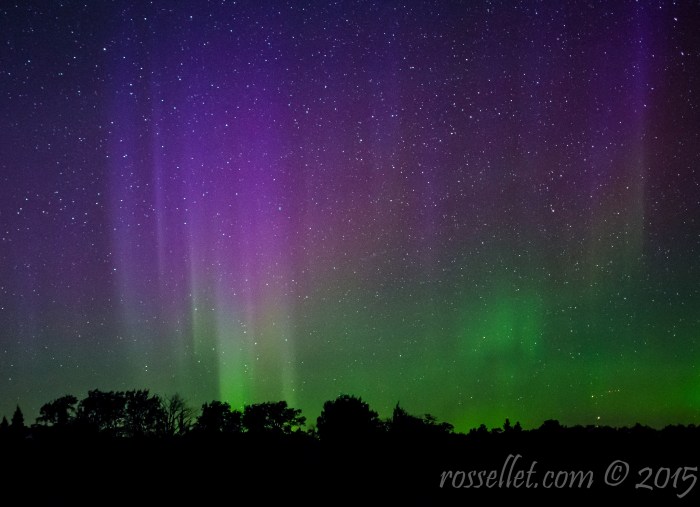
I’ve been lucky enough to see the northern lights dozens of times but have probably only seen purple auroras three or four times. Causes of Color explains the colors of the northern lights:
The sun radiates all visible colors, which is why sunlight appears white. The spectrum of visible light associated with the aurora is much more restricted. The aurora is caused by charged particles in the solar wind colliding with atmospheric atoms and ions. The collisions cause the electrons of the atmospheric atoms to become excited. As the electrons return to their original energy levels, these atoms emit visible light of distinct wavelengths, to create the colors of the display we see.
The color of the aurora depends on the wavelength of the light emitted. This is determined by the specific atmospheric gas and its electrical state, and the energy of the particle that hits the atmospheric gas. The atmosphere consists mainly of nitrogen and oxygen, which emit the characteristic colors of their respective line spectra. Atomic oxygen is responsible for the two main colors of green (wavelength of 557.7 nm) and red (630.0 nm). Nitrogen causes blue and deep red hues.
Most of the auroral features are greenish-yellow, but sometimes the tall rays will turn red at their tops and along their lower edges. On rare occasions, sunlight will hit the top part of the auroral rays to create a faint blue color. On very rare occasions (once every 10 years or so) the aurora can be a deep blood red color from top to bottom. Pink hues may also be seen in the lower area of the aurora. In addition to producing light, the energetic auroral collisions transmit heat. The heat is dissipated by infrared radiation, or transported away by strong winds in the upper atmosphere.
Ross took this on August 10th last summer. He says “The Northern Lights over Moskey Basin in Isle Royale National Park. This is the first time in my life I have seen a bright purple aurora develop.”

 Michigan in Pictures