Prismatic

Lower Harbor Massive Rainbow

lower harbor massive rainbow, photo by Lake Superior Photo

I’ve featured a photo of a rainbow and one of Marquette’s harbor in the last couple of days, but I haven’t featured a photo of both! Have a great weekend folks.

Shawn writes: prismatic is on the mind right now, recalling one of the most brilliant rainbows I’ve ever witnessed. View the photo background bigtacular and head over to Lake Superior Photo to view and purchase photos (including a stunning double rainbow) in her Lake Superior Landscapes gallery.

More rainbows & rainbow science on Michigan in Pictures.

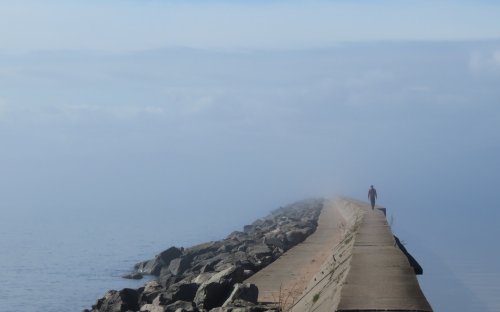
Out of the fog

Walking the breakwater in the fog

Walking the breakwater in the fog, photo by Ann Fisher

View Ann’s photo of the Marquette breakwater background bigtacular and see more in her 2015 UP slideshow.

There’s more spring wallpaperfog & mist & Marquette on Michigan in Pictures.

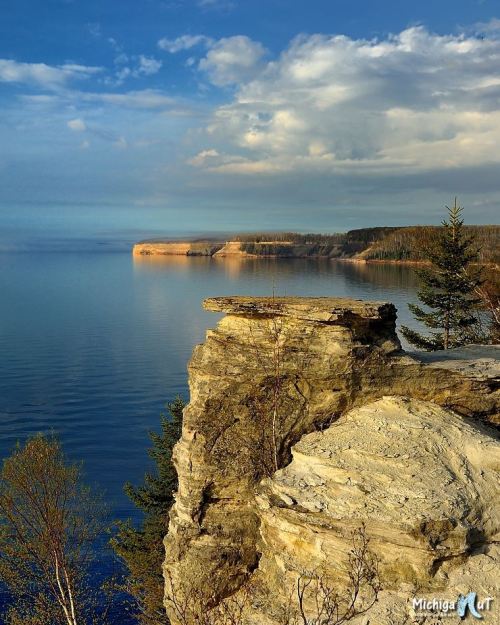
Tranquility at Pictured Rocks

Tranquility at Pictured Rocks

Tranquility, photo by Michigan Nut Photography

John McCormick aka Michigan Nut shared this gorgeous shot from the Pictured Rocks National Lakeshore showing Lake Superior at its calmest.

View John’s photo bigger on Facebook, view & purchase photos at michigannutphotography.com and definitely follow him on Facebook for many more photos of the Great Lakes State.

PS: John’s Pictured Rocks gallery will knock your socks off!

Wolves almost gone from Isle Royale

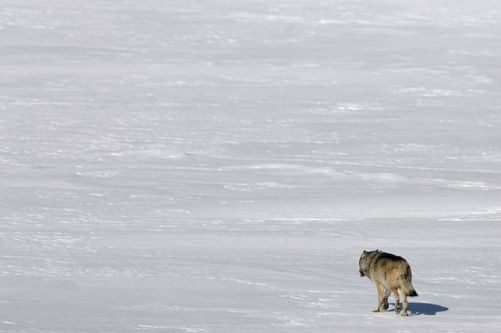
Isle Royale Wolf

The Urge, photo by isleroyalewolf.org

Last weekend the Freep reported that the delicate biosphere that characterized Isle Royale National Park is about to fall apart. The wolf count is down from nine last year to only three, and Michigan Tech ecologist John Vucetich says he wouldn’t be surprised if none remain next winter.

“What’s really important here is not the presence of wolves, per se,” Vucetich said. “But the wolves need to be able to perform their ecological function — predation. Predation has been essentially nil for the past four years now.”

That’s led to a 22% increase in the moose population for each of the past four years, he said, taking the island population from 500 to 1,200 moose. An individual moose consumes up to 40 pounds of vegetation a day.

“One of the most basic lessons we know in ecology, wherever creatures like moose live, you have to have a top predator,” he said. “If you don’t, the herbivore can cause a great deal of harm to the vegetation.”

… Vucetich and his colleague at Michigan Tech, Rolf Peterson, both support a “genetic rescue” of the island’s wolf population — bringing in wolves from elsewhere to bolster island wolves and help facilitate breeding. The U.S. Forest Service is studying the concept, but that process may take years. If the remaining wolf population doesn’t survive, and the Forest Service ultimately approves of the plan, it may mean creating a whole new pack on the island.

I think that this poses very interesting questions about our role in the ecosystems we seek to preserve. Are we to watch what happens and not interfere like a kid watching an ant farm or a Star Fleet team, or do we accept the responsibility of our decision to preserve and seek to maintain the natural balances and populations? As our climate changes, we will no doubt be called to make these decisions more and more frequently as flora and fauna lose the ability to survive in the places we have set aside for them.

This photo was the first in a series of 40 shared last fall in “Thinking Like an Island” from the Wolves & Moose of Isle Royale. They wrote:

THE URGE. Walk 40 miles in two days searching for a lover that may not even exist. Return home to parents and siblings the next day. The life of a dispersing wolf, unsatisfied.

It’s a great series featuring images by George Desort, Rolf Peterson, John Vucetich, and Brian Rajdl along with text by John Vucetich and Michael Paul Nelson. Click to see this photo bigger on Facebook and then use your left arrow to page through them.

Definitely visit isleroyalewolf.org for lots more about the predator/prey balance of one of Michigan’s most fascinating places.

Testament of a Fisherman

Testament of a Fisherman by Aaron Peterson

Testament of a Fisherman, photo by Aaron Peterson Photography

My friend Aaron Peterson shared this on Facebook last night. It’s built around the words of one my very favorite writers, Michigander John Voelker (aka Robert Traver). I hope you enjoy it – Aaron writes:

Please enjoy this new video I did for Travel Marquette.

In 1964 Ishpeming native John Voelker published his essay “Testament of a Fisherman” summarizing in just 200 words the power of rivers and the solace one finds in trout fishing. When I came to Marquette in 2001 I didn’t have much, but I had a fly rod and a library card. In the library I found the words of John Voelker, and on the rivers of the Upper Peninsula I found a purpose. To be able to do this project and adapt Voelker’s words, with permission from his family, was very important to me on many different levels.

A lot has changed in the 50 years since he wrote this, but the health of our water, wild fish and time spent away from phones and crowds is more important than ever. Enjoy, share, then get the hell off your computer and get in the woods. Maybe to Marquette, because they paid the bill for this inspiration smile emoticon Thanks to Fly Fishing Michigan’s U.P. Nick from Ore Dock Brewing Company and all those who fight for the sanctity of our water. –AP

(the video is beautiful – view it full screen if you can!)

View Aaron’s photo bigger on Facebook and follow his page for the latest. Definitely check out his website too. He has some crazy photos of the U.P.’s incredible adventure offerings!

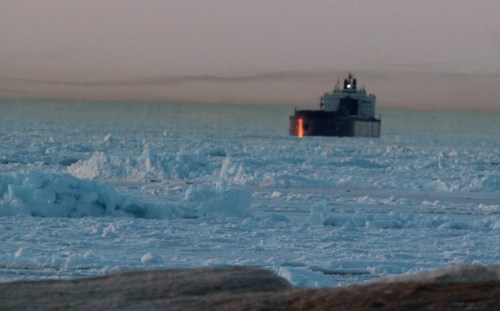
Ice bound, Whitefish Bay

Ice bound, Whitefish Bay

Ice bound, Whitefish Bay, photo by Thom Skelding

Here’s a cool shot from last Saturday on Lake Superior’s Whitefish Bay. I hope that you’re shaking off the ice and getting out to enjoy whatever spring is serving up close to you.

View Thom’s photo background big and see more great shots from Whitefish Bay and elsewhere in his slideshow.

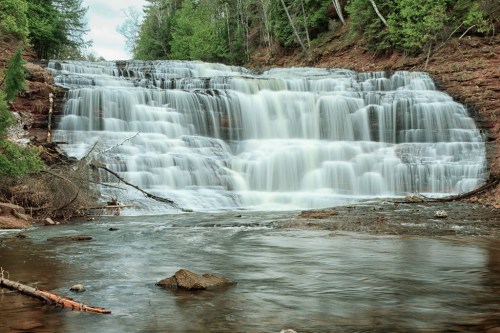
Waterfall Wednesday: Agate Falls on the Ontonagon River

Agate Falls, Bruce Crossing, MI, April, 2010

Agate Falls, Bruce Crossing, MI, April, 2010, photo by Norm Powell

GoWaterfalling.com is the site for Michigan waterfalls. Their page on Agate Falls says that this pretty waterfall is relatively easy to get to and adds:

Agate Falls is a Michigan State Scenic Site 6.5 miles east of Bruce Crossing on MI-28. There is a roadside park (Joseph F. Oravec roadside park) just past the bridge over the Ontonagon River. Unfortunately the provided trails and overlooks are somewhat limited. With some effort you can scramble down to the river to get some very good views of the falls, which seems to be popular with local fishermen, or scramble up the river banks to get to the old railroad bridge over the falls. The bridge is now part of a snowmobile trail.

Bond Falls is just around the corner. From Agate Falls, go east on MI-28 and take a right onto Agate road.O Kun de Kun Falls is 8 miles to the north. Go west on MI-28 and turn north on to US-45.

View Norm’s photo bigger and see more (including Bond Falls and other waterfalls) in his great Michigan Upper Peninsula – April 2010 slideshow.

Many more Michigan waterfalls and also more about the Ontonagon River on Michigan in Pictures!

Perils of Michigan: Quicksand Edition

Sturgeon River by Sven

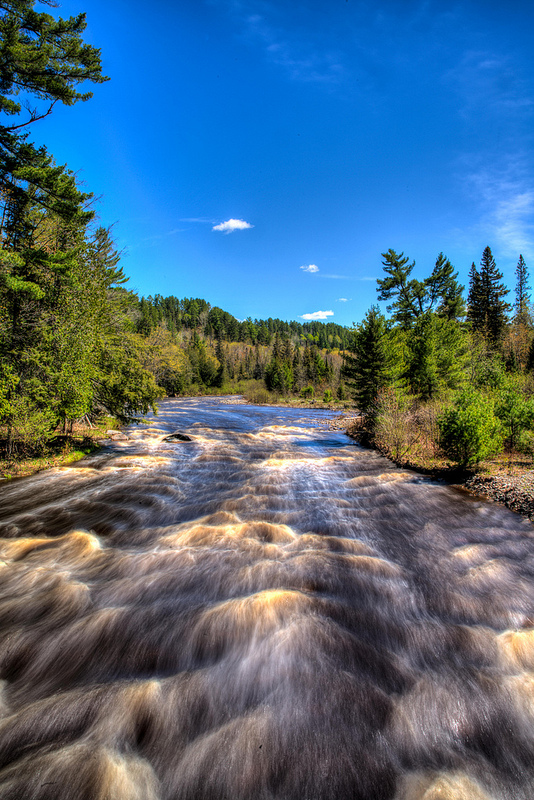
Sturgeon River, photo by Sven

While the ice has melted, leaving the shorelines temporarily free of peril – at least until until bodysurfing season starts – we can take a moment to worry about quicksand. Quicksand in Michigan Streams from Fichigan says:

Everything I know about quicksand I learned from Tarzan movies. The main thing to know is: bad guys don’t make it out, but good guys and gals always do. If you’re a bad guy, please stop reading. Quicksand on a trout stream is a little different than sand bogs in Africa, but there’s some similarity. They are both camouflaged so you don’t see it until it’s too late and if you make it out alive you’ll have an interesting story to tell even if no one believes you.

Quicksand on a trout stream is harder to see since it’s underwater. The stream bottom appears normal except there is no visible hole (sand covers it) so you don’t know it’s here until you start sinking. In waders it’s pretty scary since swimming doesn’t feel like an option.

I’ve found quicksand on the Pine River in Lake County and the Sturgeon River in the Pigeon River State Game Area. On the Pine, the particular spot I know of is a few bends downstream from Raymond Road. The first time I ran into it I was alone. I scrambled to get out and it was like running in place up a sand dune. It was easy to see the exact spot afterwards because a cloud of light gray silt poured out like smoke. An hour later, walking the bank downstream, the silt was still pouring out.

Read on for lots more including his encounter on the Sturgeon River.

I can find photos of almost anything View Sven’s photo bigger on Flickr and see more in his UP Michigan slideshow.

The Sturgeon River is one of Michigan’s Wild & Scenic Rivers – more Sturgeon River on Michigan in Pictures.

Polling for Parks: Porcupine Mountain Wilderness State Park

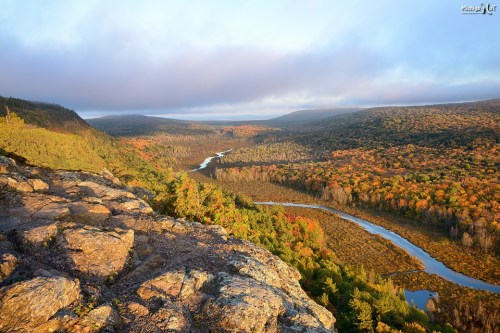
Sunset over Lake of the Clouds, Porcupine Mountains

Sunset over Lake of the Clouds, Porcupine Mountains, photo by John McCormick

USA Today is polling their readers to see what they think the 10 best state parks in the nation are. The entry page for the Porcupine Mountain Wilderness State Park says:

The Porcupine Mountains Wilderness State Park, or the “Porkies” as its known to frequent visitors, encompasses 60,000 acres of lakes, rivers and virgin forest. The park offers camping on the shores of Lake Superior, 90 miles of hiking trails, kayak rentals, mountain biking and, in the winter, access to the Porcupine Mountains Ski Area.

Porcupine Mountains Wilderness State Park – Mich. is currently ranked #2 of 20.

You can click here to vote if you’re so inclined.

John took this evening shot in October 2014 near the east end off the Lake of the Clouds. View it bigger on Flickr, see more staggering photos in his Autumn in Michigan slideshow, and definitely follow him on Facebook at Michigan Nut Photography.

You can click to visit the Porcupine Mountains Wilderness State Park website and get all kinds of Porcupine Mountains rivers, falls and views on Michigan in Pictures.

Michigan Tech Huskies are on the road to hockey’s Frozen Four

Michigan-Tech-Hockey

Michigan Tech vs Minnesota State, photo by Michigan Tech Huskies

There’s just one Michigan team that will compete for a chance to appear in the NCAA hockey Frozen Four, and it’s a perennial hockey power that you may not know about: the Michigan Tech Huskies.

Tech has won three national titles in 1962, 1965 and 1972, and the Huskies (29-9-2) are currently ranked 5th in the nation and tied for most wins in the country this year. They received an at large bid to the tourney and take the ice as the #2 seed in the West region this Friday at 4:30 PM vs St. Cloud State. (details)

Here’s the beginning of a really excellent New York Times feature from last December entitled Stirring Passions in Hockey Hotbed:

Hockey rules this remote part of Michigan’s Upper Peninsula, where it is played by everyone from children to those in their 70s and 80s. All through the long winter it is always game on — in modern arenas, outside (into the wee hours of the night) and in two of the oldest hockey rinks in the world.

Professional hockey was born here in Copper Country in 1902, 15 years before the N.H.L. was formed. Even before that, the game was king in Houghton, Hancock, Calumet and nearby towns when they were at the center of a mining boom.

The mining is gone, the woods dotted with abandoned buildings and ghost towns. Only about 44,000 live in the area now, but the love affair with hockey endures. And the Michigan Tech Huskies are winning again, at last.

Tech’s hockey tradition stretches back 95 years and includes three N.C.A.A. Division I titles, in the 1960s and ’70s, but the Huskies have finished above .500 only once since 1993.

This season, though, they opened with 10 straight victories, their best start in history, and achieved their first No. 1 ranking. Now 13-3-0, Tech is ranked No. 5, having split a two-game series with No. 7 Minnesota-Duluth last week.

I really recommend that you click to read on at the Times for a great feel of the rich history of hockey in the Copper Country. If you want a lot more MTU hockey history, check out Copper Country Hockey History. Their compendium of Michigan Tech Hockey History begins with MTU’s crushing 30-0 destruction of Eagle River that still stands as the record for most goals in a game and rolls through nearly 100 years of hockey.

The photo above was taken during the WCHA Tournament Championship game on Saturday which the Huskies lost 5-2 to tourney top seed Minnesota State. View it and more in their gallery, get lots more at michigantechhuskies.com and be sure to follow them on Facebook & Twitter.