Mosquito Falls and Waterfall Week on Michigan in Pictures

Mosquito river - Pictured Rocks National Lakeshore

Mosquito river – Pictured Rocks National Lakeshore, photo by Michigan Nut

I’ve decided to declare it Waterfall Week on Michigan in Pictures, due in part to today’s photo from John McCormick.

We’ll lean heavily on the fantastic GoWaterfalling.com, far and away the best guide to waterfalls in the Great Lakes region. They say that Michigan has nearly 200 named waterfalls, with all but one located in the Upper Peninsula (more about that tomorrow). They note that many (such as today’s) are pretty small and might better be described as rapids.

Their page on Mosquito Falls says:

This is the smallest and least impressive of the named waterfalls in Pictured Rocks. If time is limited, skip this one in order to see Chapel Falls. However this waterfall is a nice feature of the Chapel Loop Hike which will take you past both Chapel and Mosquito Falls.

Mosquito Falls is a small waterfall consisting of two main drops about 100 meters apart with a stretch of rapids in between them. The lower drop is about 10 feet high, and the upper one is about 5 feet high. This is the smallest of the named Pictured Rocks waterfalls but it is a very lovely hike, especially in spring when the flowers are out.

They’re definitely right about what is for my money the best hiking trail in Michigan – trail map right here. Read on for directions and more and also see the Waterfalls page from the Pictured Rocks National Lakeshore.

See John’s photo bigger and see more in his Michigan Waterfalls slideshow.

Unchaining a River: Restoring the Boardman River

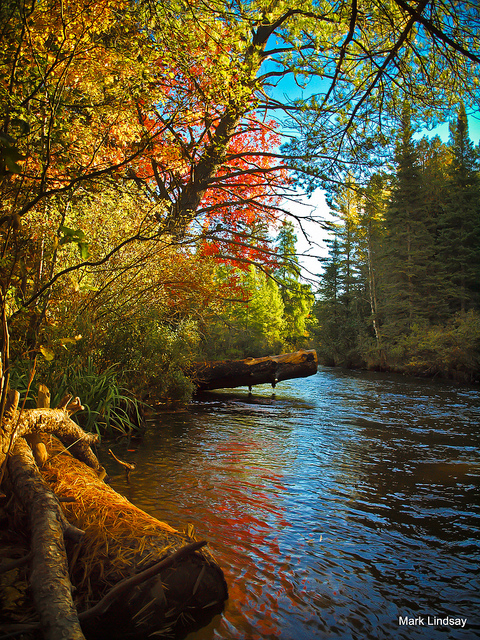
Poetry of Nature, photo by Mark Lindsey

“We’re healing one of Mother Earth’s arteries. I think she’s been hurting for a long time.”
~Hank Bailey, Grand Traverse Band Natural Resources Official

The Boardman River watershed encompasses 291 square miles and flows 179 miles from its origin in Kalkaska County to West Grand Traverse Bay in Traverse City. Last Wednesday, the process of removing three no longer used hydro-electric dams from the Boardman began at Brown Bridge Dam. The removal of the three Boardman River dams (Brown Bridge, Sabin & Boarman) will be the largest dam removal project in Michigan’s history, and the largest wetlands restoration in the Great Lakes Basin. It will allow the Boardman to return to a more natural state as a free-flowing, cold-water river. You can read all about the dam removal on the Boardman River website which explains:

The Boardman River was formed after the last retreat of glaciers covering Northern Michigan approximately 10,000 years ago. The proto-Boardman River was a tributary of the Manistee River and flowed south to Lake Michigan. The course of the river changed as early headwaters streams cut through glacial deposits and joined with the proto-Boardman River. This allowed the Boardman River to flow north and empty into Grand Traverse Bay. Glacial deposits, in particular the Kalkaska series soil, are responsible for the high quality of the Boardman River.

…Americans living in the area knew the River by another name. They valued the river as an important transportation route as well as a source of sustenance. Early European settlers called the river the “Ottawa” after the local band of Native Americans. Things changed when Captain Harry Boardman came to the area around 1848, established a sawmill, and acquired timber rights for the area. Captain Boardman stored logs for his sawmill in a natural lake on the Ottawa River, which became known as “Boardman’s Lake.” In time, the entire river became known as the “Boardman River.” In 1852 Captain Boardman sold his timber rights to the real timber barons of time, Perry Hanna & Tracy Lay. The Boardman River played a vital role in the economic growth of the region as it was cleared of debris in order to drive logs downriver to the mills. This process fueled a growing city but was devastating to the river’s aquatic habitat, contributing to the extirpation of Michigan Grayling in the river. After the logging era, several dams were constructed to provide power for the growing needs of Traverse City. These hydroelectric dams originally supplied a large percentage of the city’s electrical needs, but this declined over time. Before being decommissioned in 2005, these dams only provided 3.4% of the power used by Traverse City Light & Power customers each year.

Of approximately 179 miles of stream in the Boardman River Watershed, 36 are designated as “Blue Ribbon” trout habitat. These areas, located upstream of the Beitner Road crossing are premier fish habitat and important to anglers. Boardman River anglers have an important economic impact on the region. The entire watershed is also used for activities such as canoeing, tubing, kayaking, hiking, hunting, and bird watching. These uses make it a destination for an estimated 2 million Recreational User Days annually.

This project seems to me to be an excellent example of “government done right” – an adequately funded effort that leverages a wide range of scientific experts to protect property owners while restoring a natural resource to its natural state. There’s also a Boardman River Prosperity Plan that will seek to turn a solid environmental decision into a sound economic one was well.

Also see this feature on IPR News Radio and a cool video about the dam removals produced for The Grand Vision Natural Resource Network by Miles Chisholm of the Grand Traverse Band of Ottawa and Chippewa Indians. The video includes some great old photos of activity on the river.

Mark took this photo in October 2010 when the colors were callin’ – see it on black and see more in his Explored slideshow.

Waterfall Wednesday: Rock River Falls

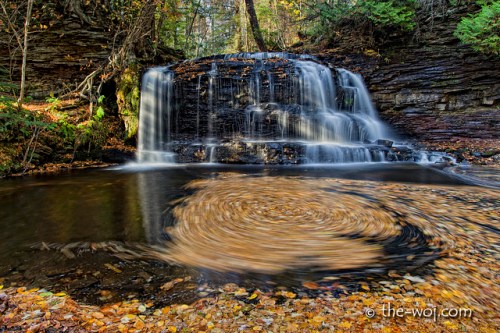
Rock River Falls

Rock River Falls, photo by PaulWoj

Rock River Falls is located in the Rock River Canyon Wilderness Area in Alger County which is s administered as a part of the Munising Ranger District of the Hiawatha National Forest:

The canyon area itself has been relatively undisturbed by humans. Little evidence of prior human activity can be found, except for an occasional old skid road or decaying stump. Dense undergrowth and brush covers most of the land. The canyons are points of interest because few such landscape features exist in the eastern Upper Peninsula of Michigan. Foot travel is difficult along the steep walls and through the densely vegetated and wet canyon floor. High ground around the canyons is covered by northern hardwoods and is easily traveled.

At the edge of the canyons are sandstone outcrops which water and weather have transformed into caves 10 to 40 feet deep. During winter, ice curtains formed by water seeping over the canyon edge hang in front of the caves. Large cedar trees also hang over the rim of the canyon. Rock River Falls is a notable feature in spring, when its waters cascade over a sandstone ledge into a pool 15 feet below.

Check this photo out background bigtacular and in Paul’s Especially in Michigan slideshow. Also see Paul’s cool Tumblr photo blog.

More Michigan waterfalls on Michigan in Pictures.

The Guru Of The Green and our science fiction moment

Guru Of The Green  -  Flint, Michigan

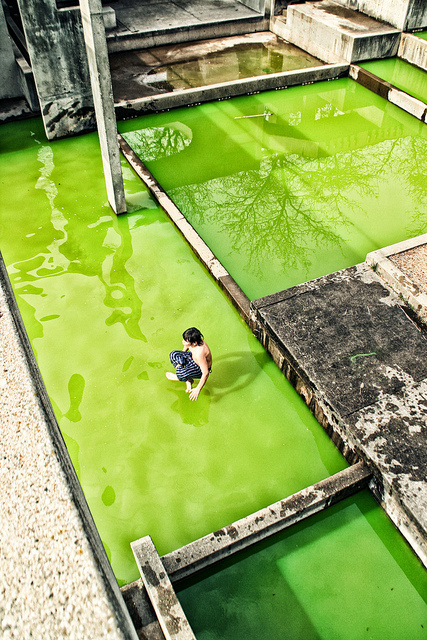
Guru Of The Green – Flint, Michigan, photo by J.M.Barclay.

“It’s almost like science fiction at this point.”
~Weather Underground weather historian, Christopher C. Burt

Dr. Jeff Masters flew with the NOAA Hurricane Hunters from 1986-1990 and co-founded Ann Arbor-based The Weather Underground in 1995 while working on his Ph.D. He’s Wunderground’s Senior Meteorologist and has been writing some insightful and frankly scary articles about what he calls “Summer in March” which has seen up to a week straight of record high temperatures. Yesterday he wrote:

Since record keeping began in the late 1800s, there have never been so many temperature records broken for spring warmth in a one-week period–and the margins by which some of the records were broken yesterday were truly astonishing. Wunderground’s weather historian, Christopher C. Burt, commented to me yesterday, “it’s almost like science fiction at this point.” A few of the more remarkable records from yesterday:

Pellston, Michigan in the Northern Lower Peninsula is called “Michigan’s Icebox”, since it frequently records the coldest temperatures in the state, and in the entire nation. But the past five days, Pellston has set five consecutive records for hottest March day. Yesterday’s 85° reading broke the previous record for the date (53° in 2007) by a ridiculous 32°, and was an absurd 48°F above average.

The low temperature at Marquette, Michigan was 52° yesterday, which was 3° warmer than the previous record high for the date!

Also don’t miss this article where Jeff looks at how extraordinarily rare for climate locations with 100+ year long periods of records to break records day after day after day.

James snapped this amazing capture of the Guru frozen above some green water left over from St Patrick’s Day at Flint’s Riverbank Park. Check it out bigger and in his free run sun slideshow with some Free Running / Parkour action. He also has a show starting Saturday – details on his Facebook.

Michigan Wild & Scenic Rivers: Manistee River

Ox Bow on the Manistee River

Ox Bow on the Manistee River, photo by jimflix!.

Michigan has 16 nationally designated Wild & Scenic Rivers. The Wild & Scenic Rivers Act of October 2, 1968 provided for federally designated rivers that “possess outstandingly remarkable scenic, recreational, geologic, fish and wildlife, historic, cultural or other similar values.” A 26 mile section of the Manistee River was added in 1992 from the Michigan DNR boat ramp below Tippy Dam to the Michigan State Highway 55 Bridge. On the Manistee’s page at the Wild & Scenic River website they say:

The Manistee Wild and Scenic River is well known for beautiful scenery, excellent fishing and a variety of recreational activities. In the spring and fall, high numbers of anglers are attracted to the superb salmon and steelhead runs. During the summer, walleye and pike fishing become the primary recreational activity. The river supports a variety of other recreational uses including wildlife viewing, hiking, canoeing and hunting.
Private businesses and government agencies have developed a variety of facilities and services to meet the expanding recreation demands of the public. Commercial guided fishing is one of the most popular activities on the Manistee River. The amount of recreational use fluctuates from year to year, mostly based on the fishing runs and local economic factors. There are eight developed river access sites within the wild and scenic river corridor. The Forest Service maintains sites at High Bridge, Bear Creek, Rainbow Bend and Blacksmith Bayou. The state of Michigan operates a river access site at Tippy Dam. Private recreation sites include Big Manistee Riverview Campground and Coho Bend Campground. The Forest Service developed recreation sites along the Manistee River require a vehicle parking pass under the Recreation Enhancement Act.

View this photo background big and in Jim’s Manistee River slideshow.

More Wild & Scenic Rivers on Michigan in Pictures!

Power House Falls on the Fall River

n2c_111-8241

n2c_111-8241, photo by sgowtham.

GoWaterfalling.com says that Power House Falls is located on the Falls River:

It is the largest of many falls to be found on the aptly named river. The river is about 40 wide here and drops 15 feet. The falls is named for the old power house that stands next to it.

Reaching this waterfall is easy. From US-41 about 1 mile south of L’Anse head west on Power Dam Road. There is a sign for the falls. Follow the road for about a mile. When it crosses the train tracks it branches. There is another sign for the falls. There is a small park at the falls.

There are a number of small drops just above the falls, and there are supposed to be a dozen or so more between Power House Falls and the Middle Falls in L’Anse.

Check this out bigger and also see this photo on Gowtham’s map!

Many more Michigan waterfalls can be found on Michigan in Pictures!

Summertime Dreaming

Summertime Fun

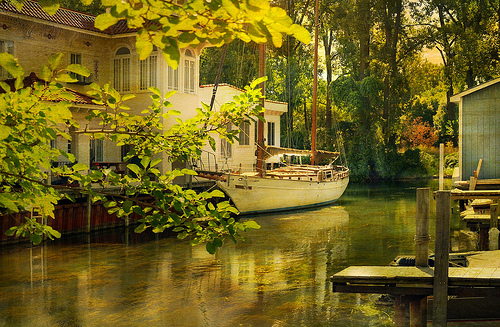
Summertime Fun, photo by Ann279.

I think that I want to live here. Here’s hoping your weekend is dreamy!

Check this out on black, background big and in Ann’s slideshow.

Update: a commenter below explains that this is the Harbor Island neighborhood of Detroit in case you (like me) were wondering!

Barton Dam, in ice and history

IMG_3373.jpg

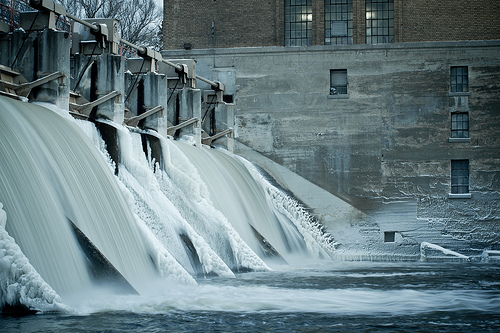
Barton Dam 1/21/12, photo by pcaines

ArborWiki’s entry for Barton Dam says that:

Barton Dam is one of Ann Arbor’s four dams on the Huron River. It was designed by engineer Gardner Stewart Williams and architect Emil Lorch and built in 1912-13 as part of the development of hydroelectric power on the Huron River by the predecessor of Detroit Edison. The earthen-construction dam is 34 feet high and 1767 feet long, and has a typical surface area of 315 acres and typical storage of 5050 acre-feet. The dam can be accessed from Huron River Drive from the city park located at the foot of Bird Road.

The City of Ann Arbor purchased the dam from Detroit Edison in the 1960s, and restarted hydroelectric generation in the 1980s. The facility has a 900-kilowatt turbine that generates 4.2 million kWh per year.

In case you’re wondering, Emil Lorch (1870-1963) was the first University of Michigan Dean of Architecture and – as this page from the Bentley Historical Library explains, Gardner Stewart Williams was the engineer who worked with the Detroit Edison Company to identify sites for dams to generate power on the Huron in the early 1900s. There’s also a Flickr group for Barton Dam where you can see a lot more photos!

Be sure to check this photo out bigger and see more in cpcaines Ann Arbor slideshow.

Tahquamenon Falls in Winter

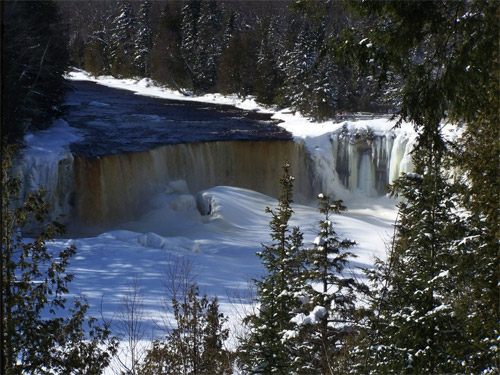
Tahquamenon Falls in Winter, photo by Karen Lancour

You know that we love, love, love Tahquamenon Falls on Michigan in Pictures. If you haven’t made the trek in wintertime, definitely do – it’s amazing!

Karen shared this photo on the Michigan in Pictures page on Facebook. See it bigger on Facebook and click here to see more of the photos folks have shared with us!

Dead River Falls

Dead River Falls

Dead River Falls, photo by johndecember.

The Waterfall Record, a new discovery for me, has this to say about Dead River Falls:

There are some waterfalls that I’ve visited where I’ve had high expectations, and it’s not that I’m terribly disappointed, but not I’m not always sure what the attraction is. On the other hand, there are other waterfalls where my expectations are very low, and I am overwhelmed when I finally see the waterfall. There are two very impressive waterfalls on the Dead River right near Marquette.

I wasn’t expecting much because of the description I read in the book about Michigan waterfalls. I hadn’t seen any pictures, so I really didn’t know what to expect. The first waterfall is not that exciting, but wow, the 2nd waterfall is truly amazing. I wasn’t sure whether to keep walking along, but I did. The 3rd waterfall is small, but I decided to keep going. There was one turn along the trail where I suddenly realized that the 4th waterfall was going to be spectacular. It was early May, and the amount of snow melt created a great surprise. The waterfall is maybe 30′ tall or so, but the amount of water flowing over the falls was amazing. This group of waterfalls isn’t advertised that much, so you’ll likely be alone.

Also, I should mention, if I haven’t already, that the trail leading to the falls, while not terribly dangerous, would be best described as precarious at a few specific points. At one point, you’ll be hugging the dirt trail that is only feet from a river that is flowing VERY fast, at least in May. If you’re not careful, you’ll be carried away by the very swift current. As long as you’re paying close attention, I think you’ll be ok.

Read on for directions and a photo of the indeed impressive Upper Falls, and also to check out over 60 more Michigan waterfalls. Note that the site author says that on a June 2011 visit he encountered a No Trespassing sign due to work at the falls so maybe call the Marquette CVB to check before making the trek…

Check this photo out bigger and check out the area on John’s map.

Many (many) more Michigan waterfalls on Michigan in Pictures.