Beating the Winter Blahs at Elizabeth Park

Winter's Beauty

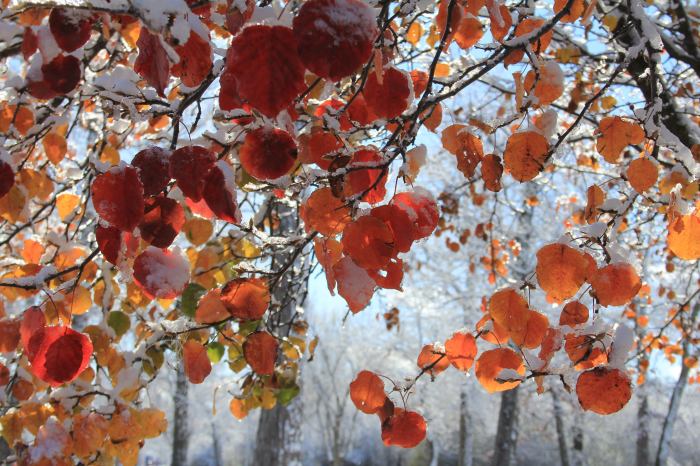
Untitled, photo by mballen89

Several of my friends shared this very appropriate article today about how Norwegians in the far north of the country deal with the dark and cold of winter:

First, Norwegians celebrate the things one can only do in winter. “People couldn’t wait for the ski season to start,” says Leibowitz. Getting outside is a known mood booster, and so Norwegians keep going outside, whatever is happening out there. Notes Leibowitz: “There’s a saying that there’s no such thing as bad weather, only bad clothing.”

Norwegians also have a word, koselig, that means a sense of coziness. It’s like the best parts of Christmas, without all the stress. People light candles, light fires, drink warm beverages, and sit under fuzzy blankets. There’s a community aspect to it too; it’s not just an excuse to sit on the couch watching Netflix. Leibowitz reports that Tromsø had plenty of festivals and community activities creating the sense that everyone was in it together.

And finally, people are enamored with the sheer beauty of the season. Leibowitz grew up near the Jersey shore, and “I just took it as a fact that everyone likes summer the best.” But deep in the winter in Norway, when the sun doesn’t rise above the horizon, multiple hours a day can still look like sunrise and sunset, and against the snow, “the colors are incredibly beautiful,” she says. “The light is very soft and indirect.”

Most likely you can’t cross-country ski straight out of your house, and while Norwegian sweaters may be catching on, restaurants and coffee shops in more temperate climates don’t all feature the fireplaces and candles common to the far north. Still, there are little things non-Norwegians can do. “One of the things we do a lot of in the States is we bond by complaining about the winter,” says Leibowitz. “It’s hard to have a positive wintertime mindset when we make small talk by being negative about the winter.”

Read on for more good advice on battling the winter blahs – I hope it’s helpful to you!

The photo was taken in Elizabeth Park in Trenton which I just learned is Michigan’s first county park!

This 162-acre family estate was bequeathed to the Wayne County Park Trustees in October of 1919 by the children of Elizabeth Slocum.

The acceptance of this special gift marks the beginning of the Wayne County Park System. Elizabeth Park sits like an emerald jewel along the banks of the Detroit River, and features over 1,300 feet of riverwalk for fishing and river watching. In addition Elizabeth Park also offers activities such as softball, cycling, in-line skating, hiking, cross-country skiing and ice skating.

View the photo background bigtacular and see more in mballen89’s slideshow.

More winter wallpaper and more straight-up winter on Michigan in Pictures!
Fiery Fall Foliage at Fenner

Fiery Fall Foliage

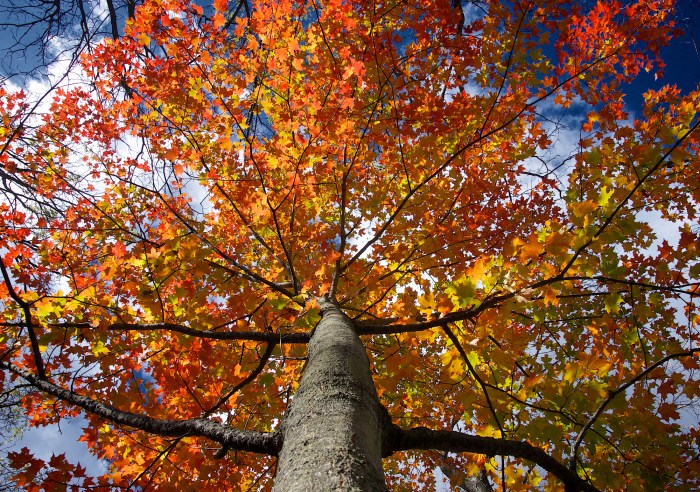
Fiery Fall Foliage, photo by David Marvin

Let’s head out of autumn with a with a bang and this firework of a maple! I hope you get a chance to get out and enjoy what remains of the 2015 fall color touring season in Michigan. mLive updated their color report with some pics from readers:

The colors are fading fast and the leaves are falling, but there are still some Michigan areas with peak color. The inland areas of the Upper Peninsula and the inland areas of northern Lower Michigan are past fall color peak now. The leaves are falling fast.

But the shoreline areas and the peninsulas are warmer. Some of those areas are still at peak, or even just peaking now.

It will still be well worth the trip to the Leelanau Peninsula and the Old Mission Peninsula this week and probably even this weekend.

We took the drive of M-22 along the shore of Leelanau County Sunday, October 18, 2015. Along the shore there was still some green and was a few days away from peak. Old Mission Peninsula was 50 percent green still on Sunday, Oct. 18, 2015. So if you are going north this weekend, take the routes near water and you’ll be pleased.

The southern half of Lower Michigan is peaking now through the next few days. This weekend will still be real nice to take that last fall color drive.

Also have at these aerial photos of fall color from a U.S. Coast Guard MH-65D Dolphin helicopter they shared a week ago.

Check this photo out big as a tree and head over to Dave’s blog for more photos & writing from Fenner Nature Center.

More fall wallpaper on Michigan in Pictures.

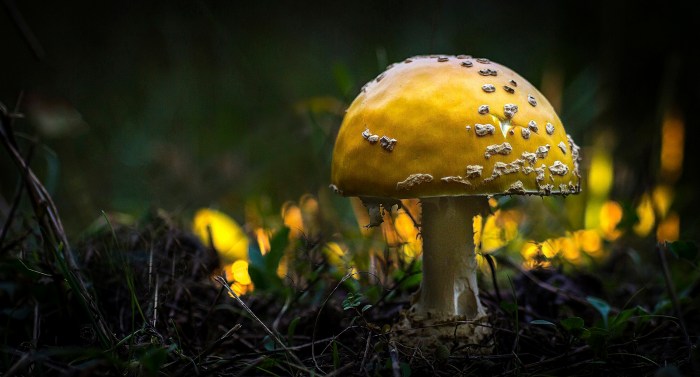
Golden Mushroom

Mushroom by Kevin Povenz

Mushroom, photo by Kevin Povenz

Kevin says that Google suggests this mushroom is amanita flavoconia, putting it squarely in the “look but probably better not eat” category.

View it bigger and see more in Kevin’s Flowers/Plants slideshow.

More mushrooms on Michigan in Pictures.

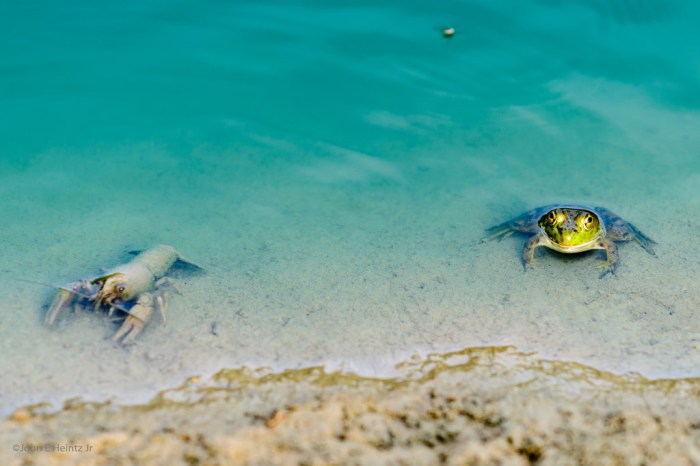
Best Friends in Nature: Crayfish & Green Frog Edition

Best Friends Crayfish & Green Frog

Crayfish & Green Frog, photo by John Heintz Jr.

The next installment of the critically acclaimed Michigan in Pictures exclusive “Best Friends in Nature” series. I believe what these two have in common is a long list of shared predators, so this could well be a pond-side support group meeting. ;)

View John’s photo bigger and see more of his cool wildlife photos. Seriously, I feel like he’s the long-lost nephew of Doctor Doolittle when I look at his photos!

More animals on Michigan in Pictures, and also more about the Northern Green Frog.

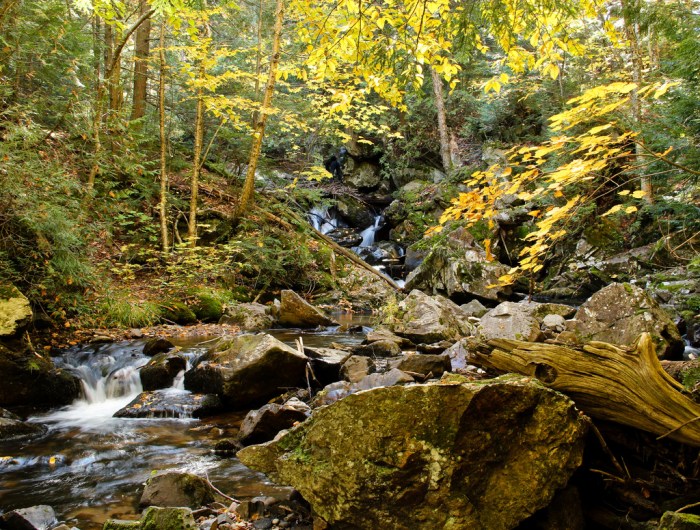
Waterfall Wednesday: Big Pup Falls

Big Pup Falls

Big Pup, photo by Kim Nixon

Travel Marquette shares:

Big Pup Creek Falls (Lat. N46 Degrees 42′ 42″ Long W87 Degrees 42′ 14″) is located from Marquette – Travel County Road 550 north toward Big Bay approximately 23 miles to County Road 510. Travel about 7 miles (you will cross the steel bridge which spans the Yellow Dog River as directed for Yellow Dog (River) Falls). Drive approximately 2 miles farther on the winding road. Just before the bridge about 60 yard. Park safely off to the side of the road before the bridge. Walk down the hill off the road right of way to the falls.

View Kim’s photo bigger, see more in her September 2012 slideshow and follow her at Photography with Kim on Facebook.

FYI, there’s now 134 waterfall posts on Michigan in Pictures!

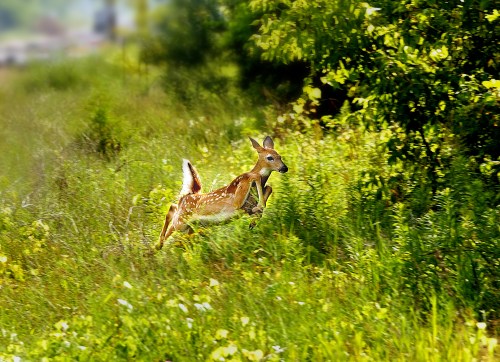
Fawn Finding Forest Fast

Fawn Finding Forest Fast, photo by jdehmel

We’ve all heard of f-stops, but look at this fawn f-GO!! Here are a couple of fun fawn facts from Outdoor Life:

  • Fawns average 6-8 lbs. at birth
  • Fawns are capable of walking within a few hours
  • Does usually remain within 100 yards of their fawns
  • A 3-week-old fawn can outrun most danger
  • The average number of spots on a fawn is 300

View Jeff’s photo background bigtacular and see more in his slideshow.

More Michigan fauna and more summer wallpaper on Michigan in Pictures.

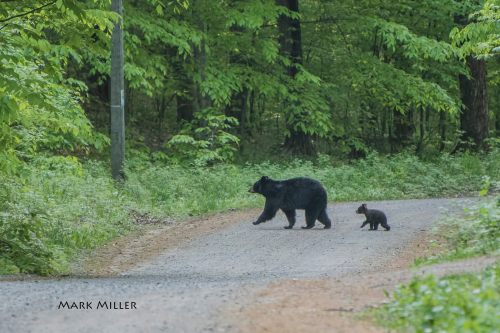
Saturday Morning Stroll: Black Bear in Michigan

Saturday Morning Stroll Michigan Black Bears

Saturday Morning Stroll, photo by Mark Miller

Recently there have been several reports of black bear sightings in Michigan, in traditional ranges like Leelanau County where these bear were photographed and even as far south as the state line in southwest Michigan and Washtenaw County, where  The Hastings Banner shared that while some are escapees from private facilities, others are ranging south:

“We’re interested in learning more about how they use the landscape in southern Michigan,” explained DNR wildlife research biologist Dwayne Etter. “The landscape in southern Michigan is very different from traditional bear habitat further north.”

…The Saginaw County bear is the southernmost collared bear in Michigan. Other collared bears south of traditional Michigan bear country include a male that was trapped and collared outside of Whitehall in orchard country, as well as a sow with cubs in Newaygo County, and a male in Oceana County. “We got a good break getting this bear collared this far south,” said Etter, who is studying how bears disperse in southern Michigan.

In recent years, bears have been documented in Washtenaw, Ionia and Ingham counties. “There was a bear sighted just north of Lansing several years ago,” Etter said. “We have photos of tracks from Sleepy Hollow State Park in April.

Read on for more including how they tranquilized and collared the Saginaw in an effort to learn more about bear movements. The DNR’s Living with Bears page shares some good tips for staying safe:

With the exception of baiting for hunting purposes in remote areas, placing food to attract bear near homes, cottages, parks, campgrounds and picnic areas may teach them to associate people with food. This may place them and people at risk of injury.

Black bear have enormous appetites and an excellent sense of smell, and are capable of remembering the locations of reliable food sources from year to year. They will travel great distances to find food. When natural foods such as tender vegetation, nuts, berries and insects are scarce, bear are likely to come into contact with people. Problems occur when bear attempt to feed or actually feed on human foods, garbage, pet foods or birdseeds.

Although most bear are secretive and shy by nature, they will tolerate contact with people when their natural food is scarce. Because they are large and powerful animals, they must be respected.

Black bear are generally fearful of humans and will leave if they are aware of your presence. In the rare circumstance that you encounter a bear that does not turn and leave, first try to scare it off by yelling while leaving a clear, unobstructed escape route for the bear. If the bear stands its ground, makes threatening sounds or bluff charges, you are too close. Take slow steps backward while continuing to talk to the bear in a stern tone. In the rare event of an attack, fight back with a backpack, stick or your bare hands. Black bears have retreated in similar situations.

Mark took this photo on the Leelanau Peninsula and wrote: When my neighbor called me early on a Saturday morning to tell me a bear was heading my way, I had to go looking for him. View his photo bigger and see more in his In My Backyard slideshow.

Want to know more about bear cubs with triple the bear cuteness? Check out Bear Triplets on Michigan in Pictures!


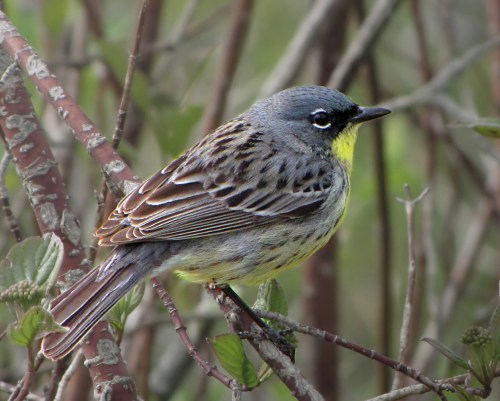
Kirtland’s Warbler on the Rebound

Kirtland Warbler at Tawas Point, 5-15-2010

Kirtland Warbler at Tawas Point, 5-15-2010, photo by John Britt

The Michigan Department of Natural Resources completed their annual June survey of Kirtland’s warbler, one of the rarest members of the wood warbler family that nests almost exclusively in Michigan’s northern Lower and Upper peninsulas, with a few locations in Wisconsin and the province of Ontario. They explain:

“We have a great group of DNR, U.S. Forest Service and U.S. Fish and Wildlife Service staff members, as well as volunteers, who are trudging through young, thick jack pine in the early morning hours,” said Department of Natural Resources wildlife supervisor Keith Kintigh. “The reward is getting to hear that singing male Kirtland’s warbler, which is the way we actually census the population.”

The Kirtland’s warbler census is a tool managers use to compare population numbers relative to recovery goals by listening for the male’s song. Kirtland’s warbler numbers had been very low, under 200 nesting pairs, in the mid-1980s. Michigan became the focus for habitat management, since it has been a primary location for the birds’ reproduction.

Kirtland’s warblers spend eight months wintering in the Bahamas. The males arrive back in Michigan between May 3 and May 20, a few days ahead of the females. The males establish and defend territories and then court the females when they arrive. The males’ song is loud, yet low-pitched, ending with an upward inflection – easily recognized to identify the presence of a Kirtland’s warbler.

Additionally, the presence or absence of Kirtland’s warblers determines if protection of that area is needed and allows evaluation of different habitat management techniques. The habitat requirements for Kirtland’s warbler are very specific; they prefer large blocks of young jack pine, usually hundreds of acres in size. The Kirtland’s warbler is a ground-nester, often using the living branches of 5- to 20-foot-tall jack pine trees to conceal their nests, so jack pine trees must be actively managed. Large areas of sandy soils are planted with jack pine and then cut decades later, on specific intervals, to achieve the perfect-aged stands.

Lots more about this rare songbird, including census results that show a steadily increasing population on the DNR’s Kirtland’s Warbler (Dendroica kirtlandii) page.

View John’s photo from May of 2010 background big and see more in his Animals & Wildlife slideshow.

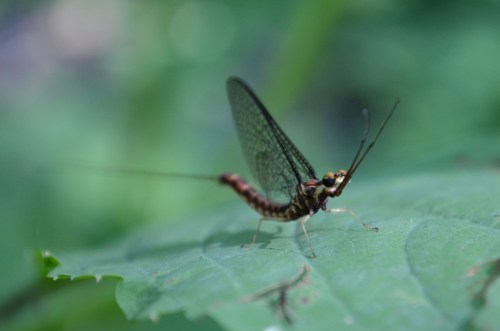
Appreciating the Michigan Mayfly (Ephemeroptera)

Mayfly (Ephemeroptera)

Mayfly (Ephemeroptera), photo by Todd Marsee, Michigan Sea Grant

Last year Steve Stewart of Michigan State University Extension shared The Mayflies are coming – time to celebrate!:

It’s summer, so it’s time for the mayfly hatch! There are hundreds of species of mayflies (also commonly referred to as fish flies) in North America, representing a number of Families in the Order Ephemeroptera. Ephemeroptera comes from the Greek word for “short-lived” (as in “ephemeral”), and it’s a good name because as winged adults, mayflies only live a few days. The most widespread burrowing mayfly species in the Great Lakes is Hexagenia limbata, the Giant Mayfly.

Mayflies have a very interesting life cycle. They are the only insect to have two “adult” molts, and begin life as eggs laid on the surface of the water that sink to the bottom. The aquatic nymphs of mayflies are called naiads, and creep around rocks and vegetation. After months or years (depending on the species), they float to the surface and molt to a winged, but sexually immature, sub-adult. Often within hours, another molt occurs and the final stage emerges—the winged, reproductive adults, which possess only vestigial mouth parts and cannot eat or drink and, depending on the species, live for only days or, in some cases, mere hours.

One of the most obvious characteristics of the adults is their large numbers. They can emerge in huge numbers from a body of water. So huge, in fact, that their swarms can be seen on Doppler radar! This image is from June 14 showing a mayfly swarm over western Lake Erie, pushed ashore in Monroe County by an easterly breeze. Once ashore, mayflies tend to sit on upright objects and can completely cover the surfaces of posts, sheds, and light poles. At night, they are attracted to lights.

Some people think of mayfly hatches as a nuisance, and they can be a bit annoying when they are swarming. But mayflies are a good thing. Some people think of mayfly hatches as a nuisance, and they can be a bit annoying when they are swarming. But mayflies are a good thing. They are rarely found in degraded bodies of water because their external gills in the nymph stage are very vulnerable to silting and pollution. Mayflies are, therefore, used as an indicator species when testing for environmental quality, and their presence reflects the good quality of the habitat from which they hatched.

Read on for more including photos and school lessons on the Mayfly.

View this photo from the Michigan Sea Grant background bigtacular and see more of their mayfly photos on Flickr.

PS: Thanks to Absolute Michigan pool member Steve Brown for posting the first Mayfly of the season and alerting me.

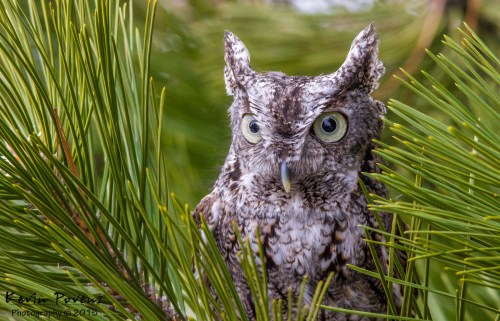
Know your Michigan Birds: Eastern Screech Owl

Eastern Screech Owl by Kevin Povenz

Eastern Screech Owl, photo by Kevin Povenz

The Owl Pages says (in part) that the Eastern Screech Owl (Megascops asio):

…is a small, nocturnal woodland Owl with short ear-tufts and yellow eyes. There is a greyish-brown, red and grey morph, with intermediates also occurring. The word “asio” is Latin for ‘Horned Owl’. Eastern Screech Owls have also been called the Common Screech Owl, Ghost Owl, Dusk Owl, Little-eared Owl, Spirit Owl, Little Dukelet, Texas Screech-Owl, Whickering Owl, Little Gray Owl, Mottled Owl, Red Owl, Mouse Owl, Cat Owl, Shivering Owl, and the Little Horned Owl.

…A nocturnal bird, with activity beginning after sunset. The Eastern Screech-Owl flies fairly rapidly with a steady wingbeat (about 5 strokes/second). They rarely glide or hover, but may fly with erratic movements, when manoeuvring through wooded areas. Their wings are broad and the head is held tucked in giving the bird a stubby appearance when flying.When threatened, an Eastern Screech Owl will stretch its body and tighten its feathers in order to look like a branch stub to avoid detection, but will take flight when it knows it has been detected. In open roosts, gray-phase birds tend to roost next to a tree trunk, whereas red-phase birds tend to roost in outer foliage, possibly because of thermal requirements.

…Eastern Screech Owls hunt from dusk to dawn, with most hunting being done during the first four hours of darkness. They hunt mainly from perches, occasionally hovering to catch prey. This Owl mainly hunts in open woodlands, along the edges of open fields or wetlands, or makes short forays into open fields. When prey is spotted, the Owl dives quickly and seizes it in its talons. They will also capture flying insects on the wing.

…Breeding season for Eastern Screech Owls is generally around mid April, but may range from mid March to mid May. They have an elaborate courtship ritual. Males approach females, calling from different branches until they are close. The male then bobs and swivels his head, bobs his entire body, and even slowly winks one eye at the female. If she ignores him, bobbing and swivelling motions intensify. If she accepts him, she moves close and they touch bills and preen each other.

… Eastern Screech Owls inhabit open mixed woodlands, deciduous forests, parklands, wooded suburban areas, riparian woods along streams and wetlands (especially in drier areas), mature orchards, and woodlands near marshes, meadows, and fields. They will avoid dense forests because Great Horned Owls use that habitat. They will also avoid high elevation forests. Eastern Screech Owls roost mainly in natural cavities in large trees, including cavities open to the sky during dry weather. In suburban and rural areas they may roost behind loose boards on buildings, boxcars, or water tanks. They will also roost in dense foliage of trees, usually on a branch next to the trunk, or in dense scrubby brush.

Read on for lots more about screech owls and definitely make owlpages.com your go-to for all things owlish (including screech owl gear).

View Kevin’s photo bigger on Flickr, see a lot more in his fantastic Birds of Prey slideshow and follow him at Kevin Povenz Photos on Facebook.