Michigan Mink (Mustela vison)

michigan-mink

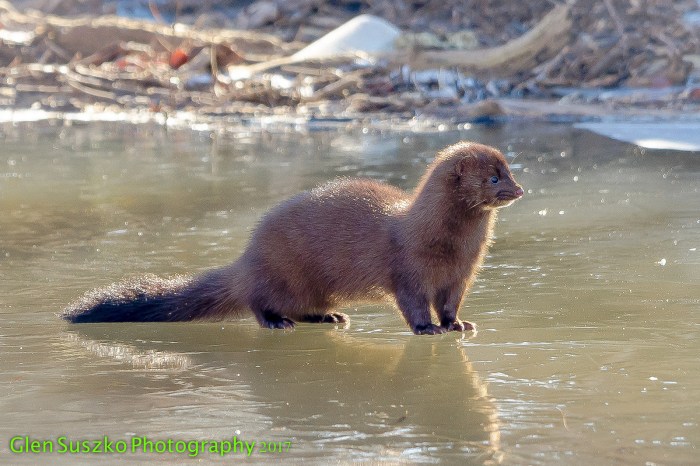
Hello Mink, photo by Glen Suszko

The Michigan Wildlife Conservancy has an excellent article on the mink (Mustela vision) that says in part:

Some predators are highly specialized, honed by evolution to efficiently hunt certain prey in distinct habitats and situations. And then there’s the mink (Mustela vison). The sleek, dark- bodied weasel is about as versatile as predators come – taking a wide variety of prey on land and water, day or night. If a mink played baseball, it would be the utility player who could step in at almost every position.

Mink are found throughout North America except in the extreme northernmost reaches of Canada and the arid southwestern U.S. Much larger than the short-tailed and long-tailed weasels (see the March – April 2012 issue of The Wildlife Volunteer), adult males reach 28 inches in length and can weigh up to 3.5 pounds. Females are smaller, but are still big enough to prey on muskrats, rabbits, small woodchucks, chickens, a host of smaller animals, and birds’ eggs.

A mink’s foot has five toes that are slightly webbed and with semi-retractile claws. That combination lets the animals swim well and keep its claws sharp enough to grab fish and other slippery prey.

Mink can dive 15 feet and swim fast enough to catch muskrats underwater as well as in muskrat houses and burrows. They stalk lakeshores, river banks, and wetlands, matching hunting times to prey availability. This past winter, I watched a mink follow a lakeshore, then walk the edge of open water on ice in broad daylight far away from cover. Yet, mink also frequently hunt at night, slinking in and out of thick brush, cattail stands, log jams, or rock piles.

Read on for lots more!

View Glen’s photo from the Sterling Heights Nature Center bigger and see more in his slideshow.

Lots more Michigan animals on Michigan in Pictures!
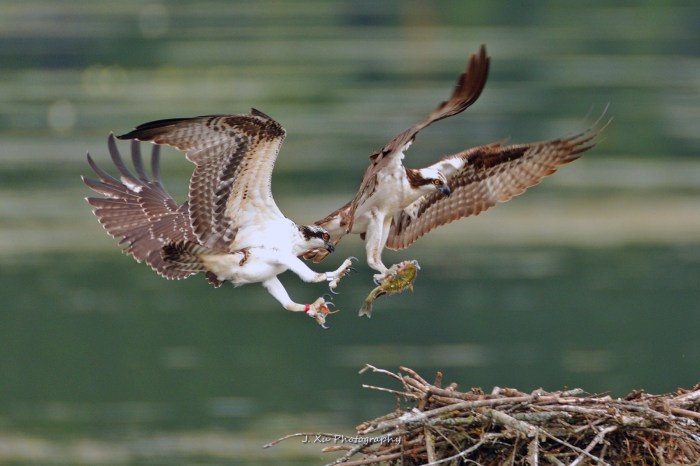
Dinner with the Ospreys

Dinner with the Ospreys

Can’t Wait, photo by Jiafan(John) Xu

Osprey Watch of Southeast Michigan shares some information about Michigan Osprey:

An Osprey is a large bird with a length of 22-25 inches, a wingspan of 4.5-6 feet, and a weight of approximately four pounds. The Osprey has a dark brown back and a white belly, as well as a white head, which features a dark stripe running from its yellow eyes to the back of its head. Female Ospreys are slightly larger than males and may sport a dark speckled necklace

..The Osprey dines almost exclusively on live fish, often catching its meals by hovering over the water at an altitude of 50 to 200 feet, then diving feet first into the water to catch its prey. The Osprey’s feet are uniquely adapted to “air fishing.” Each Osprey foot has a reversible front toe, as well as barbs, called spicules, which help it hold onto a slippery fish in flight. Normally, an Osprey will aerodynamically position a fish headfirst in its talons before it returns to the nest.

These talons definitely look like fish hooks – read on for more!

View Jiafan’s photo bigger and see more in his slideshow where you can also see shots from a trip out west.

More Michigan birds on Michigan in Pictures.

Frog Friday: You Looking at Me? Edition

Frog Friday You Looking at Me Edition

You Looking at Me?…, photo by Kevin Povenz

I had so much fun with Blackcaps: Blackberry or Black Raspberry last week that I had to try it again (spoiler alert: they were black raspberries).

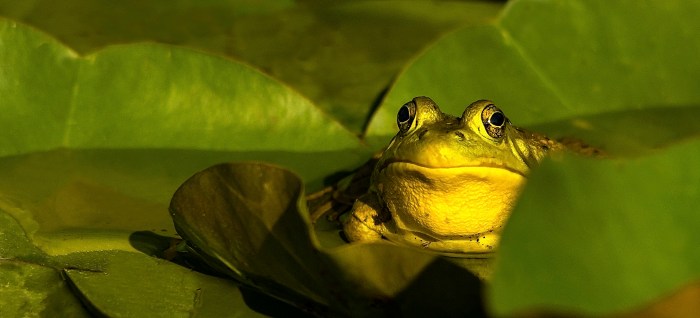
What do you think, internets: is this a Northern green frog or a Michigan bullfrog? The only difference I know of between the two is that the green frog has a fold of skin from the eardrum down each side of the back.

View Kevin’s photo bigger and see more in his Animals slideshow.

More frogs on Michigan in Pictures.

Summer White-tail

Summer Whitetail by Arnie Bracy

Summer Whitetail, photo by Arnie Bracy

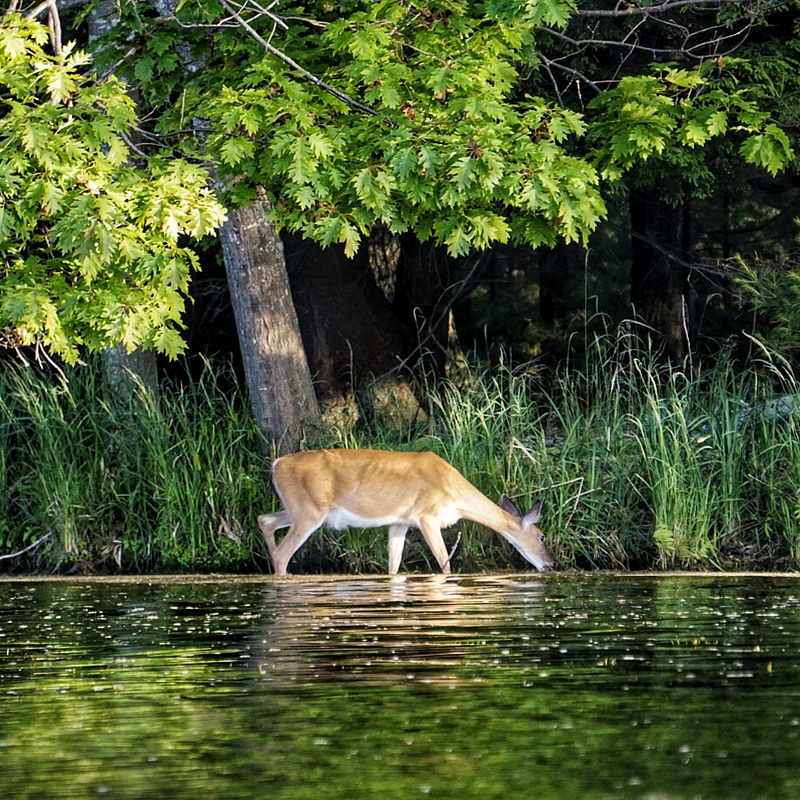
Arnie quietly paddled his kayak closer to get this awesome shot of our state animal, the White-tailed deer on the shore of Hamlin Lake. View it bigger and see more in his Summer slideshow.

In 1997, the White-tailed deer (Odocoileus virginianus) was designated the state game mammal after the successful lobbying efforts of a group of Zeeland fourth graders. Found in every Michigan county, the white-tailed deer is an important natural and economic resource.

More white-tailed deer on Michigan in Pictures including this cool pic of a white-tail grabbing a drink in the fall.

Support Michigan in Pictures with Patreon

Flower Friday: Yellow Lady’s Slippers

Yikes! I got the link for the Michigan Wildflowers database wrong!

Yellow Slippers

Yellow Lady’s Slippers, photo by Rick Lanting

While I was gathering info for today’s post I came across a really cool resource! MichiganWildflowers.com michwildflowers.com is an online photo database of Michigan’s wildflowers curated by Charles and Diane Peirce that lists 545 Michigan wildflowers and lets you (very quickly) click among them. With multiple photos for each wildflower, it’s pretty darn useful.

The Ladybird Johnson Wildflower Center says that the Yellow Lady’s-slipper Orchid (Cypripedium parviflorum):

…is easily distinguished from others by its large yellow lip, or slipper. It grows up to 2 feet tall and has large, strongly veined leaves 6–8 inches long and half as wide. It has a flower, sometimes 2, at the end of the stem, cream-colored to golden-yellow. Flowers have 3 sepals, greenish-yellow to brownish-purple, the upper sepal larger, usually erect, and hanging over the blossom.

Rick took this photo last weekend at Mill Creek State Park using the Hipstamatic app. View it bigger and see more in his Michigan wildflowers slideshow.

Red Mohawk: At Home with Michigan’s Pileated Woodpecker

Red Mohawk

Red Mohawk, photo by PK HyperFocal

The All About Birds entry for the Pileated Woodpecker (Dryocopus pileatus) says in part:

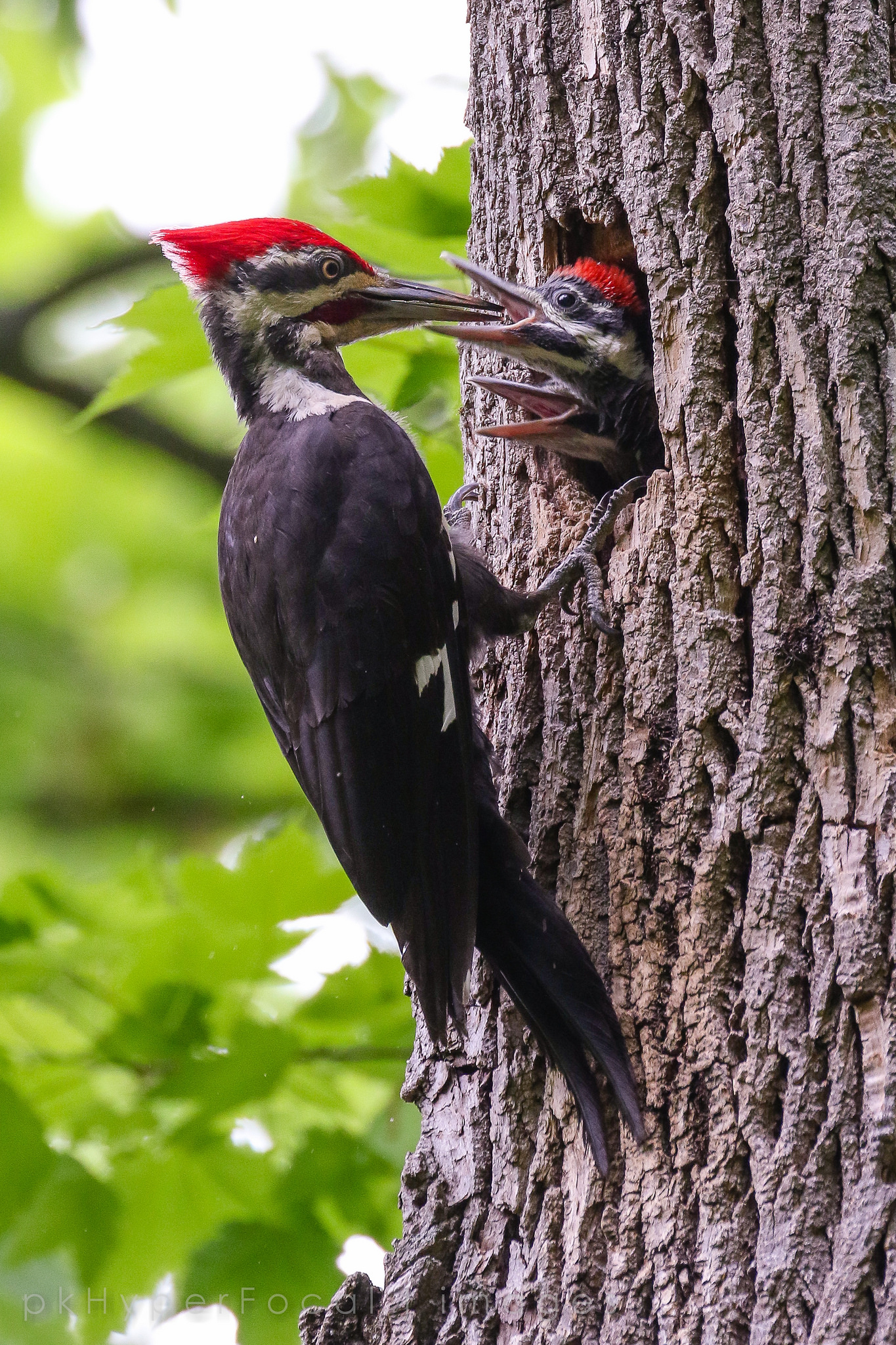
The Pileated Woodpecker is one of the biggest, most striking forest birds on the continent. It’s nearly the size of a crow, black with bold white stripes down the neck and a flaming-red crest. Look (and listen) for Pileated Woodpeckers whacking at dead trees and fallen logs in search of their main prey, carpenter ants, leaving unique rectangular holes in the wood. The nest holes these birds make offer crucial shelter to many species including swifts, owls, ducks, bats, and pine martens.

…The male begins excavating then nest cavity and does most of the work, but the female contributes, particularly as the hole nears completion. The entrance hole is oblong rather than the circular shape of most woodpecker holes. For the finishing touches, the bird climbs all the way into the hole and chips away at it from the inside. Periodically the adult picks up several chips at a time in its bill and tosses them from the cavity entrance. Pileated Woodpeckers don’t line their nests with any material except for leftover wood chips. The nest construction usually takes 3-6 weeks, and nests are rarely reused in later years. Cavity depth can range from 10-24 inches.

Nest trees are typically dead and within a mature or old stand of coniferous or deciduous trees, but may also be in dead trees in younger forests or even in cities. Dead trees are a valuable resource as nest sites or shelter for birds and other animals, and Pileated Woodpeckers battle for ownership with Wood Ducks, European Starlings, Red-bellied Woodpeckers, Red-headed Woodpeckers, Eastern Bluebirds, and Great Crested Flycatchers. Occasionally bats and swifts share roost cavities with Pileated Woodpeckers.

Click through for lots more including calls, Pileated facts, and video.

PK HyperFocal’s photo background big and see more in his Feathers slideshow.

Lots more Michigan birds on Michigan in Pictures.

Michigan’s Bird of Fire: Saving the Kirtland’s Warbler

Michigan Bird of Fire Kirtlands Warbler

Kirtland’s Warbler, photo by James Fox

On June 3-4, northeast Michigan will celebrate a Michigan conservation success story with the annual Kirtland’s Warbler Weekend that includes an Au Sable River Kayak Tour. You can also lend a hand this Saturday with the annual jack pine planting day through the Kirtland’s Warbler Initiative!

The Detroit News has a nice editorial by Michael Bean, Principal Deputy Assistant Secretary for Fish and Wildlife and Parks at the U.S. Department of the Interior about how determination saved Michigan’s “Bird of Fire”, the Kirtland’s Warbler:

More than 60 years ago, scientists realized that the Kirtland’s warbler was in trouble. A 1951 census found fewer than 500 breeding pairs. The bird was among the first species ever listed as endangered and was the first species to ever have a “recovery team.”

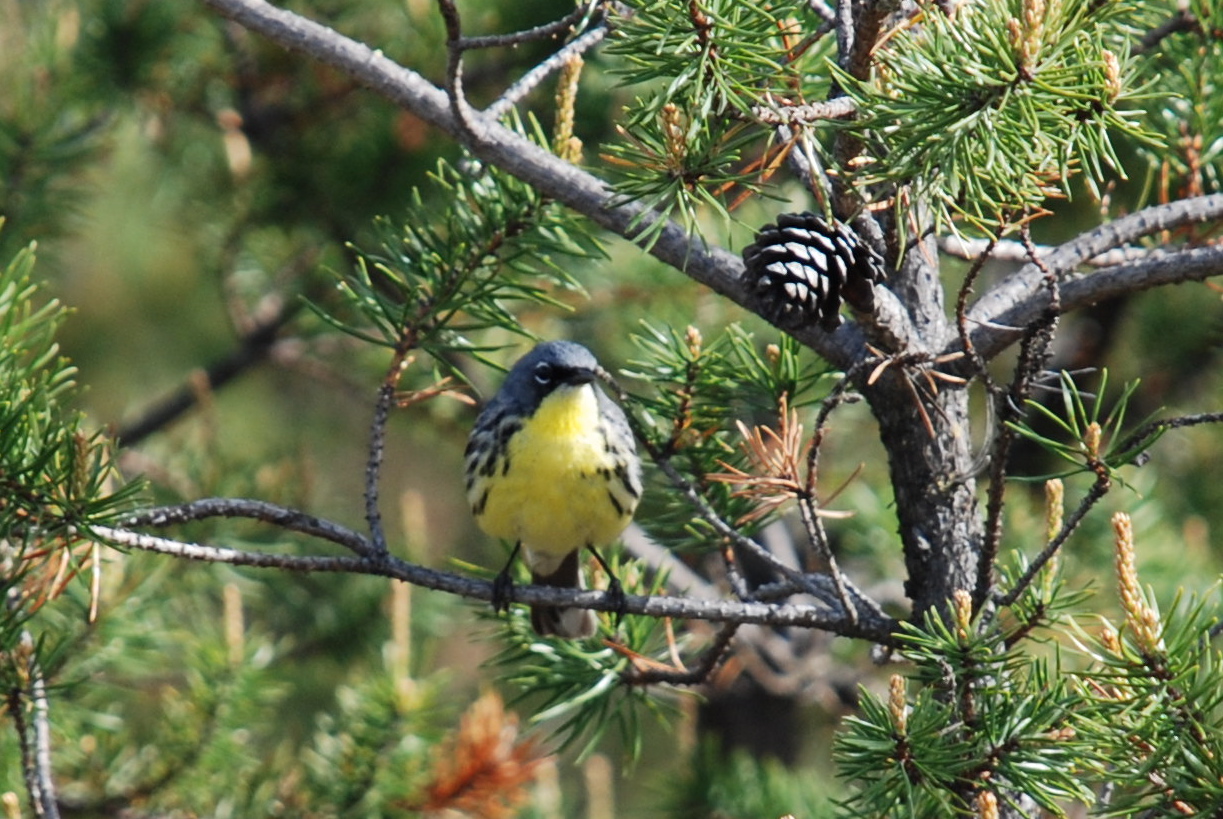
Kirtland’s warblers will only nest in young jack pine forest. Jack pine requires fire to open its cones and spread its seeds — hence the nickname, “bird of fire.” Fire suppression policies last century led to the decline of the Kirtland’s warbler, as did parasitism from brown-headed cowbirds. The recovery team had to figure out a way to overcome these challenges to save the species.

Since 1974, the Kirtland’s Warbler Recovery Team has worked to save the species, even when the outlook for recovery was bleak. The recovery team brought together federal, state, academic, nonprofit, and even international partners.

Today, scientists estimate there are more than 4,000 Kirtland’s warblers in Michigan. The population has more than doubled its recovery goal, so the recovery team is no longer needed. Through years of hard work the partners figured out how to provide the conditions necessary for the warblers to survive, and the birds have flourished.

View James’ photo background big and see more in his Grayling 2009 slideshow.

Know Your Michigan Frogs: Mink Frog (Rana septentrionalis)

Michigan Mink Frog

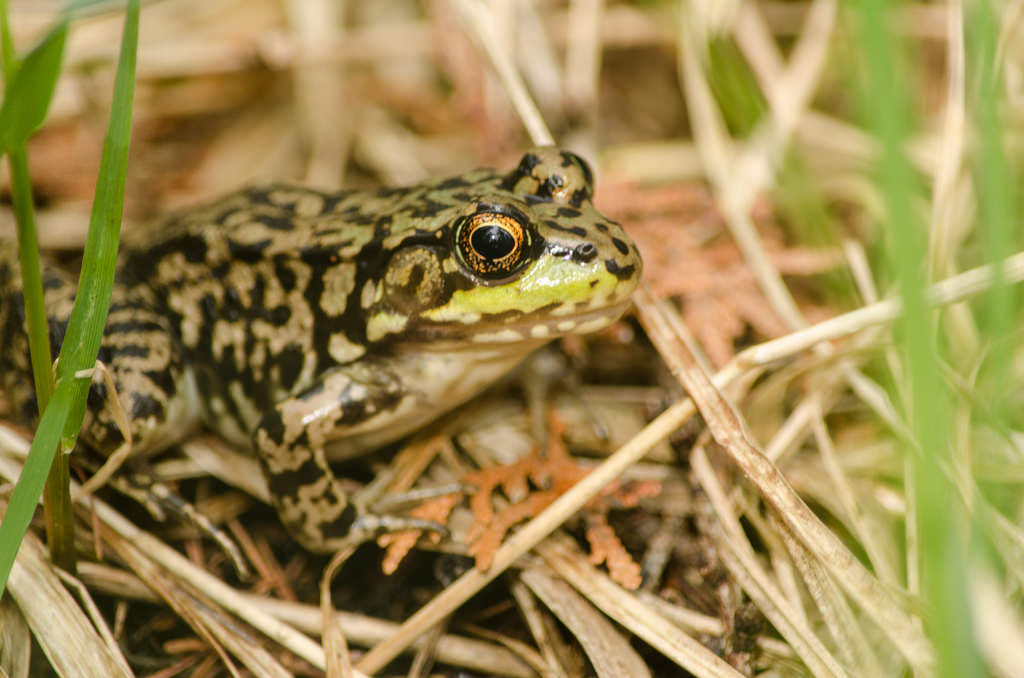
mink frog-0376, photo by tifranta

Saturday was World Frog Day so let’s add another Michigan frog to the list, the Mink Frog (Rana septentrionalis) about which the DNR says:

A blotchy, spotted, greenish or brownish frog. Similar to Green Frog, but has spots or blotches instead of cross bands on the hind legs. Bright green upper lip and creamy to yellowish belly. Produces a musky, mink like odor when handled. Medium – 2 to 3 inches long.

HABITAT: Bogs, ponds, and lake edges. Remains close to permanent water.

BREEDING: June-July. Eggs laid on vegetation in deep water. Tadpoles may require more than one summer to become frogs.

VOICE: Likened to distant hammering; “Kuk, kuk, kuk, kuk, kuk.”

RANGE AND STATUS: Found throughout Upper Peninsula, but generally uncommon.

Click over to the Wisconsin Sea Grant to hear the Mink frog’s call.

View Tiffany’s photo bigger, see more in her slideshow, and follow her at Tiffany Rantanen Photography on Facebook!

More Michigan frogs on Michigan in Pictures.

2016 Michigan Morel Season Underway!

Backyard Morels

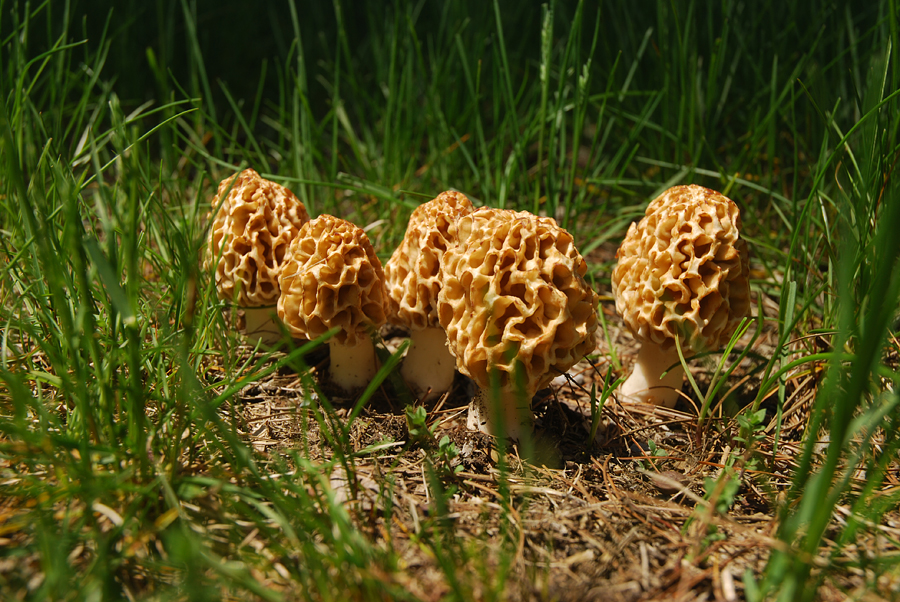
backyard morels, photo by Jason Rydquist

I’ve been getting word from various parts of the state that morel mushrooms are being found! They’re one of my favorite Michigan foods, and over on Absolute Michigan today I’ve put together Five Things you need to know about Michigan Morels. It includes a new online tool that could be of use to morel hunters so check it out!

View Jason’s photo bigger and see more in his slideshow.

Lots more morels on Michigan in Pictures.

Platte River Bald Eagle Nest Cam

Platte River Eagle Cam

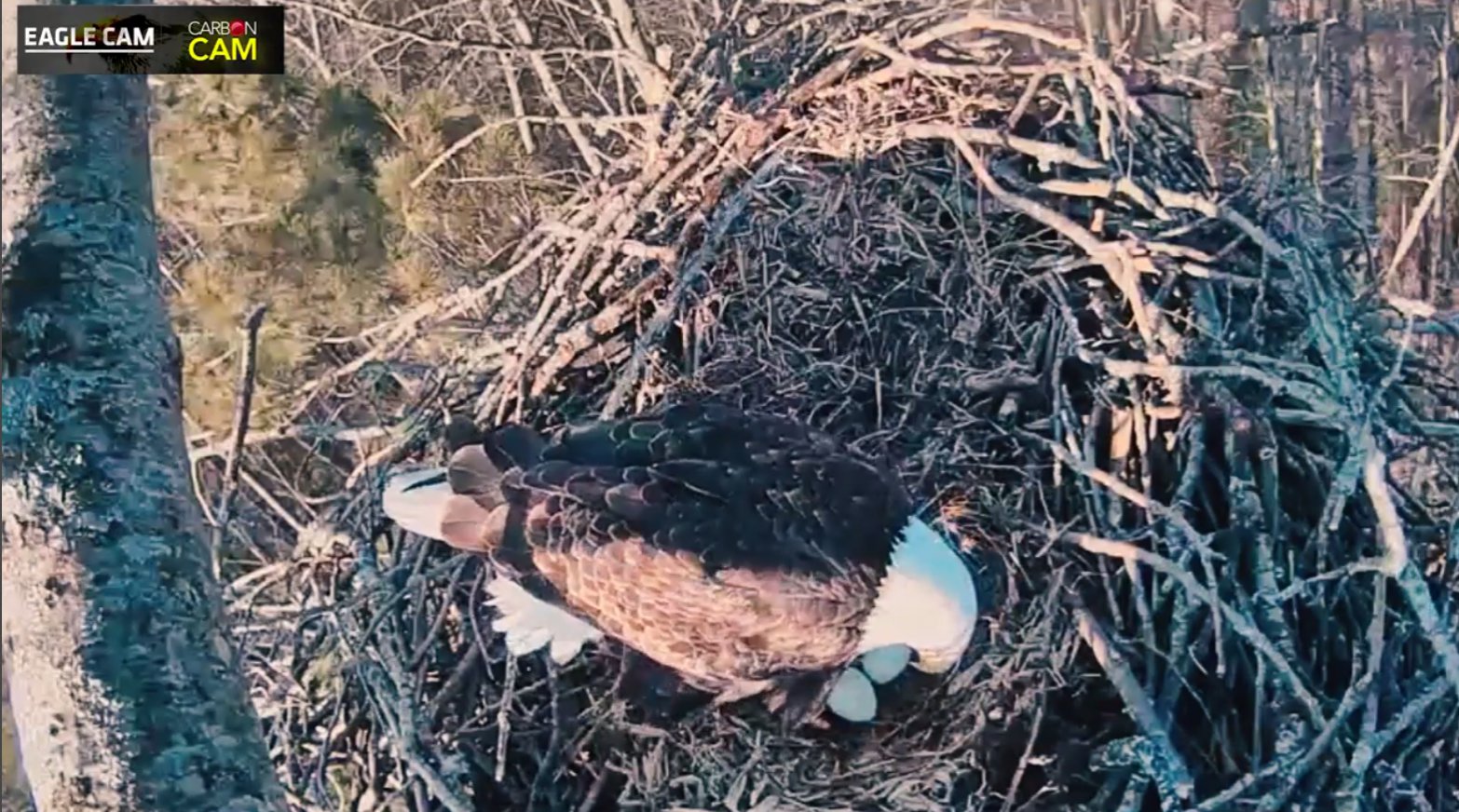
Michigan Eagle Cam, photo via Carbon TV

Carbon and the Michigan Department of Natural Resources are collaborating on a cool webcam of a nesting pair of bald eagles in Benzie County. mLive explains:

Cameras are pointed at a pair of nesting bald eagles in residence at the Platte River State Fish Hatchery. The large nest is 100 feet above the ground, along the Platte River in Benzie County.

Carbon Media Group alerted viewers earlier this week that incubation time is almost up, and that small holes called “pips” that parents make in the shells can be seen on two of the eggs.

“This pair of eagles have been regular visitors to this nest for the past three years,” Ed Eisch, DNR fish production manager, has said.

Click to view the live camera – which makes a really soothing background soundtrack – and also to check out video clips including an eagle adjusting the eggs from the photo above and visits by owls and pine martens!