Fox Kit Friday

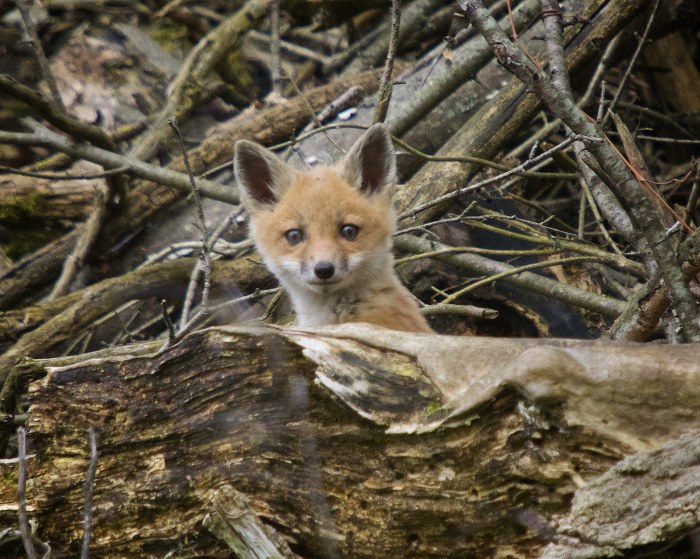
Fox Kit, photo by David Marvin

Spring is also baby animal season in Michigan, so here’s a little about baby foxes and what to do if you encounter one from Friends of Wildlife in Ann Arbor:

There are two species of fox in Michigan, the Red and the Gray. The Red prefer meadow areas and the Gray favor woods.

As with most wildlife, the kits are born in early spring. The vixen (female fox) chooses a hollow log, an empty woodchuck hole or a roadside culvert for the nursery. This nest site provides her young protection from predators, especially coyotes. The male fox helps with the rearing by bringing the vixen food while she nurses their young and keeps the kits warm. Then later in the kits development both parents teach them how to forage for food.

The foxes diet consists mainly of small rodents, moles and bugs. The benefits that foxes afford farmland, orchards and the general public is their consumption of these invasive pests. It is an absolute miss conception that fox eat cats, dogs or small children.They are very curious creatures but avoid contact with domestic animals and humans.

When fox kits are first born, their eyes and ears are closed, they remain secluded in their den with their mother. As they develop, at about one month, they start venturing out to play, attacking twigs, leaves and their siblings, but never far from the protection of the den.

If you do find an infant fox, please contact them for further instructions and see their website for information about other species!

View the photo background bigtacular and see more including some shots of these kiddos walking around in David’s slideshow.

PS: David has a video too. He writes: “Please note that the video was taken from quiet a distance away with a high power lens so as to avoid as much human contact with the kits.”

Turtles don’t care about personal space

Apparently turtles have no concept of “my personal space”, photo by Dale Devries

Regular readers are aware that World Turtle Day is a big favorite of mine. It takes place a week from today on Tuesday, May 23rd, and I’m extra excited for this year as I will post the 10th and final turtle on my list of the ten turtles native to Michigan! Be sure to tune in and definitely consider supporting American Tortoise Rescue and their World Turtle Day!

I tried to find a definitive answer as to why turtles “stack” like this. It appears to be a way for littler turtles to get more sun, but I’m curious if anyone has a definitive answer.

About the photo Dale writes:

I took an old section of dock and made a ramp up to it just above the waterline, and the turtles have voiced their approval! I have no idea why we have so many turtles here, but it must mean the lake is healthy!

View the photo background big and see more in Dale’s The Best of West Lake slideshow.

Love is in the Air

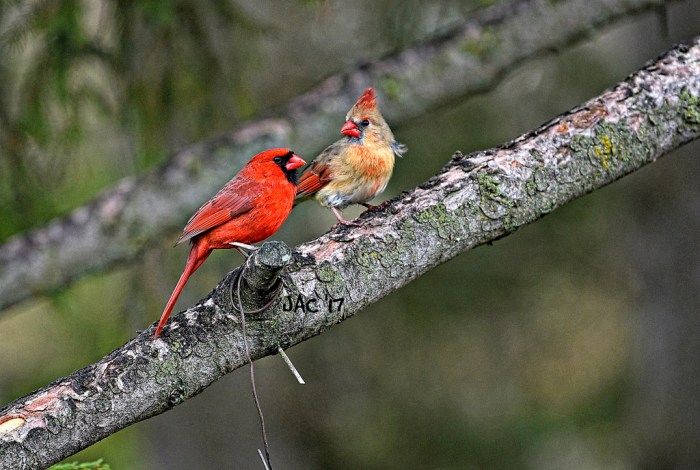
Love is in the Air, photo by Julie

Julie caught this pair of cardinals earlier this week. Definitely a lot of this going on out there!!

View the photo bigger and see more in her Birds slideshow.


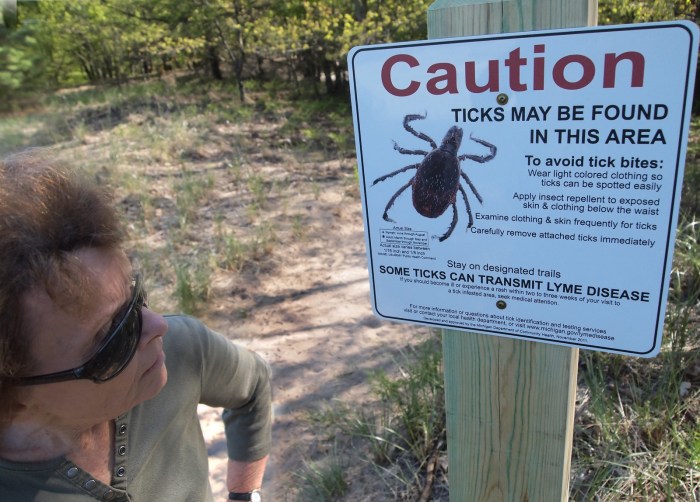
Danger on the Trail: Michigan’s Tick Season in Full Swing

Danger on the Trail, photo by otisourcat

The other day I went on a hike. After I got in the car, I belatedly remembered to check for ticks and found TWO just hanging out on my leg.

You can check out the information about Michigan ticks from the State of Michigan, and you might also find these 5 essential oils that repel bugs useful:

  • Lavender – This smells sweet to us but bugs absolutely hate it. It works on mosquitoes, flies and other insects.
  • PennyRoyal – this is a member of the mint family and it is toxic to insects.
  • Lemongrass – This essential oil comes from tropical lemongrass and has a citrusy sent. It is a natural flea and tick repellent and can be sprayed directly on the skin.
  • Eucalyptus – use this alone or along with citronella oil to keep bugs away. According to the Journal of medical entomology, Eucalyptus extract can reduce tick bites and infections.
  • Lemon – some lemon essential oil can work against fleas and other bugs. Slightly dilute it and spray it on your clothing and skin.

View the photo bigger and see more in otisourcat’s massive Here & Now slideshow.

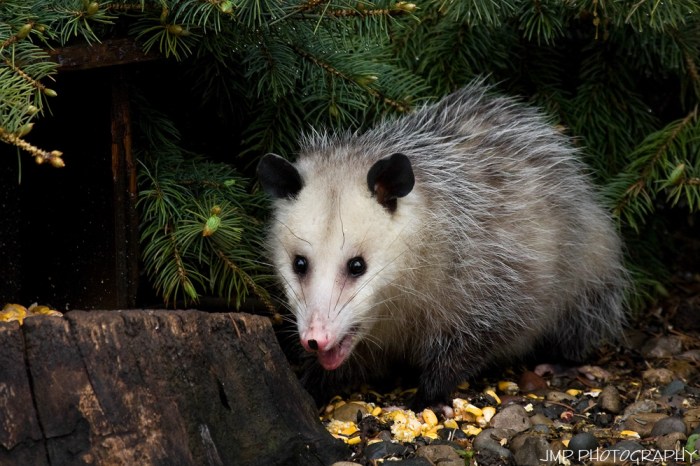
Possum Power!

Caught In The Headlights, photo by James Marvin Phelps

Tick season is upon us, and with the added threat of Lyme disease, it’s serious business here in Michigan. My friend Tara with the Leelanau Conservation District shared some information about opossums from Opossum Awareness & Advocacy (opossum facts image below that you can share):

Did you know that opossums eat up to 5000 ticks per season thereby reducing our risk of contracting Lyme Disease and other tick-born diseases? They kill vermin, including mice, and garden pests. They are not dirty; they are very clean animals and groom and clean as much as cats. Better still, most opossums cannot contract or spread rabies. Opossums are the United States and Canada’s only marsupials.

They may look a little scary to the uninitiated, but they are actually timid and do so much good for humans compared to most other creatures. If you see an opossum consider yourself lucky, leave it alone and please do not harm it. They have a hard time surviving in cold climates because they don’t have very thick coats. Sometimes opossums play dead because they are afraid. Please don’t hit them with your car. Spread the word and please help protect opossums!

View the photo background big and see more in James’ massive Michigan slideshow, and follow James Marvin Phelps Photography on Facebook.

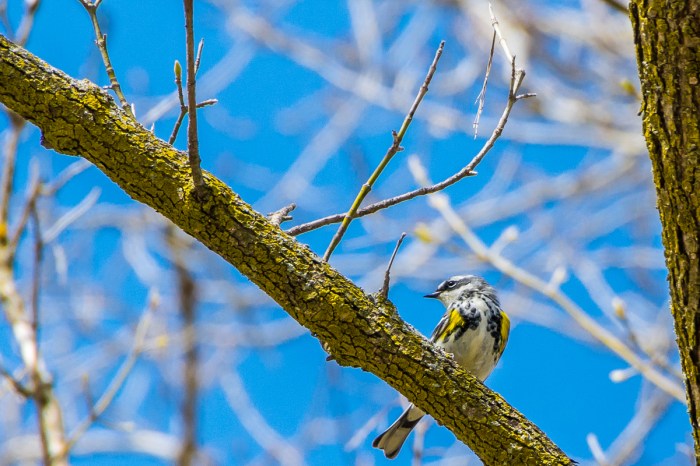
Yellow Rumped Warbler

Yellow Rumped Warbler, photo by Jeff Dehmel

Jeff’s back with another bird everyone! I couldn’t resist – the colors on this are so perfectly April!! Here’s a couple of facts on the Yellow-rumped Warbler from All About Birds:

Yellow-rumped Warblers are impressive in the sheer numbers with which they flood the continent each fall. Shrubs and trees fill with the streaky brown-and-yellow birds and their distinctive, sharp chips. Though the color palette is subdued all winter, you owe it to yourself to seek these birds out on their spring migration or on their breeding grounds. Spring molt brings a transformation, leaving them a dazzling mix of bright yellow, charcoal gray and black, and bold white.

The Yellow-rumped Warbler is the only warbler able to digest the waxes found in bayberries and wax myrtles. Its ability to use these fruits allows it to winter farther north than other warblers, sometimes as far north as Newfoundland.

They’re the warbler you’re most likely to see fluttering out from a tree to catch a flying insect, and they’re also quick to switch over to eating berries in fall. Other places Yellow-rumped Warblers have been spotted foraging include picking at insects on washed-up seaweed at the beach, skimming insects from the surface of rivers and the ocean, picking them out of spiderwebs, and grabbing them off piles of manure.

The oldest recorded Yellow-rumped Warbler was at least 7 years old.

View the photo background big and see more in Jeff’s Holloway Reservoir slideshow (where you’ll see his photo of a bald eagle from not long ago).

More spring wallpaper and more birds on Michigan in Pictures.

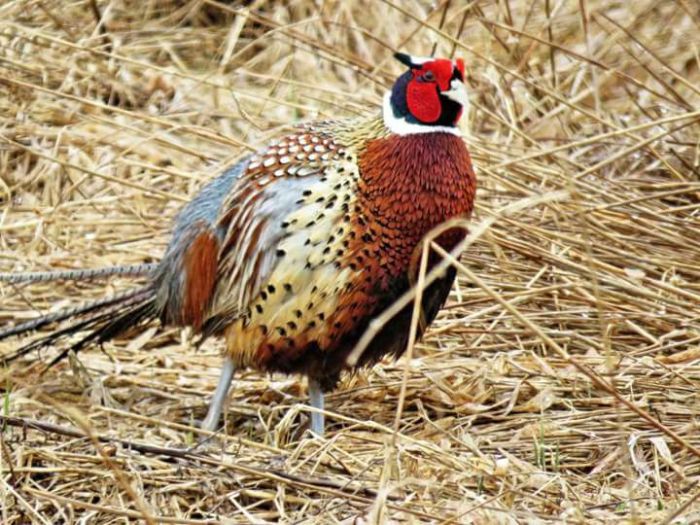
Pheasant Friday: Ring-necked Pheasant Breeding Habits

Ringnecked Pheasant, photo by Tim Carter

This pheasant is ready for the weekend, Ladies! All About Birds has all the details on the very colorful Ring-necked Pheasant including information about their breeding season which is going on right now:

Male Ring-necked Pheasants establish breeding territories in early spring. A male maintains sovereignty over his acreage by crowing and calling; he approaches intruders with head and tail erect, and may tear up grass that he then tosses. Competitors sometimes resort to physical combat. After a series of escalating threat displays, fighting cocks flutter upward, breast to breast, and bite at each other’s wattles. They may take turns leaping at each other with bill, claws, and spurs deployed. Usually the challenger runs away before long, and these fights are rarely fatal. Females assemble in breeding groups focused on a single male and his territory.

The cock courts the hen with a variety of displays—strutting or running; spreading his tail and the wing closest to her while erecting the red wattles around his eyes and the feather-tufts behind his ears. He also “tidbits”—poses with head low while calling her to a morsel of food. A female may flee at first, leading the male on a chase punctuated by courtship displays. Males guard their groups of females from the advances of other males.

Like many birds, Ring-necked Pheasants take frequent dust baths, raking their bills and scratching at the ground, shaking their wings to sweep dust and sand into their feathers, lying on their sides and rubbing their heads. Dust-bathing probably removes oil, dirt, parasites, dead skin cells, old feathers, and the sheaths of new feathers.

View the photo from near Attica, Michigan bigger on Facebook.

More birds on Michigan in Pictures.

Brunching with Bald Eagles

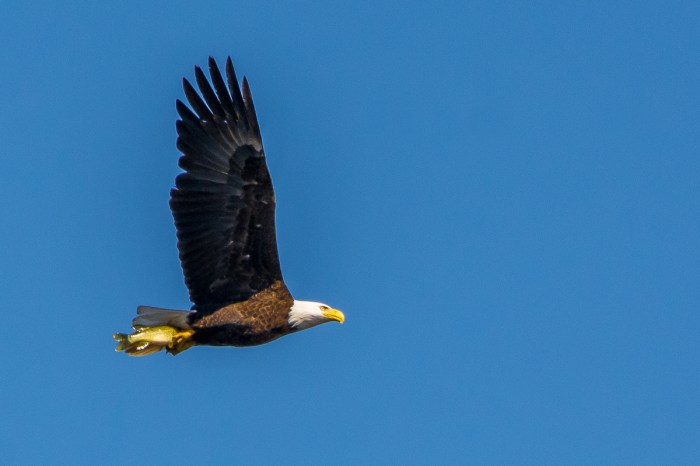
Bald Eagle with Cargo, photo by Jeff Dehmel

Jeff took this shot last weekend in Milford’s Kensington Metropark.

If you’re looking for an alternative to Saturday morning cartoons for kids & adults alike, the CarbonTV Eagle Cam at the Platte River Fish Hatchery in Benzie County has returned for 2017. While it’s a lot of sitting on eggs right now, before too long there will be all kinds of fun as the eaglets hatch and grow!

View the photo background bigilicious and see more in Jeff’s Kensington Metropark 4.1.17 slideshow.

More bald eagles on Michigan in Pictures.

Black Bear Boom!

black-bear-cub

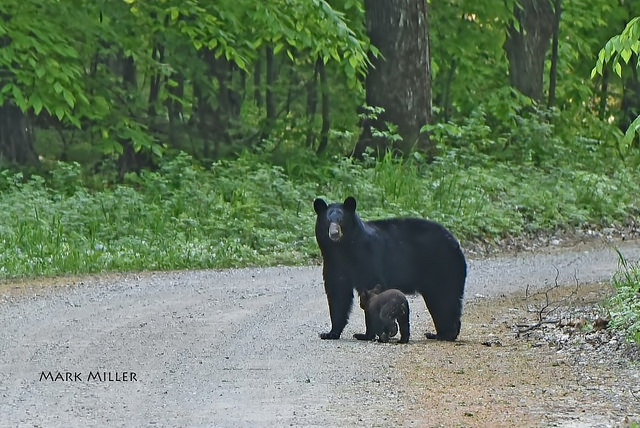
Black Bear & Cub, photo by Mark Miller

The Detroit Free Press reports that the black bear population is booming in northern Michigan:

The black bear population has risen 29 percent in the region since 2012 and almost 50 percent since 2000, according to wildlife management specialist Kevin Swanson of the Department of Natural Resources.

Swanson says complaints about nuisance bears are increasing, especially in the Baldwin management unit, which extends from Muskegon County north to Leelanau County. Mlive.com says Swanson recently told the state Natural Resources Commission the bear harvest should be increased significantly in the Baldwin area.

He says the Upper Peninsula population has grown by a more manageable 11 percent since 2012. There are about 9,700 bears in the U.P. and over 15,000 statewide. Swanson is proposing a quota increase from 5,806 in 2016 to 5,925 for the 2017-18 season.

About the photo, Mark says: After yelling a quick “hey” at mama to get her to turn around, there was a moment that I wondered if I had done a dumb thing. I was about the same distance from the house, as she was to me (100 yds.) I guess me and my Nikon didn’t pose much of a threat, as they slowly went on their way.

View the photo bigger and see more in his In My Backyard slideshow.

PS: I realize that back in May of 2015, I featured another photo of this pair along with general info about black bears in Michigan.

Sturgeon Bay Outhouse & Winter Cabin Camping at Wilderness State Park

sturgeon-bay-outhouse

Sturgeon Bay Outhouse, photo by David Clark

We’re going to let David Clark of one of my favorite blogs, Cliffs and Ruins, take over today’s post. He writes:

The most scenic walk to an outhouse award goes to Sturgeon Bay Cabin at Wilderness State Park, where this line of wind-blown cedars escorts you to the potty.

I took this photo on the 2nd day of my snowshoe adventure at Wilderness State Park in December 2016, after a heavy snowfall the night before. I enjoyed 3 days of spectacularly good snowshoeing and utter solitude. Read more at my blog: Winter Cabin Camping at Wilderness State Park.

I really encourage you to check out David’s post for photos and a great account of his visit to Wilderness State Park which is located on the northwest shore of the lower peninsula, to the west of the Mackinac Bridge. This is an adventure I really hope to take!!

View David’s photo background bigtacular and see more in his Wilderness State Park 2016 slideshow.