Superior Flight

Superior Flight

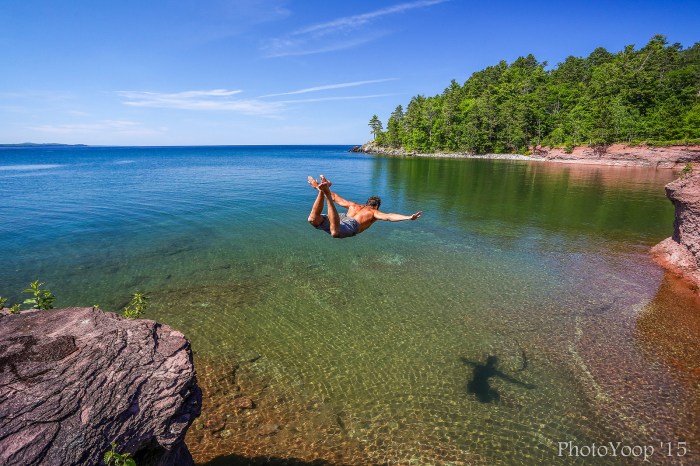
Superior Flight, photo by Cory Genovese

Cory writes:

Have a Yoop-tastic weekend and be sure to get your Superior flight on ;)

I’ve got an amen for that!

View cory’s photo bigger, see more in his Yoop Life slideshow and definitely follow him at PhotoYoop on Facebook!

The Seagull Signal

Independence Sunset

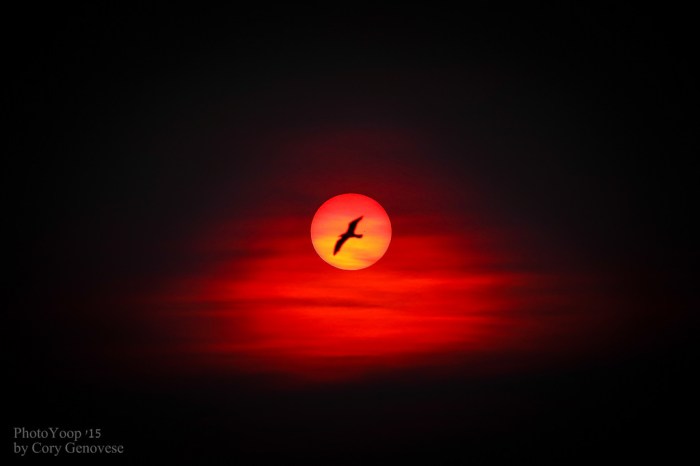
Independence Sunset, photo by Cory Genovese

These amazing sunsets we’ve been seeing lately are the result of smoke from Canadian & Alaskan wildfires – perhaps that’s what the mayor of Marquette trying to signal Seagull Man about!

View Cory’s photo from before the Marquette fireworks bigger and definitely follow him on Facebook.

More from Marquette and lots more sunsets on Michigan in Pictures.

Prismatic

Lower Harbor Massive Rainbow

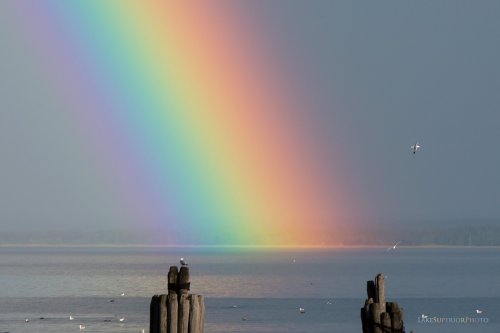
lower harbor massive rainbow, photo by Lake Superior Photo

I’ve featured a photo of a rainbow and one of Marquette’s harbor in the last couple of days, but I haven’t featured a photo of both! Have a great weekend folks.

Shawn writes: prismatic is on the mind right now, recalling one of the most brilliant rainbows I’ve ever witnessed. View the photo background bigtacular and head over to Lake Superior Photo to view and purchase photos (including a stunning double rainbow) in her Lake Superior Landscapes gallery.

More rainbows & rainbow science on Michigan in Pictures.

Out of the fog

Walking the breakwater in the fog

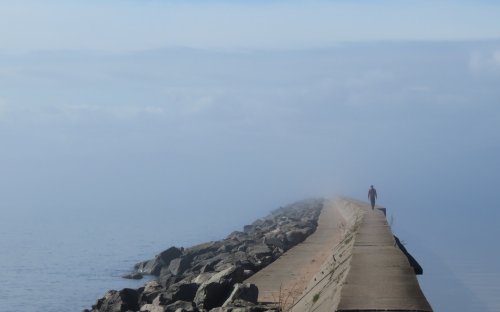
Walking the breakwater in the fog, photo by Ann Fisher

View Ann’s photo of the Marquette breakwater background bigtacular and see more in her 2015 UP slideshow.

There’s more spring wallpaperfog & mist & Marquette on Michigan in Pictures.

Halo, Sundog & Circumzenithal Arc over Marquette

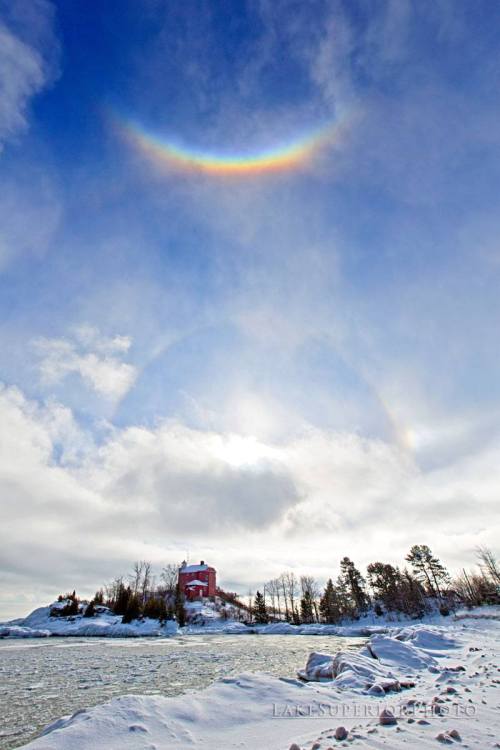
Solar Halo over Marquette Lighthouse

Welcome to the Smile High Club, photo by Lake Superior Photo

Today’s photo is one of the most incredible pictures I’ve seen. In addition to the Marquette Harbor Light and the frozen Superior shore, there’s a cornucopia of solar optics that fairly defies imagination.

Atmospheric Optics is a wonderful website, certainly the best I’ve found for describing solar phenomena in a clear and inspiring manner. Here’s a bit of decoding of what’s happening in the skies of Marquette yesterday, but definitely follow the links to explore. There’s so much information and some great photos too!

First, above the lighthouse, there’s a 22º radius halo:

…visible all over the world and throughout the year. Look out for them (eye care!) whenever the sky is wisped or hazed with thin cirrus clouds. These clouds are cold and contain ice crystals in even the hottest climes.

The halo is large. Stretch out the fingers of your hand at arms length. The tips of the thumb and little finger then subtend roughly 20°. Place your thumb over the the sun and the halo will be near the little finger tip.

The halo is always the same diameter regardless of its position in the sky. Sometimes only parts of the complete circle are visible.

There’s also a sundog, known also as parhelia or mock sun. These appear in the 22º halo, even when you can’t see the halo. You can see one at the visible base of the halo on the right:

They are most easily seen when the sun is low. Look about 22° (outstretched hand at arm’s length) to its left and right and at the same height. When the sun is higher they are further away. Each ‘dog’ is red coloured towards the sun and sometimes has greens and blues beyond. Sundogs can be blindingly bright, at other times they are a mere coloured smudge on the sky.

They advise you’ll see one or two a week if you look and if you click over you can learn about how they form & moon dogs.

Finally, we come to the circumzenithal arc (CZA), the upside down rainbow at the top:

…the most beautiful of all the halos. The first sighting is always a surprise, an ethereal rainbow fled from its watery origins and wrapped improbably about the zenith. It is often described as an “upside down rainbow” by first timers. Someone also charmingly likened it to “a grin in the sky”.

Look straight up near to the zenith when the sun if fairly low and especially if sundogs are visible. The centre of the bow always sunwards and red is on the outside.

The CZA is never a complete circle around the zenith, that is the exceptionally rare and only recently photographed Kern arc.

Read on for more, and definitely be sure to check atoptics.co.uk when you see solar & lunar phenonmena you’d like to know more about.

View Shawn’s photo bigger and join thousands of others in following Lake Superior Photo on Facebook … and on the Twitters. You can purchase this photo on the Lake Superior Photo website.

PS: Check out Dominic B. Davis’s photo of the solar halo in the morning too!

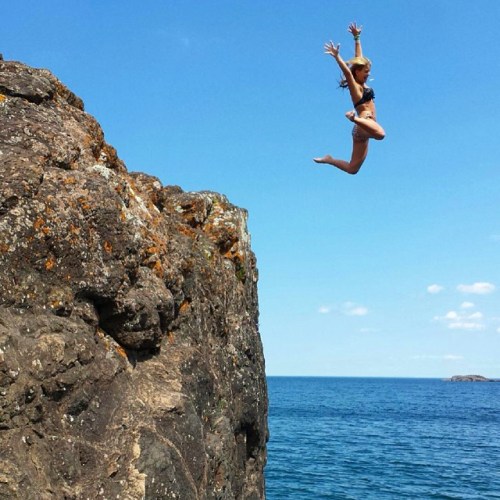
When in Doubt, Jump off a Cliff

When in Doubt Jump off a Cliff

When in Doubt, Jump off a Cliff, photo by shaleewanders

Through the magic of Twitter, I came across the website Shalee Wanders the other day. Created by Shalee Blackmer, it’s a really engaging site she created to inspire people (especially young people) to get out and enjoy traveling on a budget.

The post that drew me in was her Michigan Bucket List, a compilation with some photos of a lot of very fun things to do from to hiking the Porcupine Mountains to exploring the Detroit Packard Plant. Even better, there’s 250+ comments from people with more ideas for getting the most out of Michigan.

View Shalee’s photo from last summer near Marquette bigger and see more on her Instagram.

PS: I do feel that I need to point out that last summer Lake Superior was ice cold, making this leap especially impressive!

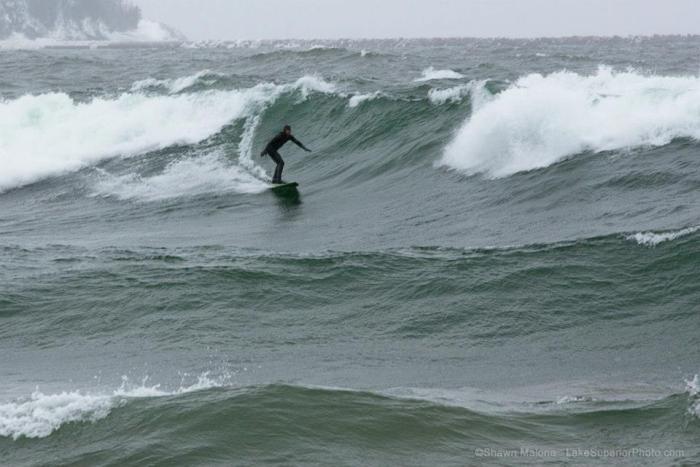
Tis the season … to Surf Michigan

Marquette MI Surf 04-12-2013

Marquette MI Surf 04-12-2013, photo by Shawn Malone/Lake Superior Photo

The Great Lakes Echo has a great WKAR Current State feature produced by April Van Buren that I encourage you to check out to get a real feel for Michigan surfing. It’s titled Can’t get to California? Surf the Great Lakes and features Bob Beaton, president of the Great Lakes Surfing Association and Joe Matulis, owner of East Lansing-based paddleboard and surfboard company Matuli.

The story of surfing the 25 foot waves at Grand Haven the night the Fitz went down is reason alone to check it out, and this 15 minute feature takes you from the birth of Michigan surfing in the 70s when they tore the masts off of sailboats and made their own boards, to the recent past when they … well … still made their own boards while learning to surf to be more employable as ocean lifeguards, and all the way up to the present day with heated wetsuits that let you surf two hours in the dead of winter without a break. Except for the winter waves because this is Michigan, so of course the best waves are found in winter!

If you’re talking about cold weather surfing, it doesn’t get much colder than Lake Superior in April! Check out Shawn’s photo bigger and get many more from this April surfing session on Lake Superior in Marquette in her Marquette MI Surf 04-12-2013 album on Facebook. Shawn also has a gallery of some long period Superior winter waves at lakesuperiorphoto.com that was featured in Surfer’s Journal.

Lots more surfing on Michigan in Pictures.

Into the cold clear night with Shawn Malone … and NASA

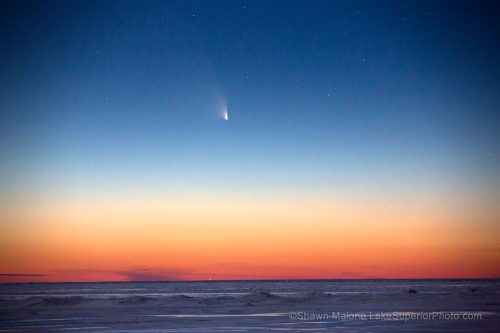
Shawns Comet

Comet Pan-Starrs over Headlands International Dark Sky Park, photo by Shawn Malone/Lake Superior Photo

Michigan in Pictures regular Shawn Malone of Lake Superior Photo is one of the best photographers of the Michigan night sky around, and on the evening of November 22nd , you have a chance to learn from her at a Night Sky Workshop. She writes:

The Upper Peninsula of Michigan is a wonderful place to discover the magic of night sky photography, due to the abundance of easily accessible dark sky locations. These night sky workshops are designed for those looking for a basic understanding of the equipment and technique necessary for capturing the night sky.

Photography workshops will take place at LakeSuperiorPhoto- gallery/studio on 211 S. Front, Marquette Mi. 49855. There will be an hour class at the studio where I will cover techniques for capturing night sky photos, from basic camera set up and settings, to a brief discussion of post processing to helpful websites and software to help you come away with great night sky photos.

During this workshop we will concentrate on the techniques necessary to capture low light and night sky photos. Hopefully the weather cooperates and we have a chance to photograph the stars or maybe even possibly the northern lights. No matter what weather conditon – we will conduct the workshop and you will come away with everything you need to know about capturing great night sky images.

She has 4 spaces left – click here to register!

You can purchase this photo of Comet Panstars at Lake Superior Photo. Be sure to follow her at Lake Superior Photo on Facebook and see more of Shawn’s photos on Michigan in Pictures.

Speaking of comets, NASA’s Rosetta Mission is going to go all Bruce Willis on a comet THIS MORNING! EarthSky reports:

The Philae (fee-LAY) lander is scheduled to touch down on Comet 67P/Churyumov-Gerasimenko on November 12, 2014 at 10:35 a.m. EST (15:35 UTC). We on Earth – 300 million miles (500 million km) away – won’t know the lander has set down successfully until a signal is received back at about 11:02 a.m. EST (16:02 UTC). Both NASA and ESA will provide live online coverage of this first-ever attempted landing on a comet.

Rosetta spacecraft will do the equivalent of transferring an object from one speeding bullet to another, when it tries to place its Philae lander on its comet. Read more about the mission’s dramatic attempt to land on a comet here.

After landing, Philae will obtain the first images ever taken from a comet’s surface. It also will drill into the surface to study the composition and witness close up how a comet changes as its exposure to the sun varies.

Philae can remain active on the surface for approximately two-and-a-half days. Its “mothership” – the Rosetta spacecraft – will remain in orbit around the comet through 2015. The orbiter will continue detailed studies of the comet as it approaches the sun for its July 2015 perihelion (closest point), and then moves away.

Click through for more and follow it live from NASA right here!

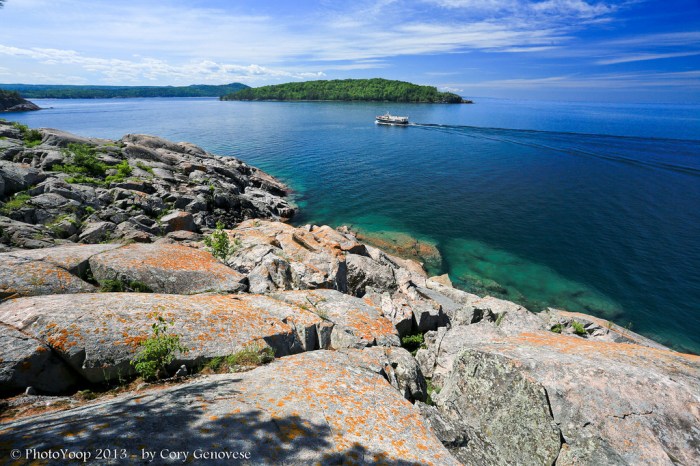
A beautiful day on Partridge Bay

Partridge Bay

Partridge Bay, photo by Cory Genovese

It’s raining like crazy here in Traverse City this morning, so let’s take a trip back to last summer and up to Partridge Bay, just north of Marquette on Lake Superior.

View Cory’s photo bigger, see more in his Portfolio slideshow and definitely follow him at PhotoYoop on Facebook!

More Lake Superior beauty on Michigan in Pictures.

Heavy Space Weather Ahead?

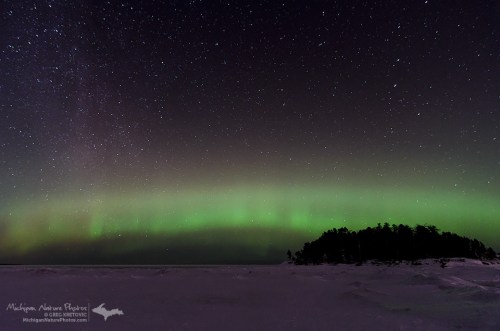
Frigid Auroras Over Superior

Frigid Auroras Over Superior, photo by Michigan Nature Photog

NOAA’s current space weather forecast reports an M Class (moderate) solar flare from solar region AR2002. Spaceweather.com adds that AR2002 has destabilized its magnetic field, making it more likely to erupt, and that NOAA forecasters are estimating a 60% chance of M-class flares and a 10% chance of X-class flares during the next 24 hours. X-class flares are major solar events that can spawn incredible auroras visible far to the south of us, planet-wide radio blackouts and long-lasting radiation storms. Click to Space Weather for a video of AR2002 development.

While there’s not much chance of a major event, I thought it was interesting that 25 years ago this week,  one of the most significant solar storms in memory created a spectacle in the skies as it demonstrated the power and danger of solar weather to modern society. A Conflagration of Storms begins:

On Thursday, March 9, 1989 astronomers at the Kitt Peak Solar Observatory spotted a major solar flare in progress. Eight minutes later, the Earth’s outer atmosphere was struck by a wave of powerful ultraviolet and X-ray radiation. Then the next day, an even more powerful eruption launched a cloud of gas 36 times the size of the from Active Region 5395 nearly dead center on the Sun. The storm cloud rushed out from the Sun at a million miles an hour, and on the evening of Monday, March 13 it struck the Earth. Alaskan and Scandinavian observers were treated to a spectacular auroral display that night. Intense colors from the rare Great Aurora painted the skies around the world in vivid shapes that moved like legendary dragons. Ghostly celestial armies battled from sunset to midnight. Newspapers that reported this event considered the aurora, itself, to be the most newsworthy aspect of the storm. Seen as far south as Florida and Cuba, the vast majority of people in the Northern Hemisphere had never seen such a spectacle. Some even worried that a nuclear first-strike might be in progress.

…Millions marveled at the beautiful celestial spectacle, and solar physicists delighted in the new data it brought to them, but many more were not so happy about it.

Silently, the storm had impacted the magnetic field of the Earth and caused a powerful jet stream of current to flow 1000 miles above the ground. Like a drunken serpent, its coils gyrated and swooped downwards in latitude, deep into North America. As midnight came and went, invisible electromagnetic forces were staging their own pitched battle in a vast arena bounded by the sky above and the rocky subterranean reaches of the Earth. A river of charged particles and electrons in the ionosphere flowed from west to east, inducing powerful electrical currents in the ground that surged into many natural nooks and crannies. There, beneath the surface, natural rock resistance murdered them quietly in the night. Nature has its own effective defenses for these currents, but human technology was not so fortunate on this particular night. The currents eventually found harbor in the electrical systems of Great Britain, the United States and Canada.

You can read on for more about how the storm spawned a power outage in Quebec and pushed US systems to the brink of collapse. If you want to totally geek out on auroral science, check this article out about how the Earth’s magnetosphere actually extends itself to block solar storms.

Greg took this shot in late February in Marquette in -17 temps! View his photo bigger and see more in his northern lights slideshow. You can purchase Greg’s pics at MichiganNaturePhotos.com.

There’s more science and much (much) more about the Northern Lights and Michigan on Michigan in Pictures.