Fall Color Tours: The Keweenaw Peninsula (Houghton, Eagle River, Copper Harbor)

Quincy Hill in Fall Colors 5 by KaylynStar

Quincy Hill in Fall Colors 5, photo by KaylynStar

Kaylyn has a number of colorful photos of Quincy Hill in the fall. As the northernmost point of Michigan, the Keweenaw Peninsula would probably have been the logical place to start color touring Michigan rather than where we did start (Western UP – Ironwood, Silver City, Wakefild, Porcupine Mountains).

In any case, the Keweenaw, way up north and surrounded by the icy waters of Lake Superior, is one of the first places in Michigan to be touched by autumn’s paintbrush. Michigan.org’s Color Tour of Houghton, Eagle River, Copper Harbor starts you in the city of Houghton at the Quincy Mine (photo: Quincy Mine & Hoist by Coder). Quincy Mine by CoderThe mine is open from May through late October and is part of the Keweenaw National Historical Park and offers guided tours of the old copper mine, the largest steam hoist ever built and a whole lot more mining history. There’s a museum on site and they also have a passenger cog rail tram that takes you to the top of Quincy Hill (where I assume you can get some great photos).

The tour heads north on M-41 to Phoenix where you can apparently tour the Church of the Assumption. The copper mining ghost towns of the Upper Peninsula page from Exploring the North has a brief bit on Phoenix:

Phoenix is located on highway 41 at the junction of M-26 to Eagle River. Once (about 1872) a thriving mining town of around 500 to 1000 people, but today there are only a few old buildings and the Phoenix Church remaining at the site of the old mine. St. Mary’s Church was built in 1858 to serve the Catholic residents of the mining community of Cliff, the scene of the area’s first major copper discovery in 1844. In 1899 the church was dismantled and reassembled in Phoenix, where it was renamed the Church of the Assumption. The Keweenaw County Historical Society has purchased and restored the property so the Phoenix Church appears much as it did over 100 years ago.

Eagle River Falls by Jim SorboeFrom there, it’s west to Eagle River, once an important port town for the copper industry and now a resort community. Attractions include the Eagle River Falls (photo: Eagle River Falls by Jim Sorbie) and the Eagle River Inn (they have some cool old photos on their site). Keep heading north and you’ll come to Jacob’s Falls and the Jampot, where the good monks of the Holy Transfiguration Skete make jams, jellies and pastries from all kinds of fruits including their famous thimbleberry jam. Stop car. Go in. Buy jam.

Eagle Harbor is next, and I can never mention Eagle Harbor without mentioning the first blog I ever saw, George’s Eagle Harbor Web. It’s also home to the Eagle Harbor Lighthouse and Museums (detailed info from Seeing the Light). Samuel of the Mountain by Kyle RokosNot far past here is Brockway Mountain Drive, the highest above sea-level drive between the Rockies and the Alleghenies. From the lookouts you can see glorious views of the town of Copper Harbor where you can see their photo gallery & webcam, Lake Fanny Hoe & Fort Wilkins State Park and the northern Keweenaw (photo: Samuel of the Mountain by Kyle Rokos). It’s probably time for a bite to eat too and them you can take a boat tour to the Copper Harbor Lighthouse if you’re feeling a little adventurous … or the ferry to Isle Royale if you’re feeling a lot adventurous!

It looks like the folks at Travel Michigan got a little tired at this point, tailing off with:

Continuing south of Copper Harbor is the authentic Delaware Mine, which yielded eight million pounds of the metal between 1847-1887. The scenic route continues through wonderful forests and through the city of Calumet, which was the cultural and commercial center of the Keweenaw Copper Range. Take time to visit the restored Calumet Theater and the red sandstone buildings of the downtown business district. This is the heart of the Keweenaw National Historic Park, which recognizes the importance of the mining history of this rugged and scenic region.

I’ve been in the Delaware Mine and I have to agree with UPTravel.com who say “If you have time to visit only one attraction in the Keweenaw, make it Delaware Mine, the area’s premier tourist attraction, where copper was mined from 1847 – 1887.” It’s very, very cool.

If you’re curious as to what the color looks like right now, I’d say “pretty darn good!” A final reminder, be careful when driving those back roads!

Just so it’s clear, these fall color tour entries are produced by Absolute Michigan & Michigan in Pictures using the great information compiled in Travel Michigan’s Fall Color Tours as a starting point. We’re trying to add to what they’ve put together – not rip them off! As always, if you have links to information or photos that we missed, comments or reports, post them in the comments below!

Don’t miss our Michigan Fall Wallpaper series and see more of Travel Michigan’s Fall Color Tours.
Flint Vehicle City Arch – The Making of Modern Michigan

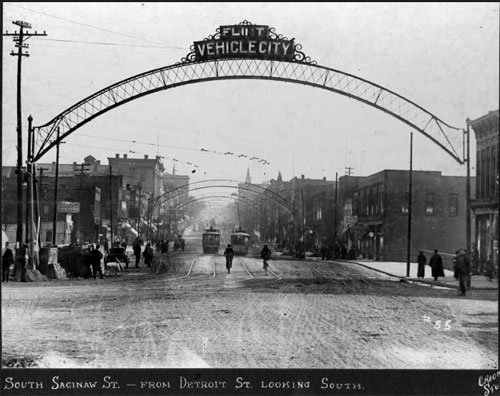
Flint Vehicle City Arch

Flint Vehicle City Arch, photo by Arthur Crooks (Kettering University Library, Scharchburg Archive)

This photo of Saginaw Street (from Detroit Street looking south) shows the Vehicle City Arch that was erected in 1905 as part of the City’s 50th anniversary. It was taken in 1909 and is one of many photos from Michigan’s past in The Making of Modern Michigan, a collaborative project headed by the Michigan State University Libraries, in partnership with the Library of Michigan, the Michigan Library Consortium, and the 50+ libraries currently participating in the project. It includes local history materials from communities around the state – photographs, family papers, oral histories and genealogical materials on a wide range of subjects.

Many of the images (such as the one above) are part of collections. The Crooks collection includes lots more photos of Flint at the turn of the century like Buick: Made in Flint, The circus comes to town and a shot of the arches lit up at night. The Crooks collection reaches into the 1920s, and you have to check out Bootleg Raid in Flint.

As is often the case, I got curious about those arches. Fortunately, I didn’t have to go any further than Arches Restoration to Celebrate our Heritage (ARCH). Their history page explains:

The Flint arches were erected in 1899 to replace gas lanterns used to illuminate the business district at night. Built by Genesee Iron Works, five arches were placed at intersections along Saginaw Street. Each arch was built with 50 light bulbs to illuminate the City’s main street at night. Half were turned off at midnight. The arches supported decorations for every parade of importance held in the city and colorful lights replaced golden incandescence at holiday times. None of the original arches had the famous Flint Vehicle City crown at its apex.

When Flint celebrated its 50th anniversary in 1905 two additional arches were erected with the famous Flint Vehicle City graphic at the crown. These arches were placed at the south end of the city at the intersection of Fifth and Saginaw Streets and at the north end of the business district at the confluence of Saginaw and Detroit Streets (now M.L. King Boulevard).

Though many believe the arches celebrated Flint’s heritage as a center for automobile manufacturing, the original arches were a salute to Flint as the world’s largest volume manufacturer of horse drawn carriages.

They were successful in their campaign to restore the arches on Saginaw and you can see a photo by day and by night!

Not much remains of Grindstone City

grindstone03.JPG

grindstone03.JPG, photo by smartee_martee.

Marty Hogan writes:

One of the few remaining grindstones on the beach. This one is about 3.5 feet in diameter. The beach used to be covered in the old Grindstones; from 1.5 feet to six feet in diameter. Bad, bad thieves plundered them all away.

This photo is part of Marty’s great Huron County, Michigan photo set (slideshow)

I went looking for a photo and details on Grindstone City so I could feature a site I found the other day, but there was little to be found from Michigan.org’s page on Grindstone City or the Port Austin Chamber.

UPDATE: March 2012: The best resource I found at the time of this post was willett.org, which featured piles and piles of photos and information about Michigan and its history. Among their were some postcards and old photos from Grindstone City, from which I learned that Grindstone City had a quarry and stone mill and made and shipped a whole lot of grindstones. Nothing at willett.org seemed to have been updated, and it felt like going up to an attic in an abandoned farm and poking through partially labeled boxes. Sadly the digital room has since fallen in, leaving nothing.

Fortunately, there are other resources, so check out today’s post Truing up a 3 ton stone in Grindstone City.

If you have anything to share about Grindstone City, post it in the comments!

“L” is for Lansing Tower … or is that a “B” for Boji?

Lansing Tower.

Lansing Tower., photo by Corey (a.k.a. ten0fnine).

Corey writes that this was formerly the Michigan National Tower and you must look at this photo bigger.

When I went a-Googling for the history of the building, I stumbled upon L is for Lansing:

…an online community for Lansing students, teachers, parents and anyone interested in hearing the stories of how this area, its neighborhoods, businesses, families, and citizens of note contributed to the history of “the land of the big bend” we call Lansing, Michigan.

The site looks to be one of the innumerable “ghost sites” that you find around the net where some energy and thought was applied to a topic before it was abandoned by its creators (the Young Spartans Program, who have themselves vanished). While the Lansing Timeline was never completed, their Lansing Tour, letter by letter, is kind of cool with some photos from the recent and distant past and links to more info as on ““O” is for Olds“.

Now where was I? Emporis says that this 341′ tall building is tallest in the Capital City and now known as the Boji Tower. Completed in 1931:

The Michigan National Tower was originally named the Olds Towers in honor of industrialist Ransom E. Olds. The brick and stone tower, with its tall, narrow profile topped with a spire and beacon, was typical of American skyscraper design in the early 1930’s. Four engraved panels in the portals of the main passenger elevators also reflect themes of labor and industry typical of the time.

Here’s the Boji Group’s page on Boji Tower and some more photos of Boji Tower.

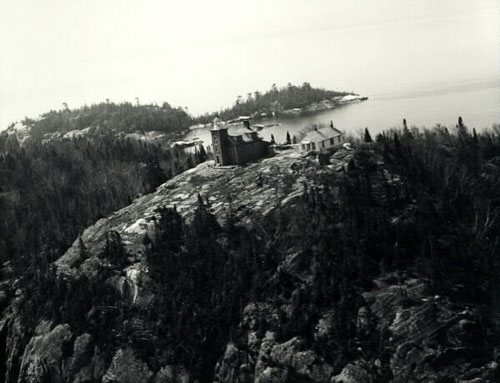
Huron Island Light Station from the Michigan Lighthouse Collection

Huron Island Light Station

Huron Island Light Station c. 1965, Archives of Michigan

The Archives of Michigan has a number of digital collections including the Michigan Lighthouse Collection. With almost 600 photos, the Lighthouse Collection is a great resource for lovers of lighthouses and historical photos.

The entry on the Huron Island Light Station in Terry Pepper’s Seeing the Light begins:

When the Soo Locks opened in 1855, maritime traffic boomed around the Keweenaw, with immigrant miners and supplies arriving at the growing number of harbors, and huge loads of copper shipped to feed the incessantly hungry furnaces of the industrial cities of on the southern lakes.

With this increasing vessel traffic it became quickly apparent that the Huron Island chain represented a significant hazard to vessels making their way along the coast. Marking the turning point for vessels coasting in either direction between the lights of Marquette and Portage River, the islands were surrounded by dangerous shoals, were frequently enshrouded in pea-soup fogs, and had been the site of numerous shipwrecks over the years.

You can see more Huron Island Light Station photos from the Archive of Michigan’s Lighthouse Collection, get information about the Huron Island Light from the National Park Service lighthouse inventory, check out a few  photos and a map from Lighthouse Friends and also get a more recent view of the Huron Island Lighthouse feature from Michigan in Pictures.

Ludington from the SS Badger Car Ferry

Ludington, MI from the Bow of SS Badger

Ludington, MI from the Bow of SS Badger, photo by Wigwam Jones.

Yesterday on Absolute Michigan we took a look at the S.S. City of Milwaukee, a permanently moored rail car ferry museum (website).

It seems only fitting that we give a nod to the S.S. Badger with a cool set of SS Badger photos from Wigwam Jones (slideshow).

The S.S. Badger web site gives the history of the ship which begins:

She is the largest car ferry ever to sail Lake Michigan, and has provided a safe, fun, and reliable shortcut across the huge inland sea for more than fifty years. The S.S. Badger is a national treasure, offering a cruise experience that links us to an earlier time when a sea voyage was the ultimate travel and vacation adventure.

The 410′ S.S. Badger entered service in 1953, designed specifically to handle the rough conditions that it would likely encounter during year ’round sailing on Lake Michigan. Built primarily to transport railroad freight cars, but with superior passenger accommodations, the Badger reigned as Queen of the Lakes during the car ferries’ Golden Era in the late Fifties, with Manitowoc, Milwaukee, and Kewaunee as her Wisconsin ports of call.

Unlike most of her fellow ferries, the Badger escaped the scrapyard and makes the daily journey from Ludington to Manitowoc, WI May – October. Be sure to take the tour of the Badger!

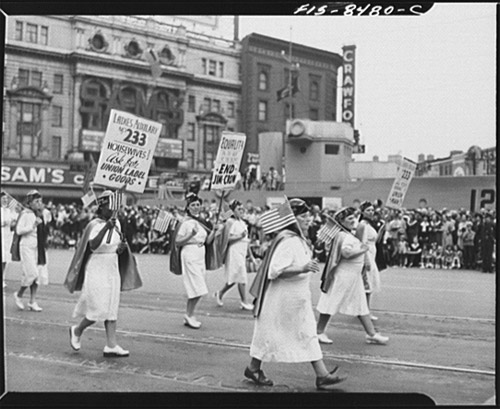
Labor Day in Michigan

1942 Detroit Labor Day Parade

Women Workers in the 1942 Detroit Labor Day Parade by Arthur S. Siegel.

Wikipedia says that Labor Day:

…has been celebrated on the first Monday in September in the United States since the 1880s. The form that the observance and celebration of Labor Day should take were outlined in the first proposal of the holiday — a street parade to exhibit to the public “the strength and esprit de corps of the trade and labor organizations” of the community, followed by a festival for the recreation and amusement of the workers and their families.

The entry goes on to say how that has mellowed to more of a day of family rest and recreation (and for political appearances of course).

The Detroit News Rearview Mirror series How Labor won its day by Patricia K. Zacharias does an excellent job of weaving Michigan’s role in the holiday into the broader historical picture and has some great old pictures (be sure to click the button at the top left!).

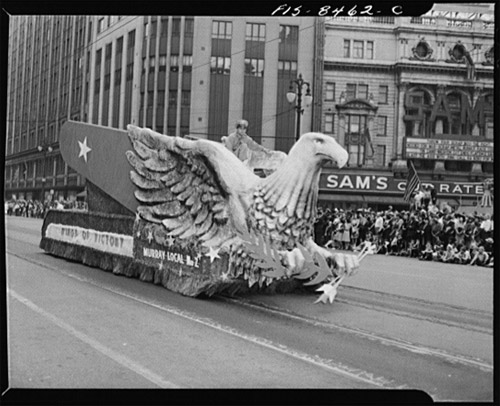
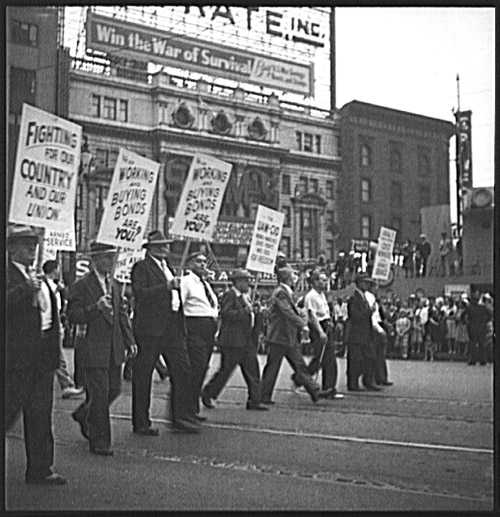
These pictures were taken at the 1942 Labor Day Parade in Detroit by Arthur S. Siegel. You can click the photos at the right for a larger view too!

1942 Detroit Labor Day Parade, Wings of Victory

1942 Detroit Labor Day Parade, War of Survival

The Annual Labor Day Mackinac Bridge Walk

The 2010 Mackinac Bridge Walk takes place on Monday, September 6, 2010!

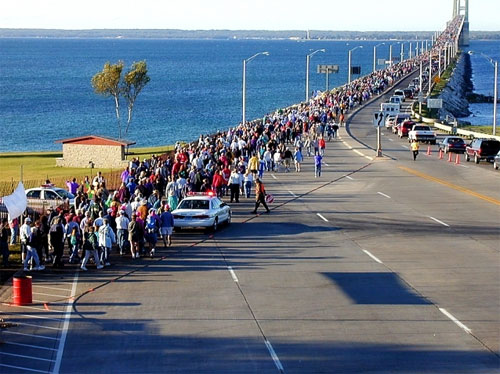
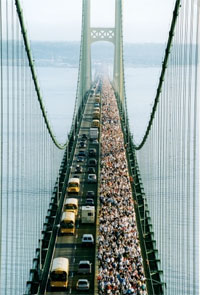
2000 Mackinac Bridge Walk
2000 Mackinac Bridge Walk, photos courtesy Michigan Department of Transportation & Mackinac Bridge Authority

The annual Mackinac Bridge Walk has been held every year on Labor Day since the Bridge opened in 1957, so, like the Mackinac Bridge itself, The Bridge Walk is celebrating its 50th anniversary.

Walkers in the Mackinac Bridge Walk from the tower!Strangely enough, Wikipedia seems to have the most historical information on the walk (which is not much). They say that the first walk took place in the early morning hours of Labor Day, 1958. and that just 68 people took that first 5 mile walk across the Mighty Mac. In the early years, it seems that the walk was sparsely attended and viewed as an annoyance until the governor was brought in to lead the walk. The walk averages 50,000 to 65,000 attendees and the record is estimated to be 85,000 when George H. W. Bush led the walk in 1992. Will we break the record this year? Seems like we should, but I wonder.

The Governor’s party leads the way at 7 AM (I think) with registered and pre-qualified joggers (details from the Governor’s Council on Physical Fitness). Important things to note (according to the official site) are that traffic still moves across the bridge during the event, that it starts on the St. Ignace side, that they really recommend you figure your return transport out, that it’s FREE (my capitalization) and that there are NO RESTROOMS ON THE BRIDGE (their capitalization).

The Michigan Department of Transportation has a photo gallery from past Mackinac Bridge Walks. A photographer named Chuck contributed one of his photos from the bridge walk to Wikimedia, and he has a nice gallery of Mackinac Bridge Walk photos. A search of Flickr finds some bridge walk pics as well (hopefully more after this year’s walk!). Do you have more links? Post ’em in the comments and please share your story/photos if you walk this year!

The Mackinac Bridge

I should add that on September 16 from 7:00 – 7:30 AM, there will be a “Bike Across the Mighty Mac” event sponsored by Mackinaw City Chamber of Commerce. If you’re up in the area, there’s also a Truck Parade of Lights from 8-9 PM on September 15th.

Tiger Stadium: At the corner of Michigan & Trumbull

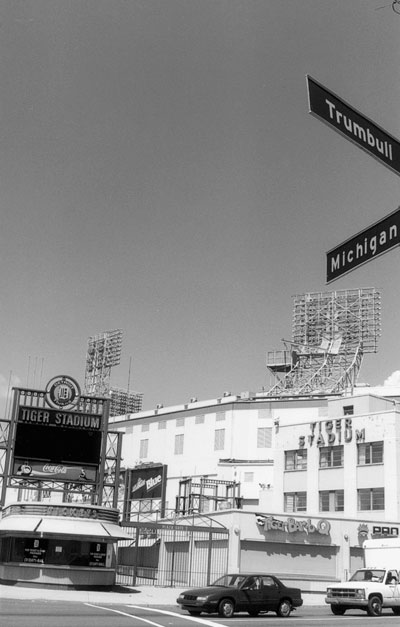
At the corner of Michigan & Trumbull

Michigan and Trumbull was the address for professional baseball in Detroit for 104 seasons. From 1896 when Bennett Park opened, until the last game at Tiger Stadium in 1999, Michigan and Trumbull was the most famous street corner in Michigan. Tiger Stadium by Irwin J. Cohen takes you on a visual tour of baseball in the Motor City from the beginning of the Tigers franchise to the historic final game played at Tiger Stadium. The pages are filled with photos (some never before published) of the stadium and Tiger legends from Cobb, Gehringer and Greenberg right up to Kaline, Lolich, Trammell, Gibson and others.

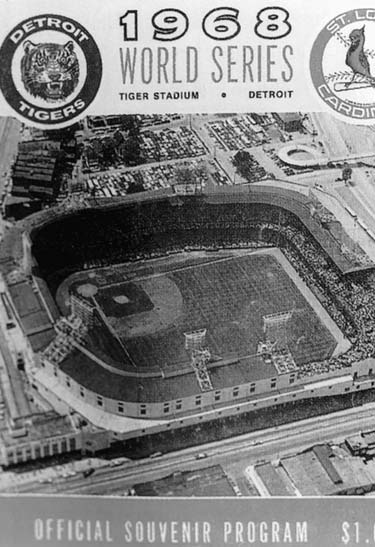
1968 Detroit Tigers / St. Louis Cardinals World Series program cover
The World Series went a full seven games and games three, four, and five were played in Detroit. Each game attracted the same 53,634 attendance numbers. (Author’s collection.)Click above photos for a larger view!
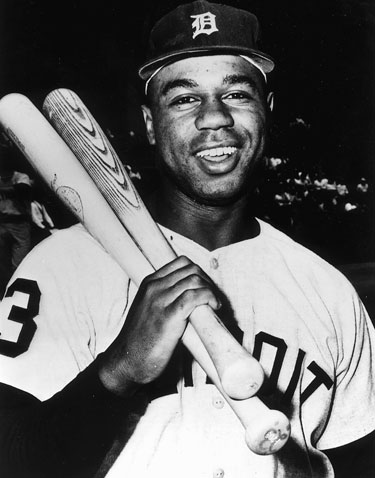
Willie Horton of the Detroit Tigers
Affable slugger left fielder Willie Horton hit 36 home runs in 1968. In game five with St. Louis ahead three games to one, Horton made the most memorable defensive play in the history of the ballpark when he threw out speedster Lou Brock trying to score from second on a single. (Courtesy B&W Photos.)

Tiger Stadium by Irwin J. Cohen is available from the publisher online at www.arcadiapublishing.com or by calling 888-313-2665.

View other excerpts from Arcadia Publishing’s Michigan books at Michigan in Pictures!

On a more editorial note, I had originally thought when I requested these photos that this would be part of a requiem for this grand old ballpark. It still may, but with Tiger icon Ernie Harwell pushing a plan to redevelop Tiger Stadium as a smaller ballpark and museum complex, maybe not!

You can follow Tiger Stadium news at Absolute Michigan.

Cruisin’ the Original: Woodward Avenue

Cruising Woodward Avenue in Detroit Michigan

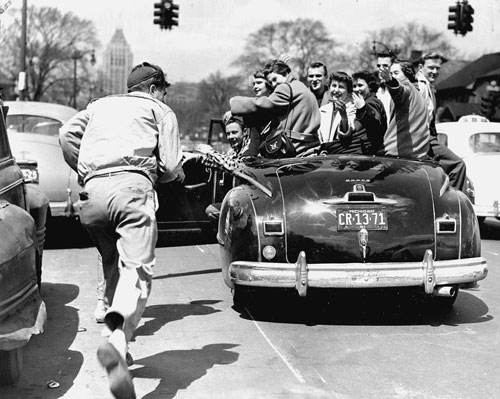
Cruising Woodward, 1951 (above) …the seriousness of the times (1950s) did not dampen a growing love of cars and the freedom experienced by driving them. These young Detroiters found their cars especially useful during the longest transportation strike in the city’s history. In April 1951, the folks here piled into a car not far from the Fisher Building, in the distance, which is across from the General Motors Building in Detroit’s New Center area. After the strike, Detroit mayor Albert Cobo urged the city council to sell Detroit’s streetcars to a willing buyer, Mexico City, for $1 million. The streetcars remained in service there until the 1980s. Detroit soon dismantled its trolley tracks, and only buses ran after that. Cars became the city’s major means of transportation.

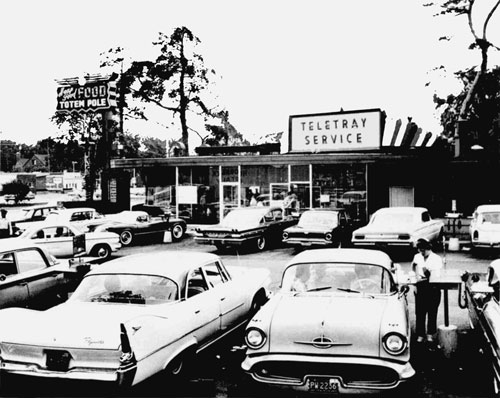
Cruisin’ the Original: Woodward Avenue by Anthony Ambrogio and Sharon Luckerman begins: In the 1950s, cruising swept the nation. American streets became impromptu racetracks as soon as the police turned their backs. Young people piled into friends’ cars and cruised their main streets with a new sense of freedom. The Totem Pole on Detroit’s Woodward AvePent-up desires after the hardships of World War II plus a booming economy fueled a car-buying frenzy. To lure buyers to their particular makes and models, automobile companies targeted the youth market by focusing on design and performance. No place was that more relevant than on metro Detroit’s Woodward Avenue, the city’s number-one cruising destination and home of the world’s automobile industry. Barely 50 years earlier, Henry Ford rolled his first Model T off the assembly line at Piquette and Woodward, just south of where cruisers, dragsters, and automobile engineers ignited each other’s excitement over cars. This unique relationship extended into the muscle car era of the 1960s, as Woodward Avenue continued to reflect the triumphs and downturns of the industry that made Detroit known throughout the world.

The Totem Pole (right) was the cruisers’ unofficial starting point on Woodward Avenue at Lafayette Street, kitty-corner from the zoo. This 1957 photograph demonstrates the “proper” way cruisers parked—to see and be seen, backed in, like the finned Plymouth in the lower-left corner. (click photo for larger view!)

Funded in part by a grant from the Federal Highway Administration’s National Scenic Byway program and with guidance from the Woodward Heritage Team, Detroit writers Anthony Ambrogio and Sharon Luckerman interviewed numerous local historians, automobile engineers, automobile museum directors, and Detroiters who cruised during these extraordinary decades.

The Images of America series celebrates the history of neighborhoods, towns, and cities across the country. Using archival photographs, each title presents the distinctive stories from the past that shape the character of the community today. Arcadia is proud to play a part in the preservation of local heritage, making history available to all.

Cruisin’ the Original: Woodward Avenue is available from the publisher online at www.arcadiapublishing.com or by calling 888-313-2665.

View other excerpts from Arcadia Publishing’s Michigan books at Michigan in Pictures!

Here’s an action-packed feature on the Woodward Dream Cruise from Absolute Michigan!