A birthday card from the Grand Hotel

View from West Bluff of The Grand Hotel

View from West Bluff of The Grand Hotel, photo by MI photographer

126 years ago today on July 10, 1887, The Grand Hotel opened for business on Mackinac Island. In honor of Michigan’s most famous hotel, here’s a seldom seen view.

Check it out bigger and see more in MI photographer’s Mackinac Island slideshow.

PS: The lighthouse you can see in the distance is Round Island Lighthouse – click the link to get closer with Michigan in Pictures.

The Only Choice: Seul Choix

Boulder Splash - Seul Choix Point (Gulliver, MI)

Boulder Splash – Seul Choix Point (Gulliver, MI), photo by Aaron C. Jors

Wikipedia’s entry for Seul Choix Light begins:

This location is the only harbor of refuge in a long and dangerous stretch of coast; the translation of the French name is “only choice” so it is clear that it was used as a refuge by the early French traders in this area. Local references state that the correct pronunciation is “Sis-shwa”, assumed to be the common name used by both the French Voyageurs and the Native Americans with whom they traded furs.

In the 1880s, there was increased maritime traffic between the harbors on Lake Michigan’s western shore and Green Bay on the one hand, and the Straits of Mackinac on the other. Although the St. Helena Island Light marked the western entry into the Straits, and Poverty Island Light lighted the entrance to the Bays de Noc, there were no lighthouses to aid mariners navigating a dark 100-mile (160 km) stretch of coastline on the southern shore of Michigan’s Upper Peninsula. The navigation season along this shoreline often began and ended with treacherous storms. Waves would build as they traversed the lake, making shelter a matter of life and death. Thus, mariners would seek shelter on the leeward side of points protruding into the lake along this stretch of unlighted shore.

You can read on for more and also check out The Haunting of Seul Choix Point Lighthouse on Michigan in Pictures for more about this lonely locale.

Check out Aaron’s photo bigger and see more in his Michigan slideshow.

Message in a Bottle from Tashmoo Park

tashmoo park

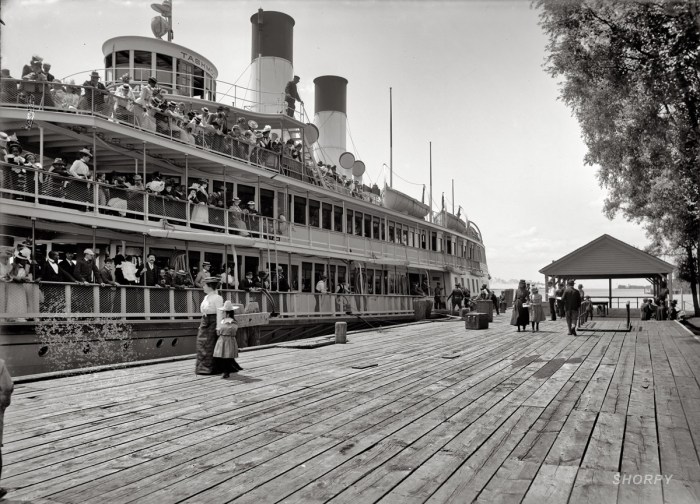
Tashmoo at the Dock, 1900, photo courtesy shorpy.com

The Daily Mail reports on an almost 100-year-old find:

Selina Pramstaller was 17-years-old and Tillie Esper was 23-years-old when they visited an amusement park on Harsens Island in Michigan alongside the St Clair River in 1915 and decided to commemorate the day with a message in a bottle.

That message- ‘having a good time at Tashmoo’- was found almost 97 years later by diver Dave Leander.

Click through for more on the find and some pictures. You can see more pictures and read something about this once popular amusement park on Harsens Island that closed for good in 1951 at waterwinterwonderland.com.

Check this out background bigtacular (or buy a print) and see many more old photos from Detroit and elsewhere at shorpy.com. About the boat, they explain:

The Detroit River excursion steamer SS Tashmoo, a sidewheeler, stopped at Tashmoo Park on the St. Clair Flats on trips between Detroit and Port Huron. A high point in the boat’s eventful 36-year life was the night in 1927 that she broke free of her moorings in a winter storm and headed downriver on her own. Her end came in 1936, when she hit a submerged rock and sank.

Sugar Man: Detroit’s Own Sixto Rodriguez

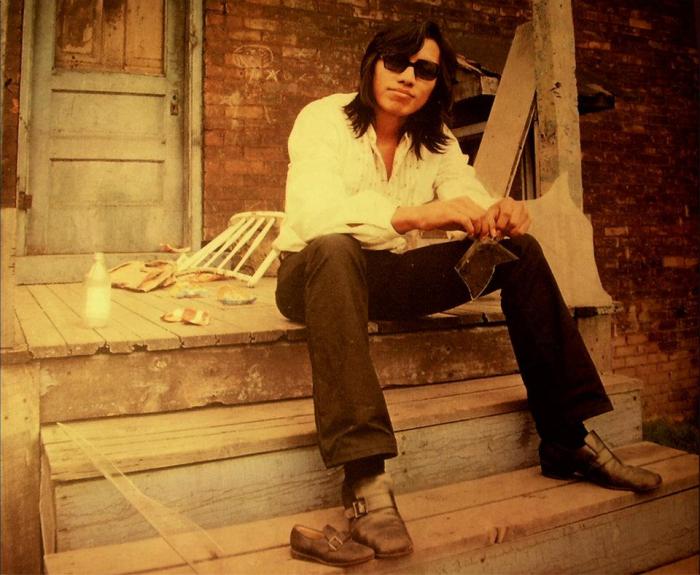
Sugarman Sixto Rodriguez

Next Saturday (June 22nd) I get to be part of a neat moment in the annals of Michigan music when I work with my partner Laura, the wineries of Traverse City and a fantastic team of workers & volunteers to host Sixto Diaz Rodriguez at the 5th annual Traverse City Wine & Art Festival.

Thanks to the global stardom of Rodriguez, hero of the Academy Award winning documentary Searching for Sugar Man, our festival sold out easily. You still have a chance to see this beautiful film though:

In 1968, two producers went to a downtown Detroit bar to see an unknown recording artist – a charismatic Mexican-American singer/songwriter named Rodriguez, who had attracted a local following with his mysterious presence, soulful melodies and prophetic lyrics. They were immediately bewitched by the singer, and thought they had found a musical folk hero in the purest sense – an artist who reminded them of a Chicano Bob Dylan, perhaps even greater. They had worked with the likes of Marvin Gaye and Stevie Wonder, but they believed the album they subsequently produced with Rodriguez – Cold Fact – was the masterpiece of their producing careers. Despite good reviews, Cold Fact was a commercial disaster and marked the end of Rodriguez’s recording career…

A bootleg recording of Cold Fact somehow found its way to South Africa in the early 1970s, a time when South Africa was becoming increasingly isolated as the Apartheid regime tightened its grip. Rodriguez’s anti-establishment lyrics and observations as an outsider in urban America felt particularly resonant for a whole generation of disaffected Afrikaners. The album quickly developed an avid following through word-of-mouth among the white liberal youth, with local pressings made. In typical response, the reactionary government banned the record, ensuring no radio play, which only served to further fuel its cult status.

The film tells the story of the search and rediscovery of Rodriguez. He’s now in the midst of a world tour that has seen him appear on 60 Minutes (great piece), Letterman & Leno and legendary concert venues as the Montreaux Jazz Festival, the Orpheum Theatre in LA, the Hammersmith Apollo in London, Radio City Music Hall  … and our festival in Traverse City.

La Chapele: The Doric Arch & Chapel Rock

Pictured Rocks Shoreline

Pictured Rocks Shoreline, photo by dwfphoto

Their beginning is in the Doric Rock which is about two miles from the line of towers and battlements which compose the grand display of the Pictured Rocks; and seems to have been sent in advance to announce to the voyageur the surprising and appalling grandeur that awaits him ahead.
~Thomas McKenney, 1834

“Appalling grandeur” is indeed fitting for the stretch of the Pictured Rocks. The above quotation comes from a wonderful website I just discovered: Tracing The Trail: The Pictured Rocks Segment of the Anishnaabeg Migration Route. The site has some incredible historic information about the Anishnaabeg and their life & migration through the Pictured Rocks. The site has some fascinating information, and I heartily urge you to check it out. Regarding what is today known as Chapel Rock, they explain that what we see today was once an arch known as Doric Rock or Le Chapelle.

“The voyageurs, of course, coined the name ‘Le Chapelle,’ and they continued to use the term well into the American period. The journals of the 1820 Cass expedition reveal the origin of the new name. David Bates Douglass simply notes that just west of a waterfall cascading over the rocks they visited a ‘fine natural arch.’ Schoolcraft states that near a cascade four miles beyond the beginning of the sandstone bluffs is located ‘Doric Arch.’ Both Charles C. Trowbridge and James Duane Doty indicate that the Cass expedition was responsible for naming the formation ‘Doric Arch.’ The following excerpt from Doty’s journal gives a good description of the formation and reason for naming it ‘Doric Arch.’

About midway of the rocks a stream of water is seen pouring over a perpendicular bank 70 feet high. The sheet is about 10 feet wide. Passing this we soon come to an arched rock separated apparently entirely from the bank. It is 10 feet from the waters edge to the top of the bank on which it is based; the arch then rises about 35 feet. On the right supporting the arch 2 pillars well formed are seen, on the left but one was discovered—the woods however obstructed the view. The arch appeared smooth and elegantly shaped. On its top and under it pine trees were growing –one very large directly on its center….This arch we named Doric Arch from the resemblance which it bears to that order of architecture.

…“The Chapel, which is reported to have collapsed in 1906, has left its name on current topographic maps. At the site of its location is a symbol and the term ‘Chapel Rock.’

While the arch connecting “The Chapel” and the adjacent cliff did indeed collapse in 1906, the intricately sculpted rock remains as Chapel Rock. The great white pine that Doty observed still grows on top of Chapel Rock, and the tree’s roots mark where the rock arch once stood.

Check this out background big and see more in his excellent Pictured Rocks slideshow.

The Pictured Rocks Boat Tour company offers free tours of the Pictured Rocks National Lakeshore shoreline for UP residents every year to celebrate Pictured Rocks Day. That’s this Saturday, so I’m celebrating the Pictured Rocks all week with posts to give everyone a taste of one of Michigan’s most amazing places. Want more Pictured Rocks photos? Michigan in Pictures has tons!

Con Foster and the Bijou By the Bay

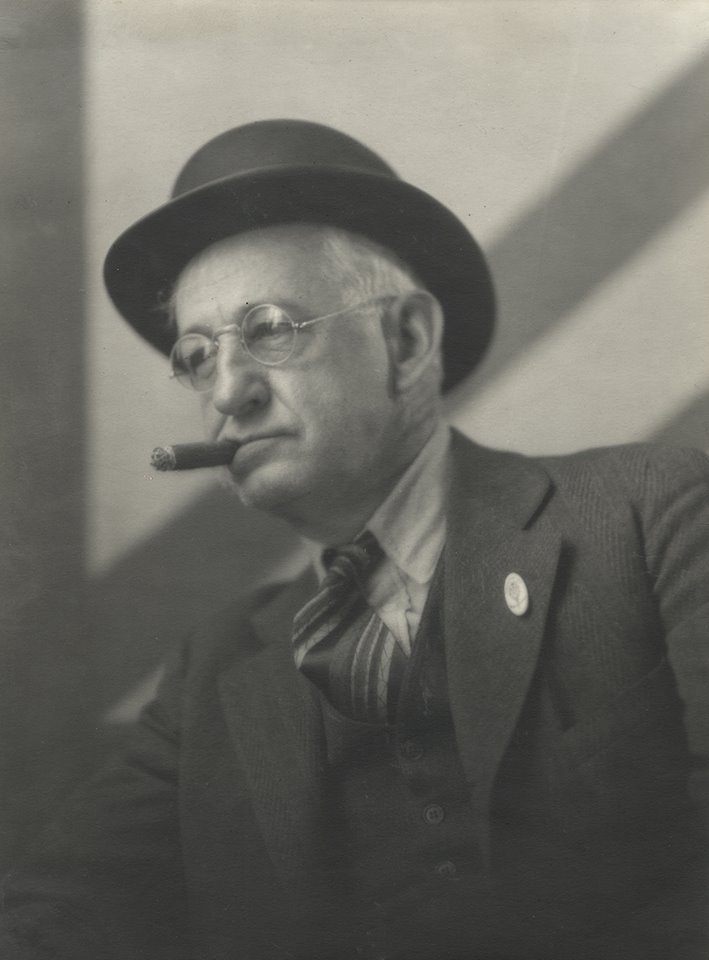
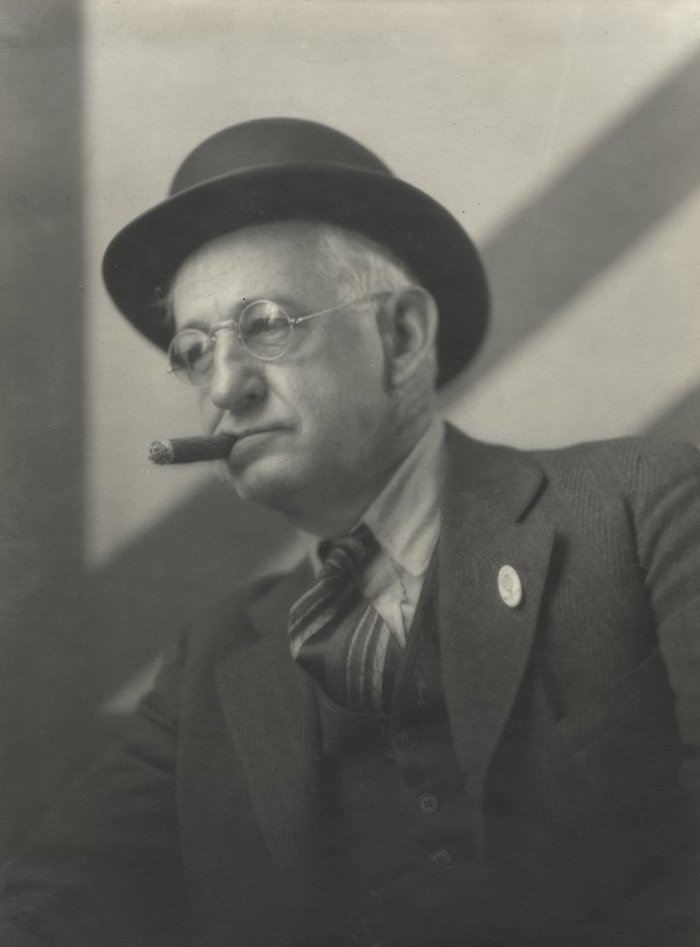
Con Foster

I have to confess: I am a huge fan of Michael Moore. One of the reasons has nothing to do with politics or his films. Almost 10 years ago, Michael did something that I didn’t think possible. He galvanized support, spent and raised money and brainstormed to lead a vast & diverse army of volunteers to restore the theater of my childhood, the State Theatre in Traverse City. While the successful and wildly entertaining Traverse City Film Festival has been a huge driver of the theater’s comeback, many overlook how his dedication to the movie-going experience created a theater that hundreds of people every day enjoy as part of a vibrant downtown experience. Of course after the Motion Picture Association of America tapped the State as #1 on their list of the best theaters in America, that number has probably gone down.

All this is a rather long-winded way of introducing Michael’s latest Traverse City cause, restoring the empty Con Foster Museum as a new theater – the Bijou By the Bay.  The story starts with Conrad “Con” Foster:

Manager of the State Theatre when it was originally known at the Lyric Theatre, he first arrived in Traverse City in July of 1917 as an employee of Fitzpatrick-McElroy Company to run and operate the Lyric. A true showman with a passion for the movies, one of the first things he did upon arrival was install a “newer and brighter” screen as part of his commitment to make the Lyric “equal to any motion picture house in the state.” It is this commitment to presentation the State Theatre continues today.

Born in Boston, Massachusetts on March 21, 1875, Foster was not a Traverse City native, but the community embraced him and he quickly made the area his home. After less than a year in Traverse City, Fitzpatrick-McElroy transferred him to a new theater post in Wisconsin, and Foster spent the next six years heartsick, petitioning the company to bring him back.

Foster’s pleas were answered in April 1924 when he returned to Traverse City to resume his post at the Lyric. He placed an ad in the Record Eagle expressing his delight, writing:

“My ambition has been to return to Traverse City, since they made me leave, to operate what I think is the most beautiful theater in our circuit. I have come to love the city, its good natured folks, and have often told my wife that Traverse City is the place to make a home. So it is with great pleasure that I can announce that my longings have been realized and I have again been transferred to the best little city in the world.”

Over the course of the next sixteen years, Foster worked tirelessly to make the Lyric the best theater in Michigan. Ahead of his time, in the spring of 1929 Foster had the foresight to bring “talkies” to the Lyric, installing the latest state-of-the-art sound technology and film projectors in Traverse City. At that time, sound technician Walter Beck claimed this was the smallest city in the country, to his knowledge, to have installed this modern equipment.

Foster’s impact extended far beyond his movie house and into all aspects of civic life. He encouraged and promoted Cherry Festival programs, patriotic presentations and educational speakers. He knew the Lyric was more than a just movie theater, but an important gathering space for the community. Serving as head of the Chamber of Commerce, City Commissioner and even Mayor, Foster was committed to serving his community.

Foster managed the Lyric until he died suddenly of a heart attack in 1940. The city mourned his loss, with a tribute in the Record Eagle claiming, “When Con Foster died this morning a part of Traverse City died with him, not a physical part, but a spiritual part.” Downtown businesses closed for his funeral and the Lyric reopened afterward to screen Gone with the Wind.

Foster also created Clinch Park, which is home to the proposed theatre. Find out more and how to donate at Bijou By the Bay.

More Traverse City on Michigan in Pictures!

Memorial Day & Michigan

History of Memorial Day and Michigan

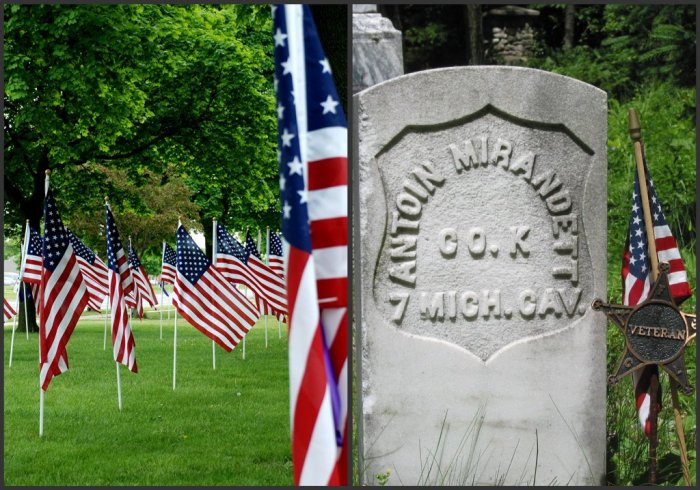
Remember, photo by LindaB.

While the Memorial Day page at the Center for Civil War Research Center lists roles that people from many states had in creating Memorial Day, there’s no doubt that Michiganders had some part in it:

“On the sixteenth of April, 1862, some ladies and a chaplain from Michigan were chatting together at Arlington Heights. They were talking about the horrors of the war and one lady said: ‘How lonely and cheerless the bare graves of the soldiers look.’ Another proposed gathering some flowers and laying them on the graves of the Michigan soldiers that day. They did so, — and the next year they decorated the same graves. The third year [1864] the same chaplain and ladies were in Fredericksburg, and they decorated the soldiers’ graves there. So the beautiful custom grew and spread its influence with its flowers each year.”

What’s more, as detailed on Michigan in Pictures last year, Michigan was the first state to make Decoration Day a state holiday. Here’s hoping that you have a chance to remember and reflect upon those who have given their lives for our nation, and also that few more are called to do the same.

View Linda’s photo at Flickr and see more in her Great Great Grandfather slideshow.

More Memorial Day on Michigan in Pictures.

The Deadliest Game: Fort Michilimackinac Massacre of 1763

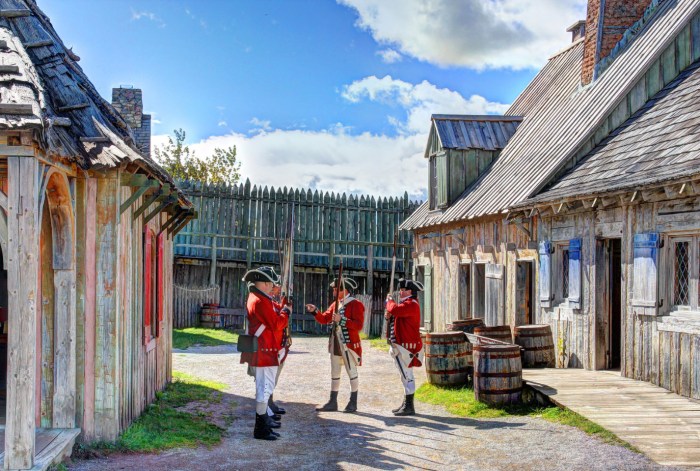
British Troops at Fort Michilimackinac by Robert F Carter

British Troops at Fort Michilimackinac, photo by Robert F Carter

This year marks the 250th anniversary of the most dramatic event at Fort Michilimackinac. On June 2, 1763 the fort was captured by Ojibwa & Sauk warriors, who gathered under the guise of playing a huge game of baggatiway. Elizabeth Edwards of Traverse Magazine has an in-depth article about the massacre that begins:

Under an unusually hot sun on a late spring day on the Straits of Mackinac, British Major George Etherington, commandant of Fort Michilimackinac, was suffering from an acute case of cultural blindness. And there was no excuse for it. Relaxed at the sidelines of a rousing game of baggatiway (similar to lacrosse) outside the fort, the major should have seen the danger signs in this Ojibwe versus Sauk contest of sweaty, half-naked bodies painted with white clay and charcoal.

The 30-year-old officer was born in the colonies, and most likely grew up on stories of Indian uprisings. He’d even served in the just-ending French and Indian War, in which the English had wrested control of North America from the French—a victory that had put this previously French fort in Etherington’s care. Though the major had been raised on American soil and had fought on it, he was still English. And in that country, a battle was a battle, and a sporting event was a sporting event.

Perhaps that explains why the major missed the clues…

Definitely read on for much more at Traverse! Every Memorial Weekend on Saturday, Sunday & Monday, they re-enact this event and much more of the fort’s history in the  annual Fort Michilimackinac Pageant. Next Sunday (June 2) they will commemorate the 250th anniversary of the attack at Michilimackinac at the fort as they open the new South Southwest Rowhouse.

Robert has some more good information about the events at the fort including a link to the painting The Conspiracy – Fort Michilimackinac by Robert Griffing that imagines the planning of the massacre. See his photo background bigtacular and see more in his My Neighborhood slideshow.

More from the Straits of Mackinac & Mackinac Island on Michigan in Pictures.

Celebrate Henry Ford’s 150th at The Henry Ford Museum!

Entrance to the Museum! - HFM

Entrance to the Museum! – HFM, photo by MikeRyu

Lish Dorset of The Henry Ford museum in Dearborn writes on the Pure Michigan Blog that although summer is always a busy time at The Henry Ford, this summer is shaping up to be especially busy as they celebrate what would have been the 150th birthday of founder Henry Ford. She writes:

We’re celebrating Henry’s legacy all year at The Henry Ford, whose birthday is July 30. Starting in June and running through August, pay a visit to Miller School in Greenfield Village and step back in time to the days of Henry’s youth as he experiments with clock parts, machines and principles that challenged him.

You can also visit Henry’s T, a 15-minute dramatic play and hear how this ultimate maker was inspired to build his universal car. Follow up the play with a visit to Henry Ford Museum and learn how to build a Model T yourself.

Both Henry Ford Museum and Greenfield Village are offering guided tours to guests with an emphasis on Henry’s work.

Check out HenryFord150.com for a timeline of the legendary automotive pioneer, and you can also read more about events at the Henry Ford and keep up with everything on their Facebook.

Mike took this shot on an Exposure.Detroit photowalk at The Henry Ford. Check it out on black and see more in his Henry Ford Museum slideshow.

Also see the Henry Ford Museum slideshow in the Absolute Michigan pool on Flickr for over 400 more photos from The Henry Ford!

Michigan Stereoscopy and the National Stereoscopic Association Convention

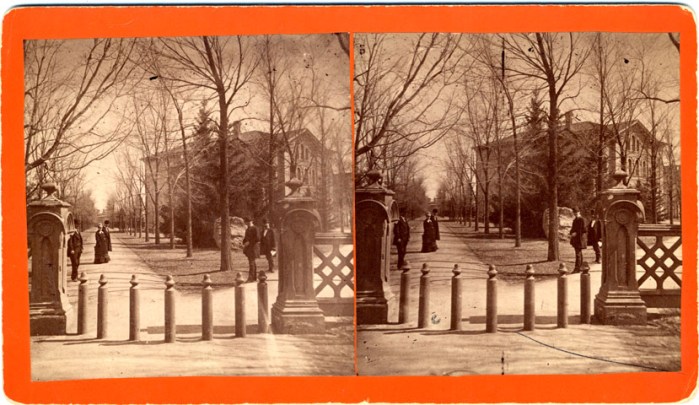
Diag at University of Michigan 3d card

Central Campus, diagonal, with fence posts, photo courtesy UM Bentley Library

Michigan in Pictures regularly features  awesome historical postcards from Don Harrison of UpNorthMemories.com. Don emailed me the other day to let me know that the 39th National Stereoscopic Association Convention will be held in Traverse City next month (June 4-10, 2013).

The event features speakers, workshops, 3D image competitions, exhibitions and a huge 3D Trade Fair where you can view and purchase equipment and photographs. While there’s no specifically Michigan tie, I thought it was pretty cool that Brian May, CBE, PhD, FRAS is one of the featured speakers. You may know Brian as the guitarist of Queen, but he apparently postponed a career in astronomy, returning to astrophysics in 2006. He’s also a life-long stereoscopy enthusiast.

Regarding stereoscopy, Wikipedia’s explains:

Stereoscopy (also called stereoscopics or 3D imaging) is a technique for creating or enhancing the illusion of depth in an image by means of stereopsis for binocular vision. The word stereoscopy derives from the Greek “στερεός” (stereos), “firm, solid” + “σκοπέω” (skopeō), “to look”, “to see”.

Most stereoscopic methods present two offset images separately to the left and right eye of the viewer. These two-dimensional images are then combined in the brain to give the perception of 3D depth. This technique is distinguished from 3D displays that display an image in three full dimensions, allowing the observer to increase information about the 3-dimensional objects being displayed by head and eye movements.

The photo above shows the Diag at the University of Michigan. You can see it bigger along with dozens more from all across Michigan in the Bentley Library’s Michigan in 3D Stereoscopic Cards gallery.

For a real treat, request your free 3d glasses from the Civil War Trust and check out the 3D images of the photos!