Go Green, Go White & Go Blue: Rivalry Week is Here

4th & Goal by Cory Smith

4th & Goal by Cory Smith 

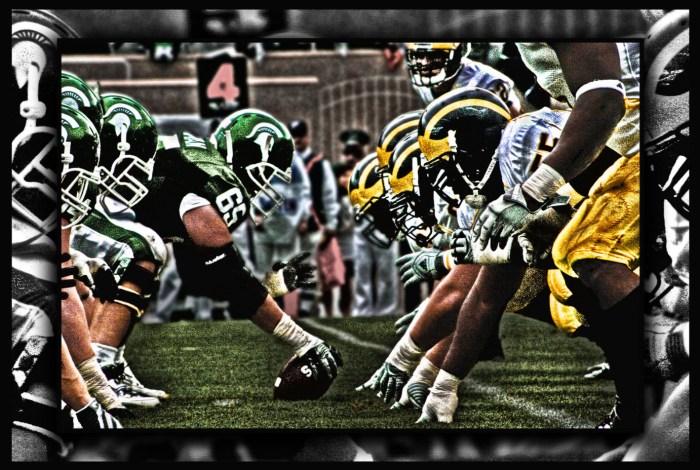
The undefeated & #6 ranked University of Michigan Wolverines travel to Spartan Stadium in East Lansing on Saturday to face the also 7-0 Michigan State University Spartans. First & foremost, let us know in the comments who you got this weekend! 

mLive notes that the last time these two programs were top 10 with such a high profile meeting, the Beatles were touring America:

Saturday’s game between the Wolverines and the Spartans will be the first time in the 113-year history between these two state rivals that both teams are at least 7-0. It’s also the first game both teams have been ranked in the Top 10 since the same year The Beatles landed in the U.S.

The setting was East Lansing on October 10, 1964. Seventh-ranked Michigan took on 9th-ranked MSU in one of the biggest games in the decades-long rivalry, with Michigan winning 17-10 in front of 78,234 people. This was just the fourth game against each other where both teams were ranked in the Top 10.

…Michigan is favored by four over the No. 8 ranked Spartans. The Wolverines lead the all-time series 71-37-5.

Cory took this photo of the Spartans getting ready to punch it in back in October of 2009. MSU eventually won the game in overtime. See more in Cory’s HDR Photography gallery on Flickr & view and purchase prints on his website!

Support Michigan in Pictures with Patreon

Sleeping Bear Dunes National Lakeshore turns 51 today!

Sleeping Bear Dunes National Lakeshore by Thomas DB

Sleeping Bear Dunes National Lakeshore by Thomas DB

(via leelanau.com) On October 21st, 1970 the Sleeping Bear Dunes National Lakeshore became the third US National Lakeshore. The online book A Nationalized Lakeshore: The Creation & Administration of the Sleeping Bear Dunes National Lakeshore has a good overview of what was a remarkably contentious issue back in the day:

A Nationalized Lakeshore: The Creation & Administration of the Sleeping Bear Dunes National Lakeshore Beginning in 1919 a small portion of what is now the national lakeshore was set aside as a state park. The idea of a national park in northwestern Michigan did not surface until the National Park Service’s Great Lakes Shoreline Survey visited the area in 1958. Between 1959 and 1970 there was a continuous and controversial effort in Congress to create a park unit around the Sleeping Bear Dune. The legislative leader of the Sleeping Bear park proposal was United States Senator Philip A. Hart. The senator’s persistence and patience in the end led to the creation of Sleeping Bear Dunes National Lakeshore on October 21, 1970.

Opposition to the creation of the lakeshore was very strong among local summer homeowners. More than 1,400 tracts of private land had to be acquired to create the lakeshore. A heavy-handed, poorly planned land acquisition program reinforced the bitterness that surfaced during the decade of struggle that preceded authorization. The legacy of those actions has been twofold. On one hand the National Park Service has been vilified by many local property owners and the park staff have had to work in an environment that is unnecessarily confrontational. On the other hand, the presence of an organized local populace wary of National Park Service policy has influenced for the better the development of the national lakeshore. Local sentiments played an important role toning-down the agency’s initial plans to intensively develop the area’s recreational assets. More recently local sentiment has influenced the agency’s approach to the lakeshore’s rural cultural landscapes. Unfortunately, resistance to the National Park Service in the region has also hindered opportunities to bring more land under protection and to develop scenic drives for park visitors.

The National Park Service conceived the Sleeping Bear Dunes lakeshore at a time when the shores of Lake Michigan were rapidly undergoing privatization. Subdivisions of vacation and year round homes threatened to keep ordinary citizens from enjoying Michigan’s broad, sandy shoreline. A nationalized lakeshore along the beaches and bluffs of the Sleeping Bear made available for all what might have been enjoyed only by a select few. The cost was millions of dollars of federal funds and the hopes and dreams of hundreds of small property owners. Sleeping Bear Dunes was a tragedy for the latter and a wise investment of the former.

Indeed. You can read lots more in A Nationalized Lakeshore.

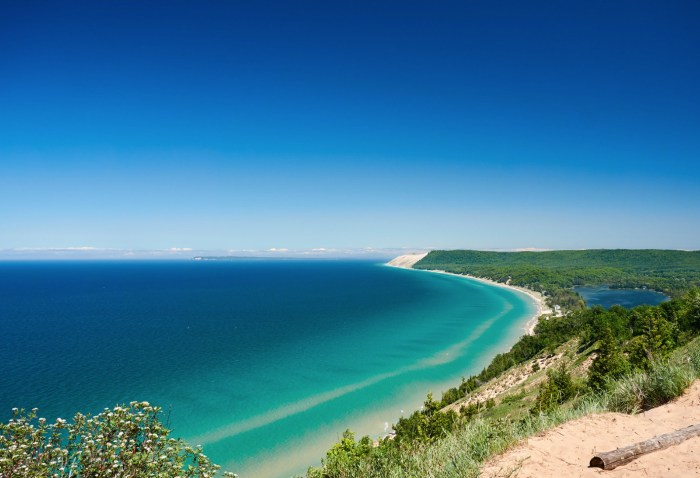
It was hard to pick a photo for this post, but I ended up going with Thomas’s beautiful shot from June of 2016 of my favorite view in the Lakeshore atop the Empire Bluffs where you can see South Bar Lake, the southern end of the main dune complex, and the Manitou Islands in the distance. See more in Thomas’s 6/1-6/3/16 Grand Traverse & Leelanau gallery on Flickr.

Support Michigan in Pictures with Patreon

Peak Colors at the Cut River Bridge

Peak Colors at the Cut River Bridge by Michigan Nut Photography

Peak Colors at the Cut River Bridge by Michigan Nut Photography

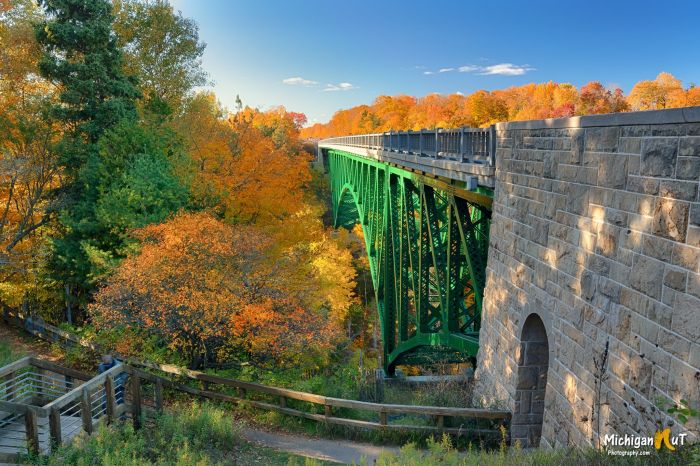
John got a fantastic angle on one of my favorite Michigan bridges, the Cut River Bridge. He shares that when he was a kid it was known as “The Million Dollar Bridge Over the Ten Cent River” 😂 Historic Bridges says that the Heath Michael Robinson Cut River Memorial Bridge was built in 1947 by the Wisconsin Bridge & Iron Company: 

This bridge is large enough that MDOT actually has maintained this bridge as an area attraction. Surrounding the bridge is a roadside park and a series of trails around the bridge. The intent to make this bridge something more than just a crossing goes back before this bridge’s status as a historic bridge to its initial construction. The bridge was designed as an attraction even when it was built, since sidewalks above the bridge in this rural area are present. Also, a set of stairways, part of the original design, take pedestrians under the bridge where they can view the supporting trusses. The abutments and piers were also given unusually exceptional detail, in particular the use of decorative stone facing. The two main piers give the appearance are attractive cut stone arches.

The bridge includes a total of 888 tons of steel and its height over the Cut River is 147 feet. It offers views of Lake Michigan from its deck. The bridge was originally painted a silver color, but is today painted green. This bridge is a steel deck cantilever truss bridge. This structure type is much more common in more hilly states like Pennsylvania, but is extremely rare in Michigan. The structure has visual complexity as a result of the extensive lattice and v-lacing on its riveted, built-up members, which are all very massive, typical for both a bridge of its size and its age. The bridge retains original standard-plan metal guardrails (Michigan’s “signature” type R4 railings) on the sidewalks that flank the roadway on each side. It also retains standard Michigan State Highway Department plaques.

Follow Michigan Nut on Facebook & Instagram and for sure head over to his website to view & purchase prints, calendars, stickers & more!

More Michigan bridges on Michigan in Pictures.

Support Michigan in Pictures with Patreon

Thanks for the wilderness, Congressman Dale Kildee!

Sturgeon River Gorge I by David Mayer

Sturgeon River Gorge I by David Mayer

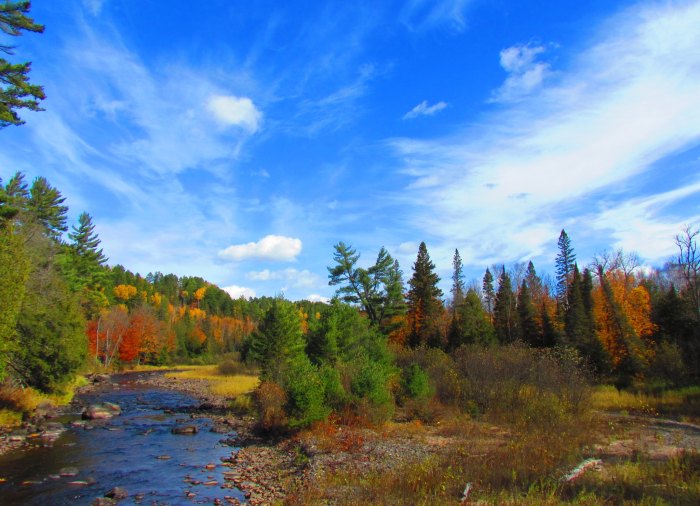
This week longtime Congressman Dale Kildee passed away. Kildee, uncle of current Flint Representative Dan Kildee, represented Flint for over 30 years earning the nickname “the Cal Ripken of Congress.” He was involved in many efforts including some vital early childhood bills and (of course) auto industry support, but one interesting thing that I learned from writer David Dempsey is that Dale was the sponsor of the 1987 Michigan Wilderness Act which created 10 State Wilderness Areas protecting nearly 100,000 acres of old growth forest, dunes, lakes, and rivers including Sturgeon River Gorge.

Thank you Dale for your work on the behalf of Michigan’s wild places! Click for a map of all 18 of Michigan’s Wilderness Areas.

David took this back in October of 2012 in the Sturgeon River Gorge Wilderness. See more in his Porcupine Mountains gallery on Flickr.

Support Michigan in Pictures with Patreon

October 8, 1871: The Demon in the Gale

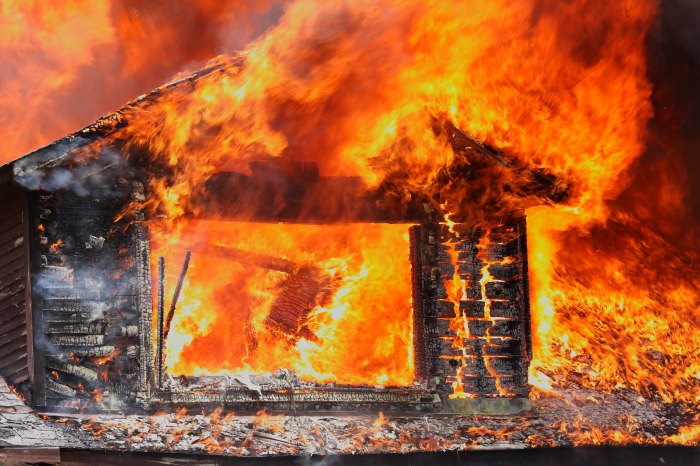
Tinder by Kevin Ryan

Tinder by Kevin Ryan

A sky of flame, of smoke a heavenful, the earth a mass of burning coals, the mighty trees, all works of man between and living things trembling as a child before a demon in the gale. To those who have seen, the picture needs no painting.”
-a history of Sanilac County

The Chicago Fire of 1871 which started on October 8th gets (justifiably) a great deal of attention, but something that is not as well known is the fact that it was only one of a number of major fires across the Midwest that burned millions of acres in October of 1871 and caused over 1200 deaths. Michigan was dealt grievous blows from “The Fiery Fiend” as fires swept across the state, wiping out or endangering entire cities, towns and villages including Holland, Manistee, Grand Rapids, South Haven and Port Huron doing millions of dollars worth of property damage and killing hundreds.

It’s probably impossible for us to fathom what the threat of fire was like in those days. This brief excerpt from a terrifying account account of the burning of Manistee might give a glimmer:

…A bright light came up out of the south, directly in rear of the town, and the fierce gale bearing it on directly toward the doomed city. Those who resided in that part of town, including the writer, rushed to the new scene of danger, the full extent of which few comprehended. The fire had originated two miles south of the city, on the lake shore. It first came upon the farm of L.G. Smith, Esq., which it devoured. Eighty rods north the extensive farm and dairy of E.W. Secor shared the same fate, with all his barns and forage. Another quarter of a mile, and the large farm buildings of Mayor R.G. Peters were quickly annihilated. Here the column of fire divided, the left hand branch keeping to the lake shore hills, and coming in at the mouth; the other taking a northeasterly course and coming in directly south of the town, as before described. Here a small band of determined men, fighting with the energy of despair to protect their homes, kept it at bay till past midnight. But all was vain – at 12:30 o’clock the gale became a tornado, hurling great clouds of sparks cinders, burning bark and rotten wood through the air in A Terrific, Fiery Storm.

Every man now fled to his own house. The fire now came roaring through the dead hemlocks south of the blocks included between Maple and Oak Streets, in the Second Ward. The flames leaped to the summits of the great hemlocks, seventy, eighty or ninety feet high, and threw out great flags of fire against the lurid heavens. The scene was grand and terrible beyond description. To us, whose homes and dear ones and all were in the track of the fire, it was heart-rending.

Read more of these amazing journal style entries from the history of Manistee County. The cause of these fires has been given as a hot dry summer, too many leavings from timbering operations and of course Mrs. O’Leary’s firebug of a cow. There is an interesting theory, however, that the root cause was the earth passing through the tail of a comet. You can read all about it at The Comet and the Chicago Fire where it’s noted that even a steamship passing the Manitou Islands in Lake Michigan noted that they too were on fire.

Kevin took this back in 2009 at a firefighter training in Grand Haven. See more in his Other gallery on Flickr.

Support Michigan in Pictures with Patreon

Riding out the storm on Poe Reef Lightship

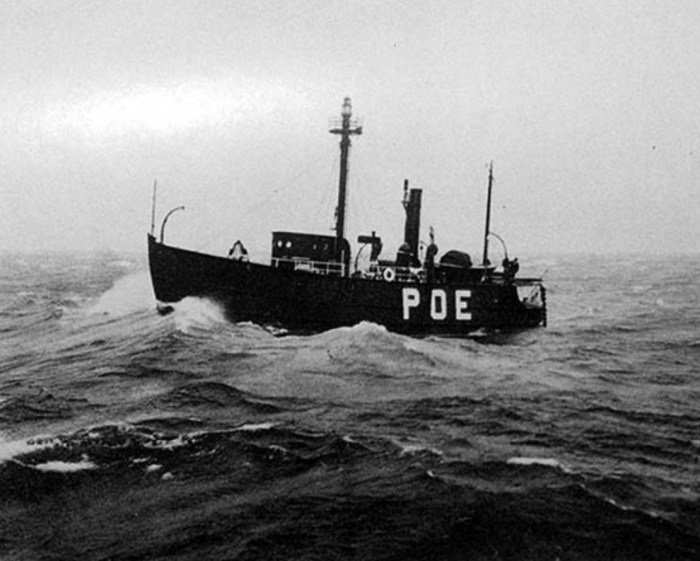
Poe Reef Lightship LV62 riding out a storm on her station

Poe Reef lies just eight feet beneath Lake Huron’s surface between Bois Blanc Island and the Lower Peninsula mainland. Terry Pepper’s Seeing the Light shares the story of Poe Reef Lightship LV62, launched on this day in 1893:

In 1892 two contracts totaling $55,960 were awarded to the Craig Shipbuilding Company in Toledo for the construction of four lightships. Designated as Lightships LV59, LV60, LV61 and LV62, all four vessels were built to similar specifications. Framed and planked of white oak they measured 87′ 2″ inches in length, 21′ 6″ inches in the beam, with a draft of 8 feet. In a cost-cutting effort, the vessels were un-powered, outfitted with only a small riding sail carried on a short after mast. Equipped with a cluster of three oil-burning lens lanterns hoisted on their foremasts, each was also equipped with 6″ steam whistles and hand-operated bells for fog use. Work was completed on the four vessels the following year, and after sea trials, all four were commissioned by the Board and placed into service, LV59 being assigned to Bar Point, LV60 to Eleven Foot Shoal, LV61 to Corsica Shoal and LV62 to Poe Reef.

With the words POE REEF brightly painted in white on her fire engine red hull, LV62 was towed to Poe Reef by the lighthouse tender Marigold, and anchored on station to begin her vigil on September 29, 1893. For the next seventeen years LV62 spent every shipping season faithfully guarding the shoal. With the end of each shipping season, one of the lighthouse tenders would make the rounds of all lightship stations in the Straits area, and tow them into Cheboygan harbor for winter lay-up. While in Cheboygan, necessary repairs and improvements would be made in preparation for the following season. At some time in March or April, the ice would break up sufficiently to allow the vessels to be towed back to their stations to stand guard for yet another season.

Head over to Seeing the Light for more about Poe Reef Lighthouse & the stories of all Michigan’s lighthouses compiled by a champion for their preservation who has gone too soon.

Support Michigan in Pictures with Patreon

Happy Birthday, St Helena

St Helena Light by Joel Dinda

St Helena Light by Joel Dinda

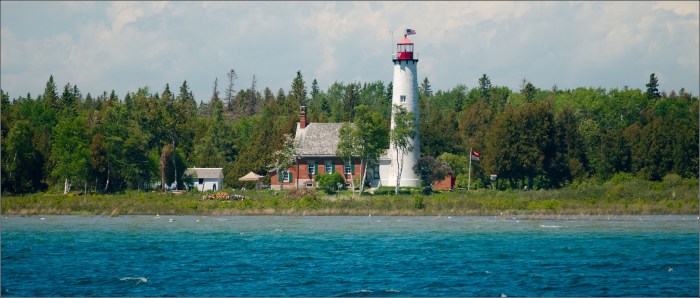
On September 20th way back in 1873, the beacon of the the St. Helena Island Lighthouse was lit for the first time. CMU’s Clarke Historical Library explains:

Because several ships had been wrecked on the dangerous shoals near the island of St. Helena in 1872, Congress authorized construction of a lighthouse at the southeast tip of the island. Since September 20, 1873, the beacon of the St. Helena Lighthouse has helped guide vessels safely through the Straits of Mackinac.

The light was first automated in 1922 and the modern lighthouse uses solar batteries to power the light.

In 1988, the lighthouse was added to the national Register of Historic Places. Recently restored to excellent condition by the Great Lakes Lighthouse Keepers Association, the St. Helena Island Lighthouse continues to light up the Straights and provide a glimpse of the golden age of the Great Lakes’ lights.

Definitely check the Clarke Historical Library out – some great Michigan history there for sure!

Joel took this photo back in 2014 on a Lighthouse Cruise with Shepler Ferry / Great Lakes Lighthouse Keepers Association. See more shots in his Lighthouse Cruise 6/16/2014 gallery.

More lighthouses on Michigan in Pictures!

Support Michigan in Pictures with Patreon

Boating Back in the Day

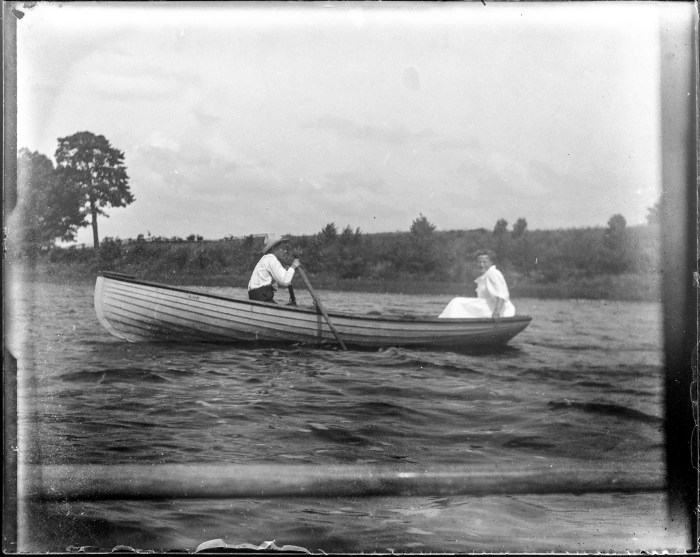
from a 4x5 glass negative by Bill Dolak

from a 4×5 glass negative by Bill Dolak

Bill shares:

The VanBuren County Historical Museum (a great afternoon visit, btw) is sitting on dozens, if not hundreds, of 4×5 glass negatives. Some of them were on display on a light table. I snapped a few with my iPhone and did a quick conversion of one using Snapseed (an iPhone image editor), which was perhaps the first time a “print” had been made from the negative in possibly a hundred years (these types of negatives were popular between the 1880s and the 1920s). Here are a few I “processed” in Lightroom. Sadly, I am sure that these images cannot reproduce the detail that is likely stored on those plates.

You can see more of his scans in the Michigan in Pictures group on Facebook & in his massive Michigan: Van Buren County gallery on Flickr!

20 Years after September 11th

Half Staff by Neil Weaver

Half Staff by Neil Weaver

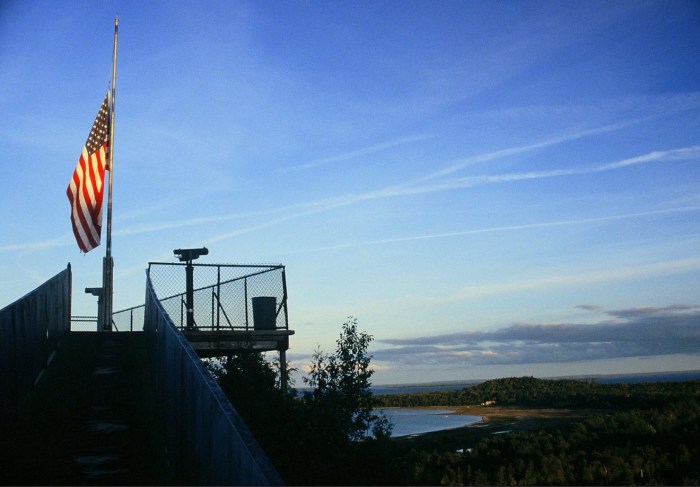
20 years ago this morning, our nation was shattered by the worst terrorist attack in history, and one that still echoes through it. If you want to relive the events of the day, the History Channel has you covered.

Neil took this photo at Castle Rock in St. Ignace just a few days after September 11th. See more in his UP Gallery & view and purchase prints at Neil Weaver Photography.

Support Michigan in Pictures with Patreon

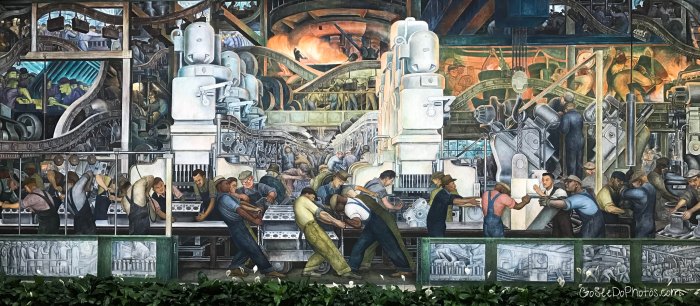
Diego Rivera’s Industrial Symphony

Diego Riviera Mural by Ashleigh Mowers

Diego Rivera Mural by Ashleigh Mowers

“As I rode back to Detroit, a vision of Henry Ford’s industrial empire kept passing before my eyes. In my ears, I heard the wonderful symphony which came from his factories where metals were shaped into tools for men’s service. It was a new music, waiting for the composer with genius enough to give it communicable form.

I thought of the millions of different men by whose combined labor and thought automobiles were produced, from the miners who dug the iron ore out of the earth to the railroad men and teamsters who brought the finished machines to the consumer, so that man, space, and time might be conquered, and ever-expanding victories be won against death.”
― Diego Rivera, My Art, My Life

There’s probably not a better monument to the massive role of labor in building Michigan & the United States than the Diego Rivera’s Detroit Industry murals. Commissioned for the Detroit Institute of Art, these 27 massive paintings that cover the four walls of the Rivera Court at the DIA:

In 1932, Mexican muralist Diego Rivera (1886-1957) began illustrating the walls of what was then the DIA’s Garden Court. Using the fresco technique common in ancient Egypt, Greece, Rome, and the Americas, Rivera created a grand and complex cycle of murals that portray the geological, technological, and human history of Detroit. He also developed an ancient context for modern industry rooted in the belief system of the Aztec people of central Mexico.

Ashley took this photo back in January of 2017. You can see more in her Detroit gallery & on her website!

Support Michigan in Pictures with Patreon