JFK & Detroit’s Black Leaders

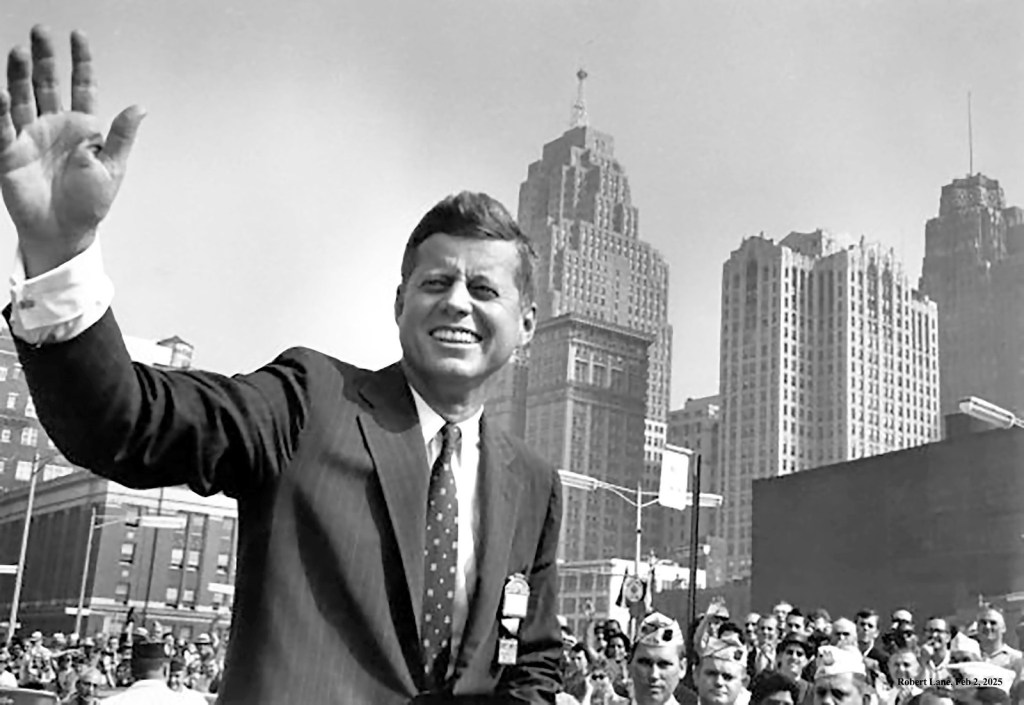
JFK in Detroit, Sept 4, 1960 by Bob

JFK in Detroit, Sept 4, 1960 by Bob

Since it’s both President’s Day & Black History Month, here’s some of both courtesy Michigan Advance who shared that in addition to President John F. Kennedy’s very public appearance in Detroit’s Labor Day parade in 1960, a little known meeting in June of 1960 with a group of Detroit’s Black leaders may have been what boosted him to victory over Nixon:

Some Detroiters point to a little known June 1960 private meeting that pushed Kennedy over the top with the growing African American demographic in Michigan and throughout the Midwest.

A group of Detroit Black Democratic leaders that included UAW official Horace Sheffield Jr., business owner Forrest Green, longtime Democratic stalwart Joseph Coles and Detroit Common Council member William Patrick Jr. met with Kennedy at his home. The event was set up by Williams, Michigan’s popular governor.

Kennedy flew to the party on a private plane, according to Saul Green, Forrest’s son and future U.S. attorney for Michigan’s Eastern District. “[Kennedy] had an opportunity to gather these respected Black thought leaders to help make his case [for the presidency],” recalled Green, who was a 12-year-old Tappan Junior High student at the time.

There, they urged the Massachusetts U.S senator to adopt a stronger civil rights platform.The Rev. Horace Sheffield III said his father made the case “What are you going to do for Black folks?” said Sheffield III about the question that his father likely had for Kennedy.

Head over to the Michigan Advance for more including a great photo.

Bob says that he was there that Labor Day. See more in his Detroit gallery & follow him on Flickr for his latest.


Support Michigan in Pictures with Patreon

Michigan’s Ultimate Snow Day: The Blizzard of ’78

The Blizzard of '78 by John Russell

The Blizzard of ’78 by John Russell

“The most extensive and very nearly the most severe blizzard in Michigan history raged throughout Thursday January 26, 1978 and into part of Friday January 27. About 20 people died as a direct or indirect result of the storm, most due to heart attacks or traffic accidents. At least one person died of exposure in a stranded automobile. Many were hospitalized for exposure, mostly from homes that lost power and heat. About 100,000 cars were abandoned on Michigan highways, most of them in the southeast part of the state.” -National Weather Service Ann Arbor Meteorologist in Charge, C.R. Snider on January 30th, 1978

48 years ago one of the most powerful blizzards in Michigan history brought the state to a standstill. In her feature on historical Michigan snow days in the now defunct Seeking Michigan,  Jessica Miller of the Archives of Michigan related:

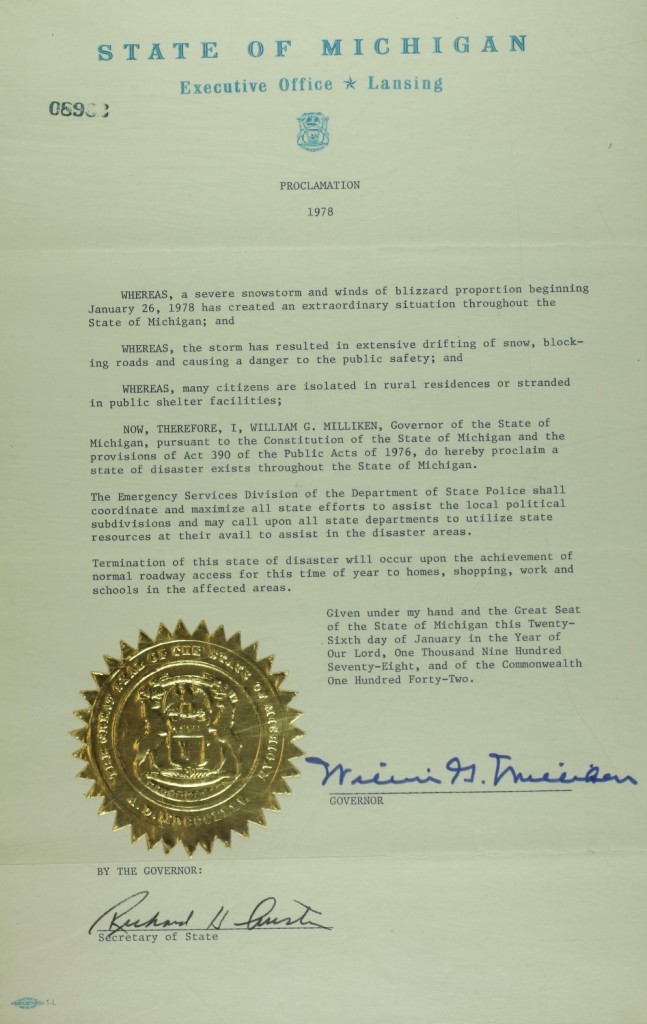
On January 26-27, 1978, snowstorms with fifty-to-seventy-mile per hour winds pummeled much of Michigan. Snowfall totals ranged from eighteen inches in Lansing to an incredible fifty-one inches in Traverse City. More than 100,000 cars were abandoned on roads and highways, and travel was impossible for days. Governor William G. Milliken declared a state of emergency on January 26 (See the image below.) and activated the National Guard to assist with the cleanup. The governor also requested financial assistance from the federal government and estimated damage totals to be more than $25 million, not including lost productivity from workers who were unable to get to their jobs.

Regarding the photo, John wrote: Marty Lagina stands on the frozen pier at the Great Lakes Maritime Academy on January 29, 1978, viewing the capsized training vessel Allegheny, which capsized from ice buildup during the Blizzard of ’78. This image was on assignment for TIME magazine, who had seen my b&w image on the UPI wire and wanted a color image. Marty and I were lucky – the sky cleared and the wind stopped for about 20 minutes, then the storm began again. I wondered at the time who TIME knew to make that happen…

See the latest from John on his TC Photo Facebook page & stay warm folks!!

Support Michigan in Pictures with Patreon

One Hundred Years of Flying High at Suicide Hill

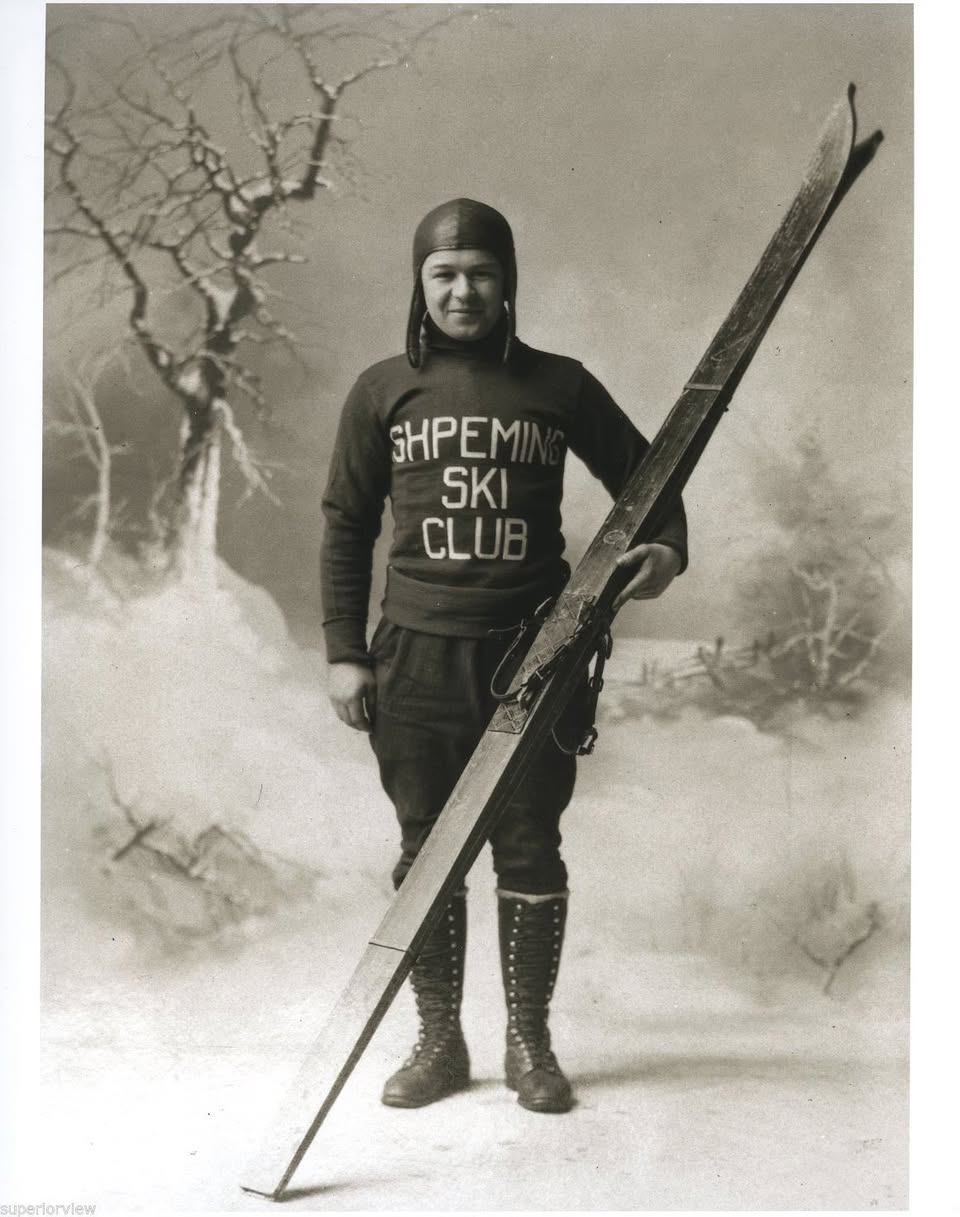
Suicide Hill Ski Jump by Ishpeming Ski Club

Suicide Hill Ski Jump by Ishpeming Ski Club

The annual UP Ski Jumping Tournament is celebrating its its 139th anniversary this year January 16-18, 2026, and aptly named “Suicide Hill”, the longtime site of the tourney, will be celebrating its 100th anniversary!

The competition is hosted by the Ishpeming Ski Club every winter on MLK Weekend at the UP Nordic Ski Complex. It lasts three days and in addition to the marquee event, the club hosts Junior National Qualifiers, a cross-country ski race, and a Target Jump event where competitors try to land as close as possible to a predetermined mark on the hill. They also have bonfires, concessions, beer tent & fireworks show.

The Ski Club has some great information about the colorfully named Suicide Hill explaining:

Suicide Hill got its name when in 1926 Walter “Huns” Anderson was injured on the hill. The local newspaper reporter, Ted Butler, said “Sure it’s a good hill, but why not have a little color about it. I gave it the name a few days before it was used in 1926. Walter Anderson fell in practice a few days before the meet and was badly hurt. In the stories I sent out about him, I called it Suicide Hill and the name stuck”. “We don’t like the name ‘Suicide Hill,” James Flaa, club official protested, “because it keeps riders away. It creates the wrong impression of what troubles await them”. Actually, it’s one of the best hills in the country. Even Johanna Kolstad, the fine Norwegian woman skier, says she has only seen one better hill in the country. But the name did stick, and it has turned out to be a fine, competitive, and safe hill.

Pure Michigan shared some pics and added a reminder that the competition is just a few miles away from the U.S. Ski & Snowboard Hall of Fame and Museum, providing an opportunity to explore and celebrate the history of the sport while visiting the “birthplace of American skiing.”

Support Michigan in Pictures with Patreon

Yesterday & Today with Rephotographing Michigan

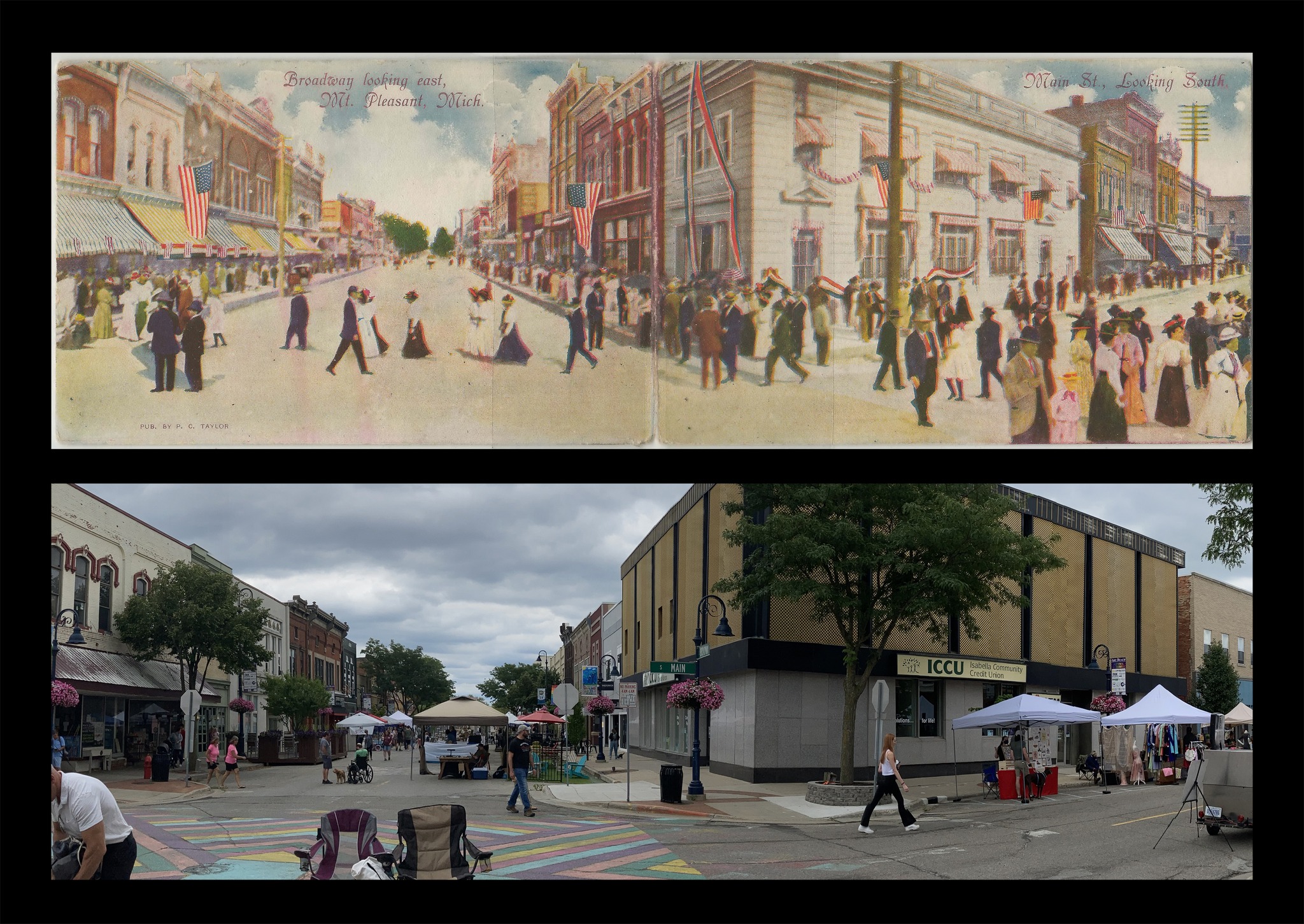
Downtown Mt Pleasant by Rephotographing Michigan

Downtown Mt Pleasant by Rephotographing Michigan

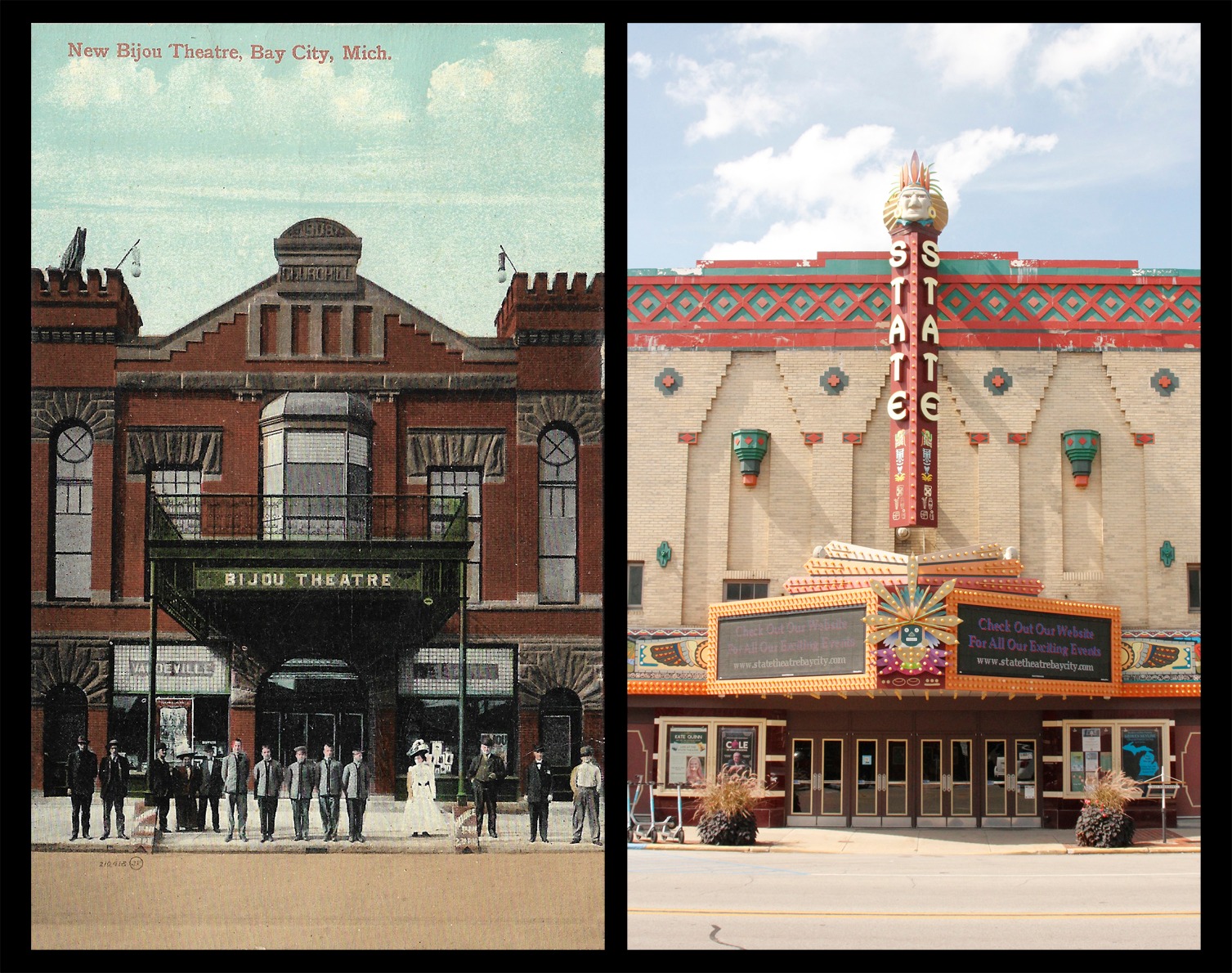
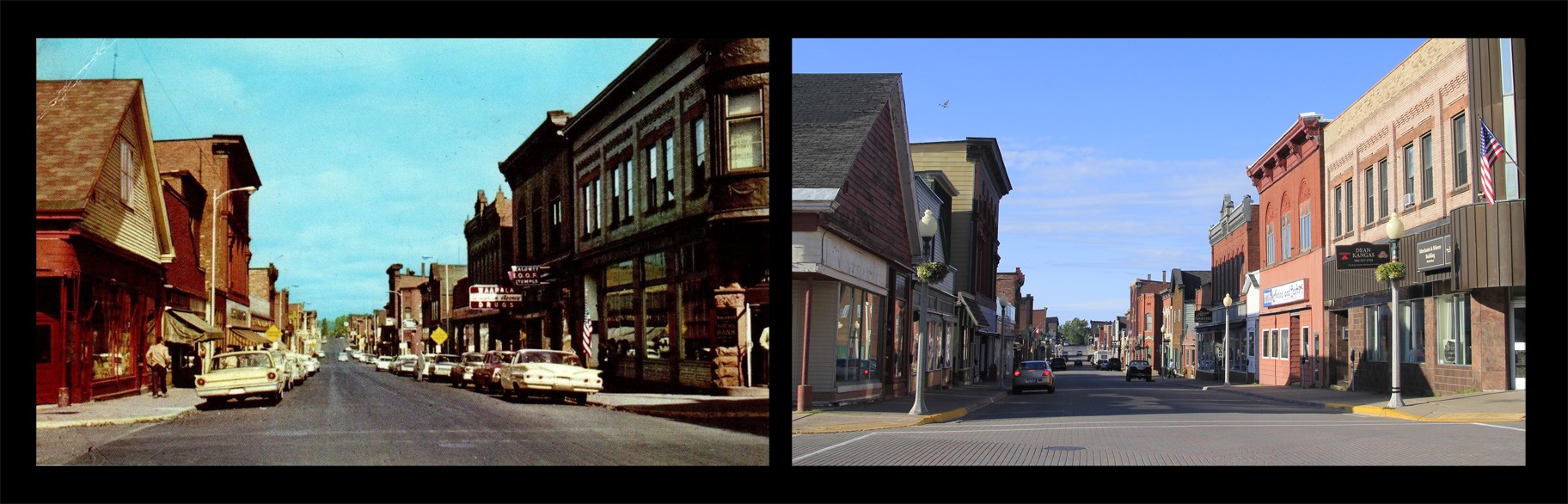
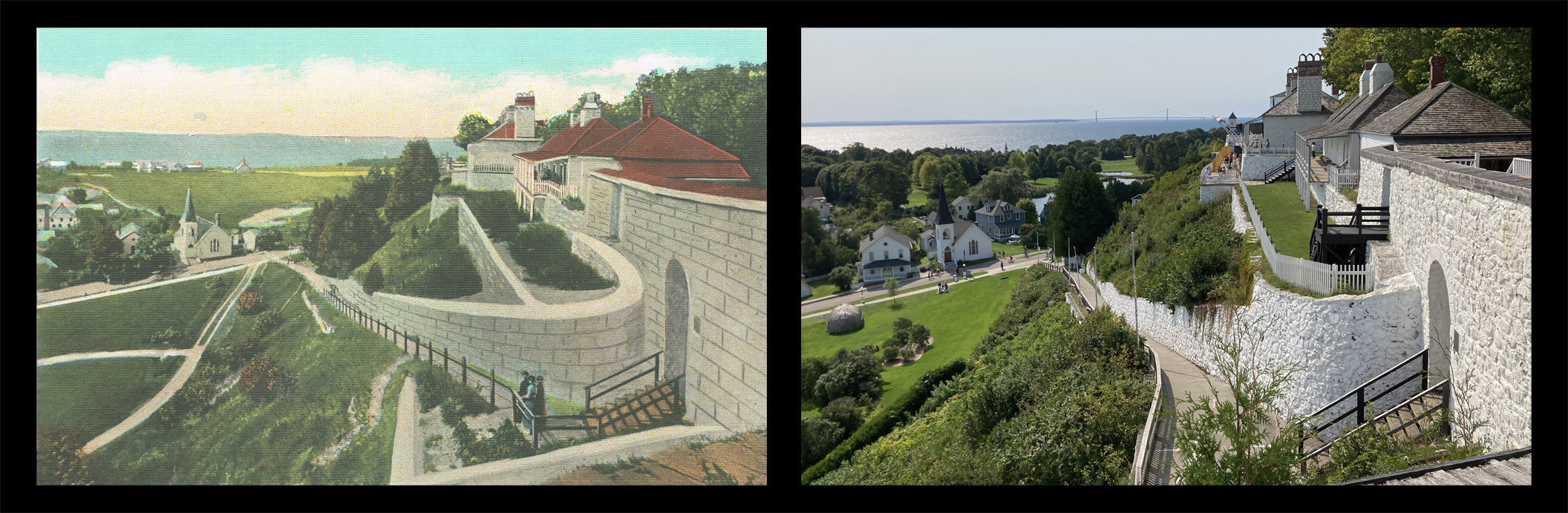
Nine years ago I featured Rephotographing Michigan, Paul Evans’s photographic exploration of the environmental and economic changes Michigan has experienced. I’m happy to report that Paul is still going strong and to share a few of his excellent yesterday & today photos.

Check out yesterday & today scenes from Bay City, Petoskey, Calumet, Lansing & Mackinac Island below and follow Rephotographing Michigan on Facebook for lots more!

Support Michigan in Pictures with Patreon

Divco Delivery from the Detroit Industrial Vehicle Company

Nostalgia Time by otisourcat

Nostalgia Time by otisourcat

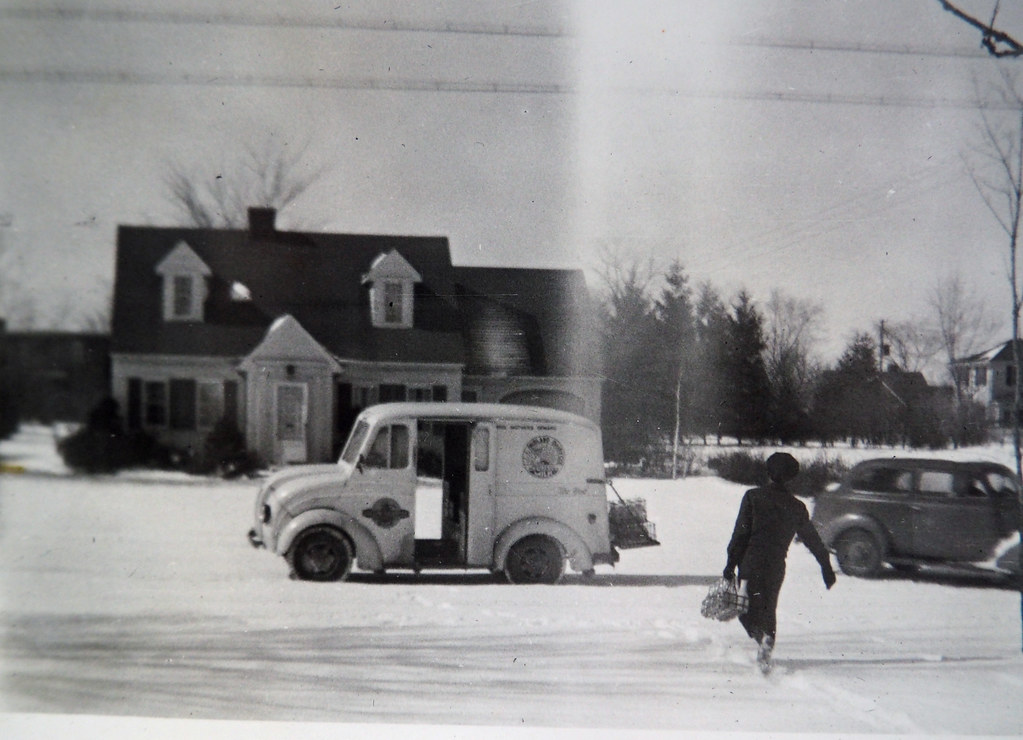
The Divco Club of America shares the fascinating history of the iconic Divco Delivery Truck:

In 1922, George Bacon, Chief Engineer for the Detroit Electric Vehicle Company, designed a remarkable new milk delivery truck. It could be driven from four positions, front, rear, or either running board. But battery power was no match for winter weather, heavy loads (such as milk) or long days on the city streets. His employer balked at making a gasoline powered truck, so Bacon and other investors formed the Detroit Industrial Vehicle Company (D.I.V.CO.) to produce his invention using a LeRoi gasoline engine. After testing a prototype in 1924, and 25 more prototypes with the Detroit Creamery in 1925, Bacon and his investors were ready to go into business.

Read on for a whole lot more about these classic vehicles!

Otisourcat shares that this photo shows a milk delivery on Nelson Street in Midland circa 1940. Head over to their Flickr for the latest.
Support Michigan in Pictures with Patreon

Michigan rolling out Semiquincentennial license plates for 2026

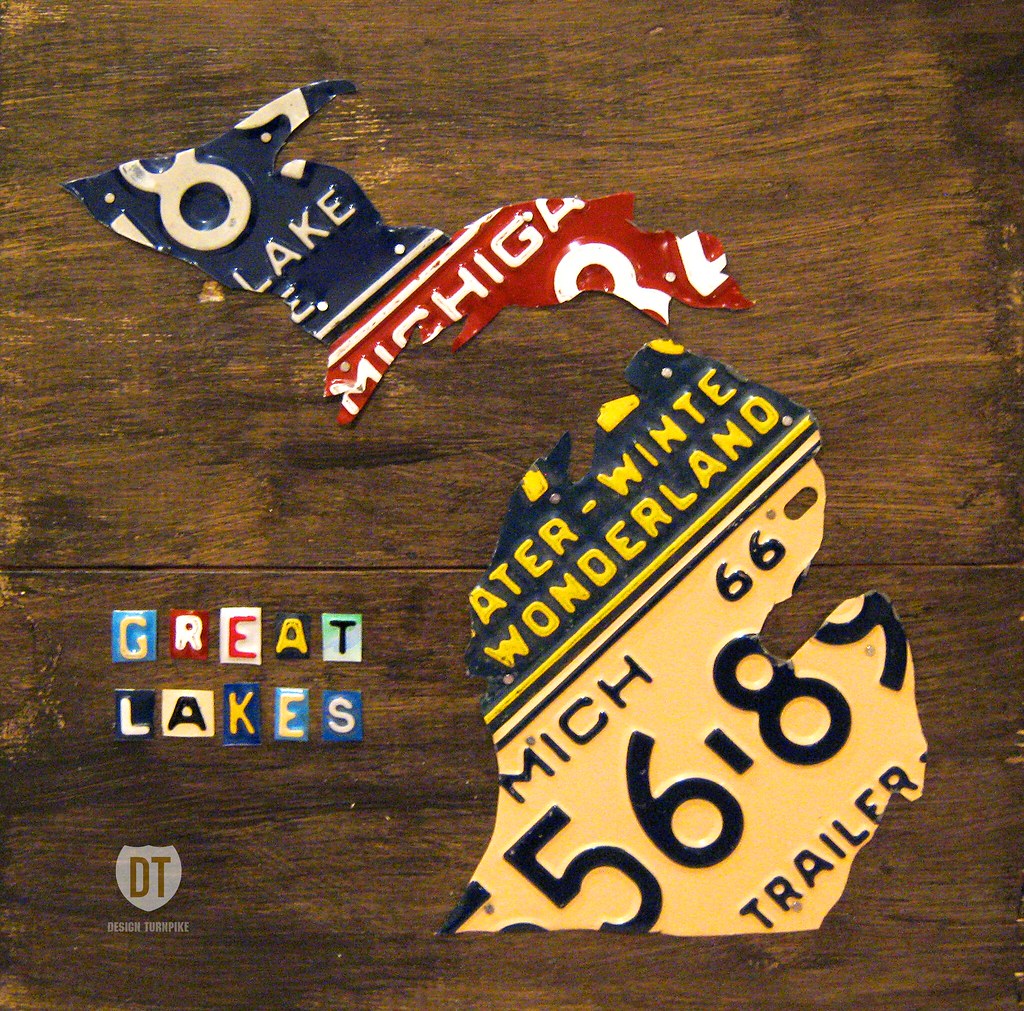
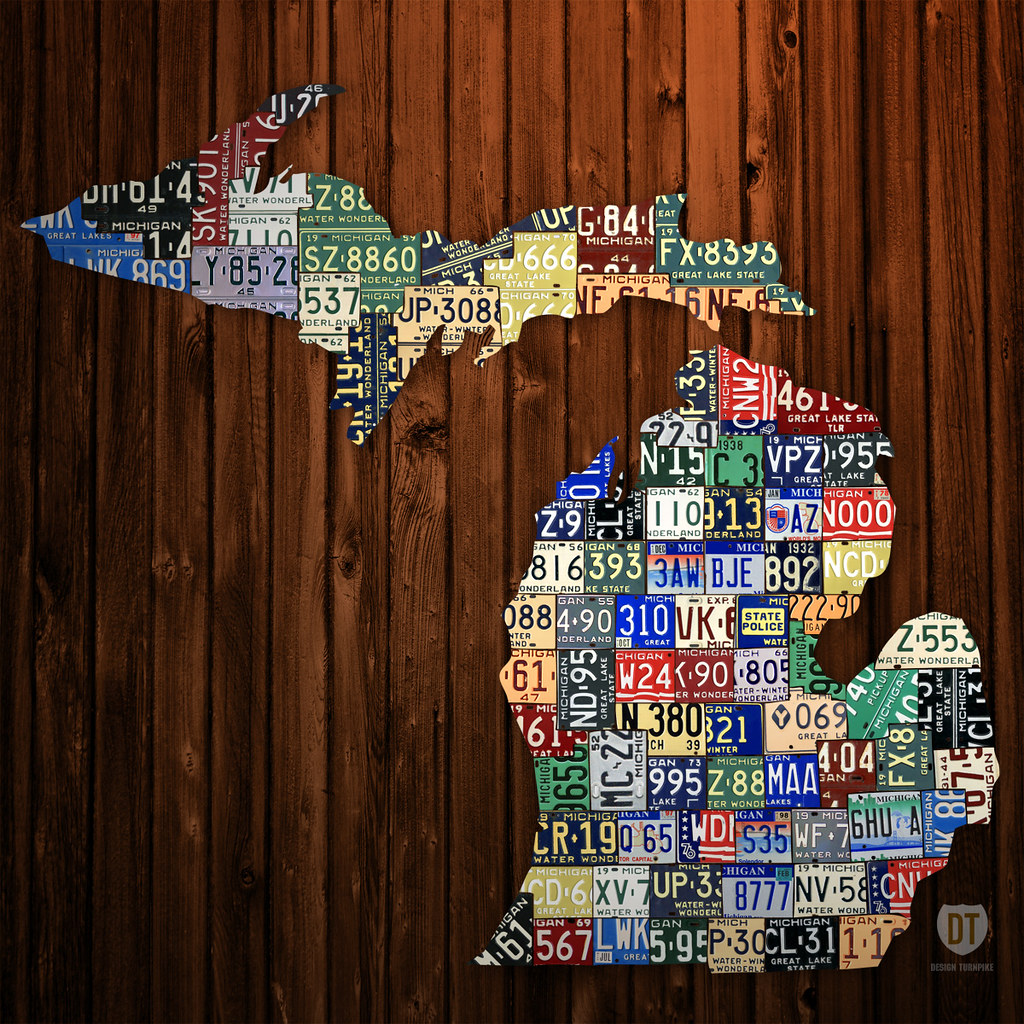
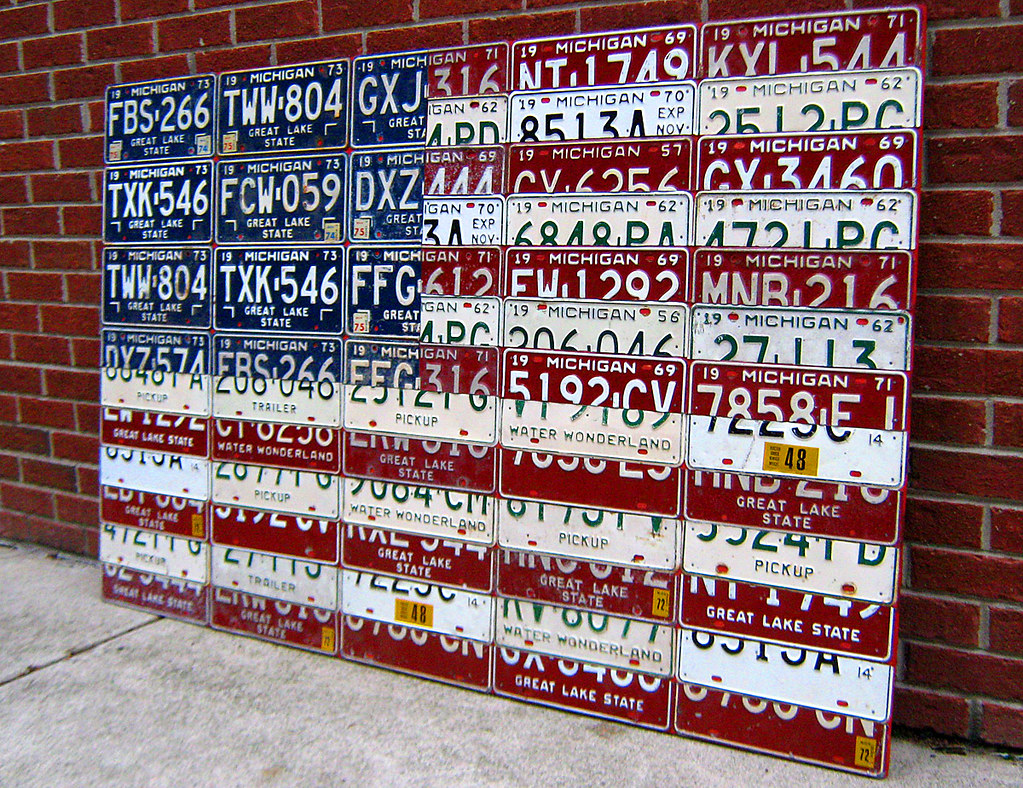
Bicentennial License Plate Map - Michigan by design turnpike

Bicentennial License Plate Map – Michigan by design turnpike

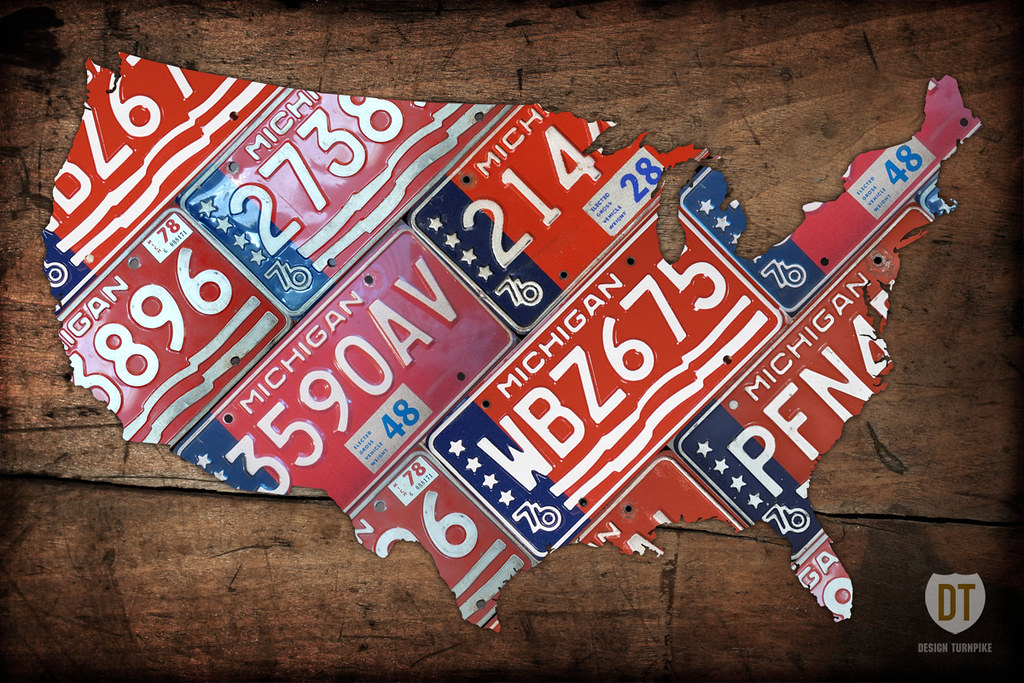
I’m old enough to remember the Bicentennial craze of 1976 from Sam the Eagle to Michigan’s iconic bicentennial license plates. Get ready drivers, because Bridge Magazine shares that Michigan is bringing back the red, white and blue retro license plate next month in celebration of America’s 250th anniversary: Beginning Jan. 2, Michiganders will be able to order a new red, white and blue semiquincentennial plate that is modeled after the 1976 bicentennial design. The plate features updated patriotic elements, including stars and stripes, and will be available through the end of 2026.

The photos that David of Design Turnpike shared years ago of his original license plate artwork were so perfect for this post, so I was happy to see that he’s still in business! Follow Design Turnpike on Facebook and view & purchase his work on his website.

Support Michigan in Pictures with Patreon

The Spartan roots of the Polar Express

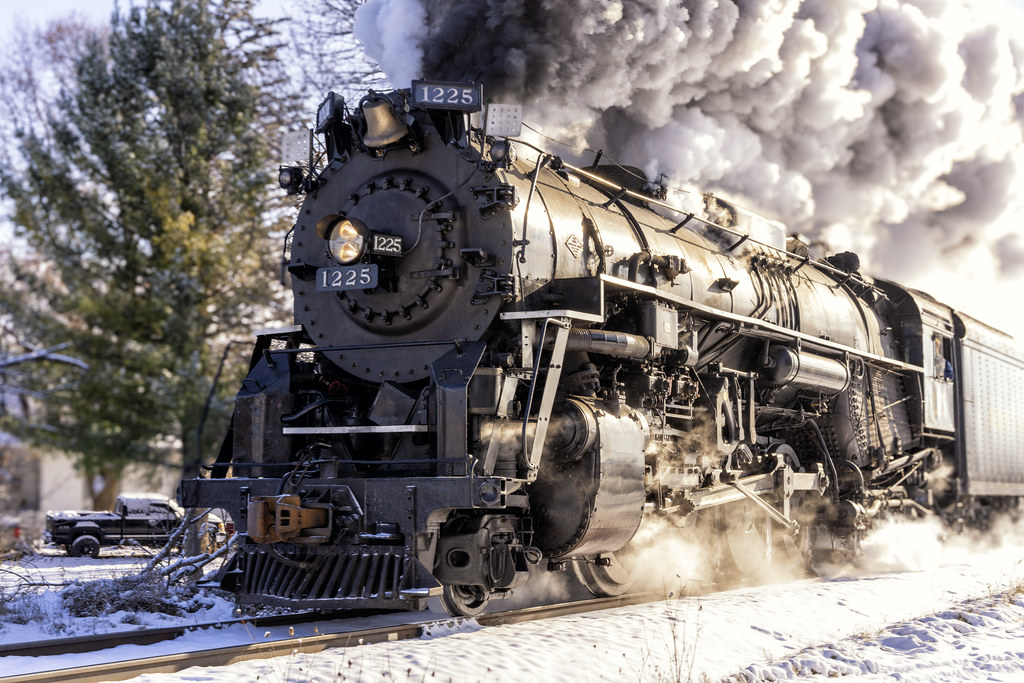
Bannister Mi Polar Express by Charles Bonham

Bannister Mi Polar Express by Charles Bonham

I realize that I should add that although you can book tickets to ride the North Pole Express from Owosso, they sell out very early so I will try and shout this out earlier next year!!

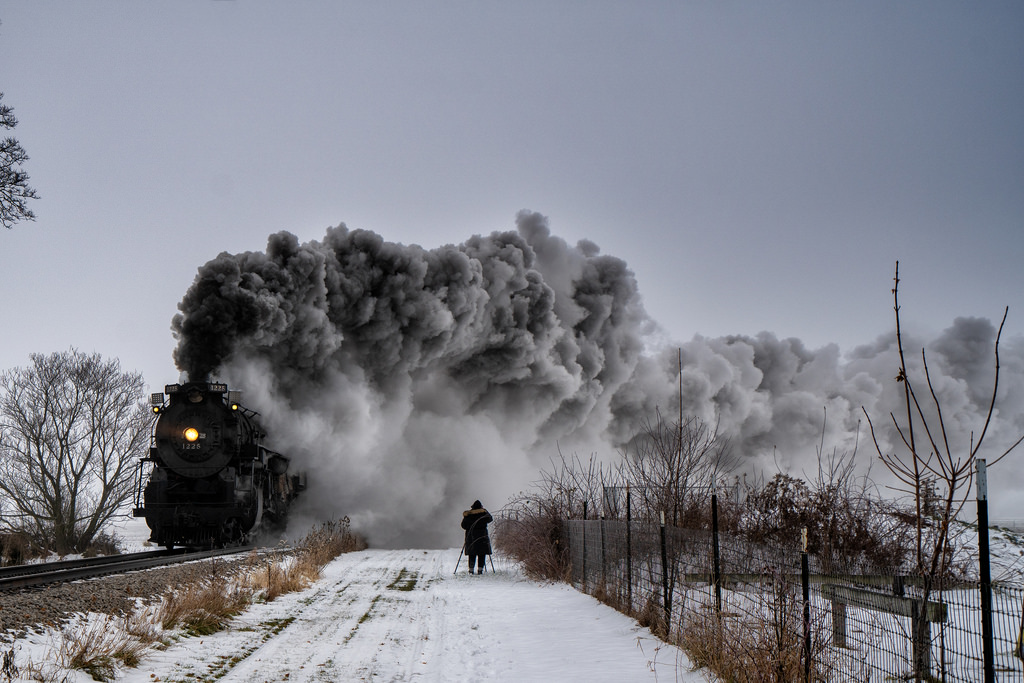
The steam locomotive Pere Marquette 1225 was first used by the Pere Marquette Railway to transport products between Detroit, Toledo, Flint, Saginaw, Grand Rapids and Chicago for a decade before being retired in 1951 when the Railway merged with Chesapeake and Ohio Railway who favored diesel locomotives. It was then given to a reluctant Michigan State University where it sat for 25 years. Spartan Newsroom explains how Pere Marquette 1225 returned to service & became the inspiration for beloved children’s book The Polar Express:

The Pere Marquette 1225 sat untouched on MSU’s campus just south of Spartan Stadium until 1969, when a group of students took interest in the steam locomotive. Randy Paqueete, a Michigan State alum and then-member of the MSU Railroad Club, suggested that the group try to restore the engine instead of it just being on display.

The club’s first goal was to get the steam locomotive up and running to transport students to and from football games. “These students had some crazy ideas. We’re going to go to away football games. We’re going to go to Florida. We’re going to go to Aspen. We’re going to run charters,” Struck said. In 1975, after five years of work, the students were successful in firing up the boiler long enough to sound the whistle. This victory did not come easy, as they needed to put 245 pounds of steam pressure into a 400-ton boiler, which the university was nervous about.

“Ultimately, we got permission,” Paqueet recalled. “We jumped through a lot of hoops but we got licensed. We had to do it on a Sunday when there weren’t very many people on campus.”

The students started the fire for the boiler at 4 a.m., and by 8 a.m., the steam engine had enough pressure to sound the whistle. For the first time in two decades, the whistle of the Pere Marquette 1225 was heard, proving the restoration process on the locomotive to be a success.

The legacy of the Pere Marquette 1225 is not limited to MSU’s campus. Author Chris Van Allsburg, who wrote “The Polar Express” children’s book the animated movie was based on, was inspired by this same steam engine during his childhood. Growing up in Grand Rapids, Allsburg frequently visited MSU on the weekends for football games and would see the locomotive on display. When writing the book he remembered the steam engine he played on as a child, and the model number 1225, which also coincidentally represented Christmas Day. During production of the film, animators were given blueprints of the Pere Marquette 1225, allowing them to accurately recreate the train. They also made frequent visits to Owosso, Michigan, where the locomotive was eventually relocated, to record its authentic sound to use in the movie.

Here’s a few more shots by Charles of Pere Marquette 1225 from this year along with one of a photographer getting the shot that I shared back in 2018. For sure head over to Flickr to check out more in his Steam Engine, Railroad Photos gallery.

Support Michigan in Pictures with Patreon

Yesterday & Today with Michigan’s Christmas Tree Ships

USCG Cutter Mackinaw with a load of Christmas Trees by MightyMac.org

USCG Cutter Mackinaw with a load of Christmas Trees by A.M. / MightyMac.org

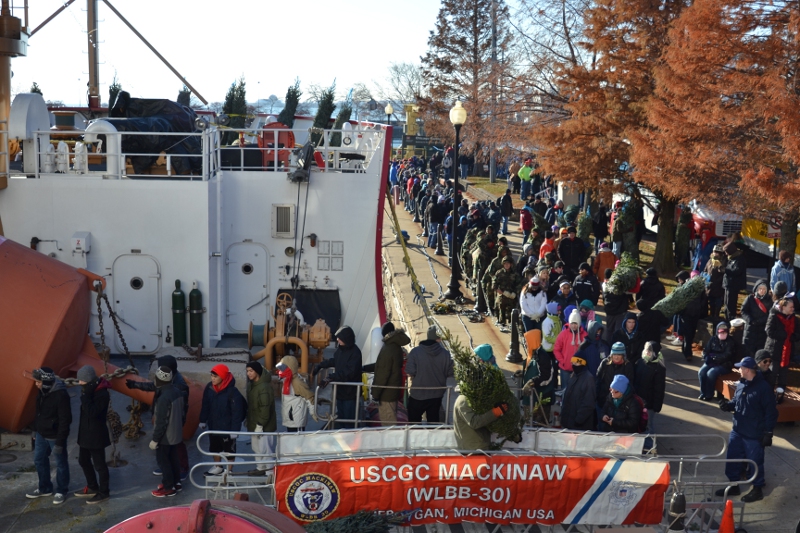
MightyMac.org is the leading resource for Mackinac Bridge news & photos. On Monday shared this shot of the USCG Cutter Mackinaw passing under the Mackinac Bridge Saturday on its journey to Chicago with 1,200 Christmas trees for families in need aboard. The ship is scheduled to arrive today (Friday, December 5th) and if you’re in the Windy City, you can head over to the Chicago Christmas Ship for all the info on the ship, the Christmas tree distribution, and how you can support this cool project.

The annual journey honors the tradition of the original Christmas Tree Ship Rouse Simmons which sank in 1912 in a storm during its annual transit from northern Michigan to Chicago. Way back in 2006, the National Archives shared that the saga of the Schuenemann family and the Rouse Simmons is a microcosm of Great Lakes maritime history. Their excellent article says (in part):

The 1868 peak in sail-powered ships on Lake Michigan also marked the year the 123-foot Rouse Simmons was launched from Milwaukee’s shipyards. The ship was built by the firm of Allan, McClelland, and Company, one of Milwaukee’s preeminent shipbuilding firms …In the early 1870s, the Rouse Simmons joined the sizeable shipping fleet of wealthy lumber magnate and philanthropist Charles H. Hackley of Muskegon, hauling loads of lumber for Hackley’s fleet from company mills to the various markets around the lake for roughly 20 years.

By the late 19th and early 20th centuries, the popular German tradition of decorating an evergreen tree in the home was widely practiced, and it was not uncommon for a handful of lake schooners to make late-season runs from northern Michigan and Wisconsin loaded with thousands of Christmas trees for busy Chicago waterfront markets. Estimates of the number of Christmas schooners vary, but perhaps up to two dozen vessels in any season delivered evergreens to markets in Great Lakes states.

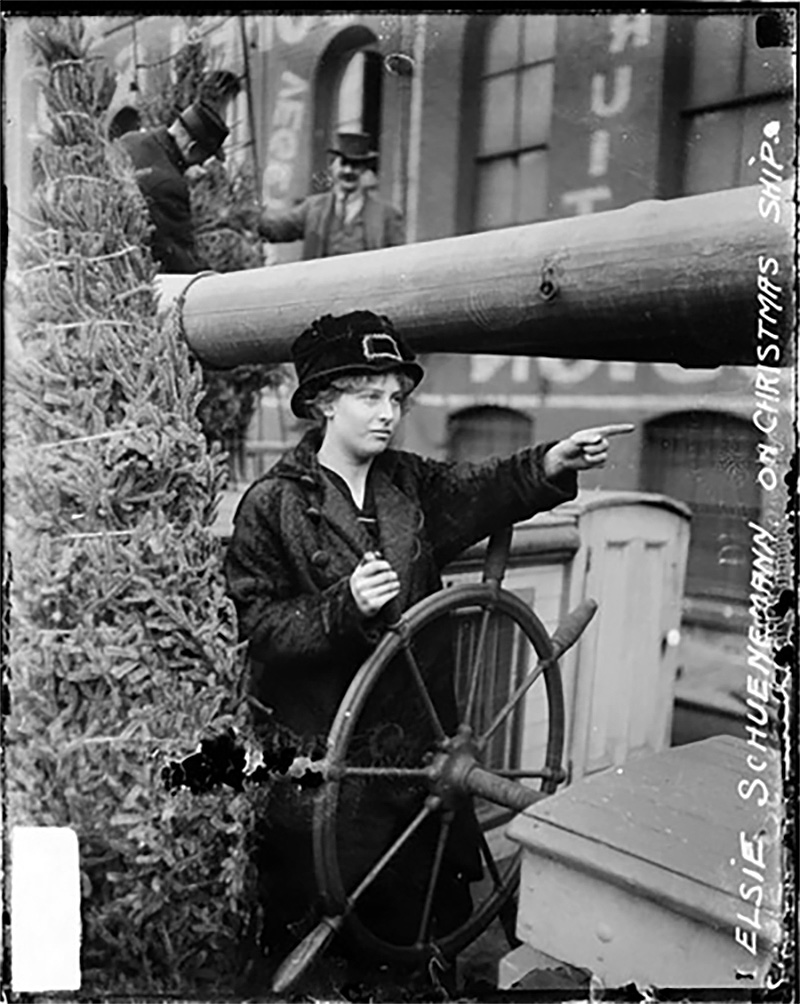
In Chicago, most vessels, including the Rouse Simmons, sold the trees directly from their berths along the Chicago River’s Clark Street docks. Electric lights were strung from the schooner’s bow to stern, and customers were invited to board the ship to choose their trees. In addition to selling Christmas trees, many boat operators, including Schuenemann, made and sold wreaths, garlands, and other holiday decorations. Barbara Schuenemann and her three daughters (Elsie is pictured above) helped make and sell these items as part of the family’s holiday trade.

You can read on for much more about Herman Schuenemann’s long career as “Captain Santa” which tragically came to an end on Friday, November 22, 1912 when the Rouse Simmons, heavily laden with 3,000–5,000 Christmas trees filling its hold & deck, left the dock at Thompson, Michigan looking “like a floating forest.” Sadly, the Rouse Simmons sailed into a powerful winter storm on the lake that sent her and several other ships including the South ShoreThree Sisters, and Two Brothers to the bottom of Lake Michigan.

Here’s a photo of Elsie Schuenemann at the helm of the Rouse Simmons along with one of the offloading in Chicago. Also be sure to check out a great video on the wreck of the Rouse Simmons by Richie Bravo.

Support Michigan in Pictures with Patreon

Rosa Parks was tired of giving in

The Rosa Parks Bus by Rafael Peixoto Ferreira

The Rosa Parks Bus by Rafael Peixoto Ferreira

“The only tired I was, was tired of giving in.” -Rosa Parks

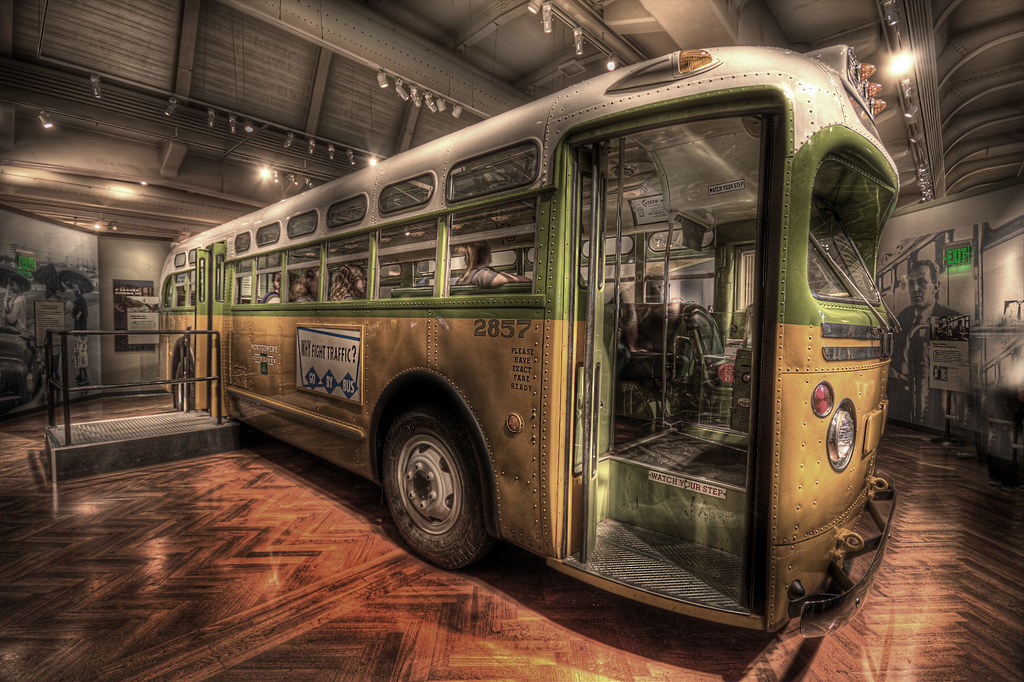
70 years ago today on December 1, 1955, African-American seamstress Rosa Parks was arrested for failing to give up her seat on a Montgomery city bus to a white man. This broke existing segregation laws, and many believe her courageous act sparked the Civil Rights movement. The Henry Ford has a detailed page on the Rosa Parks bus that the museum was able to purchase the bus at auction for $492,000:

After sitting unprotected in a field for 30 years, it is not surprising that The Rosa Parks bus needed a substantial amount of work. Its seats and engine had been removed, many windows were broken, metal had rusted through and the lime, white and gold paint job was a mere shadow of its former self. Our experienced conservation staff carefully examined the vehicle and consulted with various experts.

Three interested companies bid on the extensive restoration work, and finally, MSX International, an automotive engineering and technical services firm headquartered in Southfield, Michigan, was selected to perform the work at a cost of over $300,000. Museum and MSX employees researched every detail of the bus so that the restoration would be truly authentic. Original material was reused wherever possible and original parts from identical 1948 GM buses were used when necessary. Our goal was to restore the bus to its condition in 1955—a seven-year-old urban transit coach.

I couldn’t think of a more fitting image for this than the Rosa Parks bus, just one of many amazing relics of American history that are displayed at the Henry Ford (see their exhibits). See more in Rafael’s great Detroit gallery.

Here’s Rosa Parks relating the story of that day to the BBC.

Support Michigan in Pictures with Patreon

91 years of Detroit Lions Thanksgiving Day football!!

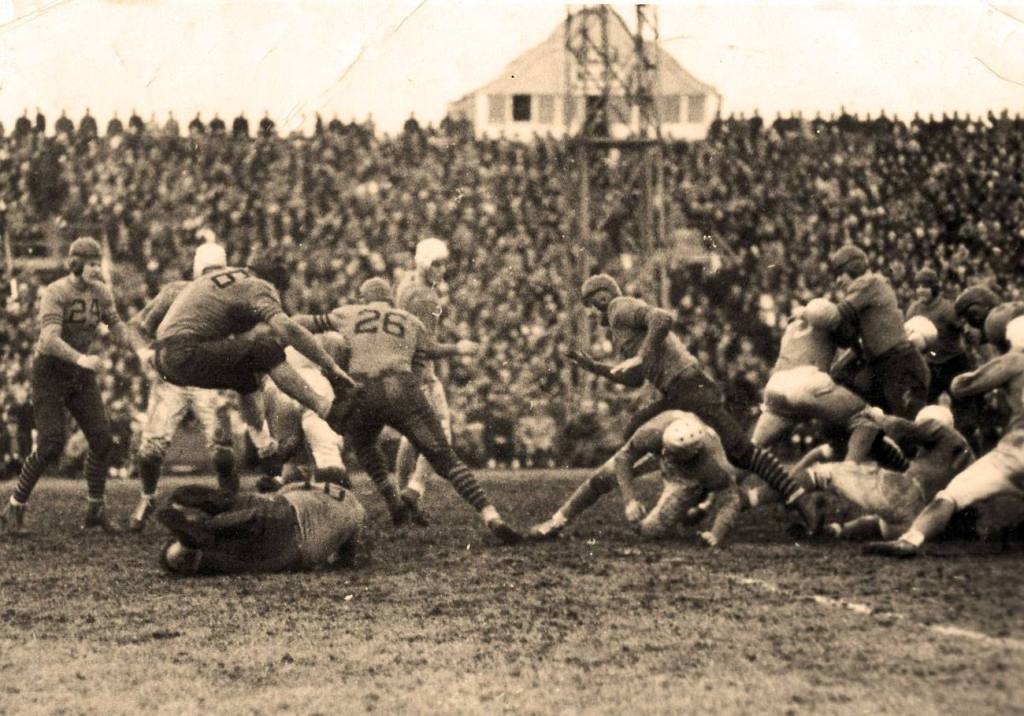
Detroit's first Thanksgiving Day game 1934

Detroit’s First Thanksgiving Day Game 1934

I’m thankful for the Lions being a solid football team, for the Pistons leading the Eastern Conference, for friends & family & the turkey I am about to cook and for all of you readers!! Thank you for keeping this interesting and I hope that whatever your plans are, that you take some time to give thanks to those in your life who make it better.

The Detroit Lions will face divisional foe Green Bay Packers in today’s 1pm Thanksgiving Day football matchup. It’s the anniversary of the first-ever NFL Thanksgiving Day game that featured the Detroit Lions and the undefeated Chicago Bears who won the game 19-16. It was also the first year of Detroit Lions football!

The Detroit Historical Museum shares that in 1934 the Portsmouth Spartans made the wise decision to leave Portsmouth, Ohio and rebrand as the Detroit Lions. The Lions have played every Thanksgiving Day since 1934 (except for 1939 to 1944 during World War II) due to the influence of the team’s first owner George Richards who also owned the WJR radio station & whose marketing savvy was a big part of the early success of the National Football League.

In other Lions news, the team made an agreement with Eminem to produce halftime shows. For his first act, Em has lined up Detroit-born Hall of Fame & Grammy winning rocker Jack White along with fellow Detroiter & gospel musician CeCe Winans who will sing the national anthem. And yesterday, they announced the unretirement of All-pro center Frank Ragnow!

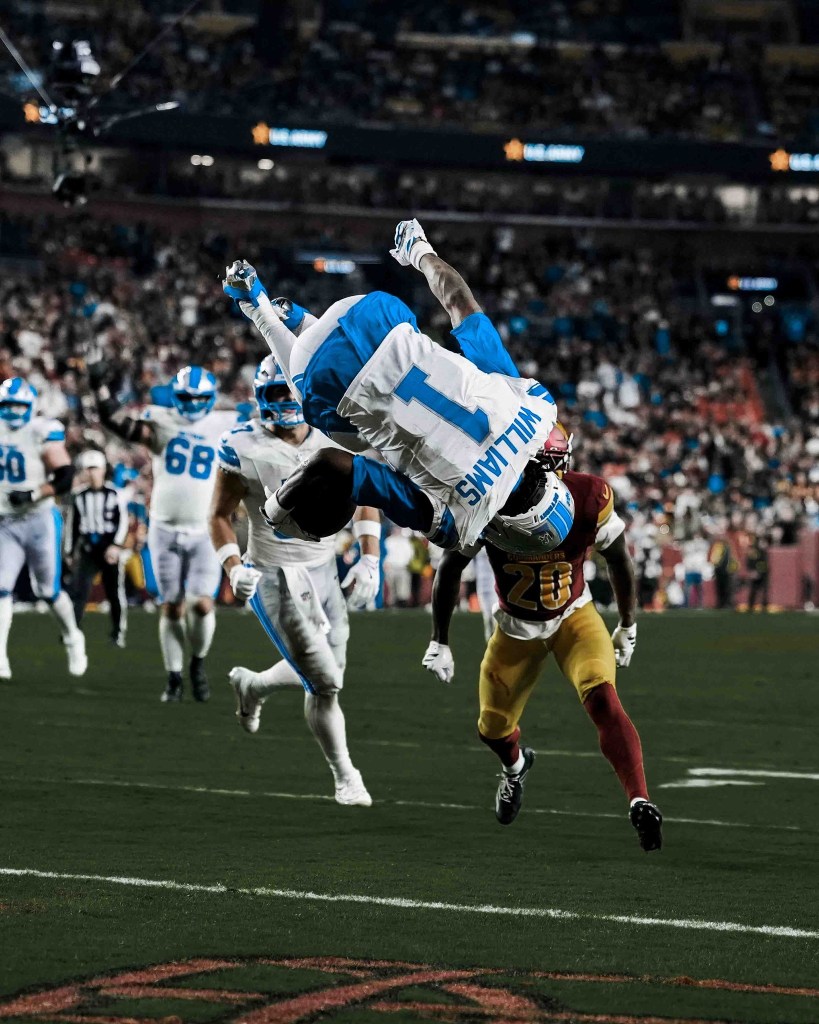
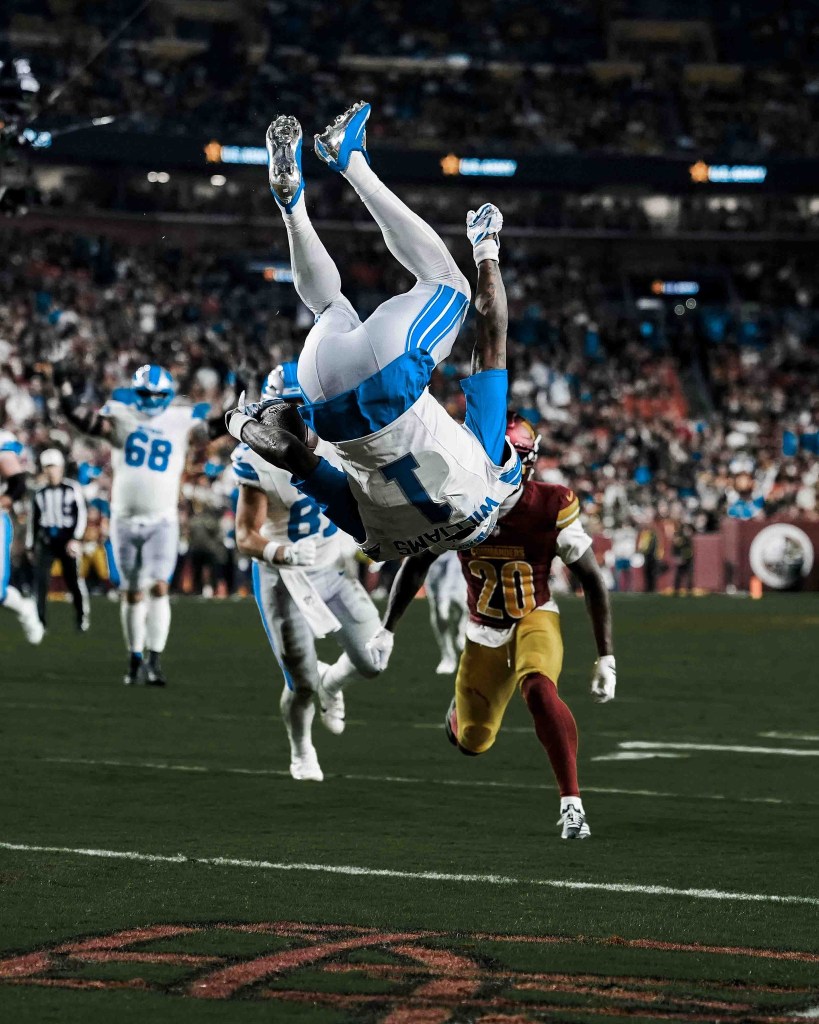
OK here’s a few photos from the Detroit Lions of Jameson Flippin’ Williams and a look at the Lions throwback 2025 Thanksgiving Day uniforms to take us out…


Support Michigan in Pictures with Patreon