Passing Pluto

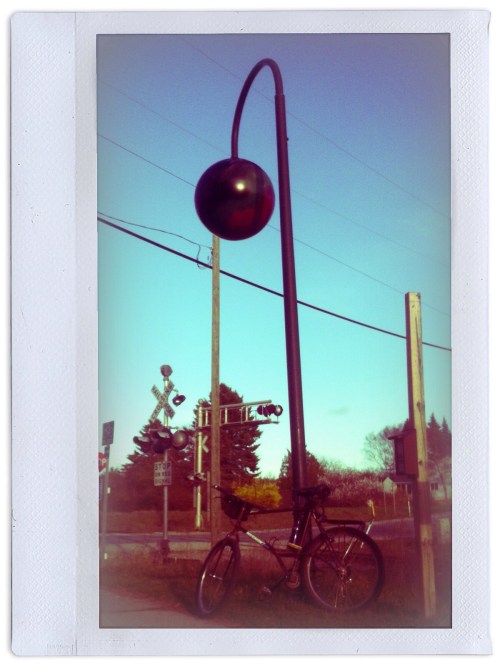
Charons Crossing aka Pluto

Charon’s Crossing, photo by Andrew McFarlane

Anyone remember Hipstamatic? This is a shot of Pluto in Dave Kirby’s cool installation of the planets along the TART trail in Traverse City (created prior to the de-planetization of Pluto). I don’t usually feature my own photos here, but I had to find something to celebrate NASA’s historic 3,000,000,000 mile journey to Pluto:

After a decade-long journey through our solar system, New Horizons made its closest approach to Pluto Tuesday, about 7,750 miles above the surface — roughly the same distance from New York to Mumbai, India – making it the first-ever space mission to explore a world so far from Earth.

“I’m delighted at this latest accomplishment by NASA, another first that demonstrates once again how the United States leads the world in space,” said John Holdren, assistant to the President for Science and Technology and director of the White House Office of Science and Technology Policy. “New Horizons is the latest in a long line of scientific accomplishments at NASA, including multiple missions orbiting and exploring the surface of Mars in advance of human visits still to come; the remarkable Kepler mission to identify Earth-like planets around stars other than our own; and the DSCOVR satellite that soon will be beaming back images of the whole Earth in near real-time from a vantage point a million miles away. As New Horizons completes its flyby of Pluto and continues deeper into the Kuiper Belt, NASA’s multifaceted journey of discovery continues.”

Read on for more and definitely check out the New Horizons Mission at NASA for lots more about our mission to explore Pluto, its moons and the Kuiper Belt at the furthest reaches of our solar system.

More science on Michigan in Pictures.
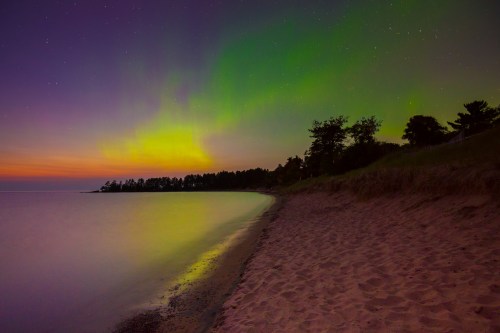
When Day and Night Collide

When Day and Night Collide

When Day and Night Collide, photo by Eric Hackney

We got some great Northern Lights last weekend, and so far summer 2015 has been great for the Aurora Borealis.

Eric took this stunning photo at twilight Saturday on Great Sand Bay. View it bigger and see more in his 7-11-15: Northern Lights III slideshow.

The Michigan Tech Geology Department’s page on Great Sand Bay says (in part):

This is a remarkable geological site, with many excellent examples of features to see.  There is a low energy beach with offshore sandbars, sheltered by a dramatic headland.  The headland is part of a resistent lava layer from the Lake Shore Traps, where there are underwater copper rich veins which cut across. A large copper boulder was removed for the display at Quincy Mine, but much remains of veins for diving here in the Underwater preserve.

Inland, within the Redwyn Dunes and George Hite Dunes are Coastal Dune Ecosystems with many perched dunes and vernal pools.  Perched dunes are dunes that are located above glacial deposits, moraines, outwash or glacial lake deposits. In this place vernal pools are between dunes and above post glacial lake materials.  All this makes for an unsual environment, well worth visiting. A 1 hr trail at Redwyn covers these features well.

Read on for lots more including photos, maps and aerials and get tons more about the Northern Lights including viewing and prediction tips on Michigan in Pictures!

Fawn Finding Forest Fast

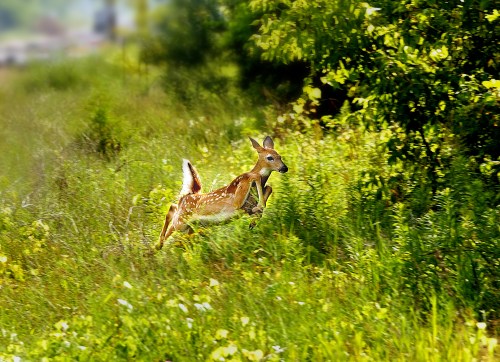
Fawn Finding Forest Fast, photo by jdehmel

We’ve all heard of f-stops, but look at this fawn f-GO!! Here are a couple of fun fawn facts from Outdoor Life:

  • Fawns average 6-8 lbs. at birth
  • Fawns are capable of walking within a few hours
  • Does usually remain within 100 yards of their fawns
  • A 3-week-old fawn can outrun most danger
  • The average number of spots on a fawn is 300

View Jeff’s photo background bigtacular and see more in his slideshow.

More Michigan fauna and more summer wallpaper on Michigan in Pictures.

The Seagull Signal

Independence Sunset

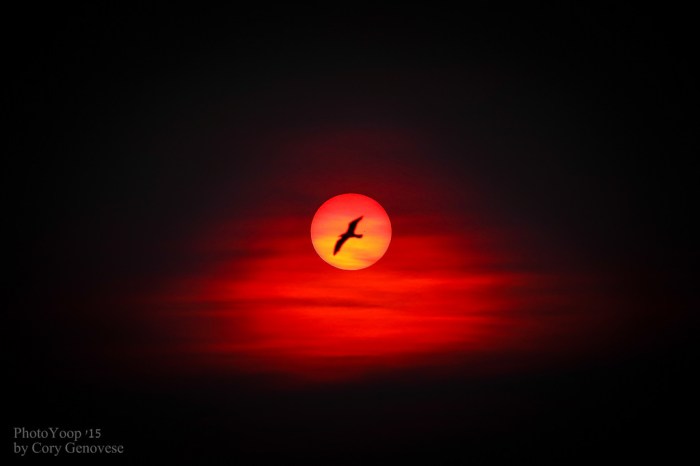
Independence Sunset, photo by Cory Genovese

These amazing sunsets we’ve been seeing lately are the result of smoke from Canadian & Alaskan wildfires – perhaps that’s what the mayor of Marquette trying to signal Seagull Man about!

View Cory’s photo from before the Marquette fireworks bigger and definitely follow him on Facebook.

More from Marquette and lots more sunsets on Michigan in Pictures.

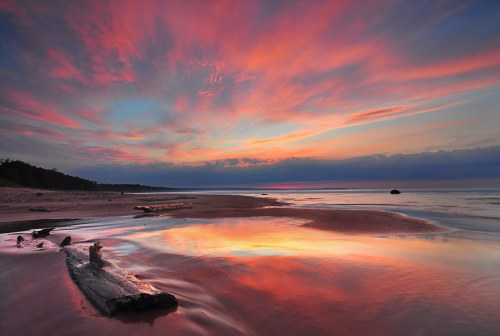
Simplicity – Sand and Stones

Simplicity - Sand and Stones Grand Mere Beach

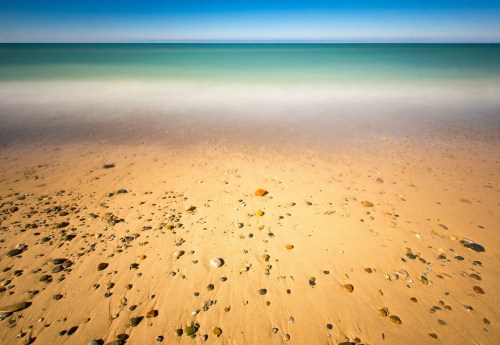
Simplicity – Sand and Stones, photo by PhotoJacko

Michigan comes from the Chippewa language where “Michi-gama” means “great water” or “big lake”. With 3,126 miles of PUBLICLY ACCESSIBLE Great Lakes shoreline and countless public beaches, there’s no excuse not to get out to beaches like the fabulous one at Grand Mere State Park near Stevensville in southwest Michigan this weekend!

View Jackie’s photo bigger, see more in her Long Exposures slideshow and be sure to follow her on Facebook.

More great beaches & beach photos on Michigan in Pictures.

Happy 128th Birthday to the Grand Hotel

Grand Hotel at Night

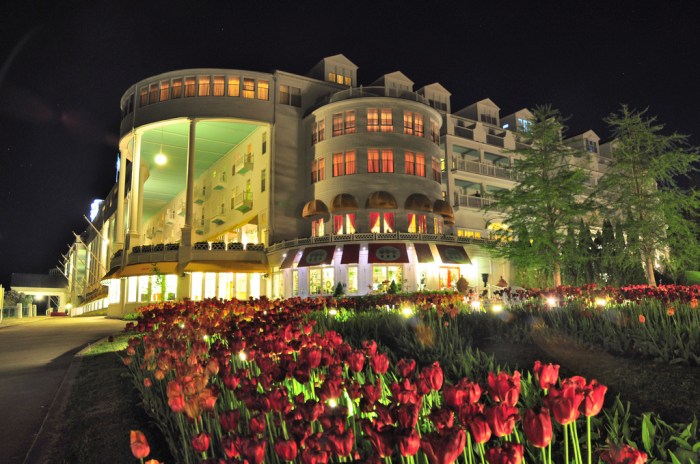
Grand Night, photo by Wade Bryant

Sending out an early Happy 128th Birthday to The Grand Hotel on Mackinac Island which opened on July 10, 1887. Here’s some historical highlights about Michigan’s most iconic hotel:

1887 Grand Hotel opens, billed as a summer retreat for vacationers who arrive by lake steamer from Chicago, Erie, Montreal, Detroit, and by rail from across the continent. Rates are $3 to $5 a night.

1890s Grand Hotel’s Front Porch – longest in the world—becomes the principal meeting place for all of Mackinac Island, as well as a promenade for the elderly and a “Flirtation Walk” for island romantics. Grand Hotel Manager James “The Comet” Hayes invites an agent of Edison Phonograph to conduct regular demonstrations of the new invention.

1895 Mark Twain lectures in the Grand Hotel Casino. Admission: $1.

1897 The West Wing is added to the hotel.

Turn of the century – The automobile finds its way onto the island. Grand Hotel supports an island-wide ban. A law is passed, but not strictly enforced until the 1930s.

1919 Hotel rates: $6 a day per person.

1935 A radio salon where patrons can listen to Jack Benny and other popular programs is added.

1947 This Time For Keeps starring Jimmy Durante and Esther Williams is filmed on the island and at Grand Hotel.

1960 Grand Hotel owner W. Stewart Woodfill appoints R.D. (Dan) Musser president of Grand Hotel.

1976 Musser and wife Amelia begin the redesign of the hotel’s interior and exterior with the help of architect Richard Bos and decorator Carleton Varney.

1979 The Mussers purchase Grand Hotel.

1980 Somewhere In Time, filmed at Grand Hotel and starring Christopher Reeve, Jane Seymour, and Christopher Plummer, is released.

1989 The U.S. Department of Interior designates Grand Hotel a National Historic Landmark.

View Wade’s photo from May of 2010 background bigtacular and see more in his My Favorites slideshow.

More Grand Hotel and more Mackinac Island on Michigan in Pictures!

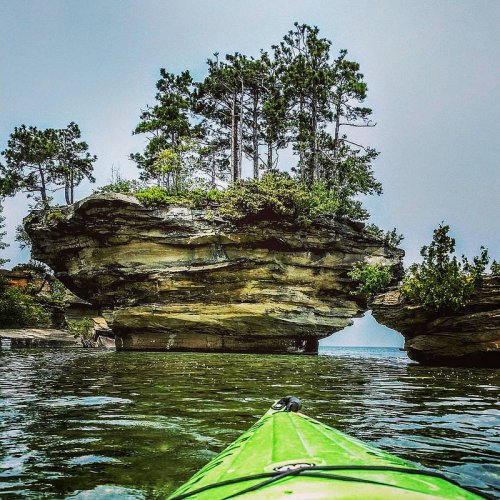
Kayaking to Turnip Rock

Kayak at Turnip Rock

Turnip Rock, Port Austin, MI, photo by Seasons Photography

The second in our series of “Cool Places Your Kayak Can Take You” features this cool rock formation in Lake Huron. Port Austin Kayak’s page on kayaking to Turnip Rock says:

A trip to Turnip Rock in Port Austin is unmistakably one of the best activities for kayakers on Lake Huron. The trip consists of a 7 mile out-and-back trip via the Point aux Barques trail. The shallow waters surrounding Turnip Rock allow you to get out and enjoy the area as well as snap a few photos while you are there. Be sure to wear suitable footwear if you are going to exit the kayak as the rocks are slippery. For an account of what it’s like kayaking out to Turnip Rock, read this adventurer’s great story. While this story also goes out to the lighthouse, that leg of the trip is for experienced kayakers only and is reserved for the calmest weather days, as you will be kayaking two miles out into Lake Huron.

Please note that the property surrounding Turnip Rock is privately owned, which is why kayaking is the premier way to access the rock. The owners of the surrounding properties take great care of the land and we ask that you respect their space by not trespassing or littering.

If you don’t have a kayak, they can certainly rent you one. That link goes to one of my favorite photographer’s trips: Lars Jensen and his Turnip Rock expedition.

View the photo bigger and see more in Seasons Photography’s Michigan slideshow.

More kayaks & kayaking and more about Turnip Rock on Michigan in Pictures.

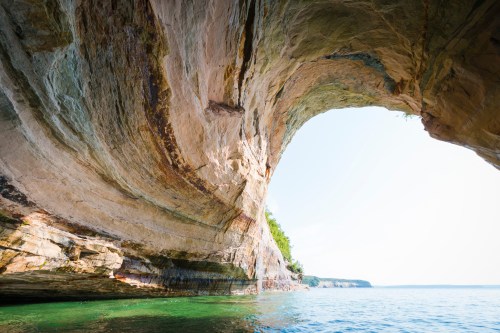
Under Petit Portal

Under Grand Portal

Under Petit Portal, photo by AllieKF

Here’s a shot from a place on my Michigan kayaking bucket list – Petit Portal (also known as Petit Arch and Arch Rock by some) and other cliff formations of the Pictured Rocks National Lakeshore. The Lakeshore’s Geologic Formations page begins:

The geologic formations of Pictured Rocks National Lakeshore are most spectacularly represented by the 50-200 ft. sandstone cliffs that extend for more than 15 miles along the shoreline. Sea caves, arches, blowholes, turrets, stone spires, and other features have been sculpted from these cliffs over the centuries by unceasing waves and weather.

The name “Pictured Rocks” comes from the streaks of mineral stain that decorate the cliffs. Stunning colors occur when groundwater oozes out of cracks and trickles down the rock face. Iron (red and orange), copper (blue and green), manganese (brown and black), and limonite (white) are among the most common color-producing minerals.

Geologic history recorded in the sedimentary rocks and surficial deposits of Pictured Rocks National Lakeshore is limited to two widely separated intervals of geologic time, the Late Precambrian, Cambrian, and Early Ordovician Periods (500-800 million years before present), and the Late Quaternary Period (two million years before present to the present).

You can read on for more about each geologic era, and I think that that this report by Lakeshore Volunteer Geologist Robert Rose (pdf) has some graphics that really help to understand how the layers fit together.

View Allie’s photo background bigtacular and check out her simply awesome Pictured Rocks photos – it’s amazing how huge the formations look from the water.

Lots more Pictured Rocks National Lakeshore and more summer wallpaper on Michigan in Pictures!

Superior Sunset from Little Presque Isle

Superior Sunset

Superior Sunset, photo by Mark Stacey

The Michigan Department of Natural Resources has nominated Little Presque Isle for dedication (explanation). It’s located on the Superior shore 7 miles north of Marquette and they explain that the Little Presque Isle tract:

…is often called the crown jewel of Lake Superior, with its beautiful sand beaches, rugged shoreline cliffs, heavily timbered forests, and unmatched public views. The proposed natural area occurs north and south of Little Presque Point, around the mouth of Harlow Creek. The area is a combination of a wooded dune and swale community and bedrock lakeshore and cliff. The wooded dunes and swales formed as post-glacial lake levels receded, depositing a series of low sandy beach ridges. Since then, the ridges have become forested with hemlock, red pine, white pine, cedar, and balsam fir, while the wet swales that developed between them are now either forested or open wetlands.

The rock comprising the area represents some of the oldest exposed formations of its kind. More than a mile of bedrock lakeshore and cliffs adorns Little Presque Isle, including sandstone cliffs that reach nearly 60 feet high toward the base of Sugar Loaf Mountain. One kind of bedrock, granitic, that occurs here is the least common bedrock type along the Great Lakes shoreline, with less than eight miles occurring in total. This is one of three areas where the public can see these 2.3 billion year old formations in Michigan.

The proposed wilderness area is a local landmark, which has significant historical value. The island was reportedly connected to the mainland sometime prior to the 1930s and was a landing place for early explorers and native inhabitants. Roughly 100 yards off the mainland, the island is accessible by wading hip deep water and offers and opportunity for solitude in a unique and scenic setting.

View Mark’s June 2012 photo from Little Presque Isle bigger and see more in his really cool Michigan’s Upper Peninsula slideshow.

Freedom lies in being bold

Renaissance Center Fireworks

freedom festival | detroit, michigan, photo by Ryan Southen

“Freedom lies in being bold.”
~Robert Frost

Hope your Fourth of July is as big, bold & amazing as this great shot of the Detroit fireworks over the Renaissance Center from Lafayette Park.

View Ryan’s photo biggerpurchase it and others and definitely follow him on Facebook!