Michigan Lake Appreciation: Glen Lake edition

via Leelanau.com
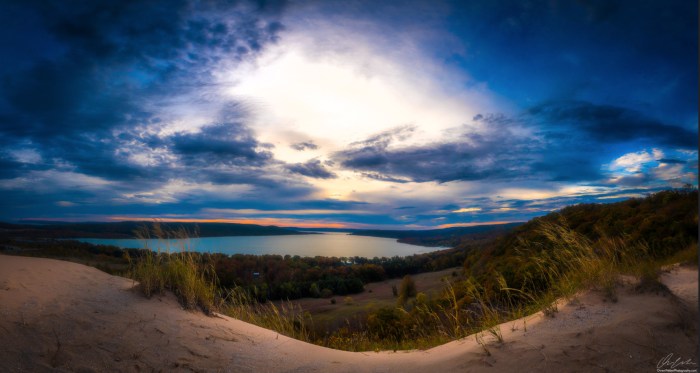
Sunglow over Glen Lake by Owen Weber

Sunglow over Glen Lake by Owen Weber

While Minnesota gets a lot of mileage out of their “Land of 10,000 Lakes” slogan, Michigan has over 10,000 lakes larger than 5 acres. Clean Water Action of Michigan has been working to draw attention to our incredible good fortune with an incredible Twitter thread of Michigan’s largest lakes.  

Big & Little Glen Lake check in at #18 on the list of Michigan’s largest inland lakes or 23 if you include the 4 Great Lakes & Lake St. Clair. Glen Lake is 6265 acres (9.8 square miles) with 17 miles of shoreline and a maximum depth of 130 feet. The Sleeping Bear Dunes National Lakeshore page on Glen Lake says:

Glen Lake, with its remarkably blue waters, is famous for its beauty. The lake appears divided into two parts by the constriction at the “narrows” bridge. The two parts are Little Glen Lake in the foreground, only 12 feet deep, and Big Glen Lake, beyond the M-22 bridge, about 130 feet deep. Glen Lake used to be connected to ancestral Lake Michigan. Glacial erosion carved out both lakes during the Ice Age. In post-glacial times, a sand bar developed, separating Glen Lake from Lake Michigan. Both the D.H. Day Campground and the village of Glen Arbor are located on that sandbar. The flat terrain and proximity to Lake Michigan made it a desirable site for these developments.

Check the lakes out at #LakesAppreciation on Twitter! & learn more about Clean Water Action Michigan on their website.

Owen took this photo a few years ago from atop the Sleeping Bear Dunes. See more in his Michigan gallery on Flickr & view and purchase prints at OwenWeberPhotography.com

Support Michigan in Pictures with Patreon

Happy 320th Birthday Detroit!

the lamp post by kare hav

the lamp post by kare hav

320 years ago tomorrow on July 24, 1701, Antoine de la Mothe, Sieur de Cadillac realized the success of his plan with mentor and Governor General of New France, Louis de Buade, Comte de Frontenac, to found a new settlement at the south of Lake Huron to increase the security of French interests on the Great Lakes. Frontenac died, and his successor was not fond of Cadillac so, as History Detroit explains, the story of Cadillac took matters into his own hands:

Cadillac set sail for France in 1698 in order to convince King Louis to allow him to found a new settlement lower in the Great Lakes. Specifically, he was interested in the area south of Lake Huron known as le détroit, or the straits.

The area known as le détroit was ideal for a new settlement because the land was fertile, the location on the river was felt to be easily defended against the British and the climate was more hospitable than that in the more northern settlements like Michilimackinac.

Cadillac returned to Quebec, then travelled to Montreal where he gathered canoes, farmers, traders, artisans, soldiers, and Native Americans to accompany him on his quest. The men set sail on June 4, 1701.

Cadillac and his men reached the Detroit River on July 23, 1701. The following day, July 24, 1701, the group traveled north on the Detroit River and chose a place to build the settlement. Cadillac named the settlement Fort Ponchartrain du Detroit in honor of King Louis’s Minister of Marine.

Kare hav took this photo of the Detroit skyline from across the Detroit River back in 2017. See more in their Detroit gallery & have a great weekend!

Lots more Detroit photos & history on Michigan in Pictures!

Support Michigan in Pictures with Patreon

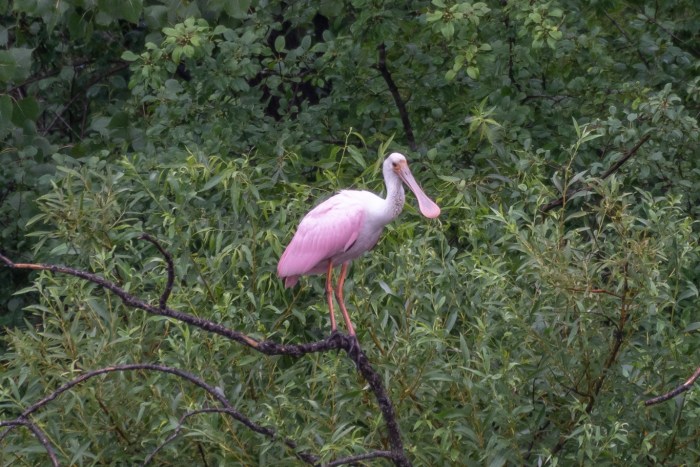
Roseate Spoonbill in Michigan

Roseate Spoonbill in Michigan by Bill VanderMolen

Roseate Spoonbill in Michigan by Bill VanderMolen

The Detroit Free Press reports that bird-watchers are flocking to Saline in hopes of seeing this rare roseate spoonbill:

This is the first record of a roseate spoonbill in Michigan, said Molly Keenan, communications and marketing coordinator at Michigan Audubon in an email to the Free Press.

Michigan DNR biologists believe the bird either escaped from a local zoo or is very confused, according to a Facebook post from Saline police.

Roseate spoonbills are typically found on the Gulf Coast, in the Caribbean and in Central and South America, but they have been spotted in neighboring states, said Benjamin Winger, curator of birds at the University of Michigan Museum of Zoology and an assistant professor in the Department of Ecology and Evolutionary Biology.

“It was really only a matter of time before one was documented in Michigan,” he said.

In the late summer, it’s normal for young water birds such as spoonbills, herons and storks to wander, Winger said.

“Sometimes, they wander a bit too far,” Winger said.

I’m not gonna definitively tell you to believe the zoologist over the DNR, but I am gonna look hard at the DNR & ask if they remember their decades of denial around cougars in Michigan.

Bill took this photo at Washtenaw County Wilderness Park. You can see another angle (with an egret) right here & see 211 more feathered finds in his Bird Life List gallery on Flickr.

Support Michigan in Pictures with Patreon

Say Hello to Oliver & Charlotte

Red Fox Pups (Vulpes vulpes) by John Dykstra

Red Fox Pups (Vulpes vulpes) by John Dykstra

The Social Security Administration has shared the 100 most popular baby names for each state in 2020 to their online list.  For Michigan in 2020, the most popular male name was Oliver & with Charlotte as our most popular female name. Amelia, Olivia, Eva & Emma completed the top five girl’s names while Noah, Liam, Henry & Elijah rounded out the top boy names.

The lists go back to 1960 when David & Mary led the way.

While John didn’t report the actual names of these two when he shared the photo back in 2009, the little guy on the left is definitely an Oliver! See more in John’s Michigan gallery on Flickr.

Support Michigan in Pictures with Patreon

That Michigan Vibe

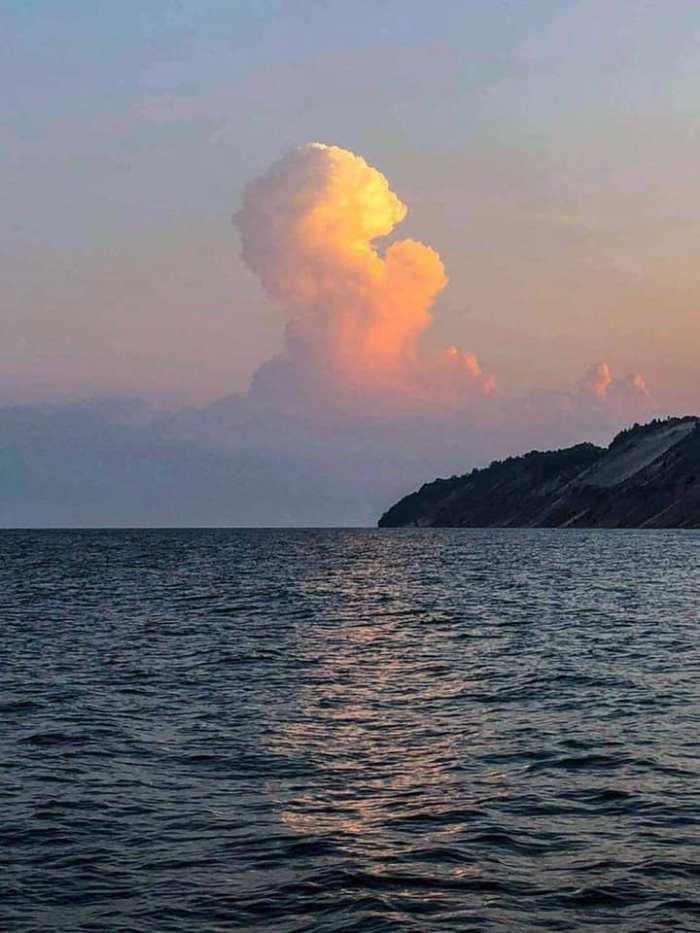
Michigan Vibe by Heather Aldridge

Michigan Vibe by Heather Aldridge

Heather shares that she rode her bike to the pier in Frankfort for sunrise & was delighted with the Michigan cloud next to the bluff. That makes two of us Heather – WOW! 😍

Click the pic to view her photo on Facebook & here’s hoping you have a magical day!

Check out more Michigan amazingness on Michigan in Pictures.

Support Michigan in Pictures with Patreon

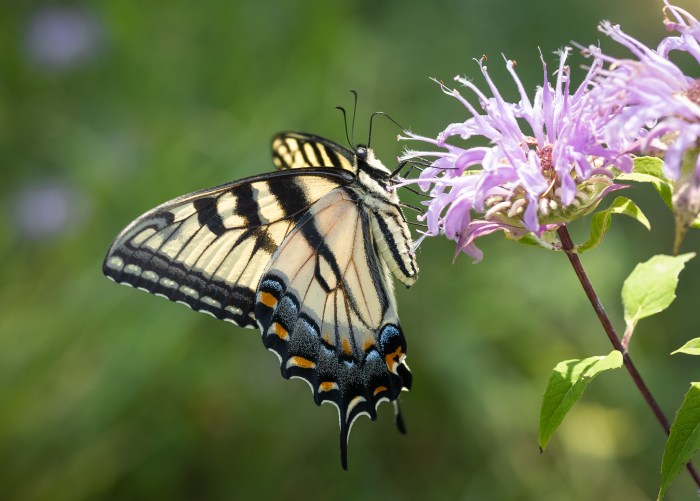
An American Bug: The Eastern Tiger Swallowtail Butterfly

Eastern Tiger Swallowtail Butterfly by David Marvin

Eastern Tiger Swallowtail Butterfly by David Marvin

The University of Michigan Animal Diversity Web entry for the eastern tiger swallowtail butterfly (Papilio glaucus) says in part:

The eastern tiger swallowtail ranges from Alaska and the Hudsonian zone of Canada to the southern United States, east of the Rocky Mountains.

This species occurs in nearly every area where deciduous woods are present, including towns and cities. It is most numerous along streams and river, and in wooded swamps.

As with most butterflies, Eastern tiger swallowtails tend to be solitary. Males “patrol” for a mate, flying from place to place actively searching for females. “Patrolling” male tiger swallowtails can recognize areas of high moisture absorbtion by the sodium ion concentration of the area. It is believed that the moisture found by these males helps cool them by initiating an active-transport pump. Both male and female tiger swallowtails are known to be high fliers. Groups of fifty butterflies have been spotted in Maryland flying 50 meters high, around the tops of tulip trees.

The tiger swallowtail is thought of as the American insect, in much the same way as the Bald Eagle is thought of as the American bird. It was the first American insect pictured in Europe; a drawing was sent to England from Sir Walter Raleighs’ third expedition to Virginia.

You can read on for more including photos. I also found a page with a listing of Michigan butterflies and apparently we have eight species of swallowtail butterfly!

Beautiful capture by David. See more in his 2022 Calender gallery on Flickr! 

Support Michigan in Pictures with Patreon

Field, Flowers, Farm

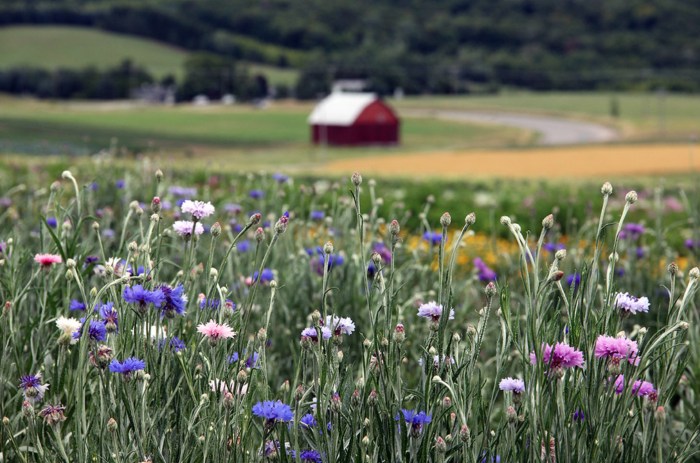
Field of Flowers at the Farm by Robert F Carter

Field of Flowers at the Farm by Robert F Carter

“Sometimes I do get to places just when God’s ready to have somebody click the shutter.”
– Ansel Adams

Robert took this back in August of 2015. He shared this perfectly apt quotation from Ansel Adams on his profile & about this photo he writes:

While visiting a local farm market in Petoskey, Michigan, I was drawn to their crop of flowers next to their driveway. The flowers in the foreground are Bachelor’s Buttons. The road that curves through the hilly terrain can be seen near the barn in the distance.

See more in his My Petoskey gallery on Flickr & for sure check out his website.

More from Petoskey on Michigan in Pictures!

Support Michigan in Pictures with Patreon

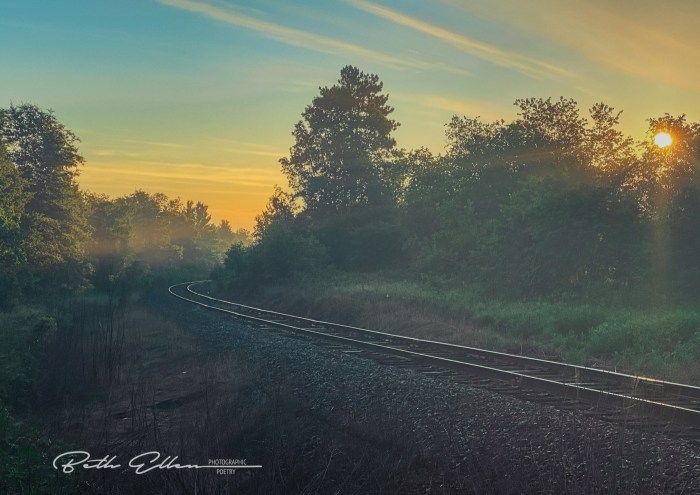
Silence contains all the sounds

No Real Silence by Fire Fighters Wife

No Real Silence by Fire Fighter’s Wife

“Since there is no real silence, Silence will contain all the sounds, All the words, all the languages, All knowledge, all memory.”
-Dejan Stojanovic

I just love Beth’s pairing of photos & quotations! About this pic she shares, “Not the best technically perfect picture, seeing I took it with my iPhone. But, when I saw this one my way to work I had to stop and take a picture. It was too beautiful to let it go to waste.”

Head over to her Flickr for lots more!

Support Michigan in Pictures with Patreon

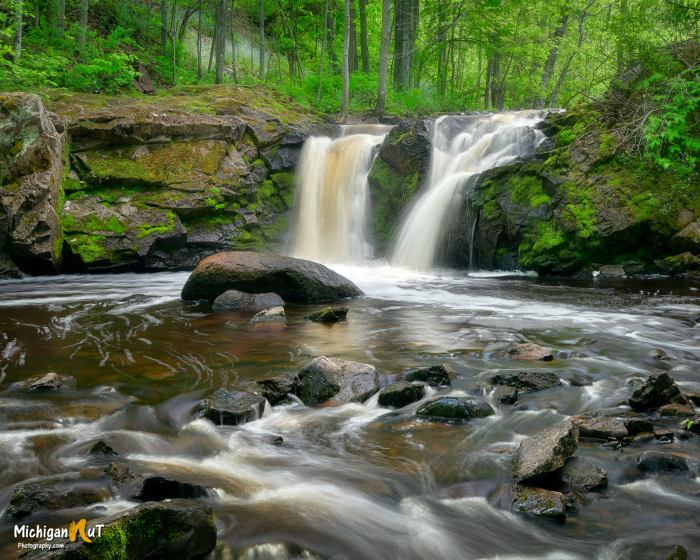
Waterfall Wednesday: Root Beer Falls

Root Beer Falls near Wakefield by Michigan Nut Photography

Root Beer Falls near Wakefield by Michigan Nut Photography

While one of the names for Tahquamenon Falls is “Root Beer Falls, Travel the Mitten shares another waterfall with the same name, Root Beer Falls on Planter Creek:

Few Michigan waterfalls are as easy to visit as Root Beer Falls in Wakefield. This small waterfall can be viewed from the side of the road, and getting a closer view only requires a walk of a few hundred yards. If you’re in the area to see other waterfalls or headed up to the western end of the Porcupine Mountains this is a waterfall you won’t want to miss.

Planter Creek flows under M-28 a few blocks from Sunday Lake. Shortly after passing under the highway it cascades over a small rock ridge, forming a waterfall in a beautiful forested setting. The sudden drop of around six feet that forms this waterfall is a stark contrast to the otherwise quiet setting here as the creek winds its way through the woods.

Click through for a video & detailed directions.

Joel took this photo last month. Head over to Facebook or his website for the latest!

Support Michigan in Pictures with Patreon

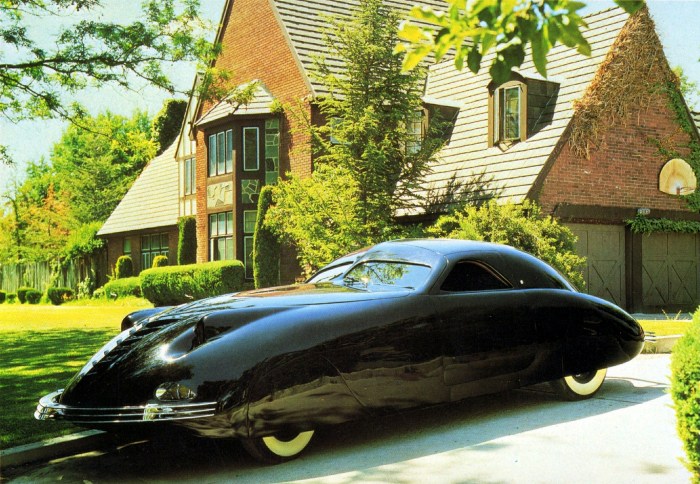
The 1938 Phantom Corsair: Different by Design

1938 Phantom Corsair by Alden Jewell

1938 Phantom Corsair by Alden Jewell

In their Story of the Week feature, the Motor Cities National Historic Area shares the story of the “different by design” 1938 Phantom Corsair:

The Phantom Corsair was one of the most unique automotive designs ever when it was introduced to the public in 1938. he model was designed by Rust Heinz, who once had a dream of what an American supercar should look like. Heinz was from the well-known family that made its fortune selling condiments like ketchup and mustard across the country.

The Phantom Corsair was intended for a limited manufacturing run and would have sold for $15,000 on the consumer market. However, that price was a problem for the Phantom Corsair since it was designed and engineered when most Americans were still struggling with the Great Depression.

The Phantom Corsair was a prototype 2-door model sedan. A clay scale model featured an aerodynamic shape that was sleek and futuristic. The model offered room for six passengers … Heinz’s parents disapproved in the beginning of his developing the Phantom Corsair. His aunt ultimately agreed to fund the project. Unfortunately, Heinz was killed in an auto accident in July 1939, and the Phantom Corsair project came to an end.

…For many years since, automotive writers and historians have said that “Although sometimes dismissed as a failure because it never entered production, the Corsair is regarded as ahead of its time because of its futuristic features and styling cues such as faired-in fender and a low profile.”

The Phantom Corsair prototype offered an electric push-button door operation, along with green tinted triple-layer safety glass windows, hydraulic impact bumpers, and fog lights for nighttime driving. The instrument panel offered a flush design with a dozen instruments that included a compass and altimeter. The interior offered an aviation design theme with a warning light that signaled when the door was ajar. Other features included a multi-wave radio with twin speakers plus a great air conditioning and heating system. The prototype model used a Cord V8 Lycoming engine with a front wheel drive transmission.

Read more & see some really great photos at motorcities.org!

For a chance to really geek out on some wild automotive designs, have a look at Alden’s Concept Vehicles & Prototypes gallery on Flickr.

Support Michigan in Pictures with Patreon