Michigan will emerge from an absolutely BRUTAL heat dome later today, but until them I hope you can find a large amount of cool water to hide in!
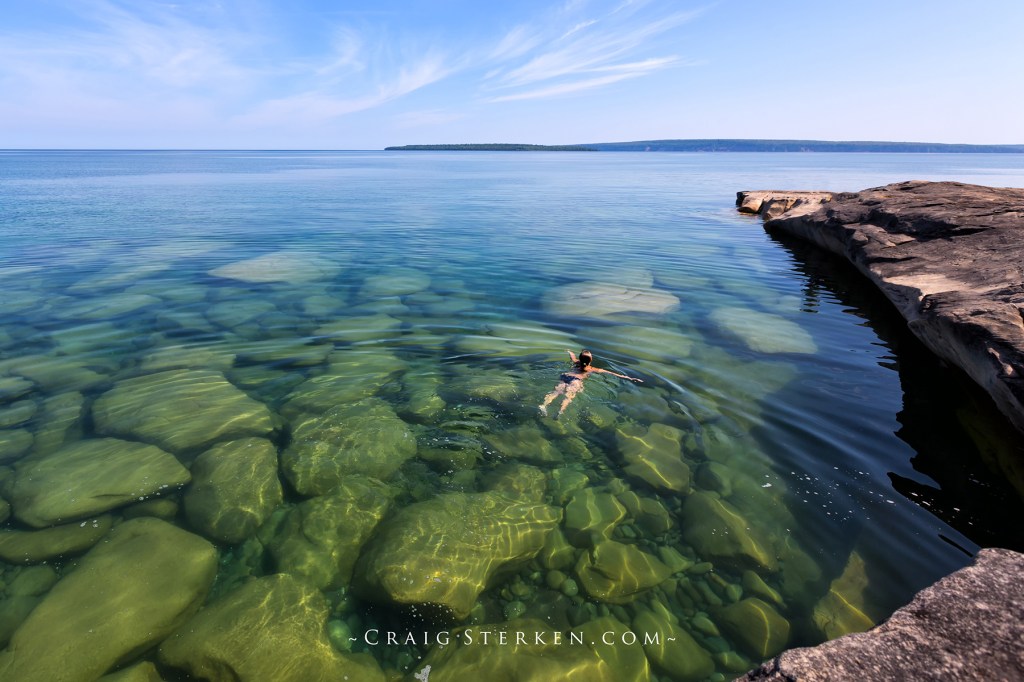
Craig took this photo a few years ago on Lake Superior, I think at Presque Isle Park where the water temp is currently 48.2 degrees! Here’s a couple recent pics from Pictured Rocks that he shared on Facebook. See more there and for sure view & purchase his work on his website!
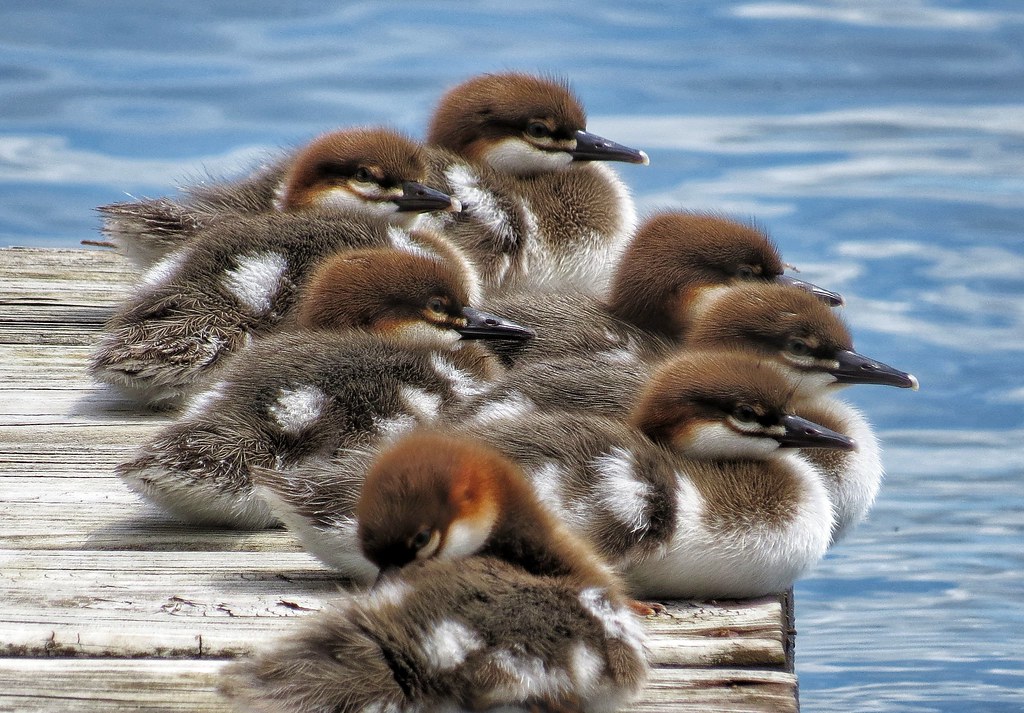
All About Birds says that Common Merganser are large, long-bodied ducks with thin, pointed wings. Their bills are straight and narrow, unlike the wide, flat bill of a “typical” duck, and the females have shaggy crests on the backs of their heads. Although these ducks look pretty punk & cool, the Tip of the Mitt Watershed Council reminds us that Merganser ducks are the main culprit in the spread of swimmers itch:
Swimmer’s itch (cercarial dermatitis) is a skin irritation caused by a larval form of certain flatworms from the family Schistosomatidae. Schistosome flatworms are parasites with complex life cycles usually involving certain species of snails and waterfowl. Upon hatching, free swimming Schistosomatidae larvae seek out an intermediary host, usually snails, to continue the life cycle. The larvae, known as cercariae, are only 1/32 of an inch long and generally invisible to the naked eye. Since humans are not the proper host, the larvae soon die upon mistakenly burrowing into the skin. The resulting skin condition and itching sensation is caused by an immune response to the dead larvae under the skin and symptoms vary by person. In many Michigan lakes, the common merganser duck is the primary or sole vertebrate host.
I am for sure NOT calling for the killing of mergansers, but as someone who has spent a lot of time on lakes with swimmers itch, I encourage you to practice safe swimming where you see these ducks:
Don’t swim first thing in the morning
Swim offshore and away from downwind areas
Rinse your body with clean water and towel off thoroughly after swimming!
Mike took these on Bear Lake a couple weeks ago. See more in his Bear Lake 2024 gallery on Flickr.
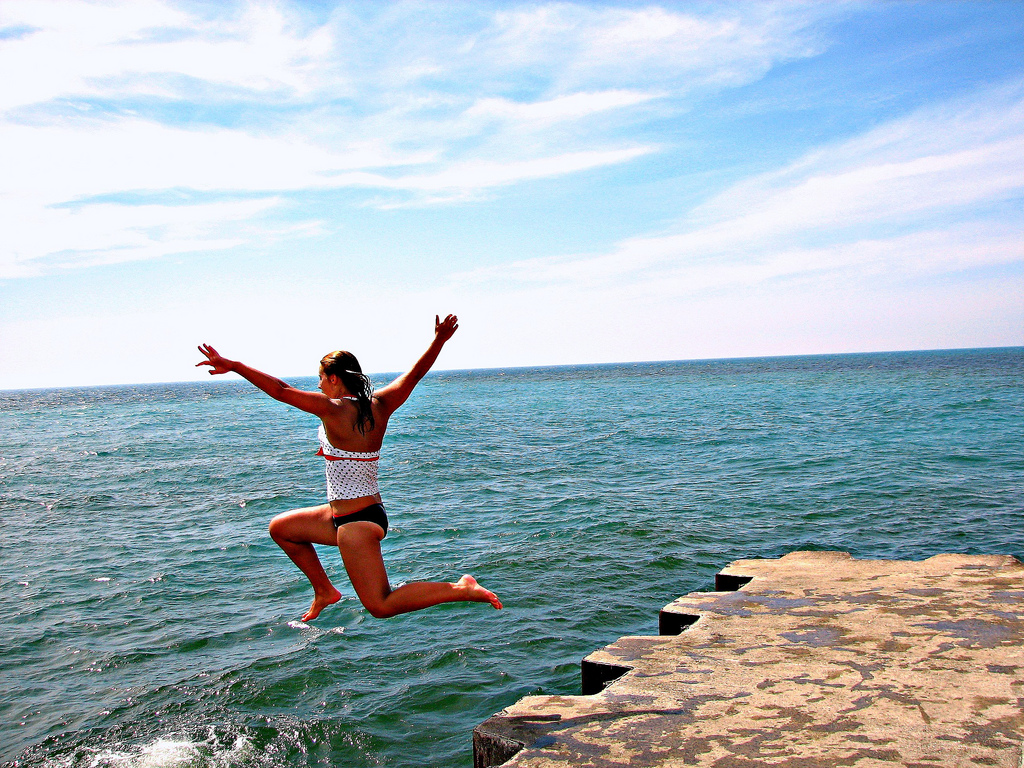
According to Chapter 7 of the Chicago Park District code: “Entering or remaining in the water at [Chicago Park District] beaches shall be permitted only during the bathing season.” The part district does have the authority to extend the season.
As most folks who live along the Great Lakes know, September typically offers warmer water and better swimming than June, so on behalf of the State of Michigan, let me extend an invitation to our oppressed Windy City brethren to enjoy the beaches of Michigan this fall!
“These are not lakes, these are the world’s eighth seas, and her bottom is littered with the wreckage of over six thousand ships.” ~The Three Sisters, Song of the Lakes
This gorgeous shot of the St. Joseph Pier Lighthouses demonstrates the incredible power of Great Lakes waves. I live in Traverse City, and this summer it feels like Lake Michigan has claimed the lives of more people than normal. Whether or not that’s true (it’s not), I thought this photo offered the perfect opportunity to share some tips and tools for staying safe on Lake Michigan, Lake Huron, Lake Superior and Lake Erie!
Thinking of any of the Great Lakes as anything like any lake you’re familiar with is a mistake. They are freshwater seas that can pack incredible power. They are stronger than you and can end your life in an instant if you don’t respect them.
The Great Lakes Surf Rescue Project is a nonprofit dedicated to drowning prevention that keeps track of drowning statistics: 74 in 2010, 87 in 2011, 101 in 2012 and 39 so far in 2013. (you can also keep up with them on Facebook)
Life jackets can save your life. U.S. Coast Guard statistics show that 90% of the people who drown in a boating or water accidents would survive with a life jacket.
Cold kills! Hypothermia is a danger all year round on the Great Lakes. Click that link for tips on how to stay alive if you do end up in the water.
Rip Currents (sometimes called “undertow” or “rip tide”) are a big danger on Michigan beaches accounting for the majority of drownings. Michigan is 4th in rip current related fatalities behind Florida, California, and North Carolina – we have “ocean force” rip currents. Learn how to beat them in this video.









 Michigan in Pictures