Making the Leap

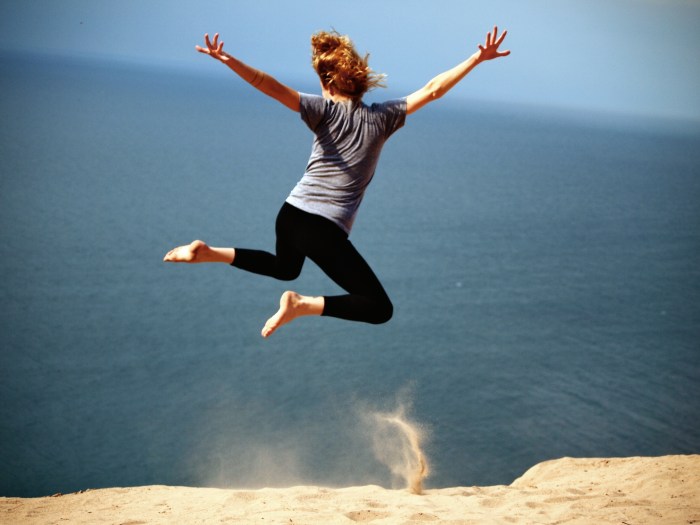
Leaping off Pyramid Point

Untitled, photo by Todd Richter

Happy Leap Day everyone and here’s hoping that this quadrennial occurrence adds a little fun to your life! Borgna Brunner lays down Leap Year 101:

Leap years are added to the calendar to keep it working properly. The 365 days of the annual calendar are meant to match up with the solar year. A solar year is the time it takes the Earth to complete its orbit around the Sun — about one year. But the actual time it takes for the Earth to travel around the Sun is in fact a little longer than that—about 365 ¼ days (365 days, 5 hours, 48 minutes, and 46 seconds, to be precise). So the calendar and the solar year don’t completely match—the calendar year is a touch shorter than the solar year.

It may not seem like much of a difference, but after a few years those extra quarter days in the solar year begin to add up. After four years, for example, the four extra quarter days would make the calendar fall behind the solar year by about a day. Over the course of a century, the difference between the solar year and the calendar year would become 25 days! Instead of summer beginning in June, for example, it wouldn’t start until nearly a month later, in July. As every kid looking forward to summer vacation knows—calendar or no calendar—that’s way too late! So every four years a leap day is added to the calendar to allow it to catch up to the solar year.

Read on for more and enjoy your day.

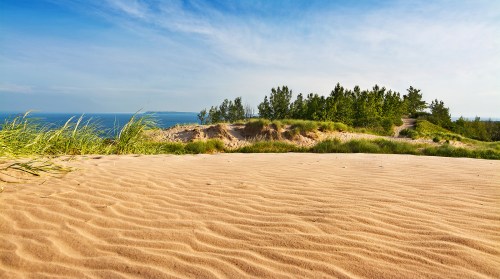
Todd took this shot back in August of 2009 at one of my favorite spots for hiking (and jumping) – the Pyramid Point overlook in the Sleeping Bear Dunes National Lakeshore. Lake Michigan is hundreds of feet down a steep bluff from the point where she’s jumping, and many is the person who wished they didn’t run down that bluff after toiling up it!

View Todd’s photo background bigtacular and see more in his digital slideshow.

More dunes on Michigan in Pictures!
The Ghost Forest in Silver Lake Dunes

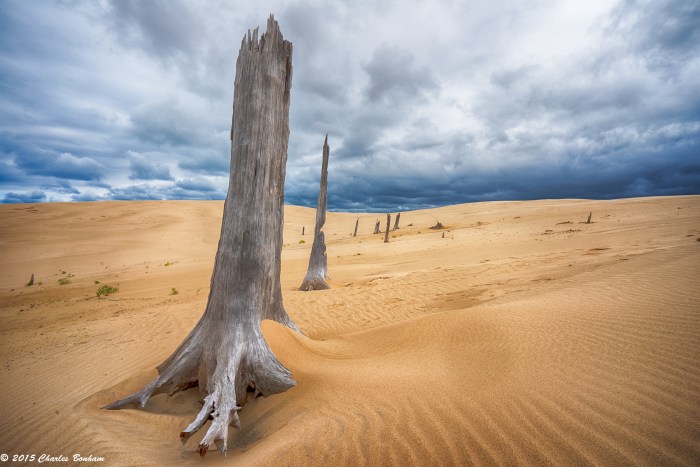
Ghost Forest

Ghost Forest, photo by Charles Bohnam

The Silver Lake State Park page at Michigan Trail Maps says in part:

Not all of Michigan’s great hikes are trails. This trek is a journey through Silver Lake State Park’s trailless backcountry, a mile-wide strip of dunes between Silver Lake and Lake Michigan. There’s not another hike like this in Michigan or even the Midwest because no other stretch of dunes are so barren.

Perched on a plateau and rising more than 100 feet high above Silver Lake, the heart of these dunes are totally devoid of any vegetation, even dune grass. The only thing besides sand are the stumps and trunks of ghost forests, ancient trees that the migrating dunes had buried and killed. Almost half of the hike is in this Sahara Desert-like terrain, the other half is spent strolling a stretch of Lake Michigan that is free of cottages and frozen custard stands.

A rare hike indeed.

View Charles’ photo background bigilicious and see more in his slideshow.

More dunes and more summer wallpaper on Michigan in Pictures.

Otter Creek Aurora

Otter Creek Aurora

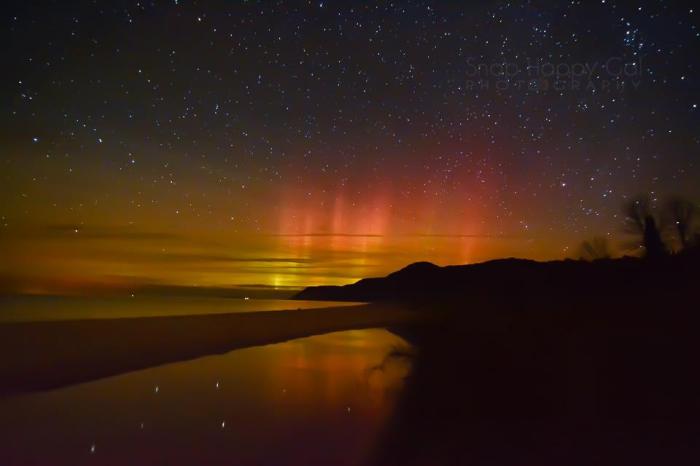
Otter Creek Aurora, photo by Snap Happy Gal Photography

This is one shot from an incredible video that Heather made of the northern lights as seen from Esch Road Beach in the Sleeping Bear Dunes National Lakeshore. That’s Otter Creek in the foreground.

Click to view bigger, follow Snap Happy Gal on Facebook, and definitely watch that video – meteors!!

Lots more northern lights on Michigan in Pictures.

Promising Start

Promising Start

Promising Start, photo by Heather Higham

Heather writes:

Hard to believe that a raging storm tore through just hours after this idyllic morning in the dunes. But this is from the same day (Sunday) as the monster winds that uprooted and snapped countless large trees…

View her photo bigger, see more in her Sleeping Bear Dunes slideshow and follow her at Snap Happy Gal Photography on Facebook.

PS: I’ve been posting lots of updates from the storm on my Leelanau.com Facebook.

Storming the Harbors of Darkness: DH Day Barn Edition

Night and DH Day Barn

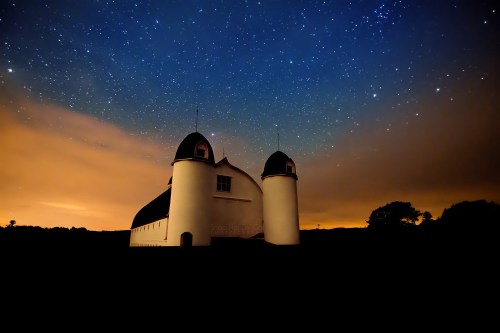
Night and DH Day Barn, photo by Heather Higham

This shot of the iconic D.H. Day barn in the Sleeping Bear Dunes National Lakeshore from a couple of days ago is beautiful, dramatic and … wrong. While the orange looks cool against the deep blue, it’s a very visible reminder that our night skies suffer from serious light pollution, even in our most preserved spaces. I encourage everyone to learn about night-sky friendly outdoor lighting options and to advocate in your community for better lighting decisions.

On a less preachy note, if you’re in the Traverse City/Sleeping Bear area tonight, the National Lakeshore is hosting the latest in their “Find Your Park After Dark” night sky events from 9-11 PM at the Pierce Stocking Scenic Drive #3 Overlook. They write:

All sky programs offered by the National Lakeshore are free. Participants need only purchase the Park Entrance Pass or have an Annual Pass displayed in their vehicle to join in the fun. Programs will be cancelled if the sky is not visible due to weather conditions. The decision to cancel is usually made three hours in advance. Please call 231-326-4700, ext. 5005, for a voicemail message with the decision. For all evening astronomy events, bring a flashlight for the walk back to your car and bug spray, if needed. Park rangers and Grand Traverse Astronomical Society (GTAS) staff will wear red glow bracelets at the events.

Each special event takes place at a different location throughout the National Lakeshore to take advantage of strategic viewing opportunities. You can come for star-gazing, eclipses, meteor showers, solar viewing, and storytelling. These events are the perfect opportunity to Find Your Park in the stars. Starry night skies and natural darkness are important components of the special places the National Park Service protects. National parks hold some of the last remaining harbors of darkness and provide an excellent opportunity to experience this endangered resource.

“Harbors of darkness” – what a cool turn of phrase! Head over to the National Lakeshore’s website for more about this and upcoming events.

Over at her blog, the Rapid City Recess, Heather writes about her experience shooting at night with two other photographers – I encourage you to read it.

View Heather’s photo bigger, see more in her Night Sky slideshow and definitely follow her at Snap Happy Gal on Facebook!

More night photography and more Michigan barns on Michigan in Pictures.

Coast Guard shares Manitou Passage shipwrecks from above

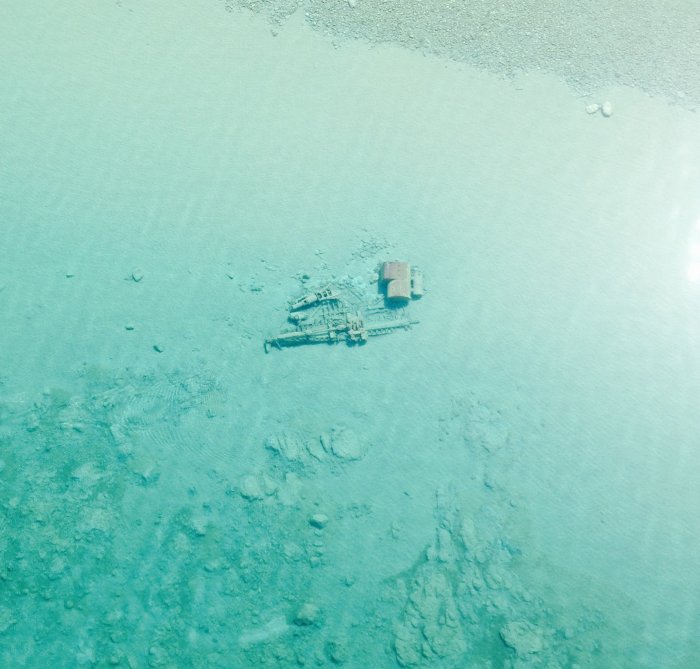
Wreckage of the Rising Sun

Wreckage of the Rising Sun, photo by U.S. Coast Guard Air Station Traverse City

Yesterday the U.S. Coast Guard Air Station Traverse City shared a collection of photos from the Manitou Passage Underwater Preserve, writing”

We can call it “Shipwreck Sunday” – With Lake Michigan ice gone for the season the crystal clear, deep blue waters of northern Michigan are back (albeit still VERY VERY cold at an average of 38 degrees).

During a routine patrol this past Friday, an aircrew captured these photos of a handful of the many shipwrecks along the Lake Michigan shoreline. These photos were taken near Sleeping Bear Point northeast along the shoreline to Leland, Michigan up to Northport.

Information on the shipwrecks is scarce, please post if you recognize any of the photographed sites.

View the Coast Guard’s photo bigger and click through for photos of other wrecks including the James McBride. Definitely follow them on Facebook for more cool shots of Michigan’s coastline from above!

Regarding the Rising Sun, the Leelanau Enterprise shares Leelanau historian George Weeks account of the wreck that includes a photo of the grounded Sun:

In October 1917, the Rising Sun went to High Island to get potatoes, rutabagas and lumber to take to Benton Harbor. On 29 October, in one of the early-season snowstorms that sweep the Lakes, the Rising Sun went aground at Pyramid Point. Lifeboats were launched and all thirty-two people aboard eventually saved.

As was often the case with Great Lakes wrecks, shoreline residents, not the U.S. Coast Guard, were the first to provide assistance. In this case, Fred Baker, summoned in the night by survivors pounding at the door of his home atop the Port Oneida bluff, was the first to respond. He hastened to his barn, quickly unloaded 60 bushels of potatoes that were on his wagon, hitched his team, and went down to the beach. The survivors, including a woman found unconscious on the beach, were brought to Baker’s house. (By the 1990s, Baker’s daughter, Lucille, who was four years old at the time of the wreck, was still residing at Port Oneida, the wife of Jack Barratt, great grandson of Port Oneida settler Carsten Burfiend.)

The Coast Guard beach rescue rig arrived from Glen Haven, pulled by two teams of horses borrowed from D.H. Day. A man who was asleep when the others abandoned ship was rescued by the guardsmen.

Remains of the Rising Sun are visible from the shore on a clear day, and are popular for recreational divers. As with other wrecks, the remains are protected objects within the Manitou Passage Bottomland Preserve.

Read more about the Rising Sun, it’s caro and final voyage and the House of David that owned it from Chris Mills and see more shipwrecks on Michigan in Pictures.

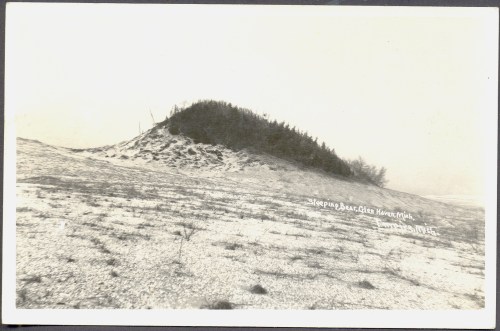
#TBT: The Bear of Sleeping Bear Dunes

Glen Haven MI Sleeping Bear Dunes Empire and Glen Haven Marked RPPC Kodak Stampbox Unsent what looks like a hump of low scrub bushes is actually a forest hill buried in sand

Glen Haven MI Sleeping Bear Dunes, photo by Don…The UpNorth Memories Guy… Harrison

Tuesday was the 44th anniversary of the founding of the Sleeping Bear Dunes National Lakeshore. You may have heard the Chippewa tale that inspired the name of the park:

“Long ago, along the Wisconsin shoreline, a mother bear and her two cubs were driven into Lake Michigan by a raging forest fire. The bears swam for many hours, but eventually the cubs tried and lagged behind. Mother bear reached the shore and climbed to the top of a high bluff to watch and wait for her cubs. Too tired to continue, the cubs drowned within sight of the shore. The Great Spirit Manitou created two islands to mark the spot where the cubs disappeared and then created a solitary dune to represent the faithful mother bear”.

You might not be aware, however, that “the Bear” was also an actual formation atop a dune about a mile north of the Pierce Stocking Overlook. The Lakeshore says that the formation pictured above…

…hardly looks like a bear now, for it has been changing rapidly in recent years. At the turn of the century, it was a round knob completely covered with trees and shrubs. You can still see some of the thick vegetation that gave it a dark shaggy appearance.

…For a long time, the Sleeping Bear Dune stood at about 234 feet high with a dense plant cover. However, through most of the twentieth century, erosion has prevailed. By 1961, the dune was only 132 feet high, and by 1980, it was down to 103 feet. The process is a continuing one. The major cause of the dune’s erosion was wave action wearing away the base of the plateau on which the dune rests. As the west side of the dune loses its support, it cascades down the hill. The wind, too, is a major agent of erosion, removing sand and destroying the dune’s plant cover.

You can see what the area looks like now and read more right here.

View Don’s photo background bigtacular and get daily blasts from the past in his Northern Michigan Photo Postcards – Our History and Heritage group on Facebook!


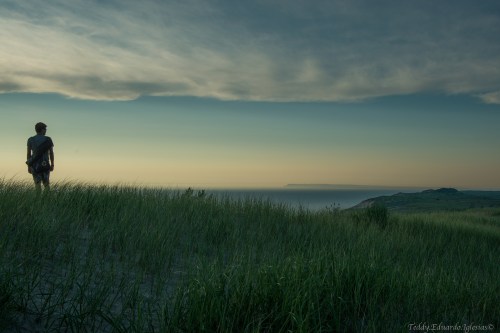
Adventurer

Sleeping Bear Dunes National Lakeshore

Sleeping Bear Dunes National Lakeshore, photo by teddy eduardo iglesias

I’ve stood in this spot, and it felt almost as amazing as this picture.

View Teddy’s photo background bigtacular and see more in his Michigan Outdoors slideshow.

Lots more from the Sleeping Bear Dunes National Lakeshore on Michigan in Pictures!

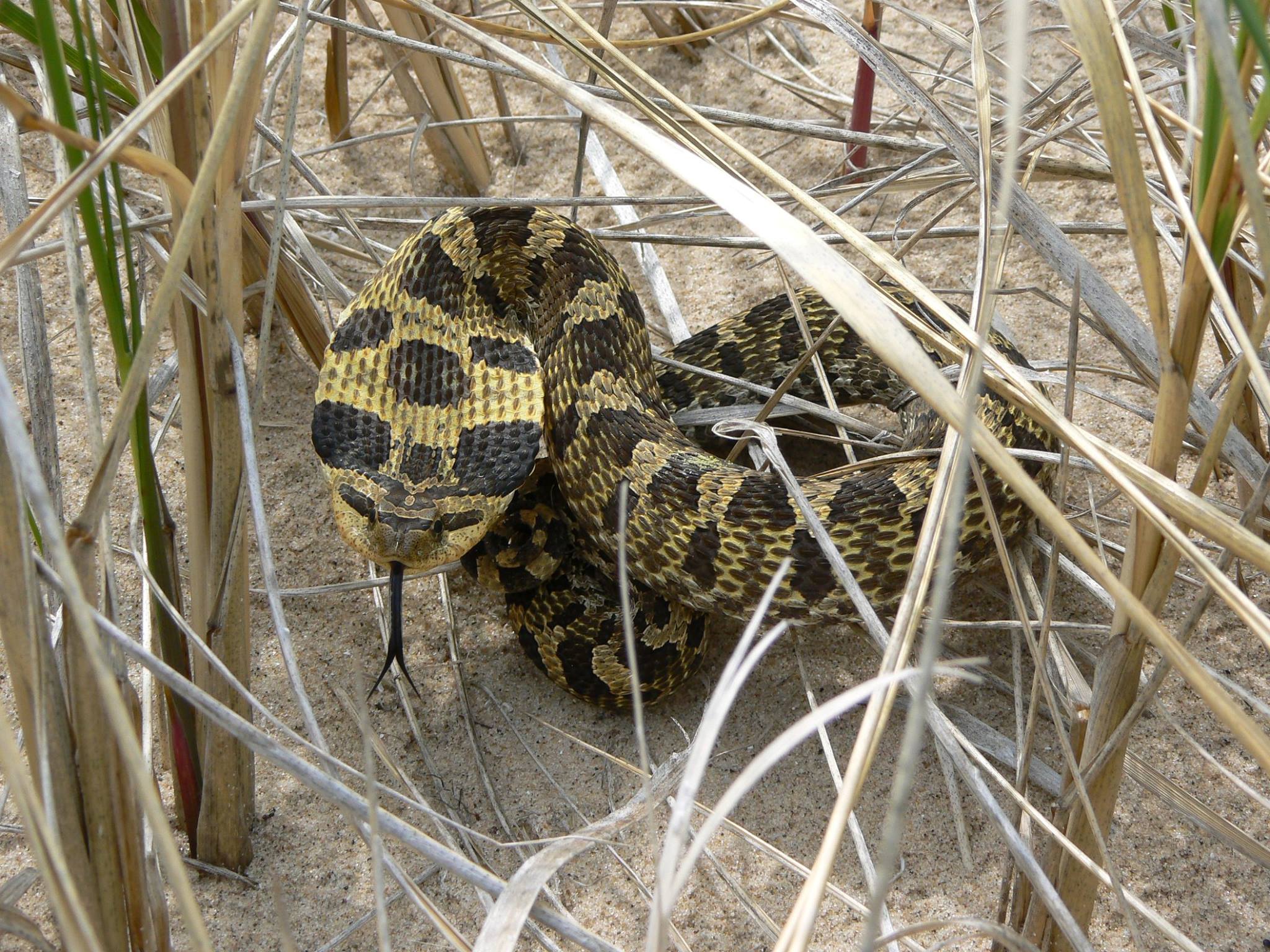
The Puff Adder aka Eastern Hognose Snake

Eastern Hognose Snake

Eastern Hognose Snake by Sleeping Bear Dunes National Lakeshore

Of the approximately 2400 species of snakes in the world, Michigan has just 17. The State of Michigan’s page on the Eastern Hog-nosed Snake (Heterodon platirhinos) says (in part):

Description: A thick-bodied, slow-moving snake with a flattened, upturned “nose.” Color is variable some have dark spots and blotches on a yellow, orange, or brown background, but other specimens are solid black, brown, or olive with little or no visible pattern. Easily identified by defensive behavior (see below). Adult length: 20 to 40 inches.

Habitat and Habits: A snake of open, sandy woodlands – found in the wooded dunes of western Michigan. The upturned snout is used to burrow after toads, a favorite food. When threatened, hognose snakes puff up with air, flatten their necks and bodies, and hiss loudly. (This has led to local names like “puff adder” or “hissing viper.”) If this act is unsuccessful, they will writhe about, excrete a foul smelling musk, and then turn over with mouth agape and lie still, as though dead. Despite this intimidating behavior, Hog-nosed snakes are harmless to humans…

Range and Status: Though recorded from most of the Lower Peninsula and the southern tip of the Upper Peninsula, Hog-nosed Snakes are most common in the western and northern LP. Their numbers have declined in many places, in part due to persecution by humans who mistakenly believe they are dangerous.

View it bigger (if you dare!) on their Facebook and see more great shots of native flora & fauna on the Sleeping Bear Dunes National Lakeshore Facebook!

More Michigan snakes on Michigan in Pictures.

Support Michigan in Pictures with Patreon


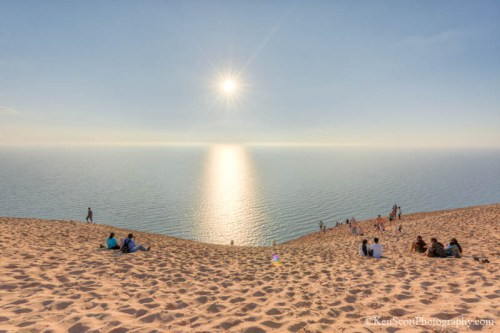
Bye Bye Summer

Summer ... bye bye

Summer … bye bye, photo by Ken Scott

Probably the best thing I’ve heard about “Summer 2014” being over is that it really wasn’t much of one anyway.

I hope everyone enjoys their last weekend of summer, and that we have a warm & long fall!

View Ken’s photo bigger, see more in his massive Sleeping Bear Dunes slideshow and definitely follow him on Facebook.