Michigan, Ohio, and the Best Worst Deal Ever

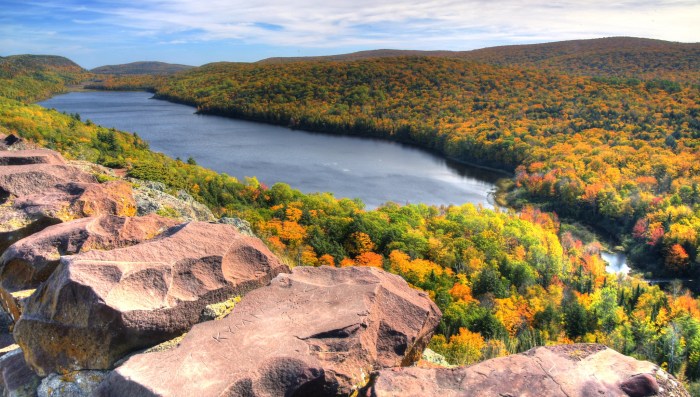
Lake of the Clouds by Tom Mortenson

Lake of the Clouds by Tom Mortenson

CMU’s Clarke Historical Library reminds us that on June 15, 1836 Congress passed the Northern Ohio Boundary Bill to resolve the ongoing boundary dispute between the state of Ohio and the Michigan Territory. Both claimed the mouth of the Maumee River (present-day Toledo) and offered surveys supporting their positions. The congressional compromise awarded Toledo to Ohio and granted Michigan the western Upper Peninsula and immediate statehood. Ohio was elated, but Michigan struggled, and eventually accepted a solution they believed was unfair.

Michigan State University’s Geography Department takes a deeper dive into the Toledo War and its aftermath, explaining that:

Sentiment against the proposed compromise was almost universal at first. A resolution adopted in March had dismissed the area that Michigan was to receive as a “sterile region on the shores of Lake Superior, destined by soil and climate to remain forever a wilderness.” The Detroit Free Press called it “a region of perpetual snows—the Ultima Thule of our national domain in the north.”

Senator Lyon said the region could furnish the people of Michigan with Indians for all time and now and then a little bear meat for a delicacy, but he was nevertheless one of the few who thought that Michigan might eventually find it got the better of the bargain. There was resentment of the fact that Arkansas had been granted statehood unconditionally the same day that Michigan had been offered admission only on conditions that most Michiganians regarded as disadvantageous to the state.

If Michigan did not want the huge area in the northland that Congress offered, it is equally true that some of the residents of the Upper Peninsula did not want to be part of Michigan either. Congress had received a number of petitions from persons in this region asking that the area south of Lake Superior be organized as the territory of Huron. Michigan Territory, as originally established in 1805, had included the eastern Upper Peninsula, including the settlements at the Straits of Mackinac and at Sault Ste. Marie. These areas had been represented in the 1835 convention that drafted Michigan’s constitution and had defined the new state’s boundaries so as to include these parts of the Upper Peninsula within that state. Thus the statement that Michigan received the entire Upper Peninsula in return for surrendering the Toledo strip is not correct, but nevertheless the error continues to be perpetuated. It was approximately the western three-quarters of the Upper Peninsula that was involved in the compromise. Some people in the eastern section preferred to become part of the proposed Huron Territory, pointing out that Sault Ste. Marie was cut off from Detroit for six months each year and claiming that the region was treated by the rest of Michigan as a remote and neglected colony. Congress, however, paid no attention. Politics was more important than geography, and Michigan was saddled with the problem–never satisfactorily resolved–of uniting two areas which nature, for many thousands of years, has set asunder.

…Sure, Michigan did “lose” to Ohio in a way. At the time, we didn’t get what we wanted, the Toledo Strip, and they did. However, as a state we never really lost anything. While Toledo was conveniently located on the water, we still had Detroit, which was and continues to be the center of industry here in Michigan. We lost a little bit, but gained tremendously. At the time of statehood, surely the acquiring of the Upper Peninsula was thought to be a disadvantage. Time proved to tell that it was nothing like that at all. We really lost nothing, and gained immense mineral wealth, fortune from logging, and vast natural beauty.

I’ll definitely take that trade! Tom took this photo back in October of 2013. See more in his Upper Michigan gallery on Flickr.

Support Michigan in Pictures with Patreon

American White Pelicans Expanding Michigan Range

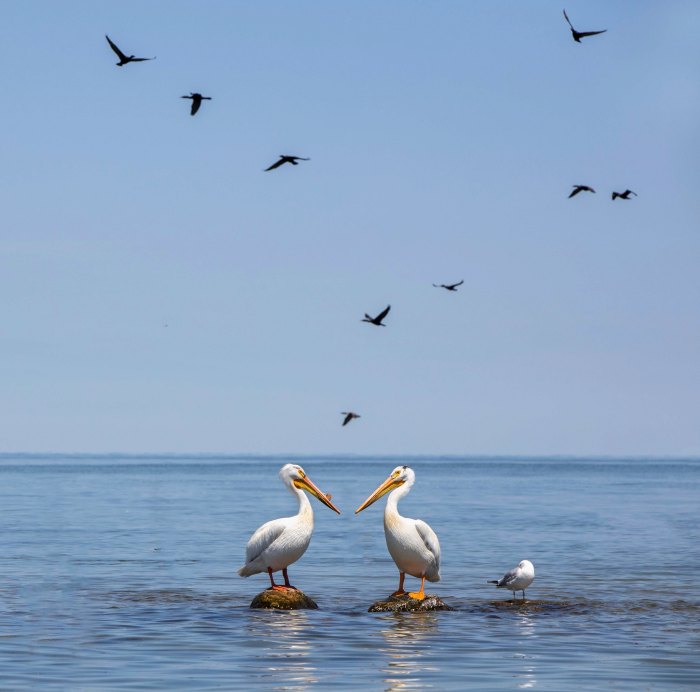
American White Pelicans on Lake Huron by kare hav

American White Pelicans on Lake Huron by kare hav

The photographer writes that it’s hard to believe that there’s pelicans in Michigan, but here they are. In an in-depth Great Lakes Echo feature, Eric Freedman writes that American White Pelicans are expanding their breeding range in Michigan & North America:

The species “is undergoing a dramatic expansion of its breeding range in North America,” the study published in the journal Ontario Birds said. “The nesting on Lake Erie, so far from the colony sites in Lake Michigan and Lake Superior, seems unusual. Why such a large dispersal from the nearest breeding colony 550 km (340 miles) away?”

Now they’re spreading eastward.

…That distance “is and is not unusual,” said study co-author D.V. Chip Weseloh, a retired Great Lakes waterbird specialist with the Canadian Wildlife Service. “Pelicans are strange birds and will range far and wide hundreds of miles to feed,” a feat documented with radio transmitters.

With its 9-foot wingspan, the American white pelican is one of North America’s largest birds and feeds primarily on fish, according to the Audubon Society.

The overall population declined through the first half of the 1900s but has grown substantially since the 1970s. It’s protected under the Migratory Bird Treaty Act, and the International Union for Conservation of Nature’s Red List categorizes it as a species of least concern.

Lots more in the Echo!

View more in Kare Hav’s Pt. Lookout/Augres gallery on Flickr.

Support Michigan in Pictures with Patreon

Brilliant Blues at Clear Lake

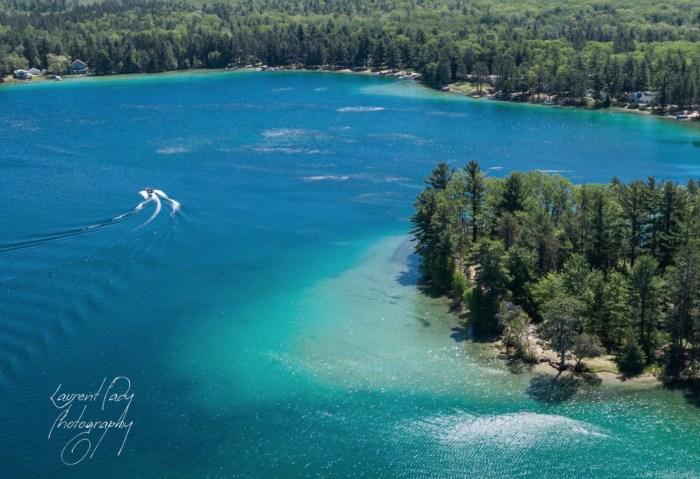
Clear Lake Montmorency County Michigan by Laurent Fady

Clear Lake by Laurent Fady

How about those blues??!! The Michigan DNR says that Clear Lake State Park in Montmorency County is located within the Mackinaw State Forest and:

…is a quiet, secluded retreat offering a sandy beach and a shallow swimming area that is ideal for children. A metal detecting area is available. The park encompasses two-thirds of the Clear Lake’s shoreline. A trail spur offers Off-Road Vehicle (ORV) riders a direct connection to the Atlanta ORV route and the Michigan Cross Country Cycle Trail.

This State Forest is composed of the northern eight counties of the Lower Peninsula. The Atlanta area of this forest contains over 258,000 acres of state-owned public land. Most of the virgin timber was removed from the forest by the 1920s and has been replaced by second-growth forests managed by the DNR. Deer, elk, turkey and small game are plentiful in the Mackinaw State Forest …elk can be seen and heard throughout the area in the early morning and evening, especially during the spring and fall. Native elk disappeared from Michigan nearly 100 years ago, they were reintroduced in 1918 and have multiplied into a large herd.

Head over to the DNR for trail, camping & disc golf course information.

Laurent took this photo above Clear Lake the other day. Lots more pics in his Aerial Photos of Northern Michigan Gallery on Flickr.

Support Michigan in Pictures with Patreon

The other side of O Kun de Kun Falls

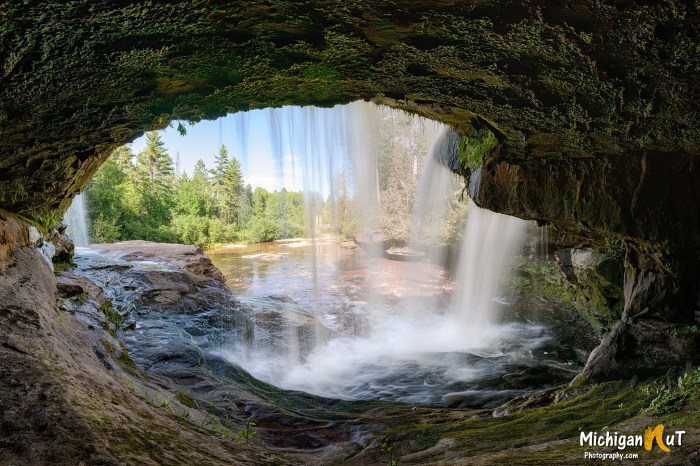
O-Kun-de-Kun Falls by Michigan Nut Photography

O-Kun-de-Kun Falls by Michigan Nut Photography

GoWaterfalling is simply the best website for Upper Peninsula waterfalls. In addition to detailed directions, they share that O Kun de Kun Falls:

…is one of the largest of the waterfalls in Ontanagon county. It is not as large as Bond Falls or Agate Falls, but it is just as scenic and far wilder. It is a mile plus hike to O Kun de Kun Falls and there are no fences or signs. The waterfall is also unusual in that it is an actual plunge falls. Only a handful of the many waterfalls around Lake Superior are plunge falls. You can go behind the falls if you want, but you need to be careful and sure footed.

…The width of the falls varies wildly depending on water levels. The Baltimore River can get pretty thin in summer months.

The waterfall is named after an Ojibway chief.

John took this from behind the falls last week and notes that the Baltimore River is a warm, slow moving river. Click to view it on Facebook and definitely follow him on Facebook & Instagram and order prints & more at michigannutphotography.com!

See many more Michigan waterfalls on Michigan in Pictures!

Support Michigan in Pictures with Patreon

I’m Still Standin’

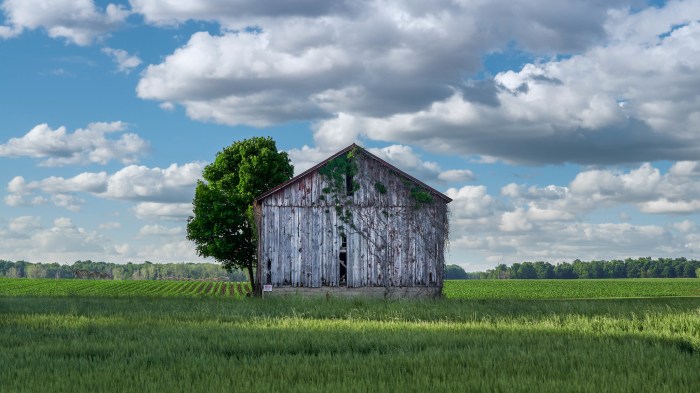
I'm Still Standin' by Third Son

I’m Still Standin’ by Third Son

Third Son took this earlier in the week. See more in his Nikon 70-200 F/4 AF-S album on Flickr & check out more great Michigan barns on Michigan in Pictures!

Support Michigan in Pictures with Patreon

Frog in the duckweed

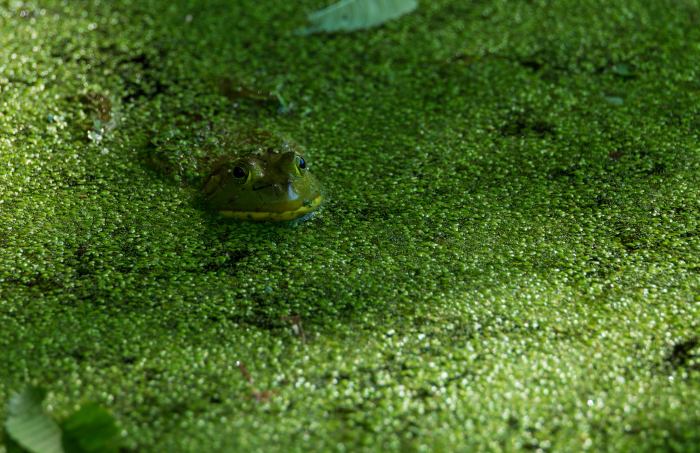
Frog hiding in the duckweed by William Dolak

Frog hiding in the duckweed by William Dolak

Hot weather is on tap for today – here’s hoping you find a cool spot! Bill shared this photo from Spirit Springs Sanctuary in Cass County in our Michigan in Pictures Group on Facebook. See more photos from his visit right here and consider sharing your own!

Support Michigan in Pictures with Patreon

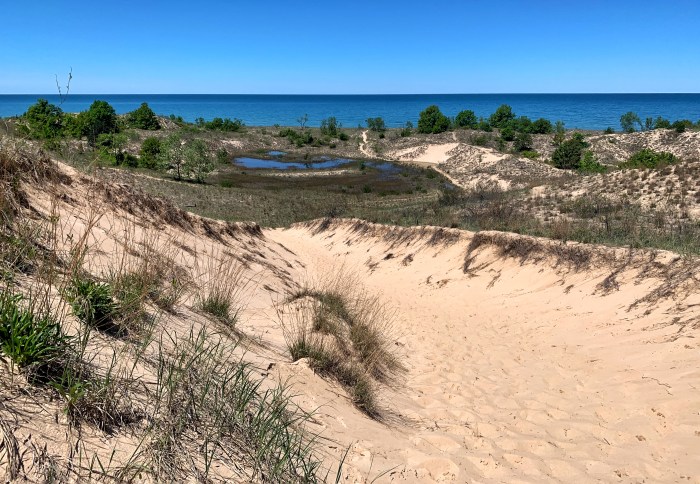
Heading down to the beach on Warren Dunes

Heading down to the beach - Warren Dunes by Mark Swanson

Heading down to the beach – Explore by Mark Swanson

Pure Michigan says that Warren Dunes State Park:

…provides 1,952 acres of recreational opportunities along the beautiful shore of Lake Michigan in southwestern Michigan. The rugged dune formation rises 260 feet above the lake and offers spectacular views and excellent for hang gliding. The park has three miles of shoreline, six miles of hiking trails and is open year-round. Pet-friendly shoreline.

Wikipedia adds that:

The dunes and beach area was preserved by a local businessman, Edward K. Warren, who originally purchased the site as a favor to a friend who had encountered significant financial difficulties. By 1930, the Warren Dunes area had been taken over as a state park

Head over to the Warren Dunes State Park website for trail maps, camping reservations & more.

Mark took this photo last weekend. See more in his June 2020 gallery.

Support Michigan in Pictures with Patreon

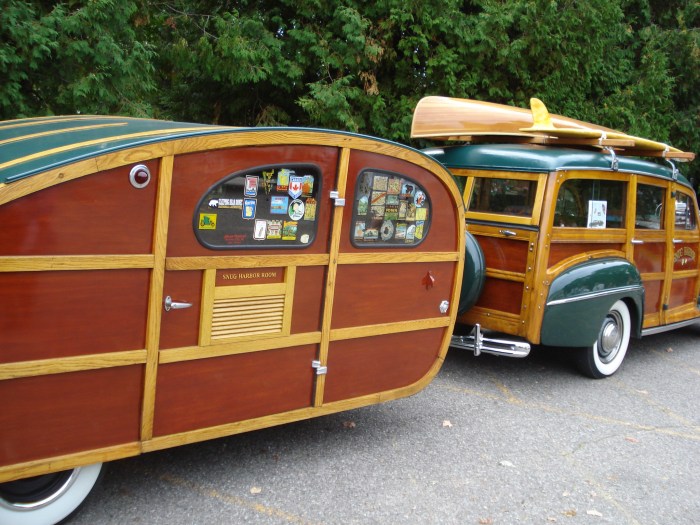
DNR Reopening Michigan Campgrounds & Harbors

When Hobbits ran Detroit by Andrew McFarlane

When Hobbits Ran Detroit by Andrew McFarlane

The Michigan Department of Natural Resources has announced opening dates for campgrounds, harbors and other outdoor spaces as Michigan moves to Stage 4 of Gov. Gretchen Whitmer’s MI Safe Start plan:

“We are excited to open up these resources to visitors again,” said Ron Olson, chief of the DNR Parks and Recreation Division. “We can identify with the passion and enthusiasm people have for these beautiful outdoor spaces, especially during the warmer months, and we’re working hard to make sure everything is ready.”

Official opening dates include:

  • Dispersed camping on state-managed lands – which allows for greater social distancing and does not involve shared restroom or shower facilities – resumed May 29.
  • Camping at the state’s more than 140 rustic state forest campgrounds and overnight stays in DNR-managed harbors resume Wednesday, June 10.
  • Camping, overnight lodging facilities, day-use shelters and sanitation stations (common place to dispose recreation vehicle wastewater) in state parks and recreation areas reopen Monday, June 22. Please note that a handful of campgrounds have extended closures due to construction that was delayed due to the COVID-19 stay-home order and associated spending restrictions.
  • Many park amenities, such as bathroom buildings, hand-washing stations, trash services, concessions, playgrounds and play equipment, viewing platforms, fishing piers, GaGa ball pits, designated dog areas, disc golf courses, radio-controlled flying fields, pump tracks, and picnic tables and shelters, are beginning to open in phases. As anticipated opening dates are finalized, they will be posted to the DNR COVID-19 response page.

You can see campgrounds & make reservations at MiDNRReservations.com or call 800-44PARKS.

I took this picture way back in 2008. More in my Leelanau gallery on Flickr.

Support Michigan in Pictures with Patreon

Celebrate Michigan Photo Contest underway

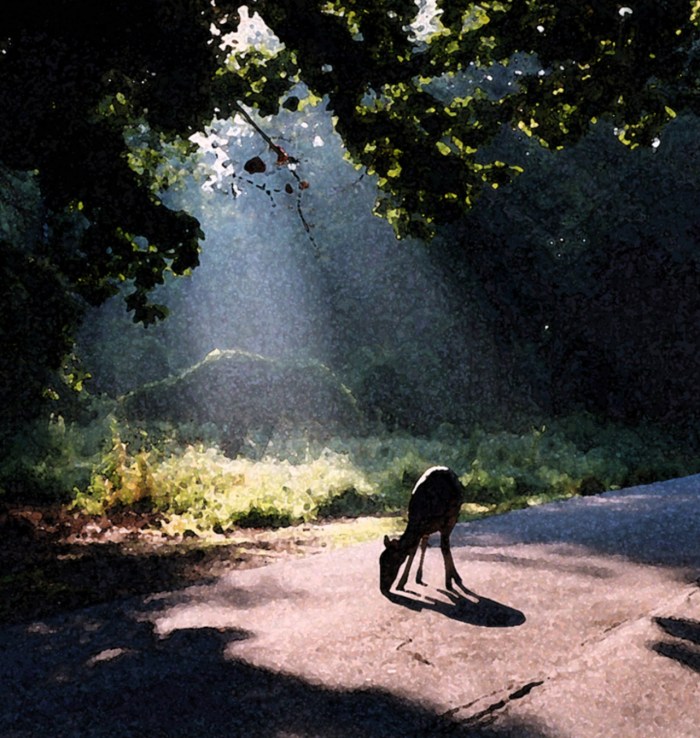
a Belle Isle deer by Race Bannon

a Belle Isle deer by Race Bannon

The Detroit News Celebrate Michigan Photo Contest rewards outstanding photos of Michigan, its people and animals, with nine prizes of as much as $300 doled out at the end of the summer:

Each week, judges from the Detroit News photo staff will select 4 photo finalists, 16 total in each category over the entire contest period. At the end of the contest, The Detroit News photo staff judges will select one winner in each category. One People’s Choice winner in each category will be chosen by an online public vote, Aug. 20-24. Each of the six winners will receive $300.

At the end of the contest, three Awards of Excellence will be chosen by the Detroit News photo staff from the remaining finalists of all three themes, and will receive $100 each.

The Celebrate Michigan Photo Contest is open to non-professional photographers age 18 and older. All photos must have been shot in Michigan, with no significant alteration by a software program. More specifics can be found in the official contest rules.

Race gave me a heads up about the contest, so I went back to a favorite photo of mine that he took 15 years ago. See more in his My Belle Isle gallery.

Support Michigan in Pictures with Patreon

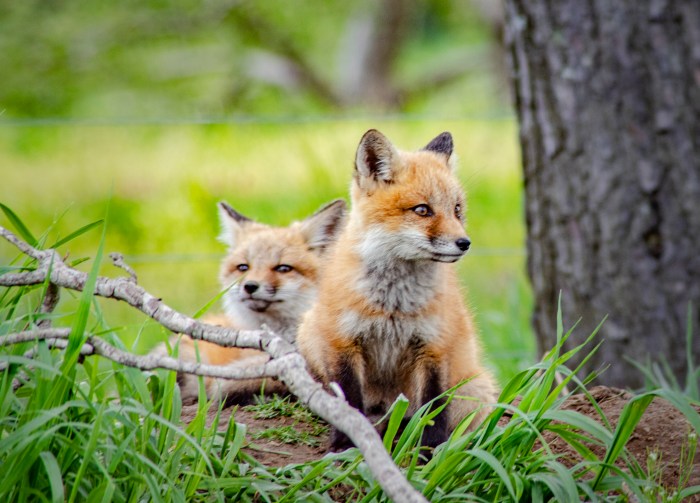
At Home with the Fox Twins

Taking in the Surroundings by TP Mann

Taking in the Surroundings by TP Mann

I know I’m running the risk of becoming an adorable animals photo blog, but darn are these little foxes cute! Here’s a little about baby foxes and what to do if you encounter one from Friends of Wildlife in Ann Arbor:

There are two species of fox in Michigan, the Red and the Gray. The Red prefer meadow areas and the Gray favor woods.

As with most wildlife, the kits are born in early spring. The vixen (female fox) chooses a hollow log, an empty woodchuck hole or a roadside culvert for the nursery. This nest site provides her young protection from predators, especially coyotes. The male fox helps with the rearing by bringing the vixen food while she nurses their young and keeps the kits warm. Then later in the kits development both parents teach them how to forage for food.

The foxes diet consists mainly of small rodents, moles and bugs. The benefits that foxes afford farmland, orchards and the general public is their consumption of these invasive pests. It is an absolute miss conception that fox eat cats, dogs or small children.They are very curious creatures but avoid contact with domestic animals and humans.

When fox kits are first born, their eyes and ears are closed, they remain secluded in their den with their mother. As they develop, at about one month, they start venturing out to play, attacking twigs, leaves and their siblings, but never far from the protection of the den.

If you do find an infant fox, please contact them for further instructions and see their website for information about other species!

See more in TP’s Sites Along the Breezeway photo album.

Support Michigan in Pictures with Patreon