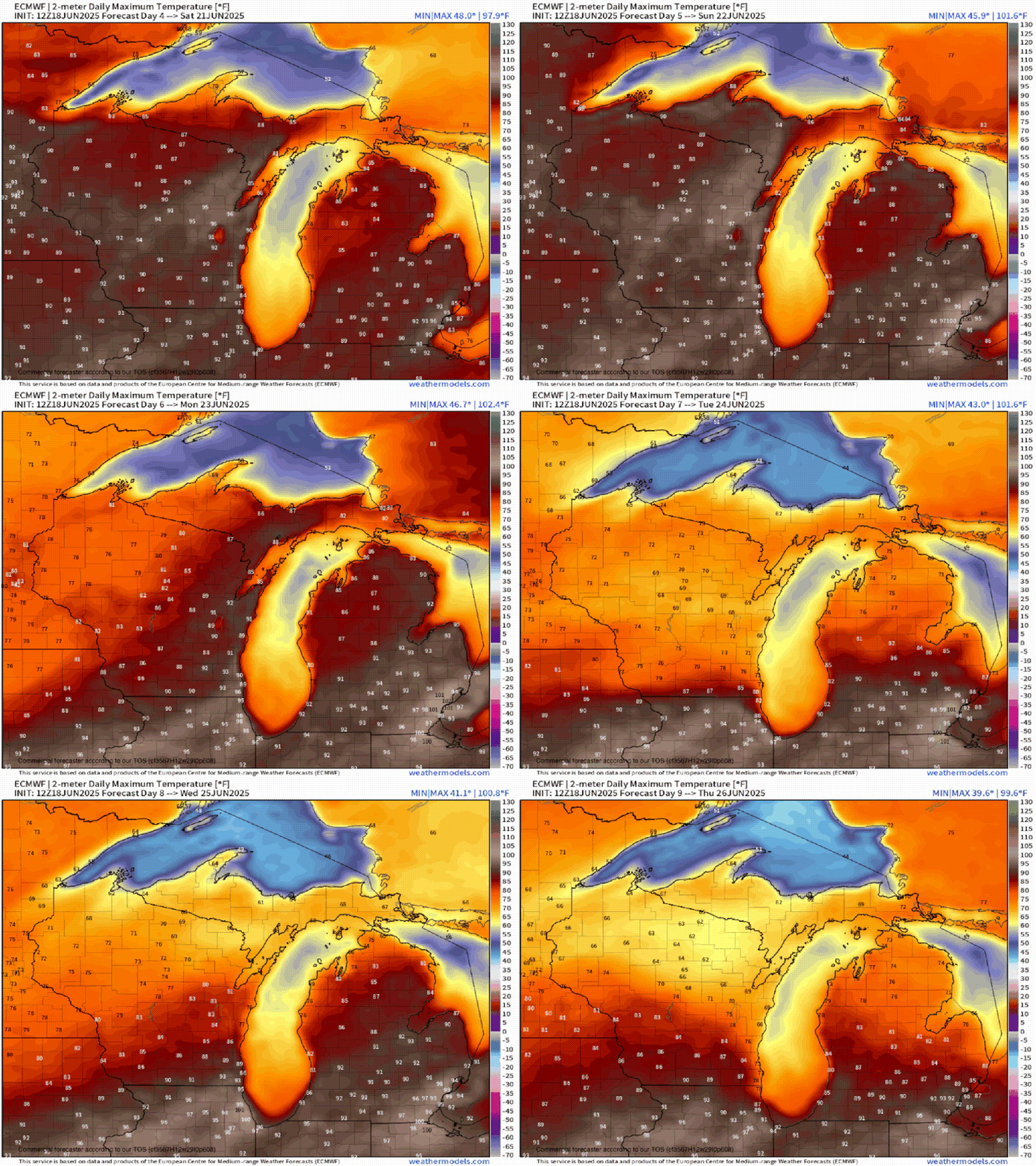
mLive’s Mark Torregrossa shares that a heat dome will cover much of Michigan beginning Saturday that is expected to keep temps in the 90s until at least next Thursday!! Mark shares that Michigan hasn’t hit 100 degrees since 2012 since our highest heat in recent years has been coming from the northwest:
This won’t be the case with the weekend’s and next week’s heat. The coming heat is going to build in from the southeast. This means what should be the hottest corner of Michigan will be the hottest. When all of the concrete and pavement of southeast Michigan gets hot it can get really hot.
It will get really hot. Detroit, Ann Arbor and Monroe will make a run at 100 degrees. If so it would be the hottest temperatures in those cities since 2012. (see the temperature map below)
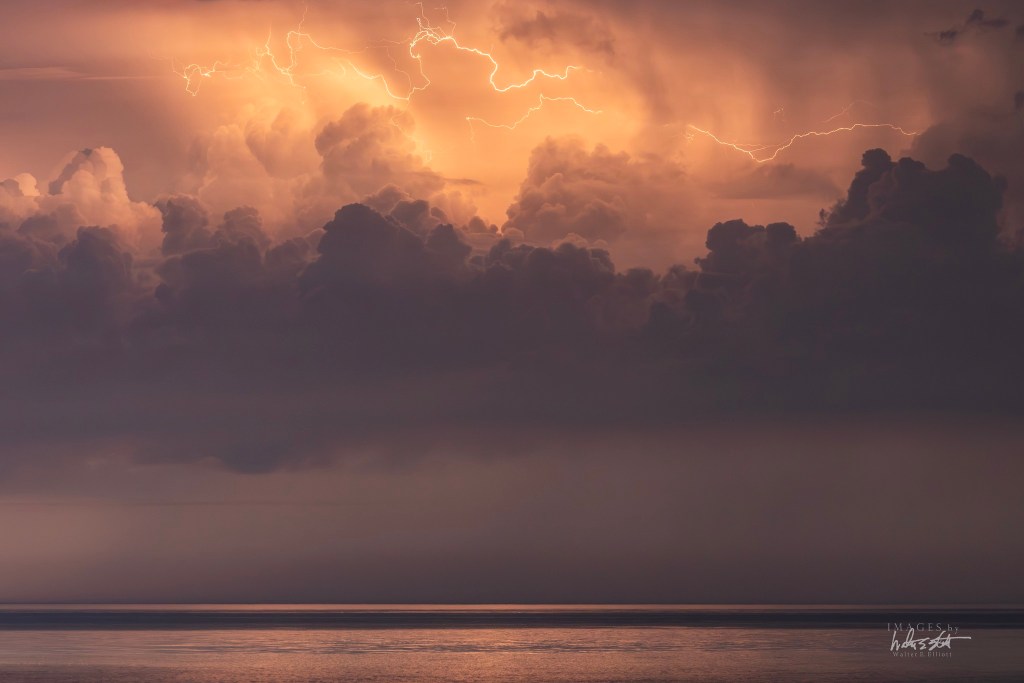
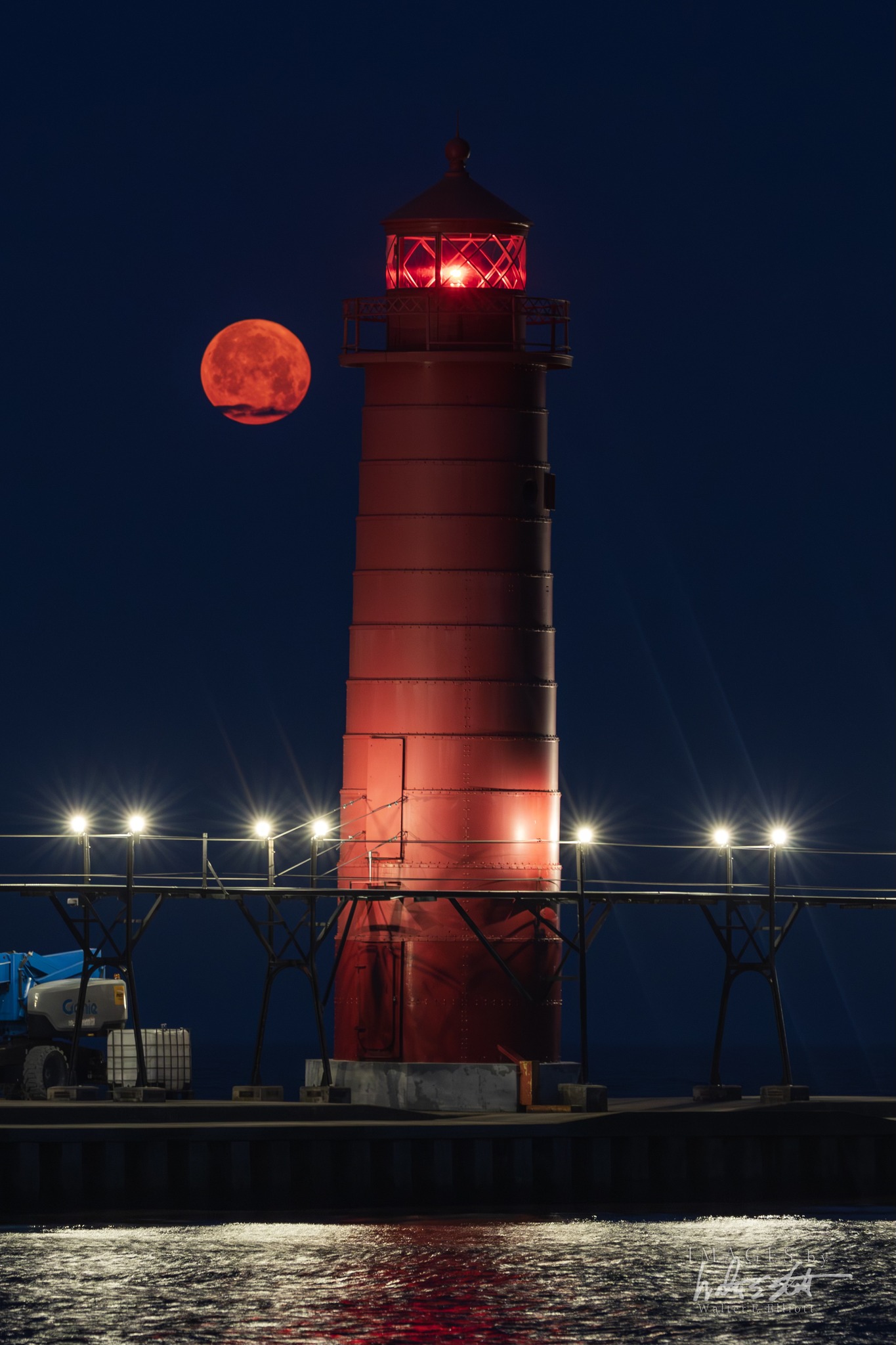
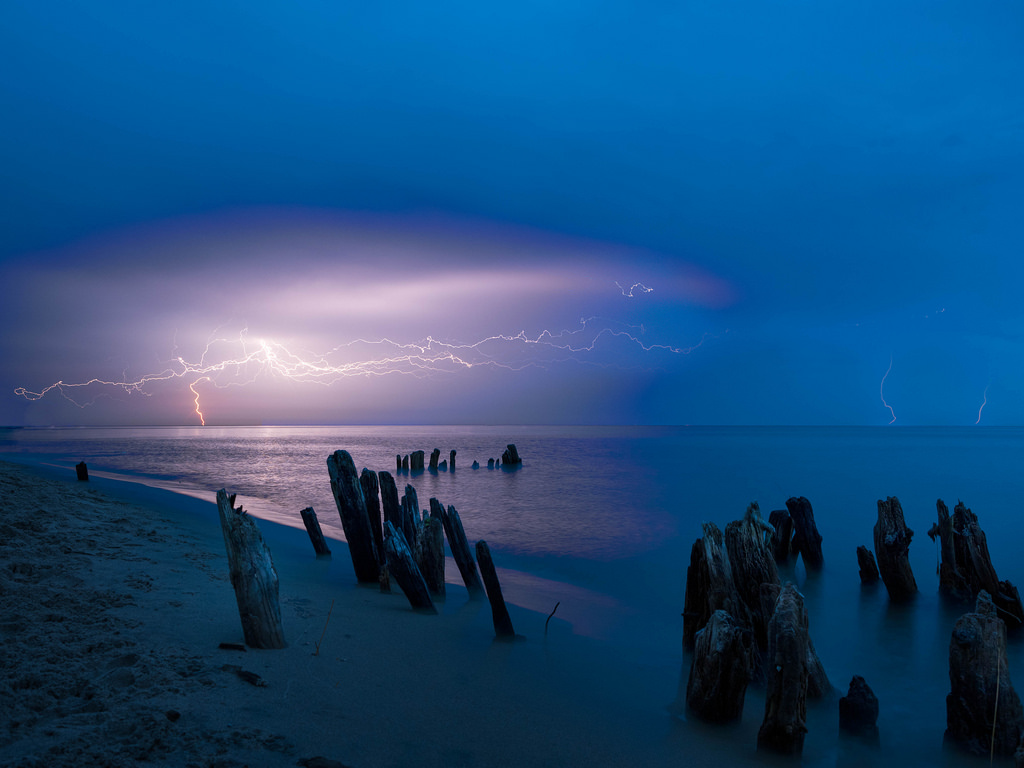
Walter took this yesterday in Grand Haven as a storm rolled across Lake Michigan, and I’ve shared a couple more sizzling shots! See many more at Images by Walter E. Elliot on Facebook and view & purchase his work on his website.
I’m not afraid of storms, for I am learning how to sail my ship. -Louisa May Alcott
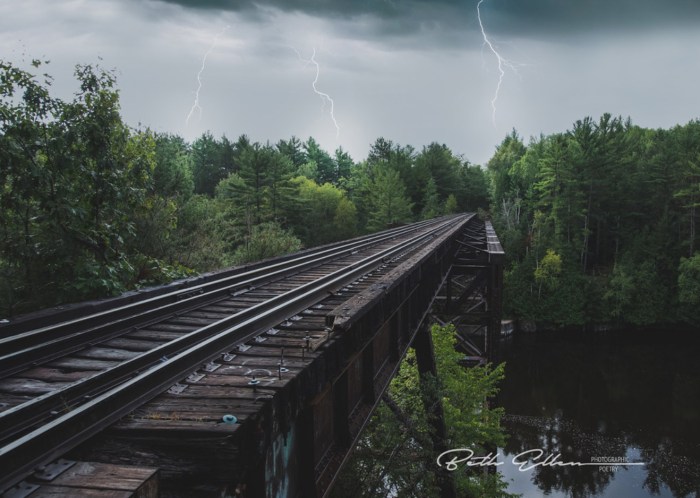
It’s been too long since I shared a photo from Beth. I just love her work!! See more in her Waterscapes / Nautical gallery on Flickr & safe (but interesting) voyages.
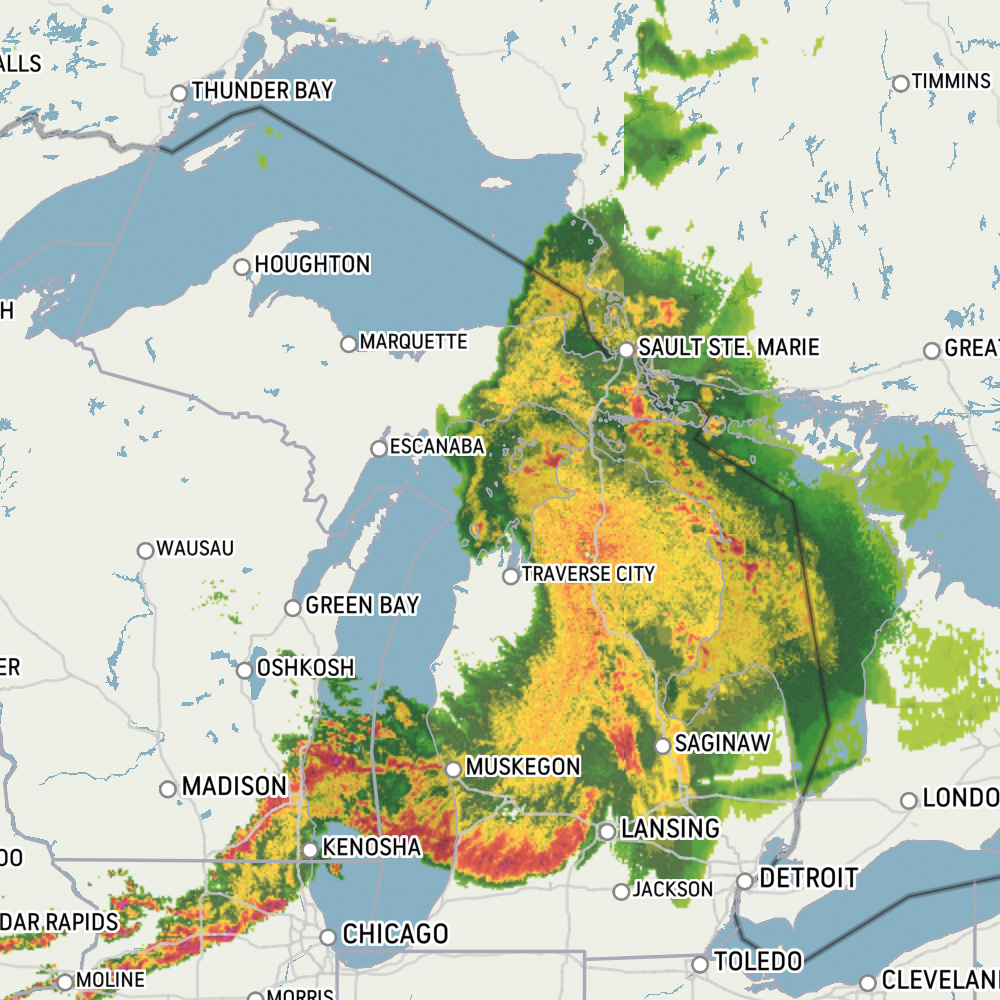
As you can see from the weather radar, a powerful summer storm has been rocking & rolling its way across the state this morning leaving cooler temps in its wake. Hoping you’re staying safe & dry!
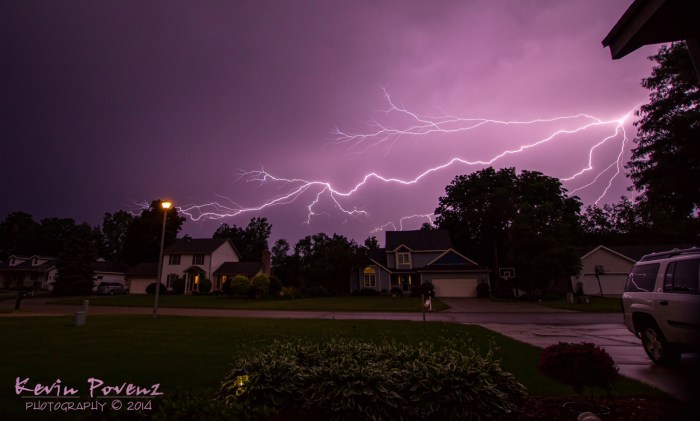
Ethan got this double stroke of lightning on Sunday just before a storm dumped buckets of rain. Follow him on Facebook at Captures By Ethan and view & purchase his work on his website.
Regular Michigan in Pictures contributor Shawn Malone of Lake Superior Photo created the official music video for David Helpling’s “As The World Falls Away.” It features her latest cinematic time-lapse work filmed entirely in the Upper Peninsula of Michigan merged with sequences from NASA’s ISS to form a stunning visual & auditory journey.
It will appear on the The Weather Channel in their “Weather Gone Viral” episode that airs tonight on The Weather Channel. She says they’ve told her 10 PM EST, but check your local listings.
“Our children were born here and now we have five grandchildren to celebrate also. We have proud geological roots here. We think the shaft should be bright on our birthdays, and this would be a good way to support geoheritage and the QMHA. We hope other local families will consider doing this.” ~Bill and Nanno Rose
The photo above shows the Quincy Mine Hoist, part of the Quincy Mine complex, an extensive set of copper mines near Hancock. The mine was owned by the Quincy Mining Company . The Quincy Mine was known as “Old Reliable,” paying a dividend to investors every year from 1868 through 1920 and operated between 1846 and 1945. The Quincy Mine page on Wikipedia says (in part):
The Quincy Mine was founded in 1846 by the merger of the Northwest Mining Company and the Portage Mining Company. Due to poor communication between government offices, these two speculative mining companies had purchased the same tracts of land during the mining rush of the early 1840s. The directors met and decided to merge, with significant investment coming from Massachusetts (the town of Quincy, Massachusetts lent the mine its name). While many other copper mines were founded at the same time, the Quincy Mine became the most successful of the 1840s-era mines, and was the country’s leading copper-producing mine from 1863 (when it exceeded the production of the Minesota Mine) through 1867 (after which it was exceeded by the Calumet and Hecla).
The mine was the first Michigan copper mine to switch from fissure mining to amygdaloid mining, when the recently discovered Pewabic amygdaloid lode was found to cross Quincy property in 1856. High-grade fissure veins contained large, pure masses of copper, but the masses could take days or even months to extract, at high cost. Amygdaloid mining consisted of extracting lower-grade strataform orebodies in the “amygdaloid zones,” the upper portions of basalt lava flows. Rock bearing small pockets of copper could be blasted out immediately and processed elsewhere at much lower cost. Amygdaloid mining proved much more productive than fissure mining, and the size and richness of the Pewabic lode in particular allowed the Quincy to produce profits for 53 consecutive years. The Quincy company expanded laterally along the lode by buying out adjacent properties. The company bought the Pewabic mine in 1891, the Mesnard and the Pontiac in 1897, and the Franklin mine in 1908. This helped the mine survive longer than almost all other Keweenaw copper mining companies, except the Calumet and Hecla Mining Company and the Copper Range Company.
To attract a better class of worker, the Quincy Mining Company built and maintained housing for the workers. Over the course of operations, the types of housing ranged from simple tents in the early days, to complete three story houses shortly before the mine’s shutdown. The executives on the east coast wanted to build more elaborate and fancy homes with amenities such as electricity and running water. However, the on-site managers didn’t think it was necessary for the miners to have such high-class dwellings. But the east coast executives realized that if they offered nicer homes to the workers, the miners were more likely to stay, raise families, and be less likely to leave the area or transfer to another mining company. This strategy proved effective and helped the Quincy Mining Company retain its status as one of the premier mining companies in the region.
BLAM!! Who’s ready for some spring storms? FYI, this is actually not a lighthouse off Belle Isle, it’s the Detroit Waterworks Intake Crib. You can have a look at on Google Maps.









 Michigan in Pictures