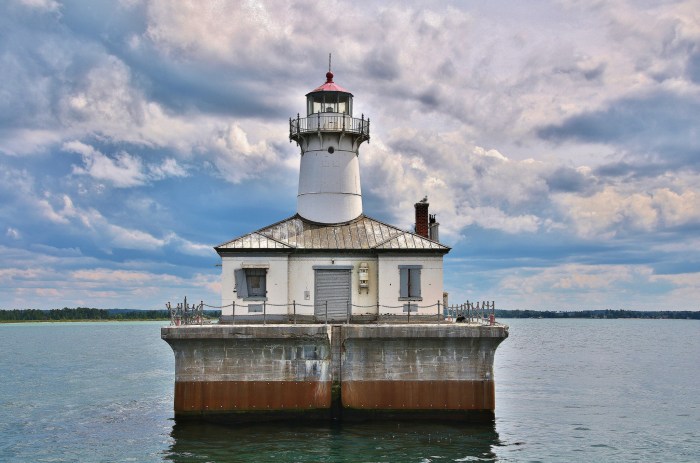
Fourteen Foot Shoal Lighthouse in Lake Huron

14 foot shoal lighthouse by David Juckett

14 foot shoal lighthouse, photo by David Juckett

Terry Pepper’s Seeing the Light remains the gold standard for information about the lighthouses of the Great Lakes. Terry writes (in part) of the process of constructing Fourteen Foot Shoal Light near the entry into Cheboygan Harbor:

With completion of the work at Poe Reef in 1929, the work crew turned their attention to work at Fourteen Foot Shoal. While the new light was of a totally different design, and considerably smaller than the twin lights built at Martin and Poe Reefs, the construction of the crib proceeded in much the same manner, with the construction of a wooden crib at the shore station on the Cheboygan Pier. After an area on the shoal was leveled, the crib was eased down wooden ways into the water, and towed to the shoal by the Lighthouse Tender Aspen. Once over the leveled area, the crib was sunk to the bottom by filling its empty pockets with rocks and gravel.

This timber foundation then served as a core, upon and around which wooden forms were constructed and filled with concrete loaded from the Lighthouse Service scow. As was the case with both the Martin and Poe stations, the upper edge of the crib was formed into a graceful flare, designed to deflect waves away from the pier, in order to help protect the structures which would be erected on the deck. With the completion of the concrete work, the pier stood fifty feet square, and its deck level fifteen feet above the water.

The steel framework for the single story equipment building was erected at the center of the deck. Standing thirty-four feet by twenty-eight feet in plan, on completion, the entire exterior of the building was sheathed with 1/4-quarter inch steel plates, each riveted to the steel framework beneath. Centered on the roof ridge, a cylindrical steel tower was integrated into the roof, standing six feet in diameter and twenty-four feet above the ridge line. The tower was capped with an octagonal cast iron lantern and outfitted with a flashing white Fourth Order Fresnel lens.

Read on for lots more and photos!

View David’s photo background bigtacular and see more in his slideshow.

Many more Michigan lighthouses on Michigan in Pictures!
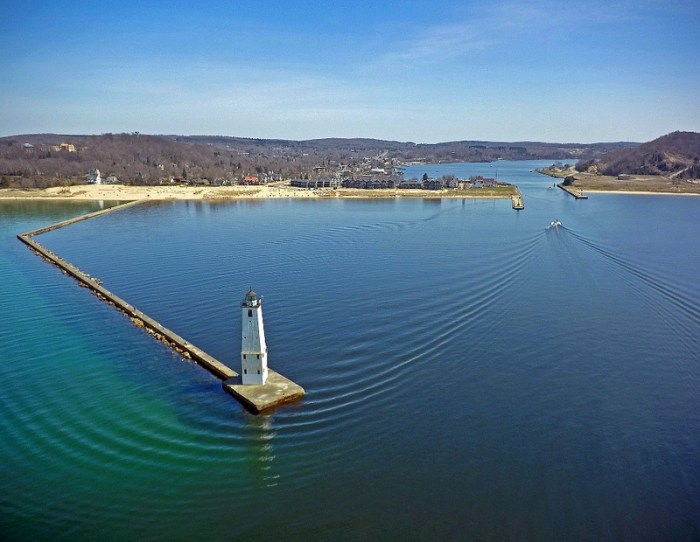
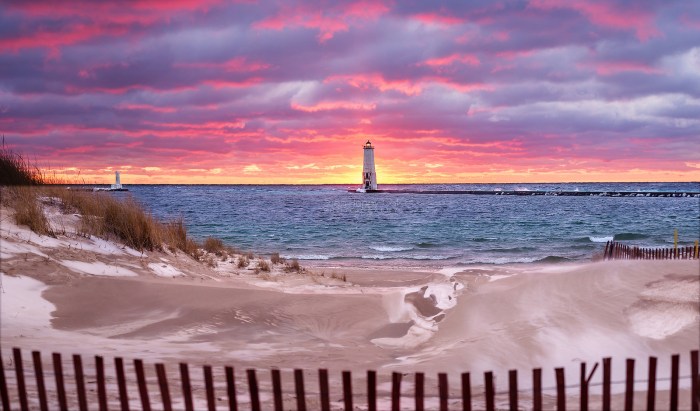
Above Frankfort Harbor

Above Frankfort Harbor

Frankfort Harbor, photo by Julie

My friend Enrico of Traverse Today and his sons shared a great aerial video from Frankfort the other day:

Julie took this stunning shot last Saturday. View her photo bigger and see more in her Drone shots slideshow.

Lots more from Frankfort on Michigan in Pictures.

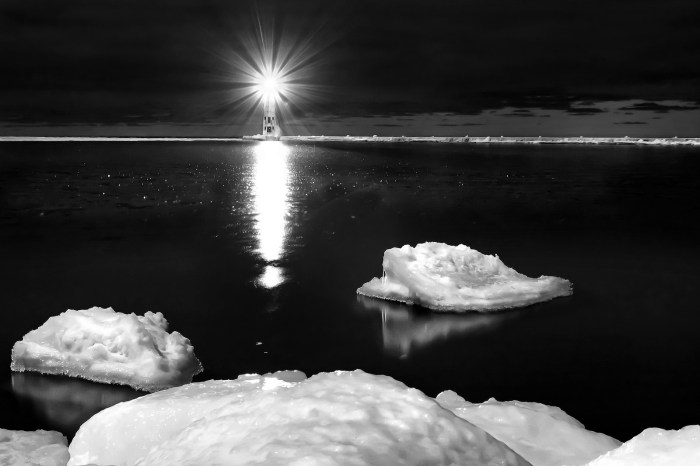
Quiet Night at Frankfort Lighthouse

Frankfort Lighthouse at Night

Quiet Night at Frankfort Lighthouse, photo by Snap Happy Gal Photography

I was going to talk this morning about how I will continue to talk about what I want to talk about on Michigan in Pictures, but then I saw this awesome photo by Heather. I’m sure you get the idea.

On her Snap Happy Gal blog where you can view & purchase some great lighthouse photos, Heather writes:

I think of myself as a serendipitous shooter: I go out to scenes in all kinds of light – the good, the bad, even the ugly – and I take photos. Sometimes I walk away with artwork worth sharing, and sometimes I just walk away with happy memories. I don’t often stalk a scene for the best light, I don’t think of myself as having a favorite thing to photograph, and I don’t find that I’m predictable (even I don’t know when or where I’ll be heading out to shoot until I get the itch). But, lately, if you wanted to catch me out and about, you’d look at northern Michigan’s west coast lighthouses.

I’ve visited every one of them from Manistee up to Northport (though I didn’t take the camera out), and I’ve been there from sunrise to sunset, and well into the night.

Last Wednesday, I checked the weather and saw something I hadn’t seen in what felt like eons: the possibility for clear night skies. I packed my gear, my cold weather clothes, and food and water, and headed for the coast. I missed the best light in an incredible sunset, but caught the afterglow and the first light of the moon on the lakeshore just south of Empire. While the skies were still cloudy, I headed south into Frankfort to see how the ice was shaping up along the beach. By this time, the winds had died down almost entirely. The water inside the breakwall was very still, the forming ice chattered, and tiny waves sloshed against the icebergs beached on the sand.

Read on for the rest, view & comment on her picture on Facebook, and definitely follow Snap Happy Gal for great pics of lighthouses and much more.

More about the Frankfort North Breakwater Light on Michigan in Pictures.

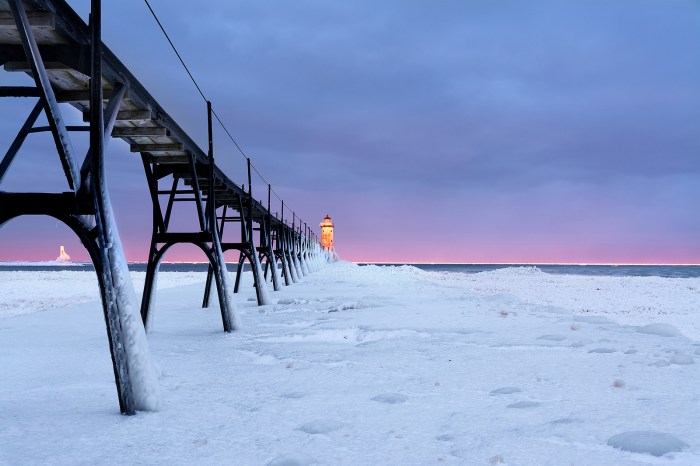
Morning Light at the Manistee Pierhead Light

Manistee Lighthouse

Manistee Morning Light, photo by Heather Higham

Terry Pepper’s Seeing the Light has an extensive entry on the history of the Manistee Pierhead Light with copious information and historical photos. Terry goes deep on Manistee’s history as a lumber port:

Although the first sawmill had been established on the banks of the Manistee in 1841, settlement in the area was not widespread until the Chippewa relinquished their reservation by treaty in 1849, and the federal government offered lands along the Manistee for public sale. It did not take lumber interests long to realize the incredible potential of the Manistee which snaked a hundred miles into the forests, and lumbermen soon began lobbying for federal funding to improve the harbor and to erect a lighthouse at the river mouth. With no appropriation forthcoming, the businessmen of Manistee took the matter into their own hands, erecting a pair of short stub piers at the river mouth in an attempt to stem the deposition of sand and silt.

In 1861, Congress instructed the Army Corps of Engineers to dispatch an Engineer Officer to Manistee to conduct a survey of the river entrance. Water depth in the opening between the piers was found to be from seven to eight feet, and a 250-foot long sand bar with a water depth of less than five feet above it was identified 600 feet off the end of the piers.

…To serve this burgeoning maritime commerce, the piers were extended an additional 150 feet in 1875, and the channel between them dredged to a minimum depth of ten feet. With the main light now standing a considerable distance to the rear of the pierheads, the decision was made to replace the shore light on the north bank with a pierhead beacon on the outer end of the longer south pier. Click to view enlarged image The new south pierhead light consisted of a timber-framed pyramidal beacon typical of the type being erected on pierheads throughout the Great Lakes. With its lower half open, the upper half immediately below the gallery was enclosed to provide a small service room for lamp maintenance. Equipped with windows, the service room also served as a sheltered area in which the keeper could stand watch during inclement weather. Standing 27 feet in height, the beacon was capped with a square gallery with iron handrails and an octagonal cast iron lantern installed at its center.

Read on for a whole lot more.

About the photo, Heather writes:

I still can’t believe I managed to drag myself out of bed this morning. There were 8 minutes of pink light – and a stunning sunrise to the east that I completely ignored – followed by about 90 minutes of interesting (if not sunrise) light.

View it bigger, see more in her Lighthouses slideshow and definitely add Snap Happy Gal Photography to your Facebook follows!

More Michigan Lighthouses and more sweet sunrises on Michigan in Pictures.

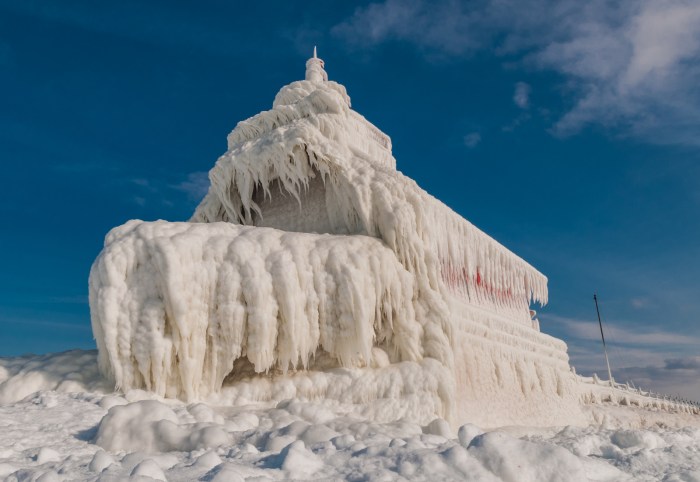
Back into the freezer, Michigan

Ice Palace Grand Haven Lighthouse

Winter Wonderland, photo by David Behrens

mLive meteorologist Mark Torregrossa says that severe & sustained cold temps plus heavy lake effect snow are coming to Michigan this week:

Most of the heavy lake effect this winter has come on a northwest wind. The lake effect this week will be brought by a more northerly wind. So the lake effect will fall closer to the Lake Michigan shoreline. The heaviest snow will likely fall in the far southwest corner of Lower Michigan from St. Joseph to Michigan City, IN and South Bend, IN. Also heavy lake effect should fall from Traverse City, Leelanau County and southward to just west of Cadillac.

The heaviest areas of lake effect snow should easily have 6″ of snow, with spots getting up to a foot of snow.

…No area will escape the deep cold. This cold snap won’t be like the other cold snaps this winter that only lasted a few days. This cold snap will start Tuesday and gradually get colder each day into next weekend. By the time temperatures bottom out this weekend, we’ll freeze with highs in the teens and low temperatures in the single digits above or below zero.

The wind will push wind chill temperatures down to -10° to -20° at times in the second half of the week.

David took this last winter at Grand Haven. Check it out bigger and see more in his Home Sweet Home slideshow.

More about the Grand Haven Pier Light along with a crazy photo of the waves that make these ice formations on Michigan in Pictures!

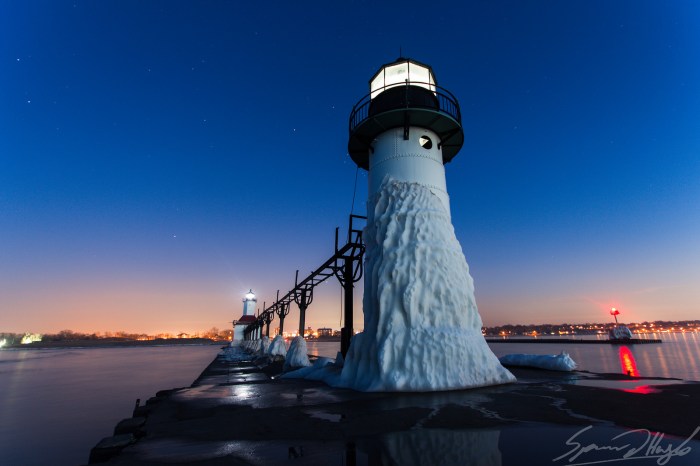
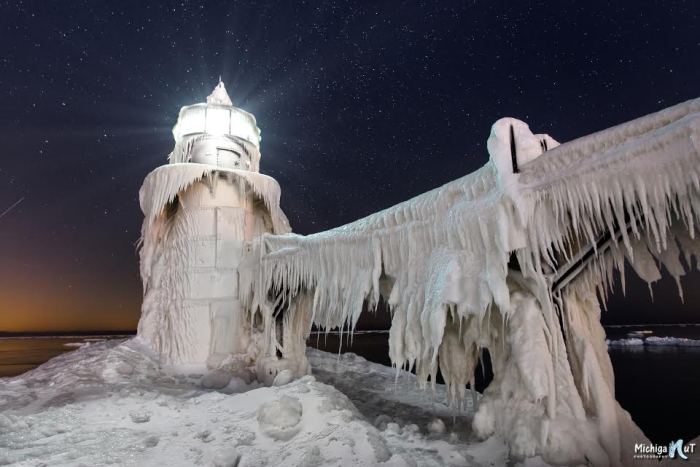
Blue Hour at the St Joseph Pier

Blue Hour at the St Joseph Pier

Untitled, photo by Spencer D Hughes

If you want to take a look at the Pier from the beach, check out the St Joseph webcam. Have a great weekend everyone!!

View Spencer’s photo bigger and see more of his awesome St Joseph photos. Some seriously cool ice shots in there.

PS: Here’s a link to more information and a photo of the St. Joseph North Pier Outer & Inner Lights from almost exactly a year ago – lots more ice.

PPS: I’d love it if you’d become a patron of Michigan in Pictures. Thanks to all who have so far – I really appreciate it!

Promise Fulfilled

Promise Fulfilled

Promise Fulfilled, photo by Heather Higham

Although I just featured a sunset photo by Heather … Wow!

She took this last night and writes: A break at the horizon that spouted god rays all afternoon hinted a the potential for a lightshow at sundown. We were not disappointed, though we were very cold.

View the photo bigger, see more in her Sunsets slideshow, and follow Heather at Snap Happy Gal Photography on Facebook.

Click for more about the Frankfort Pier Lights and a super cool winter photo by Jason Lome.


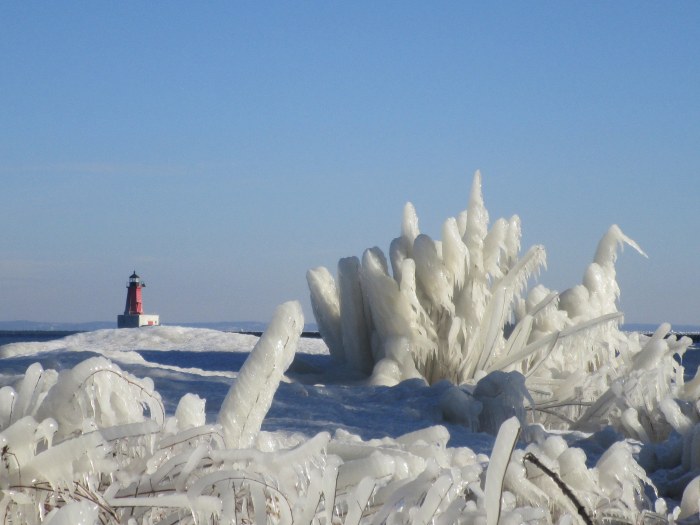
Ice is Nice at the Menominee Light Lighthouse

Ice is Nice Menominee Light Lighthouse

Ice is Nice, photo by cohodas208c

I’ll never miss a chance to tout Terry Pepper’s Seeing the Light as one of the premier resources for information about Michigan’s lighthouses, as well as others on the Great Lakes. He packs them full of the history including the political maneuverings and economic reasons for lighthouse development and closure and peppers in (sorry – couldn’t resist) historical photos and pictures from his own visits.

The entry on the Menominee North Pier Light details the lumber boom that led to the construction of the first lighthouse in 1877 and the development of the iron ore rich Menominee Range. He continues:

The town of Menominee continued to reap the benefits of the Range, and as a result significant harbor improvements were undertaken in the 1920’s, At their completion in 1927, a prefabricated octagonal cast iron tower was delivered by vessel, and lowered onto the pier.

The thirty-four foot tower was painted white, and integrated with an attached fog signal building. An elevated wooden catwalk stretched along the wooden pier to provide the keepers with safe access to the light during periods when waves crashed across the surface of the pier. The octagonal cast iron lantern room was outfitted with a Fourth Order Fresnel lens of unknown manufacture.

At some point thereafter, the wooden pier was replaced by a concrete structure with a forty-foot diameter circular crib at its offshore end. At this time, the fog signal was eliminated with the inclusion of an automated electrically operated signal in the tower. With automation of the light in 1972, the need for daily maintenance of the light was also eliminated, and the iron catwalk was removed from the pier.

The tower was painted bright red, and relocated to a white painted concrete platform in the center of the crib. Its elevated position on the pier provided a focal plane of forty-six feet.

While the catwalk no longer snakes its way along the pier, the iron tower still stands guard over the harbor entrance, its jewel-like Fresnel lens replaced by a stark modern 300mm plastic lens.

Read on for more at Seeing the Light.

View the photo background bigilicious and see more in cohodas208c’s Big City Breakout – Dec 2015 slideshow.

Lots more Michigan lighthouses and more winter wallpaper on Michigan in Pictures!

Michigan Photo Calendars

St Joseph Lighthouse by Michigan Nut

St. Joseph Lighthouse, photo by John McCormick

Time to get your 2016 Calendars! In addition to being a great way to share a daily dose of Michigan with the people on your gift list, most photographers ship them directly for you making gift-giving easier. If you are a Michigan photographer who has a calendar for sale or know of one who does, please post link to any you know of in the comments below or on this post at the Michigan in Pictures Facebook!

The photo above is for January 2016 from one of my favorites is one that a reader recently asked about: The Michigan Wild & Scenic Wall Calendar by John McCormick of Michigan Nut Photography.  You can see them all and purchase the calendar at Michigan Nut Photography. Be sure to follow Michigan Nut on Facebook too!

More about the St. Joseph Pier light on Michigan in Pictures.

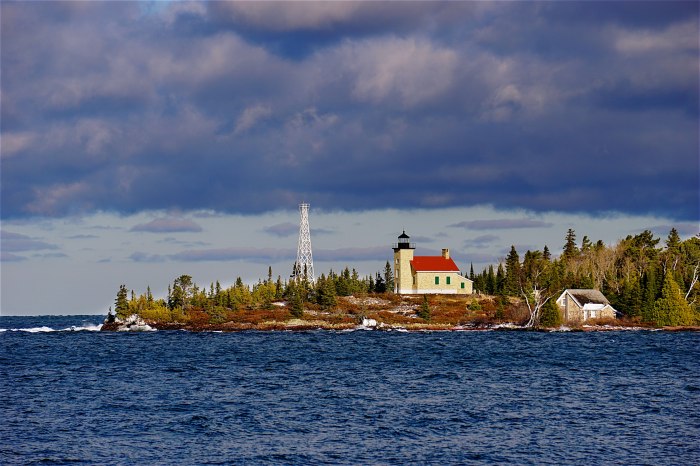
Old School Efficiency at Copper Harbor Lighthouse

Copper Harbor Lighthouse

Copper Harbor Lighthouse, photo by Frank Wulfers

Terry Pepper’s Seeing the Light has an extensive article on Copper Harbor Lighthouse that shines a light on some solid planning from back in the day … and some that was less so:

As was the case with virtually all of the lighthouses built on the Great Lakes during the Pleasonton administration, the true costs of inferior materials and shoddy workmanship began to show. After his 1864 visit to the station, the Eleventh District Inspector remarked that the Copper Harbor lighthouse required “extensive repairs.” On subsequent investigation, the condition of the tower was determined to be beyond repair, and the following year the decision was made to raze the old tower and erect a completely new structure. With old Pleasonton-era stations needing replacement at both Marquette and Ontonagon, and new stations planned for Gull Rock, Huron and Granite Islands, the decision was made to build all six lights to the same plan. Specifying a simple brick two-story dwelling with a tower integrated into the center of one of the gable end walls, this design would eventually become known as the “schoolhouse” style, as a result of its similarity to the design of rural nineteenth century one room schoolhouses.

The lighthouse tender HAZE returned to Copper Harbor in early 1866 and deposited a working crew and materials on lighthouse point to begin construction of the new main lighthouse. Work began with the demolishing of the old rubble stone tower, and excavating the foundation for the new structure. Under normal circumstances one would assume that the old tower would have been left standing until the new station was complete. However, an archeological survey conducted by the Michigan Technological University in 1994 showed that a large portion of the stone from the old tower was reused in building the foundation of the new building. Thus it is evident that the old tower must have been demolished first. What steps were put in place to allow the continued display of a light at the station for the time period between the demolishing of the old tower and the completion of the new structure are unrecorded. However, it is almost certain that some arrangement for the display of a temporary light would have been made.

Atop the rubble stone foundation, a team of masons erected a Cream City brick building, and its 42-foot tall tower capped with a square gallery with iron safety railing. A spiral cast iron stairway within the tower provided the only means of passing between the first and second floors in addition to providing access to the lantern. Centered atop the gallery, a decagonal prefabricated cast iron lantern was installed, and the Fourth Order lens from the old tower reassembled atop a cast iron pedestal at the center of the new lantern.

Seeing the Light has much more including old photos and an account of the Pleasanton Administration’s first draft of the Copper Harbor lighthouse. Before you judge Stephen Pleasanton too harshly, however, click over to his Wikipedia entry where you will learn how this James Monroe appointee helped to save the Declaration of Independence during the War of 1812!

View Frank’s photo background big and see more in his Michigan Upper Peninsula slideshow.

More Michigan lighthouses and more Copper Harbor on Michigan in Pictures.