The Night’s Watch

The Nights Watch

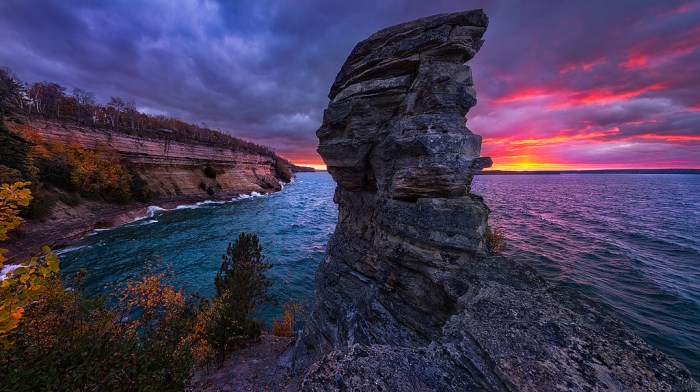
The Night’s Watch, photo by Jiqing Fan

Of this stunning photo from back in October at Miners Castle in the Pictured Rocks National Lakeshore, Jiqing Fan writes:

Winter is coming! The night’s watch of the North guard the last bit of colors against the white walkers (snow storm) approaching.

It appears that the Watch did its job and turned back winter 2016! View his photo bigger and see more in his Houghton & UP MI slideshow.

Lots more about Miners Castle on Michigan in Pictures!

Old School Efficiency at Copper Harbor Lighthouse

Copper Harbor Lighthouse

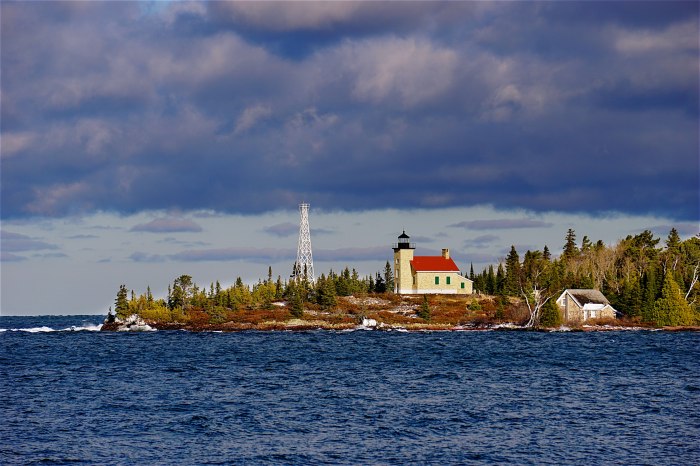
Copper Harbor Lighthouse, photo by Frank Wulfers

Terry Pepper’s Seeing the Light has an extensive article on Copper Harbor Lighthouse that shines a light on some solid planning from back in the day … and some that was less so:

As was the case with virtually all of the lighthouses built on the Great Lakes during the Pleasonton administration, the true costs of inferior materials and shoddy workmanship began to show. After his 1864 visit to the station, the Eleventh District Inspector remarked that the Copper Harbor lighthouse required “extensive repairs.” On subsequent investigation, the condition of the tower was determined to be beyond repair, and the following year the decision was made to raze the old tower and erect a completely new structure. With old Pleasonton-era stations needing replacement at both Marquette and Ontonagon, and new stations planned for Gull Rock, Huron and Granite Islands, the decision was made to build all six lights to the same plan. Specifying a simple brick two-story dwelling with a tower integrated into the center of one of the gable end walls, this design would eventually become known as the “schoolhouse” style, as a result of its similarity to the design of rural nineteenth century one room schoolhouses.

The lighthouse tender HAZE returned to Copper Harbor in early 1866 and deposited a working crew and materials on lighthouse point to begin construction of the new main lighthouse. Work began with the demolishing of the old rubble stone tower, and excavating the foundation for the new structure. Under normal circumstances one would assume that the old tower would have been left standing until the new station was complete. However, an archeological survey conducted by the Michigan Technological University in 1994 showed that a large portion of the stone from the old tower was reused in building the foundation of the new building. Thus it is evident that the old tower must have been demolished first. What steps were put in place to allow the continued display of a light at the station for the time period between the demolishing of the old tower and the completion of the new structure are unrecorded. However, it is almost certain that some arrangement for the display of a temporary light would have been made.

Atop the rubble stone foundation, a team of masons erected a Cream City brick building, and its 42-foot tall tower capped with a square gallery with iron safety railing. A spiral cast iron stairway within the tower provided the only means of passing between the first and second floors in addition to providing access to the lantern. Centered atop the gallery, a decagonal prefabricated cast iron lantern was installed, and the Fourth Order lens from the old tower reassembled atop a cast iron pedestal at the center of the new lantern.

Seeing the Light has much more including old photos and an account of the Pleasanton Administration’s first draft of the Copper Harbor lighthouse. Before you judge Stephen Pleasanton too harshly, however, click over to his Wikipedia entry where you will learn how this James Monroe appointee helped to save the Declaration of Independence during the War of 1812!

View Frank’s photo background big and see more in his Michigan Upper Peninsula slideshow.

More Michigan lighthouses and more Copper Harbor on Michigan in Pictures.

Haunted Michigan: Mishipeshu, the Water Panther

Note: While this is a tale of Michigan, it’s not a photo of Michigan, but rather Ontario!! That might be the scariest thing about today’s post – I hope that you all can deal with it! ;)
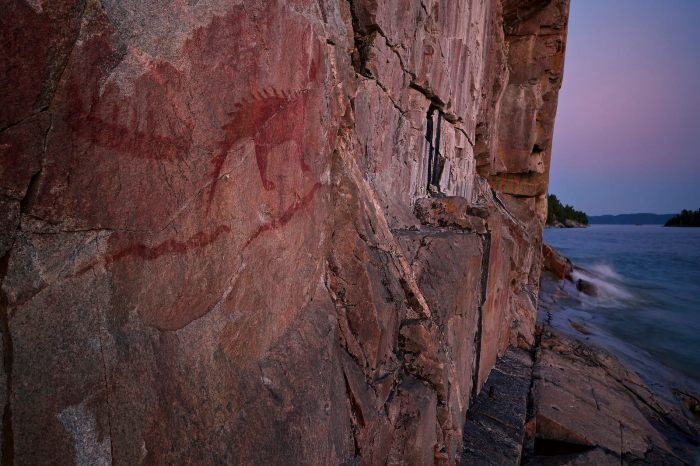
agawa pictographs lake superior provincial park ontario

agawa pictographs, lake superior provincial park, ontario, photo by twurdemann

Monstropedia says that the name Mishipeshu can be translated as Great Lynx and that this beastie was also known as “Gichi-anami’e-bizhiw” which means fabulous night panther.

The Cryptid Chronicles on Tumblr shares the tale of the Underwater Mystery Cat:

Native North Americans have a long tradition of stories regarding the Mishibizhiw, an underwater panther. Some tribes, particularly Anishinaabe, Odawa, Ojibwe, and Potawatomi, of the Great Lakes region of Canada consider this being as the most powerful underworld being. The Ojibwe held them to be the master of all water creatures. Some myths include this water lynx in their creation legends.

In the Ojibwe language, this creature is called “Mishibizhiw”, “Mishipizhiw”, “Mishipizheu”, “Mishupishu”, “Mishepishu”, “Michipeshu”, or “Mishibijiw”, which translates as “Great Lynx,” or Gichi-anami’e-bizhiw (“Gitche-anahmi-bezheu”), which translates as “the fabulous night panther.” Often, it is referred to as the “Great underground wildcat” or “Great under-water wildcat.” In Lake Superior Provincial Park on Ontario, there are pictographs of a mishibizhiw and two giant serpents. These creatures were described as water monsters that live in opposition to the Thunderbirds which are masters of the powers of the air.

With the body of a cat, usually like a lynx and the horns of a deer, it also sports scales on its back and sometimes even bird feathers. They typically are sporting long tails. Like many other creatures in native lore, it is said to be a shape shifter. It is said they roar or hiss like the sound of rushing water. Mishipizheu were said to live in the deepest lakes and rivers and can cause storms. Other traditions claim they can sometimes be helpful and protective, but generally they are viewed as bringing death or other misfortune. Traditionally, offerings are made to help with safe passage across the water.

“While skirting some rocks, which by their height and length inspire awe, we saw upon one of them two painted monsters which at first made us afraid, and upon which the boldest savages dare not long rest their eyes. They are as large as a calf: they have horns on their heads like those of a deer, a horrible look, red eyes, a beard like a tiger’s, a face somewhat like a man’s, a body covered with scales, and so long a tail that it winds all around the body, passing above the head and going back between the legs, ending in a fish’s tail.”
—French missionary Jacques Marquette, 1637

It was a widely held belief that copper came from the creature and charms were made to bring luck to hunters. After the hunt, these charms would be destroyed. Native Canadian preferred guns with brass plates depicting European dragons; they likely were interpreted to be images of Mishepishu. An Anishnaabe Ojibwa club from around 1800 has a Mishepishu figure on the end closest to the blade. In 2011, one of the Canadian Mint Mythical Creatures coins depicted a Mishepishu. The Canadian Museum of Civilization includes an underwater panther in its coat of arms. While often depicted in both ancient and modern art, modern sightings are virtually nonexistant.

Read on for more and you can also watch an episode of Grimm featuring the Mishipeshu right here!

Twurdemann writes that the Agawa Pictographs are at Agawa Rock, at the base of a 30 meter (100 foot) cliff and precarious ledge on the shore of Lake Superior. The site is sacred to the local Ojibwa and depict both historical events and legends. The paintings are believed to between 150-400 years old and were painted with a mixture of hematite (mineralized iron oxide) and animal fats. Check out the photo bigger, and see more in his Lake Superior slideshow.

More ghost & spooky stories on Michigan in Pictures.

PS: I’ve been to Agawa Rock, and if you ever get a chance to drive around all or part of Lake Superior, definitely stop here. These are some very cool pictographs!!!

Autumn’s Chapel

Chapel Rock in Fall

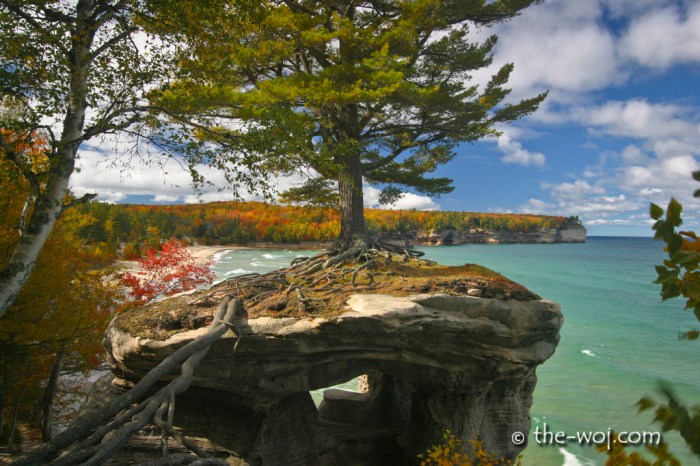
chapel rock, photo by Paul Wojtkowski

Here’s a cool picture from way back in 2006 of what I think is definitely one of the 7 wonders of Michigan: Chapel Rock in the Pictured Rocks National Lakeshore.

The Lucky Tree of Chapel Rock features quite a number of photos that I think can give you a pretty good understanding of this marvelous Michigan miracle.

Chapel Rock on Lake Superior has a single tree perched atop its column. By rights the tree should not be there: the small surface area of land on the top of the rock is insufficient to sustain a tree of this size.

There is hardly any topsoil, certainly not enough for an obviously thriving tree. How then does it flourish?

Look a little closer and you will see the answer – that rope on the right of the picture is not, in fact a rope. It is a system of roots, extending and stretching over the edge of the rock to the main bluff where there are nutrients and water aplenty.

Yet how on earth did the root extend over to the mainland? Did it slither in some triffid like way until it reached the other side? Is there a Little Shop of Horrors thing happening here?

Click through for the answer and some pics that make things clearer – including to my surprise one of my own! – from Kuriositas which looks like a pretty cool site.

View Paul’s photo bigger and see this and more in his slideshow.

More Pictured Rocks on Michigan in Pictures? You bet!

(U.P.) Weather Gone Viral

Lake Superior Weather Channel Thunderstorm

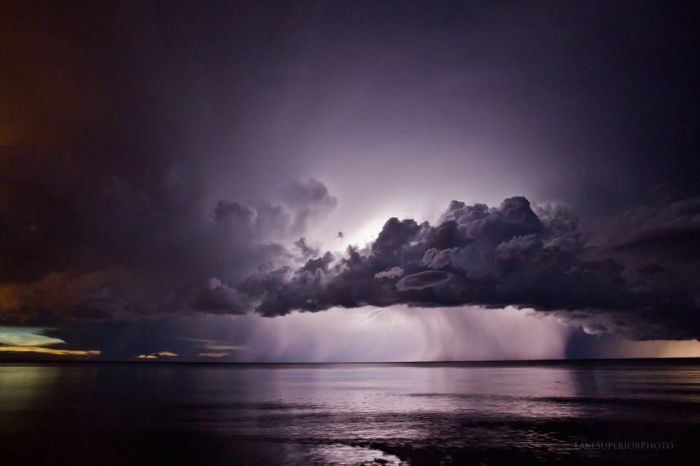
Thunderhead over Superior, photo by Lake Superior Photo

Regular Michigan in Pictures contributor Shawn Malone of Lake Superior Photo created the official music video for David Helpling’s “As The World Falls Away.” It features her latest cinematic time-lapse work filmed entirely in the Upper Peninsula of Michigan merged with sequences from NASA’s ISS to form a stunning visual & auditory journey.

It will appear on the The Weather Channel in their “Weather Gone Viral” episode that airs tonight on The Weather Channel. She says they’ve told her 10 PM EST, but check your local listings.

View Shawn’s photo bigger on Facebook and see more of her work at Lake Superior Photo!

Here’s the full video:

Winter is Coming … and it might not be all that bad

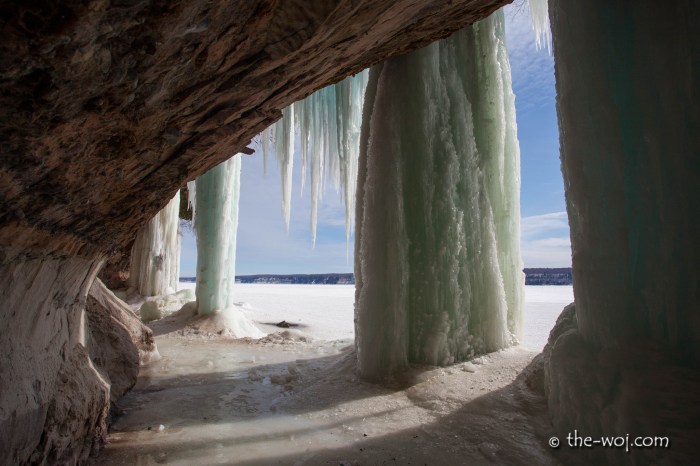
Munising Ice Caves

munising ice caves/curtains, photo by Paul Wojtkowski

The Freep reports that El Niño in Pacific could mean mild Michigan winter:

Less ice on the Great Lakes would ease the freighter shipping industry’s logistical nightmares of recent winters. Less snow-melt runoff in the spring could forestall flooding that sends nutrients off farms and into Lake Erie, fueling its summer algae blooms. And deer populations that have dropped dramatically in the Upper Peninsula over recent harsh winters could begin to rebound.

…Over a century, comparing Michigan’s normal winter precipitation versus 10 El Niño events between 1915 and 1992, rain and snowfall was about 72% of normal in the Metro Detroit area during the El Niños; 78% of normal in the Thumb area, and in the 80% to 85% range of normal throughout the rest of lower Michigan and the eastern Upper Peninsula, according to NOAA.

You can read on for more. While that means that we might not have as much ice cave fun in Michigan this winter, I think I’m OK with an El Niño intermission!

Check Paul’s photo of this winter’s incredible ice caves on Grand Island out background bigalicious, see more in his slideshow and follow Paul Wojtkowski Photography on Facebook!

More ice caves on Michigan in Pictures!


Twilit Aurora from the Keweenaw Peninsula

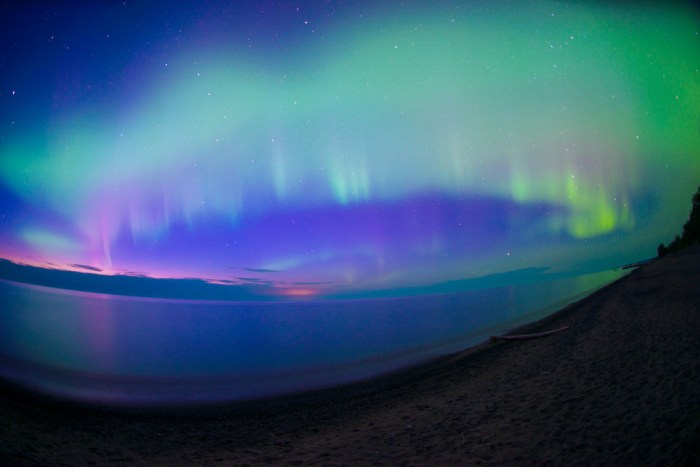
Twilit Aurora Borealis

Twilit Aurora, photo by Eric Hackney

Wowzas!!! Here’s the northern lights as seen last night from the Keweenaw Peninsula. Space Weather is saying that there’s a good chance of more strong northern lights tonight!

I’ve written about the science behind the colors on the Northern Lights, but how about some highlights of the beliefs about colors of the aurora from ancient people around the world?

In Bulfinch’s Mythology, Thomas Bulfinch claimed in 1855 that in Norse mythology: The Valkyrior are warlike virgins, mounted upon horses and armed with helmets and spears … When they ride forth on their errand, their armour sheds a strange flickering light, which flashes up over the northern skies, making what men call the “aurora borealis”, or “Northern Lights”.

The Algonquin think the lights are their ancestors dancing around a fire.

The northern lights in Scotland were known as “the mirrie dancers” or na fir-chlis. The dance often ended in a fight – “the mirrie dancers bled each other last night”. The appearance of the lights also predicted bad weather.

In Latvian folklore the aurora borealis, especially if red and observed in winter, are fighting souls of dead warriors especially if it is red and seen in the winter. It is an omen foretelling disaster.

Russian folklore associates the northern lights with the fire dragon (“Ognenniy Zmey”). The dragon came to women to seduce them when their husbands were gone.

The Finns named the northern lights revontulet, or fox fires. According to their legend, foxes made of fire lived in Lapland. And, the fox fires were the sparks they took up into the atmosphere on their tails.

Click for more including photos!

View Eric’s photo bigger and see more in his 9-7-15: Northern Lights V slideshow.

Many more Michigan aurora pics on Michigan in Pictures!

Caribbean of the North

Carribean of the North

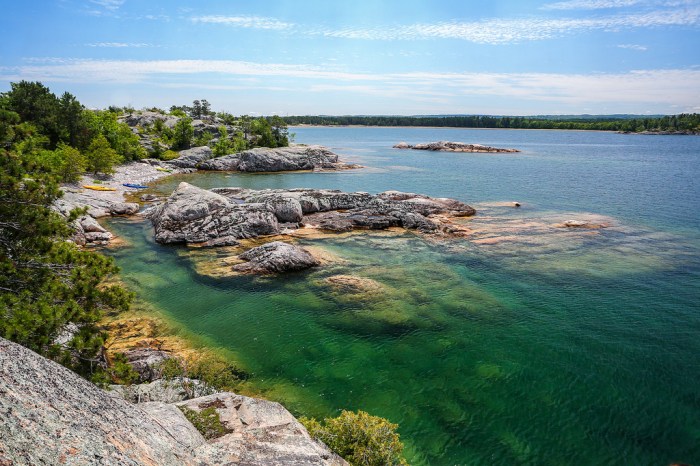
Caribbean of the North, photo by Cory Genovese

A while back I featured this as the cover photo on twitter.com/michpics. It’s so great I had to share it here as well! Cory wrote:

A day trip kayak cruise with a couple of friends on Lake Superior resulted in us finding ourselves in the “Caribbean of the North”…albeit with the pool heater unplugged ;)

Indeed! View the photo bigger and see more Lake Superior amazingness from Cory and be sure to follow him at facebook.com/PhotoYoop!

Sea Cave on Superior

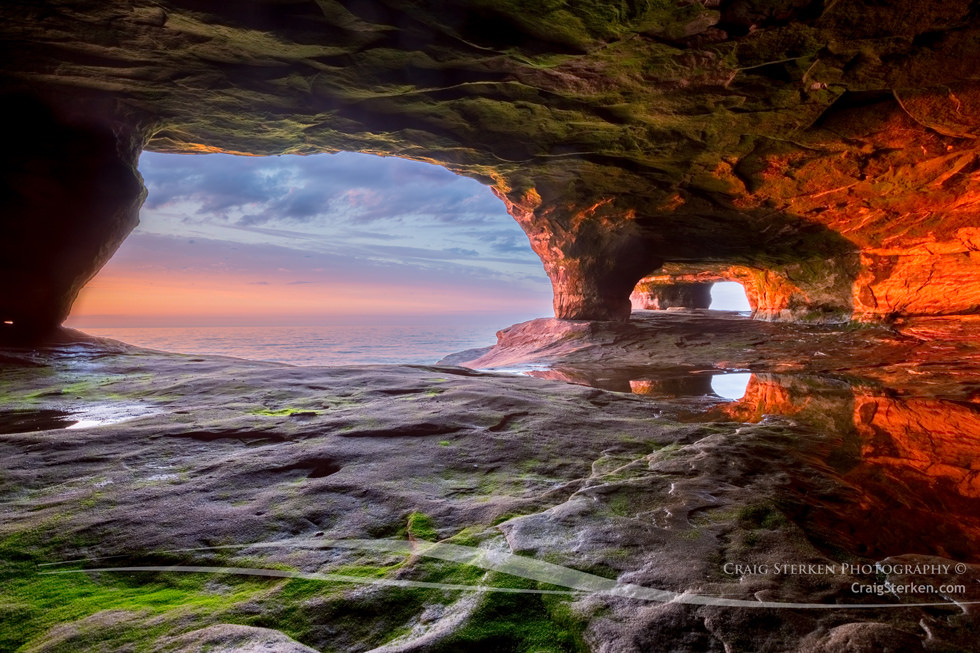
Sea Cave by Craig

Sea Cave on Lake Superior, photo by Craig

The Pictured Rocks National Lakeshore geology page says (in part) that:

During the Nipissing “high stand,” Chapel Rock and Miners Castle as well as many less prominent features (such as perched sea caves near Little Beaver Lake Campground) were carved into the Cambrian sandstone by wave action.

Quite the whittling job by Gitche Gumee!

View Craig’s photo bigger on his Facebook page and see more jaw-dropping Lake Superior pics on Craig’s Flickr.

Enjoy your weekend everyone!

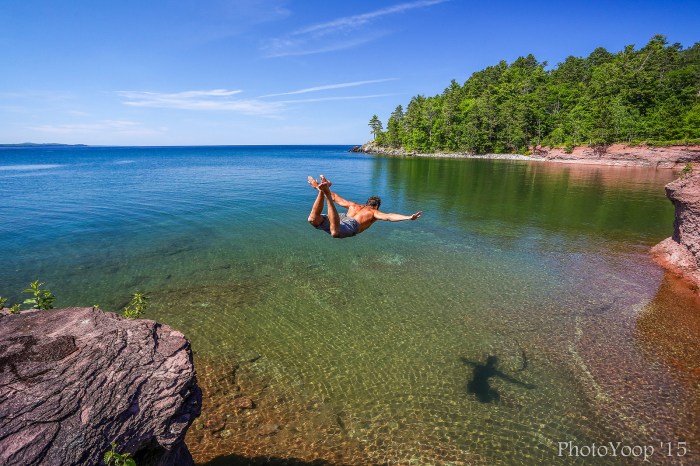
Superior Flight

Superior Flight

Superior Flight, photo by Cory Genovese

Cory writes:

Have a Yoop-tastic weekend and be sure to get your Superior flight on ;)

I’ve got an amen for that!

View cory’s photo bigger, see more in his Yoop Life slideshow and definitely follow him at PhotoYoop on Facebook!