Yesterday & Today with Michigan’s Christmas Tree Ships

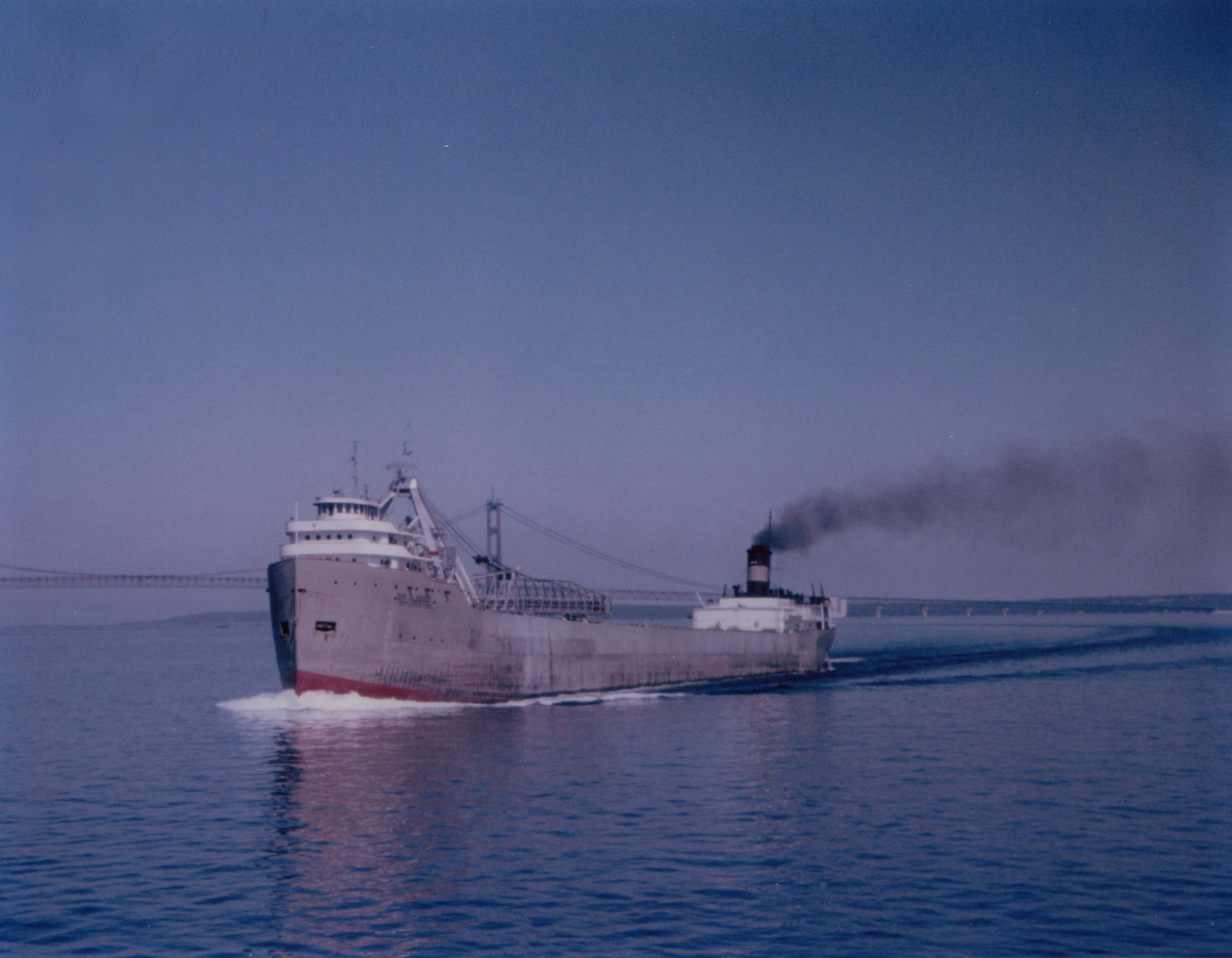
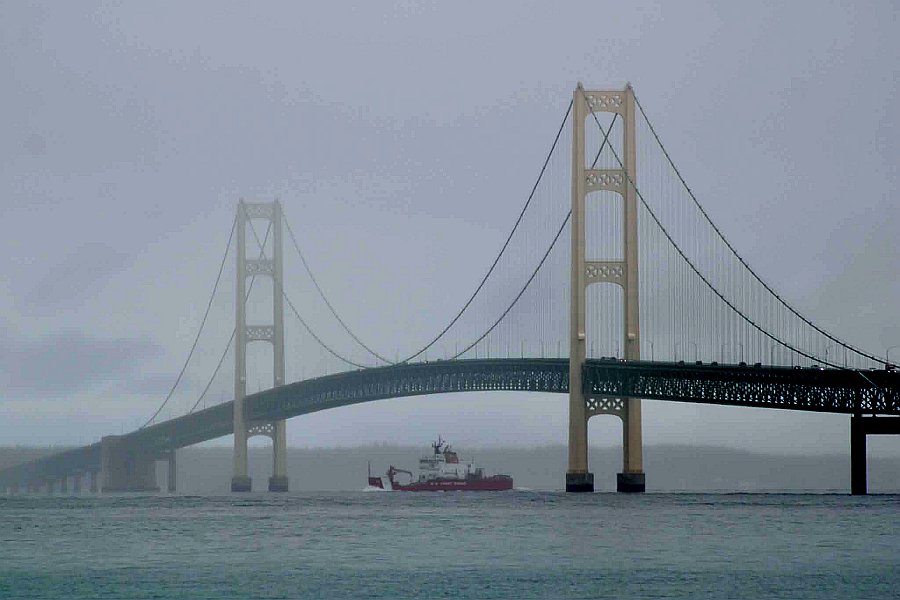
USCG Cutter Mackinaw with a load of Christmas Trees by MightyMac.org

USCG Cutter Mackinaw with a load of Christmas Trees by A.M. / MightyMac.org

MightyMac.org is the leading resource for Mackinac Bridge news & photos. On Monday shared this shot of the USCG Cutter Mackinaw passing under the Mackinac Bridge Saturday on its journey to Chicago with 1,200 Christmas trees for families in need aboard. The ship is scheduled to arrive today (Friday, December 5th) and if you’re in the Windy City, you can head over to the Chicago Christmas Ship for all the info on the ship, the Christmas tree distribution, and how you can support this cool project.

The annual journey honors the tradition of the original Christmas Tree Ship Rouse Simmons which sank in 1912 in a storm during its annual transit from northern Michigan to Chicago. Way back in 2006, the National Archives shared that the saga of the Schuenemann family and the Rouse Simmons is a microcosm of Great Lakes maritime history. Their excellent article says (in part):

The 1868 peak in sail-powered ships on Lake Michigan also marked the year the 123-foot Rouse Simmons was launched from Milwaukee’s shipyards. The ship was built by the firm of Allan, McClelland, and Company, one of Milwaukee’s preeminent shipbuilding firms …In the early 1870s, the Rouse Simmons joined the sizeable shipping fleet of wealthy lumber magnate and philanthropist Charles H. Hackley of Muskegon, hauling loads of lumber for Hackley’s fleet from company mills to the various markets around the lake for roughly 20 years.

By the late 19th and early 20th centuries, the popular German tradition of decorating an evergreen tree in the home was widely practiced, and it was not uncommon for a handful of lake schooners to make late-season runs from northern Michigan and Wisconsin loaded with thousands of Christmas trees for busy Chicago waterfront markets. Estimates of the number of Christmas schooners vary, but perhaps up to two dozen vessels in any season delivered evergreens to markets in Great Lakes states.

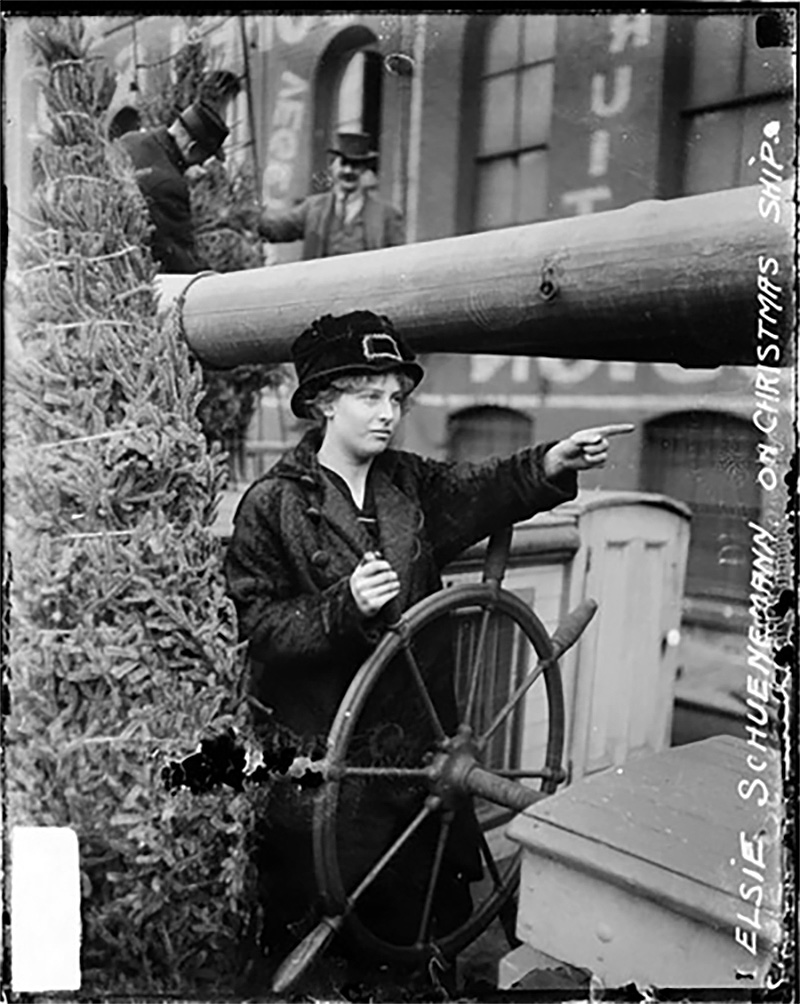
In Chicago, most vessels, including the Rouse Simmons, sold the trees directly from their berths along the Chicago River’s Clark Street docks. Electric lights were strung from the schooner’s bow to stern, and customers were invited to board the ship to choose their trees. In addition to selling Christmas trees, many boat operators, including Schuenemann, made and sold wreaths, garlands, and other holiday decorations. Barbara Schuenemann and her three daughters (Elsie is pictured above) helped make and sell these items as part of the family’s holiday trade.

You can read on for much more about Herman Schuenemann’s long career as “Captain Santa” which tragically came to an end on Friday, November 22, 1912 when the Rouse Simmons, heavily laden with 3,000–5,000 Christmas trees filling its hold & deck, left the dock at Thompson, Michigan looking “like a floating forest.” Sadly, the Rouse Simmons sailed into a powerful winter storm on the lake that sent her and several other ships including the South ShoreThree Sisters, and Two Brothers to the bottom of Lake Michigan.

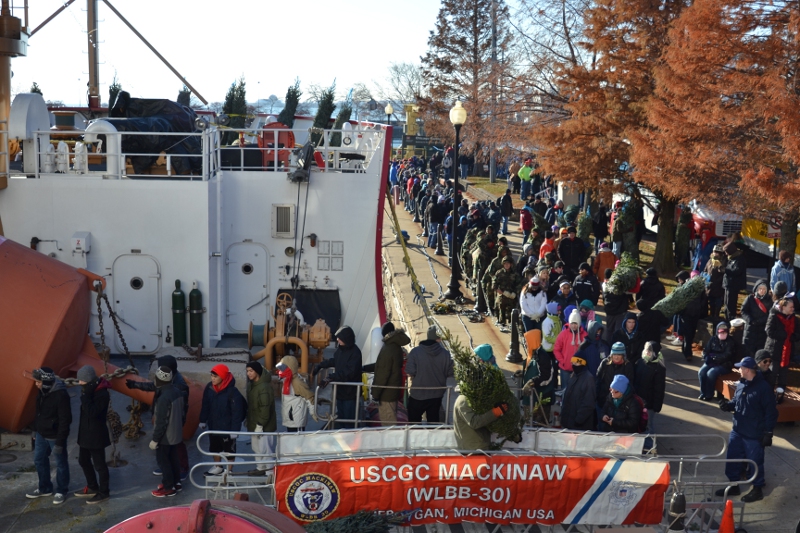
Here’s a photo of Elsie Schuenemann at the helm of the Rouse Simmons along with one of the offloading in Chicago. Also be sure to check out a great video on the wreck of the Rouse Simmons by Richie Bravo.
Support Michigan in Pictures with Patreon

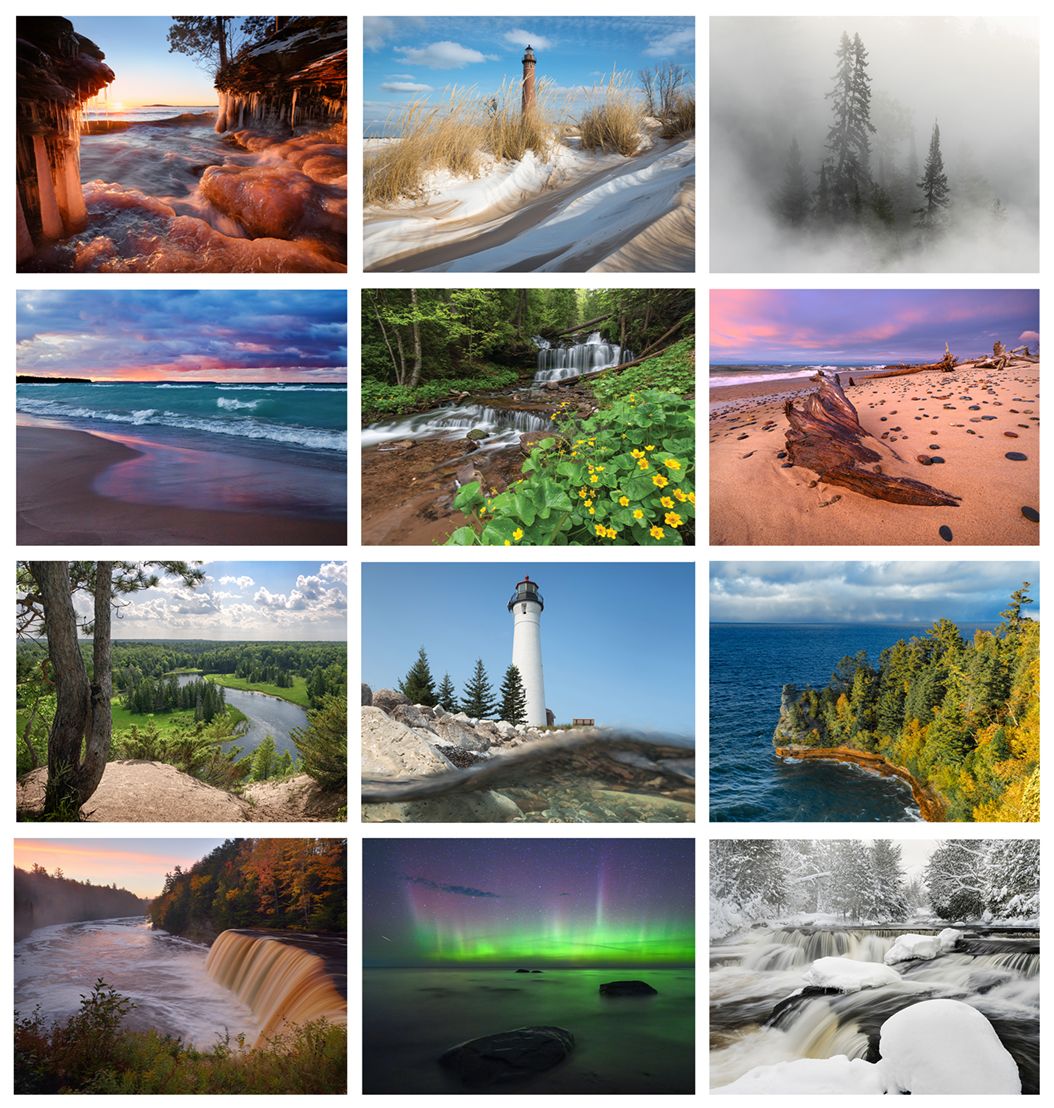
Find Black Friday on a 2026 Michigan Calendar!

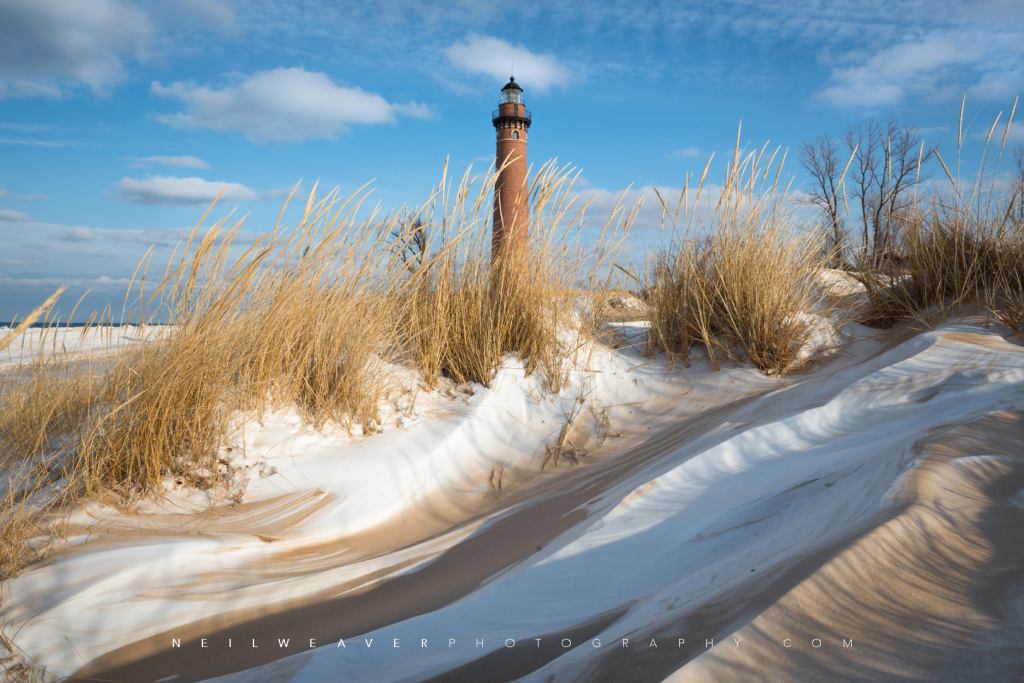
Sand and snow at Little Point Sable Lighthouse by Neil Weaver Photography

Sand and snow at Little Point Sable Lighthouse by Neil Weaver Photography

I am thinking that a good way to help support the photographers who make Michigan in Pictures so cool is to feature their calendars & photos as potential holiday gifts. In a way, you are also supporting the protection of the beautiful places featured in these calendars by sharing that beauty with the people you love!

Neil has been a favorite photographer for a long time now for his excellent work as well as for his photography workshops like the upcoming Munising Winter Workshop that make great gifts as well! He says that you can get his 2026 Michigan Calendar while they last & is also offering 25% off all prints orders through this week with the code: HOLIDAY25 at NeilWeaverPhoto.com.

PS: You will be able to find the calendars featured predictably enough at the Calendar tag on Michigan in Pictures!

PPS: I probably won’t get to them all this year, so be sure to check the links on the Michigan Photographers page!

Support Michigan in Pictures with Patreon

Michigan’s most devastating shipwreck was the Carl D Bradley

Carl D Bradley by Presque Isle County Historical Museum

Carl D Bradley by Presque Isle County Historical Museum

When I posted about the wreck of the Edmund Fitzgerald a couple weeks ago, a reader asked why I don’t share the other famous shipwrecks. I explained that although posts about the Fitz tend to be more shared, my vote for the most grievous loss on the Great Lakes has always been the S.S. Carl D Bradley, a 639-foot freighter that sank almost 70 years ago November 18, 1957. Here’s an article by Valerie van Heest (Seeking Michigan / the Archives of Michigan) that was featured on my Absolute Michigan website back in the day.

“A Deafening Thud”

Abandon ship! Abandon ship! The whistle squawked seven short blasts, then one long blast. It was a signal twenty-six year old deck watchman Frank Mays knew well, but never expected to hear. Just minutes earlier, he had been having a smoke with Gary Price in the dunnage room, deep in the bow, when they heard a deafening thud. “We hightailed it out of there to find out what had happened,” Mays recalls. “When I reached the upper deck, I looked aft and saw the stern flapping up and down like a dog’s tail.” The Carl D. Bradley‘s back had broken, and it would be only a matter of minutes before water filled the tunnels and cargo holds of the 639-foot vessel. It was 5:30 p.m. on November 18, 1958.

Final Voyage

The Bradley had departed Gary, Indiana the day prior, running in ballast in building southwest seas along Lake Michigan’s western shore. On the season’s final voyage, the veteran boat was scheduled to head to Manitowoc, Wisconsin for repairs during its winter lay-up. The rusting cargo had been due for an $800,000 replacement for over a year, but its owner, Bradley Transportation Company, a subsidiary of U.S. Steel, pushed the work back until the end of the season. A radio call from headquarters ordering an additional stone delivery before lay-up proved to be the demise of the Bradley. Despite reports of gale-force winds and thirty-foot seas that compelled other freighter captains to take shelter along Wisconsin’s shore, Captain Roland Bryan, known as a “heavy weather man,” headed northeast across the lake from the Door County peninsula toward the Straits of Mackinac and back to Rogers City. At 5:35 p.m., the Bradley sank twelve miles southwest of Gull Island.

“The Worst Night of His Life”

Even today, survivor Mays recalls that horrific night with clarity. Hunkered down on the life raft just aft of the pilothouse, he trembled realizing the sinking beneath him. His eyes were drawn aft toward the flying sparks as the huge steel deck plates began to tear apart. In the growing darkness and mayhem, he could make out second mate John Fogelsonger running toward the stern and leaping over the break. Before his eyes, his friend disappeared as the Bradley ripped apart. The next thing Mays recalls was being pitched into the air, landing in the icy, angry water and then struggling onto the raft where he fought to hold on through the worst night of his life.

“A Painful Memory”

By morning, only Mays and first mate Elmer Fleming were alive. After fifteen bone-numbing hours in the icy waters, the U.S. Coast Guard cutter Sundew rescued them. All thirty-three of their mates, including Gary Strelecki and Dennis Meredith, who shared the raft for most of the night, as well as two of Frank’s own cousins, perished. These men left behind twenty-five widows and fifty-four fatherless children. Considering twenty-three of the crew hailed from Rogers City, the home port of the Bradley, the loss personally affected nearly everyone in the small community. Fifty years later, the sinking is still a painful memory.

When it was all over, 33 of the 35 member crew were dead with 23 of those from Rogers City. For a town of less than 4000, it was a devastating blow. You can learn much more about the wreck of the Carl D Bradley from the Presque Isle County Historical Museum.

More Michigan shipwrecks on Michigan in Pictures.

Support Michigan in Pictures with Patreon

Happy 55th, Sleeping Bear Dunes National Lakeshore!

via Leelanau.com…

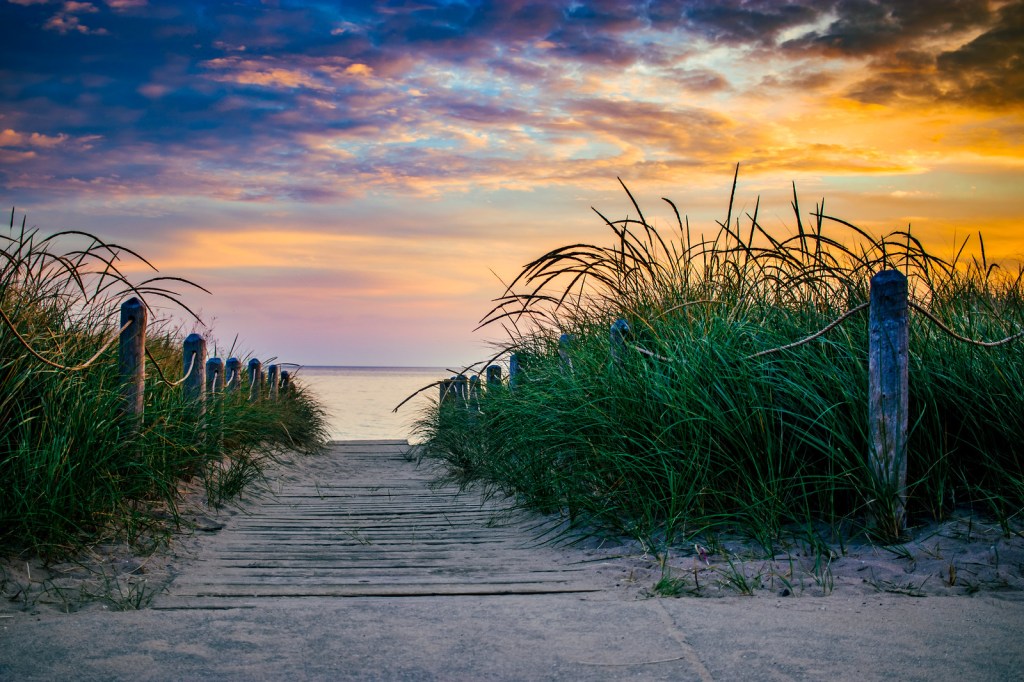
At the End of the Trail by James Banks

At the End of the Trail by James Banks

Today is the 55th birthday of the Sleeping Bear Dunes National Lakeshore. Normally, I would lead with a photo of the Dunes, but the creation of the National Lakeshore on October 21, 1970 preserved a whole lot more!!

Here is the tale of the tape on Michigan’s magnificent national lakeshore as of August 1, 2024!

  • Annual Visits – 1,589,248
  • Employees – 46 permanent, 83 seasonal
  • Volunteer Hours – 58,389 from 1,659 volunteers
  • Natural and Cultural Resources
  • Area – 71,318 acres
  • Lake Michigan Shoreline – 65 miles (35 miles on the mainland)
  • Inland Lakes – 26
  • Miles of rivers and streams – 12
  • Terrestrial plant species – 908
  • Bird species – 246
  • Federally threatened or endangered species – 6
  • Historic structures on List of Classified Structures – 369
  • Sites on National Register of Historic Places – 8
  • Cultural Landscapes – 9 (4,500 acres)
  • Prehistoric archeological sites – 150
  • Historic boats – 21
  • Lighthouse – 1
  • Historic artifacts – 70,158
  • Archived documents – 21,325
  • Infrastructure
  • Buildings – 370
  • Employee housing units – 38
  • Campgrounds – 9 (357 sites)
  • Picnic Areas – 5
  • Visitor Centers – 3
  • Outdoor ampitheaters – 2
  • Miles of roads – 23
  • Covered bridge – 1 (Pierce Stocking Drive)
  • Miles of trails – 105
  • Lake access ramps – 9
  • Signs and wayside exhibits – 3572
  • Major photovoltaic power systems – 3
  • Motor vehicles in fleet – 54
  • Large boats – 8

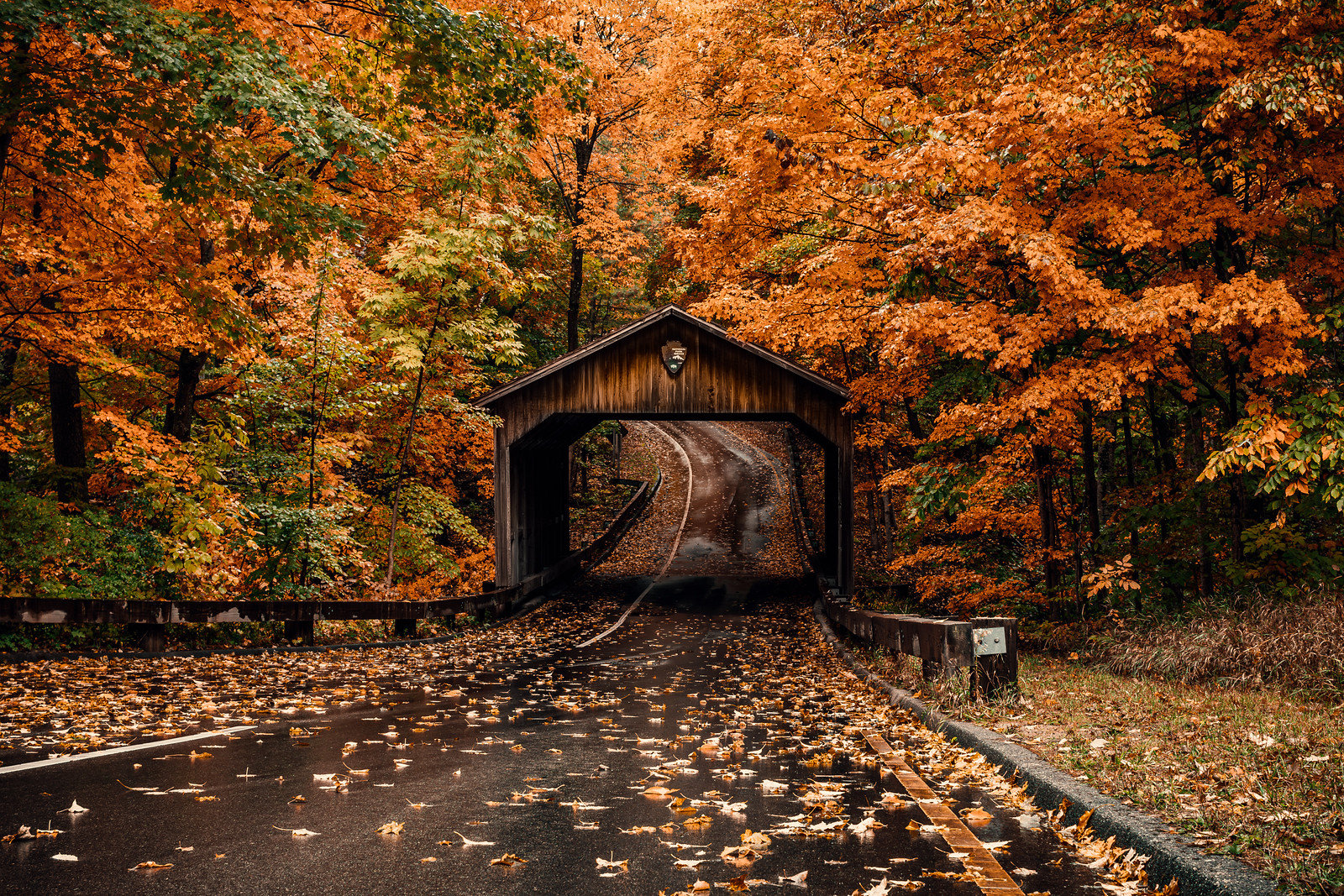
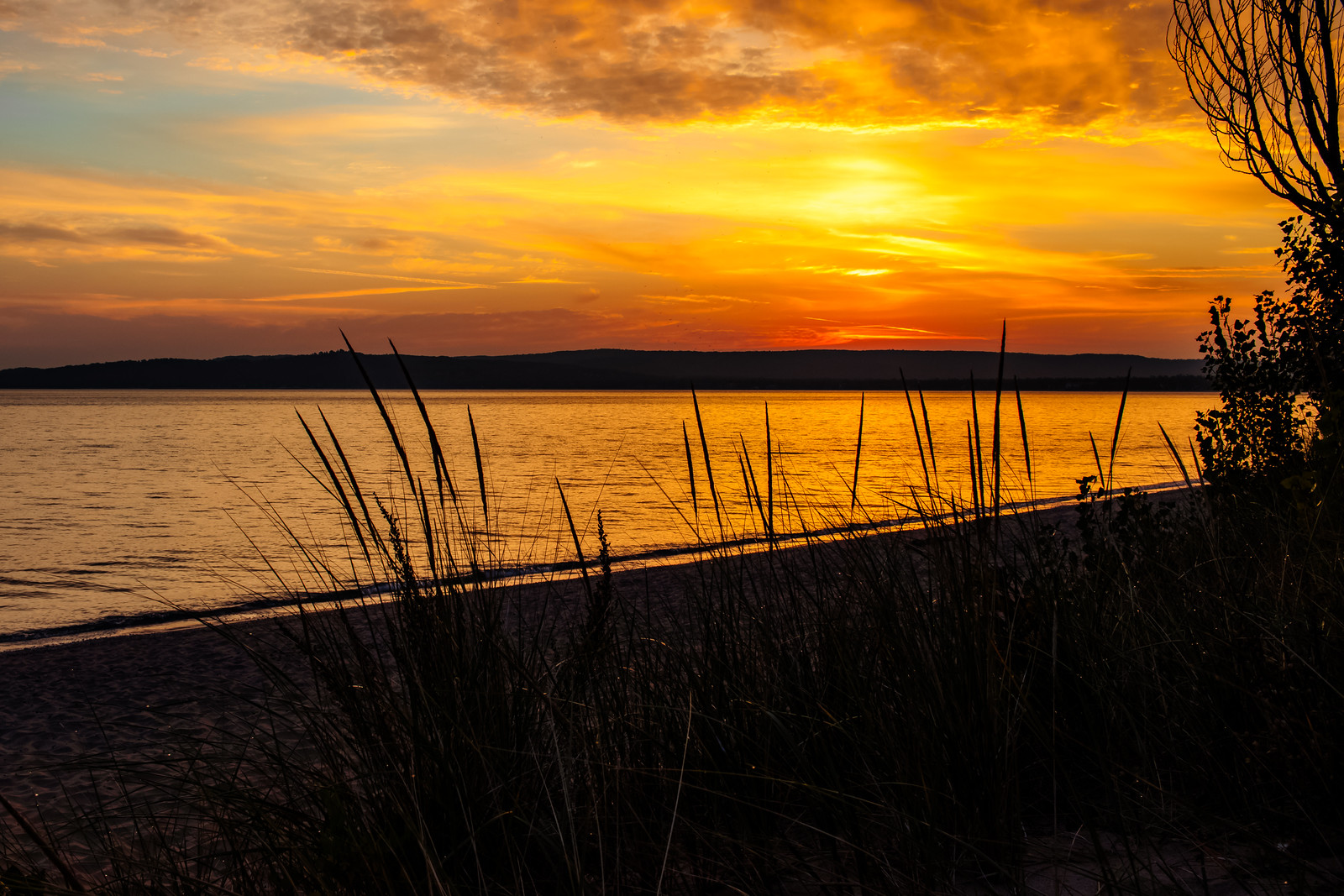
James took these in the Sleeping Bear Dunes National Lakeshore back in fall of 2023. See lots more great shots in his Top 100 gallery on Flickr!

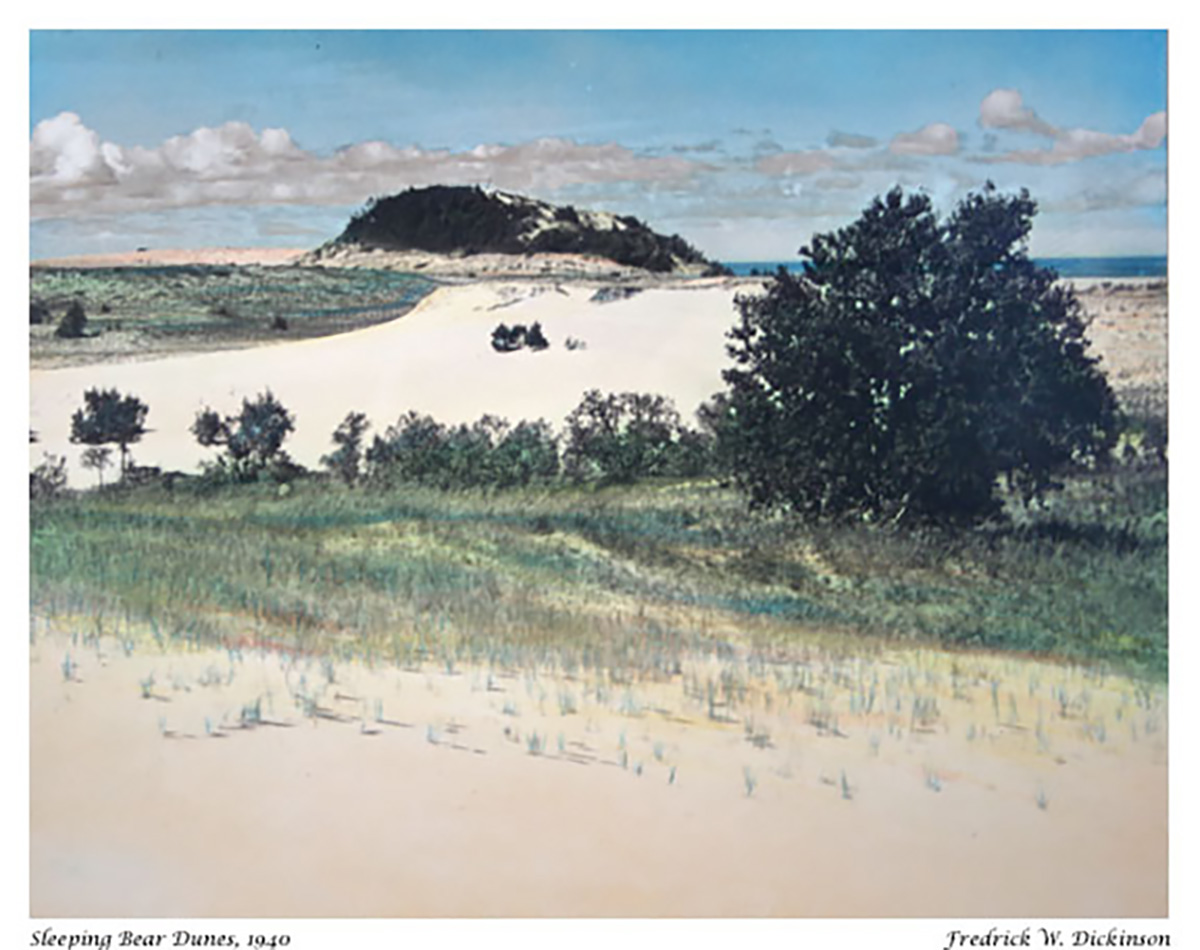
I also added a hand colored photo of “the Bear” from 1940 by Leelanau photography legend Fred Dickinson whose work you can see at the Dickinson Photo Gallery on Glen Lake & who you can read more about on Leelanau.com.

Support Michigan in Pictures with Patreon

Comet of Unknown Origin

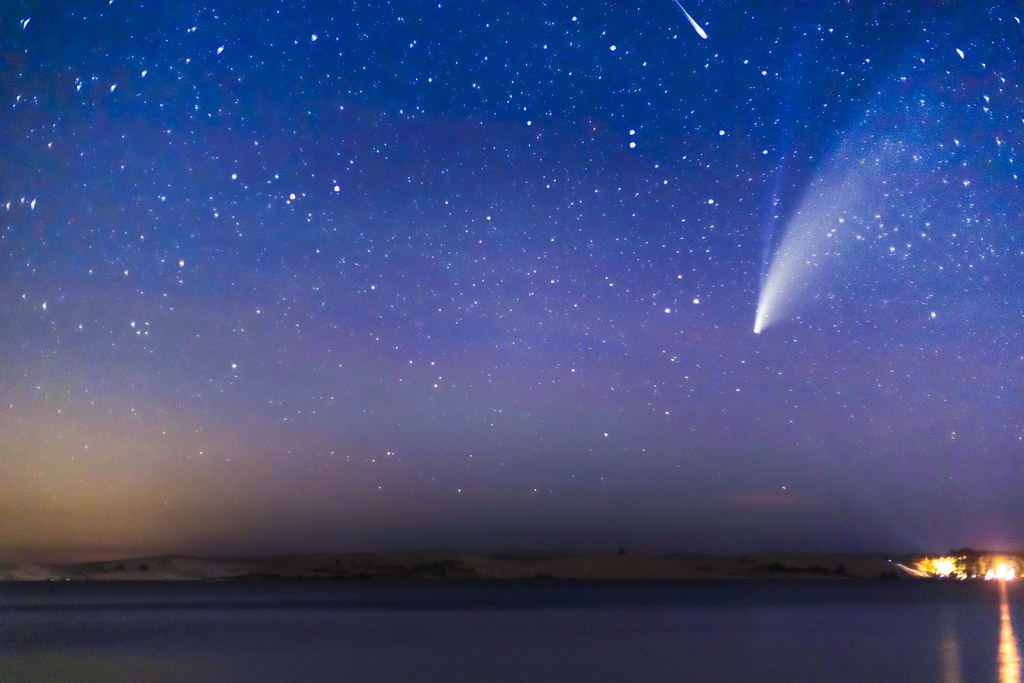
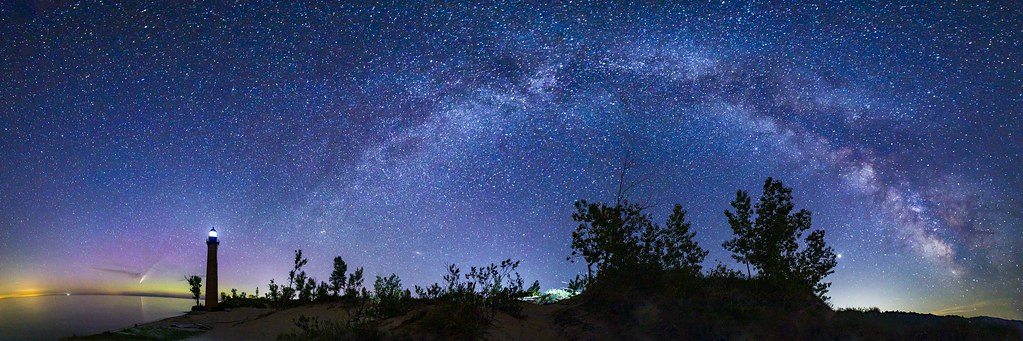
Northern Lights and Comet Neowise by Gary Syrba

Northern Lights and Comet Neowise by Gary Syrba

Our friends at EarthSky share that the latest observations of Comet 3I/ATLAS show it brightening more quickly than predicted:

Up until now, the interstellar comet had been brightening as expected. But now, the observations from mid-September 2025 are beginning to rise above the upward-sloping line of brightening that would have been typical for a comet nearing the sun.

(There has been a lot of talk that 3I/ATLAS might be an interstellar probe due to its great speed & a trajectory that takes it close to Jupiter, Mars & Earth before it slingshots away using the Sun’s gravitation.)

A team of scientists, led by Xabier Pérez-Couto of the University of A Coruña in Spain, has traced the path of interstellar object 3I/ATLAS back 10 million years. Indeed, this is only the 3rd-known object found traveling in our solar system that didn’t originate with our sun and its planets. Its trajectory tells us it must have come from another star system, but which one?

They traced the path back over 100 million astronomical units (9.3 quadrillion miles) but couldn’t find where it started towards Sol. You can read on for lots more!

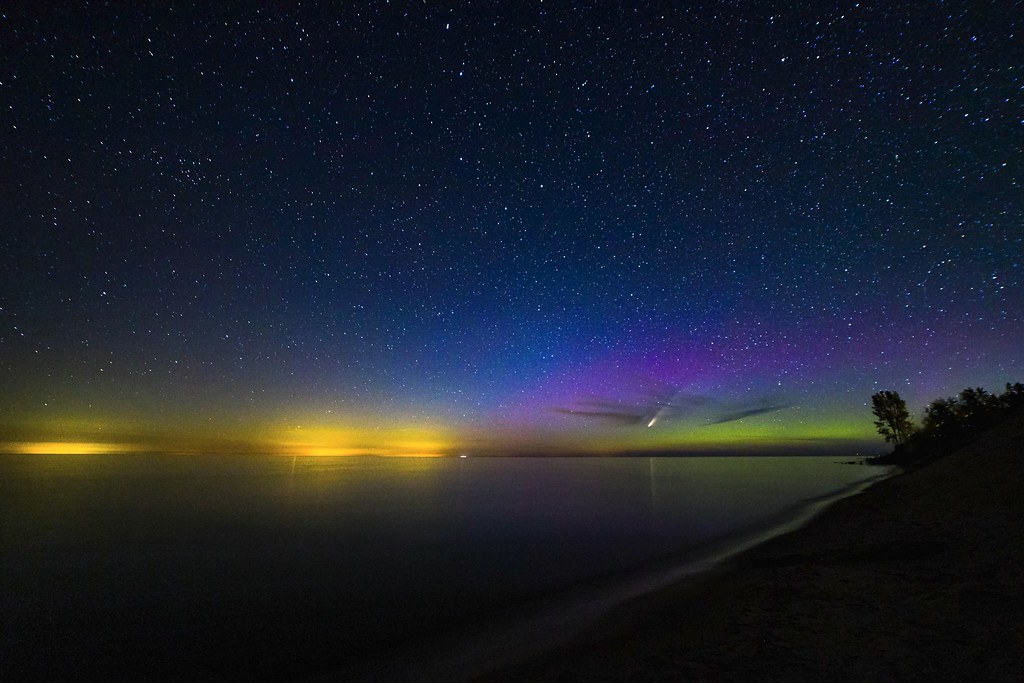
Gary took these photos of the Northern Lights & Comet Neowise over Lake Michigan back in 2020. See more in his Night Skies gallery on Flickr and view & purchase Gary’s work on his website.

Support Michigan in Pictures with Patreon

Fall Equinox is today … mostly

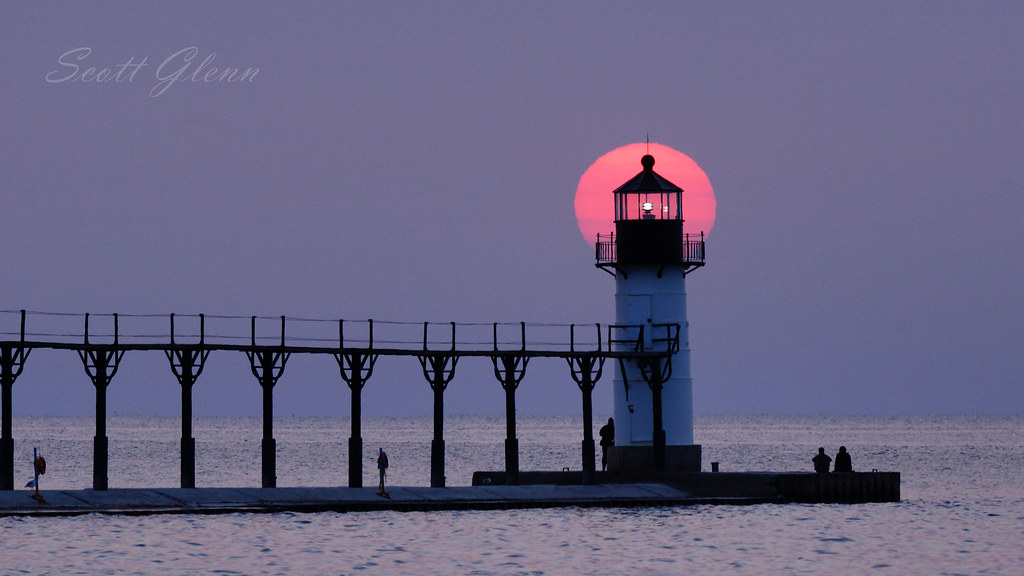
Last sunset of summer 2020 by Scott Glenn

Last sunset of summer 2020 by Scott Glenn

Astronomical fall starts at 2:19 pm today (September 22, 2025), but that doesn’t mean that day & night are exactly equal for us here in Michigan. The very useful timeanddate.com shares that in addition to latitude & the refracting effect of our atmosphere:

One of the reasons why most locations on Earth do not enjoy exactly 12 hours of daytime and 12 hours of nighttime on the equinoxes is how sunrise and sunset are defined. If sunrise and sunset were defined as the moment the geometric center of the Sun passes the horizon, then the day and night would be exactly 12 hours long. But that is not the case. Sunrise and Sunset are defined as the exact moment the upper edge of the Sun’s disk touches the eastern and the western horizon, respectively. The time it takes for the Sun to fully set, which can be several minutes, makes the day just a bit longer than the night on the equinoxes.

The day with the same sunrise & sunset time is September 25th. The sun still does rise directly in the east & set directly in the west, so don’t forget to pack your sunglasses – a lot of our roads are laid out east/west making the sunrise and sunset around the equinox sun a positively blinding proposition!

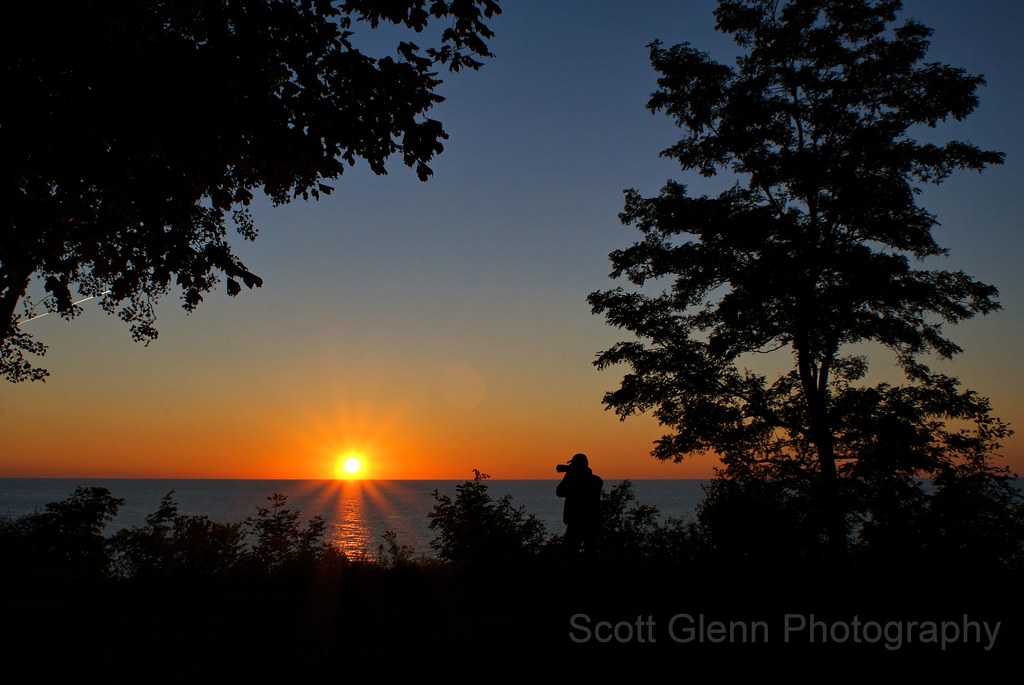
Scott took this photo of the St Joseph Lighthouse on September 21, 2020. See more in his awesome Lighthouses gallery on Flickr & enjoy a selfie he took of the last summer sunset of 2014 below!

Last Summer Sunset Selfie by Scott Glenn

Last Summer Sunset Selfie by Scott Glenn

Support Michigan in Pictures with Patreon

Sunset on a steamy summer

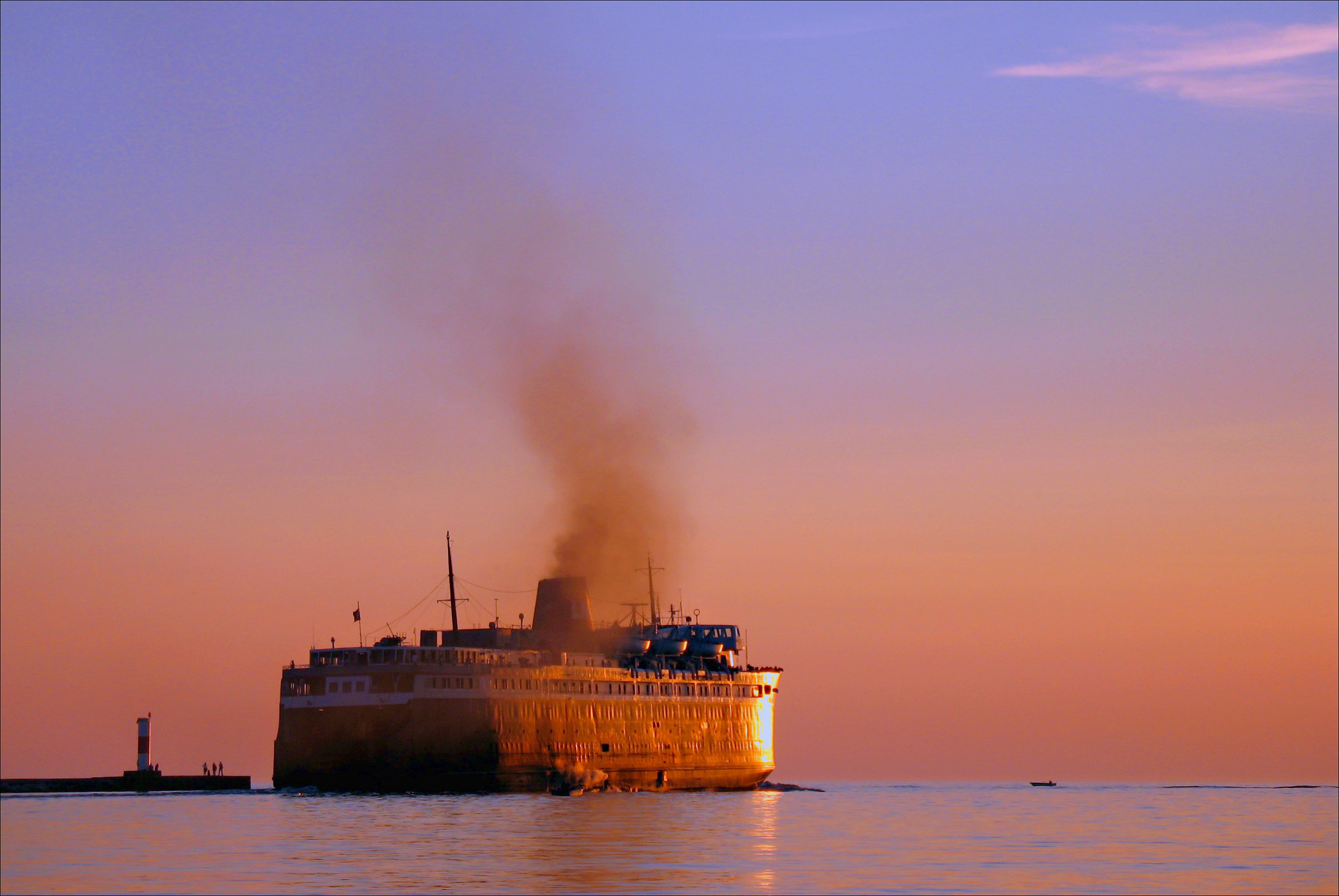
Steaming into Sunset by Diann*

Steaming into Sunset by Diann

Summer is pretty much in the books, and Fox 2 Detroit shares that Summer 2025 was a hot one for a unique reason that bodes poorly for our future:

Because the summer of 2025 is not over, it’s not included in the rankings. But as of Aug. 14, the average daily temperature is 74.3 degrees – making it one of the hottest.

Here’s the difference: this year’s overnight lows have been some of the highest ever. The region has dealt with multi-day periods of sustained heat unlike any other year.

When people talk about how hot it was back in 88, they’re right to do so,” FOX 2’s meteorologist Derek Kevra said. “But what they got was some relief days. We have had very few relief days this year.”

In the summer of 1988, there were seven days when overnight lows fell into the 40s and 26 days with overnight lows in the 50s. The summer this year has had barely any nights when temperatures fell that low. That included a 150-hour stretch where temperatures didn’t even fall below 70 degrees. Over the entire month of July, only three days have fallen into the 50s.

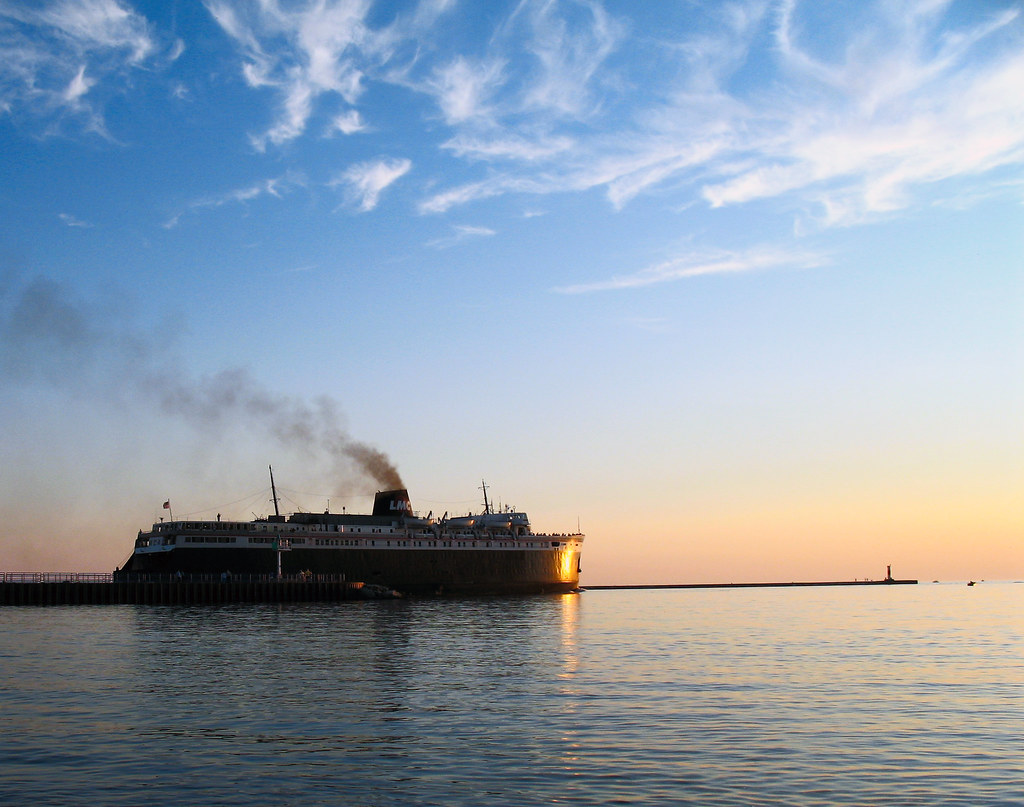
This isn’t the first time I’ve shared Diann’s photo of the coal powered SS Badger steaming out of its home port of Ludington back on Labor Day 2008 & it won’t be the last! Here are a few others that I’ve featured over the years – see more in her Third Coast gallery on Flickr.

More Michigan-focused climate change posts on Michigan in Pictures.

Support Michigan in Pictures with Patreon

August 7th is National Lighthouse Day!

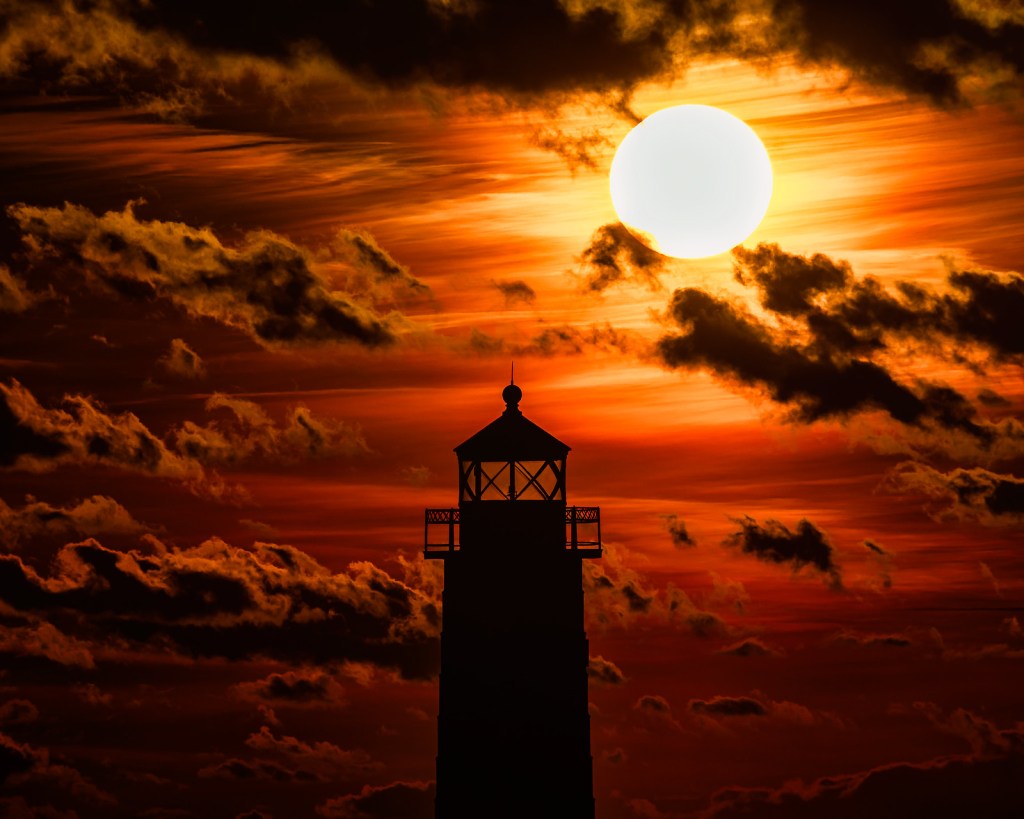
Sunset Fire by Brian Ertl

Sunset Fire by Brian Ertl

National Lighthouse Day is an un-official celebration of lighthouses and the commitment and service of those who tended America’s lights for generations. It’s an especially big deal in Michigan because we are home to more lighthouses than any other state in the country, with over 120 lighthouses keeping watch along the 3,200 miles of Great Lakes shoreline!!

The American Lighthouse Foundation explains that the 1789 Act for Establishment and support of Lighthouse, Beacons, Buoys, and Public Piers enabled a huge amount of commerce by guaranteeing that lighthouses and other marine safety infrastructure would be funded nationally. National Lighthouse Day was officially celebrated on August 7, 1989 to mark the 200th anniversary signing, but Congress has yet to officially name it a national holiday.

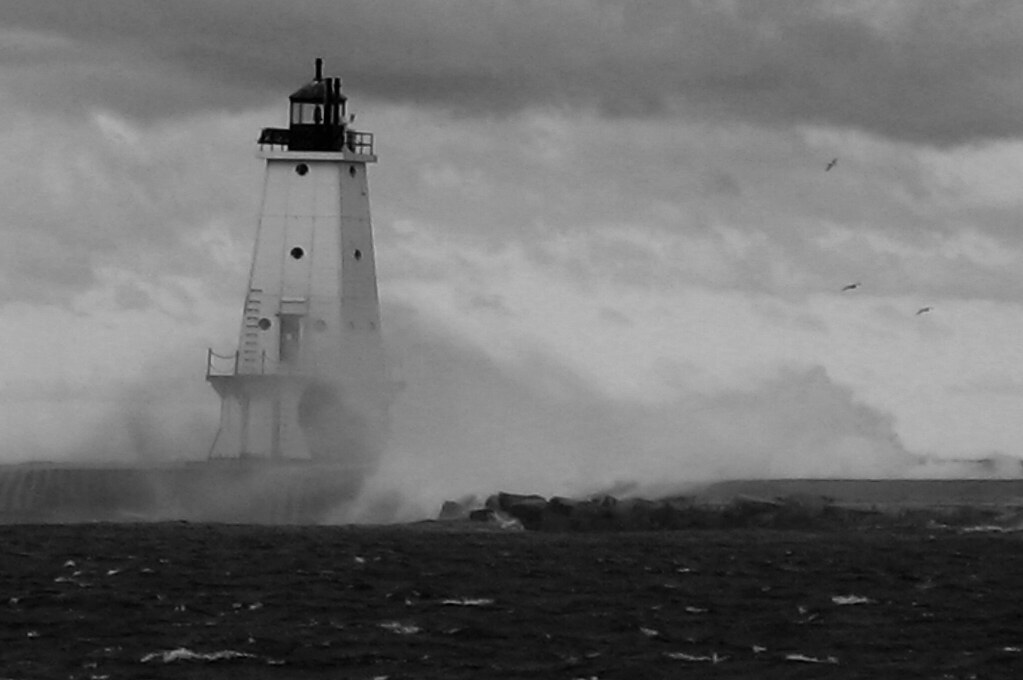
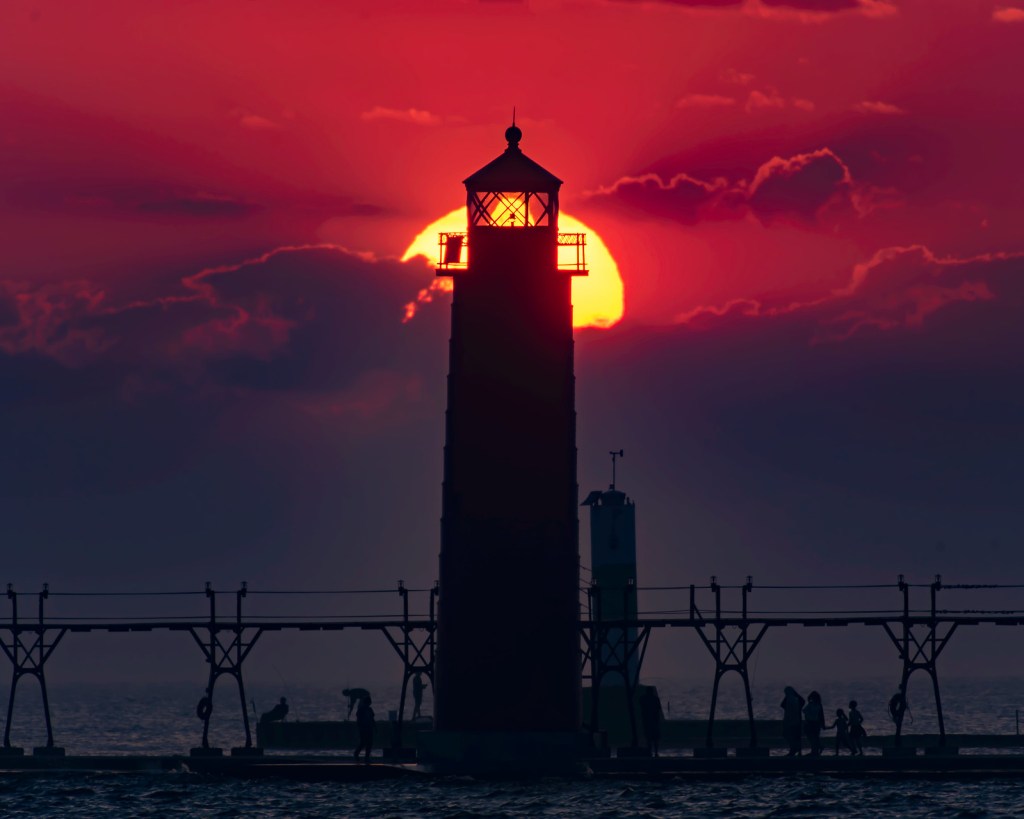
Brian took the above shot of the Grand Haven Lighthouse earlier this year & the one below back in June of 2020 – love the way the sun lights the light! See his latest on Flickr.

…and learn about many more Michigan lighthouses on Michigan in Pictures!

Grand Haven Pier Sunset by Brian Ertl

Grand Haven Pier Sunset by Brian Ertl

Support Michigan in Pictures with Patreon

Climate Change devouring Great Lakes beaches

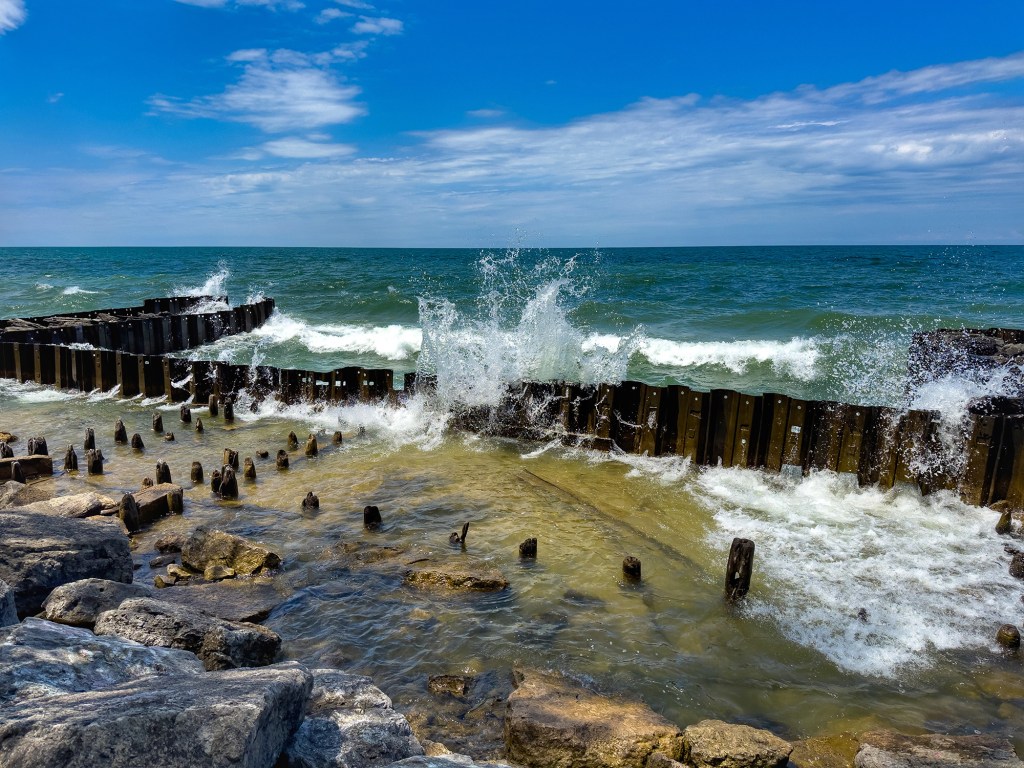
Breakwall by Mark Swanson

Breakwall by Mark Swanson

Michigan Sea Grant shares a recent Science Line story about how extreme changes in water levels, fierce storms, decreasing ice coverage, and infrastructure that interferes with the natural coastal cycle are washing away beaches & baffling local officials charged with protecting Great Lakes beaches:

…“When we get 15 foot waves on Lake Michigan, I’m thinking, ‘Oh, my God. How much damage are they doing?’” says David Bunte, the supervisor for Chikaming Township, near the southern tip of Lake Michigan.

Water levels fluctuate naturally in the Great Lakes but intensifying climate change accelerates those changes. What used to be normal on a 20 year cycle is now happening in five or 10 years, says Mike Shriberg, an environmental policy researcher at the University of Michigan.

“We’re seeing record highs and then record lows much closer together,” says Shriberg, whose work focuses on Great Lakes water policy. “The Great Lakes has already experienced more water level change in the last decade than the saltwater coasts are expected to experience in the next 100 years.”

Ice normally acts as a buffer for the shoreline, absorbing the blows of powerful waves in winter storms, but as temperatures warm, diminished ice coverage in the Great Lakes is speeding up coastal erosion.

Read on for much more. If you’re not yet aware of Michigan Sea Grant , I encourage you to learn more about this cooperative program of the University of Michigan, Michigan State University, and the National Oceanic and Atmospheric Administration that funds research, education, and outreach projects designed to foster science-based decisions about the use and conservation of Great Lakes resources.

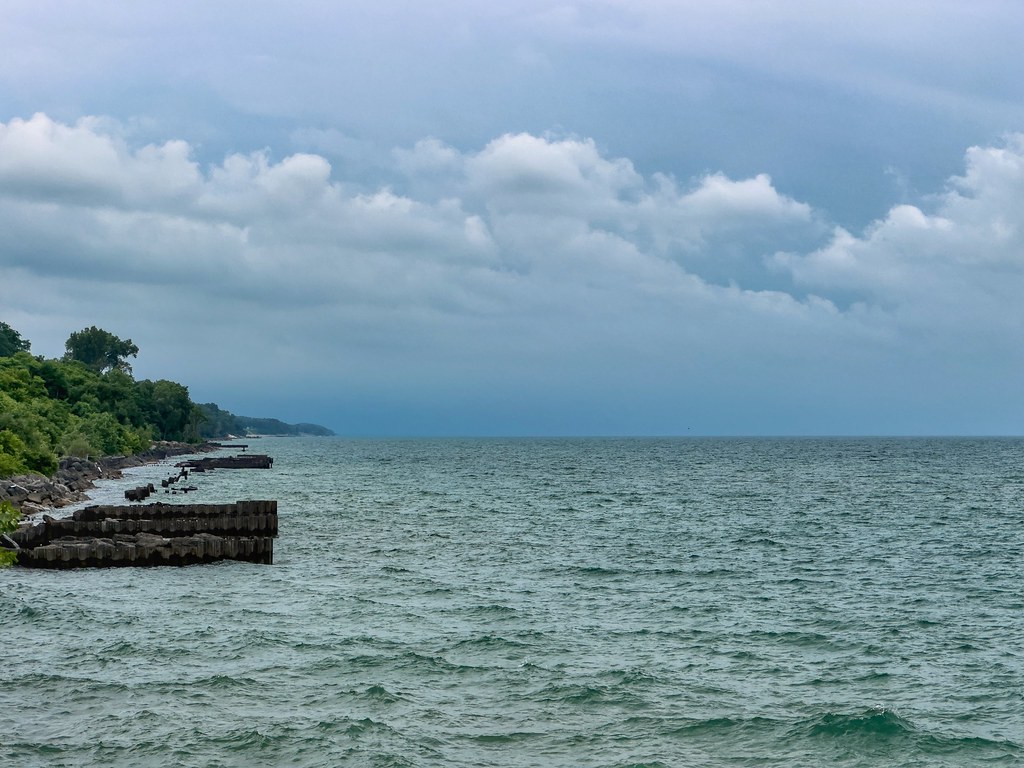
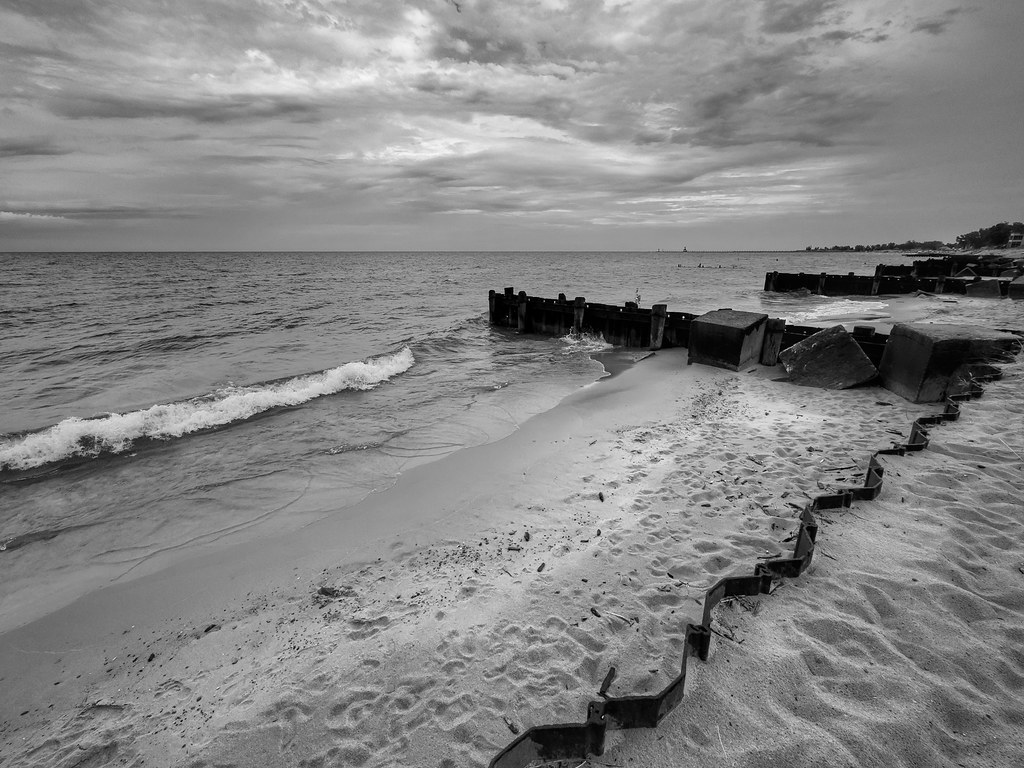
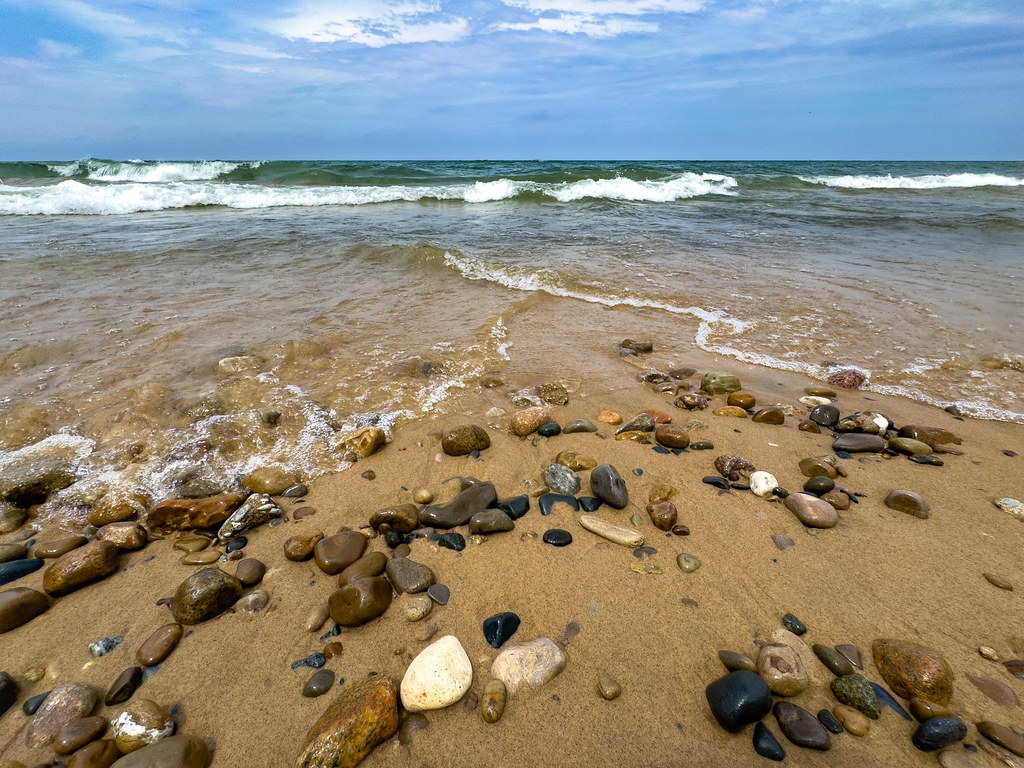
Mark took this photo at the beach in St. Joseph. Here’s a few more of Mark’s recent shots from the St Joseph’s Lake Michigan shoreline – note the crazy high water! See the latest in his 2025 gallery on Flickr!

Support Michigan in Pictures with Patreon

Jellyfish Stormfront

Jellyfish Stormfront by Tom Parrent

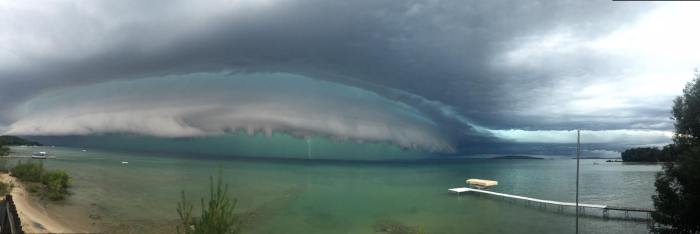
Tom shot this terrifying image of the August 2, 2015 superstorm from Traverse City’s Old Mission Peninsula. See more on his Facebook.

Check out a full retrospective on one of the strongest storms in Michigan’s modern history on Leelanau.com.

Support Michigan in Pictures with Patreon