Closing out the Summer

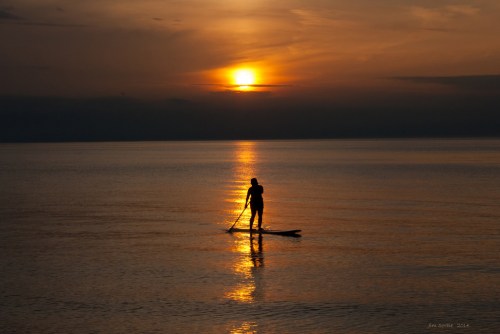
Untitled, photo by Jim Sorbie

Summer 2014 – get it before it’s gone!

View Jim’s photo of a sunset paddleboarder on Lake Michigan near Empire background bigtacular and see more in his Leelanau Scenes slideshow!

More sunsets and more summer wallpaper on Michigan in Pictures!

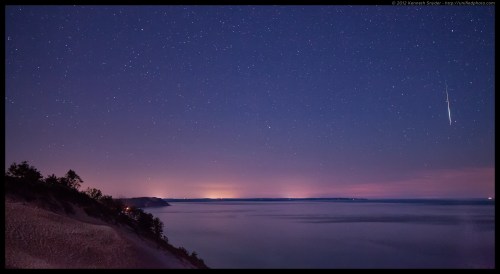
2014 Perseid Meteor Shower

Sleeping Bear Persied

Sleeping Bear Perseids, photo by Kenneth Snyder

Without question the best meteor shower of the summer in Michigan is the Perseids, EarthSky’s Everything you need to know about the Perseid Meteor Shower has (predictably) all kinds of details and diagrams to help you get the most out of this annual display. The most important thing is to start watching now as the August supermoon is full this weekend.

Every year, from around July 17 to August 24, our planet Earth crosses the orbital path of Comet Swift-Tuttle, the parent of the Perseid meteor shower. Debris from this comet litters the comet’s orbit, but we don’t really get into the thick of the comet rubble until after the first week of August. The bits and pieces from Comet Swift-Tuttle slam into the Earth’s upper atmosphere at some 210,000 kilometers (130,000 miles) per hour, lighting up the nighttime with fast-moving Perseid meteors. If our planet happens to pass through an unusually dense clump of meteoroids – comet rubble – we’ll see an elevated number of meteors.

…The swift-moving and often bright Perseid meteors frequently leave persistent trains – ionized gas trails lasting for a few moments after the meteor has already gone. Watch for these meteors to streak the nighttime in front of the age-old, lore-laden constellations from late night until dawn as we approach the second weekend in August. The Perseids should put out a few dozen meteors per hour in the wee hours of the mornings of August 11, 12 and 13.

Read on for lots more.

View his photo big as the sky and see more in his Sleeping Bear Dunes slideshow.

More meteors on Michigan in Pictures!

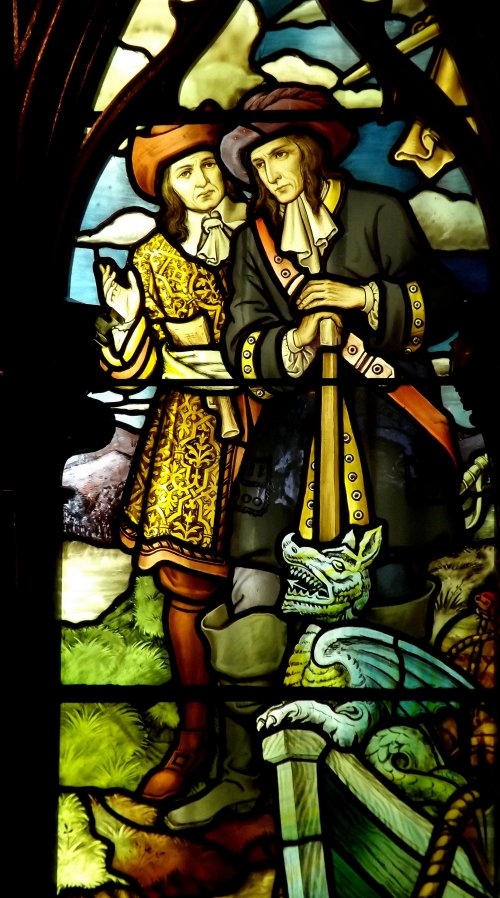
Hunting the Griffon

Detail: The LaSalle Stained Glass Window, Installed at Dossin Great Lakes Museum, Belle Isle Park--Detroit MI

Detail: The LaSalle Stained Glass Window, Installed at Dossin Great Lakes Museum, Belle Isle Park–Detroit MI, photo by pinehurst19475

John Flesher of the Associate Press has a feature on NBC News about the possible discovery of the Holy Grail of Great Lakes shipwrecks, Le Griffon, the ship of French explorer Rene-Robert Sieur de La Salle. The article says (in part):

A wooden beam embedded at the bottom of northern Lake Michigan appears to have been there for centuries, underwater archaeologists announced Tuesday, a crucial finding as crews dig toward what they hope is the carcass of a French ship that disappeared while exploring the Great Lakes in the 17th century.

Expedition leaders still weren’t ready to declare they had found a shipwreck or the long-lost Griffin. The ship, commanded by the French explorer La Salle, was never seen again after setting sail in September 1679 from an island near the entrance of Green Bay, in what is now northern Wisconsin, with a crew of a six and a cargo of furs.

…Scientists and divers began excavating last week at the base of the wooden beam, hoping to determine whether it is part of the Griffin. Steve Libert, a diver and shipwreck enthusiast who has searched three decades for the Griffin, discovered the timber in 2001 and recently obtained state and federal permits to probe beneath the muddy surface.

Read on for more. Libert is president of Great Lakes Exploration Group started the Lasalle-Griffon Project with the state of Michigan and the Republic of France in July of 2010. He’s definitely obsessed with finding the ship, and their Expedition page explains:

If the wreck Libert has found is Le Griffon, it will be a find of tremendous historical significance. Le Griffon was built by Rene-Robert Sieur de La Salle, one of the first French explorers of the Great Lakes Region. He would later claim the Mississippi River watershed for France, a vast expanse of land that extended from the Allegheny Mountains to the Rocky Mountains and North of the Great Lakes, a portion of which became what is presently known as the Louisiana Purchase.

Exploration and study of the ship will tell us much about the history of our country and how our ancestors lived. “The ship is a time capsule that will fill the missing gaps of La Salle’s early exploration of North America,” says Libert. In particular, the wreck is a record of ship construction of that period, about which relatively little is known. La Salle constructed Le Griffon on the banks of the Niagara River, about three miles above the falls. There is strong documentation to support the view that Le Griffon was built on what is now the U.S. side of the Falls. If the wreckage is Le Griffon, however, it may be possible to use samples to establish definitively which side it was built on.

The fact that Le Griffon was built in the wilderness, as opposed to a shipyard, will reveal the circumstances La Salle and his men faced and the tools and technology they possessed. The ship was built with timber cut on site. The exact dimensions of the vessel are not known. It is however known to have been a 40 tun* vessel with three masts, a foremast, main and mizzen, and several square sails.

*Tun is an old French word for a large cask used in shipping wine, equivalent to 33.7 cubic feet or 252 gallons. Read on for a whole lot more.

Regarding the stained glass above, pinehurst19475 writes:

This is a full view of part of a panel that depicts two cavaliers in discussion. They are part of a scene that depicts Robert Cavalier Sieur de la Salle’s voyage through the Detroit River in 1678-9. The small boat in the foreground is the “Griffon,” the vessel that made the voyage.

The five-part stained glass window was originally installed in the Gothic Room of the “City of Detroit III.” At the time it was built (1912), it was the world’s largest side-wheeler. The Edward F. Lee Glass Company of Detroit designed the stained glass window.

View his photo background big and see more in his Stained Glass slideshow.

Amongst Lovely Things

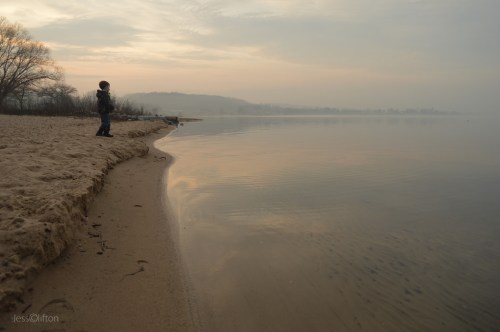
The most effective kind of education is that a child should play amongst lovely things. – Plato

The most effective kind of education is that a child should play amongst lovely things.
~Plato (photo by Jess Clifton)

Here’s hoping you have a chance this weekend to spend a little time amongst lovely things.

View Jess’s photo background big and see more in her Fabulous Fog slideshow.


Iced Over

Iced Over

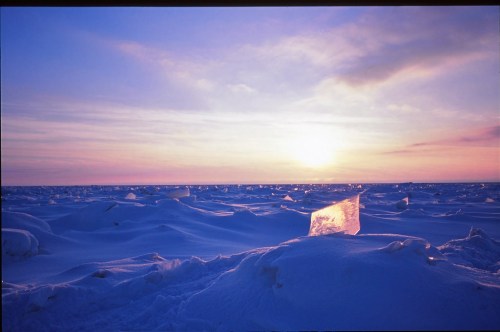
Iced Over, photo by karstenphoto

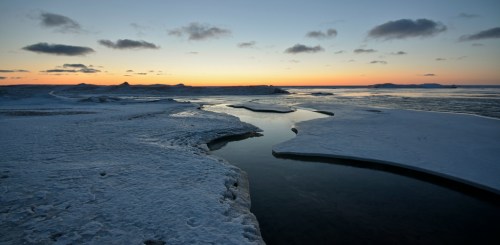
Stephen shot this photo on Lake Michigan on February 26th using Fujifilm Velvia 100. View it background bigtacular and see more in his winter slideshow.

More film photography and more winter wallpaper on Michigan in Pictures.

Running Out of Ice

Running Out of Ice

Running Out of Ice, photo by Aaron Springer

Probably wishful thinking, but I’m guessing that’s better than wishless thinking. Enjoy your weekend everyone!

View Aaron’s photo bigger and see more in his Northern Michigan slideshow.

Ice Everywhere: Great Freeze on the Great Lakes

Ice Everywhere

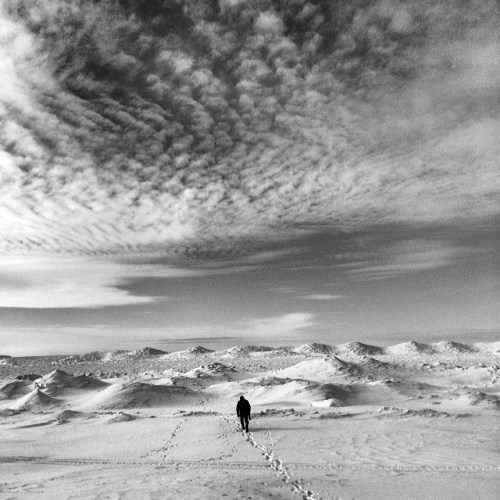
So much ice, everywhere, photo by caterleelanau

At night, as cold settles in, lake ice creaks and groans. It’s been excessively cold, and I camped exposed on the snow-swept surface. Other than the lack of vegetation and the sounds at night, you’d never know you were on a lake. It feels like an empty plain. In some places, you see pressure ridges where ice has pushed into itself, sticking up like clear blue stegosaurus plates.
~ Author Craig Childs on Lake Superior

From the latest satellite photo, it looks like Lake Huron is 100% frozen with Superior & Erie 95% and Michigan somewhere in the 85% area. Ontario is looking like the slacker right now, and you can follow along and see daily satellite shots from NOAA.

The NASA Goddard Space Flight Center provided the quotation above and reported on the Great Freeze Over the Great Lakes saying (in part):

Scientists say it’s understandable that the Great Lakes have had so much ice this year considering the cold temperatures in the region that persisted through the winter. Cold air temperatures remove heat from the water until it reaches the freezing point, at which point ice begins to form on the surface, explained Nathan Kurtz, cryospheric scientist NASA’s Goddard Space Flight Center in Greenbelt, Md.

“Persistently low temperatures across the Great Lakes region are responsible for the increased areal coverage of the ice,” Kurtz said. “Low temperatures are also the dominant mechanism for thickening the ice, while secondary factors like clouds, snow, and wind also play a role.”

The freeze this year has local implications, including possible changes to snowfall amounts in the Great Lakes area, explained Walt Meier, also a cryospheric scientist at NASA Goddard. When the lakes are primarily open water, cold air picks up moisture from the relatively warm and moist lake water, often resulting in lake effect snow on the lee side of the lakes, on the eastern and southern shores. When the lakes freeze, the lake effect generally shuts down. “Although this year, they’re still picking up a fair amount of snow,” Meier said.

Lake levels could also see an impact by summer, as winter ice cover generally reduces the amount of water available to evaporate during winter months. If that turns out to be the case, it would be “good news for local water supplies, as well as for shipping and recreational use,” Meier said.

A 2012 study in the Journal of Climate by scientists at NOAA’s Great Lakes lab, which included data from MODIS, found that winter season ice cover on Lake Superior has decreased 79 percent from 1973 to 2010. The study also showed that ice cover on the lakes is highly variable and difficult to predict.

Today’s photo was taken on frozen Lake Michigan off the Leelanau shore by my friend and neighbor Cammie, co-owner of Epicure Catering. You can follow her at caterleelanau on Instagram for lots of wintertime fun and summertime food!

More ice on Michigan in Pictures!

The Ice Caves of Leelanau

IMPORTANT SAFETY UPDATE! The Leelanau County Sheriff’s Department has declared the ice caves on Lake Michigan unsafe!! The winds have moved the ice and there is now open water within feet of the caves, and the strong winds expected today and tomorrow will continue to push water and ice inland. There are also large cracks in the arches and they are expected to start collapsing soon.

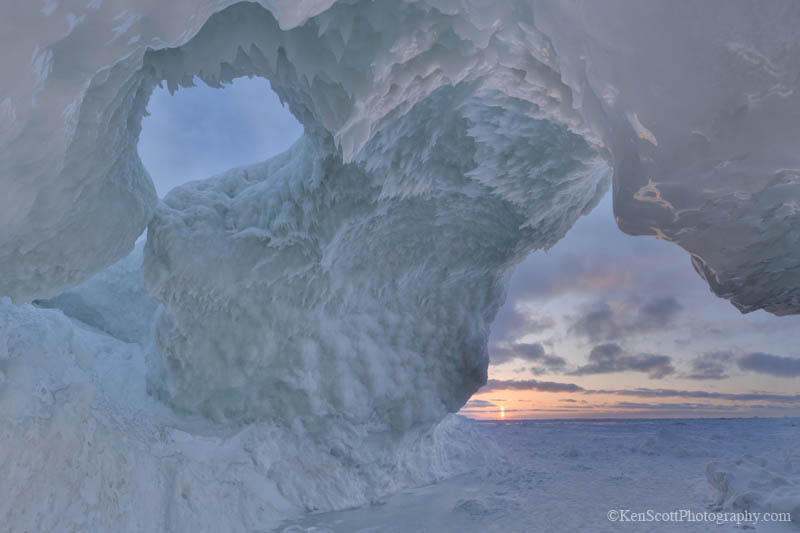
Lake Michigan … ice cave sunset II by Ken Scott

Ken Scott took a trip out to the massive ice caves off the shore of the Leelanau Peninsula near Traverse City. You can see a fantastic video of his explorations and should definitely take a minute to watch his cautionary video showing the cracks that can form in these massive structures. There are few things less forgiving than the Great Lakes in winter, and with temps forecast in the upper 30s for tomorrow, things could get very dangerous.

View Ken’s photo bigger and see more in his Ice Cave slideshow.

Although ice caves and similar formations form every winter on Michigan’s shoreline, these ones are particularly incredible due to the greater than normal mass of ice generating more force. They have made it all the way to national news and have drawn thousands of visitors. A couple more features are at Huffington Post, another nice YouTube video showing the structures and the crowds and this mLive article with directions.

So cold the ice is blue

Blue Ice

Blue Ice, photo by HLHigham

You may have seen one or more of these incredible ice photos making the email round as Lake Michigan or Lake Huron ice. The Snopes.com article above says that they and many more were taken Antarctic base of Dumont D’Urville by Tony Travouillon in 2002. A shout-out to TC weatherman Joe Charlevoix who posted a story earlier in the week debunking the hoax!

While we don’t have that level of brilliant blue, our ice does get bluish. Via Shawn Malone at the Earth Science Picture of the Day, I found an informative article by Larry Gedney about blue ice & snow that says:

It is a common misconception that the blue color exhibited by glaciers, old sea ice, or even holes poked into a snow bank is due to the same phenomenon that makes the sky blue–light scattering. But nature has more than one recipe for producing the color blue. In frozen water and in the sky the processes are almost the reverse of each other.

A blue sky results when light bounces off molecules and small dust particles in the atmosphere. Because blue light scatters more than red does, the sky looks blue except in the direction of the sun (particularly when the sun is near the horizon and the blue light is scattered out of the sunlight, leaving the red color of sunrises and sunsets).

When light passes through ice, however, the red light is absorbed while the blue is transmitted. Were the operating process scattering as in the atmosphere, then the transmitted light would be red, not blue. However, because of the large size of snow grains and ice crystals, all wavelengths of visible light are scattered equally. Scattering therefore does not play an appreciable role in determining the color of the transmitted light.

It takes an appreciable thickness of pure ice to absorb enough red light so that only the blue is transmitted. You can see the effect in snow at fairly shallow depths because the light is bounced around repeatedly between ice grains, losing a little red at each bounce. You can even see a gradation of color within a hole poked in clean, deep snow. Near the opening, the transmitted light will be yellowish. As the depth increases, the corer will pass through yellowish-green, greenish-blue and finally vivid blue. If the hole is deep enough, the color and light disappear completely when all the light is absorbed.

The color of ice can be used to estimate its strength and even how long it has been frozen. Arctic Ocean ice is white during its first year because it is full of bubbles. Light will travel only a short distance before it is scattered by the bubbles and reflected back out. As a result, little absorption occurs, and the light leaves with the same color it had when it went in.

There’s more (lots more) on water, snow & ice from the University of Alaska, Fairbanks.

Heather took this photo at Point Betsie last weekend. View it bigger and see more in her Winter slideshow.

More science on Michigan in Pictures and speaking of ice, check out the ice caves off the Leelanau Peninsula in this mLive feature & video.

Great Lakes approaching record ice cover

Leland & Lake Michigan by Elijah Allen

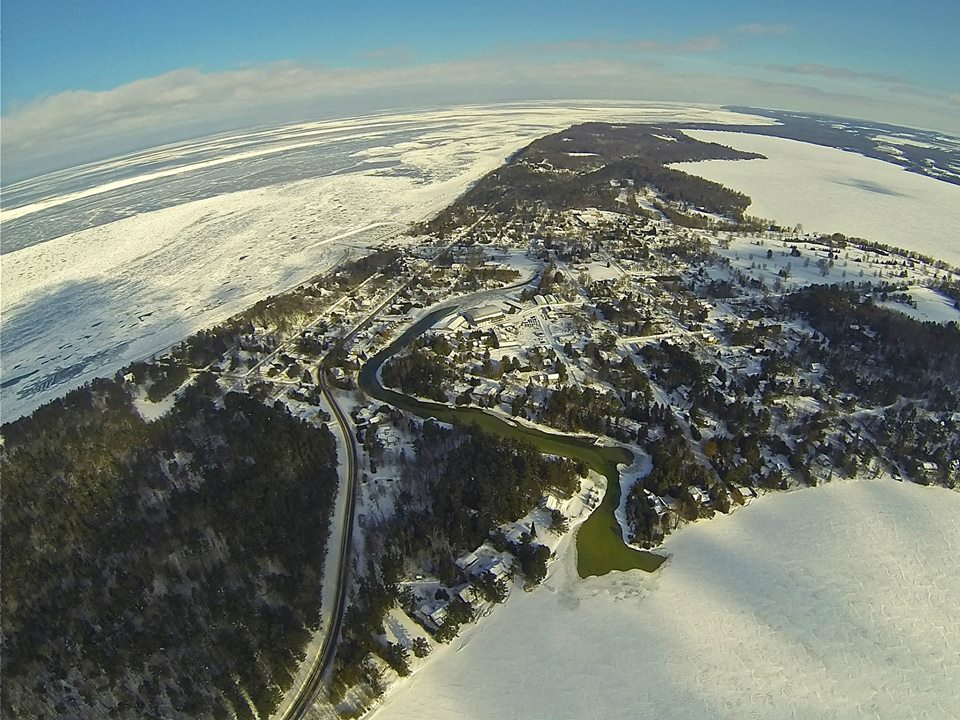
Drone over Leelanau (at Leland), photo by Elijah Allen

Mark Torregrossa writes at mLive that the Great Lakes are nearly 90% ice-covered:

The total ice cover on the Great Lakes continued to increase in the past seven days. At the rate the ice is growing, ice cover would reach record levels sometime next week.

We also had a mostly clear day Tuesday February 11, 2014. The high resolution satellite was able to generate some fascinating images.

The total ice cover on the entire Great Lakes system is reported at 87.3 percent today, according to the Great Lakes Environmental Research Laboratory(GLERL). The ice cover is up from 77 percent covered seven days ago.

The highest recorded total ice cover on the Great Lakes is 94.7 percent back on February 19, 1979. It should be emphasized that the most modern data set only goes back to 1973.

So the entire Great Lakes system has gone from 77 percent ice covered last week to 87 percent ice covered today. At that rate of increase, the Great Lakes would set a new modern day record for ice cover sometime next week.

Click through to mLive for a Lake by Lake report on ice cover and some sweet satellite shots.

My friend Elijah has been having entirely too much fun in and above the snow this winter. Lately he’s been flying a drone above the Leelanau Peninsula to see what he can see. View his photo bigger and (if you can) see more in his Drone over Leelanau Facebook gallery.

More aerial photography on Michigan in Pictures!