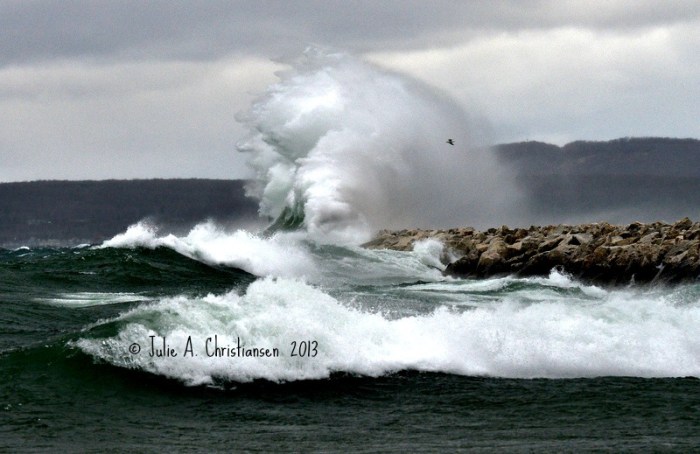
The Indian Drum

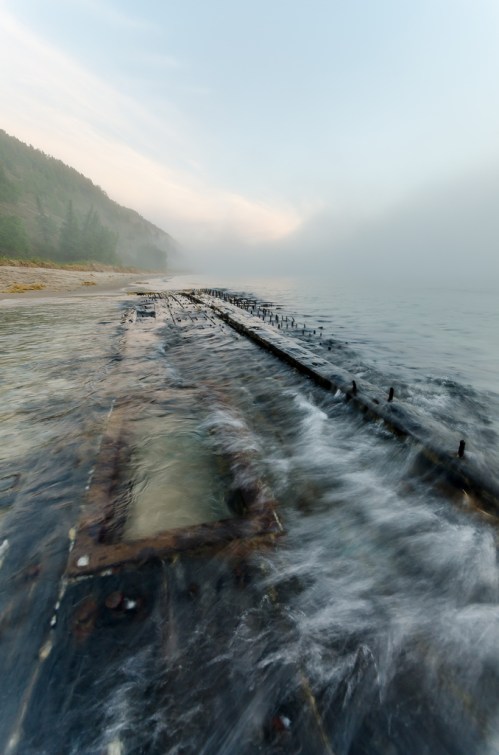
petoskey-breakwall-wave

Petoskey Breakwall, photo by Julie A. Christiansen

Earlier this week I posted about The Crooked Tree. While August isn’t yet shipwreck season in Michigan, the post reminded me of the 1915 novel by William MacHarg & Edwin Balmer set in the same region called The Indian Drum. The whole book is available online at Project Gutenberg (hooray for free books!). It begins:

Near the northern end of Lake Michigan, where the bluff-bowed ore-carriers and the big, low-lying, wheat-laden steel freighters from Lake Superior push out from the Straits of Mackinac and dispute the right of way, in the island divided channel, with the white-and-gold, electric lighted, wireless equipped passenger steamers bound for Detroit and Buffalo, there is a copse of pine and hemlock back from the shingly beach. From this copse—dark, blue, primeval, silent at most times as when the Great Manitou ruled his inland waters—there comes at time of storm a sound like the booming of an old Indian drum. This drum beat, so the tradition says, whenever the lake took a life; and, as a sign perhaps that it is still the Manitou who rules the waters in spite of all the commerce of the cities, the drum still beats its roll for every ship lost on the lake, one beat for every life.

So—men say—they heard and counted the beatings of the drum to thirty-five upon the hour when, as afterward they learned, the great steel steamer Wenota sank with twenty-four of its crew and eleven passengers; so—men say—they heard the requiem of the five who went down with the schooner Grant; and of the seventeen lost with the Susan Hart; and so of a score of ships more. Once only, it is told, has the drum counted wrong.

At the height of the great storm of December, 1895, the drum beat the roll of a sinking ship. One, two, three—the hearers counted the drum beats, time and again, in their intermitted booming, to twenty-four. They waited, therefore, for report of a ship lost with twenty-four lives; no such news came. The new steel freighter Miwaka, on her maiden trip during the storm with twenty-five—not twenty-four—aboard never made her port; no news was ever heard from her; no wreckage ever was found. On this account, throughout the families whose fathers, brothers, and sons were the officers and crew of the Miwaka, there stirred for a time a desperate belief that one of the men on the Miwaka was saved; that somewhere, somehow, he was alive and might return. The day of the destruction of the Miwaka was fixed as December fifth by the time at which she passed the government lookout at the Straits; the hour was fixed as five o’clock in the morning only by the sounding of the drum.

The region, filled with Indian legend and with memories of wrecks, encourages such beliefs as this. To northward and to westward a half dozen warning lights—Ile-aux-Galets (“Skilligalee” the lake men call it), Waugaushance, Beaver, and Fox Islands—gleam spectrally where the bone-white shingle outcrops above the water, or blur ghostlike in the haze; on the dark knolls topping the glistening sand bluffs to northward, Chippewas and Ottawas, a century and a half ago, quarreled over the prisoners after the massacre at Fort Mackinac; to southward, where other hills frown down upon Little Traverse Bay, the black-robed priests in their chapel chant the same masses their predecessors chanted to the Indians of that time. So, whatever may be the origin of that drum, its meaning is not questioned by the forlorn descendants of those Indians, who now make beadwork and sweet-grass baskets for their summer trade, or by the more credulous of the white fishermen and farmers; men whose word on any other subject would receive unquestioning credence will tell you they have heard the drum.

Read on at Project Gutenberg.

Julie took this shot back in November of 2013. You can view it bigger, see more in her This & That slideshow and also check out this video from the day.

More Michigan shipwreck lore on Michigan in Pictures.
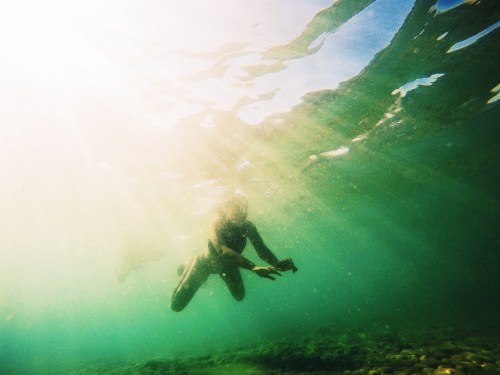
Faith

Faith in Grand Traverse Bay

Faith, photo by Cameron

View Cameron’s photo from underneath Grand Traverse Bay background bigtacular and see more in his Elk Rapids MI slideshow.

More great summer wallpaper on Michigan in Pictures!

Promising Start

Promising Start

Promising Start, photo by Heather Higham

Heather writes:

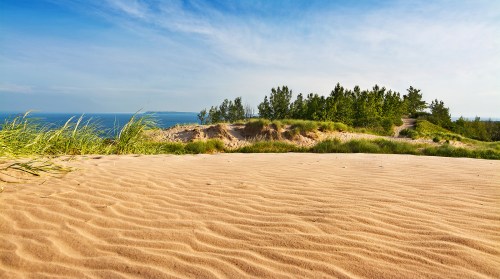
Hard to believe that a raging storm tore through just hours after this idyllic morning in the dunes. But this is from the same day (Sunday) as the monster winds that uprooted and snapped countless large trees…

View her photo bigger, see more in her Sleeping Bear Dunes slideshow and follow her at Snap Happy Gal Photography on Facebook.

PS: I’ve been posting lots of updates from the storm on my Leelanau.com Facebook.

Badger in the Mist

Badger Heading Out

Ludingtons SP_0103, photo by Ron DeHaan

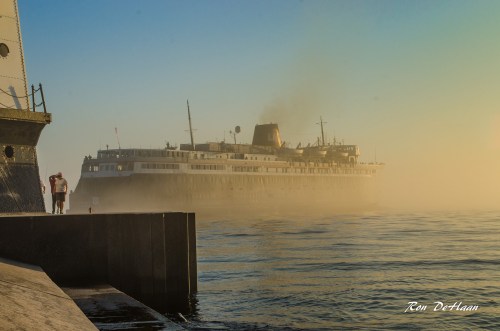
Here’s the S.S. Badger heading out for Wisconsin. I rode the Badger many times in my Junior & Senior year of high school (Go Wausau East Lumberjacks!) to get from Michigan to Wisconsin. It was such a pleasant way to cross Lake Michigan, and at the prices they charged there were a number of people who would do a round trip crossing, playing cribbage, drinking beer from a cooler and laughing as they enjoyed the ride.

View Ron’s photo bigger and see more cool shots from the Ludington area in his slideshow.

More ships & boats, more Ludington and more of the Badger (and badgers) on Michigan in Pictures.

Shoreline Trek

Lake Michigan Pyramid Point

Lake Michigan … points along the bay, photo by Ken Scott

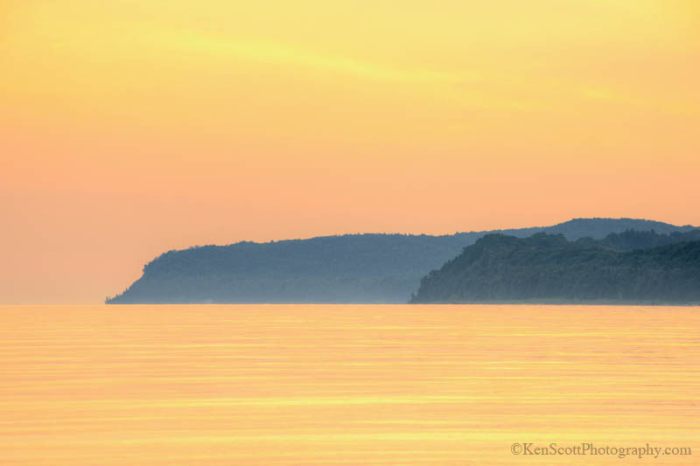
My friend Ken Scott has been walking the shore of the Leelanau Peninsula for the past year and a half. He writes that the point to the left is Pyramid Point in the Sleeping Bear Dunes National Lakeshore but he doesn’t know what name (if any) the other point is. Anyone know?

View Ken’t photo bigger, follow him at Ken Scott Photography on Facebook and definitely check out his Shoreline Trek slideshow.

Lots more Lake Michigan on Michigan in Pictures.

Summertime Rolls

Lake Michigan Rolls

Untitled, photo by Noah Sorenson

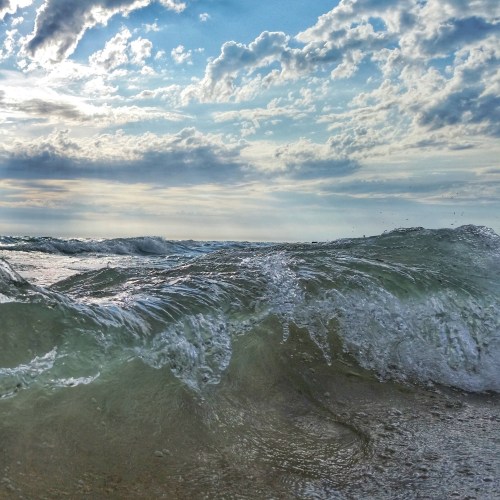
There’s nowhere in Michigan that’s more than 85 miles from one of the Great Lakes, and you can probably find a swimmable lake or river closer than that.

That’s something that I hope you’ll manage to do on this sweltering weekend – stay cool folks!

Noah took this on Monday at Elberta beach on Lake Michigan. Definitely check it out background bigalicious and see more northern Michigan goodness in his slideshow.

Lots more Michigan beaches and summer wallpaper on Michigan in Pictures!


June 29th in Holland

Holland - MI

Holland – MI, photo by betopps

View this photo from June 29, 2013 background bigtacular and see more in betopps slideshow.

Shipwreck Saturday: The Wreck of the Minnehaha

Taking on Water

Taking on Water, photo by Aaron Springer

“She was built in 1880 [by Linn & Craig in Gibralter, Michigan] and has been unfortunate from the start. Two years ago [in 1891] she was wrecked near Detour [at the north end of Lake Huron], and remained on the rocks all winter, being abandoned to the underwriters, who finally rescued the wreck and sold it.”
~ Buffalo Evening News Monday, October 16, 1893

Historic Arcadia Michigan tells the tale of The Wreck of the Minnehaha:

In October of 1893, the steam barge Henry J. Johnson was towing the Minnehaha from Chicago bound for Point Edward at the south end of Lake Huron with 58,000 bushels of corn. At 7:30 PM on October 13, the two ships found themselves off Point Betsie facing 90 mile per hour gale force winds. They tried to find shelter behind the Manitou Islands, but at dawn the next day, they were still south of Sleeping Bear Point fighting high winds and waves to stay out of shallow water.

Captain Benniteau of the Johnson decided to turn the ships south and head to Frankfort, the nearest refuge. However, somewhere near Frankfort high waves crashed over the Minnehaha’s deck, smashed two hatch covers, and began filling the hold with water. William Parker, captain of the Minnehaha, realizing his ship was in serious trouble, sent up distress signals, released the tow lines, and headed for the beach. There was nothing the crew of the Johnson could do but avoid the same shallow water.

The Minnehaha ran aground about a quarter of a mile offshore between Burnham and Arcadia. To avoid the waves sweeping the decks, all but one member of the crew, who drowned trying to swim to shore, climbed into the ship’s rigging. As the ship was breaking up, the captain called to the crew to grab whatever would float and go over the side anyway. But only the captain made it to shore safely. One crew member made it to a pier, but was too tired to hold onto a pole used to try to pull him to safety.

Read on for much more including photos of the Minnehaha.

Check out Aaron’s photo bigger where he also has a pic of the wreck in calm water and see many more of his great photos of Lake Michigan.

More Michigan shipwrecks on Michigan in Pictures!

Michigan Ghost Towns: Aral at Otter Creek

Esch Beach

Esch Beach, Otter Creek, photo by Sara Hunt/oni_one_

The Sleeping Bear Dunes National Lakeshore tells the rich tale of the ghost town Aral:

Aral was located on Lake Michigan where Otter Creek empties into the Lake just south of Esch Road, a few miles south of Empire, MI. Today this is one of the most popular swimming beaches in the Lakeshore, but in the 1880s, Aral was a booming lumber town!

When the United States acquired land, it first had to be surveyed before it was made available to individuals. In the summer of 1849, Orange Risdon was one of the surveyors assigned to the area around Grand Traverse Bay. In 1853 soon after he finished the survey, Risdon and his wife, Sally, bought 122 acres where Otter Creek emptied into Lake Michigan.

The US Civil War began in 1861, and to induce able-bodied men to join the Union forces, the US government offered $100 bounty to men who enlisted. By 1863 the bounty was increased to $300, and finally a draft was instituted. An interesting provision of the draft act allowed drafted men to avoid service by hiring a substitute or by paying $300. One of the men receiving draft notice was Robert F. Bancroft, who was married and 30 years old. He chose to take advantage of this provision by hiring a German immigrant to take his place as a soldier, but interestingly he followed his replacement to the battlefield. Instead of carrying a gun, he brought his camera and became one of the first battlefield photographers.

Following the war, the veterans returned home, and Robert Bancroft settled with his wife Julia and daughter Anna in Traverse City. He began buying land in Platte and Lake townships as investments and in late 1864, he bought the 122 acres from Orange and Sally Risdon of Saline, MI.

Bancroft cleared 20 acres and built a log cabin for his family to live in. Then he planted some black locust trees and an apple orchard around the cabin. Lumber speculators soon arrived looking for stands of white pine. Most of the forest in this area was hardwood, but there were some stands of white pine inland from Otter Lake. By the late 1870s Daniel Thomas bought a 5-acre parcel on Lake Michigan south of Otter Creek, but he decided to build a house across the road from the Bancroft’s. Lumber speculators were on their way north as the forests near Grand Haven and Muskegon were harvested.

…By 1883, the lumber business was booming and the town was growing. A post office was required. The community was known as Otter Creek – the “Krik” by locals. When they applied for a post office, their name was rejected because there was already an “Otter Creek” in Michigan. “Bancroft” was the next suggestion, but again the name had already been used. One of the workers suggested the name “Aral” because of the beautiful Aral Sea in Europe. Locals continued to call it Otter Creek though. Dr. Frank Thurber was named the first postmaster. Keep his name in mind, for he too would play a central role in the murder.

Murder you say? Indeed – read on for lots more…

View Sarah’s photo background bigilicious on Facebook and follow her for lots more at oni_one_ on Instagram.

Chaos & Order: Elberta Breakwall Edition

IMG_20150529_122634

Untitled, photo by Noah Sorensen

You really should check out this photo background bigtacular. Lots more in his slideshow and if you do the Instagram thing, Noah is a great follow @mcsorensens.