Waterfall Wednesday: Quartzite Falls on the Slate River

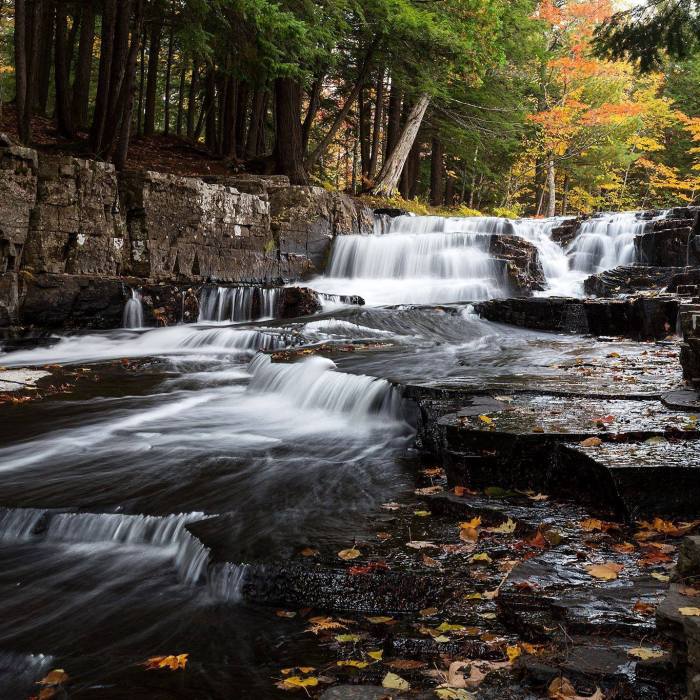
Quartzite Falls on the Slate River

Quartzite Falls on the Slate River, photo by Amie Lucas

Waterfalls of the Keewenaw’s page on Quartzite Falls says:

Quartzite Falls is a perfect little waterfall high above the rugged gorge on Slate River. The river drops in a sudden crescent onto a large, flat slide of slate before flowing into a deep pool surrounded by cedars. Quartzite Falls may be small, but it’s shape and scenic area makes for an amazing waterfall experience.

This waterfall is a short distance downstream of Black Slate Falls, easy walking distance from the road and about a mile from the slate quarries of Arvon. These three areas make for an excellent little adventure that is fairly accessible for all ages.

You can click through for directions and some pics. Amie took this back in October and writes:

The Slate River is magnificent. I spent an entire day traversing over rough, steep terrain & wading through cold water on slippery rocks to visit places that felt like no one had ever been before. Quartzite Falls, one of the many beauties on this river, is one of the easier waterfalls to access.

View her photo background bigilicious, follow her on Facebook and definitely check out her waterfall gallery and others at her photography website!

Many more Michigan waterfalls and (if you can’t let go of autumn) more fall wallpaper on Michigan in Pictures!

On Down the Road

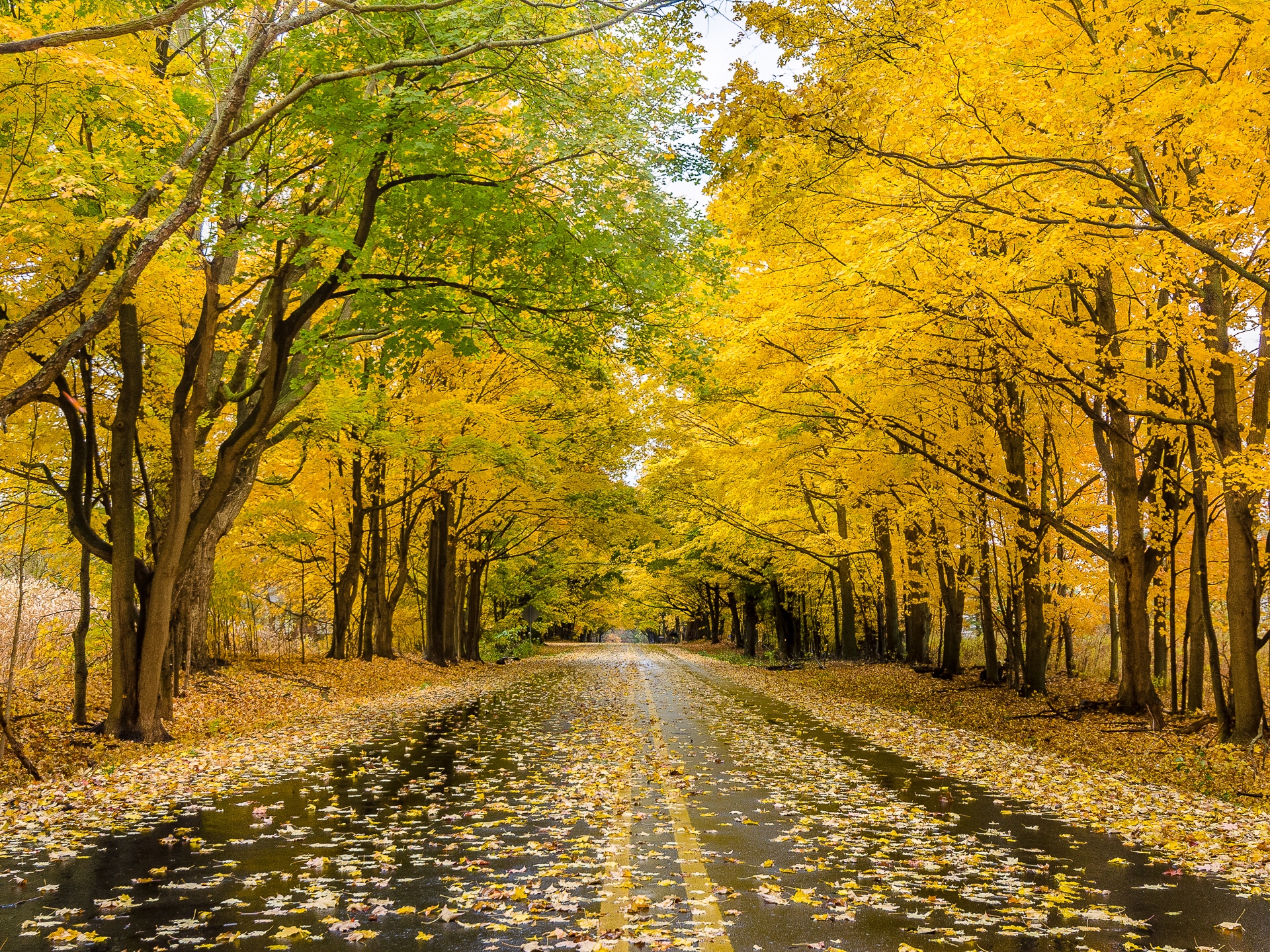
On Down the Road

On Down the Road, photo by Doug Jonas

Miraculously, there’s still pockets of fall color out there, so how about one more before November closes in?

View Doug’s photo background bigtacular and see more in his amazing slideshow.

More fall wallpaper on Michigan in Pictures.

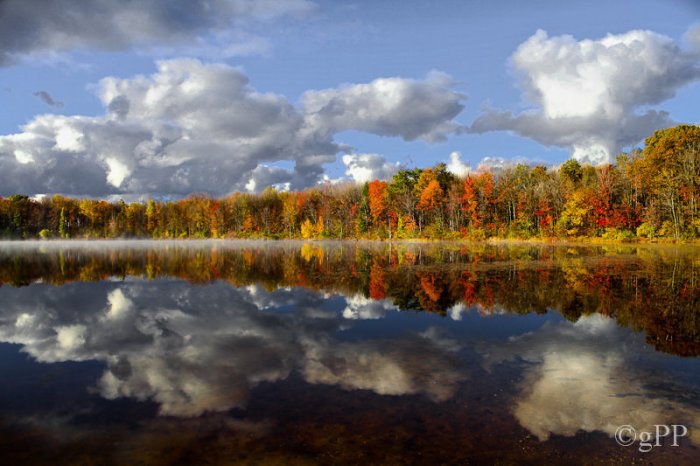
Healy Lake Reflections

Healy Lake Fall Color

Healy Lake Reflections, photo by Dorn Gallatin

Hope everyone has a great weekend and gets out there to take a big bite out of autumn before winter eats it all!

Here’s a map to Healy Lake, located not far from Onekama. Lake Link’s entry for Healy Lake says:

Healy Lake is located in Manistee County, Michigan. This lake is 39 acres in size. It is 50.00 feet deep at its deepest point. Anglers can expect to catch a variety of fish including Bluegill, Largemouth Bass, Northern Pike, Sunfish and Yellow Perch.

Click to view it bigger and see more in Dorn’s Fall slideshow.

More Michigan lakes on Michigan in Pictures.

Fiery Fall Foliage at Fenner

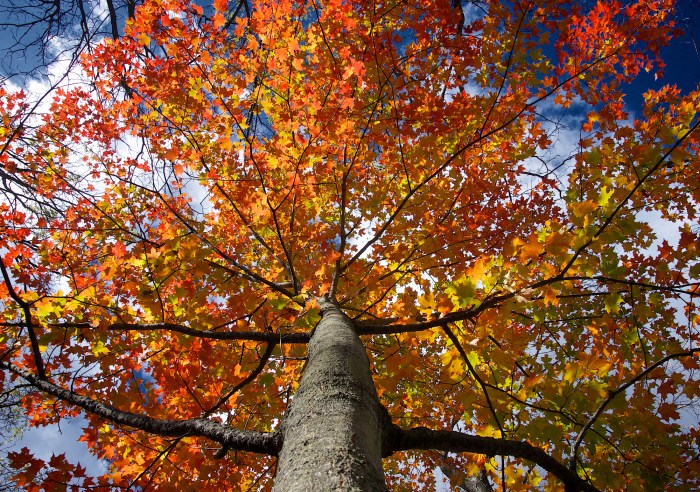
Fiery Fall Foliage

Fiery Fall Foliage, photo by David Marvin

Let’s head out of autumn with a with a bang and this firework of a maple! I hope you get a chance to get out and enjoy what remains of the 2015 fall color touring season in Michigan. mLive updated their color report with some pics from readers:

The colors are fading fast and the leaves are falling, but there are still some Michigan areas with peak color. The inland areas of the Upper Peninsula and the inland areas of northern Lower Michigan are past fall color peak now. The leaves are falling fast.

But the shoreline areas and the peninsulas are warmer. Some of those areas are still at peak, or even just peaking now.

It will still be well worth the trip to the Leelanau Peninsula and the Old Mission Peninsula this week and probably even this weekend.

We took the drive of M-22 along the shore of Leelanau County Sunday, October 18, 2015. Along the shore there was still some green and was a few days away from peak. Old Mission Peninsula was 50 percent green still on Sunday, Oct. 18, 2015. So if you are going north this weekend, take the routes near water and you’ll be pleased.

The southern half of Lower Michigan is peaking now through the next few days. This weekend will still be real nice to take that last fall color drive.

Also have at these aerial photos of fall color from a U.S. Coast Guard MH-65D Dolphin helicopter they shared a week ago.

Check this photo out big as a tree and head over to Dave’s blog for more photos & writing from Fenner Nature Center.

More fall wallpaper on Michigan in Pictures.

Fall…ing: Michigan is Still Michigan Edition

Fall-ing Northern Marquette County

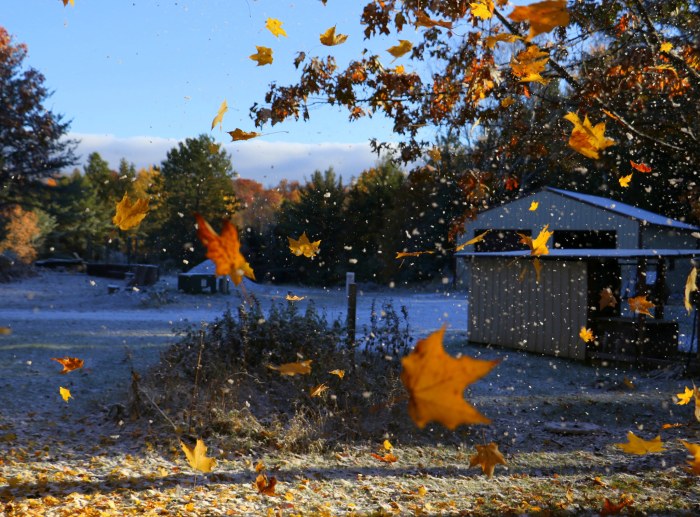
Fall…ing, photo by Thom Skelding

Yep. This photo pretty much sums up the weekend!! In Michigan gets bragging rights to first heavy snow east of Rockies, mLive meteorologist Mark Torregrossa writes:

Michigan now has bragging rights to the first heavy snow of the winter, east of the Rockies. Overnight Friday, October 16, 2015, and this morning, lake effect snow has been falling in part of the Upper Peninsula and a large area of northwest Lower Michigan.

The Kalkaska area, east of Traverse City, has officially reported 5.7 inches of new snow.

The northwest Lower Michigan snow belt has received areas of two to five inches of the winter wonder.

Click through for more, including some photos.

View Thom’s photo background bigtacular and see more in his slideshow.

More fall wallpaper and more winter wallpaper

Under An Autumn Sunbeam: Fall Color Explained

Fall Color 2015 in Michigan

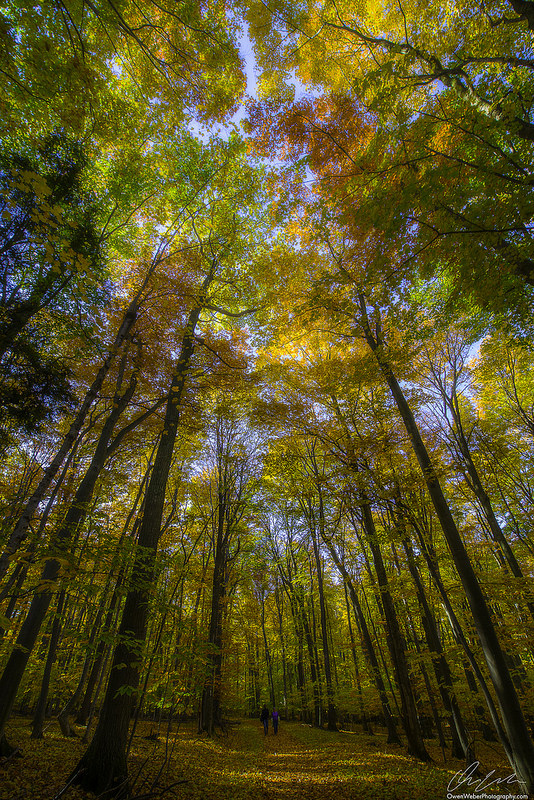
Under An Autumn Sunbeam, photo by Owen Weber

As we wait for the fall color season in Michigan to kick off, here’s a look back to last October and my annual rework of one of the most popular posts on Michigan in Pictures, the Science of Fall Color. If you already know the words you can sing along – have a great weekend folks!

The Science of Color in Autumn Leaves from the United States National Arboretum says (in part):

Many think that cool weather or frost cause the leaves to change color. While temperature may dictate the color and its intensity, it is only one of many environmental factors that play a part in painting deciduous woodlands in glorious fall colors.

…The process that starts the cascade of events that result in fall color is actually a growth process. In late summer or early autumn, the days begin to get shorter, and nights are longer. Like most plants, deciduous trees and shrubs are rather sensitive to length of the dark period each day. When nights reach a threshold value and are long enough, the cells near the juncture of the leaf and the stem divide rapidly, but they do not expand. This abscission layer is a corky layer of cells that slowly begins to block transport of materials such as carbohydrates from the leaf to the branch. It also blocks the flow of minerals from the roots into the leaves. Because the starting time of the whole process is dependent on night length, fall colors appear at about the same time each year in a given location, whether temperatures are cooler or warmer than normal.

During the growing season, chlorophyll is replaced constantly in the leaves. Chlorophyll breaks down with exposure to light in the same way that colored paper fades in sunlight. The leaves must manufacture new chlorophyll to replace chlorophyll that is lost in this way. In autumn, when the connection between the leaf and the rest of the plant begins to be blocked off, the production of chlorophyll slows and then stops. In a relatively short time period, the chlorophyll disappears completely.

This is when autumn colors are revealed. Chlorophyll normally masks the yellow pigments known as xanthophylls and the orange pigments called carotenoids — both then become visible when the green chlorophyll is gone. These colors are present in the leaf throughout the growing season. Red and purple pigments come from anthocyanins. In the fall anthocyanins are manufactured from the sugars that are trapped in the leaf. In most plants anthocyanins are typically not present during the growing season.

As autumn progresses, the cells in the abscission layer become more dry and corky. The connections between cells become weakened, and the leaves break off with time. Many trees and shrubs lose their leaves when they are still very colorful. Some plants retain a great deal of their foliage through much of the winter, but the leaves do not retain their color for long. Like chlorophyll, the other pigments eventually break down in light or when they are frozen. The only pigments that remain are tannins, which are brown.

Temperature, sunlight, and soil moisture greatly influence the quality of the fall foliage display. Abundant sunlight and low temperatures after the time the abscission layer forms cause the chlorophyll to be destroyed more rapidly. Cool temperatures, particularly at night, combined with abundant sunlight, promote the formation of more anthocyanins. Freezing conditions destroy the machinery responsible for manufacturing anthocyanins, so early frost means an early end to colorful foliage. Drought stress during the growing season can sometimes trigger the early formation of the abscission layer, and leaves may drop before they have a chance to develop fall coloration. A growing season with ample moisture that is followed by a rather dry, cool, sunny autumn that is marked by warm days and cool but frostless nights provides the best weather conditions for development of the brightest fall colors. Lack of wind and rain in the autumn prolongs the display; wind or heavy rain may cause the leaves to be lost before they develop their full color potential.

OK, sorry to share a novel with you. Might have to change the name of the blog to “Michigan in a Whole Bunch of Words with a Picture.”

Owen took this last October in Glen Arbor. View it bigger and see more in his Michigan slideshow.

PS: I have to think that it doesn’t look the same there this year due to the crazy storm they are still recovering from.

Tons more fall photos on Michigan in Pictures.

Bond Falls in Autumn

Bond Falls in Autumn

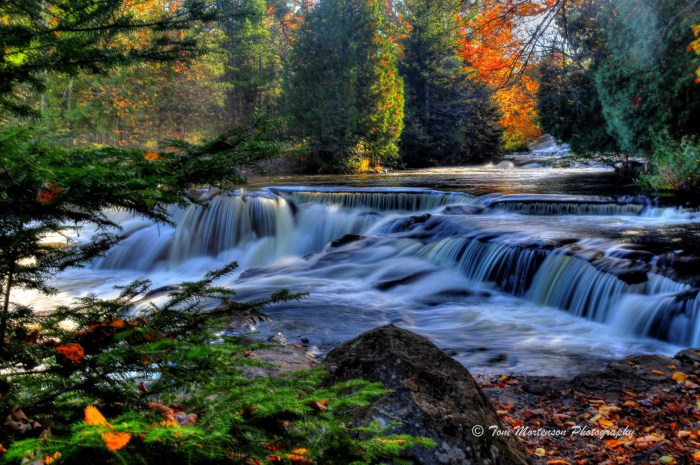
Bond Falls in Autumn, photo by Tom Mortenson

Here’s the latest cover photo for Michigan in Pictures, one of many in the Michigan Cover Photos group on Flickr!

It’s from early October of 2013, and while it looks like our color season could be pretty darned good, it’s probably a little late this year. Via the Freep, it looks like the recent run of “Indian summer” is pushing color back:

The Upper Peninsula, which usually has plenty of fall color by this time in September, is still lolling around in green, reports Pure Michigan and the Foliage Network, which monitor fall color in the state.The very western Upper Peninsula as of Thursday was showing between 12% to 30% color, but the rest of the state had none.

Things seem to be about two weeks or more behind schedule.

Still, “cooler weather has taken hold and should help to get things going,” reports Market Rzonca, who runs The Foliage Network.

Pure Michigan’s fall color blog (Michigan.org/fall) predicted that peak fall color in the U.P., including Mackinac Island, is not expected to hit for about three weeks. Same with Alpena, Charlevoix and Ludington. Farther south, the show will come even later.

View Tom’s photo background bigtacular and check out more of Tom’s Michigan waterfall photos.

There’s more fall wallpaper, more about fall color, and more on Bond Falls on Michigan in Pictures.


Summer to Fall

Looking Out at Pictured Rocks

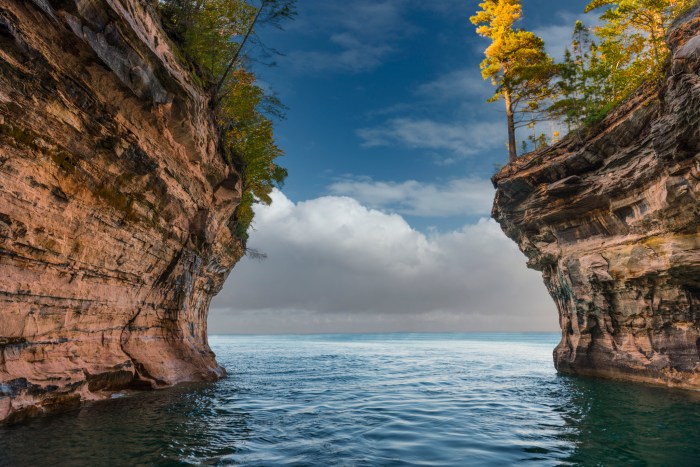
Looking Out, photo by Peter Tinetti

What a perfect photo from the Pictured Rocks National Lakeshore for the last day of summer as we prepare to make the leap into autumn tomorrow.

View this photo background bigtacular and see more in Peter’s slideshow.

There’s more Pictured Rocks and more Fall wallpaper on Michigan in Pictures!

Behind every great photo…

Hogback Mountain Photographer

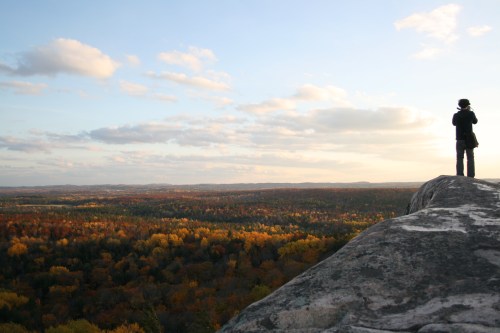
Hogback Mountain, photo by Chelsea Graham

Shots like these help me remember that behind every great photo, there’s someone who went through all the time and effort to get out there and take it.

Thanks so much to all of you photographers who share your work with me – there’s no way I could do what I do without all of your time, effort and love of Michigan.

View Chelsea’s photo background big and see more in her Michigan slideshow.

More fall wallpaper on Michigan in Pictures.

Polling for Parks: Porcupine Mountain Wilderness State Park

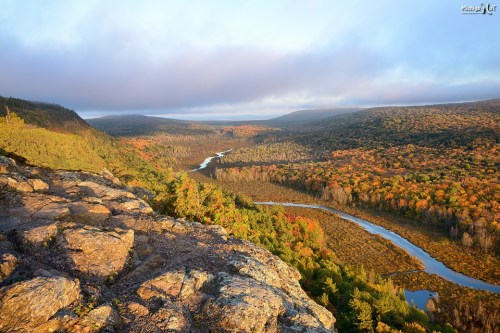
Sunset over Lake of the Clouds, Porcupine Mountains

Sunset over Lake of the Clouds, Porcupine Mountains, photo by John McCormick

USA Today is polling their readers to see what they think the 10 best state parks in the nation are. The entry page for the Porcupine Mountain Wilderness State Park says:

The Porcupine Mountains Wilderness State Park, or the “Porkies” as its known to frequent visitors, encompasses 60,000 acres of lakes, rivers and virgin forest. The park offers camping on the shores of Lake Superior, 90 miles of hiking trails, kayak rentals, mountain biking and, in the winter, access to the Porcupine Mountains Ski Area.

Porcupine Mountains Wilderness State Park – Mich. is currently ranked #2 of 20.

You can click here to vote if you’re so inclined.

John took this evening shot in October 2014 near the east end off the Lake of the Clouds. View it bigger on Flickr, see more staggering photos in his Autumn in Michigan slideshow, and definitely follow him on Facebook at Michigan Nut Photography.

You can click to visit the Porcupine Mountains Wilderness State Park website and get all kinds of Porcupine Mountains rivers, falls and views on Michigan in Pictures.