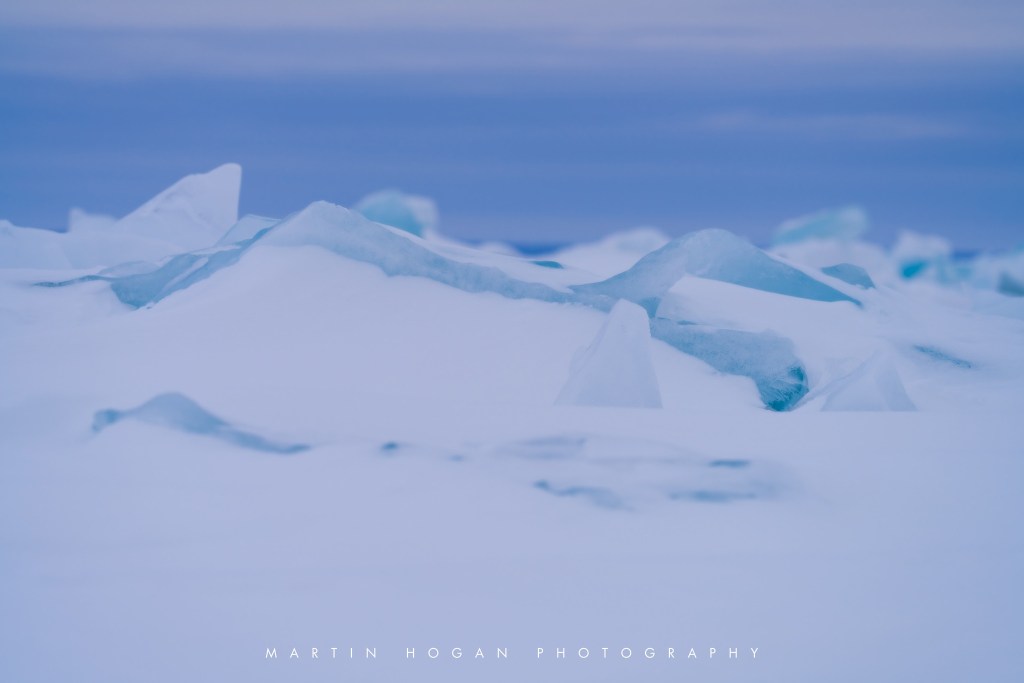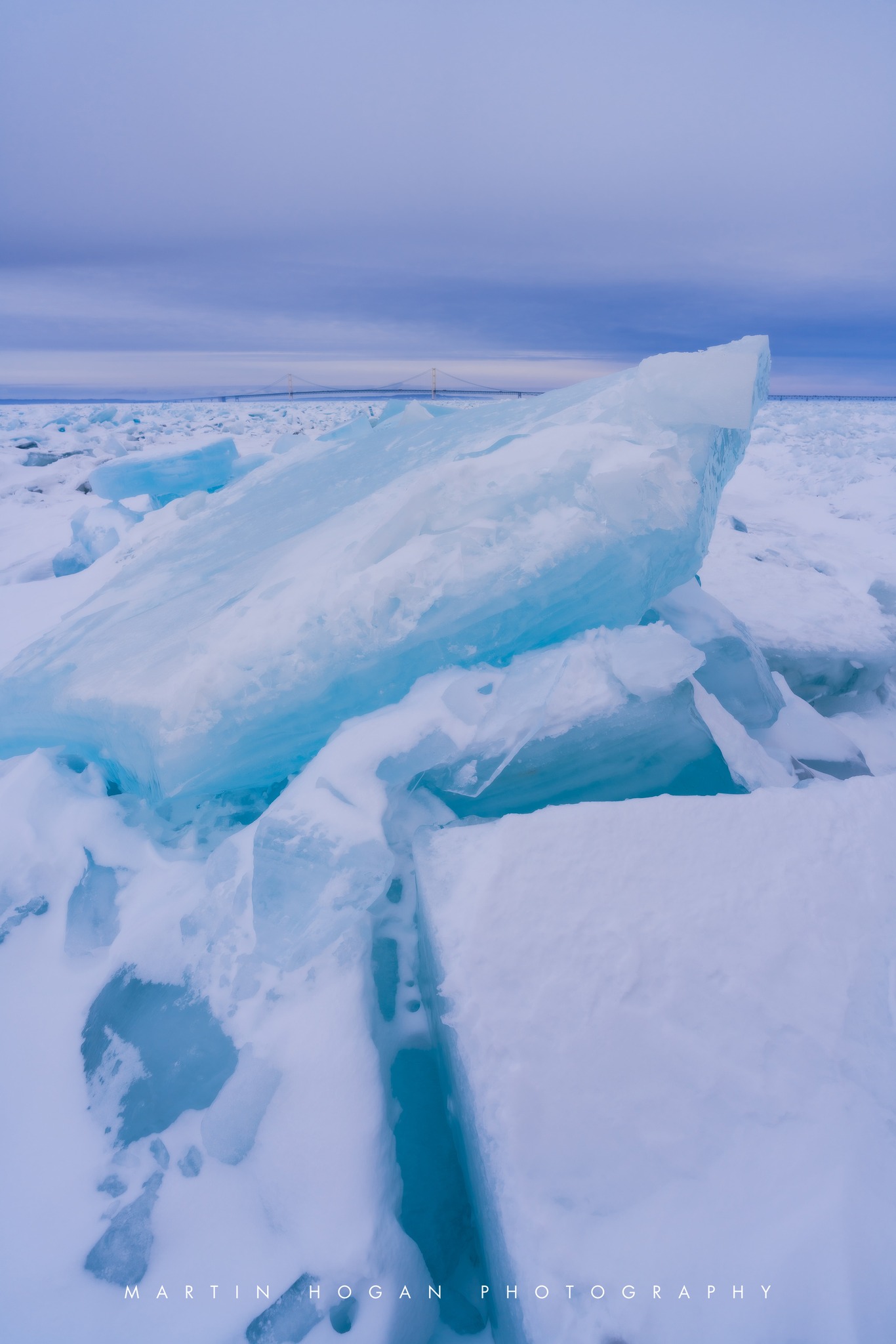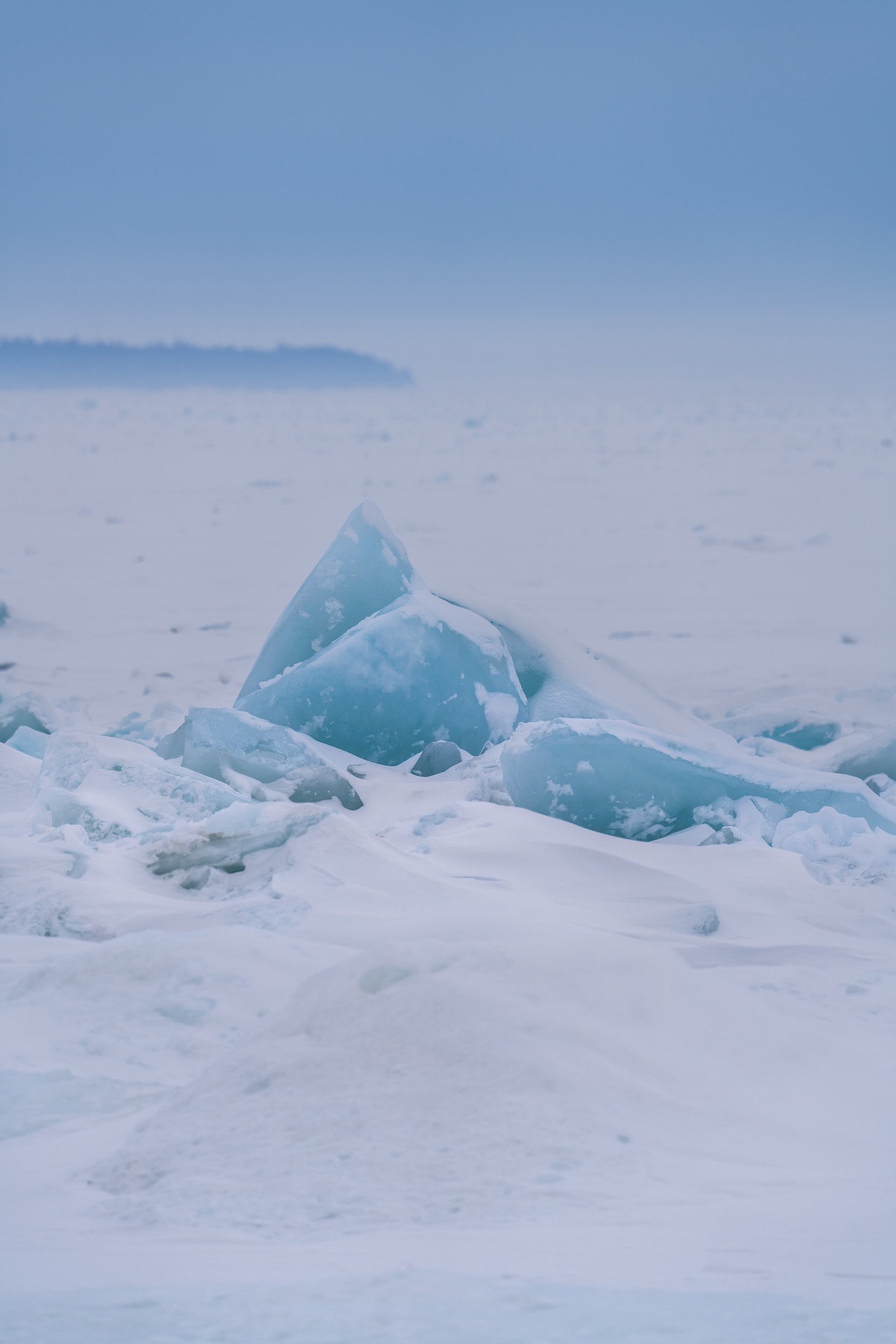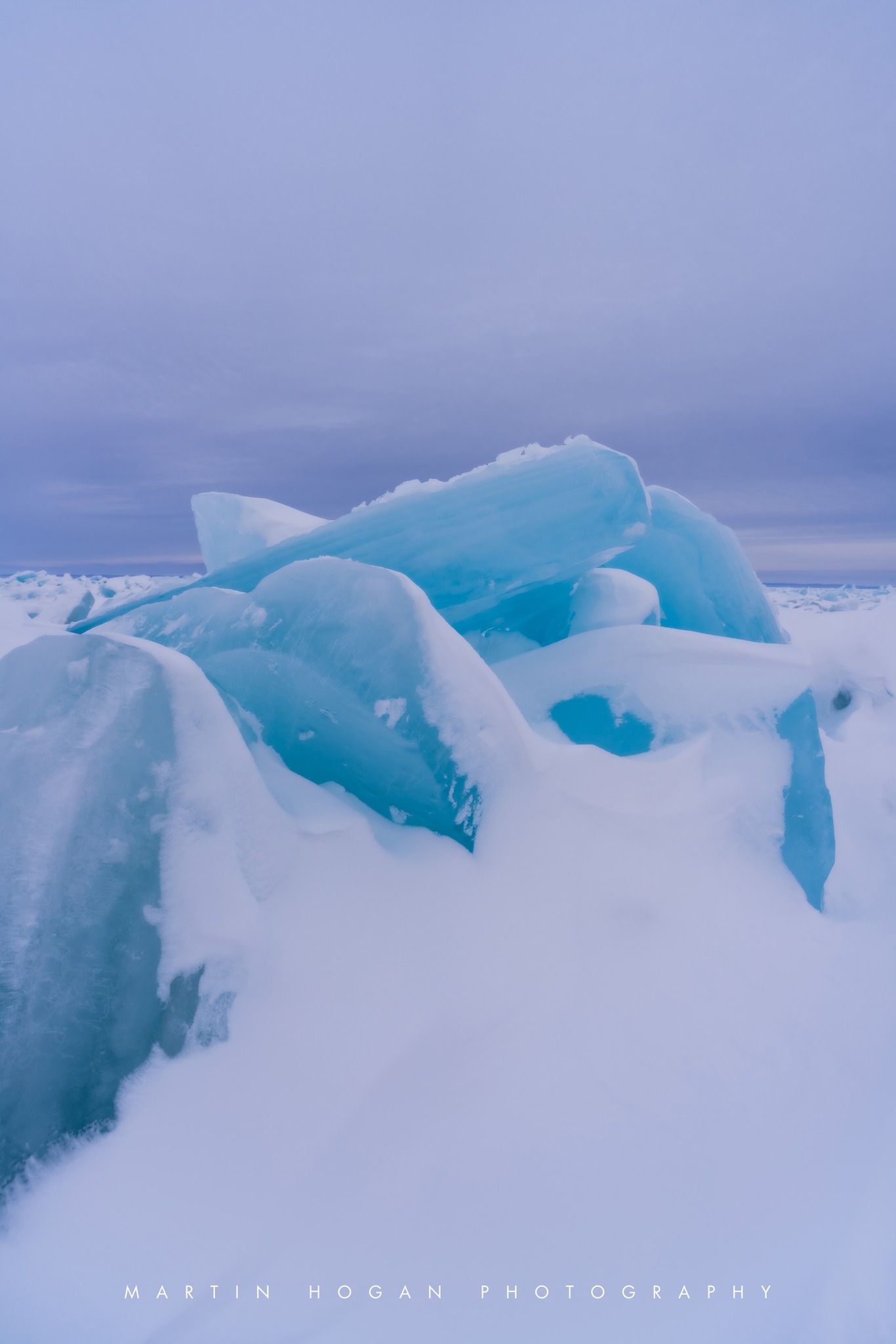
Blue Ice at the Straits of Mackinac

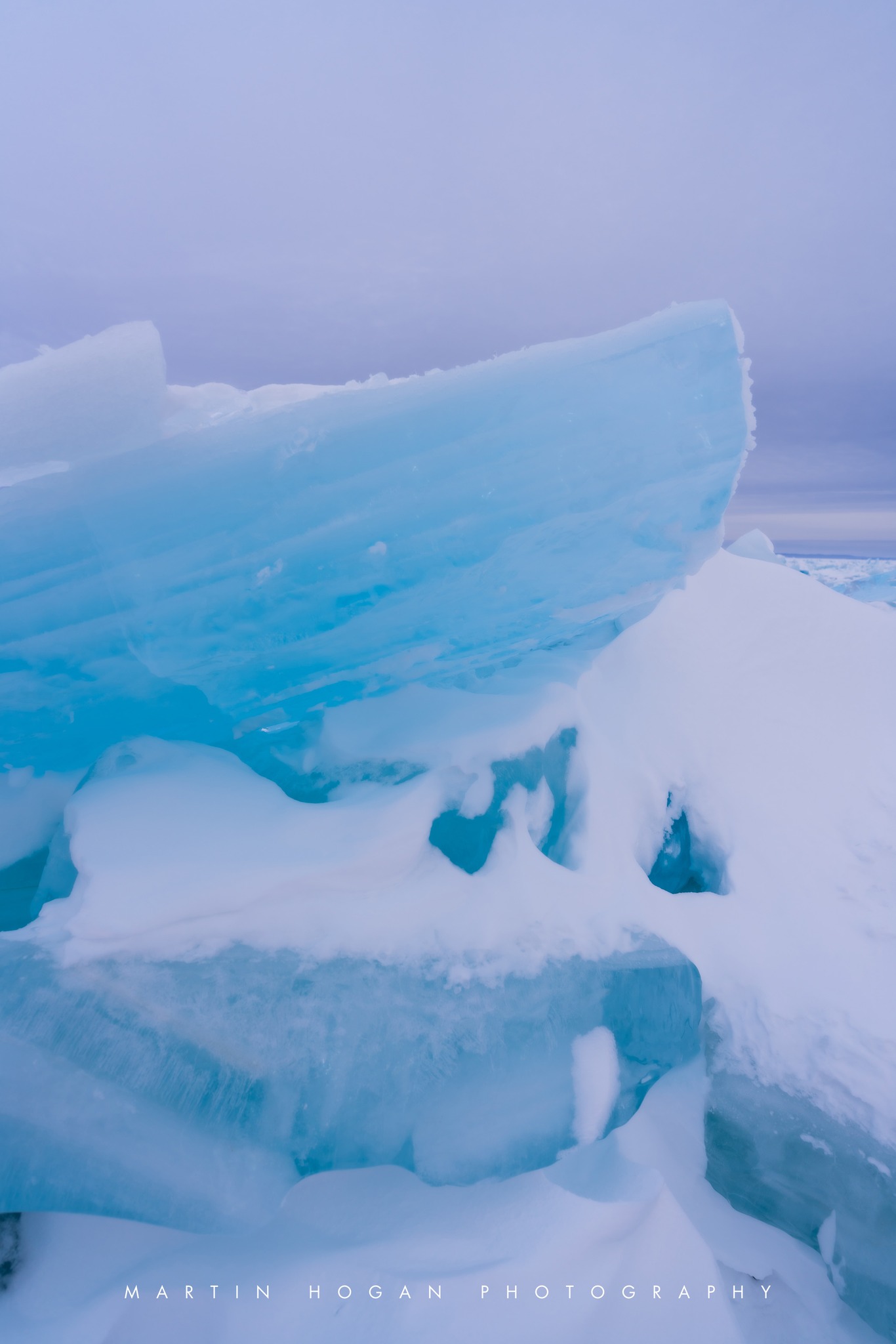
Blue Ice at the Straits of Mackinac by Martin Hogan Photography

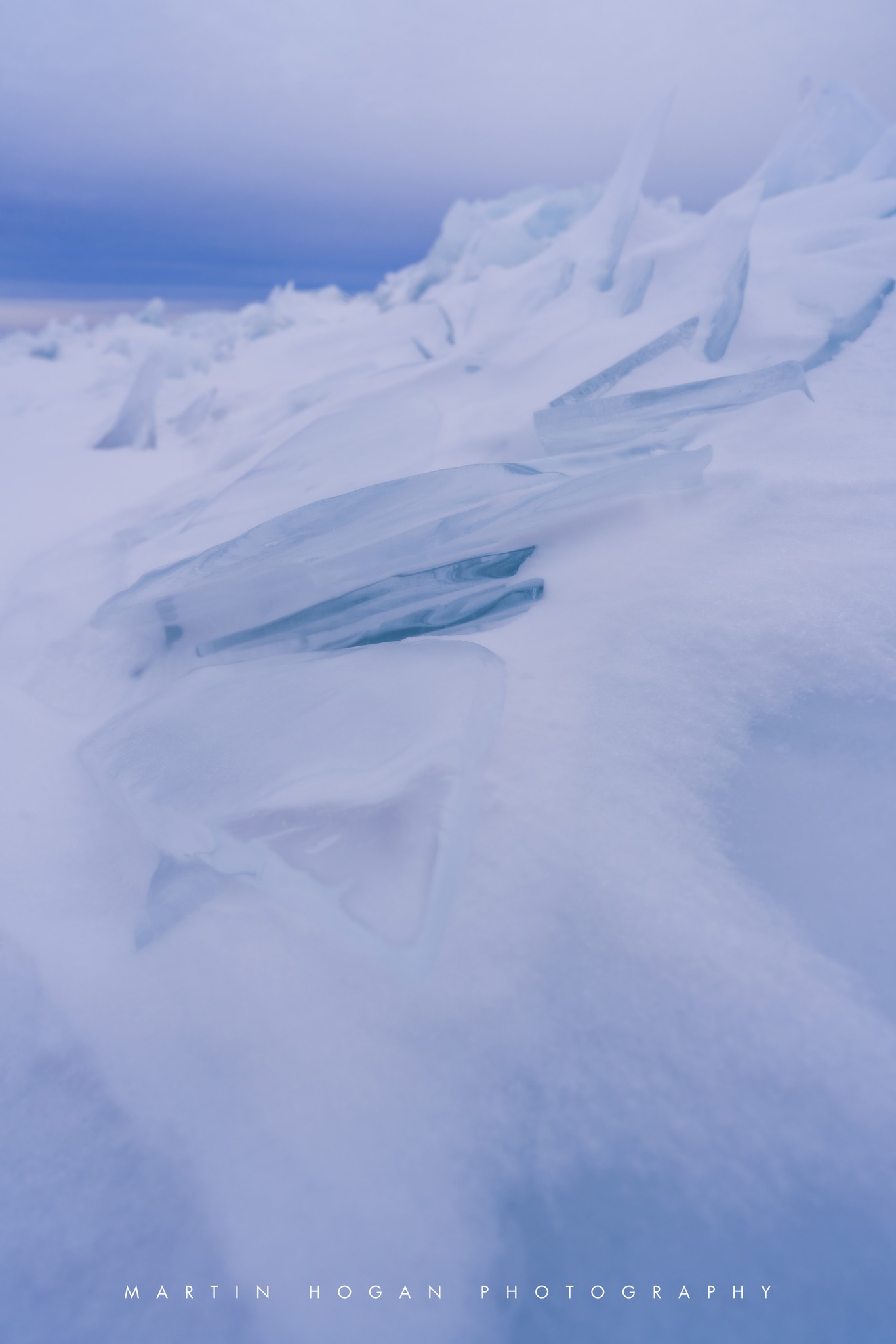
Blue Ice at the Straits of Mackinac by Martin Hogan Photography

Although winter “officially” ended yesterday, the snowy pictures I’m seeing from around Michigan this morning make me feel OK sharing these pics Marty got of blue ice on the Straits of Mackinac last weekend. Click to follow Marty on Facebook & for sure check out some of his past photos on Michigan in Pictures!

If you are wondering Why Ice is Blue, Michigan in Pictures says (in part):

As with water, this color is caused by the absorption of both red and yellow light (leaving light at the blue end of the visible light spectrum) … In simplest of terms, think of the ice or snow layer as a filter. If it is only a centimeter thick, all the light makes it through; if it is a meter thick, mostly blue light makes it through. This is similar to the way coffee often appears light when poured, but much darker when it is in a cup.

Support Michigan in Pictures with Patreon

Honolulu Blue Monday

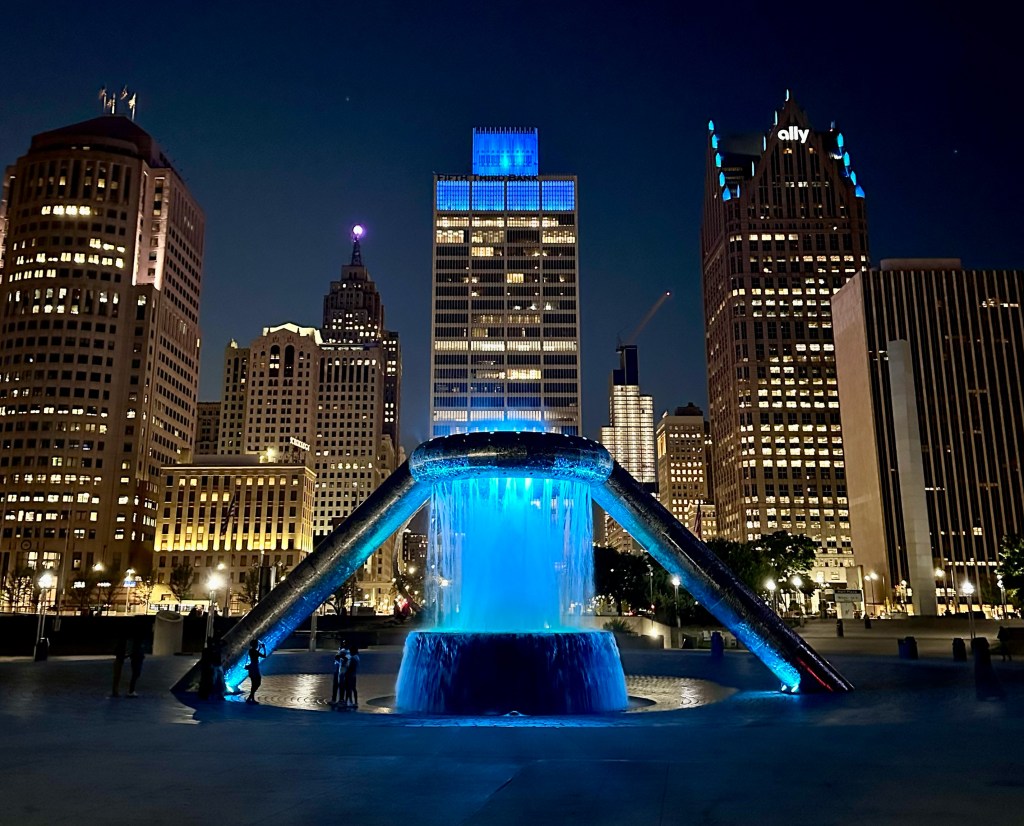
Dodge Fountain in Honolulu Blue by Andrew McFarlane

The Detroit Lions kicked off their highly anticipated 2024 season with a 26-20 overtime victory over former QB Matthew Stafford and the Los Angeles Rams! In honor of this, I decided to share one of my own photos, a picture of the Dodge Fountain on Hart Plaza in downtown Detroit lit up in Honolulu Blue.

I knew that the Dodge Fountain had been designed by artist Isamu Noguchi, but I just learned that he designed Philip A. Hart Plaza as well:

Noguchi’s most ambitious effort at the time, the Philip A. Hart Plaza project, began with a commission for a fountain and spanned almost a decade as the artist expanded his scope to create the surrounding plaza along with facilities below surface level. Envisioned as a place for the community to gather, the plaza layout emphasized flexibility to accommodate large groups. Dotting the eight-acre site are various stepped areas for both seating and play; an outdoor amphitheater built into a hollow below-surface grade; and a 120-foot-tall stainless steel, torqued pylon marking one entrance. Its central feature is the Horace E. Dodge Fountain, a horizontal ring of stainless steel suspended by legs above a massive granite pool and animated by the results of Noguchi’s ongoing experiments with programmed spray patterns (as well complex lighting schemes for nighttime).

I don’t have a photography website, but if you enjoy Michigan in Pictures you can support me with a few bucks on Patreon!!

Support Michigan in Pictures with Patreon

Labor Day Weekend 2024: Don’t drive like an idiot edition

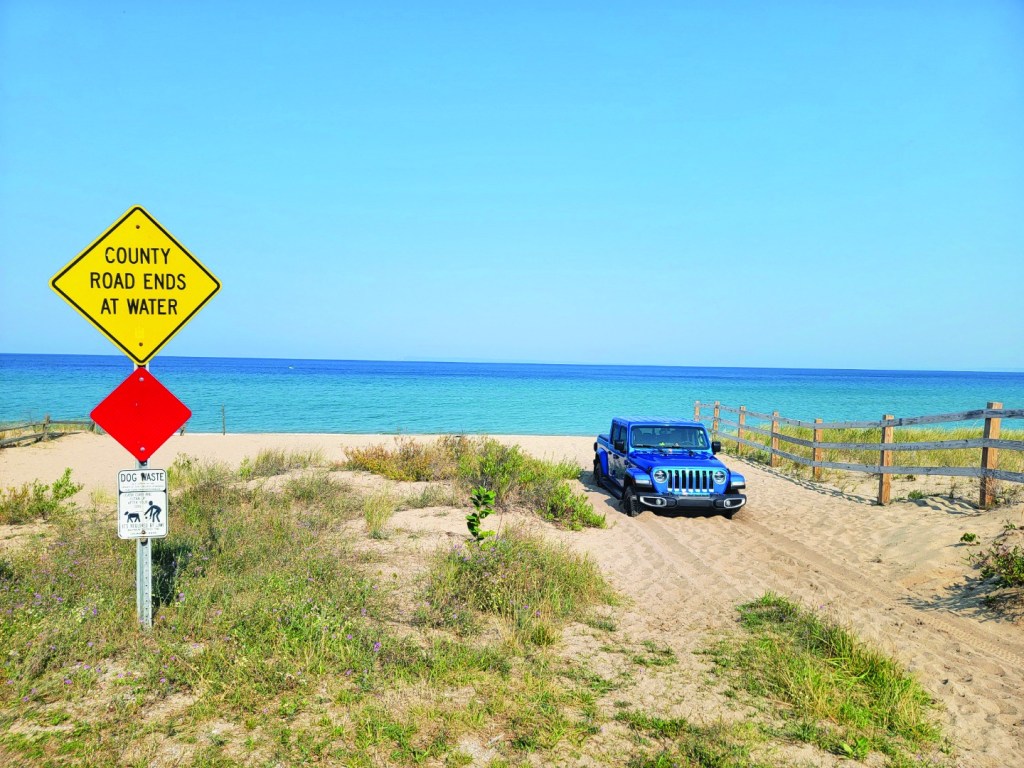
County Road Ends at Water by Glen Arbor Sun

via Leelanau.com The Glen Arbor Sun shared this photo a year ago, and I think it’s the perfect reminder for everyone to pay attention to your driving & traffic laws as we head into the Labor Day Weekend. Have fun and please don’t drink & drive – you simply don’t want to end up as a traffic statistic.

And yes, Jeep lovers, we know that you can deflate the tires to get out of a mess like this. The point is don’t break Federal law by driving on the beach in Sleeping Bear Dunes National Lakeshore or any of the other idiotic things that might seem like a good idea at the time!!

Support Michigan in Pictures with Patreon

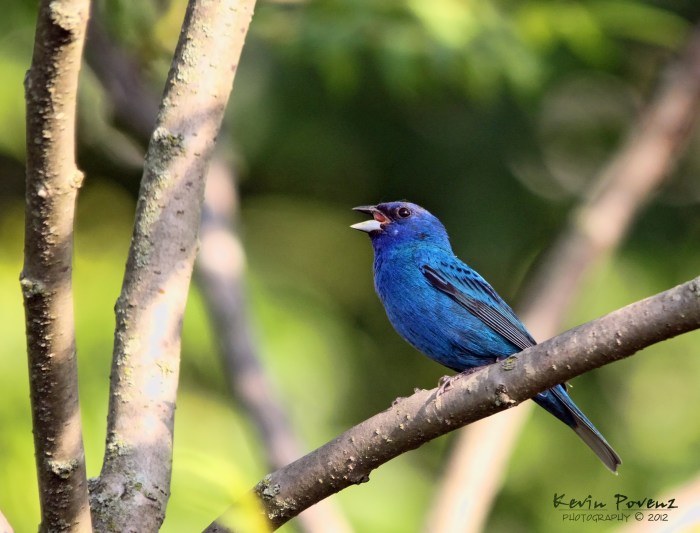
Blue Canary aka Indigo Bunting

Indigo Bunting by Kevin Povenz

Indigo Bunting by Kevin Povenz

Yesterday I saw a brilliant blue Indigo bunting on the bird feeder, so let’s talk about them! All About Birds shares that the all-blue male Indigo Bunting are sometimes nicknamed “blue canaries” and known for their bouncy songs. There’s all kinds of info including recordings of their songs and fun facts like:

Indigo Buntings migrate at night, using the stars for guidance. Researchers demonstrated this process in the late 1960s by studying captive Indigo Buntings in a planetarium and then under the natural night sky. The birds possess an internal clock that enables them to continually adjust their angle of orientation to a star—even as that star moves through the night sky.

Indigo Buntings learn their songs as youngsters, from nearby males but not from their fathers. Buntings a few hundred yards apart generally sing different songs, while those in the same “song neighborhood” share nearly identical songs. A local song may persist up to 20 years, gradually changing as new singers add novel variations.

Like all other blue birds, Indigo Buntings lack blue pigment. Their jewel-like color comes instead from microscopic structures in the feathers that refract and reflect blue light, much like the airborne particles that cause the sky to look blue.

Kevin took this a decade ago at the Upper Macatawa Natural Area in Zeeland. See more in his Birds gallery on Flickr.

Support Michigan in Pictures with Patreon

Leland Blue

via Leelanau.com

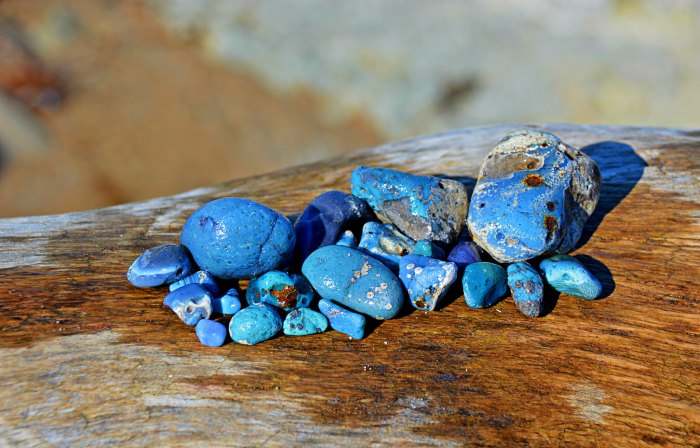
Leland Blue Stone by Cortney Brenner

Leland Blue Stone by Cortney Brenner

In last week’s post about an unidentified blue mineral discovered at the Adventure Mine on the Keweenaw Peninsula, I offered my personal theory that the color is due to the same reaction that created “Leland bluestones”. A couple people asked what the heck a Leland blue is, so here you go:

In the Glen Arbor Sun, Sandra Serra Bradshaw shares that Leland Bluestones were born over 100 years ago in the fires of the Leland Lake Superior Iron Company:

Between the years of 1870 to 1884, the Leland Lake Superior Iron Company operated an iron smelter north of the mouth of the river. They supplied the voracious furnace with ore from the Upper Peninsula. The charcoal they needed was made from local maple and beech timber that was produced in 14 beehive kilns that were kept near the smelting furnace. It produced up to an amazing 40 tons of iron per day. In 1884, the plant was sold to the Leland Lumber Co., which operated a sawmill on the site. Other sawmills and shingle mills operated in Leland during the years between 1885 through 1900.

Back then Leland was a smog-filled industrial town, the main industry of which was anchored by the iron company. The smelting industry failed because of large overhead costs and the lack of a good harbor in Leland. Interestingly, the remains of the industry, including heaps of slag, were dumped into the harbor and today, that has resulted in something as a precious collectible for many. As raw ore was heated, the desired iron ore was separated from various natural impurities. When those impurities cooled, it resulted in a stone-like slag. Hence the Leland Blue Stones were born!

The Leland Blue is a bit of a misleading title to this little man-made gem as it is the mix of blue glass with other chemicals — but this varying chemical medley can also cause the slag to appear in colors of purple, gray, or in shades of green. Today, people relish finding this slag material on the shores of Leland’s beaches. It is not only collectible as a stone, but also sought for as jewelry.

More in the Sun.

This sweet photo was taken by Cortney Brenner on the beach in Leland back in 2017. See more from Cortney on her Flickr!

PS: I promise no posts from Leelanau for at least the rest of the week!

Support Michigan in Pictures with Patreon

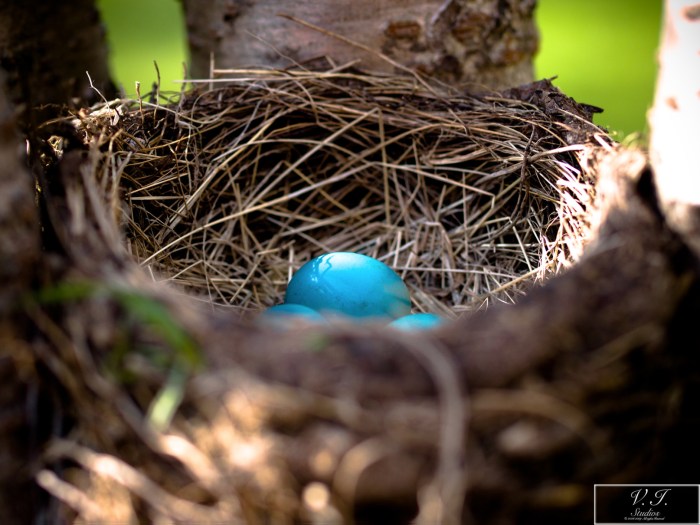
#TBT A Blue Like No Other: Why are robin eggs blue?

A Blue Like No Other by Jamie MacDonald

A Blue Like No Other by Jamie MacDonald

Here’s a Throwback Thursday from April of 2009 in honor of Spring, which I hear is still happening. The resource on the initial post is no longer online, so I dug up this post from The Spruce explaining why robin eggs are blue:

The color of an eggshell is determined by pigments deposited as the shell is formed in the shell gland. The shell gland is the avian equivalent of a mammal’s uterus and is near the end of the oviduct, just before the cloaca. The shell is formed just before the egg is laid.

The bile pigment biliverdin is responsible for blue tones in bird eggs. Depending on the concentration of the pigment, the coloration can range from bright, bold blue or blue-green to pale ice blue and every shade in between. Smaller eggs and those laid first in a brood are usually more intensely colored than larger eggs or those laid later in the nesting cycle.

In addition to coloring eggshells, biliverdin is also responsible for blue tones in moth and butterfly wings, and is the same pigment that makes bruises turn bluish-green.

Read on for more and see a bunch more awesome shots in Jamie’s Nature photo album.

Support Michigan in Pictures with Patreon

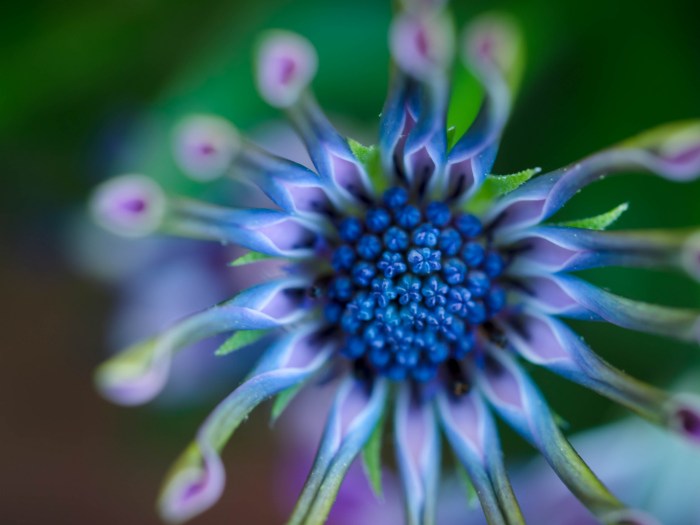
Spoon Flower

Spoon flower, photo by Bailwick Studios

The photographer writes that this flower might also be called a spooned daisy, African daisy, or a caped daisy.

View the photo background bigtacular and see more in Bailwick Studious slideshow.

More flowers on Michigan in Pictures!

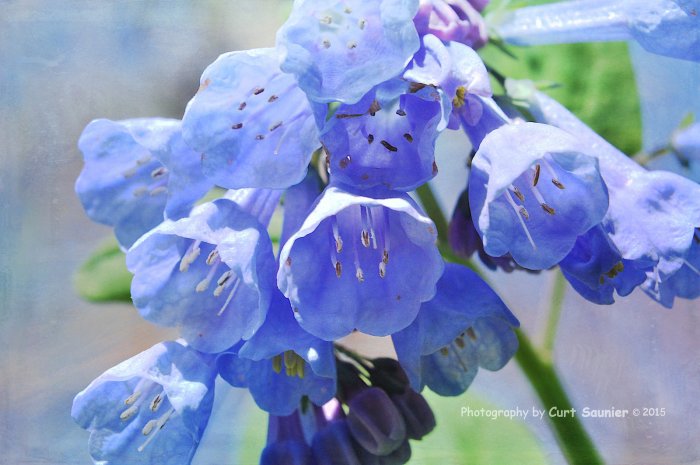
Blue Monday

blue, photo by Curt Saunier

View Curt’s photo bigger and see more in his Flowers slideshow.

Why is Ice Blue or Green?

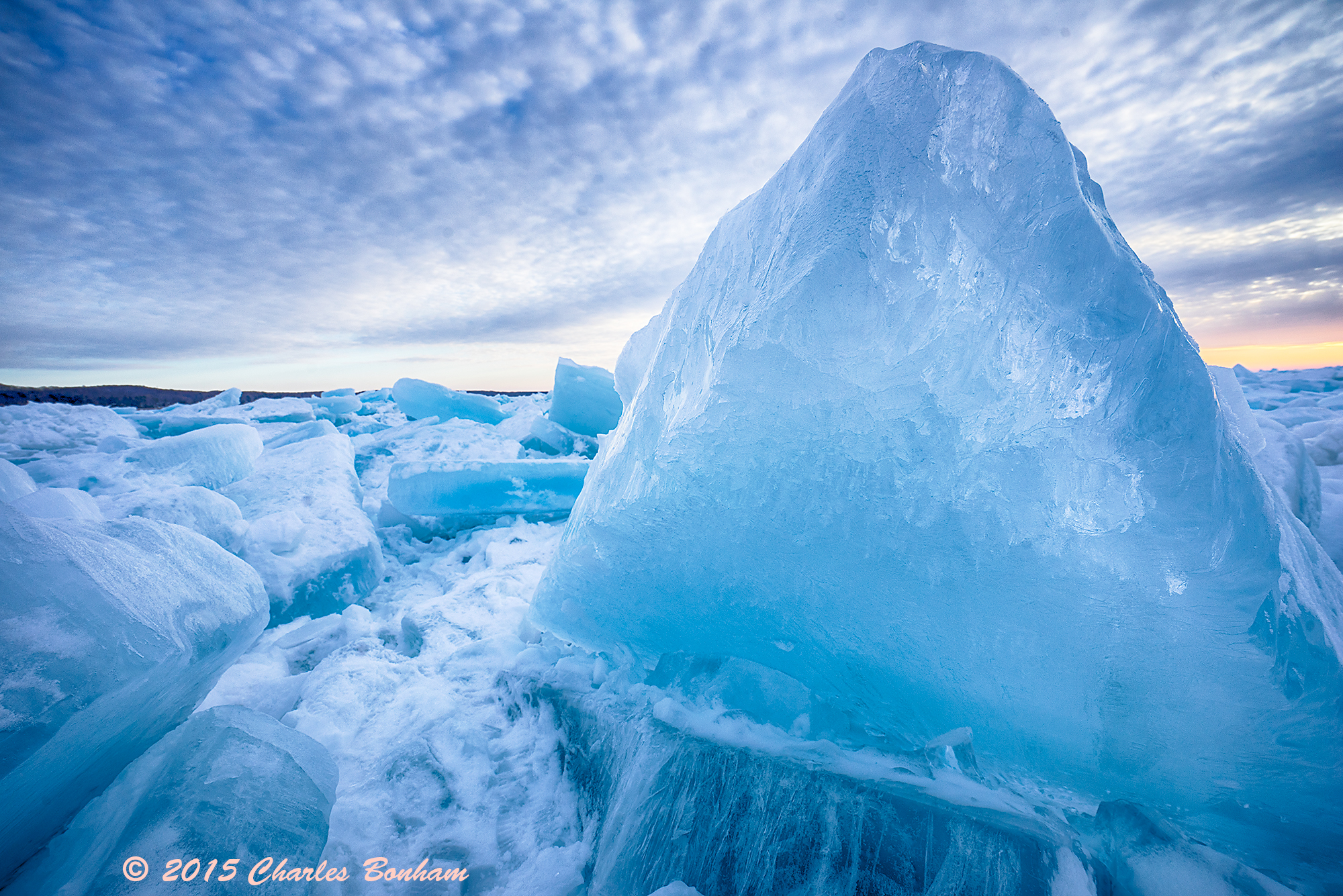
The Blue Ice

The Blue Ice, photo by Charles Bonham

The Causes of Color answers the question: What causes the blue color that sometimes appears in snow and ice?

As with water, this color is caused by the absorption of both red and yellow light (leaving light at the blue end of the visible light spectrum). The absorption spectrum of ice is similar to that of water, except that hydrogen bonding causes all peaks to shift to lower energy – making the color greener. This effect is augmented by scattering within snow, which causes the light to travel an indirect path, providing more opportunity for absorption. From the surface, snow and ice present a uniformly white face. This is because almost all of the visible light striking the snow or ice surface is reflected back, without any preference for a single color within the visible spectrum.

The situation is different for light that is not reflected, but penetrates or is transmitted into the snow. As this light travels into the snow or ice, the ice grains scatter a large amount of light. If the light is to travel over any distance it must survive many such scattering events. In other words, it must keep scattering and not be absorbed. We usually see the light coming back from the near surface layers (less than 1 cm) after it has been scattered or bounced off other snow grains only a few times, and it still appears white.

In simplest of terms, think of the ice or snow layer as a filter. If it is only a centimeter thick, all the light makes it through; if it is a meter thick, mostly blue light makes it through. This is similar to the way coffee often appears light when poured, but much darker when it is in a cup.

Click through for lots more about light & color!

Charles took this photo last March off Gills Pier on the Leelanau Peninsula when there was a whole lot more ice than there is this winter. View it background bigilicious and see more in his Leelanau Peninsula slideshow.

More winter wallpaper and more amazing ice on Michigan in Pictures.

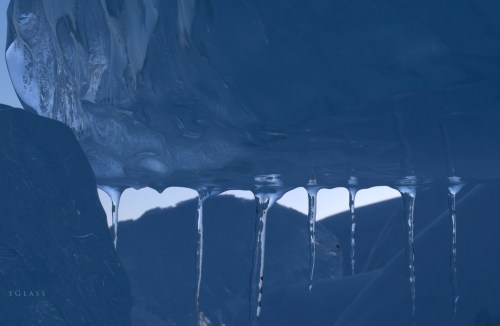
Blue Anticipation

Blue Anticipation

Blue Anticipation, photo by Elizabeth Glass

I dug way back through the over 13,000 winter photos in the Absolute Michigan pool on Flickr for today’s photo.

Liz Glass took it at the Straits of Mackinac in 2011. She says that the color is real and recommends you check it out bigger to see the details on Fluidr. It’s also a cool way to look at her Ice set (or view the slideshow on Flickr).

More ice on Michigan in Pictures.