Wednesday’s windstorm leaves Southeast Michigan powerless

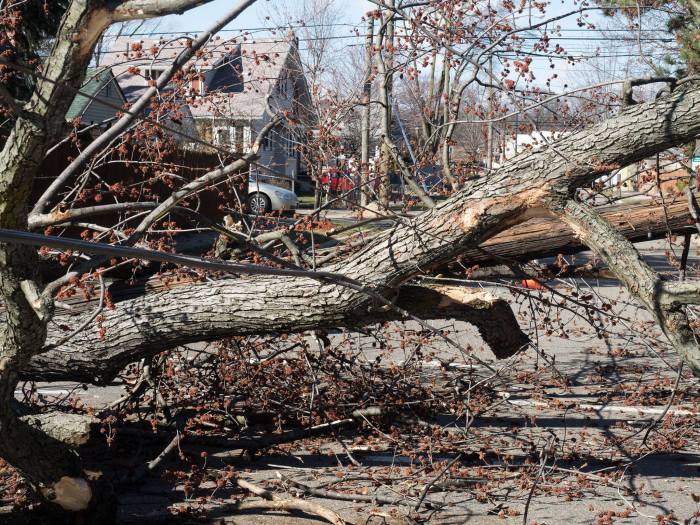
Storm Damage, Ferndale Michigan, photo courtesy DTE Energy

The Detroit Free Press reports that millions of people in Michigan lost power in yesterday’s crazy winds and many are still without power:

A barrage of high winds Wednesday cut power to a record 700,000 DTE Energy customers and 290,000 customers of Consumers Energy across southeast and south-central Michigan, utility officials said.

A number of customers had been restored by about 10 p.m., bringing DTE’s outage number down to about 650,000 and Consumers’ down to 210,000.

…The total number of customers equates to an even higher number of people because the utilities’ term “customer” refers to electric meters, not individuals. “During the height of the storm, we were seeing 1,000 customer outages a minute,” said Randi Berris, a communications manager for DTE Energy.

As utility crews from Michigan began 16-hour shifts, and crews from four other states were due to arrive around dawn Thursday, families in the dark faced forecasts of possible snow and sliding temperatures for southeast Michigan, with a low of 12 predicted in Detroit by early Saturday, according to the National Weather Service.

Across the region, as winds clocked as high as 68 m.p.h. at Metro Airport, the weather knocked down even more trees and power lines than usual because the ground, instead of being frozen at this time of year, was soft and super-saturated with this winter’s unusually heavy rains, DTE Energy said.

View DTE’s photo bigger on their Facebook and thanks to the crews from both companies and elsewhere for their hard work – stay warm everyone!

$1 Million Asian Carp Challenge

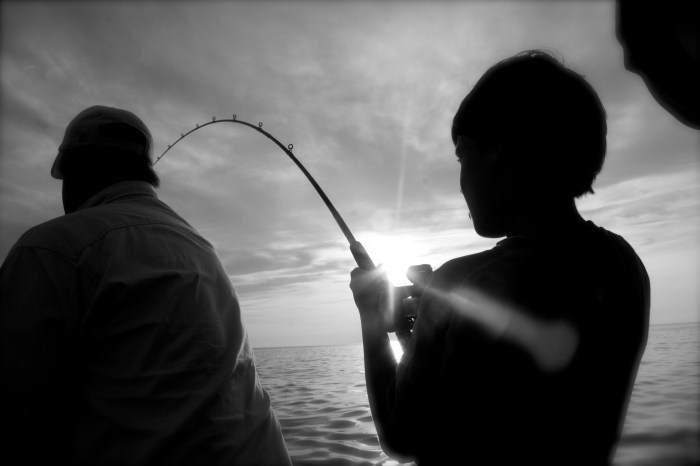
Fish On, photo by Terry Murphy

ABC News reports that the State of Michigan is turning to the public for new ideas and plans to offer a prize to whoever comes up with a way to stop the voracious Asian carp:

Michigan’s global search challenge comes after the U.S. government and others have spent hundreds of millions searching for a solution to stop the carp from entering the world’s largest freshwater system. If they aren’t stopped, officials fear the aggressive fish will crowd out prize native fish and hamper recreational boating in large sections of the lakes, which stretch from Minnesota, Wisconsin and Michigan in the west to New York and Pennsylvania in the east and from Ontario, Canada, in the north to Illinois, Indiana and Ohio in the south.

“I think in the fight against Asian carp, there aren’t really any bad ideas,” said Molly Flanagan, vice president of policy for the Alliance for the Great Lakes. “We have to try a bunch of different things.”

Michigan alone has a $38 billion tourism industry, much of it focused on the outdoors, and the Great Lakes region has a $7 billion fishing industry. Asian carp have been spotted 45 miles from Lake Michigan. If the fish make it into that lake, they could make their way into the other Great Lakes.

Details on how much prize money will be offered are still being worked out. Officials also haven’t determined how many winners might be chosen.

The Michigan Legislature and Gov. Rick Snyder allocated $1 million to develop the challenge. Most of the money will go toward a prize for an idea or ideas that are deemed feasible, Michigan Department of Natural Resources spokeswoman Joanne Foreman said. The rest will be used to create the challenge, which includes working with InnoCentive, a crowdsourcing company that will host the event online. The campaign is expected to go live this summer.

If you have an idea, now’s the time to start working!

View Terry’s photo background big and see more in his Terry Murphy Portfolio Selects slideshow.

Underneath the Mackinac Bridge

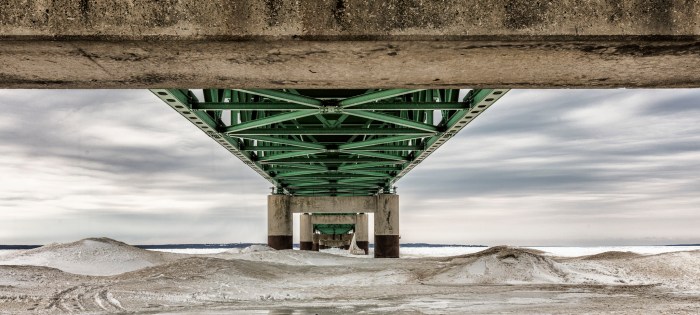
Mackinac Bridge 1, photo by John McGraw

View John’s photo from beneath the mighty Mackinac Bridge bigger, see a few more from the Straits in his slideshow, and follow John McGraw Photography on Facebook to view & purchase more photos.

Muse Monday: The Muses of Michigan’s Capitol Dome

offset-michigan-capitol-dome

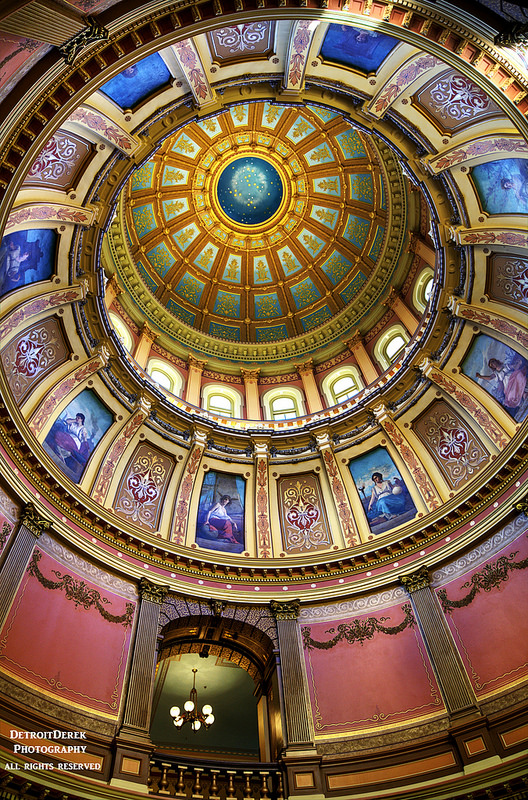
Offset, photo by DetroitDerek Photography

A highlight of the Michigan State Capitol in Lansing are the eight muses that ring the Capitol dome. During the latest restoration, it was learned that they were painted in the late 19th century by Italian artist Tommaso Juglaris. Michigan’s Otherside relates the story of the Mysterious Painter of the Michigan State Capital Muses:

The paintings are absolutely gorgeous, and for years, historians believed they might have been the work of Lewis Ives, an artist who has other pieces in the Capitol. Then, in 1992, a visitor named Geoffrey Drutchas entered the building, looking for works by a nineteenth-century Italian artist. Drutchas’ inquiry led to an investigation that ultimately revealed the paintings’ true creator. But more on that later; first, a quick background on how the muses became a part of the Capitol in the first place.

The current state Capitol opened in 1879. For the first few years of its existence, the Capitol’s walls were bare, as the state couldn’t spare any money for artwork. Eventually, the state had extra cash, so the legislature commissioned William Wright, owner of a Detroit decorating company, to handle interior design duties. The Capitol’s architect, Elijah Myers, said that he wanted allegorical paintings (in other words, paintings whose subjects look like one thing, but represent something else) to appear above the Capitol rotunda. That’s how the Capitol ended up with its muses. At first glance, the women in the paintings that Wright delivered to the Capitol are simply figures from Greek mythology; however, if a viewer looks at the paintings closely, he or she finds that each muse holds or is surrounded by items that represent a specific aspect of Michigan’s economy and culture.

Read on for more, and also see State Capital historian Kerry Chartkoff’s lecture on Michigan’s Capitol: Muses, Memoirs at Michigan State University.

View Derek’s photo bigger and see more in his Cities other than Detroit slideshow.


A Tale of Two Sunsets

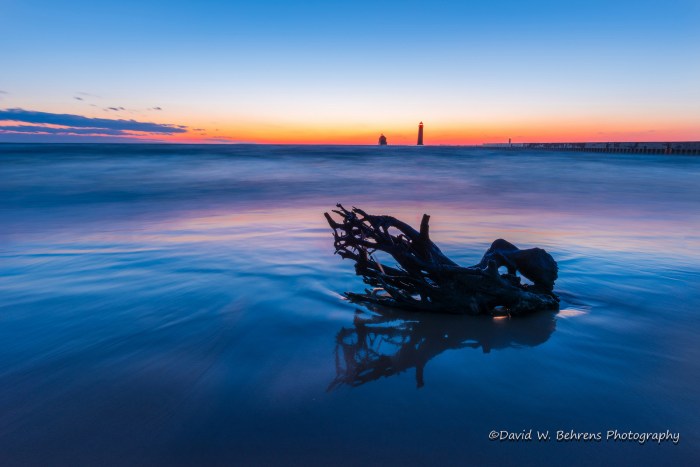
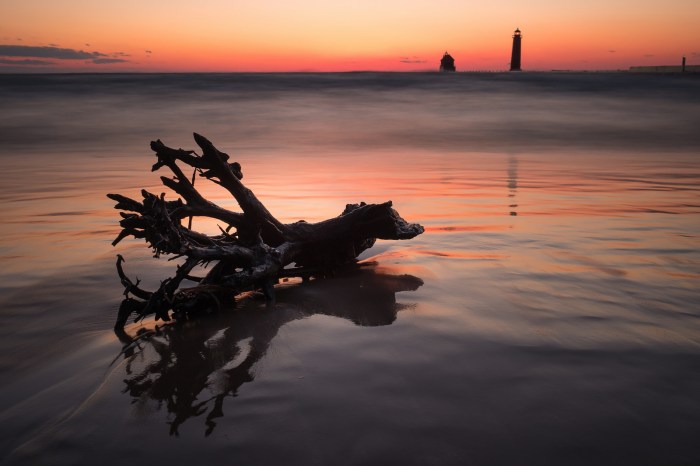
Here’s two photos from the Absolute Michigan pool taken from the same spot in Grand Haven on the same evening by two photographers that I recently featured on Michigan in Pictures! I just love coincidences, don’t you?

driftwood-and-reflected-pastels-of-afterglow

Driftwood And Reflected Pastels Of Afterglow, photo by David Behrens

View David’s photo bigger and see more in his slideshow (where you’ll see the photo of the Grand Haven Fog Signal I featured the other day). Then when you’re done with that, check out Jerry James’ photo bigger and see more in his slideshow (where you’ll see the “Alley Adventures” from a little while back).

drifting-by-jerry-james

Drifting, photo by Jerry James

March 3, 1875: Mackinac National Park & Fort Mackinac

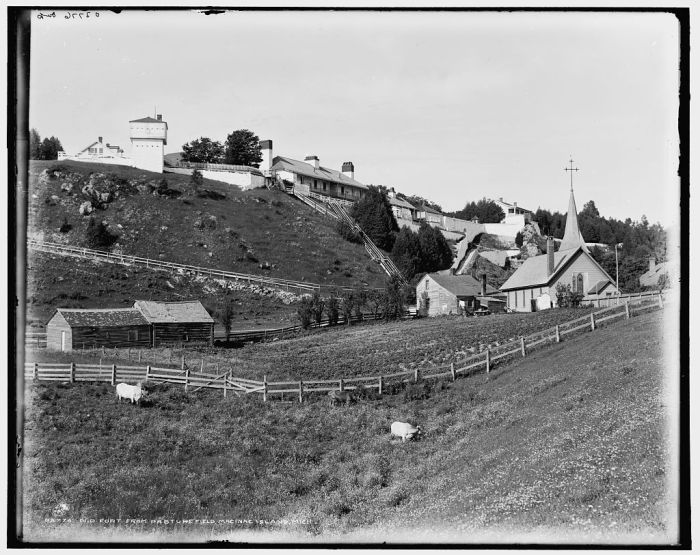
old-fort-mackinac-from-pasture-field-macinac-sic-island-mich

Old Fort [Mackinac] from pasture field, Macinac [sic] Island, Mich., courtesy Library of Congress

“Mackinac is a place largely visited by people from all parts of our country, and I take it from many foreign lands. A National Park is established on the island and I think the military post should be made not only comfortable but attractive.”
-Quartermaster General Montgomery Meigs

It’s a birthday of sorts for Mackinac State Historic Parks which is a treasure trove of our colonial history. The page from Mackinac Parks on Fort Mackinac and the Mackinac National Park explains the birth of the park and how one forward thinking officer may very well have created the model for historical preservation in the park that holds so much of Michigan and the nation’s cultural history:

After Congress created Yellowstone in 1872, Senator Thomas Ferry introduced legislation to create a second park on Mackinac Island. In addition to the island’s attractive history and natural features, the U.S. government already owned much of the island as part of the Fort Mackinac military reservation and the soldiers stationed at Fort Mackinac could act as caretakers. As a result, the park would cost almost nothing, which Ferry knew appealed to the tight-fisted Congressmen of the 1870s. After two years of campaigning, President Ulysses Grant created the Mackinac National Park, the second park in the country, on March 3, 1875.

The park made Mackinac Island even more attractive to Midwestern visitors, and brought changes to Fort Mackinac, where the commanding officer became the park superintendent and a second company of soldiers joined the garrison. The Army finally performed some long-overdue repairs at the fort … Quartermaster General Montgomery Meigs believed that “the fort itself is to the public one of the greatest curiosities within the lands of the park,” and required the fort’s commanding officer, Major Alfred Hough, to repair the post’s aging blockhouses. Although the blockhouses served no military purpose, Meigs knew that they were “among the few relics of the older time which exist in this country,” and believed that “there would be a cry from tourists” if they were destroyed. Fort Mackinac thus became as much a part of the national park as the island’s natural curiosities.

…On September 16, 1895, the last soldiers formally transferred Fort Mackinac and the Mackinac National Park to the state. Although the national park ceased to exist with this transfer, the state immediately created the Mackinac Island State Park, which continues to welcome thousands of Mackinac Island visitors every year.

You can view the photo taken somewhere between between 1880 and 1899 bigger and see more great old Mackinac Island photos in this Mackinac Island slideshow from the Library of Congress.

Lots more from Mackinac on Michigan in Pictures!

Even Wally Pipp didn’t get Wally Pipped!

via “Everything You Know About Wally Pipp Is Wrong” on Absolute Michigan…
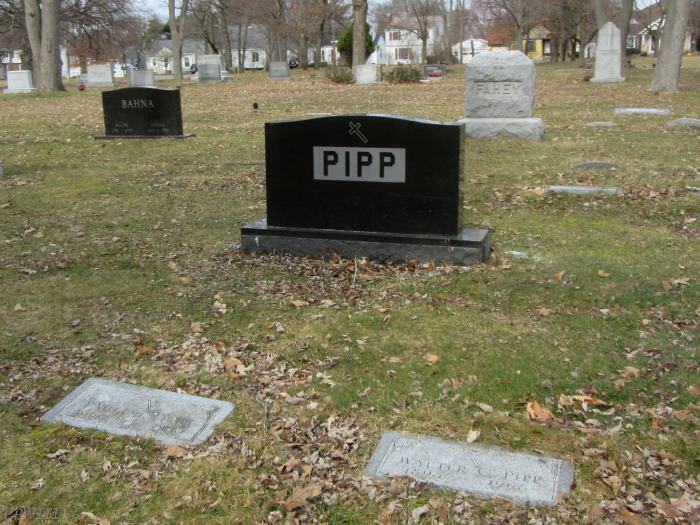
wally-pipps-final-resting-spot

Wally Pipp’s Final Resting Spot, photo by PPWWIII

True confession: My father was a veritable baseball encyclopedia good enough for a scholarship at Yale whose love of the game kept him around baseball and me steeped in it. That said, though I learned the story of Wally Pipp at a young age, it was all wrong.

The name of Wally Pipp conjures visions of shirkers, slackers and layabouts and the stars who get a chance to shine when they take the inevitable day off. Most sports fans know the story of how on June 2, 1925 New York Yankee first baseman Wally Pipp was given the day off for a headache, and Lou Gherig played 1st for the next 2,130 consecutive games until “The Iron Horse” retired due to ALS (amyotrophic lateral sclerosis) also commonly known as “Lou Gehrig’s disease. Tom Brady “pipped” Drew Bledsoe years ago, and Dak Prescott did the same to Tony Romo last season.

I read a whole lot about this confusing tale, but the article Wally Pipp’s Career-Ending ‘Headache’ by Snopes founder David Mikkelson is quite simple a tour de force of the twists and turns in one of our biggest American sports legends that has been told and retold in print and screen. There’s a ton to read including the newspaper clippings and I recommend you do so, but let’s skip to Mikkelson’s conclusion:

After winning three straight American League pennants between 1921-23, the Yankees finished a couple of games off the pace in 1924 as the Washington Senators captured their first flag ever. New York expected to regain the top spot in 1925, but that was the year Babe Ruth’s excesses finally caught up with him.

…With Ruth either missing or too weak to play effectively, and some key players slumping … New York tumbled to a dismal seventh-place finish (in an eight-team league) in 1925. With his team already near the bottom of the standings and eleven games under the .500 mark at the beginning of June, manager Miller Huggins decided to shake up his line-up and replace some of his slumping veterans with younger players. Contemporaneous news accounts leave no doubt that Wally Pipp did not sit out the game on 2 June 1925 with a headache; he was deliberately benched by a manager who had charge of a team that was playing poorly and who opted to sit down some of his older players to give others a try.

In the case of Wally Pipp there was no inopportune headache, no “delightful and romantic story” — just a case of a slumping player who lost his job to an up-and-comer and never got it back. But his replacement was the stuff of legend (the indestructible ballplayer finally felled by a fatal disease), and so he became part of a legend that mixed fact and fiction and grew so large even some of the participants came to believe in its fictional aspects.

Via Mental FlossBleacher Report, and Wikipedia, I can report that Pipp was raised in Grand Rapids, was hit in the head with a hockey puck as a child that he attributed his headaches to, and played his first pro baseball for (seriously) the Kalamazoo Celery Champs. Pipp was one of the best first basemen of his era, hitting .281 with 90 HRs, 997 RBI and 1,941 hits. After retiring in 1928, Pipp played the market, wrote some radio scripts and books including as Babe Ruth’s ghostwriter, and did a pregame baseball show for the Detroit Tigers. He worked in a Michigan plant that made B-24 bombers during WWII and worked as a sales exec for the Rockford Screw Products Corporation. Mental floss concludes: Pipp went from playing first for the Yankees to peddling screws and bolts—and he loved it. Armed with the gift of gab and endless baseball stories, Pipp spent the rest of his life selling wares to Detroit’s auto hotshots. He passed away in 1965. (at the age of 71)

View the photo from Woodlawn Cemetery in Grand Rapids background big and see more in PPWWIII’s slideshow.

The Eyes of the Earth

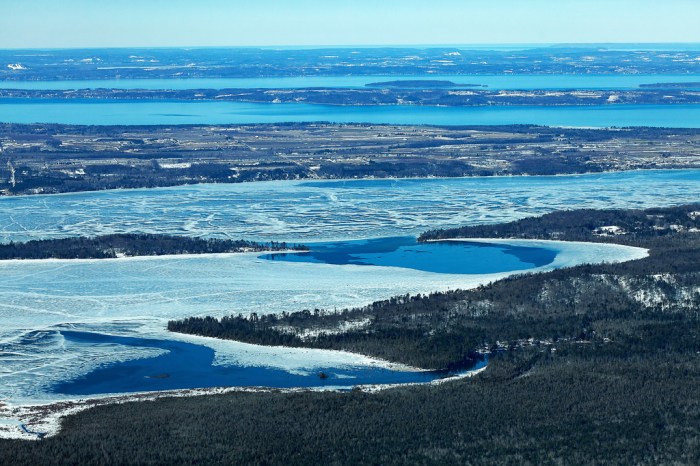
aerial-shot-sandy-hansen-photography

aerial shot, photo by Sandy Hansen Photography

“A lake is the landscape’s most beautiful and expressive feature. It is the earth’s eye; looking into which the beholder measures the depth of his own nature.”
—Henry David Thoreau, Walden

One of Thoreau’s most beautiful thoughts in my mind, and we are certainly blessed in Michigan to have the eyes of the earth upon us here as they are in few other places.

Sandy says that at the top of the photo are West & East Grand Traverse Bay and then Elk Lake and Lake Skegemog. You can get your bearings and have a little fun exploring the lakes from above in this 3d view from Google Earth.

View her photo bigger and see more including more from this February flight in her Traverse City Area slideshow.

More aerial photography on Michigan in Pictures.

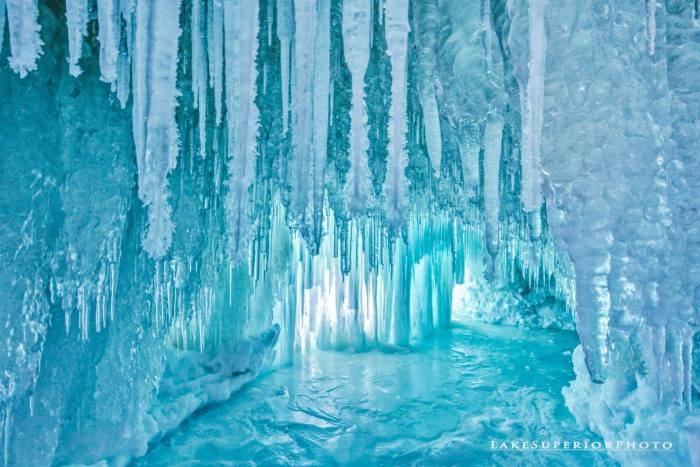
Words escape me: Grand Island Ice Caves, 2015

lake-superior-brilliant-ice-curtains

Words escape me, photo by Lake Superior Photo

Words escape ME on the beauty of the video that Shawn of Lake Superior Photo shared. The ice caves on Grand Island near Munising didn’t happen this year, a very unfortunate thing for everyone in Michigan who makes their livelihood from winter recreation. However, thanks to the magic of the video below, we can travel back to 2015.

You can view Shawn’s photo from winter of 2015  bigger on Facebook and purchase the photo right here. I can’t stress enough that you should follow Shawn and Lake Superior Photo on Facebook. Please do it.

Now here’s that video. Be sure to turn your volume up and watch in HD – there’s a “boom” from the ice sheet at 4 seconds that’s incredible!

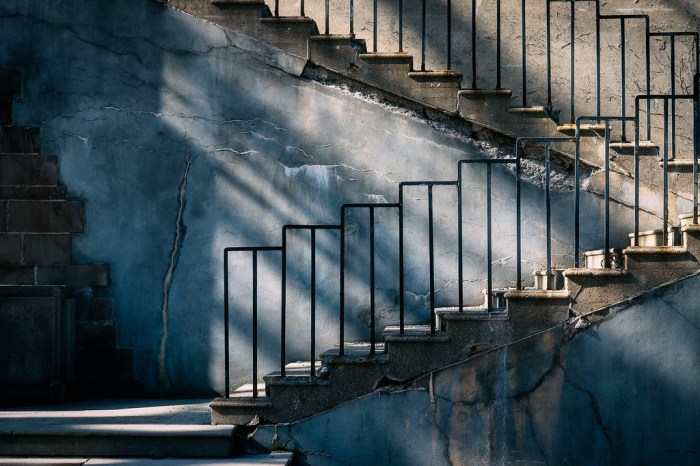
Double Stairs at Cranbrook

cranbrook-double-stairs

cranbrook double stairs, photo by GaryMB

Very cool shot from Cranbrook in Bloomfield Hills, a very unique center for education, science, and art:

Comprising a graduate Academy of Art, contemporary Art Museum, House and Gardens, Institute of Science, and Pre-K through 12 independent college preparatory Schools, Cranbrook welcomes thousands of visitors and students to its campus each year.

Founded by Detroit philanthropists George and Ellen Booth in 1904, Cranbrook’s 319-acre campus features the work of world-renowned architects such as Eliel Saarinen, Albert Kahn, Steven Holl, Tod Williams and Billie Tsien, Rafael Moneo, Peter Rose and sculptors Carl Milles, Marshall Fredericks and others. Critics have called Cranbrook “the most enchanted and enchanting setting in America” and in 1989, it was designated a National Historic Landmark.

It’s also a super-sweet place to take your camera for a walk.

View Gary’s photo bigger and see more in his slideshow.