“Mothers are like glue. Even when you can’t see them, they’re still holding the family together.” – Susan Gale
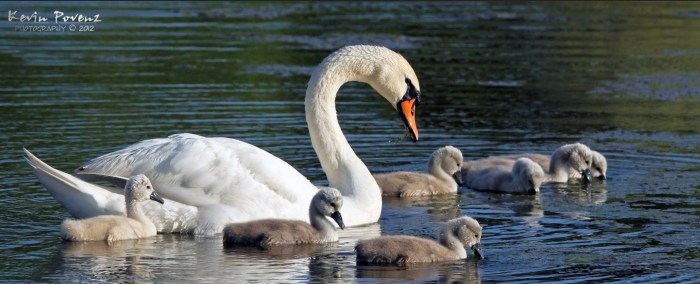
Kevin shared this pic of a mother swan and her cygnets, wishing a Happy Mother’s Day to all you moms out there! I heartily agree and hope all you moms are able to enjoy this & every day!
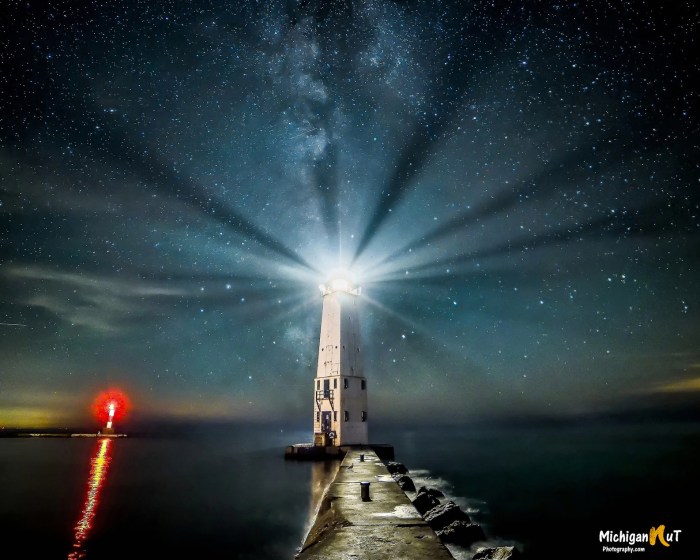
Chris Roxburgh is a diver and photographer who is one of my favorite follows on Facebook. About this photo he writes:
The Westmorland shipwreck located in a 200’ deep unpublished location in Lake Michigan. After many wreck hunters tirelessly searched for this vessel rumored to have whiskey Barrels and gold that was being delivered to the garrison army on Fort Mackinac. She sank on December 7th 1864. When she was finally found in 2010 by Ross Richardson the mystery was unlocked to her final resting place.
The Westmorland was one of the first 200 foot long steam powered ships in the Great Lakes and at first was called a “propeller” since they used a prop instead of sails. She hauled many tons of grain and meat across the Great Lakes. With a crew of 34 she steamed into rough seas with over 20’ waves and a violent snow storm all while leaking from the night before. As the crew made a bucket brigade trying to keep the engines out of the water they could not keep up with the ever increasing flow. Once the water stopped the engines she could not keep straight into the waves. The lifeboat Davits you can see in this picture where used to lower the boats Into the water as she sank. Out of the 34 crew fifteen went down with the ship and two succumbed to weather on the shore of Platte Bay as the others walked 40 miles to a nearby town.
I was very excited to dive her because only a handful of trusted divers have been given the opportunity to visit this site. Dusty Klifman and I decided to plan this deep dive last week as the opportunity with perfect weather on Lake Michigan arrived.
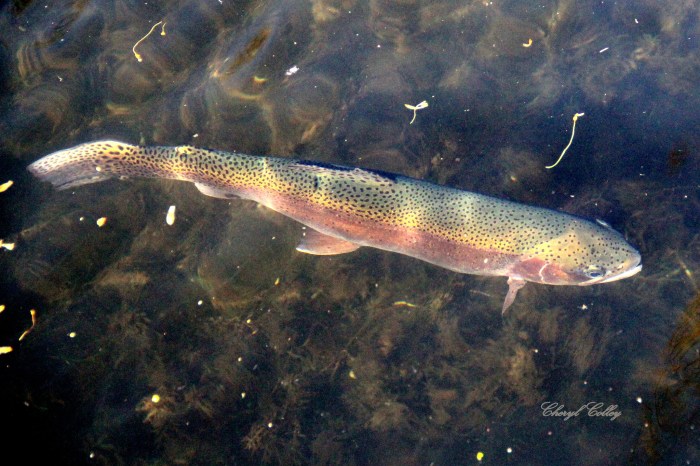
The Michigan Department of Natural Resources says that the rainbow trout are:
Native to the Pacific watershed, rainbow trout came to Michigan when eggs were imported from California in 1876. First stocked in the Au Sable River, then four years later in the Lake Michigan watershed, rainbows can now be found in all corners of the state. Large specimens that inhabit the Great Lakes but travel inland to spawn in streams have come to be called steelhead.
Young rainbow trout first eat waterfleas and then add aquatic (water) insects, like caddisflies, mayflies, and midges, to their diet. As they grow larger they include smallfish, but continue to consume larval and adult insects.
Like any trout, stream rainbows can be caught by a variety of techniques; live bait, artificial lures and flies all produce. In large lakes, rainbows can be caught by trolling or by fishing with bait or jigging through the ice in winter. Though most commonly associated with clear-water lakes in northern Michigan, rainbow trout have been successfully stocked into a number of southern Michigan lakes as well, where they provide a unique fishery. Fishing after dark at the thermocline — the depth at which there is a major change in temperature — with live bait, salmon eggs or corn is the principle technique.
Dan took this photo of Pooh, who greets visitors at Mt. Pleasant’s Veteran’s Memorial Library while it is closed in the COVID-19 crisis. See lots more in his Mt. Pleasant, Michigan photo album.
Rhonda caught these tulips in glorious bloom last weekend at the Dow Gardens in Midland:
Established in 1899 as a home for Herbert H. and Grace A. Dow and family, Dow Gardens now welcomes over 300,000 guests per year. Experience a dazzling 110-acre display of annuals and perennials punctuated by distinctive bridges, an award-winning children’s garden, towering pines, and delightful water features. Your admission includes access to Whiting Forest, home to the longest canopy walk in the United States.
Whiting Forest of Dow Gardens features 54 acres of woodlands, ponds, apple orchard, meadows, and stream. Guests of all ages and abilities are immersed in the forest on the nation’s longest canopy walk, 1,400 feet long, soaring up to 40 feet above the ground. The Alden B. Dow-designed Whiting home now welcomes guests as a Visitor Center. Other features include a playground, apple orchard, Whiting Forest Cafe, restoration of Snake Creek, and two pedestrian bridges.
May 4th is known as Star Wars Day – May the Fourth be with you – an annual celebration of one of our shared modern stories. If you’re up before dawn tomorrow, you can step out to see if you can see Eta Aquariid meteors in the east. Earthsky notes that the forecast calls for the greatest number of Eta Aquariid meteors to fall before dawn on (or near) May 5. However, this shower has a rather broad maximum, so just as many meteors may be flying on the mornings after.
The U.S. Geological Survey (USGS) announced the new Unified Geologic Map of the Moon on April 20, 2020. They said it shows the moon’s surface geology, with rock layers and craters charted “in great detail.” The map is a synthesis of six Apollo-era regional geologic maps, updated with data from more recent moon missions.
USGS said it’s designed to serve as “the definitive blueprint” for lunar science and future human missions to the moon, and to be used by the international scientific community, educators and the public at large.
To create the new digital map, scientists used information from six Apollo-era regional maps along with updated information from recent satellite missions to the moon.
The existing historical maps were redrawn to align them with the modern data sets, thus preserving previous observations and interpretations. Along with merging new and old data, USGS researchers also developed a unified description of the stratigraphy, or rock layers, of the moon. This resolved issues from previous maps where rock names, descriptions and ages were sometimes inconsistent.
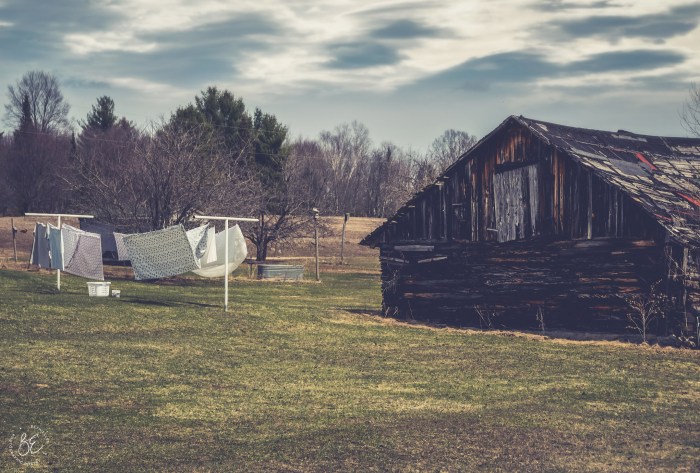
Forgiveness lives alone and far off down the road, but bitterness and art are close, gossipy neighbors, sharing the same clothesline, hanging out their things, getting their laundry confused. – Lorrie Moore






 Michigan in Pictures