Wood Duck Wednesday

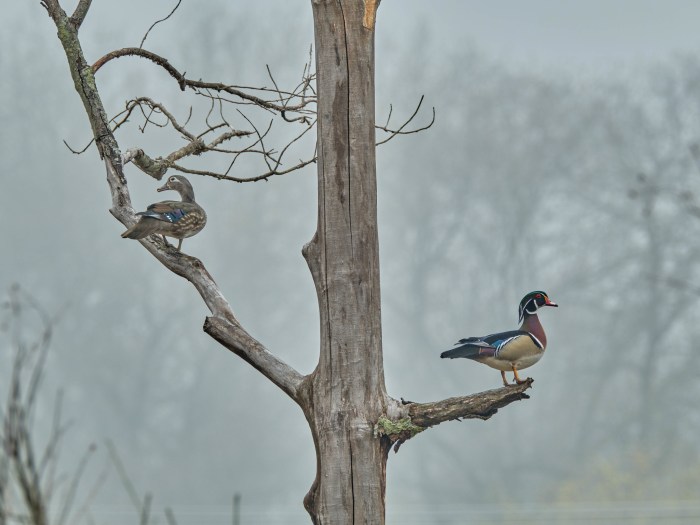
Wood Ducks by Third Son

Wood Ducks by Third Son

The All About Birds listing for Aix sponsa (wood duck) says in part:

The Wood Duck is one of the most stunningly pretty of all waterfowl. Males are iridescent chestnut and green, with ornate patterns on nearly every feather; the elegant females have a distinctive profile and delicate white pattern around the eye. These birds live in wooded swamps, where they nest in holes in trees or in nest boxes put up around lake margins. They are one of the few duck species equipped with strong claws that can grip bark and perch on branches.

Wood Ducks thrive in bottomland forests, swamps, freshwater marshes, and beaver ponds. They are also common along streams of all sizes, from creeks to rivers, and the sheer extent of these make them an important habitat. Wood Ducks seem to fare best when open water alternates with 50–75% vegetative cover that the ducks can hide and forage in.

A few wood duck facts:

  • Natural cavities for nesting are scarce, and the Wood Duck readily uses nest boxes provided for it. If nest boxes are placed too close together, many females lay eggs in the nests of other females. (click for info about building a nest box)
  • The Wood Duck nests in trees near water, sometimes directly over water, but other times up to 2 km (1.2 mi) away. After hatching, the ducklings jump down from the nest tree and make their way to water. The mother calls them to her, but does not help them in any way. The ducklings may jump from heights of up to 89 m (290 ft) without injury.
  • Wood Ducks pair up in January, and most birds arriving at the breeding grounds in the spring are already paired. The Wood Duck is the only North American duck that regularly produces two broods in one year.

More including wood duck calls at All About Birds.

Third Son took this yesterday – see more in his Birds 2020 gallery & definitely do yourself a favor and have a look at his most popular pics!

Many (many) more Michigan birds on Michigan in Pictures.
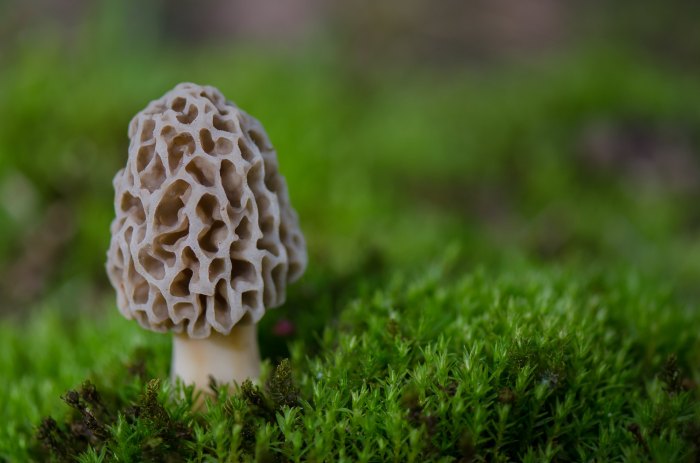
The 2020 Michigan Morel Season is Underway!

Yellow Morel (Morchella esculenta) by J Sommer

Yellow Morel (Morchella esculenta) by J Sommer

The online mushroom groups I’m in are already filling up with photos of happy people & their hauls of a popular Michigan springtime delicacy – morel mushrooms! The Michigan Department of Natural Resources  offers a Morel Mushroom Hunting page that features information about morels & morel identification, hunting tips, recipes, and also a map of the large burn sites in forested areas are ideal for morel mushroom hunting, especially in burned areas where jack, white or red pine once grew. Grassy and other non forest areas are not as likely to produce morels:

May is morel month in Michigan, but the actual fruiting period is from late April until mid-June, depending on where you are and what species you are hunting. Contrary to common belief, morels are not confined to the northern part of the state – some of the best picking is in southern Michigan.

MOREL HUNTING TIPS

  • Make your first several mushroom hunts, whether for morels or other edible mushroom species, with someone who knows mushrooms.
  • Buy or download a mushroom guide. A good guidebook is “The Mushroom Hunter’s Field Guide” by Alexander H. Smith, recognized as America’s foremost authority on mushroom identification, and Nancy Smith Weber. There also is a very good mushroom identification booklet available on the U.S. Department of Agriculture website.
  • Be prepared to cover a lot of ground and to experience disappointments when searching for morels. Some spots yield mushrooms year after year, while others skip several seasons between crops.
  • Don’t expect to find morels easily if you are new to the pastime. Because they blend into their background of last fall’s leaves and dead grass, they are hard to see even if you are looking right at them. Your “eye” for morels will sharpen with practice, and you will need to retrain it every spring.
  • Most important of all – know what you are eating! You will need to know the difference between a “true” morel and the “false morels,” such as beefsteak mushrooms, which are poisonous. (See morel identification information.)
  • For more information on morel mushroom hunting in Michigan, visit Pure Michigan or Midwest American Mycological Information.

J Sommer took this photo back in May of 2017 near Saginaw. See this photo and more in their Fungi gallery on Flickr.

There is a bunch more information about morels at the morel tag on Michigan in Pictures.

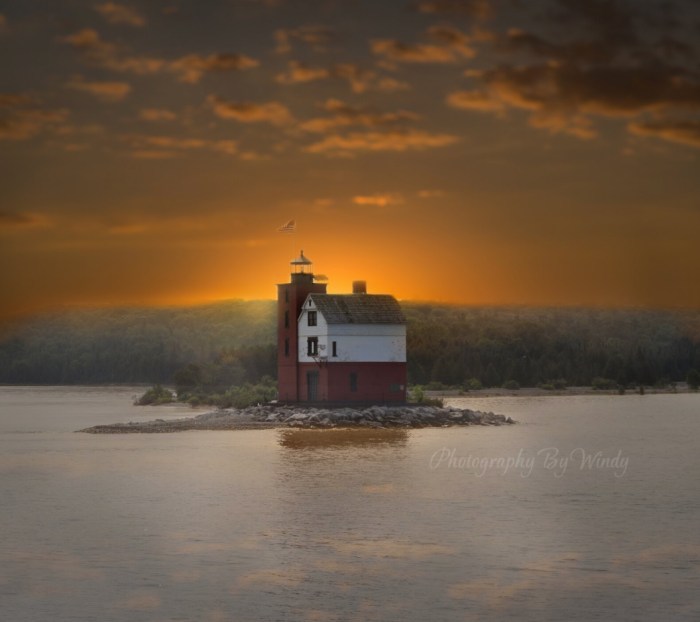
Sunset at Round Island

Lighthouse by Windy

Lighthouse by Windy

The Round Island Lighthouse Preservation Society tells us:

Round Island Lighthouse was constructed in 1895 at a cost of $15,000 by Frank Rounds, a carpenter from Detroit. Rounds had previously worked on Mackinac Island’s Grand Hotel, which was completed in 1887. The lighthouse was first lit on May 15th, 1896. It was commissioned under the U.S. Lighthouse Board, which became the United States Lighthouse Service in 1910. When it was first completed, the lighthouse was brick red. This would remain so until it was painted red and white in 1924. The fog signal at the lighthouse was installed in the fall of 1896. William Marshall was the first keeper of the lighthouse and served until 1906.

The beacon was automated in 1924 and became the responsibility of the United States Coast Guard in 1939, when the Coast Guard took over all of the nation’s lighthouses. To support World War II efforts, most of the original machinery on the first floor was removed for scrap. The structure was whitewashed in 1939.

When an automated light was constructed off the shore of Mackinac Island in 1947, the Coast Guard abandoned and decommissioned Round Island Lighthouse. A few years later, becoming tired of maintenance on the unused structure, the Coast Guard recommended that the lighthouse be demolished. Luckily the lighthouse was transferred to Hiawatha National Forest in 1958 and saved from its fate of destruction. For more information on the Hiawatha National Forest, visit the United States Forest Service website.

Since the lighthouse was abandoned, the lighthouse was a target for vandals. Also, without upkeep, the outside was feeling the effects of the Great Lakes and was starting to deteriorate away. On October 20th, 1972, a fierce storm knocked down part of the southwestern corner of the lighthouse. If it wasn’t for local preservationists, the lighthouse would have met its end.

You can read more of the history and preservation efforts right here.

Windy took this back in 2015. See more in her Other gallery on Flickr.

Support Michigan in Pictures with Patreon

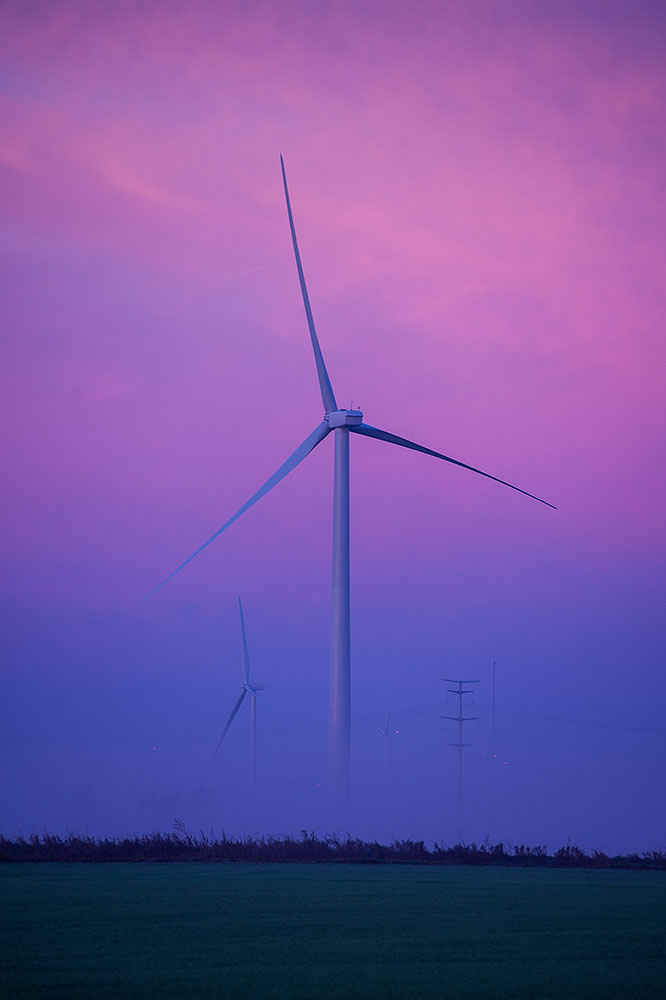
Morning sunrise, fog and a bit of wind

Morning sunrise, fod and a bit of wind by Jeff Caverly

Morning sunrise, fog and a bit of wind by Jeff Caverly

Since we have a lot of time to think, how about thinking about wind energy? Our average wind speed of 17.23 mph is 23rd in the nation, but the US Energy Information Administration says Michigan ranks in the bottom third of wind energy production – 36th to be precise. The Wind Energy Technologies Office reports Michigan’s installed capacity as 2,190 MW with 215 MW under construction.

Jeff took this back in 2013. Follow Jeff Caverly Photography on Facebook & also check out his past Michigan in Pictures photos.

Support Michigan in Pictures with Patreon

Stay at home order extended … and relaxed

Off Fishing by Julie

Off Fishing by Julie

Yesterday, Governor Gretchen Whitmer extended Michigan’s stay at home order until May 15th. mLive reports that some controversial restrictions have been removed:

Certain restrictions previously included under the state’s stay-at-home order, including bans on motorized boating, golf, and retail operations like garden centers, are lifted under the new order.

Landscapers, lawn-service companies, nurseries and bike repair shops will be allowed to return to work subject to strict social distancing, and big-box stores will be allowed to reopen closed sections of the store. Other retailers will now be allowed to reopen for curbside pick-up or delivery.

And residents will be allowed to travel between their residences again, although such travel is “strongly discouraged,” according to a press release from the governor’s office.

Public-facing businesses like gyms salons, bars and in-person dining at restaurants will remain off-limits under the order.

In a statement, Whitmer said social distancing remains the “best weapon” to defeat COVID-19, but said some of the restrictions put in place are being lifted because new COVID-19 cases appear to be leveling off.

More in mLive.

Julie took this photo of a boat out at sunrise last summer. See more in her UP of Michigan gallery on Flickr.

Support Michigan in Pictures with Patreon

Perseverance

Perseverance by Mark Smith​

Perseverance by Mark Smith​

Stay strong everyone!!!

Support Michigan in Pictures with Patreon

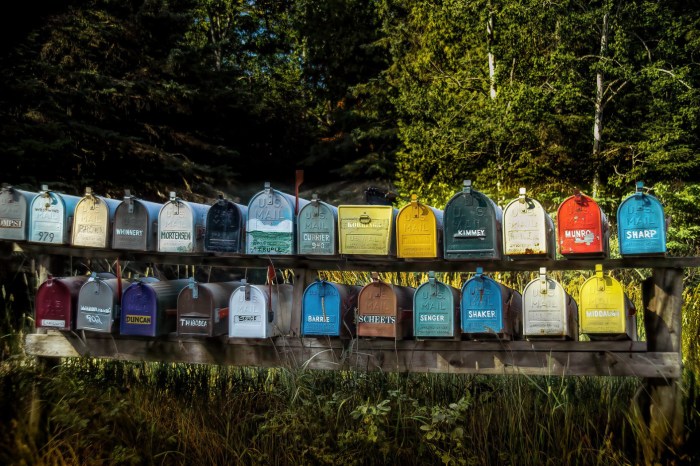
You’ve Got Mail

You've Got Mail by James Korringa

You’ve Got Mail by James Korringa

James took this on Bois Blanc Island. See more in his Barns & Countryside album on Flickr.

Support Michigan in Pictures with Patreon

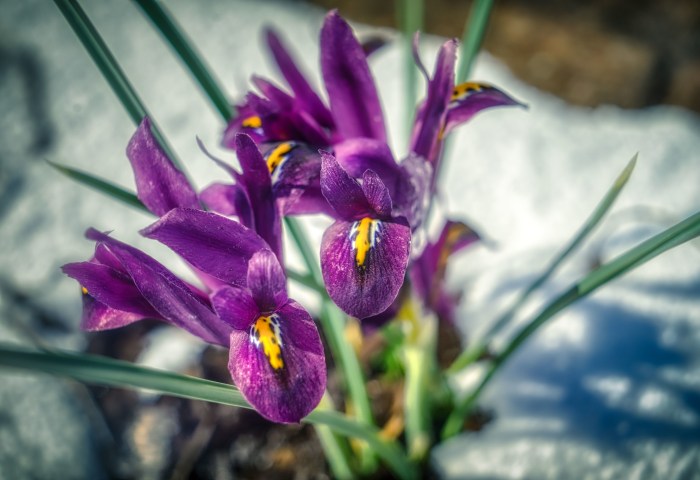
Earth Day at 50

Untitled by Brooke Pennington

Untitled by Brooke Pennington

Happy 50th Earth Day everyone! It’s without a doubt the weirdest one on record, but I thought you might be interested in the Michigan roots of Earth Day, at the University of Michigan to be precise. James Tobin of Michigan Today shares the story of the Teach-In on the Environment that UM held in March of 1970 because Earth Day fell right in the middle of exams. Students and teachers formed a group called Environmental Action for Survival (ENACT) and booked Democratic front-runner Senator Edmund Muskie, Ralph Nader and biologist Dr. Barry Commoner.

Michigan’s Teach-In on the Environment was not the first Earth Day. It was the huge and spectacularly successful prototype of the first Earth Day, which happened five weeks later—“the most famous little-known event,” one historian has written, “in modern American history.”

…The crowd in Crisler Arena overflowed into the parking lots. Workshops and rallies were swarmed by Michigan students, schoolkids, retirees, and PTA parents. When it was over, the New York Times said Michigan’s Teach-In on the Environment had been “by any reckoning…one of the most extraordinary ‘happenings’ ever to hit the great American heartland: Four solid days of soul-searching, by thousands of people, young and old, about ecological exigencies confronting the human race.”

Measured against the extreme rhetoric and violent protests that set the tone of the era, it was an earnest, even quiet, event. A few speakers were heckled and a few showy demonstrations drew heavy media attention—the “trial and execution” of a 1959 Ford on the Diag; the dumping of 10,000 non-returnable pop cans at a Coca-Cola bottling plant (afterward students picked up the cans and threw them away, an irony not lost on reporters); the smearing of tar and feathers on a building where an oil company was interviewing job prospects.

Read the rest right here & also check out the History of Earth Day and dig into 2020 online events at earthday.org.

Check out Brooke’s Spring photo album on Flickr for more!

Support Michigan in Pictures with Patreon

Trout lilies flash their colors

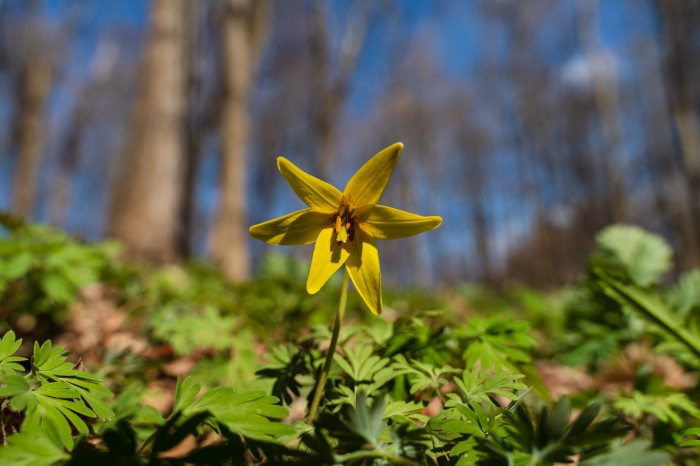
Trout Lily by William Dolak

Trout Lily by William Dolak

The trout lily derives its name due to the resemblance of its mottled leaves to the coloring on brook trout. This 4-10″ tall wildflower is one of the earliest to bloom in Michigan and is also known as Adder’s Tongue and Dogtooth Violet. Edible Wild Food’s entry for trout lily (Erythronium americanum) says:

Trout Lily grows in huge colonies that can completely cover a forest floor. The colonies can be hundreds of years old and takes a long time to grow to such a size. Its bulbs are sterile up to about the seventh year and then it produces only one leaf and no flowers. When they mature one plant will grow two leaves and one, beautiful yellow flower. The colony spreads mostly by runners and less importantly by seed. Trout lilies have a symbiotic relationship with ants known as myrmecochory. This means that they exchange a lipid-rich appendage on their seeds in return for an ant seed dispersal that spreads the colony and protects the seeds from predation. This plant is a beautiful spring ephemeral meaning it is short-lived in the spring only.

You can see this photo & more from Bill in our Michigan in Pictures group on Facebook.

Support Michigan in Pictures with Patreon

Be Yourself!

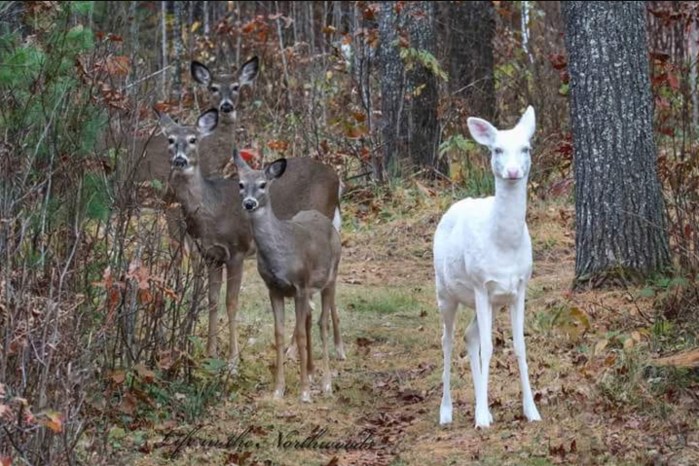
Albino Deer by Chryz Love

Albino Deer by Chryz Love

Just a little reminder from the natural world that it’s OK to be yourself & also to check out the new Michigan in Pictures Group on Facebook!! I created it so people can share photos with other readers for possible inclusion in Michigan in Pictures, and this was the first pic shared.

Chryz took it near Davidson. Click through to see it on Facebook & to check out other photos she’s shared in the group!!

Support Michigan in Pictures with Patreon