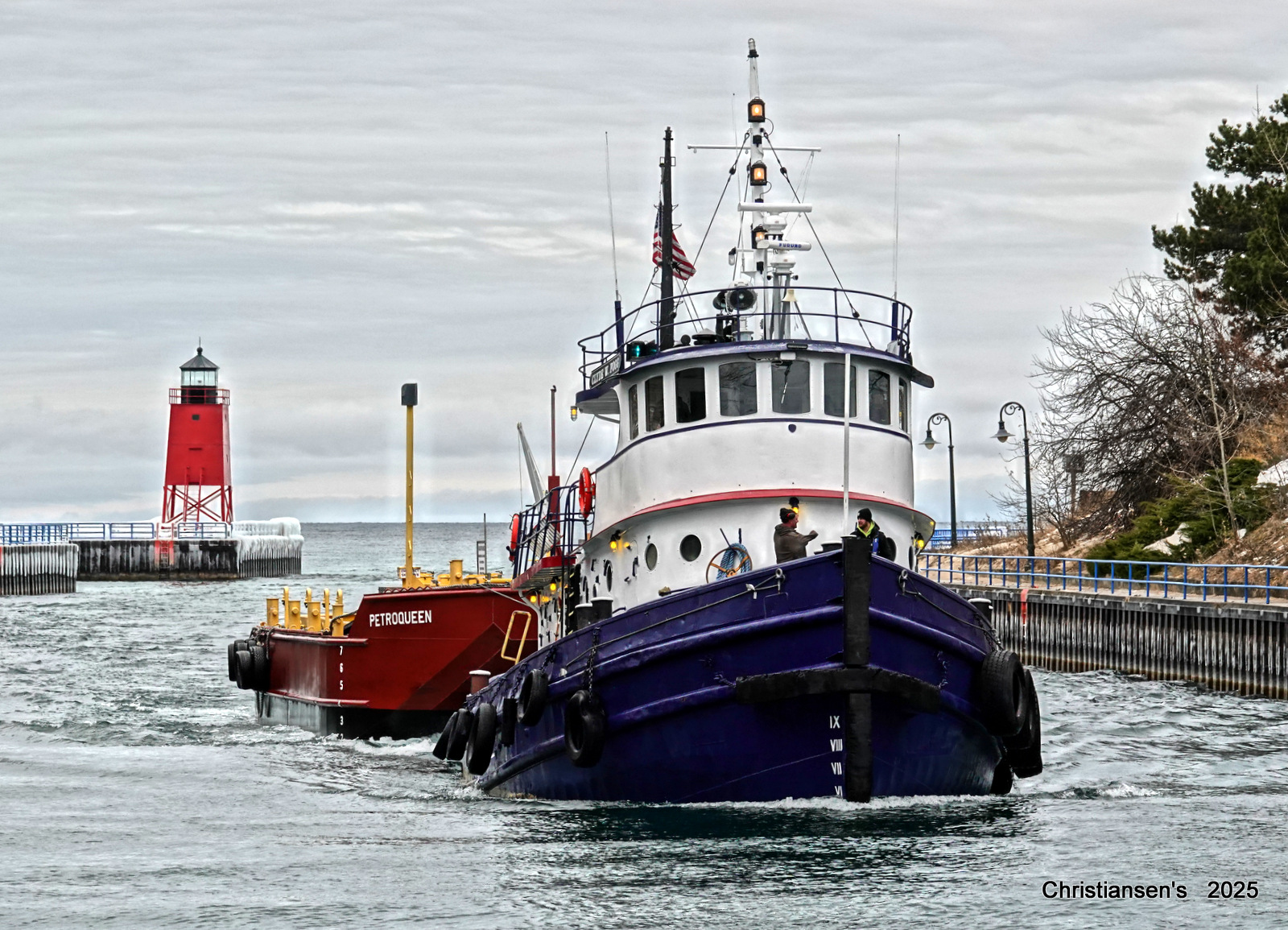
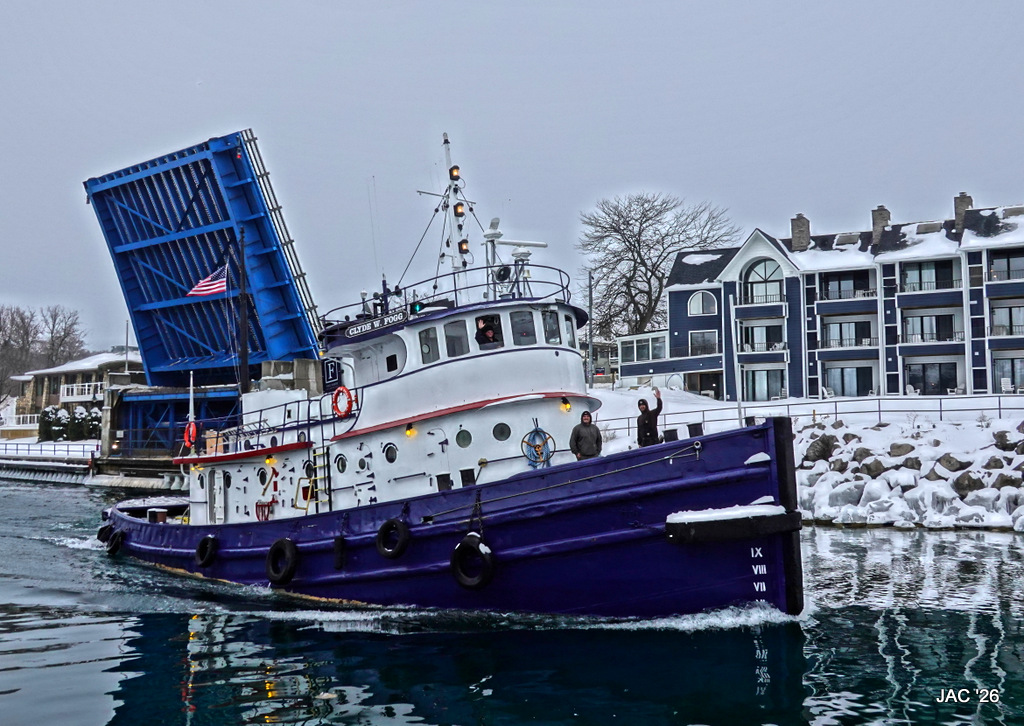
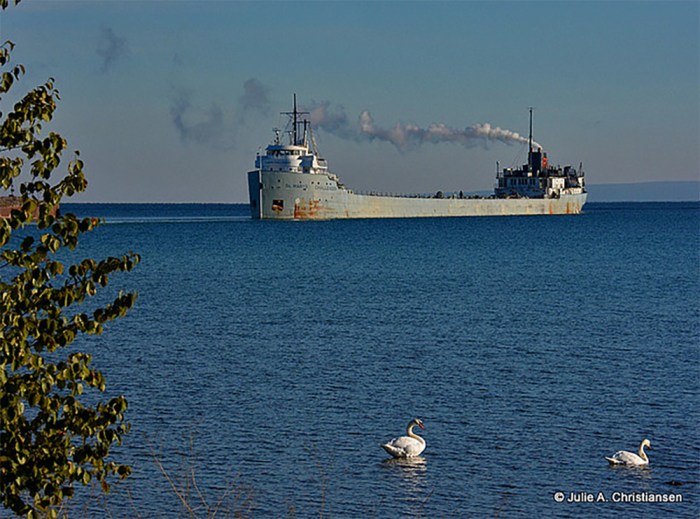
St. James Marine Company shares that it was founded in the early 1970’s by Clyde Fogg as a hobby business and is now run by Clyde Fogg’s grandson, Matt, a graduate of the Great Lakes Maritime Academy in Traverse City. The company has two tugs, the Jennifer Anne Fogg and Clyde W. Fogg.
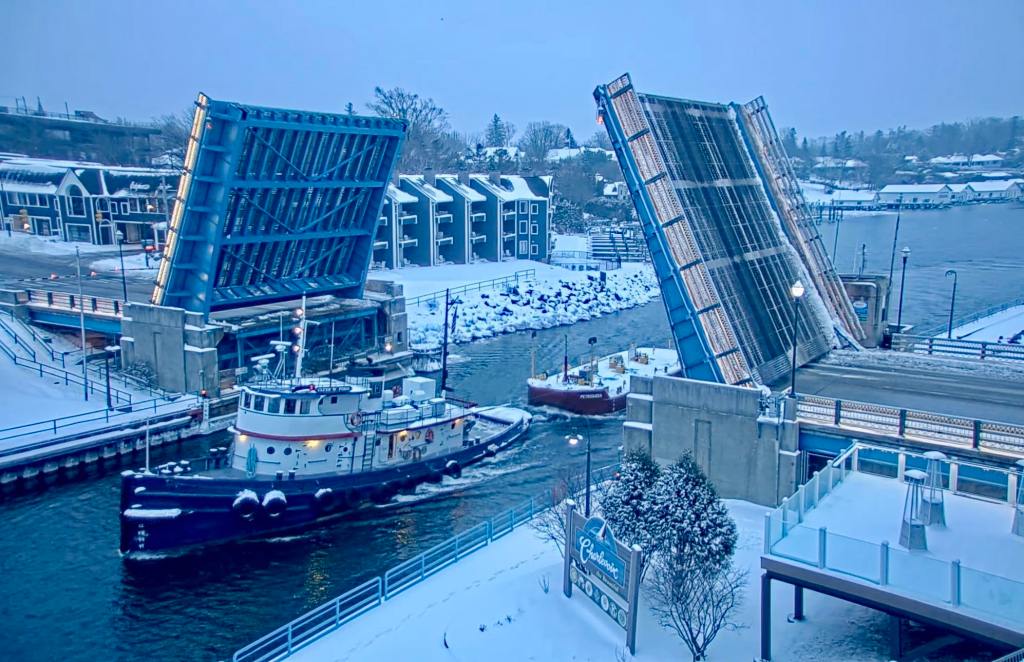
Julie shared this shot of the Clyde W. Fogg heading to Beaver Island with a fuel barge loaded with 35,000 gallons of fuel for the winter months in our Michigan in Pictures group. She captured it from the Charlevoix Bridge Cam and let me say that it’s way less frustrating watching the bridge from your computer than from your car!
Although Julie didn’t take the photo above, here are two more she did take from her Facebook. She has also shared a ton on Michigan in Pictures over the years, and I’ve linked to a few of my favorites below!
Not gonna lie, I’m not feeling good about the “plan” for Venezuela. Also, while I actually have a degree in the geopolitics of the Caribbean basin, I don’t plan to argue the logic of starting a conflict with a Chinese ally because of “drugs” but then switching to “oil & regime change” before the fires are even out. Is Maduro a good guy? Unquestionably not. Is invading a nation of 30 million people for vague & shifting reasons a good idea? Also no.
SHIVERING Birds have much higher metabolic rates and burn more energy to stay warm than we do. Black-capped chickadees weigh less than half an ounce and can maintain a body temperature of 100 degrees Fahrenheit – even when the air is 0 degrees! They do this by having great insulation, being very active and remembering where they store their food. A steady supply of food is essential, because chickadees eat more than 35 percent of their weight every day! Compared to many other birds, chickadees have a large hippocampus – the part of the brain that’s responsible for spatial memory. In the fall, this part of their brain gets even bigger.
FLUFFING FEATHERS All cold-climate birds pack on body weight in the late summer and fall in anticipation of the long, cold winter, but feathers also play an important role. All birds stay warm by trapping pockets of air around their bodies. The secret to maintaining these layers of air lies in having clean, dry and flexible feathers. The cleaning process, generally known as preening, depends on the species of bird. While all birds produce a special oil from a gland near the base of their tails, some cold-tolerant birds use this oil to weatherproof their feathers. Other birds like egrets, herons and mourning doves grow special feathers that disintegrate into a powder that they use to waterproof their feathers. Regardless of what weatherproofing method they use, preening helps birds keep a water resistant top layer and a toasty warm inner layer.
ROOSTING & CUDDLING Similar to people who may cuddle for warmth, small birds like tree swallows crowd together in shrubs, vines and evergreen trees to share body heat. They can also slow down their metabolic rate to conserve energy. Cavity nesters like nuthatches, titmice and downy woodpeckers use tree cavities and nest boxes to stay warm. Cavities and boxes provide protection from the weather and help birds hide from predators. Larger birds like American crows and ring-billed gulls are also known to flock together for warmth.
Read on for ways you can help including providing high energy foods like suet, peanuts and black oil sunflower seeds & a heated water bath.
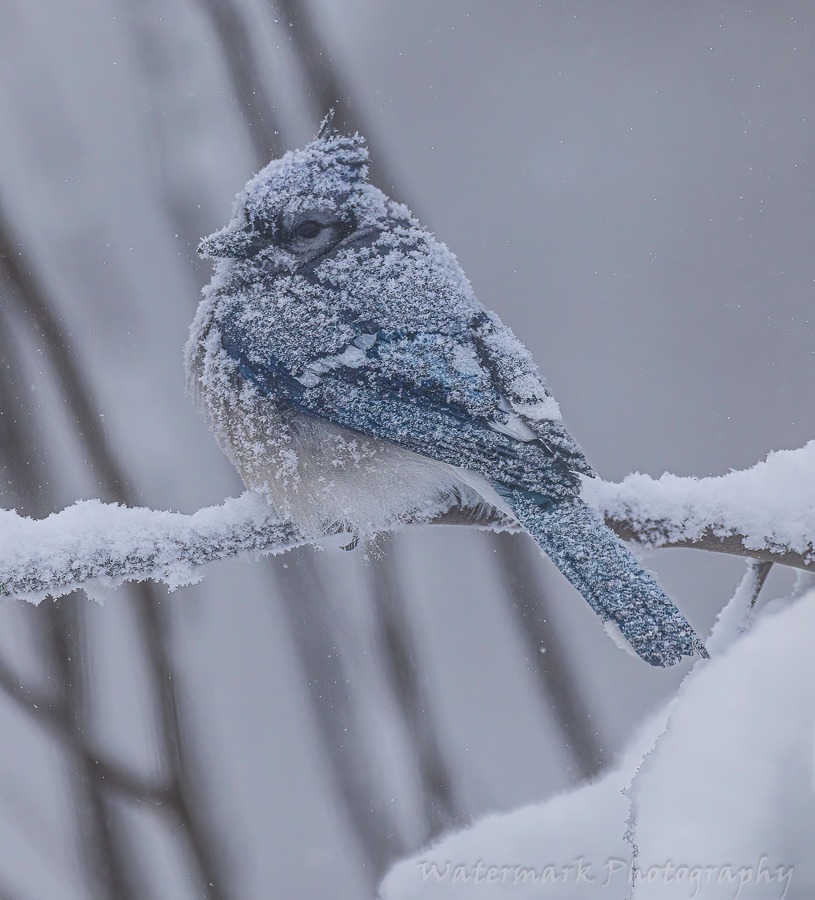
Jeff of Watermark Photography shared this photo of a snow-covered blue jay earlier this week. See more on his Facebook & see more (and purchase photos) in the Birds & Wildlife gallery on his website.
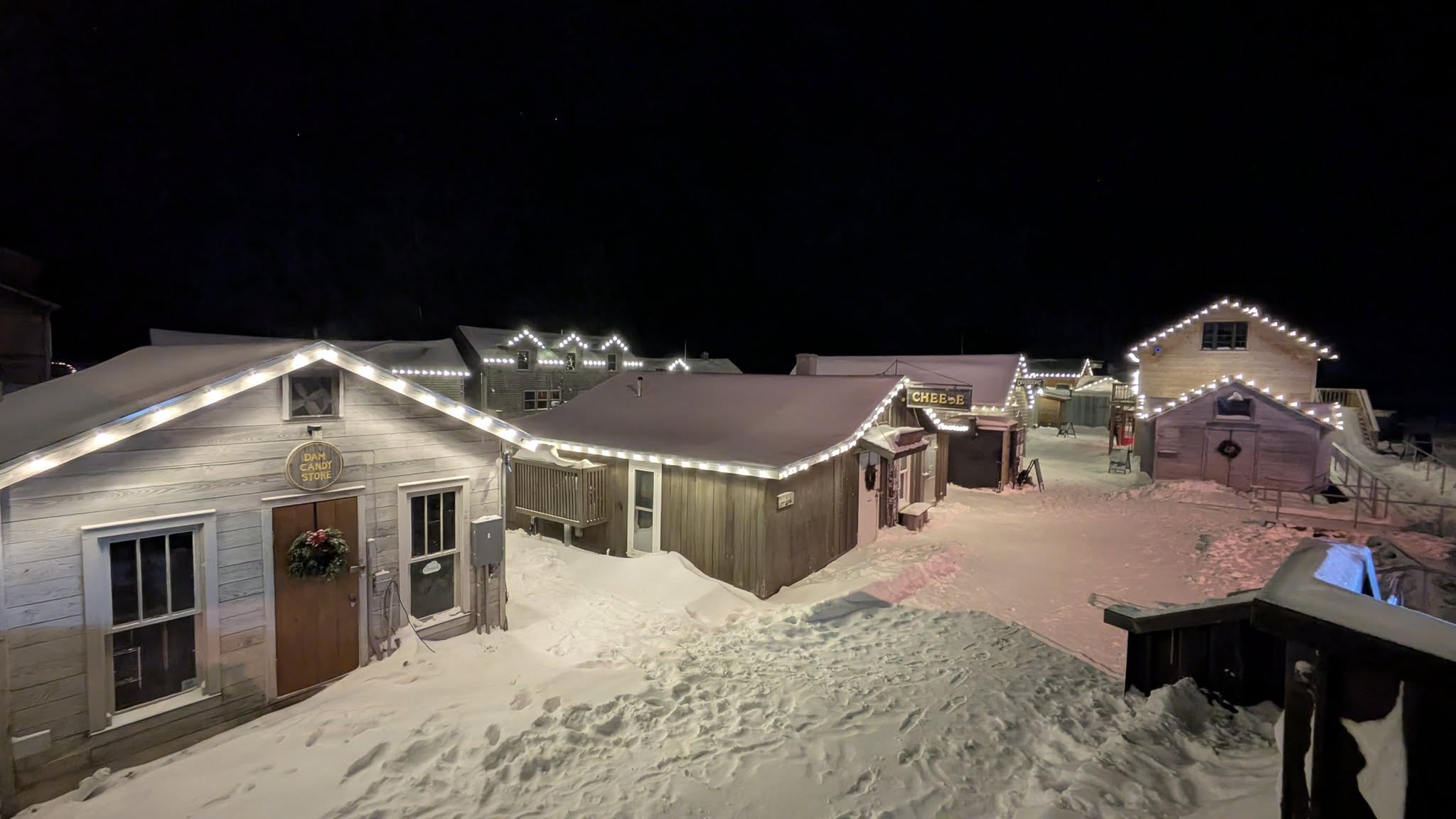
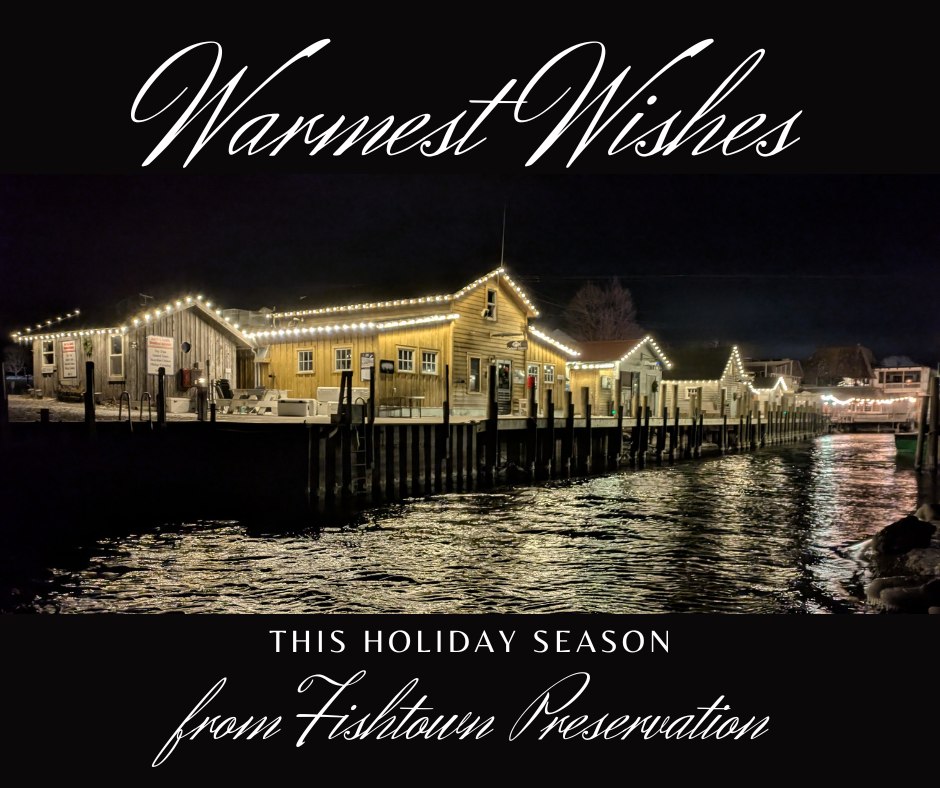
I’d like to wish everyone a very Merry Christmas & happy holiday season that brings you and those you love as much magic & love as possible. The two photos below are from Fishtown Preservation, and I encourage you to support them in their work preserving this iconic Michigan location if you can!
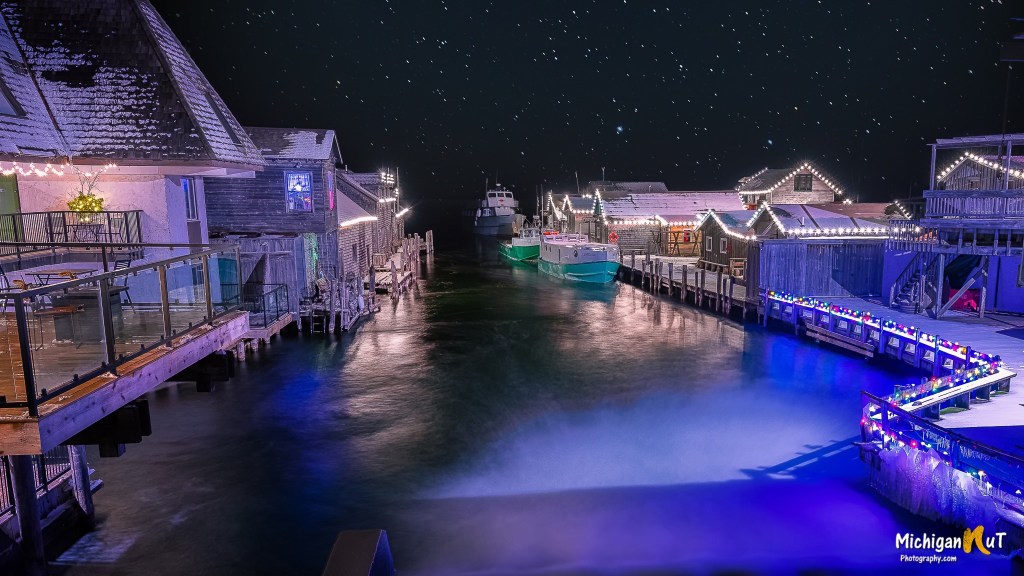
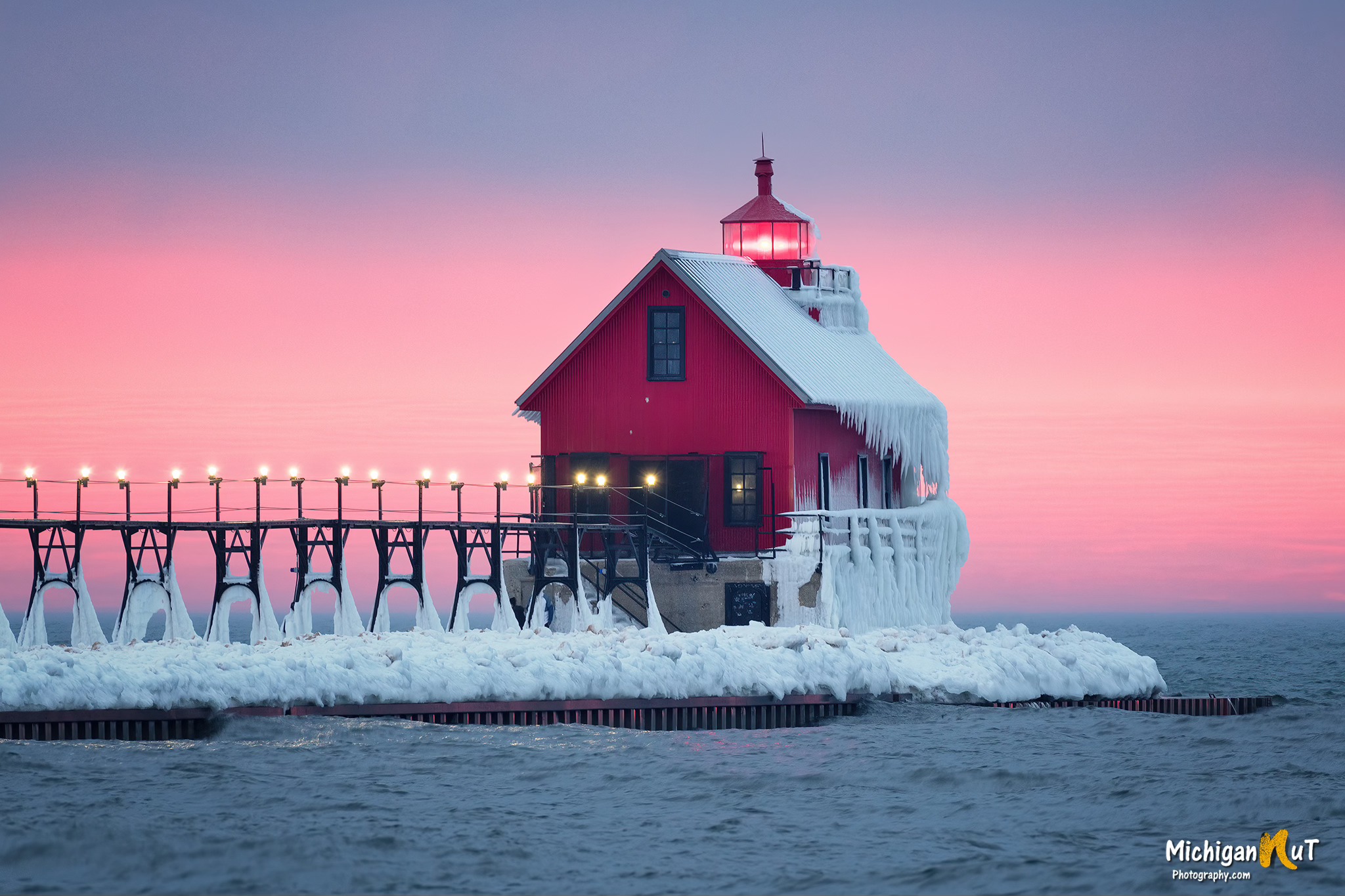
I’ve been waiting to post this photo since the moment John shared it exactly one year ago today! Head on over to the Michigan Nut Facebook to give him a like, check out his calendars as possible gifts, and for sure check out the Northern Lights & Night Skies gallery on his website to view & purchase this and other fantastic photos!
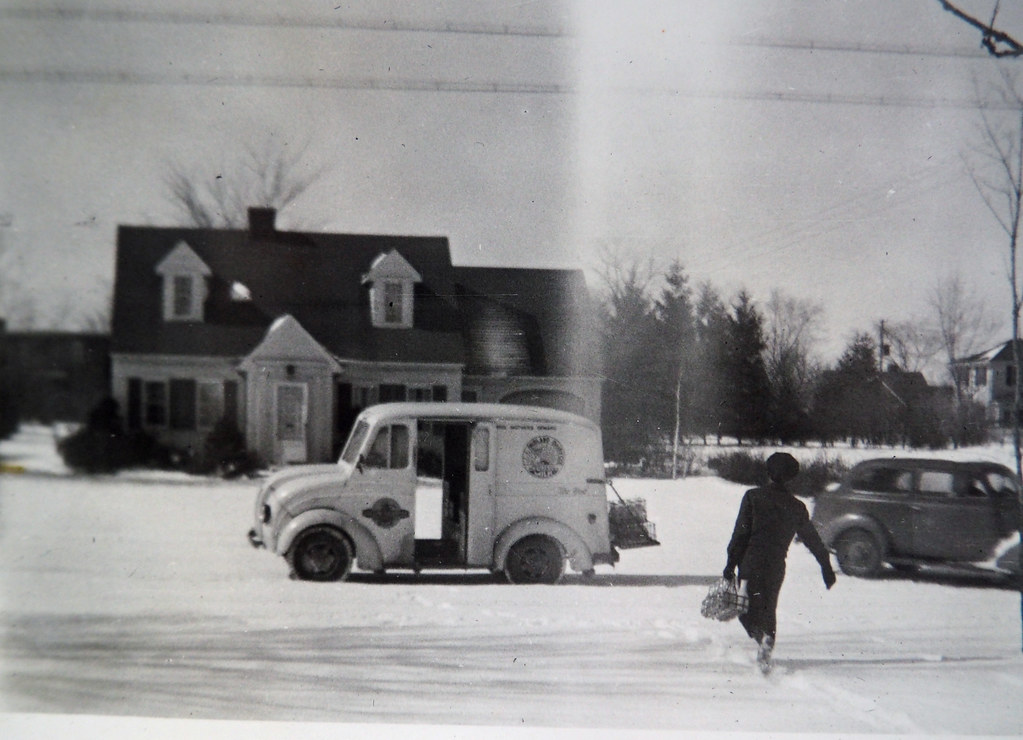
In 1922, George Bacon, Chief Engineer for the Detroit Electric Vehicle Company, designed a remarkable new milk delivery truck. It could be driven from four positions, front, rear, or either running board. But battery power was no match for winter weather, heavy loads (such as milk) or long days on the city streets. His employer balked at making a gasoline powered truck, so Bacon and other investors formed the Detroit Industrial Vehicle Company (D.I.V.CO.) to produce his invention using a LeRoi gasoline engine. After testing a prototype in 1924, and 25 more prototypes with the Detroit Creamery in 1925, Bacon and his investors were ready to go into business.
Read on for a whole lot more about these classic vehicles!
Otisourcat shares that this photo shows a milk delivery on Nelson Street in Midland circa 1940. Head over to their Flickr for the latest.
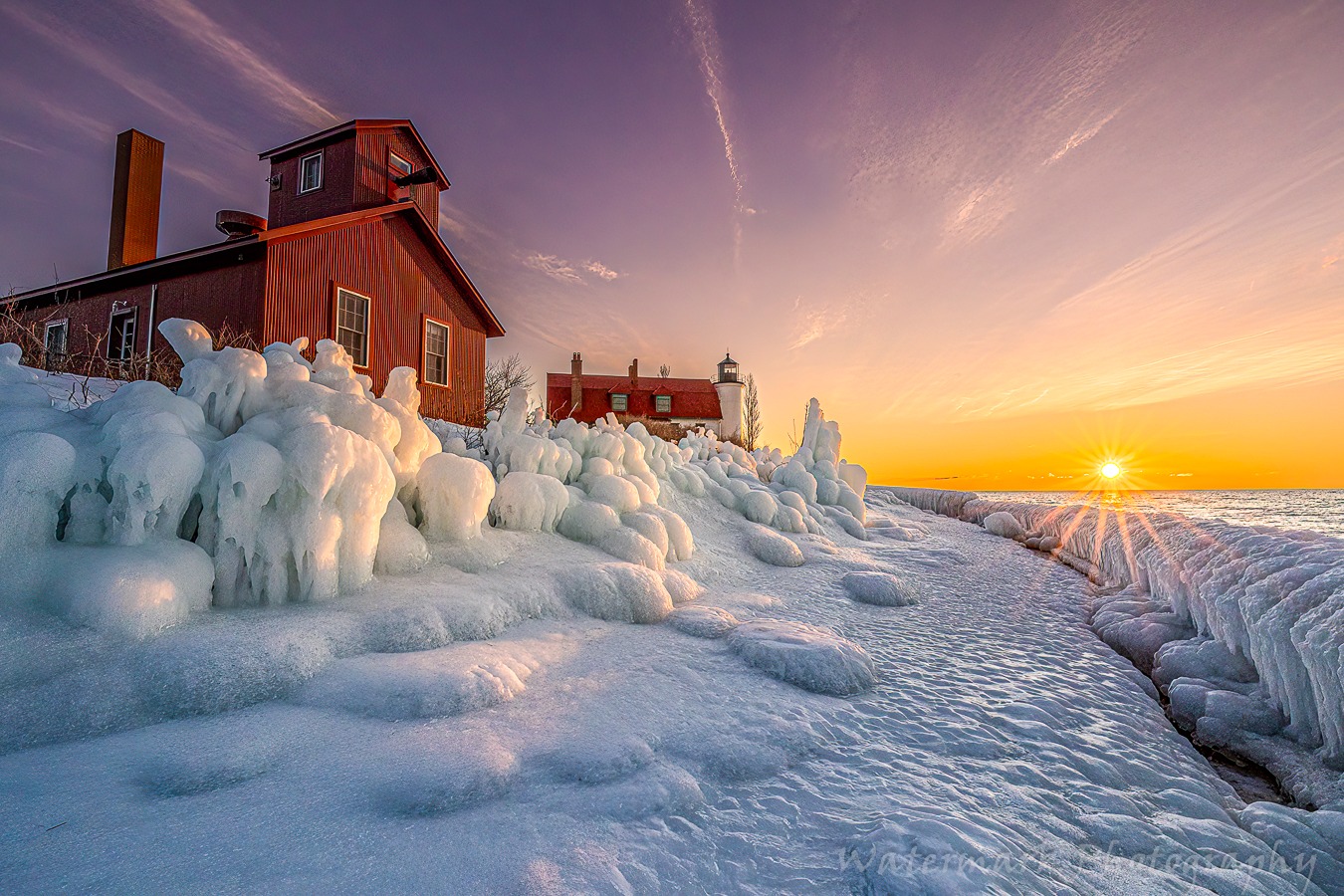
Point Betsie Lighthouse on Lake Michigan just north of Frankfort is one of the most photographed lighthouses in Michigan, but it’s definitely an “ice cleats mandatory” location this time of year! If this view looks good to you, consider supporting the renovation of this iconic lighthouse on with a stay in the Keepers Quarters.
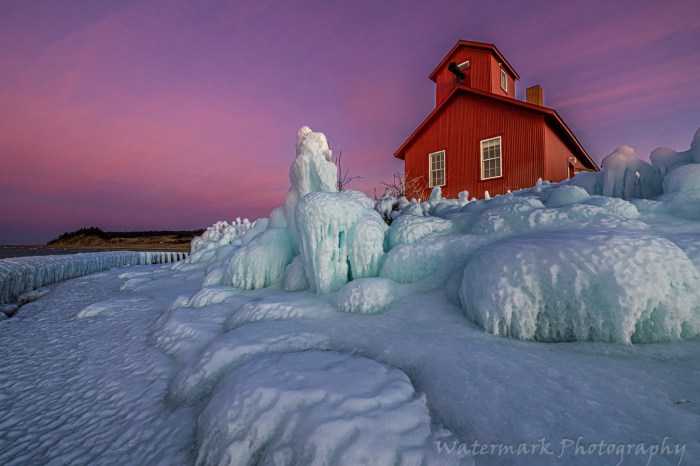
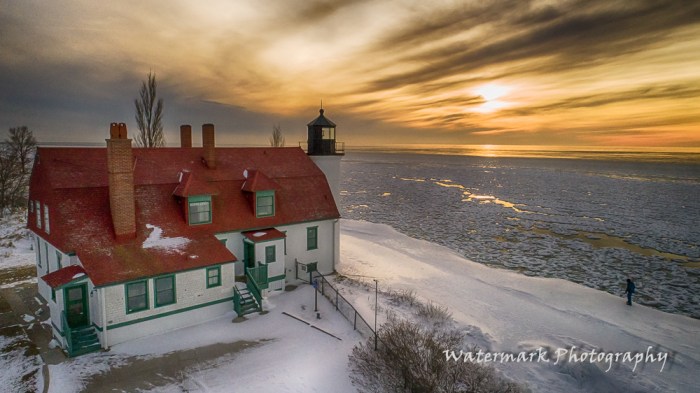
Jeff shares that Wednesday evening was his first time in a while seeing clear skies and sunset, and the ice sculptures made by the wind and breaking waves did not disappoint! There’s a couple more pics below. See (and purchase) this photo & others in the Winter Wonderland gallery on his website, and for sure follow Watermark Photography on Facebook for his latest.
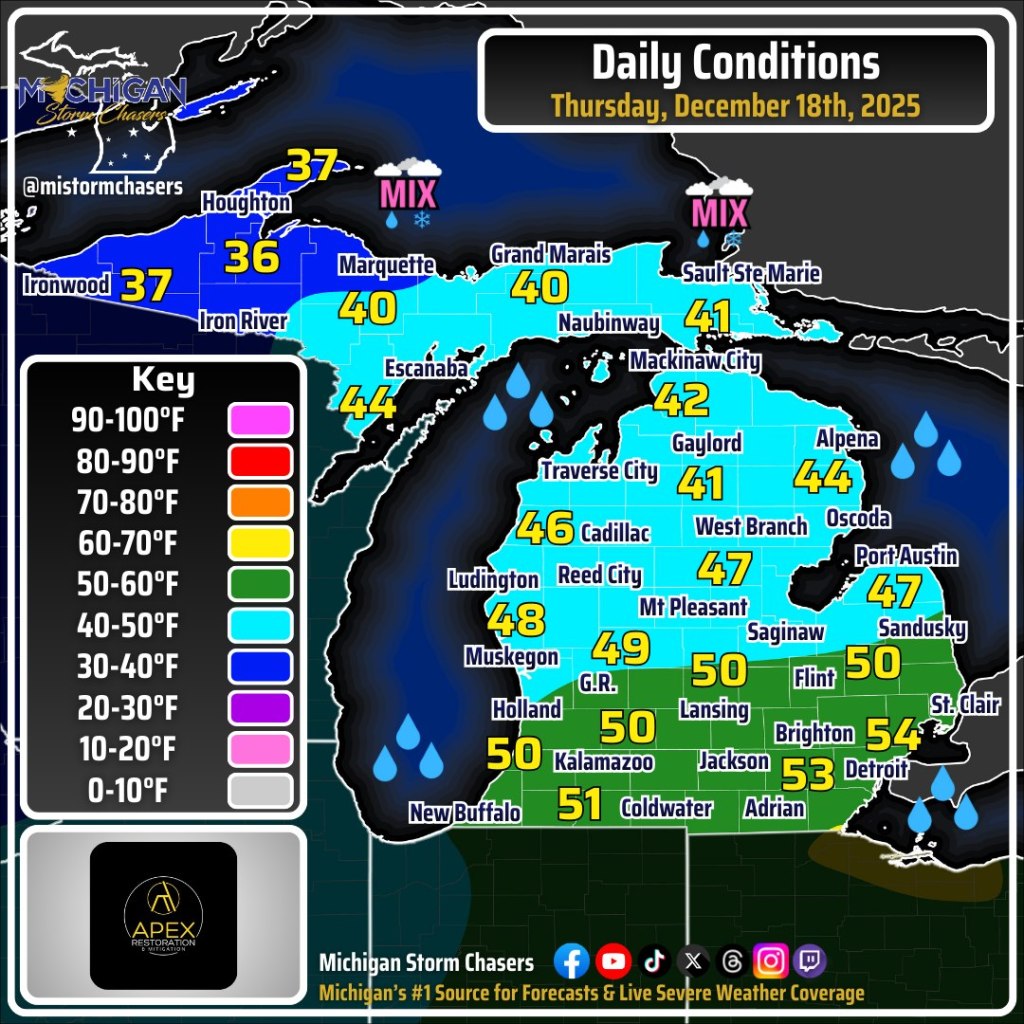
The folks at Michigan Storm Chasers share a detailed statewide Michigan weather forecast every morning that you should definitely incorporate into your daily feed. On Facebook they share that although we will see temps above freezing for most of the state, even topping 50 degrees in southern Michigan, temps will drop later in the day, potentially precipitously in what is known as a “flash freeze”. A flash freeze happens when rain has fallen, completely stopped, and then shortly afterward air temperatures drop from the 40s or 50s down into the 20s or colder. Ryan explains is all in their excellent video.
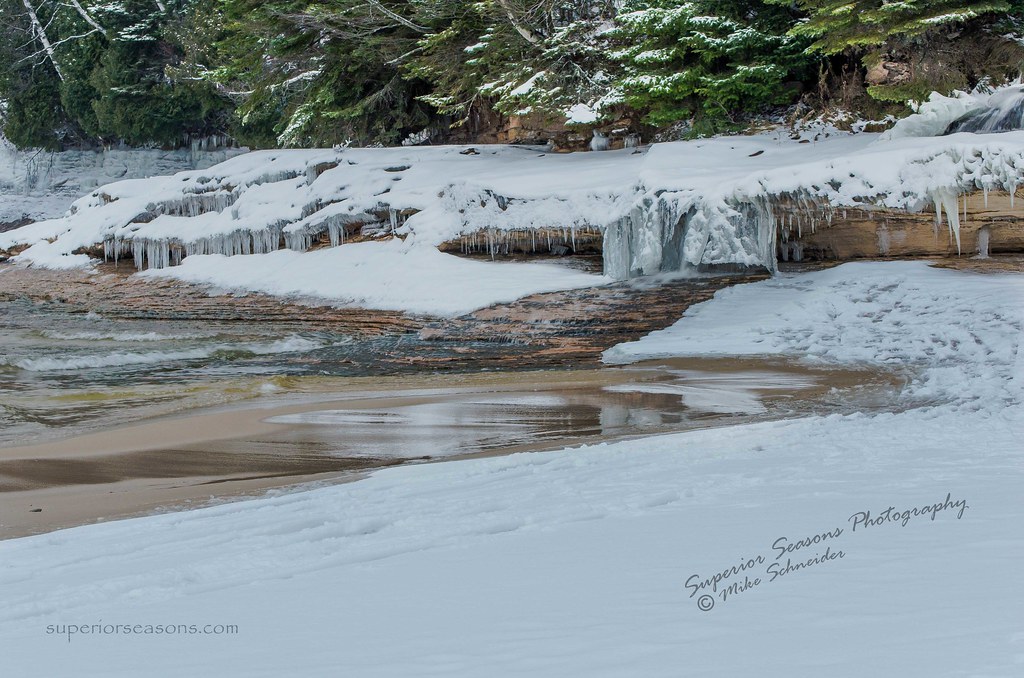
Michael shared this photo 13 years & one day ago on December 17, 2012, remarking that it was strange to see rain in December in the UP. Here are a couple more he shared to our Absolute Michigan group on Flickr, and you can see more in his The UP Eh! gallery.
I would be completely remiss in my features of 2026 Michigan photo calendars if I left out one of Michigan in Pictures’ most enduring supporters, John McCormick of Michigan Nut Photography! His 2026 Michigan Wall Calendar is made right here in Michigan and features some dynamite photos from all over the Great Lakes State. He’s got all kinds of other photo-based gifts so head over to michigannutphotography.com today & make the Michigan lover on your list happy!
I realize that I should add that although you can book tickets to ride the North Pole Express from Owosso, they sell out very early so I will try and shout this out earlier next year!!
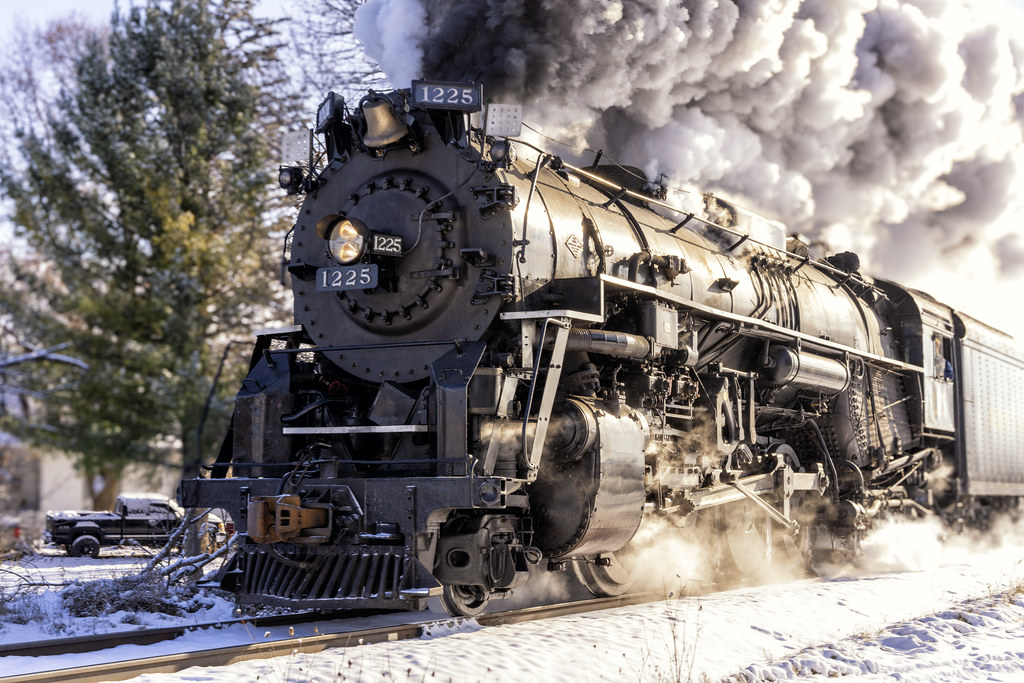
The steam locomotive Pere Marquette 1225 was first used by the Pere Marquette Railway to transport products between Detroit, Toledo, Flint, Saginaw, Grand Rapids and Chicago for a decade before being retired in 1951 when the Railway merged with Chesapeake and Ohio Railway who favored diesel locomotives. It was then given to a reluctant Michigan State University where it sat for 25 years. Spartan Newsroom explains how Pere Marquette 1225 returned to service & became the inspiration for beloved children’s book The Polar Express:
The Pere Marquette 1225 sat untouched on MSU’s campus just south of Spartan Stadium until 1969, when a group of students took interest in the steam locomotive. Randy Paqueete, a Michigan State alum and then-member of the MSU Railroad Club, suggested that the group try to restore the engine instead of it just being on display.
The club’s first goal was to get the steam locomotive up and running to transport students to and from football games. “These students had some crazy ideas. We’re going to go to away football games. We’re going to go to Florida. We’re going to go to Aspen. We’re going to run charters,” Struck said. In 1975, after five years of work, the students were successful in firing up the boiler long enough to sound the whistle. This victory did not come easy, as they needed to put 245 pounds of steam pressure into a 400-ton boiler, which the university was nervous about.
“Ultimately, we got permission,” Paqueet recalled. “We jumped through a lot of hoops but we got licensed. We had to do it on a Sunday when there weren’t very many people on campus.”
The students started the fire for the boiler at 4 a.m., and by 8 a.m., the steam engine had enough pressure to sound the whistle. For the first time in two decades, the whistle of the Pere Marquette 1225 was heard, proving the restoration process on the locomotive to be a success.
The legacy of the Pere Marquette 1225 is not limited to MSU’s campus. Author Chris Van Allsburg, who wrote “The Polar Express” children’s book the animated movie was based on, was inspired by this same steam engine during his childhood. Growing up in Grand Rapids, Allsburg frequently visited MSU on the weekends for football games and would see the locomotive on display. When writing the book he remembered the steam engine he played on as a child, and the model number 1225, which also coincidentally represented Christmas Day. During production of the film, animators were given blueprints of the Pere Marquette 1225, allowing them to accurately recreate the train. They also made frequent visits to Owosso, Michigan, where the locomotive was eventually relocated, to record its authentic sound to use in the movie.
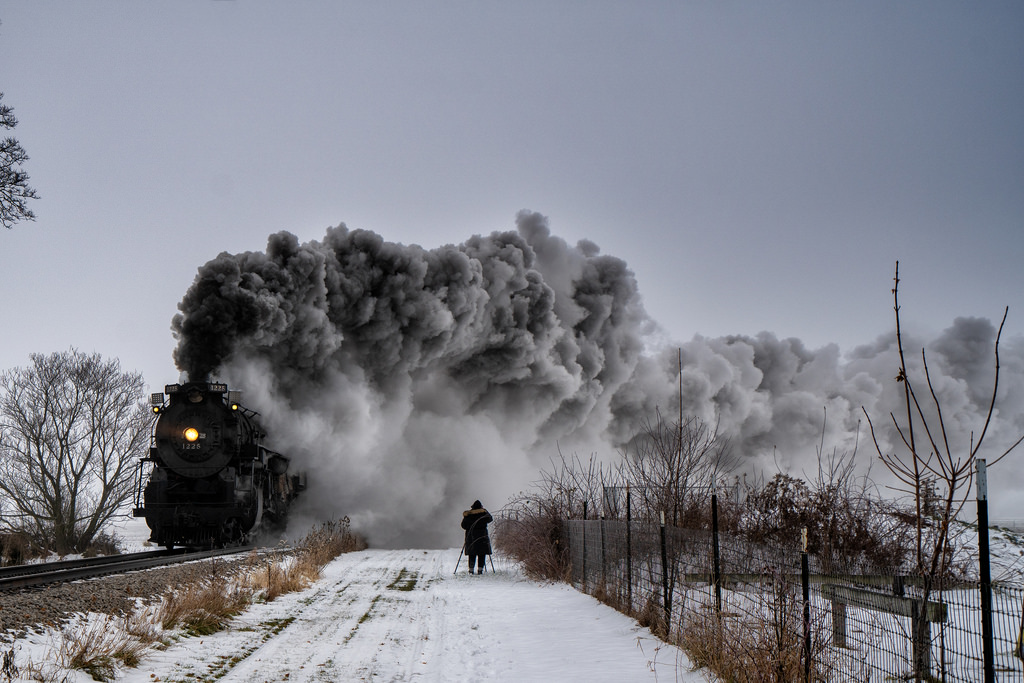
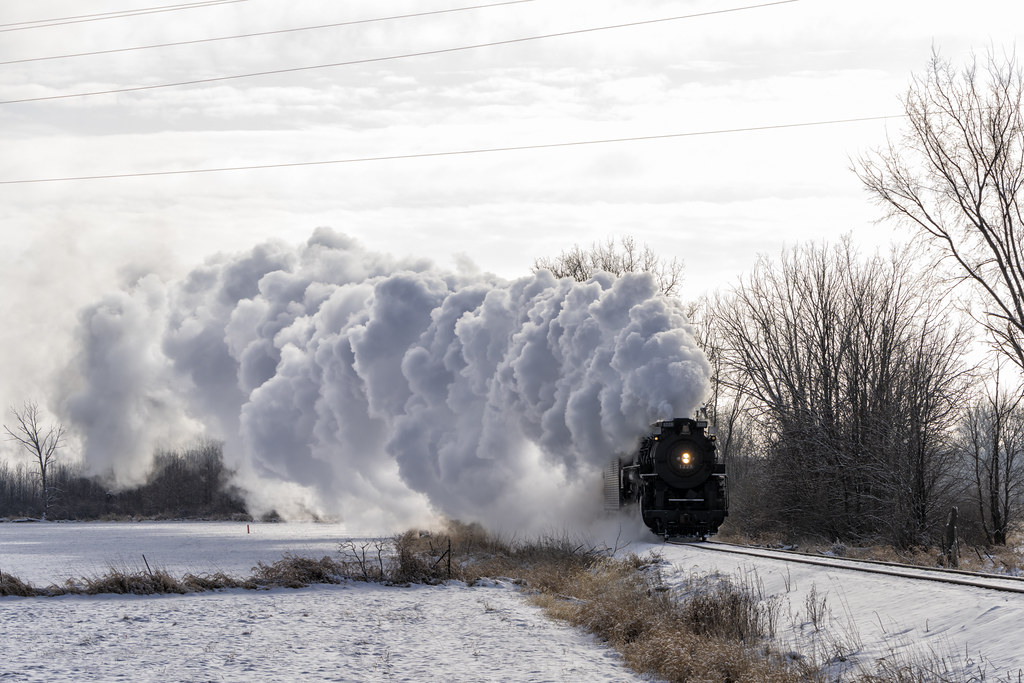
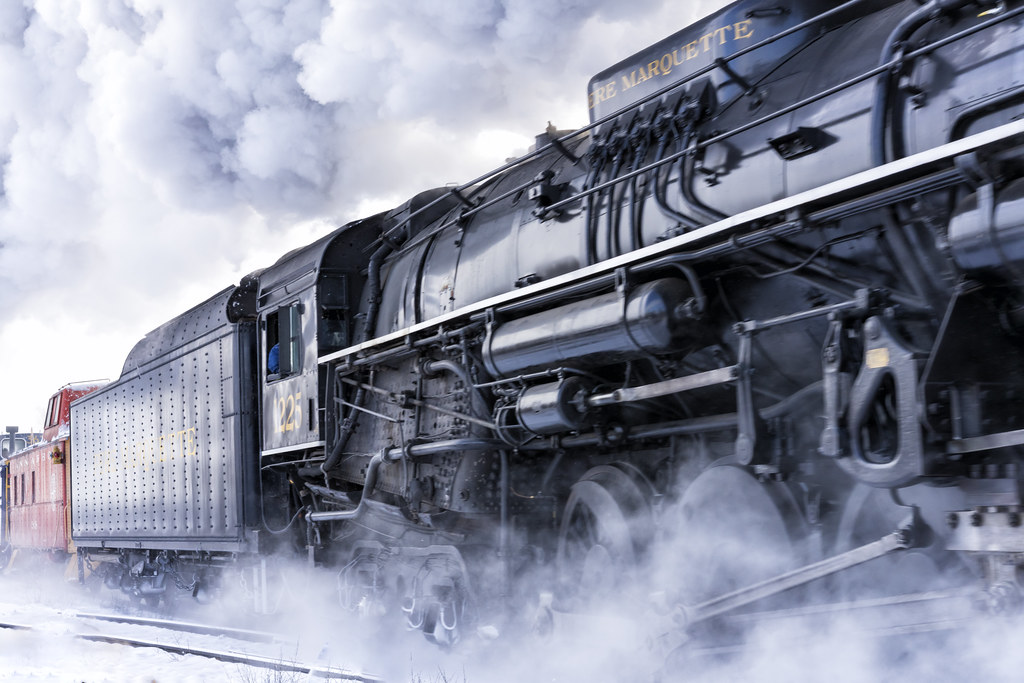
Here’s a few more shots by Charles of Pere Marquette 1225 from this year along with one of a photographer getting the shot that I shared back in 2018. For sure head over to Flickr to check out more in his Steam Engine, Railroad Photos gallery.






 Michigan in Pictures