Ludington State Park Beach House

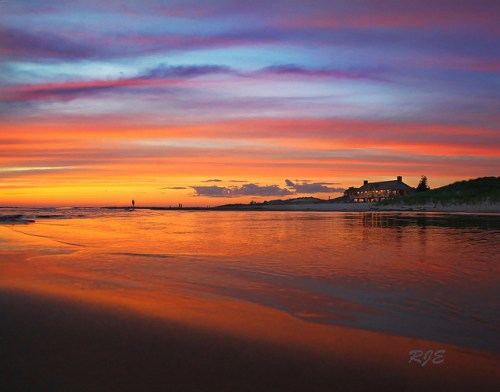
Ludington State Park beachhouse

Ludington State Park beachhouse, photo by R.J.E.

This page from the DNR has a vintage photo of the beachhouse.

Visit Ludington tells a little about the historic Beach House at Ludington State Park.

The Beach House has a long history of weathering the changing Michigan seasons within the Ludington State Park. This landmark has now received a makeover, and it’s a real showplace for the state park system. Built by the Civilian Conservation Corps in 1935, the Lake Michigan Beach at 116 ft. long and 35 ft. wide, has been a familiar sight for visitors to Lake Michigan within the State Park.

…The Lake Michigan Beach House is unique in nature due to the fact it is the only Arts-and-Craft inspired design bathhouse found on the shores of Lake Michigan. Also of significance is the role the CCC played in its construction–from architect Ralph B. Herrick to all the CCC workers who built the Beach House from recycled brick and pressed mortar. This style has not been found at any other state park in Michigan…and it is the largest and most intact of the CCC-built structures within the Ludington State Park.

Check it out background big and see more in R.J.E.’s Ludington, MI slideshow.

More from Ludington on Michigan in Pictures!

Mr. Sunshine: Sunflowers in Michigan

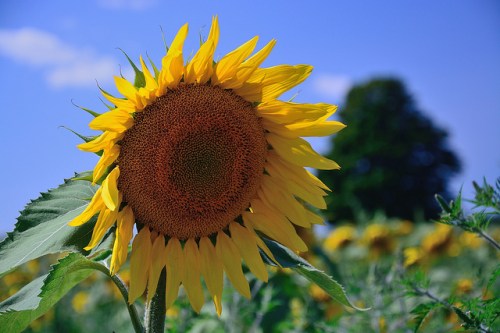
Mr. Sunshine . . .

Mr. Sunshine…, photo by Dr. Farnsworth

Michigan Gardener is a fantastic site that can give you all kinds of help with what to put in your garden and how to make it grow. They have a nice article about sunflowers featuring Bob Koenders, owner of the Backyard Bouquet Farm. It begins:

According to the Michigan Department of Agriculture, in 1997 there were 32 farms growing sunflowers on 1,522 acres, and by 2002 there were 91 farms with 2,275 acres. Most of the fields of open sunflowers are oil seed type, grown for oil or seed (for birds or humans). Their heads were bred to hang down, making it more difficult for birds to eat the seeds and rain to ruin the harvest.

…According to the National Sunflower Association, the wild sunflower is native to North America, but commercialization of the plant was done by Russia. It was only somewhat recently that the sunflower plant “returned” to America. Native Americans first developed the wild sunflower into a single-headed plant with a variety of seed colors including black, red, white, and striped black and white. Some archeologists suggest that sunflowers may have been domesticated before corn. The Native Americans used the sunflower seed for grinding into flour, trail snacks, purple dyes, body painting, ceremonial, and medicinal uses. Sunflower oil was used for making bread, as well as on skin and hair. The dried stalks were even used for building materials.

They add some fun facts about sunflowers:

  • Sunflower’s scientific name is Helianthus; Helios meaning “sun” and anthos meaning “flower.”
  • Sunflower heads track the sun’s movement; this phenomenon is called heliotropism.
  • Sunflowers can grow up to 12 inches a day during the peak of the growing season. They are more photosynthetic than many other plants and better utilize the sun for growth.
  • Sunflower stems were used as filling for life jackets.
  • Sunflower leaves are cupped to channel the water down the stem.
  • Sunflower heads consist of 1,000 to 2,000 individual flowers joined by a receptacle base. The large petals around the edge of the sunflower head are individual ray flowers which do not develop into seed.
  • The world record sunflower with the most heads (837) was grown in Michigan in 2001.

Read on for lots more including tips about growing sunflowers and get tons more sunflower info from the National Sunflower Association.

Check Dale’s photo out background bigtacular and see more in his Flower slideshow.

Eastern Tiger Swallowtail Butterfly

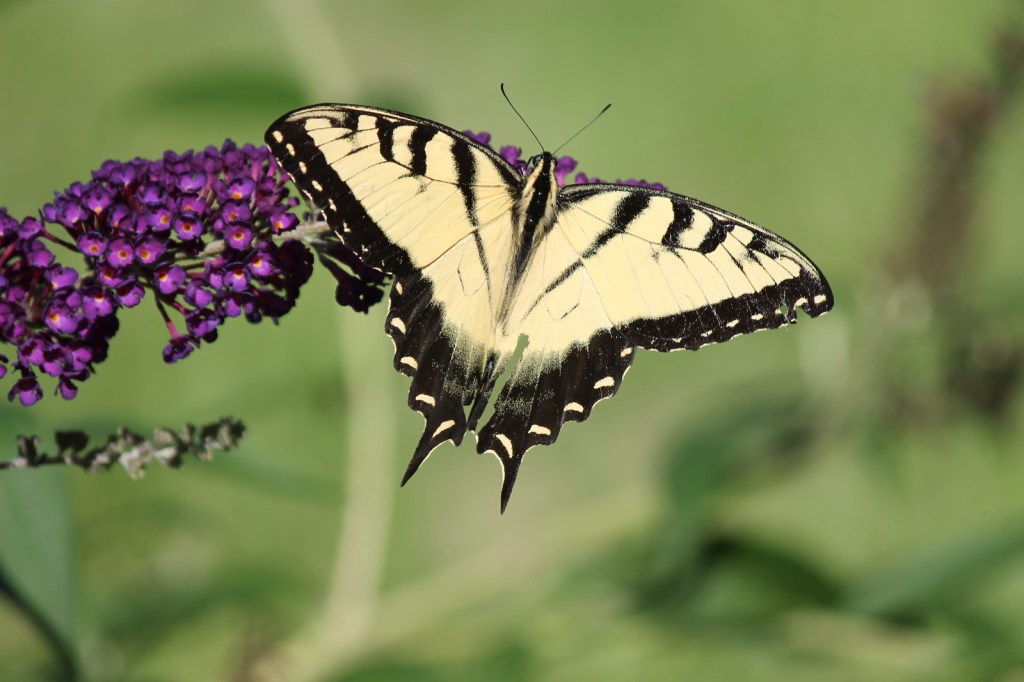
Eastern Tiger Swallowtail Butterfly by Corey Seeman

Eastern Tiger Swallowtail Butterfly (Saline, Michigan), photo by cseeman

The University of Michigan Animal Diversity Web entry for the eastern tiger swallowtail butterfly (Papilio glaucus) says in part:

The eastern tiger swallowtail ranges from Alaska and the Hudsonian zone of Canada to the southern United States, east of the Rocky Mountains.

This species occurs in nearly every area where deciduous woods are present, including towns and cities. It is most numerous along streams and river, and in wooded swamps.

As with most butterflies, Eastern tiger swallowtails tend to be solitary. Males “patrol” for a mate, flying from place to place actively searching for females. “Patrolling” male tiger swallowtails can recognize areas of high moisture absorbtion by the sodium ion concentration of the area. It is believed that the moisture found by these males helps cool them by initiating an active-transport pump. Both male and female tiger swallowtails are known to be high fliers. Groups of fifty butterflies have been spotted in Maryland flying 50 meters high, around the tops of tulip trees.

The tiger swallowtail is thought of as the American insect, in much the same way as the Bald Eagle is thought of as the American bird. It was the first American insect pictured in Europe; a drawing was sent to England from Sir Walter Raleighs’ third expedition to Virginia.

You can read on for more including photos. I also found a page with a listing of Michigan butterflies and apparently we have eight species of swallowtail butterfly. You can also see some great eastern swallowtail photos from Butterflies & Moths. Spoiler alert: the female can look a lot different.

Corey writes that he got this shot at the butterfly bush he planted this year. Check it out background big and see more great shots of this fellow in his butterfly slideshow.

Support Michigan in Pictures with Patreon

The Scarab Club

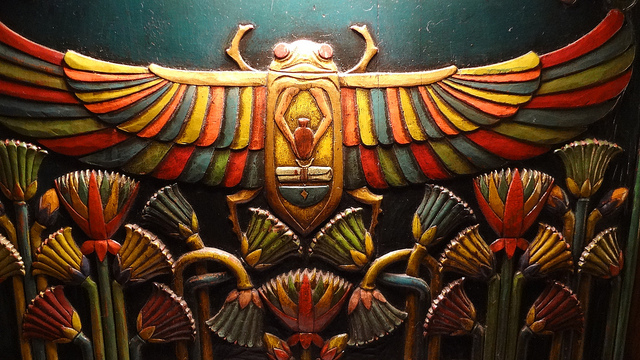
Scarab Club Detroit

Scarab Club Detroit, photo by Vasenka Photography

The Scarab Club explains that:

The Scarab Club was founded in 1907 by a group of artists and art lovers who enjoyed meeting regularly to discuss art and socialize. The desire to form an arts organization in Detroit during the first third of the 20th century was partially intertwined with the birth of automotive design and the evolution of advertising art inspired by the burgeoning automobile industry. Although generally viewed as a heavily industrial city, Detroit’s artistic community thrived from the success of the automobile.

Many of the original founding members of the Scarab Club consisted of automotive designers, advertising illustrators, graphic artists, photographers, architects, and automobile company owners. Scarab Club members inspired each others’ artistic spirit by entering their artwork in the Annual Exhibition of Michigan Artists held at the Detroit Institute of Arts under the auspices of the Scarab Club from 1911 to 1928 and the DIA from 1929 to 1974.

The club’s themed costumed balls, which began in 1917, were a significant social event in Detroit. Life Magazine covered the 1937 Ball featuring a two-page photo spread. The Detroit News and The Detroit Free Press published two pages of photogravures of costumed guests beginning in 1917.

The energy of the Club continues to the present day, hosting events like the costumed Scarab Club balls, art lectures & openings, live music and more. Read on at scarabclub.org where you can check out some of their photos of the building and the artwork and a great timeline of the club. I dug up an old video of one of their costumed balls that was themed “Inferno” that’s pretty cool.

Check out Vasenka’s photo background bigtacular and jump into his slideshow for more great shots from this cultural treasure.

More art on Michigan in Pictures.

Big Sable Point from 2,000 feet

Big Sable Point from 2,000 feet

Big Sable Point from 2,000 feet, photo by Innerspacealien

The Detroit Free Press recently had a fun article by Ziati Meyer titled Michigan Lighthouse Trivia that related:

LIGHT AFTER DARKNESS: The deaths of 48 people in one year prompted the building of the Big Sable Point Lighthouse. The stretch of water between Big Sable Point and Ludington saw 12 shipwrecks in 1855, so Congress was asked to send money to help. The result — after a Civil War delay — was a $35,000 lighthouse to help ships navigate that area of Lake Michigan

Read on for more fun facts and definitely check out Terry Pepper’s Seeing the Light and our Michigan in Pictures archive for more info and photos of this iconic light north of Ludington.

Check this out background bigtacular and see some more aerial views of the area in Craig’s slideshow.

More great aerial photos on Michigan in Pictures.

SUP Yo?! Stand-up Paddleboarding at the TC Waterman

SUP Yo?!

SUP Yo?!, photo by Rudy Malmquist

I’ve been doing a lot of stand-up paddleboarding this summer on Grand Traverse Bay courtesy my friend Michael who owns The River of Traverse City. I have been pleasantly surprised at how much fun it is and also what a great workout it is.

In a couple of weeks Traverse City will host the TC Waterman. It takes place on Saturday, August 17th and is the largest paddle board event in the Midwest and also the site of the 2013 Great Lakes Regional Championship. In addition to a variety of races and skills challenges for all ages and skill levels, the event features 50 booths by local and national SUP organizations and companies, free clinics, seminars, and demonstrations. The weekend also features two events from Porterhouse Productions: Paella in the Park on Friday (wine, music & paella) and the Great Wakes Festival Saturday (water-themed activities, organizations, music & fun).

Check this photo out background bigtacular and see more in Rudy’s slideshow.

More Traverse City on Michigan in Pictures.

To Be In Green

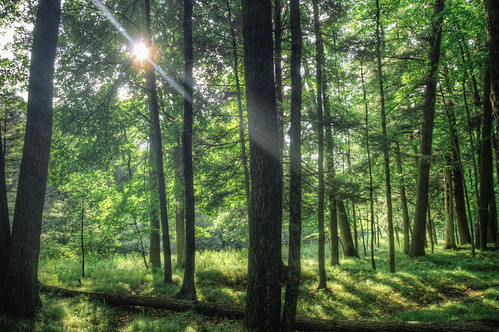
To Be In Green

To Be In Green, photo by MightyBoyBrian

This photo is the current background for Absolute Michigan and cover photo for the Absolute Michigan Facebook. Brian shared it in our Michigan Cover Group on Flickr and I encourage you to do the same and also to get out and enjoy some of Michigan’s green glory this weekend!

Check this out background bigtacular and see more in Brian’s Nature slideshow.

More trees on Michigan in Pictures.

Sizzle

Sizzle

Sizzle, photo by corinne.schwarz

I think this squirrel accurately reflects the feelings of many of us following a week of sauna-like conditions. The squirrel is heat dumping, shedding maximum heat by flattening its body. You can see some more examples of this in the hilarious Squirrel Pancakes photo group.

Check this out background big and see more (including a couple more shots of this squirrel or a relative) in Corinne’s slideshow.

Tigers’ ace Max Scherzer will start 2013 All Star game!

Max Scherzer

Max Scherzer, photo by Keith Allison

The Detroit Tigers report that Detroit Tiger pitcher Max Sherzer has been given the nod to start the All Star Game tonight by Manager Jim Leyland:

Though Scherzer’s unbeaten season ended Saturday, he remained the perfect fit to start for the American League in this year’s All-Star Game. Manager Jim Leyland took care of the announcement Monday afternoon, naming his young right-hander for the honor.

“I don’t think I need to explain it any more than that,” Leyland said Monday, citing Scherzer’s 13-1 record.

Scherzer will be the second consecutive Tiger to start the All-Star Game, following Justin Verlander’s memorable opening inning from last year’s Midsummer Classic in Kansas City. They become the first teammates to start consecutive All-Star Games since D-backs teammates Randy Johnson and Curt Schilling started in 2001 and ’02, respectively.

“It means so much, especially for being my first All-Star Game, to be in this position,” Scherzer said Monday. “This is what you dream for, to get the nod and get the ball over so many great pitchers.”

For Scherzer, it’s merely the latest bit of history in a season that has forced several references to the history books. His 13-0 start was the best by a Major League pitcher since Roger Clemens in 1986 and the fourth-longest in modern Major League history. He came within a game of becoming the first Major League pitcher to enter the All-Star break with a 14-0 record, losing Saturday to Texas.

As it is, his 13-1 record ties him for the Major League lead in wins alongside fellow All-Star Matt Moore. His 152 strikeouts and 10.55 strikeouts per nine innings rank second to Yu Darvish among AL hurlers, while his 3.19 ERA ranks ninth.

The game starts at 8 PM and though Verlander probably wants to forget his 5 run shelling last year, it definitely shows that Tigers have one of the best pitching staffs in baseball. Check out Max Scherzer page at MLB.com, and here’s hoping the American League can break a three year drought!

EDIT: Scherzer joins Miguel Cabrera in the starting lineup along with Justin Verlander, Prince Fielder, Torii Hunter, Jhonny Peralta giving the Tigers a MLB leading 6 All Stars. Also, because I know that there’s one or two folks as geeky as me reading, Scherzer joins Justin Verlander, Jack Morris (2x), Mark Fidrych, Denny McLain, Jim Bunning and Hal Newhouser as Tiger pitchers who have been selected to start the annual showcase.

Check Keith’s photo out background big and see more in his Detroit Tigers at Baltimore Orioles slideshow.

More Detroit Tigers on Michigan in Pictures!

Battle in the Mist

Battle in the Mist

Battle in the Mist, photo by Anapko

Great shot of the rock formation known as Battleship Row in the Pictured Rocks National Lakeshore. Check Andrea’s photo out big as a battleship and see more in her Pictured Rocks National Lakeshore slideshow.

Many more photos from the Pictured Rocks on Michigan in Pictures!