Yellow Dog Falls and Michigan’s Water

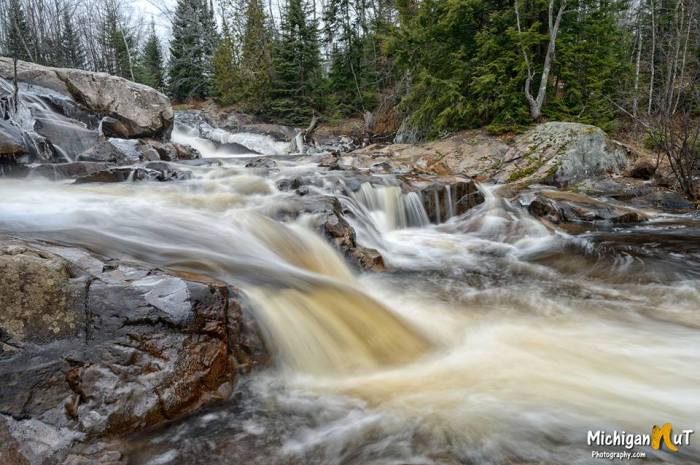
Yellow Dog Falls near Big Bay

Yellow Dog Falls near Big Bay, photo by Michigan Nut Photography

Have I said lately how great Go Waterfalling is? It’s the best! There’s comprehensive and informative listing with solid advice for visiting waterfalls in Michigan, neighboring Ontario & Wisconsin and the rest of the nation from California to West Virginia.

The Go Waterfalling page on Yellow Dog Falls says (in part):

Yellow Dog Falls is the name given to the main drop on the Yellow Dog River east of Country Road 510. The river steadily descends on it way down to Lake Superior, and there are at least seven drops of varying sizes. Many are only a few feet in height. At Yellow Dog Falls the river drops over 20 feet in a short distance. This feature is distinctive because of the large boulder that splits the falls in two.

The falls is located off of County Road 510. Just south of the bridge over the Yellow Dog River there is a small parking area on the east side. There is a trail to the main falls, which are about 1 mile downstream. The trail continues, but becomes increasingly faint for another mile or so, taking you past half a dozen rapids and small falls.

More including directions, maps and photos at Go Waterfalling.

Full disclosure: I can’t talk about the without thinking about the Eagle Mine, a ticking time bomb that sits at the headwaters of this beautiful river. I’ll let you draw your own conclusions on this mine, pro and con. I will say that acid sulfide mines have done this to rivers in the West and that acid mines from a hundred years ago in Colorado and two thousand years ago in the Roman Empire continue to seep pollution.

A decade ago I worked with a group of local citizens, business owners, and organizations on Save the Wild UP, an organization dedicated to keeping sulfide mining out of Michigan.The mine was ultimately established and more are planned, including uranium mines. Sulfide mines, and any project that carries a significant risk of pollution are not Pure Michigan in any way, and I will always call to reject threats like this to the water that is our economic and spiritual lifeblood.

John aka Michigan Nut writes: Yellow Dog Falls near Big Bay, Michigan. It was really quite remarkable what little snow and ice there was on Christmas Day. The road to this falls is normally part of a designated snowmobile trail this time of year.

View the photo bigger and see lots more on the Michigan Nut Photography Facebook page.

More mighty Michigan waterfalls on Michigan in Pictures.
New Marks for Michigan National Parks

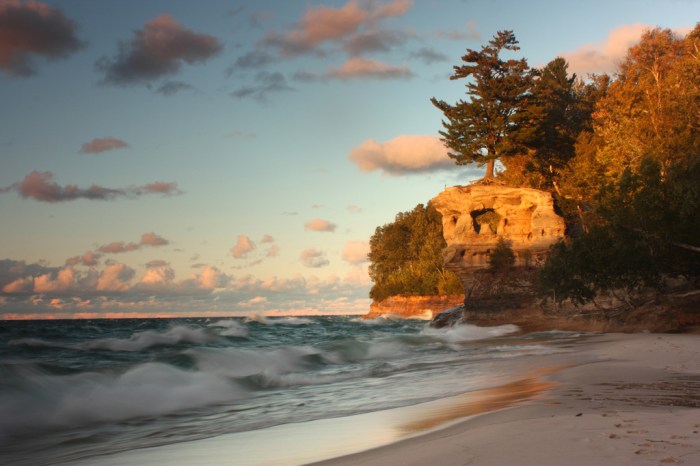
Chapel Rock Pictured Rocks

Pictured Rocks – Chapel Beach, photo by Todd

Crain’s Detroit Business reported that two of Michigan’s national parks saw record numbers of visitors in 2015:

The National Parks Service says Pictured Rocks National Lakeshore in the Upper Peninsula and River Raisin Battlefield Park in southeastern Michigan set visitation records in 2015. The two parks, along with Isle Royale National Park in Lake Superior and Sleeping Bear Dunes National Lakeshore along Lake Michigan’s northeastern coast, had more visitors through November 2015 than in 2014 and saw double-digit increases in visitors.

…The increased popularity of national parks in Michigan mirrors a nationwide trend: Overall visits to national parks are expected to reach 300 million in 2015. Last year’s figure was a record 293 million.

The park system turns 100 next year, and the Obama administration and Republican lawmakers have different ideas about what to do. Both parties agree the country’s national parks and historic sites could use some sprucing up but the question is how much of a dent Congress will make in a system-wide maintenance backlog with an estimated $11.5 billion price tag. President Barack Obama has recommended spending an additional $1.5 billion on the parks over a three-year period. Republican leaders in Congress have a smaller birthday present in mind.

Here’s hoping that our elected officials can come together to keep our National Park system strong!

Todd took this shot at Chapel Beach in September of 2012. View it bigger and see more in his Pictured Rocks National Lakeshore slideshow.

Lots more on Michigan’s state & national parks on Michigan in Pictures!

Let it snow … please

Brockit Holiday

But if you really hold me tight, all the way home I’ll be warm, photo by brockit inc

Still looking for some of that frightful weather so we can enjoy the delightful parts of winter!

View the photo bigger and tune into brockit’s Facebook for lots more creative portraits (that sometimes wander into the NSFW realm).

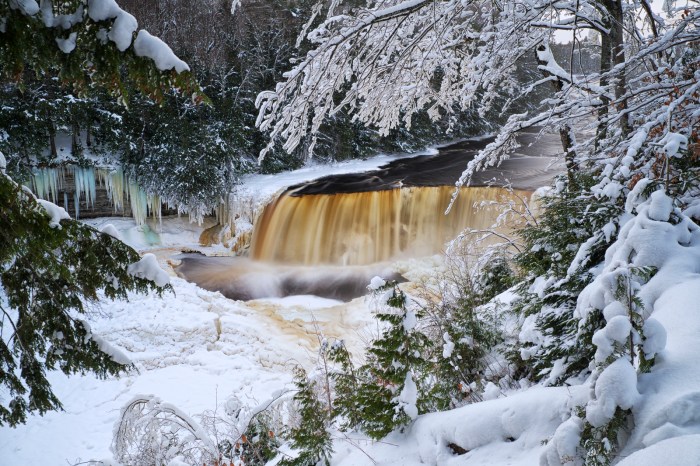
Winter Solstice: Ten seconds at Tahquamenon edition

winter-solstice-at-tahquamenon-falls

winter solstice, upper tahquamenon falls, michigan, photo by twurdemann

I wrote that the actual moment of the solstice was 11:48 PM last night, but it’s actually TONIGHT!  Anyway, here’s a simply gorgeous photo from the 2013 winter solstice at Tahquamenon Falls to kick off the shortest day of the year. I hope you can fit everything in and get a great start to your week!

View twurdemann’s incredible ten-second exposure bigger and see more including some more shots of the dramatically different scene at the Falls in 2013 in his winter slideshow.

Lots more Tahquamenon Falls and more about the winter solstice on Michigan in Pictures!

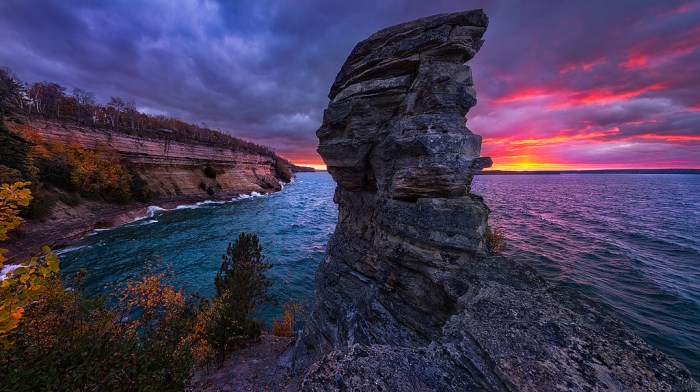
The Night’s Watch

The Nights Watch

The Night’s Watch, photo by Jiqing Fan

Of this stunning photo from back in October at Miners Castle in the Pictured Rocks National Lakeshore, Jiqing Fan writes:

Winter is coming! The night’s watch of the North guard the last bit of colors against the white walkers (snow storm) approaching.

It appears that the Watch did its job and turned back winter 2016! View his photo bigger and see more in his Houghton & UP MI slideshow.

Lots more about Miners Castle on Michigan in Pictures!

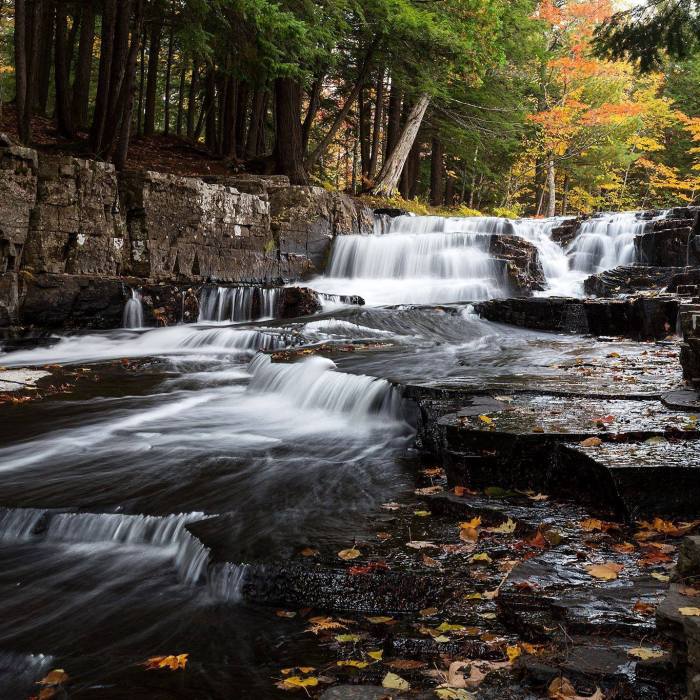
Waterfall Wednesday: Quartzite Falls on the Slate River

Quartzite Falls on the Slate River

Quartzite Falls on the Slate River, photo by Amie Lucas

Waterfalls of the Keewenaw’s page on Quartzite Falls says:

Quartzite Falls is a perfect little waterfall high above the rugged gorge on Slate River. The river drops in a sudden crescent onto a large, flat slide of slate before flowing into a deep pool surrounded by cedars. Quartzite Falls may be small, but it’s shape and scenic area makes for an amazing waterfall experience.

This waterfall is a short distance downstream of Black Slate Falls, easy walking distance from the road and about a mile from the slate quarries of Arvon. These three areas make for an excellent little adventure that is fairly accessible for all ages.

You can click through for directions and some pics. Amie took this back in October and writes:

The Slate River is magnificent. I spent an entire day traversing over rough, steep terrain & wading through cold water on slippery rocks to visit places that felt like no one had ever been before. Quartzite Falls, one of the many beauties on this river, is one of the easier waterfalls to access.

View her photo background bigilicious, follow her on Facebook and definitely check out her waterfall gallery and others at her photography website!

Many more Michigan waterfalls and (if you can’t let go of autumn) more fall wallpaper on Michigan in Pictures!

Make Mine a Michigan Thanksgiving: High Bush Cranberry Edition

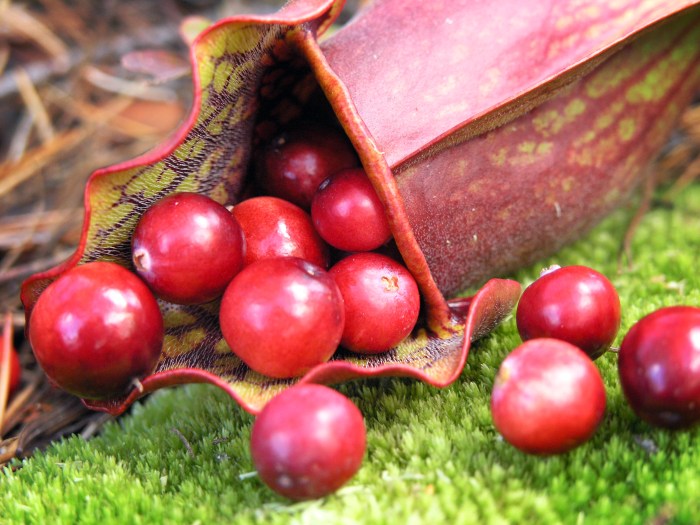
Highbush Cranberries by Blondieyooper

Cranberries, photo by Blondieyooper

One thing that I love is Thanksgiving dinner, and another is Michigan grown food. Dianna at Promote Michigan brings those together with 15 things that make Thanksgiving Pure Michigan. From starters like Koeze nuts, McClure’s Pickles, Koegel Meats, and Leelanau Cheese to sides like Michigan potatoes & squash to Michigan-raised turkeys and (of course) pumpkin & apple pie and ice cream!

One Thanksgiving staple that Michigan is producing more of are cranberries, and you can get all kinds of information from the US Cranberry Marketing Committee. While it’s too late to get them this year, we have another cranberry that grows in Michigan you might not be aware of. Green Deane’s Eat the Weeds is a great blog, and his page on the High Bush Cranberry says (in part):

The High Bush Cranberry is actually a Viburnum (Viburnum trilobum) and a cousin of the elderberry. Both are in the greater Honeysuckle Family and have a characteristic musky odor. That family by the way straddles the edibility line, with some members edible and others not, some tasty and some not. As one might suspect by the name, the High Bush Cranberry has tart fruit. Bradford Angier, a well-known Canada-based forager along side Euell Gibbons, wrote they require a “conditioned palate” to appreciate.

In North America the High Bush Cranberry is found in Canada and the northern half of the United States plus, oddly, New Mexico. It is not as that friendly to wildlife as one might suspect. The fruit persists into the winter because they are not on the top of birds’ preferred food. Birds like the berries after they soften and ferment. White-Tailed deer also browse on the twigs and leaves. For humans the berries are high in Vitamin C, about 30 milligrams per 100 grams.

Viburnum trilobum has several disputed botanical names and several mistaken common names including Pimbina, Mooseberry, Cranberry Tree, Cranberry Bush, American Cranberry, and Squashberry.

Read on for lots more including identification tips. There’s much more Michigan Thanksgiving to feast on at Michigan in Pictures too!

Blondieyooper says she picked over 8 pounds of these gorgeous highbush cranberries in the UP back in October of 2011. View her photo background bigilicious and see more in her Fall 2011 slideshow.

The Great Storm of 1913 and the Last Voyage of the Henry B. Smith

Henry B Smith Great Storm of 1919

Henry B Smith LOC det 4a16048, photo by Detroit Publishing Co. (via Library of Congress)

In November I like to share stories of some of the ships that have been lost in the most dangerous month of shipping on the Great Lakes. November is a month when owners and captains have historically sought to bet the margins in their favor. Sometimes their gamble doesn’t pay off…

The Great Lakes Storm of 1913 is one that caught many ships in the wrong place at the wrong time. More or less via Wikipedia’s page:

The Great Lakes Storm of 1913 is historically referred to as the “Big Blow,” the “Freshwater Fury,” or the “White Hurricane.” It was a blizzard with hurricane-force winds that ravaged Michigan, Ontario and much of the Midwest from November 7-10, 1913. The storm was most powerful on November 9, battering and overturning ships on four of the five Great Lakes, particularly Lake Huron. Deceptive lulls in the storm and the slow pace of weather reports contributed to the storm’s destructiveness.

The deadliest and most destructive natural disaster ever to hit the lakes, the storm killed more than 250 people, destroyed 19 ships, and stranded 19 others. The financial loss in vessels alone was nearly US $5 million (or about $120 million in today’s dollars).

There’s so much more about this storm on the Wikipedia page and definitely check out this Michigan in Pictures post on the unique weather pattern on the Great Storm.

One of the ships lost to the lakes was the Henry B. Smith, a 525′ steel-hulled, propeller-driven lake freighter. Well…

The Smith arrived at Marquette on November 6 to take on iron ore. Over the next two days a southwest gale swept over Lake Superior, dropping the temperature to 24 degrees Fahrenheit. The cold weather caused the ore to freeze inside the hopper cars, requiring men to knock them loose by hand. This resulted in a loading delay for the Smith. Captain James Owen had been plagued by misfortunes all year that had resulted in the Smith being delayed or late for its destinations. Rumors abounded, then and now, that the owners of the boat made it clear to Owen that he better make this last trip on time, or else.

Around 5 p.m. on November 9, the Smith loaded its last car of ore. Since the gale seemed to be in a brief lull, the big freighter immediately backed away from the dock and began to leave. As soon as the Smith left Marquette Harbor, the fierce wind returned and the storm’s lull ended. Witnesses on shore noted that the deckhands were frantically trying to close the Smith‍ ’​s hatches. The freighter had a total of 32 hatches; each hatch required individual attention with locking bars, clamps, and tackle. It was a couple hours’ work for even the most skilled crew. And so it was that Captain James Owen was piloting the Henry B. Smith into one of the worst storms in memory with unsecured hatches.

After about twenty minutes, the full force of the gale hit the Smith as huge waves crashed over her deck, drenching the hapless deckhands who were still struggling to close the hatches. Instead of turning to starboard on the usual course for the Soo Locks, the Smith hauled to port, rolling greatly as she did so. Witnesses on shore concluded that Owen had realized his error and was heading for shelter behind Keweenaw Point to the north. With the encroaching darkness and thick snow squalls, the Smith was then lost from view.

Two days after the storm blew itself out, the beaches along Chocolay Bay, Shot Point, and Laughing Fish Point were littered with debris from the Smith. The wreckage was found high up on the beach, indicating it came ashore at the height of the storm. The body of the second cook, H.R. Haskin, was found floating about fifty miles west of Whitefish Point some days later. Only one other body of the Smith‍ ’​s crew was ever recovered; the skeleton of third engineer John Gallagher was found on Parisian Island in the spring of 1914.

A note in a bottle, allegedly from the Smith, was found in June 1914. In it, the author claimed the ship had broken in two 12 miles east of Marquette. After a long debate, the boat’s owners decided the note was a phony; it was dated 12 November, when the Smith sank either on the 9th or the early morning hours of the 10th.

Read on for more about the Smith. In May of 2013, the wreck of the Henry B. Smith was rediscovered in about 535 feet of water roughly 30 miles north of Marquette. The article is less kind to Captain “Dancing Jimmy” Owen – so named for his habit of frequenting local dance halls – than the Wikipedia version.

View the photo background big at Wikimedia.

More of the Freshwater Fury and more Michigan shipwrecks on Michigan in Pictures.


Fantastic Friday: Tahquamenon Falls, take two

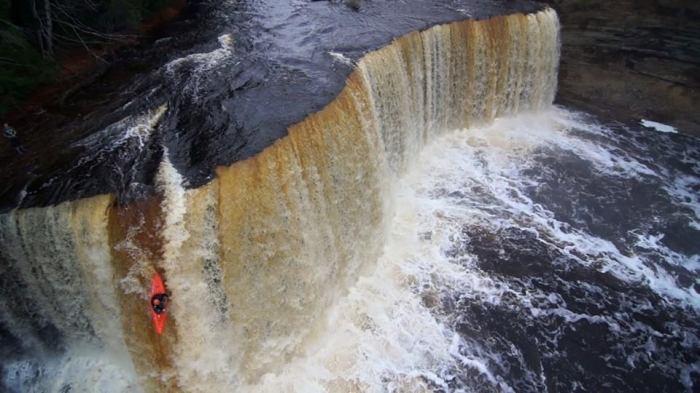
I had no idea on Wednesday that we’d be back at Tahquamenon Falls so soon. I guess I have to add a safety warning that if you’re not a crazy amazing kayaking legend like Marcelo Galizio, you probably shouldn’t do this. Also it might be illegal. Also if you tell me I shouldn’t post photos like this, I will probably tell you you shouldn’t follow my blog because I am 100% in favor of people being amazing.

Tahquamenon Falls revisited with Marcelo Galizio

Tahquamenon Falls revisited, photo by Aerial Vantage Productions

Here’s an aerial photo of Marcelo Galizio’s drop over Tahquamenon Falls yesterday!!  Look for a link to a video soon in the comments or at Aerial Vantage Productions on Facebook. Also be sure to check out their work at aerialvantageproductions.com and follow Dan Englund on Instagram!

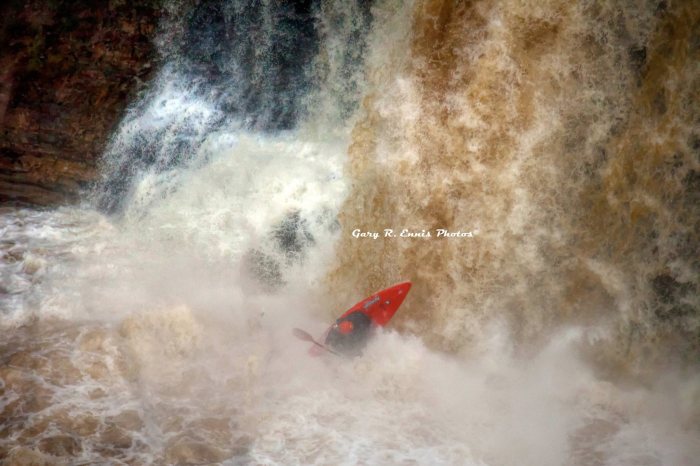
Because this is so awesome, and also because I learned about it through Gary Ennis, here’s another photo from Marcelo’s Tahquamenon Falls adventure:

Into the Falls Marcelo Galizio a

Be sure to click to check out Gary’s photos of Marcelo’s entire drop!

Autumn Squared: Fall Color at Tahquamenon Falls

Tahquamenon Falls fall 2015

Tahquamenon Falls, Luce County, Michigan, photo by twurdemann

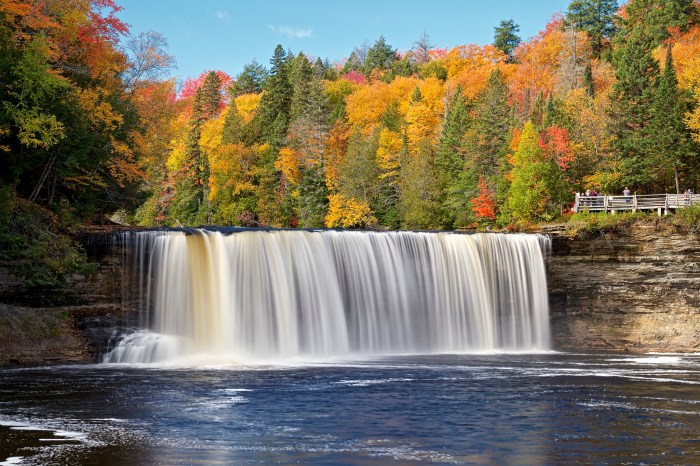
We’ll return to the fall color farewell tour with a photo from Michigan’s largest waterfall, Tahquamenon Falls (pronounced as spelled – tah-qua-me-non). It’s located in Tahquamenon Falls State Park which:

…encompasses close to 50,000 acres stretching over 13 miles. Most of this is undeveloped woodland without roads, buildings or power lines. The centerpiece of the park, and the very reason for its existence, is the Tahquamenon River with its waterfalls. The Upper Falls is one the largest waterfalls east of the Mississippi. It has a drop of nearly 50 feet and is more than 200 feet across. A maximum flow of more than 50,000 gallons of water per second has been recorded cascading over these falls. Four miles downstream is the Lower Falls, a series of five smaller falls cascading around an island. Although not as dramatic as the Upper Falls, they are equally magnificent. The falls can be viewed from the river bank or from the island, which can be reached by rowboat rented from a park concession. The island walk affords a view of the falls in the south channel.
This is the land of Longfellow’s Hiawatha – “by the rushing Tahquamenaw” Hiawatha built his canoe. Long before the white man set eyes on the river, the abundance of fish in its waters and animals along its shores attracted the Ojibwa Indians, who camped, farmed, fished and trapped along its banks. In the late 1800’s came the lumber barons and the river carried their logs by the millions to the mills. Lumberjacks, who harvested the tall timber, were among the first permanent white settlers in the area.

Rising from springs north of McMillan, the Tahquamenon River drains the watershed of an area of more than 790 square miles. From its source, it meanders 94 miles before emptying into Whitefish Bay. The amber color of the water is caused by tannins leached from the Cedar, Spruce and Hemlock in the swamps drained by the river. The extremely soft water churned by the action of the falls causes the large amounts of foam, which has been the trademark of the Tahquamenon since the days of the voyager.

Read on for more and maps & camping information. I’ll add that November through April are great months to visit Tahquamenon Falls – very few people!

twurdemann shares that this view of the the Upper Tahquamenon Falls was a three second exposure with a B+W ND106 six stop solid neutral density filter on a Fuji XT1 + XF 55-200mm. View it bigger and see more in his Waterfalls slideshow.

Lots more fall color and waterfalls on Michigan in Pictures!