2017 Chicago to Mackinac Sailing Race

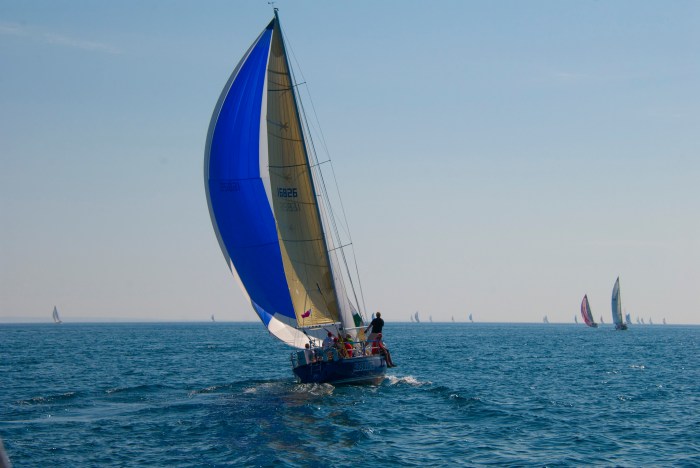
Absolute Chicago-Mackinac, photo by Jim Sorbie

When I wandered down to Fishtown in Leland yesterday afternoon, the number one topic of conversation was the annual Chicago to Mackinac sailing race. The 333-mile race from Chicago’s Navy Pier to Mackinac Island is kind of a big deal in communities along Michigan’s western coast like mine. I almost always know a couple of people who are racing, and after the race gets underway, you’ll hear a lot of speculation about the time that the boats will enter the Manitou Passage and then what time they’ll finish at Mackinac Island.

One of the things that’s particularly cool to me is that the Chicago to Mac is one of the few events that ties the whole community to the weather and condition of Lake Michigan. People will take boats out to watch them, or climb Pyramid Point or Whaleback for a view of the boats if they stream past when it’s light out. If you’re within distance of a community like Leland, Frankfort, Ludington, Elk Rapids or up near the Mackinac Bridge, consider checking out likely times boats will pass, grab the binoculars and see if you can get a glimpse of the racers.

Jim writes: Summer Flashback – We’re trying desperately to pass an old friend on the run in to the Island – no luck!

View his photo from near the end of the 2013 race photo background bigtacular and see more in his Mac Races (Chicago & Port Huron) slideshow.

PS: Definitely check out their 2016 Race Photo Contest winning photo!

Michpics Monday Message

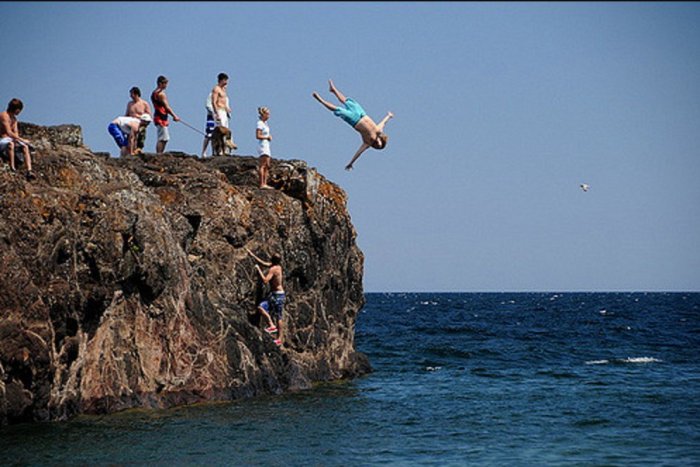
Cliff Jumpers, photo by Julie

“A ship is safe in harbor, but that’s not what ships are for.”
~William G. T. Shedd

Hi folks, this is Andy McFarlane, curator of Michigan in Pictures with a message so we’re all clear on what this blog is, and what it isn’t.

A little background: On Saturday I was not going to be a computer so I pre-scheduled a photo on Thursday, something I do fairly often. The photo was of some people jumping off the South Haven Pier, and coincidentally, someone fell (or jumped) off the pier late Friday night. They weren’t found, and the search has been called off as there’s no report of a missing person and it appears they may have gotten out of the water undetected.

While I did Saturday things not involving a computer, quite a large discussion unfolded on the Michigan in Pictures Facebook page, centering on the illegality of jumping off that pier (something I didn’t know about) and the irresponsibility of sharing photos of people doing dangerous things. After a quick scan of the comments and messages I’d received, I decided to delete the entire post from Facebook and Michigan in Pictures because I was told that people were still processing grief and that I was being insensitive. That appears to not be the case, and I’m sorry that I didn’t have more time to figure out the whole story.

I guess we can have some of the discussion here (and on the Facebook post). You may recall a couple of years ago when there was a minor uproar over a photo my girlfriend took on the ice. I think that what I wrote then is still applicable, and I hope that all my readers can accept my policy for this blog because at the end of the day, it’s how it’s going to be:

I post pictures all the time where the photographers have taken calculated risks to see, photograph and experience things that you cannot see and photograph without an element of risk. I allow my son to surf in conditions that can be very dangerous, let my daughter climb trees high enough to probably kill her if she fell, and have hiked on trails where one slip meant death.

I suppose I should post disclaimers of “don’t be an idiot” with all photos of risky environments, but I think I will continue to assume that my readers will assess risks on their own, and I will continue to experience and share Michigan as I choose.

…Please understand that Michigan in Pictures is a place where I share amazing pictures that are shared with me. I’m not doing this as a public service to educate people on how to stay alive and safe. I do it for love of Michigan and to share the cool experiences it offers. I trust that my readers will exercise appropriate caution as they enjoy Michigan, and I’m 1000% sure that if folks get out and wisely play a little closer to the edge, they’ll have a happier and longer life.

Caveat emptor!

Caveat emptor will remain the policy of Michigan in Pictures, which I will again remind readers is my personal blog, not paid for by anyone and offered with the sole hope that you can find pictures and places that help you enjoy and appreciate Michigan more.

View Julie’s photo of a maniac kid jumping off the 15-foot high Black Rocks in Marquette bigger and see more in her UP of Michigan slideshow.

Note: Lake Superior is SUPER COLD. You might die from cold water drowning. Also note that 15′ is pretty high. That could hurt or even kill you if you dive off the wrong rock somewhere else. Also note that if it’s wavy you could be hurt by the waves.

The Pink Sands of Sand Point

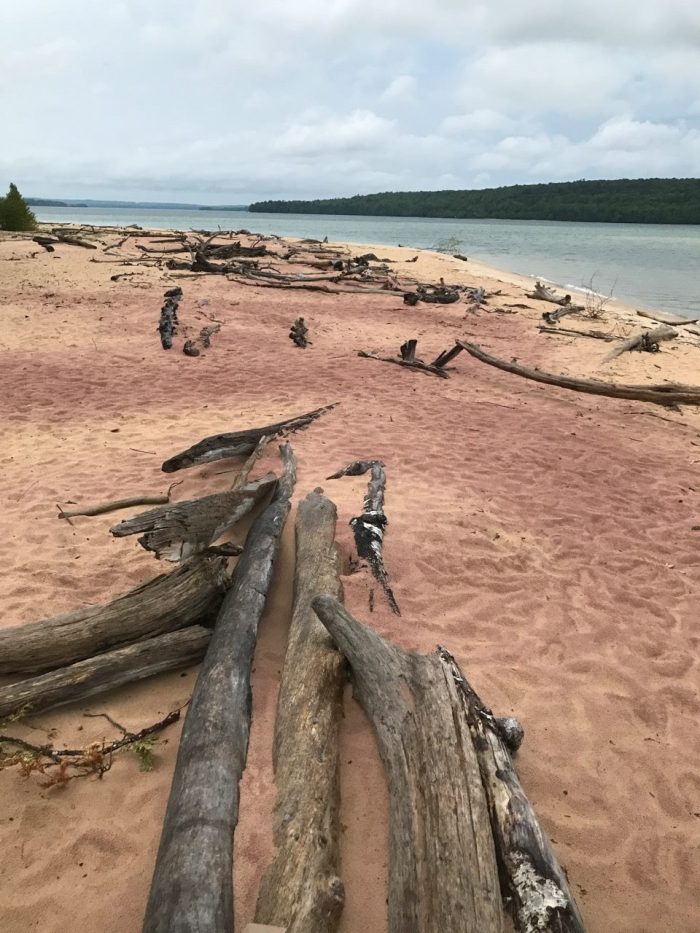
Pink Sand at Sand Point, photo courtesy Pictured Rocks National Lakeshore

The Pictured Rocks National Lakeshore shared this photo yesterday saying:

Is this sand pink? Yes it Is! The pink sand on the beach can be found on the northeast corner of Sand Point at the very end of Sand Point Rd. The pink sand is actually garnet that has eroded from one of the sandstone layers of the Pictured Rock cliffs. The garnet then washed up at Sand Point and makes a unique pink sand beach.

View it bigger on Facebook, and visit the Pictured Rocks National Lakeshore for much more information on Sand Point and other amazing places in one of Michigan’s most amazing parks.

PS: Better follow PicturedRocksNL on Facebook too if you want to know about things like being able to watch a sunset from a lighthouse.

Safe holiday travels everyone!

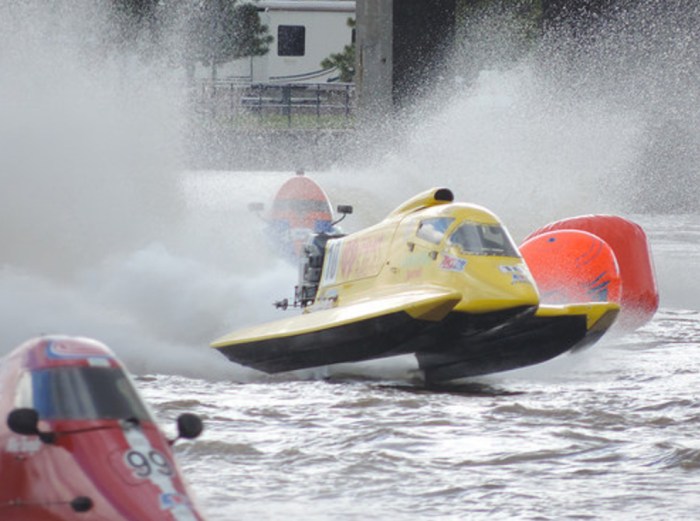
2017 Bay City Grand Prix, photo by mark5032001

Here’s hoping that you’re not heading home today, but if you are and when you do, please consider placing as much emphasis on safety as you do on speed. I need every follower I can get! ;)

One place that it’s OK to drive fast and take chances is the annual Bay City Grand Prix. View the photo bigger and see more awesome shots of boats going really fast in Mark’s slideshow.

Born in the USA

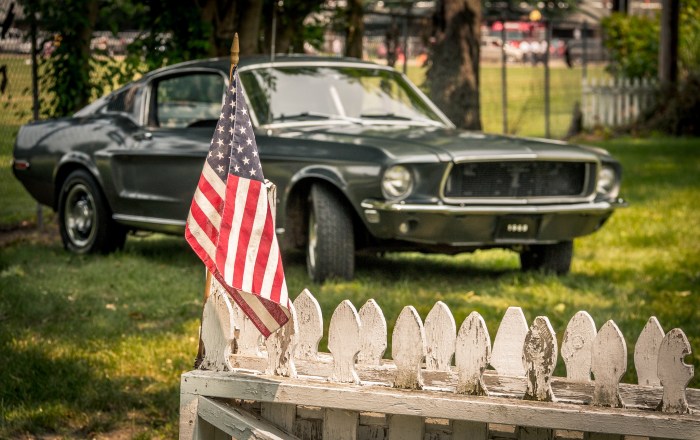
Born in the USA, photo by Bill Dolak

Happy Fourth of July everyone!

View Bill’s photo background bigtacular and see more in his massive Michigan: Kalamazoo County slideshow.

American Dream

Bay City Fireworks Festival, photo by Jeff Caverly

“There are those who will say that the liberation of humanity, the freedom of man and mind is nothing but a dream. They are right. It is the American Dream.”
-Archibald MacLeish

View the photo background big and see lots more from Bay City’s Fireworks Festival in Jeff’s slideshow!

Summer Sunrise

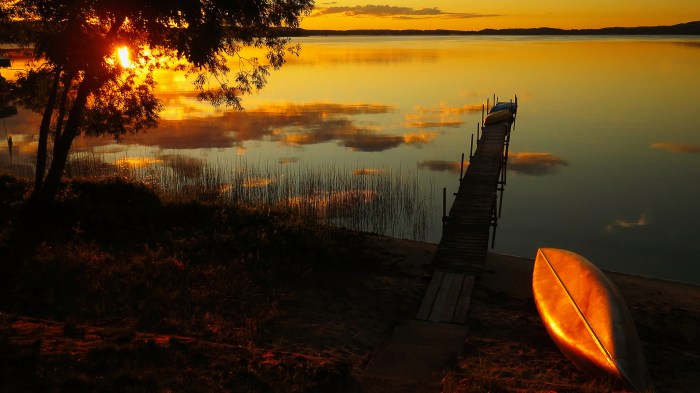
Canoe & Dock at Sunrise, photo by bioprof52

Enjoy your weekend and the month of July!

View the photo background bigtacular and see more in bioprof52’s Bear Lake slideshow!

More summer wallpaper on Michigan in Pictures.


Home Before the Squall

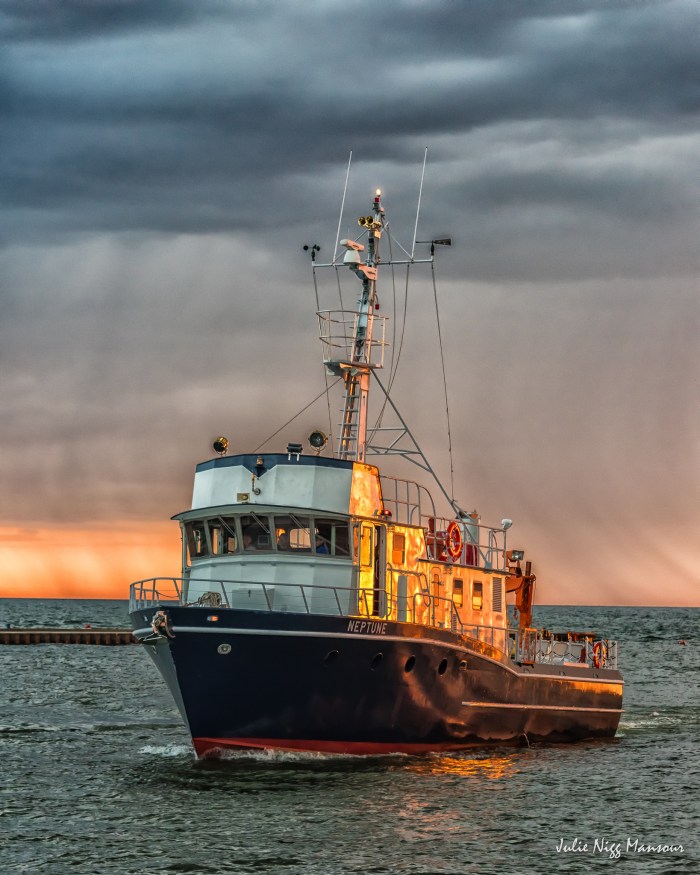
Home Before the Squall, photo by Julie Mansour

Thinking there’s been a lot of rain lately? You’re not wrong! Michigan has experienced a lot of rain over the last few weeks, and mLive meteorologist Mark Torregrossa shares that there are three weather conditions all combining over the Great Lakes that keep the rain machine running:

Over the next 10 days there should be three weather systems moving through the Great Lakes region. Each of these storms should have one to two inches of rain in the heaviest swath of precipitation.

The cause of the wet weather starts with numerous storm systems being born over the northern Pacific Ocean. These storms are hitting the Pacific Northwest coast every three to five days. The storm systems then cross the hotter than average Rockies and drop south into the base of a “U”-shaped bend in the jetstream. This U-shaped area is where storms spin faster and intensify. It’s the area along the jetstream where large-scale weather systems are at their strongest.

The final part to this wet weather scenario is what we call a “wide-open Gulf of Mexico.” Southern winds from the Gulf of Mexico into the Midwest and Ohio Valley bring high amounts of water vapor northward. The strong storm systems use that water vapor to produce heavy rain.

…The total rainfall forecast over the next week, through July 4, 2017 shows NOAA forecasters expect a swath of five to six inch total rain. We will just have to watch where this heaviest rain sets up. Right now it is expected to fall south of the flooded areas in Michigan. It could easily shift north or south a few hundred miles.

Julie caught the Neptune beating the rain in Holland last weekend. View her photo background bigtacular and see more in her slideshow.

Egg Season for Michigan Turtles

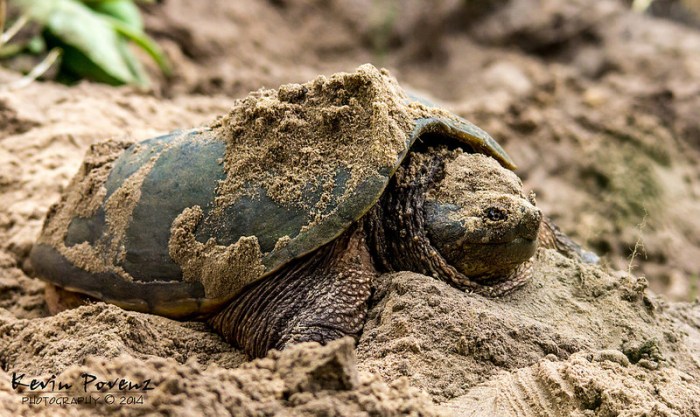
Snapping Turtle, photo by Kevin Povenz

I came across a cool video of a snapping turtle laying her eggs – check it out below! The Michigan Turtles page from the DNR says in part:

Turtles reproduce by internal fertilization and produce shelled eggs deposited on land. Most mating takes place in spring after a brief courtship, which begins shortly after turtles emerge from their hibernation sites. Courtship displays vary greatly. Male Eastern Box turtles chase their intended mates and nip at their shell edges, or chin. Female painted turtles receive soft toenail strokes from potential mates. Male snapping turtles may fight fierce battles to drive rivals away from a choice breeding territory.

Between late May and early July, a female turtle will leave the water and seek a sunny spot with little or no vegetation and moist, but not saturated, sand or soil. She digs a shallow nest cavity with her hind feet and deposits her clutch of eggs. Depending on species, the eggs may be round or oval and have either hard or flexible shells. The nest is then refilled by the female with excavated materials, without ever having seen the eggs and is abandoned to its fate. Many (probably most) turtle eggs are eaten by raccoons or other predators within a few days of being laid. Those that survive will hatch in two to three months. In most cases, the young head immediately for cover in shallow water (aquatic species) or leaf litter (box turtles). Young painted turtles have the ability to withstand partial freezing and often remain in the nest over winter, emerging in spring.

In most turtle species, gender is determined by the temperature of the egg during a critical part of incubation. In general, male turtles tend to hatch from cooler eggs, and females hatch from warmer eggs. Once hatched, baby turtles can grow quickly for the first few years, with growth slowing as they near adulthood.

Turtles are among the longest living animals on earth. Several species of turtles can live for several decades. With this longevity also comes a negative side. It takes several years for turtles to sexually mature (4 to 10 years for a Painted turtle, 14 to 20 years for a Blanding’s or Wood turtle, and 15 years for a Snapping turtle). Non breeding turtles are often the targets of predators, automobiles, and pet seekers. In addition, the longer life span allows turtles to build up environmental toxins in their tissues. These toxins can have serious affects on a turtle’s health and breeding ability.

About this photo from 2014 Kevin writes: While out on our hunt for Bald Eagles on Sunday we came across 5 different female snapping turtles laying their eggs. This one was on the bank of the Grand River that was probably 10 feet above the river.

View it bigger and see more in his Animals slideshow.

Fern Shadow

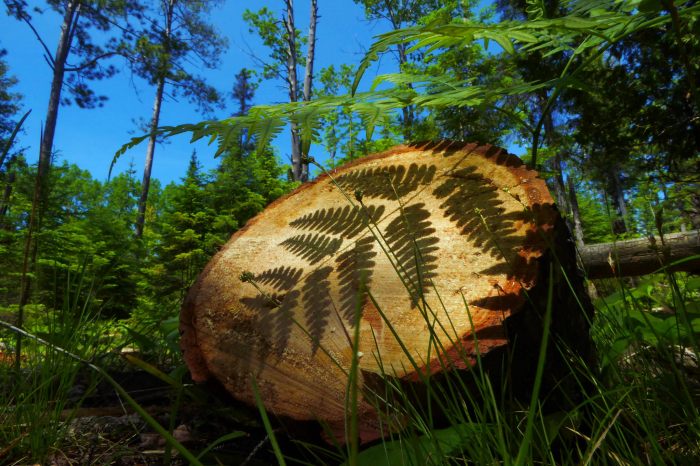
Fern Shadow, photo by Jay

Jay writes: While cutting my winter firewood I noticed this fern shadow cast on one of the cuts. So many beautiful things to see.

Indeed! View the photo background bigilicious, see more in his slideshow, and have a wonder-filled weekend!