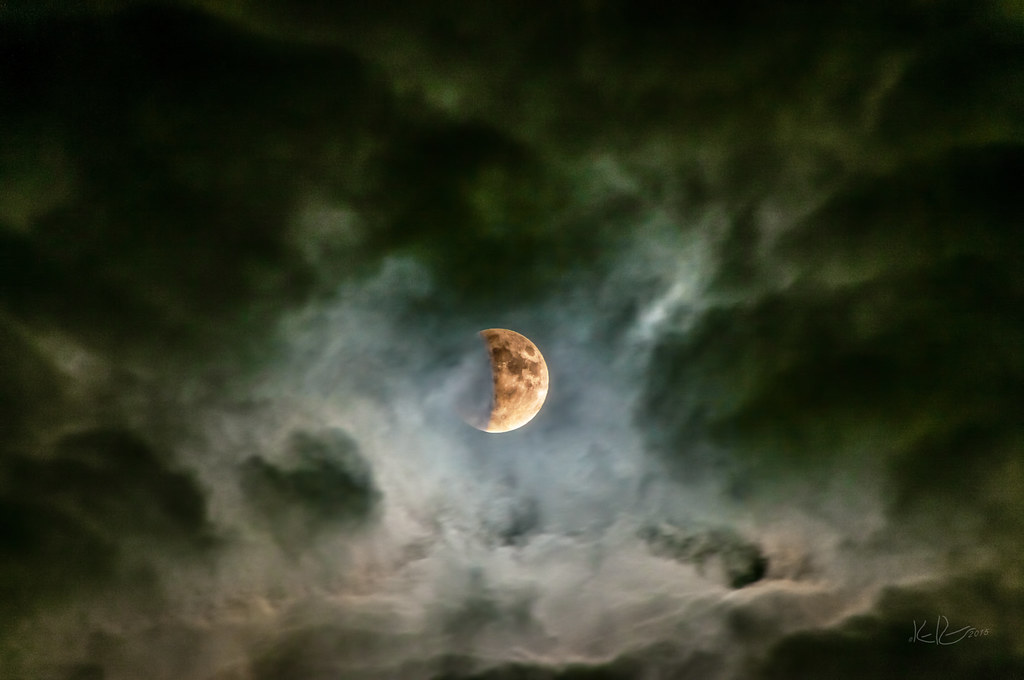
The “blood moon” eclipse takes place during March’s full moon, which will occur in the early morning of Tuesday, March 3. The full moon’s peak and eclipse’s totality to coincide at 6:38 a.m., according to the Old Farmer’s Almanac. Clear skies permitting, the Worm Moon could be visible for part of the eclipse in Michigan, with the moon to set for local viewers during totality.
Our friends over at EarthSky explain that total eclipses can turn the moon a deep shade of red, and have lots more detail about viewing. They explain why this eclipse called a Blood Moon eclipse and that the shade of red on the moon will depend mostly on what’s happening in Earth’s atmosphere at the moment of the eclipse.
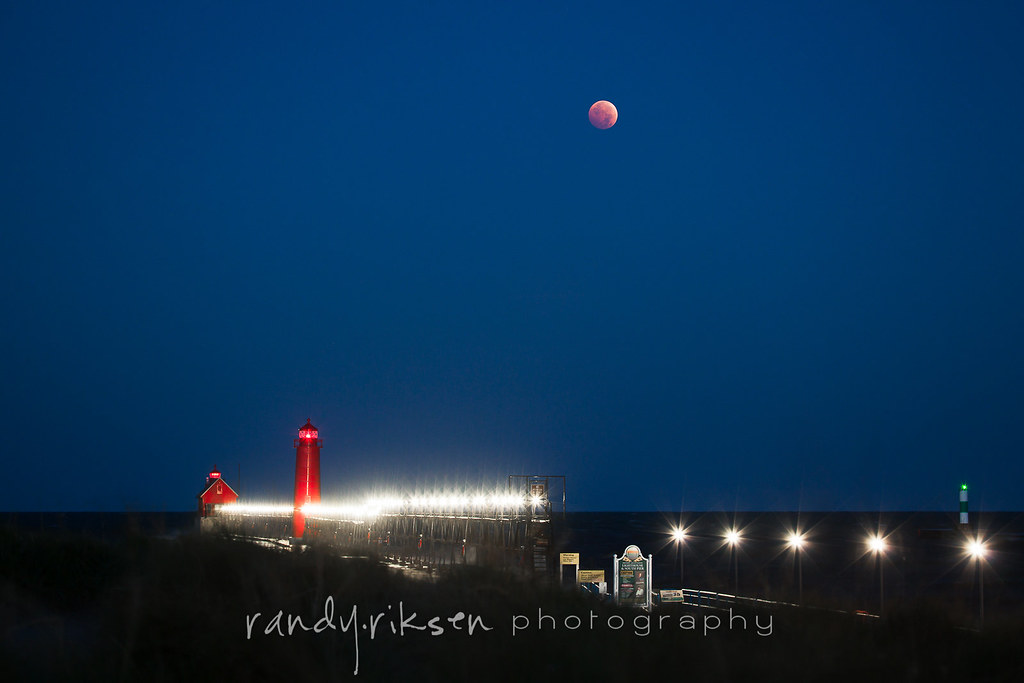
Randy took this photo of the October 2014 total lunar eclipse over the Grand Haven South Pierhead Lighthouse and says that keeping the camera still enough in the howling wind was a chore in itself!! View & purchase his work including some killer fishing photos on his website.
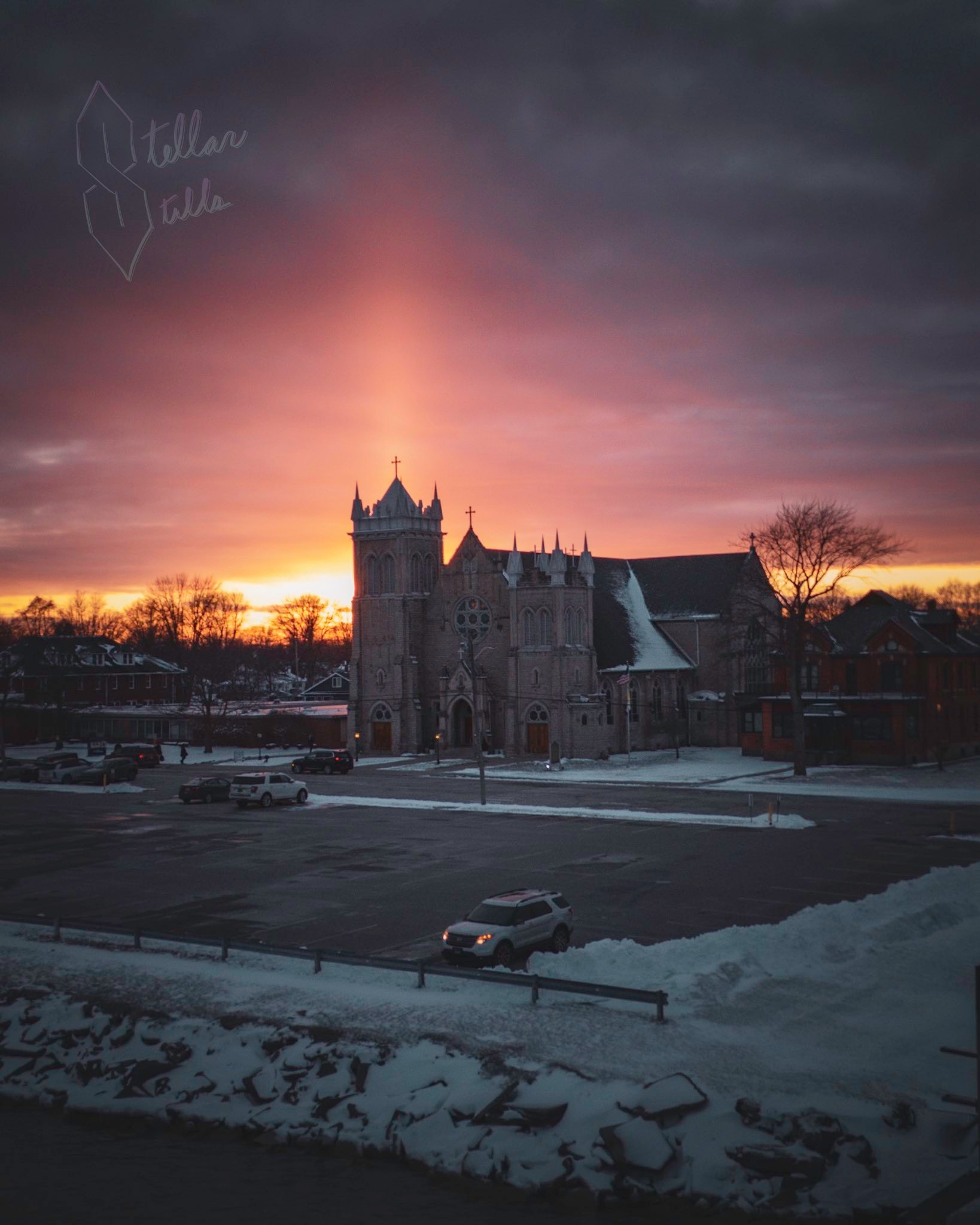
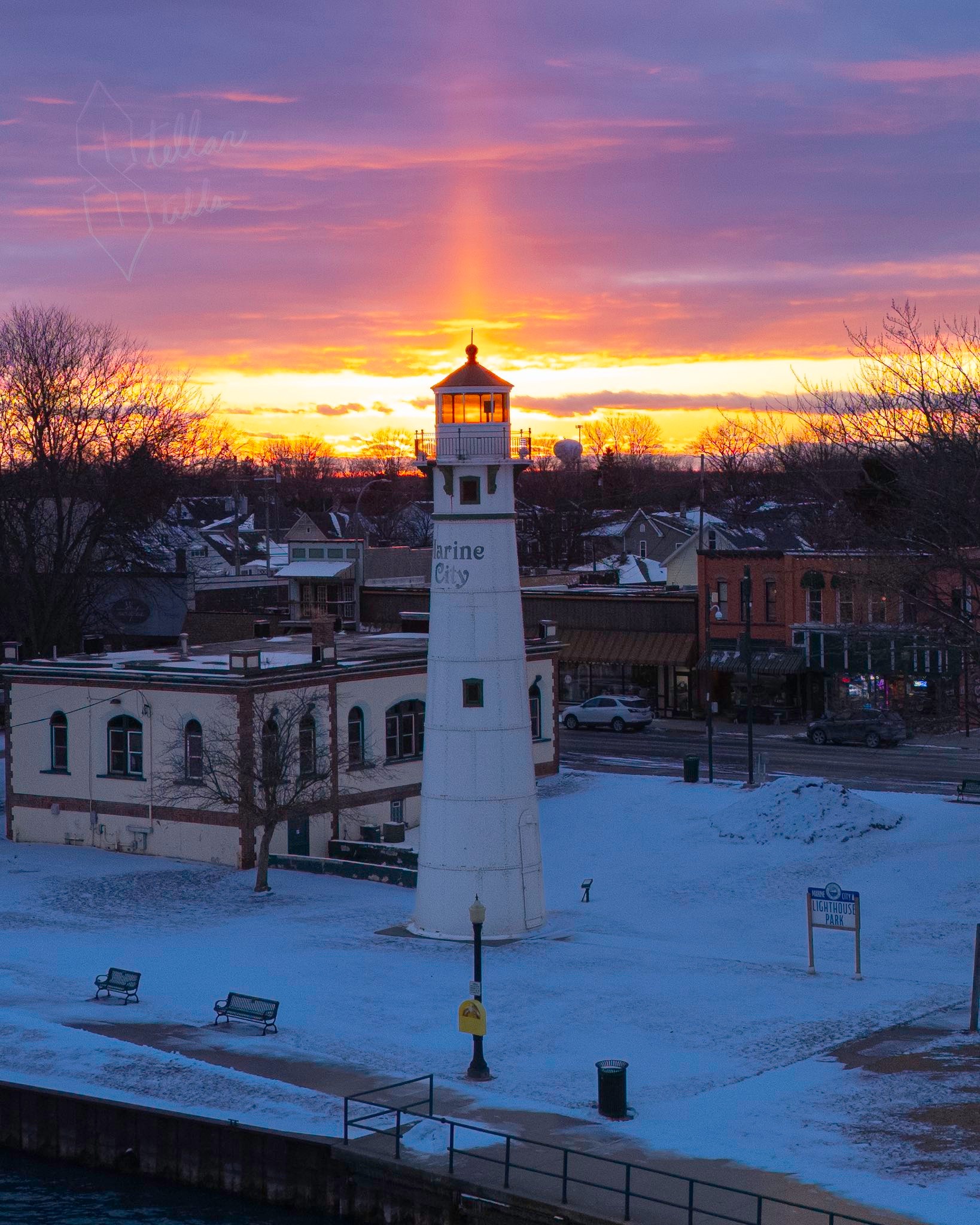
…Typically visible near sunset or sunrise, pillars can reach heights of 5 to 10 degrees, and occasionally even higher. While they may appear as vertical rays, they are actually the collective glints of millions of ice crystals. When it comes to colors, pillars are truly a sight to behold. They take on hues that reflect the sun and surrounding clouds, ranging from brilliant white to various shades of yellow, red, or purple. Depending on the locations of the cloud crystals, pillars can even manifest as several vertically strung patches of light. As the light interacts with the ice crystals in the atmosphere, it creates a stunning display that captivates observers.
Yesterday morning, I came across this photo by Stephen right before I saw him making a positive comment on a photo that Sean – the photographer I featured yesterday – had taken. This was soon after I had seen photos Neil Weaver had taken at an ice cave photography workshop along with fellow Michpics photographer Aubrieta Hope. It made me realize that a huge and underrated part of Michigan in Pictures is the community of real live human beings that are as passionate about their fellow photographers as they are about introducing people to their favorite parts of Michigan. That’s a long way of saying that I am going to be working on ways to showcase the people out there clicking the shutter. One way will be to revive the Michigan Photographer Profiles with a focus on the photographers on my Michigan Photographers page. Stay tuned!!
Thanks to Stephen for allowing me to share both of these awesome sun pillar shots. He’s facing a problem that many photographers face: figuring out which of these two photos is the best to submit for a photography contest? Have a vote? Share it in the comments below or on his Facebook post and for sure view & purchase his work on his website!
Under perfect viewing conditions, the Geminids deliver up to 120 meteors per hour, though factors like light pollution and atmospheric conditions can reduce that number. But unlike most meteor showers, the Geminids don’t come from a comet. They’re created by debris from 3200 Phaethon, a strange asteroid that brightens and grows a faint tail, helping make this shower especially bright.
Most meteor showers occur when Earth passes through debris trails shed by orbiting comets— the bits of ice and dust burn up in our atmosphere, producing shooting stars. Conceptually, the same process creates the Geminids. But instead of passing through a comet’s tail, Earth passes through the trail of Phaethon 3200, which sheds larger, tougher, and rockier debris than comets.
“This material is larger on average and survives further into our atmosphere and tends to produce brighter meteors,” says Rubert Lunsford, the journal editor of the American Meteor Society. Phaethon 3200’s debris also contains more metal. “When these metals are heated during the passage through our atmosphere, they produce colors associated with each type of metal,” he adds. Calcium and silicon produce orange; iron and sodium produce yellow; nickel produces green; and magnesium produces blue.
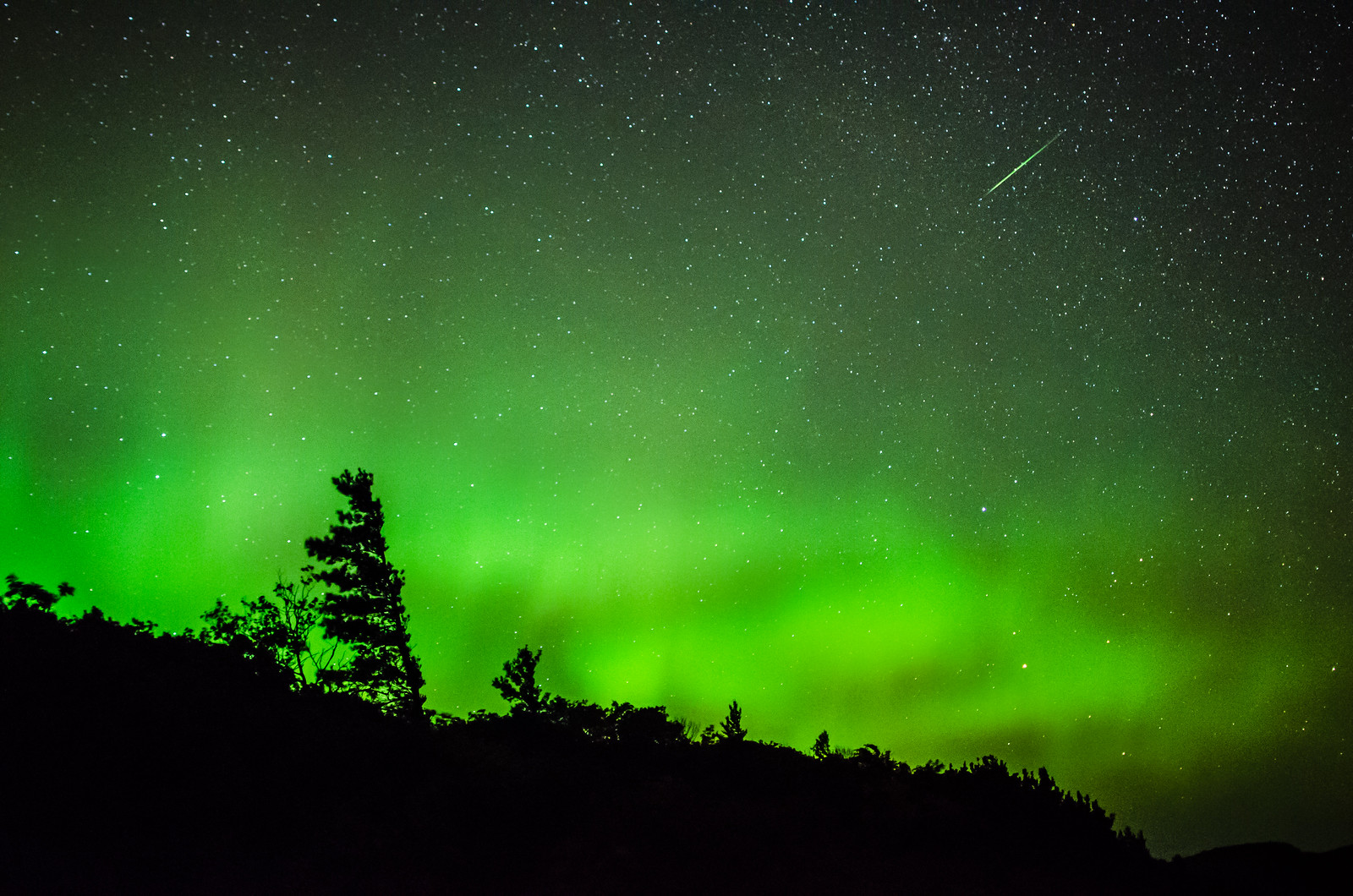
As an added bonus, we have a pretty active solar situation making bonus northern lights a definite possibility. Ross took this back in September of 2014 in the Porcupine Mountains backcountry. See many more amazing shows in his incredible Aurora gallery on Flickr.
I got a lot of enjoyment from walking around the house yesterday saying “Super Beaver Moon” so it is with sadness & regret I share that EarthSky’s Deborah Byrd explains that if a full moon of November falls after November 7, it’s the Beaver Moon but if it’s before the 7th, it’s the Hunter’s Moon. Deborah writes:
Nature is particularly cooperative around the time of the autumnal equinox to make the fall full moonrises special. On average, the moon rises about 50 minutes later each day. But when a full moon happens close to the autumnal equinox – either a Harvest or a Hunter’s Moon – the moon (at mid-northern latitudes) rises about 30 minutes later daily for several days before and after the full moon … The result is that there’s a short-than-usual lag time between successive moonrises around the Hunter’s Moon adding to the brightness of evening twilight.
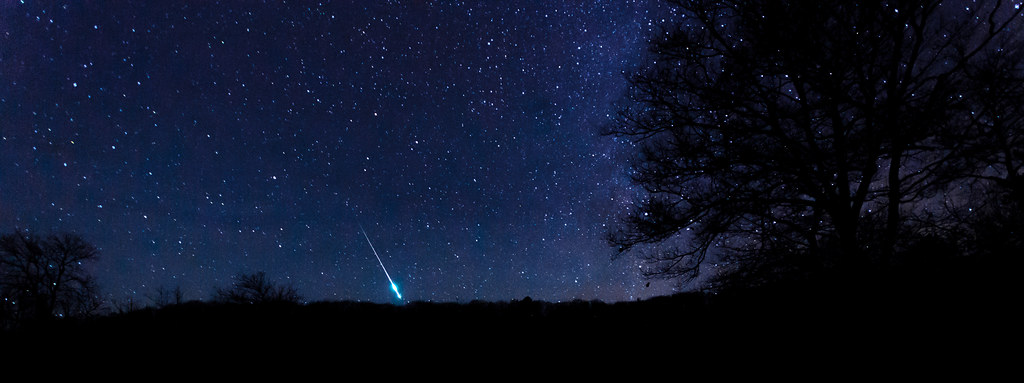
The moon has for sure been looking huge when it’s risen the last couple of nights! To add to the fun, EarthSky shares that the South Taurid & North Taurid meteor showers are both happening right now! While they aren’t a very active shower with just 5-10 meteors per hour, they can produce really intense fireballs like this one from Monday night over Glen Lake in the Sleeping Bear Dunes National Lakeshore.
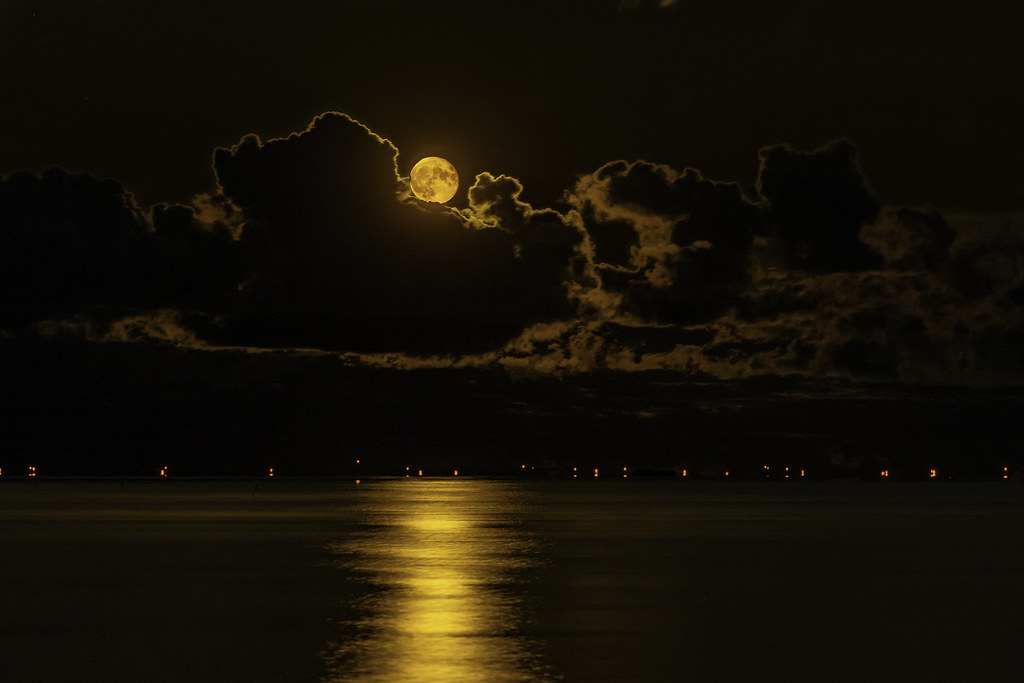
This moon is neither Hunter nor Beaver: it’s the August 2020 Sturgeon Moon as seen over Lake Huron. See more in kare hav’s Point Lookout / Au Gres gallery on Flickr including the first pic I ever shared from this awesome photographer on Night and Light.
While much of Michigan was shrouded in clouds for the peak of the Orionids, the October meteor shower will still be producing a lot of meteors for the next few days. As you are watching the skies, you may hear sounds that have been reported along with meteors for millenia, and dismissed for the same amount of time by such luminaries as Edmund “The Comet Guy” Halley. This Space.com article says that you might be able to believe your ears that meteors can make hissing sounds:
These faint sounds are probably created when bright pulses of light from the meteors heat up certain objects on the ground below, a new study reports. These objects — for example, leaves or hair — radiate thermal energy into the nearby air, producing pressure waves that generate a variety of sounds.
“I think our answer is pretty solid,” said study co-author William Sweatt, a researcher at Sandia National Laboratories in New Mexico.
The mysterious sounds are associated with very bright fireballs, meteors that blaze up at least as intensely as the full moon shines in the sky. Generally, an incoming object must weigh 1.1 lbs. (0.5 kilograms) or more to make noise audible to humans, Sweatt said.
The faint, whispery sounds have been described in many different ways by people who have heard them; popping, sizzling, rustling and hissing are commonly employed adjectives. And hearing them is a rare treat indeed. “I think a person’s lucky if they get one per lifetime,” Sweatt told Space.com.
You can read more & check out the video below. A very cool twist on the story for me is that a friend shared my experience of hearing the sounds with today’s photographer Aaron Springer when he shared this back in November of 2015. Aaron referenced the American Meteor Society’s theories on the sounds which appear to have been correct!!
Another form of sound frequently reported with bright fireballs is “electrophonic” sound, which occurs coincidentally with the visible fireball. The reported sounds range from hissing static, to sizzling, to popping sounds. Often, the witness of such sounds is located near some metal object when the fireball occurs. Additionally, those with a large amount of hair seem to have a better chance of hearing these sounds. Electrophonic sounds have never been validated scientifically, and their origin is unknown. Currently, the most popular theory is the potential emission of VLF radio waves by the fireball, although this has yet to be verified.
Head over to Aaron’s Flickr for his latest & don’t forget to look up!!
The best time to watch the Draconid Meteor Shower in 2025 is as darkness falls on the evening of October 8 through the wee hours of the morning on October 9. A waning gibbous will light up the sky that night, so try to block out the moon when watching for meteors. The radiant point for the Draconids is highest in the sky right when darkness falls so this is a great one for the early to bed crowd!
The Orionids, September 26 – November 22 / peak October 21st
The best time to watch for these meteors is on the morning of October 21, starting after midnight through the hours before dawn. In 2025 conditions are perfect with a dark sky and new moon. The Orionids produce a maximum of about 10-20 meteors per hour, some of them bright fireballs. They are known as the Orionids because they appear to radiate from the Club of the well-known constellation Orion the Hunter.
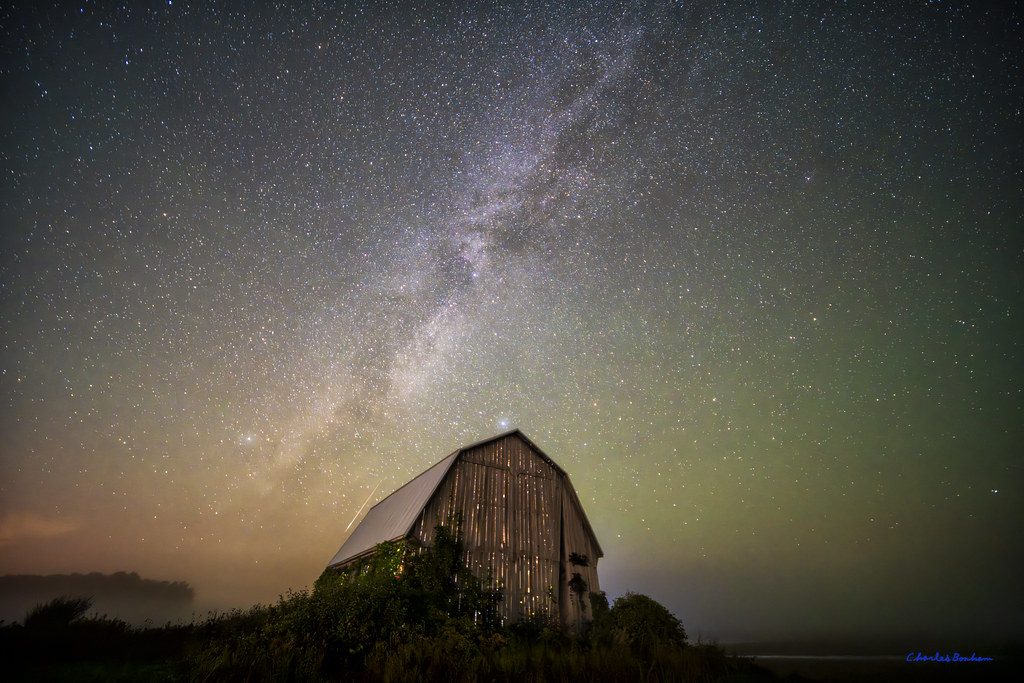
Charles shares that he found a Draconid meteor in this photo of a barn in Pinnebog from last October after reviewing many different frames. You can see it right next to the left side of barn roof along with a hint of Northern Lights on the right side! See more in his Barns gallery on Flickr including some truly spectacular ones of this barn under the aurora!
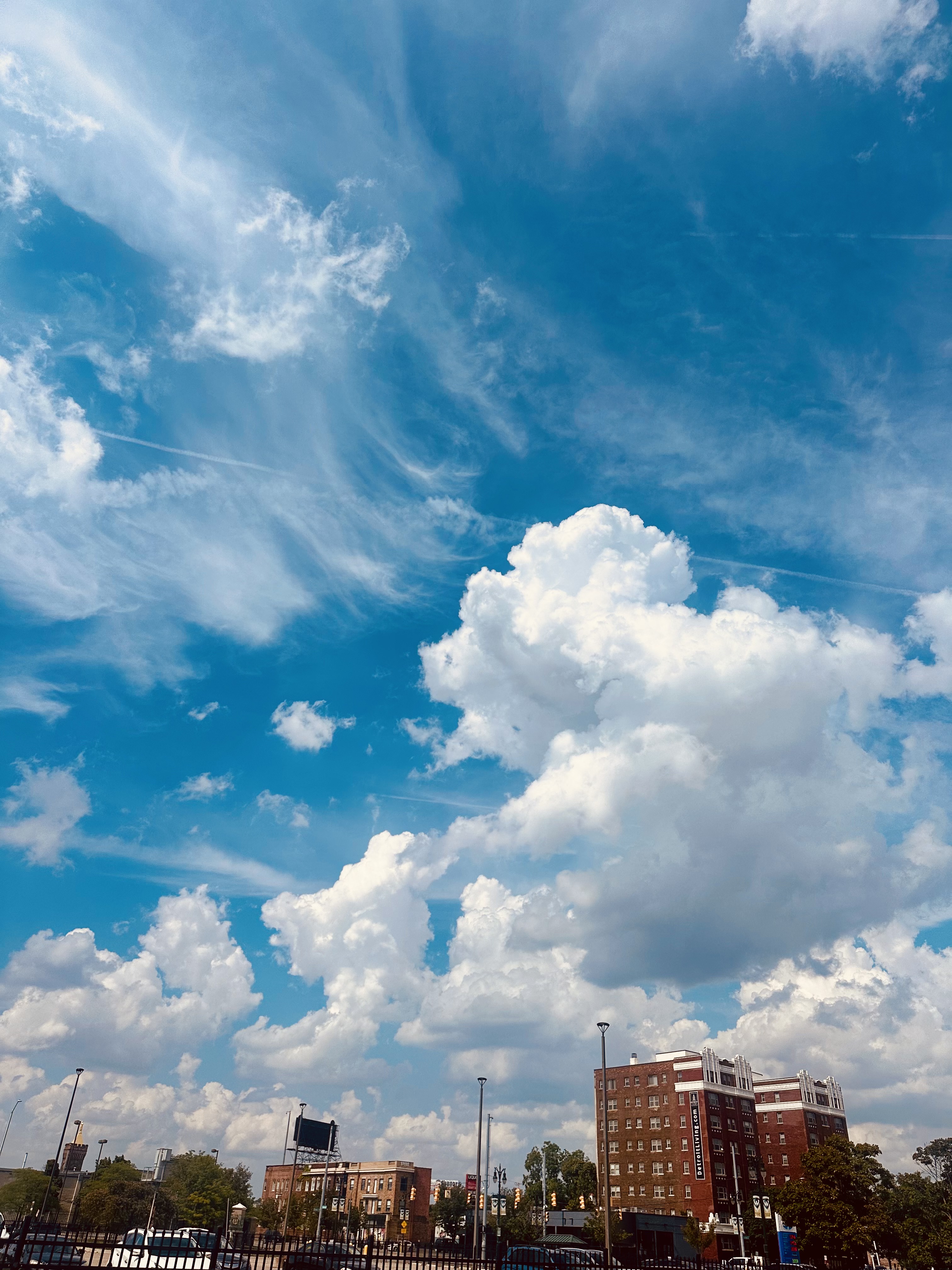
The good folks at EarthSky inform us that today (September 12, 2025) is International Cloud Appreciation Day. The Cloud Appreciation Society shares that it’s a day when people all around the world look up to appreciate the beauty of the clouds and contribute a photo of their sky to the Memory Cloud Atlas. The Atlas is an enduring and unifying record of people coming together from different locations and cultures in appreciation of our shared world and the most dynamic, evocative, and poetic nature of clouds.
I took this photo in August in Detroit’s Midtown neighborhood looking east over Woodward & Barlum Apartments, about 2 blocks from the Detroit Institute of Arts. If you would like to support me, please feel welcome to do so through Patreon or just sharing this blog with your friends & family!
Full moons are likely every month, but supermoons, which occur when the moon is closest to Earth, are rarer. Only 25% of all full moons are supermoons, according to NASA. The next ones are Oct. 17 and Nov. 15. But the September supermoon will be brighter and red because of the partial lunar eclipse, which is when the Earth passes between the sun and the moon, and casts its shadow on the moon.
“Supermoon is a popular science term for when full moons occur close to the perigee of the moon’s orbit about Earth,” said Seth Jacobson, natural science professor at Michigan State University.
“Lunar eclipses occur at full moons when the sun, Earth and moon are all in the same plane and in that order. In this case, the moon will simultaneously be closer and in almost the exact same plane, so we get a partial lunar eclipse and a supermoon at the same time. The chance of both occurring during the same full moon cycle is about 5% or once every one-and-a-half years,” Jacobson said.
In her song “The Dream Before” of my favorite musicians, Laurie Anderson, observes that progress is a storm blowing us from Paradise into the future. While I am a big fan of lots of progress, I do not welcome the rise of Artificial Intelligence image generators that are positively overwhelming social media with idealized versions of real scenes. These false images are vexing, but they are only the tip of an iceberg that threatens to sink our ability to share information of any kind.
While many will probably say this picture is an AI creation due to the fancy clouds, Mary shared it four years ago on August 26, 2020. Head over to the Traverse City Camera Club group for more from Mary!
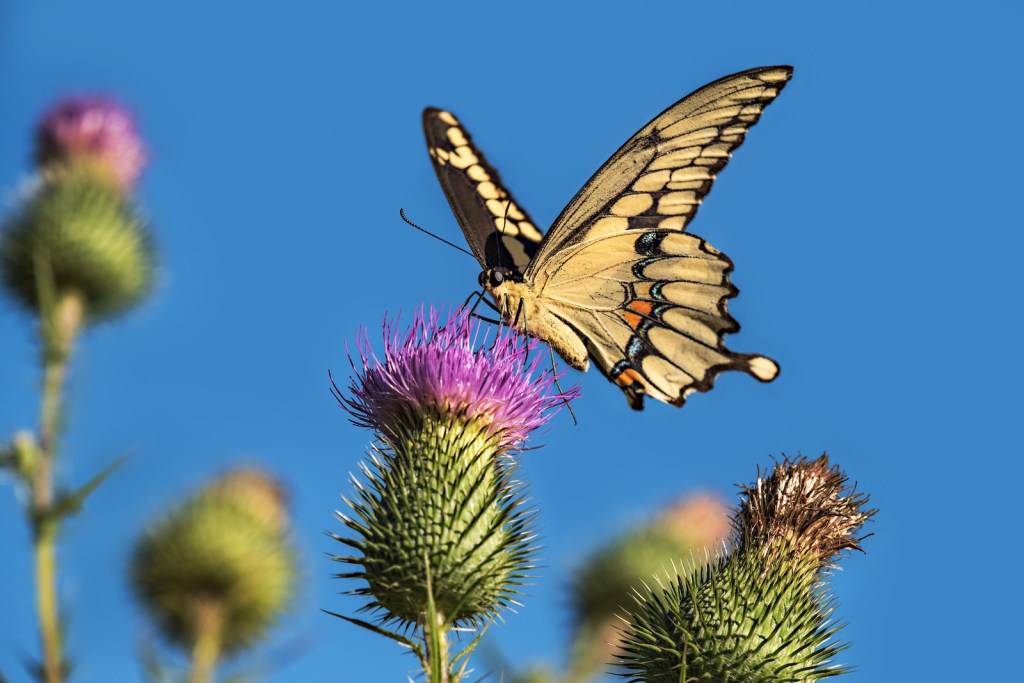
The aptly named giant swallowtail is the biggest butterfly in Michigan. Form your two index fingers into pointers and touch them to each other: if you take a large glove size, the butterfly’s maximum wingspan is approximately the length of both fingers put together. The field guides say around six inches.
The giant swallowtail’s coloration is as spectacular as its size. From the top, its wings look dark brown to black, with yellow dot ribboning and a yellow eye-shaped spot on the end of each wing. When the wings are raised, the bottom is revealed to be a subtle cream interrupted by wavy blue and rust bands.
This species spends its Michigan winter in the pupa stage and emerges in two broods each summer, the first in May through June, the second in July through early September.



 Michigan in Pictures