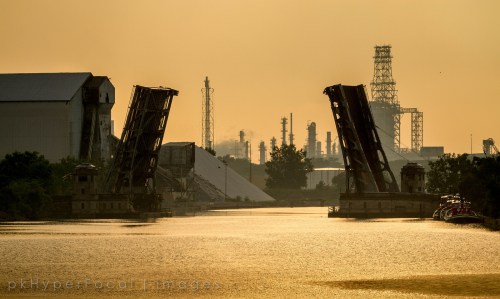
Golden Hour on the Rouge River

The Golden Hour on the Rouge

The Golden Hour on the Rouge, photo by pkHyperFocal

The Rouge River Gateway Project relates that the Potawatami referred to the river as Minosa Goink which means “Singeing Skin River” – the place where game animals were dressed. The history continues (with my links to other fun stuff):

The French first settled on the banks of the Rouge River in the 1780s. They named the river “Rouge”, or red. Settlers would claim a few hundred feet of river frontage and extend their farms deep into the forest. Remnants of these “ribbon farms” still exist today in land ownership patterns along the river. Europeans continued to immigrate into the region to take advantage of its resources. They used the reddish clay for brick, mined the area’s salt deposits, and built farming communities along the riverbanks. The native prairie oak savannah and hardwood forests were cleared to make room for agriculture and industry.

Rapid growth and industrial development characterized the late nineteenth century. Henry Ford purchased extensive land holdings along the river. He built a factory in Dearborn to manufacture farm tractors, but kept a good portion of his land in agricultural production, partially for testing equipment. In 1914, he started construction of a permanent residence on the banks of the Rouge River.

A defining moment in the history of the river transpired with the construction of the Ford Rouge Plant during World War I. The development of the plant was motivated by Henry Ford’s desire to supply submarine chasers to the US military. The Ford Rouge Manufacturing Complex grew into a massive self –contained industrial complex that daily employed over ninety thousand men in the early 20th century. Raw materials including coke, iron ore, and rubber were brought in and transformed into cars in less than thirty hours, a process that set a new global standard for industry. The Rouge Manufacturing Complex became the largest manufacturing site in the world.

In his book Burning Rivers, Allen Park native John Hartig relates how heavy manufacturing and population growth seriously impacted the river to the point where the river became one of the most polluted waterways in the nation, catching fire in 1969 shortly after the famous Lake Erie/Cuyahoga River fire.

In 1986, in a Sunday feature on a new organization seeking to restore the Rouge, the Detroit Free Press called it the “sewer for a metropolis, discharge drain for industry, dumping ground for junk and garbage”. They went on to say that “the Rouge River has become so polluted that a cleanup seems unthinkable.”

While the Rouge is certainly far from restored, the organization the Freep was talking about, Friends of the Rouge, has been dedicated along with other public and private efforts to the preservation & restoration of the river. I encourage you to check them out for more information and to learn about their good work on the behalf of the river. Lots more at the Rouge River Project and Wayne County’s Rouge Project.

View pkHyperFocal’s photo big as a boat and see more in their Man Made slideshow.

More industry on Michigan in Pictures.
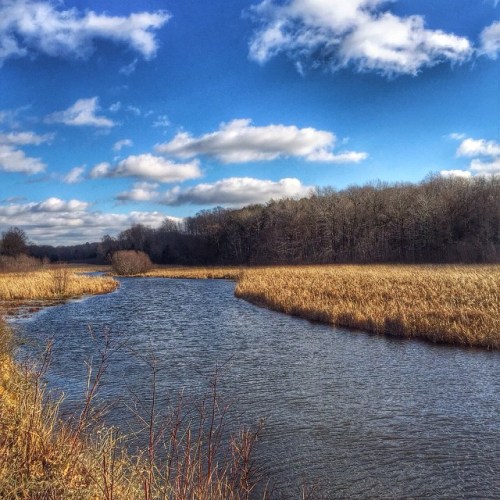
Sunny skies at Pine Bend

Pine Bend Natural Area

Winding River, photo by paisleyrainboots

Sarah took this last week at Pine Bend County Park and says that it was a beautiful day despite the 30 degree temperatures.

View her photo bigger and follow her on Instagram. You can also tune into her blog.

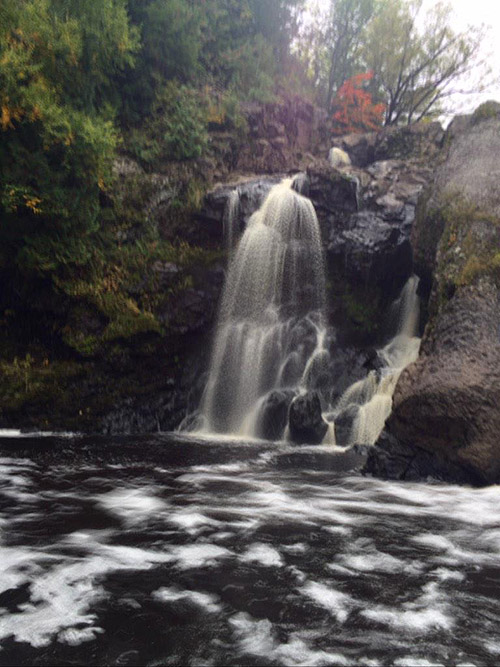
Baker’s Falls … and the Michigan in Pictures Twitter

bakers-falls-wakefield-mi

Bakers Falls, Wakefield, MI, photo by Josh Ringsmuth

Yesterday Michigan in Pictures joined Twitter @michpics. In addition to tweeting out the daily photo, I’m planning to dig out gems from the huge archive of pics & posts here, and also to share some of the many photos that I can never get around to featuring in the one-a-day format of Michigan in Pictures. I hope that you’ll follow me and tweet pictures at me there as well.

In honor of the occasion, I thought it would be good to share the first picture tweeted at me, even though it means back-to-back waterfalls. It’s of Baker’s Falls in the western U.P. aka Gabbro Falls about which GoWaterfalling says (in part):

Gabbro Falls is on the Black River and is as impressive, if not more impressive, than its more celebrated neighbors downstream along the Black River Scenic Byway. This is a largely wild waterfall with no fences or barriers of any kind. It consists of three separate drops. When the water is high there is a fourth drop that is the height of the other three combined. The main drop falls into a narrow crevice between two large rock formations.

Gabbro Falls is relatively easy to find but there is some confusing information out there. The waterfall is also known as Baker’s Falls, and it is often mistakenly called Garbo Falls (gabbro is a type of rock).

Read more & get directions at GoWaterfalling.com. Michigan in Pictures has more of those Black River waterfalls, and if you’re curious about gabbro, Wikipedia has your answers.

View the photo on Josh’s Twitter and follow him at @DaRealOtisJosh.

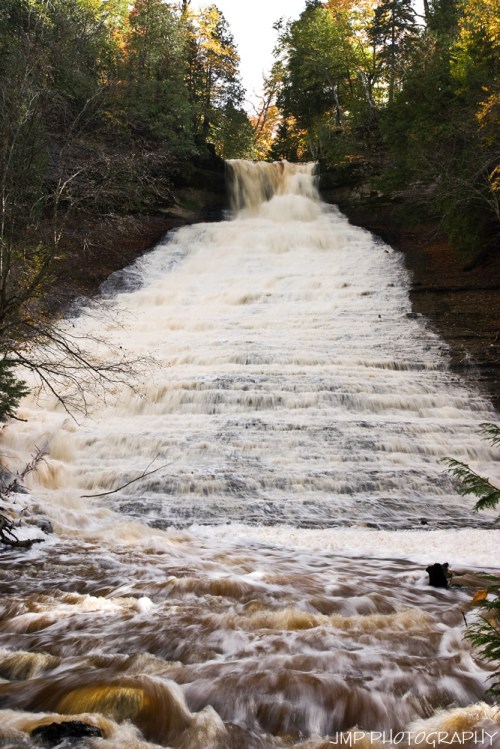
Tale of the tape at Laughing Whitefish Falls

Laughing Whitefish Falls

Laughing Whitefish Falls, photo by James Marvin Phelps

GoWaterfalling’s page on the Laughing Whitefish Falls says (in part):

Laughing Whitefish Falls is in the Laughing Whitefish State Park. This is one of the most impressive of Michigan’s waterfalls. I believe it is the highest waterfall in Michigan that is readily visitable.

The falls can be found off of M-94, about 30 miles from Munising or Marquette, and just outside of Chatham…

The waterfall is named for the river. The river is so named because the mouth of the river resembled a laughing fish when viewed by the Ojibwe from Lake Superior.

Get detailed directions at GoWaterfalling.com. They add that later in the year the water flow can get thin enough to be hardly visible!

To answer the question of the height, I found a very cool list of Michigan waterfalls by height at the World Waterfall Database. At 100 feet tall, Laughing Whitefish Falls check in fourth behind:

  • Spray Falls – 140′ (towering and incredible – view by Pictured Rocks boat tour or long hike)
  • Jasper Falls (125′, midway between Miners Beach & Sand Point along the Pictured Rocks National Lakeshore shoreline – they say it’s basically a trickle most of the time)
  • Houghton Falls (110′, private property/no trespassing! You can click that link for a Michigan in Pictures photo from someone who got permission from the landowner to visit)

View James’ photo on Flickr and see more in his massive Michigan Waterfalls slideshow including a few nice shots of Spray Falls and some waterfall videos!

PS: Just realized that this photo was from way back in 2005! Amazing that I’ve been doing Michigan in Pictures for so long, and that people like James have been supporting me with their photography for so long!

More Michigan waterfalls on Michigan in Pictures.

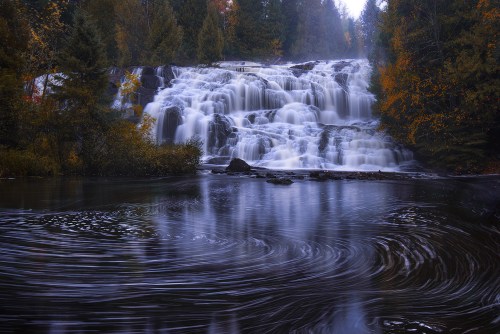
Fall at Bond Falls

Bond Falls

Bond Falls, photo by Yanbing Shi

Some mornings you just want to look out the window at what Michigan weather is up to, stick your fingers in your ears and say “I’M NOT LISTENING TO YOU.”

View Yanbing Shi’s photo background bigtacular and see more of his fall photos.

Lots more from Bond Falls on Michigan in Pictures!

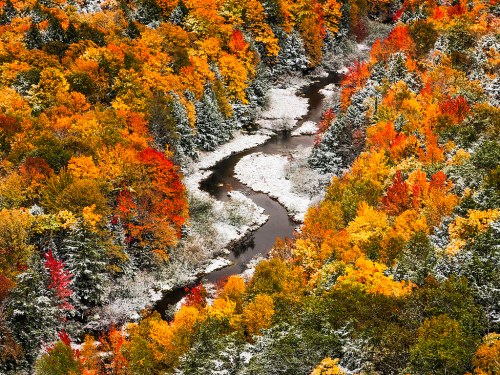
A Stream of Ice and Fire

A Stream of Ice and Fire

A Stream of Ice and Fire, photo by posthumus_cake (www.pinnaclephotography.net)

Fall color is everywhere this weekend in Michigan – get out and get some before the ice gets louder than the fire!!

About this photo of the Carp River in Porcupine Mountains State Park from five years and one day ago, Matthew writes:

Autumn in the Porcupine Mountains, from a few years ago…arguably one of the most bizarre weather experiences I’ve encountered. When I arrived, it was full-on blizzard conditions. The snow only lasted a few hours, but for that time, the forest was utterly surreal.

View the photo bigger, see more more in his Porcupine Mountains slideshow and also at his website, Pinnacle Photography.

More from the Porcupines on Michigan in Pictures including this photo that Matthew took from the Lake of the Clouds overlook in 2009!!

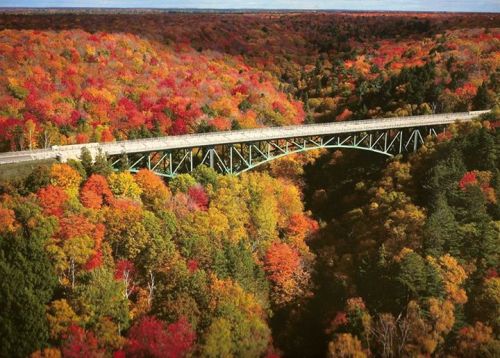
Fall Color at the Cut River Bridge

Cut River Bridge

Cut River Bridge and Fall Color, photo by Manistique Michigan

The page on the Cut River Bridge at Historic Bridges begins:

Among Michigan’s largest and most well-known historic bridges is the iconic Cut River Bridge, which is listed on the National Register of Historic Places. This bridge is large enough that MDOT actually has maintained this bridge as an area attraction. Surrounding the bridge is a roadside park and a series of trails around the bridge. The intent to make this bridge something more than just a crossing goes back before this bridge’s status as a historic bridge to its initial construction. The bridge was designed as an attraction even when it was built, since sidewalks above the bridge in this rural area are present. Also, a set of stairways, part of the original design, take pedestrians under the bridge where they can view the supporting trusses. The abutments and piers were also given unusually exceptional detail, in particular the use of decorative stone facing. The two main piers give the appearance are attractive cut stone arches.

The bridge includes a total of 888 tons of steel and its height over the Cut River is 147 feet. It offers views of Lake Michigan from its deck. The bridge was originally painted a silver color, but is today painted green. This bridge is a steel deck cantilever truss bridge. This structure type is much more common in more hilly states like Pennsylvania, but is extremely rare in Michigan. The structure has visual complexity as a result of the extensive lattice and v-lacing on its riveted, built-up members, which are all very massive, typical for both a bridge of its size and its age. The bridge retains original standard-plan metal guardrails (Michigan’s “signature” type R4 railings) on the sidewalks that flank the roadway on each side. It also retains standard Michigan State Highway Department plaques.

Read on for lots more about this bridge that was constructed in the early 1940s. If you do make it to Cut River, do yourself a favor and hike down – it’s very cool!

View the photo bigger and see lots more autumn splendor at the Manistique Facebook page. and learn about the community at Manistique.com.

More bridges on Michigan in Pictures!


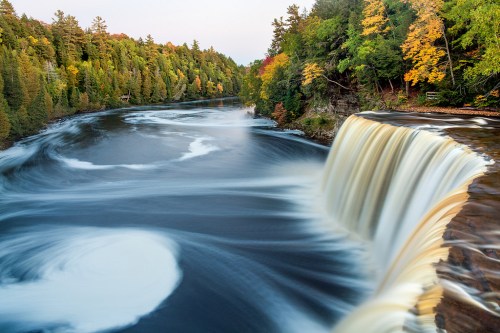
Fall Color at Upper Tahquamenon Falls

Upper Tahquamenon Falls

Upper Tahquamenon Falls, photo by Ashley Williams

If you’re wondering what fall color looks like in the northeastern Upper Peninsula, wonder no more! Ashley took this shot at Michigan’s largest waterfall, the Tahquamenon Falls last week. As you can see, it’s shaping up nicely.

If you’re wondering about statewide color, the Freep shared a NASA photo of Michigan’s fall color from space that’s pretty cool!

View her photo background bigtacular and see more in her Michigan’s Upper Peninsula slideshow.

There’s lots more fall wallpaper and more Tahquamenon Falls on Michigan in Pictures!

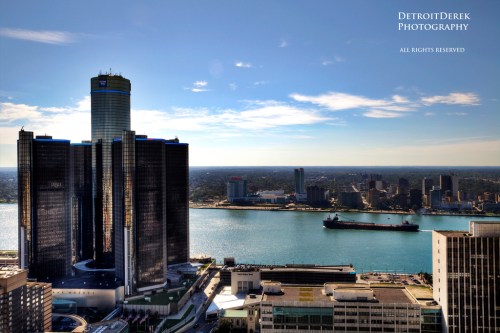
When Tall Met Long

When Tall Met Long

When Tall Met Long, photo by Derek Farr

View Derek’s photo bigger and see more in his Renaissance Center slideshow!

More Renaissance Center photos and info on Michigan in Pictures.


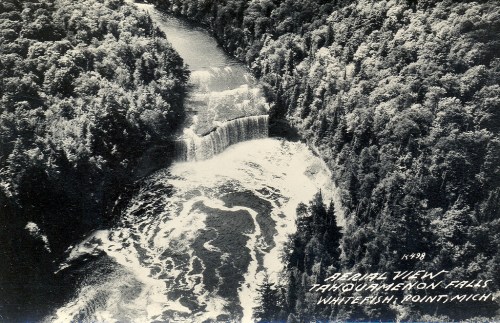
#TBT: Tahquamenon Falls Aerial View, postmarked 1948

Newberry MI UP RPPC Aerial View Upper Tahquamenon Falls near Whitefish Point LL Cook K-498 Postmarked 1948

Aerial View Upper Tahquamenon Fall, Postmarked 1948, photo by Don…The UpNorth Memories Guy… Harrison

In honor of the latest kayaker to throw caution to the wind (or is that water?) and take the plunge over the 51′ Tahquamenon Falls, here’s a cool aerial of the Falls that was postmarked in 1948 and probably taken a few years before.

If you want to see how to do this, check out a great video feature at YooperSteez on How to Kayak Over Tahquamenon Falls with Brazilian extreme kayaker Marcelo Galizio. Things To Do in the UP has an interview with Marcello as well. NOTE: I’m pretty sure this is against the rules at Tahquamenon Falls State Park and probably a great way to kill yourself if you don’t know what you’re doing!

View Don’s photo big as the Falls and see more pics & postcards from Tahquamenon and also follow him at UpNorthMemories on Facebook.

Lots more about Tahquamenon Falls on Michigan in Pictures!