Safety is always in style on Michigan’s beaches

Day at the Beach Grand Haven

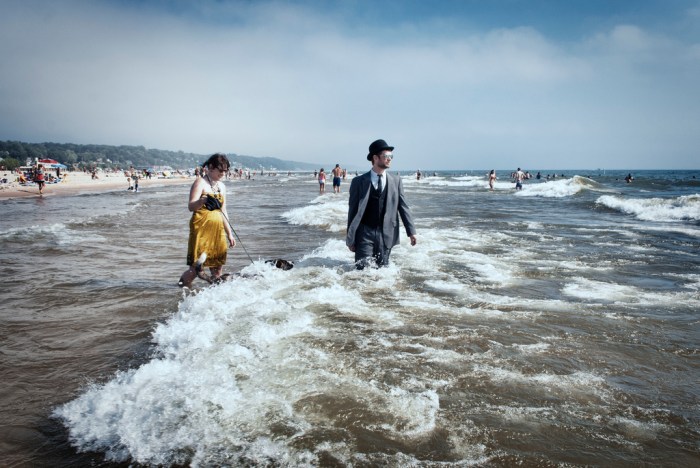
Formal Day at the Beach 2012, photo by flambedude

Staying safe at the beach? There’s an app for that. The Great Lakes Echo recently reported on myBeachCast, a smartphone app that gives you beach information:

Although drownings appear to be on track to fall from a record high in 2012, the overall trend from the past several years have seen consistent increase, according to the Great Lakes Surf Commission. The hazard warnings on the app informs users when and where there is a potential for dangerous rip currents.

In addition to the hazard warnings, the app will continue to feature lake temperature, beach locations and other components.

“The app is GPS enabled to allow a user to discover local Great Lakes beaches based on their location, save favorite beaches and view real-time information [on conditions],” said Christine Manninen, communications director of the Great Lakes Commission.

The app will hopefully reduce drownings, she said.

“Having the information at their fingertips gives people a better chance of making smarter decisions to protect their own health and safety and their family’s.”

Jonathan writes that this photo was taken at Formal Day at the Beach, a yearly event in Grand Haven where people dress up and get into Lake Michigan and swim around looking fabulous. If anyone knows when this is in 2013 please post it in the comments! Jonathan just let me know that Formal Day at the Beach takes place this year on Sunday, July 28th at 2pm.

Check his photo out bigger and see more in his Formal slideshow.

Much more about Michigan’s beaches on Michigan in Pictures!

Sugar Man: Detroit’s Own Sixto Rodriguez

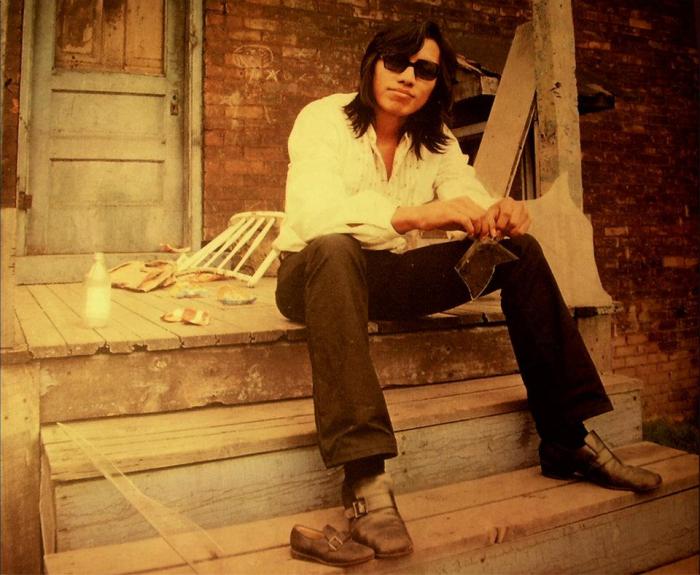
Sugarman Sixto Rodriguez

Next Saturday (June 22nd) I get to be part of a neat moment in the annals of Michigan music when I work with my partner Laura, the wineries of Traverse City and a fantastic team of workers & volunteers to host Sixto Diaz Rodriguez at the 5th annual Traverse City Wine & Art Festival.

Thanks to the global stardom of Rodriguez, hero of the Academy Award winning documentary Searching for Sugar Man, our festival sold out easily. You still have a chance to see this beautiful film though:

In 1968, two producers went to a downtown Detroit bar to see an unknown recording artist – a charismatic Mexican-American singer/songwriter named Rodriguez, who had attracted a local following with his mysterious presence, soulful melodies and prophetic lyrics. They were immediately bewitched by the singer, and thought they had found a musical folk hero in the purest sense – an artist who reminded them of a Chicano Bob Dylan, perhaps even greater. They had worked with the likes of Marvin Gaye and Stevie Wonder, but they believed the album they subsequently produced with Rodriguez – Cold Fact – was the masterpiece of their producing careers. Despite good reviews, Cold Fact was a commercial disaster and marked the end of Rodriguez’s recording career…

A bootleg recording of Cold Fact somehow found its way to South Africa in the early 1970s, a time when South Africa was becoming increasingly isolated as the Apartheid regime tightened its grip. Rodriguez’s anti-establishment lyrics and observations as an outsider in urban America felt particularly resonant for a whole generation of disaffected Afrikaners. The album quickly developed an avid following through word-of-mouth among the white liberal youth, with local pressings made. In typical response, the reactionary government banned the record, ensuring no radio play, which only served to further fuel its cult status.

The film tells the story of the search and rediscovery of Rodriguez. He’s now in the midst of a world tour that has seen him appear on 60 Minutes (great piece), Letterman & Leno and legendary concert venues as the Montreaux Jazz Festival, the Orpheum Theatre in LA, the Hammersmith Apollo in London, Radio City Music Hall  … and our festival in Traverse City.

Con Foster and the Bijou By the Bay

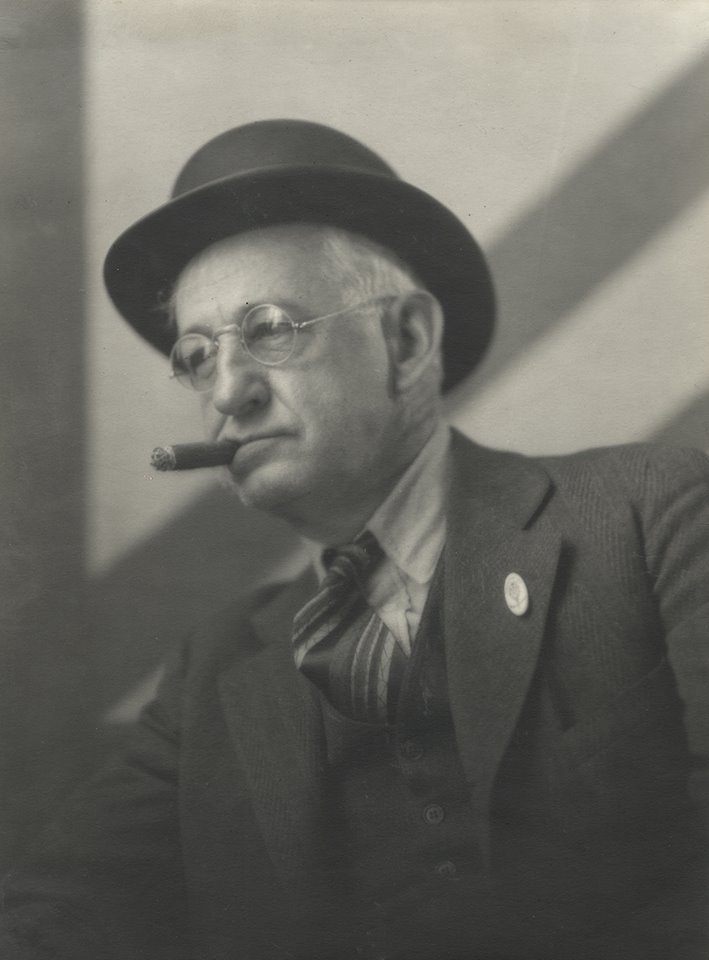
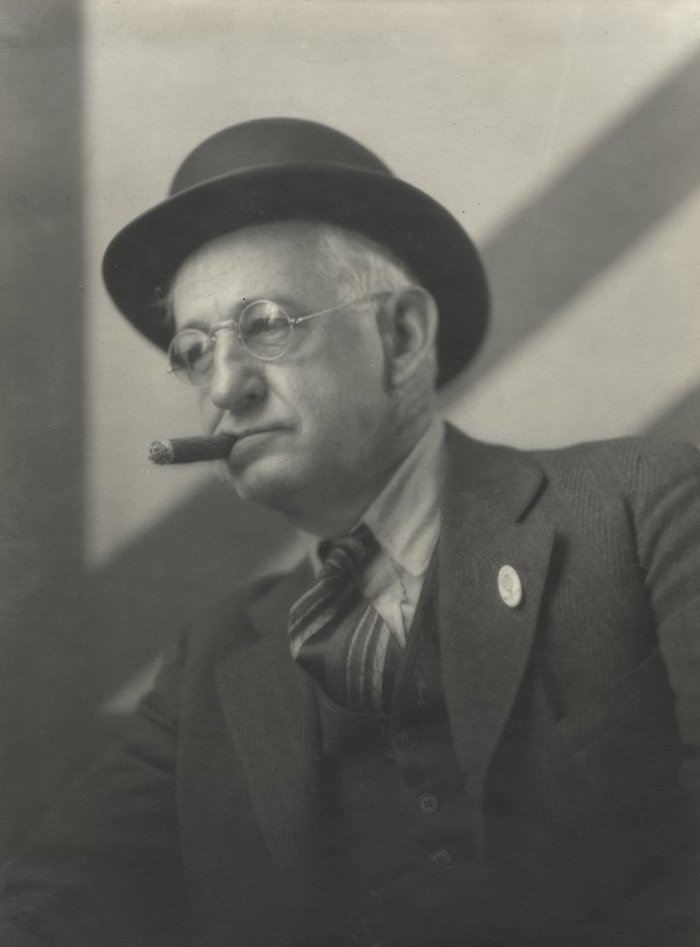
Con Foster

I have to confess: I am a huge fan of Michael Moore. One of the reasons has nothing to do with politics or his films. Almost 10 years ago, Michael did something that I didn’t think possible. He galvanized support, spent and raised money and brainstormed to lead a vast & diverse army of volunteers to restore the theater of my childhood, the State Theatre in Traverse City. While the successful and wildly entertaining Traverse City Film Festival has been a huge driver of the theater’s comeback, many overlook how his dedication to the movie-going experience created a theater that hundreds of people every day enjoy as part of a vibrant downtown experience. Of course after the Motion Picture Association of America tapped the State as #1 on their list of the best theaters in America, that number has probably gone down.

All this is a rather long-winded way of introducing Michael’s latest Traverse City cause, restoring the empty Con Foster Museum as a new theater – the Bijou By the Bay.  The story starts with Conrad “Con” Foster:

Manager of the State Theatre when it was originally known at the Lyric Theatre, he first arrived in Traverse City in July of 1917 as an employee of Fitzpatrick-McElroy Company to run and operate the Lyric. A true showman with a passion for the movies, one of the first things he did upon arrival was install a “newer and brighter” screen as part of his commitment to make the Lyric “equal to any motion picture house in the state.” It is this commitment to presentation the State Theatre continues today.

Born in Boston, Massachusetts on March 21, 1875, Foster was not a Traverse City native, but the community embraced him and he quickly made the area his home. After less than a year in Traverse City, Fitzpatrick-McElroy transferred him to a new theater post in Wisconsin, and Foster spent the next six years heartsick, petitioning the company to bring him back.

Foster’s pleas were answered in April 1924 when he returned to Traverse City to resume his post at the Lyric. He placed an ad in the Record Eagle expressing his delight, writing:

“My ambition has been to return to Traverse City, since they made me leave, to operate what I think is the most beautiful theater in our circuit. I have come to love the city, its good natured folks, and have often told my wife that Traverse City is the place to make a home. So it is with great pleasure that I can announce that my longings have been realized and I have again been transferred to the best little city in the world.”

Over the course of the next sixteen years, Foster worked tirelessly to make the Lyric the best theater in Michigan. Ahead of his time, in the spring of 1929 Foster had the foresight to bring “talkies” to the Lyric, installing the latest state-of-the-art sound technology and film projectors in Traverse City. At that time, sound technician Walter Beck claimed this was the smallest city in the country, to his knowledge, to have installed this modern equipment.

Foster’s impact extended far beyond his movie house and into all aspects of civic life. He encouraged and promoted Cherry Festival programs, patriotic presentations and educational speakers. He knew the Lyric was more than a just movie theater, but an important gathering space for the community. Serving as head of the Chamber of Commerce, City Commissioner and even Mayor, Foster was committed to serving his community.

Foster managed the Lyric until he died suddenly of a heart attack in 1940. The city mourned his loss, with a tribute in the Record Eagle claiming, “When Con Foster died this morning a part of Traverse City died with him, not a physical part, but a spiritual part.” Downtown businesses closed for his funeral and the Lyric reopened afterward to screen Gone with the Wind.

Foster also created Clinch Park, which is home to the proposed theatre. Find out more and how to donate at Bijou By the Bay.

More Traverse City on Michigan in Pictures!

La Marche du Nain Rouge

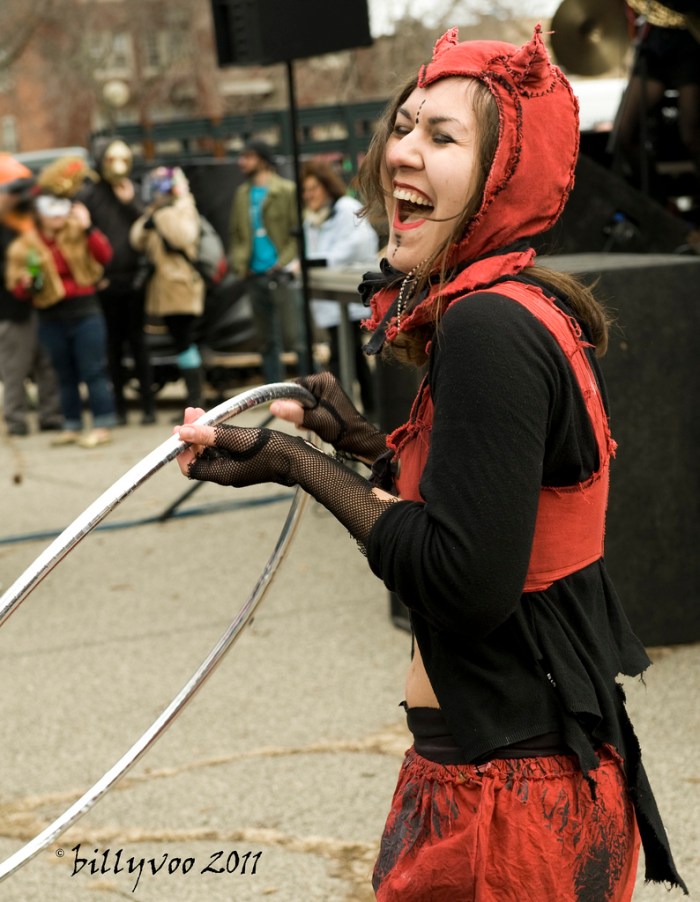
Ms Nain Rouge

Detroit MI, photo by billyvoo

Over 300 years ago, around the same time the city of Detroit was founded, an evil was discovered in and around the city. An evil that has plagued the people and the city, and even wrecked havoc upon the founder of Detroit, Antoine de la Mothe Cadillac. This ‘evil’ was said to have been a Nain Rouge, other wise known as the “red dwarf of Detroit.”
~La Marche du Nain Rouge

La Marche du Nain Rouge is held every year on the Sunday following the spring equinox. That’s Sunday March 24, 2013, and they explain:

La Marche du Nain Rouge is an annual Detroit tradition that purportedly dates back to shortly after the city’s founding by the French in 1701. Annually held on the Sunday closest to the Vernal (Spring) Equinox, it is parade and street theater similar in sensibility to Mardi Gras and other Carnival celebrations. However the impetus for La Marche is different.

La Marche drives Le Nain Rouge (The Red Dwarf) out of Detroit, preventing its evil spirit from plaguing the people of the city for the rest of the year. By forcing Le Nain Rouge from the city (and into the spirit plane), Le Nain is banished, transforming Detroiters’ fears and doubts into the hopes of new life and the coming Spring season.

Tradition holds that a citizen of Detroit dresses up as Le Nain Rouge, temporarily embodying its spirit, wearing a mask to conceal identity. As Le Nain Rouge, this person accepts responsibility for leading people through the streets of Detroit to La Marche’s final destination.

Read on for more including pictures and definitely head over to Absolute Michigan to learn much more about one of Michigan’s spookiest stories, Nain Rouge: The Red Dwarf of Detroit.

Billy took this in March of 2011 at the 300th anniversary of La Marche. See it bigger and see more in his La Marche du Nain Rouge slideshow and also check out billyvoo.com.

More portraits on Michigan in Pictures.

Robot Supply & Repair and 826 Michigan

NOVEMBER 2012-1152

NOVEMBER 2012-1152, photo by RichardDemingPhotography

Today is Black Friday, and though many of us – your host most definitely included -get worn down by the constant march of “Consumer Christmas”, it’s important to remember that our dollars when spent wisely can build strength in our communities. Below is one great example and I’m sure people can suggest more in the comments! I should add that I’ve had this post saved as a draft for almost a month which is why Richard has a rare back-to-back feature! 

This photo is of Liberty Street Robot Supply & Repair in Ann Arbor. Stocking common items as well as more esoteric gear like positronic brains, they’re the source for all your robot needs in Southeast Michigan.

The store is also (literally) the front for 826michigan, a nonprofit student writing & tutoring center, and all proceeds go toward their free student programs. 826michigan is dedicated to supporting students aged 6 to 18 with their creative and expository writing skills, and to helping teachers inspire their students to write. 826 opened its doors in June of 2005 and believes that strong writing skills are fundamental to future success and that great leaps in learning can happen with one-on-one attention.

I for one welcome our new robot overlords and encourage you to watch this great video about Liberty Street Robot Supply & Repair and 826Michigan.

See Richard’s photo bigger and see more in his Impressions 2012 slideshow.

More Ann Arbor on Michigan in Pictures.

Remembering Helen Milliken

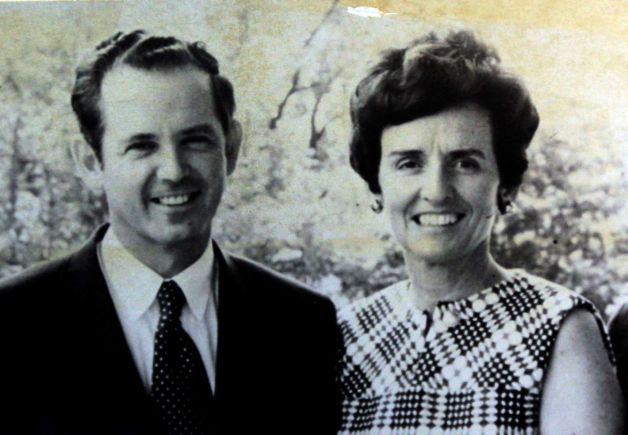
Bill and Helen Milliken, photo from AP archives

My beliefs are not particularly unique. It’s just that I’m now in a position to do something about them.
~Helen Milliken

Yesterday Helen Wallbank Milliken passed away at the age of 89 in Traverse City. Helen was the wife of Michigan’s longest serving Governor William Milliken. Her entry in the Michigan Women’s Hall of Fame says in part:

Helen Milliken, wife of the former Governor of Michigan, has long been identified with women’s issues and concerns. She was a distinguished national co-chair of ERAmerica and traveled throughout the country speaking on behalf of the Equal Rights Amendment. She also freely gave her time and energy to raising needed funds to support this major cause. In addition, she was a convener of the International Women’s Year Delegation in Michigan and a member of the delegation to the IWY Conference, which met in Houston in 1977. She is associated with The Women’s Research in Education Institute in Washington, D.C., and chaired the National Women’s Conference Committee.

Helen Milliken has been a major patron of the arts in Michigan. She was in no small measure responsible for the development of a state public arts project and for the growth in public support of the arts.

…Independent, committed, and principled, Helen Milliken never sought, but never shrank from controversy. When her commitment to equality conflicted with her political loyalties, she clearly chose the former. Her choice, her service, and her spirit have enriched the lives of countless Michigan citizens.

The Detroit Free Press has an excellent article that includes a photo gallery of Helen Milliken. along with reminisces by those who worked with her in public life.  One of these, former press secretary & chief of staff to Gov. Milliken George Weeks,  looks at the many causes Helen championed.

The Michigan Land Use Institute has a page where some of the people who remember their longtime board member and supporter Helen Milliken – click to view it.

Remembering Detroit Boxing Legend Emanuel Steward

Emanuel Steward's boxing clinic

Emanuel Steward’s boxing clinic, photo by yousef_anani

Boxing legend Emanuel Steward, one of the greatest trainers ever, was remembered yesterday in Detroit. The entry for Emanuel Steward at the International Boxing Hall of Fame begins:

Steward, who was born in West Virginia in 1944, has been one one of the most successful trainers and managers in the last two decades of the 20th century.

Like many young men, he started boxing after receiving a pair of boxing gloves as a gift. The youngster boxed in informal matches that his father set up. When his parents separated, he moved with his mother to Detroit. By age 12, he was training at the Brewster Recreation Center, which had been the boxing home of Joe Louis and Eddie Futch. As an amateur, he ran up a record of 94-3, which culminated with a 1963 National Golden Gloves title. Steward than began training amateur fighters, but eventually gave that up and found full-time employment as an electrician.

But boxing was in his blood. In 1971, he was asked to look after his half-brother James, who was 15 at the time. Steward took him to a nearby gym called, the Kronk. It wasn’t long before Emanuel was coaching again. In 1971, his charges dominated the Detroit Golden Gloves, winning seven championships. A year later, he left the security of a full-time electrician’s job, and turned his attention to boxing, and the Kronk.

By the mid-70s he had built the gym into a national power, and two of his charges, Thomas Hearns and Hilmer Kenty came close to making the ’76 Olympic Team. A year later, the two turned pro with Steward serving double duty as their trainer and manager. On March 2, 1980, Kenty became Steward’s first world champion when stopped Ernesto Espana in the fourth round to win the WBA lightweight crown.

Five months later Hall of Famer Thomas Hearns stopped Pipino Cuevas with a blistering second-round kayo to become champion No. 2.

Wikipedia’s Emanuel Steward entry lists some of the fighters he trained including Hearns, Evander Holyfield, Wladimir Klitschko, Lennox Lewis and Julio César Chávez. It adds that his heavyweight fighters had a record of 34-2-1 combined in title fights. The Freep has a nice video with boxers Thomas Hearns, Sugar Ray Leonard and Lennox Lewis remembering Steward that also includes a bit of Aretha Franklin singing. You may also want to read this article in the New York Times or watch this ESPN tribute to Steward.

Yousef Anani took this photo at an Emanuel Steward’s boxing clinic in London last year. See it bigger and view more in his Emanuel Steward slideshow.

Happy Halloween from Michigan in Pictures!

Halloween Spectacle, photo by Kim Nixon

The Halloween Spectacle is an annual event that took place last Saturday in Marquette. Here’s hoping you can get out and make a spooky spectacle of yourself tonight!

Check this out bigger on Facebook and see her slideshow from the Halloween Spectacle on Flickr. More work from Kim at Create with Kim.

…and more Halloween from Michigan in Pictures and Absolute Michigan!

Remembering the Mad Duck, Alex Karras of the Detroit Lions

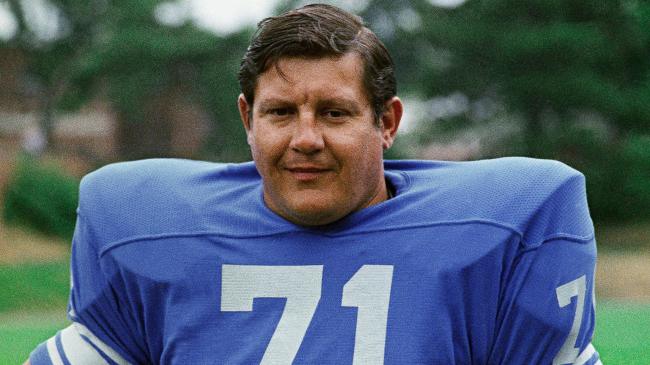
Alex Karras of the Detroit Lions, 1971 AP file photo

“It takes more courage to reveal insecurities than to hide them, more strength to relate to people than to dominate them, more ‘manhood’ to abide by thought-out principles rather than blind reflex. Toughness is in the soul and spirit, not in muscles and an immature mind.”
~Alex Karras

Yesterday Alex Karras, All-Pro defensive lineman for the Detroit Lions passed away at the age of 77. Karras followed up with a sucessful career as a pro wrestler and as an actor in movies and on TV’s Webster. The New York Times obituary of Alex Karras reads in part:

Karras, at 6 feet 2 inches and 248 pounds — large then but smaller in comparison with today’s N.F.L. linemen — first earned fame as a ferocious tackle for the Lions. He anchored the defensive line for 12 seasons over 13 years, 1958 to 1970.

It was an era when the N.F.L. had abundant talent at the position; Karras’s contemporaries included the Hall of Famers Bob Lilly and Merlin Olsen. But Karras was an especially versatile pass rusher, known around the league for his combination of strength, speed and caginess. His furious approach — Plimpton described it as a “savage, bustling style of attack” — earned him the nickname the Mad Duck.

“Most defensive tackles have one move, they bull head-on,” Doug Van Horn, a New York Giants offensive lineman who had to block Karras, said in 1969. “Not Alex. There is no other tackle like him. He has inside and outside moves, a bull move where he puts his head down and runs over you, or he’ll just stutter-step you like a ballet dancer.”

Karras was named to four Pro Bowls, and he was a member of the N.F.L’s All-Decade team of the 1960s. He was not elected to the Hall of Fame, however, which has sometimes been attributed to the fact that the Lions fielded mostly undistinguished teams during his tenure. In Karras’s only playoff game, the Lions lost to the Dallas Cowboys by the unlikely score of 5-0 in 1970.

Read on at the Times for lots more. Some of my favorite Karras items:

be always an explorer

be always an explorer

be always an explorer, photo by .brianday

A good motto for the weekend … or a lifetime.

Check this out on black and see this and many more shots in Brian’s long exposure slideshow.

More black & white photography (including several by Brian) on Michigan in Pictures.