Ice Cave Sunrise

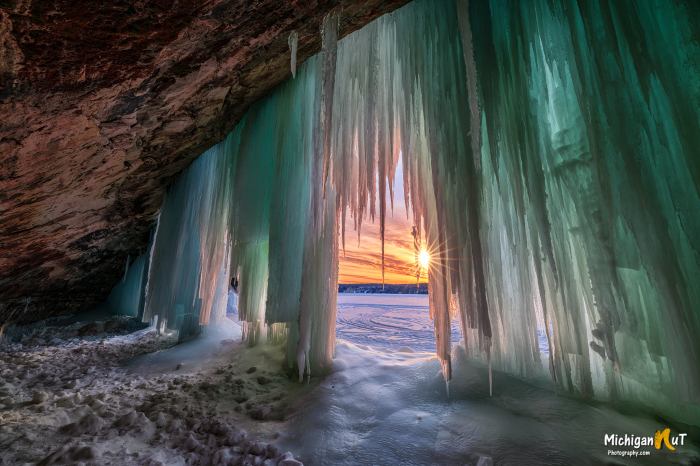
Grand Island Ice Cave Sunrise by Michigan Nut Photography

Grand Island Ice Cave Sunrise by Michigan Nut Photography

Incredible shot from inside an ice cave on Lake Superior’s Grand Island taken last weekend. You can check out another on John’s Facebook page and view & purchase his work at michigannutphotography.com

More photos & information at the Grand Island tag on Michigan in Pictures!

Support Michigan in Pictures with Patreon

March 3, 2022: Happy Birthday, Mackinac Parks!

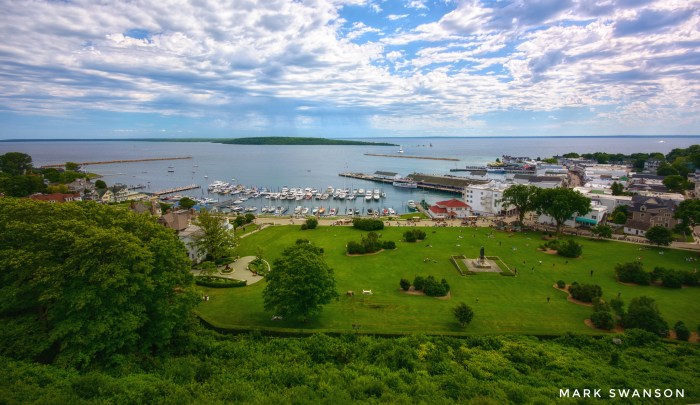
Beautiful Mackinac Island by Mark Swanson

Beautiful Mackinac Island by Mark Swanson

“Mackinac is a place largely visited by people from all parts of our country, and I take it from many foreign lands. A National Park is established on the island and I think the military post should be made not only comfortable but attractive.”
-Quartermaster General Montgomery Meigs

It’s a birthday of sorts for Mackinac State Historic Parks which is a treasure trove of our colonial history. The page from Mackinac Parks on Fort Mackinac and the Mackinac National Park explains the birth of the park and how one forward thinking officer may very well have created the model for historical preservation in the park that holds so much of Michigan and the nation’s cultural history:

After Congress created Yellowstone in 1872, Senator Thomas Ferry introduced legislation to create a second park on Mackinac Island. In addition to the island’s attractive history and natural features, the U.S. government already owned much of the island as part of the Fort Mackinac military reservation and the soldiers stationed at Fort Mackinac could act as caretakers. As a result, the park would cost almost nothing, which Ferry knew appealed to the tight-fisted Congressmen of the 1870s. After two years of campaigning, President Ulysses Grant created the Mackinac National Park, the second park in the country, on March 3, 1875.

The park made Mackinac Island even more attractive to Midwestern visitors, and brought changes to Fort Mackinac, where the commanding officer became the park superintendent and a second company of soldiers joined the garrison. The Army finally performed some long-overdue repairs at the fort … Quartermaster General Montgomery Meigs believed that “the fort itself is to the public one of the greatest curiosities within the lands of the park,” and required the fort’s commanding officer, Major Alfred Hough, to repair the post’s aging blockhouses. Although the blockhouses served no military purpose, Meigs knew that they were “among the few relics of the older time which exist in this country,” and believed that “there would be a cry from tourists” if they were destroyed. Fort Mackinac thus became as much a part of the national park as the island’s natural curiosities.

…On September 16, 1895, the last soldiers formally transferred Fort Mackinac and the Mackinac National Park to the state. Although the national park ceased to exist with this transfer, the state immediately created the Mackinac Island State Park, which continues to welcome thousands of Mackinac Island visitors every year.

Mark took this photo back in the summer of 2017 from the cannon deck at Fort Mackinac on the Island. See more in his Mackinac, Michigan gallery on Flickr.

Lots more from Mackinac on Michigan in Pictures!

Support Michigan in Pictures with Patreon

Good morning from Lake Erie’s only Michigan State Park!

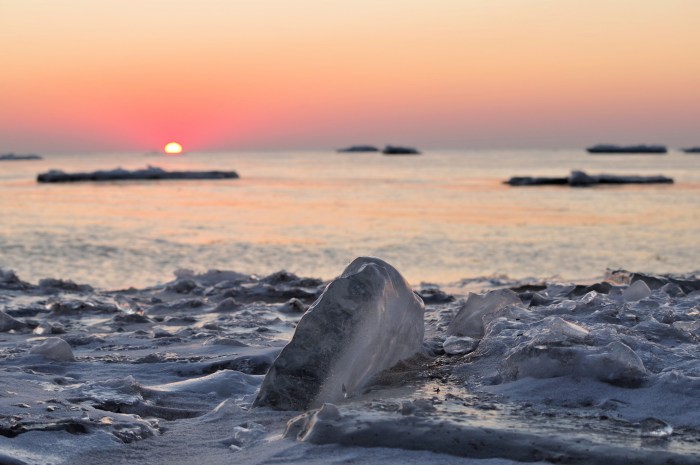
Lake Erie Sunrise by Charles Hildebrandt

Lake Erie Sunrise by Charles Hildebrandt

Charles took this photo over the weekend at William C. Sterling State Park in Monroe, which Pure Michigan says is Michigan’s only state park on Lake Erie. The 1300-acre park at the mouth of Sandy Creek is known for walleye fishing and also offers lakefront camping, 7 miles of trails, and over a mile of sandy beach.

Head over to Charles’s Flickr for his latest & have a great week everyone!

Support Michigan in Pictures with Patreon

Frozen Falls Friday

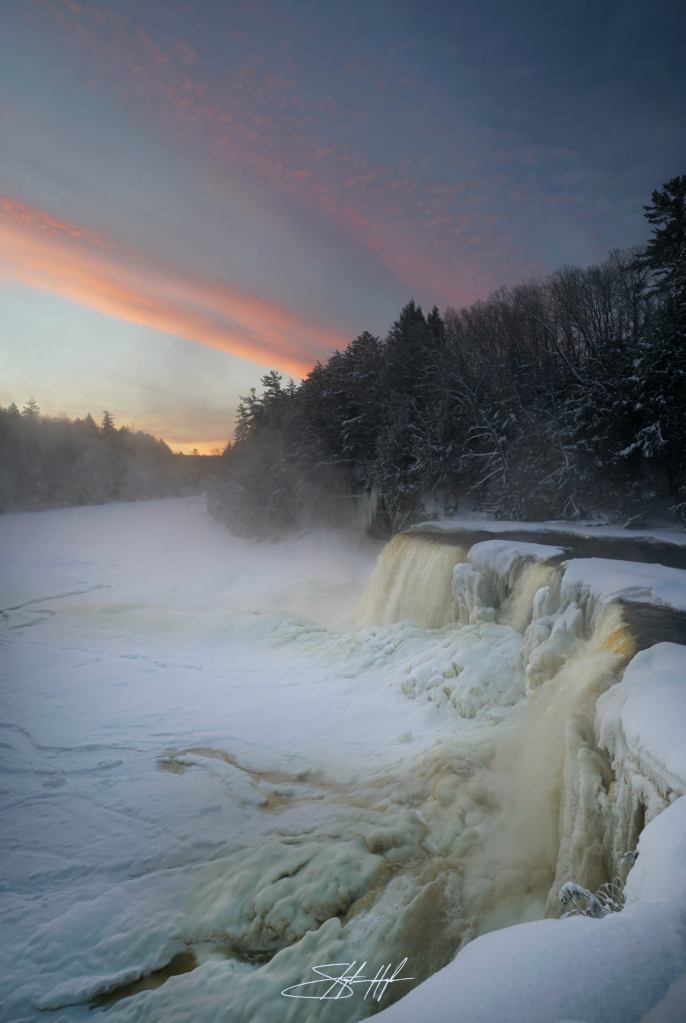
Upper Tahquamenon Falls by S Hughes Photos

Upper Tahquamenon Falls by S Hughes Photos

S Hughes shared this sweet shot from a subzero sunrise the other day at the Upper Falls in Tahquamenon Falls State Park.  Follow her on Facebook & for sure check out her video from the overlook!

Support Michigan in Pictures with Patreon

Make Isle Royale your office in 2022!

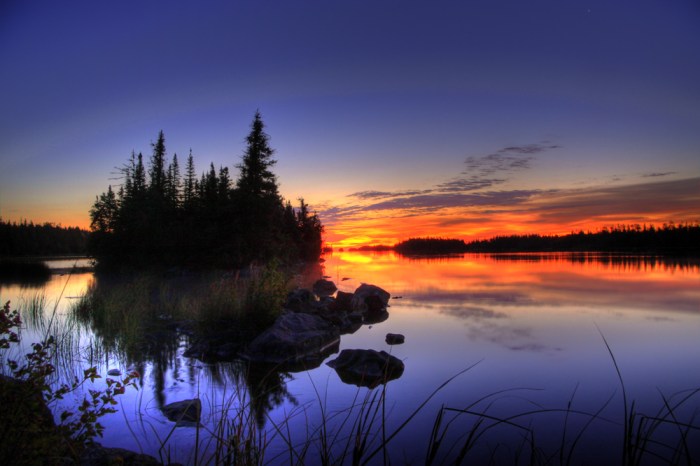
Tobin Harbor Sunrise by Carl TerHaar

Tobin Harbor Sunrise by Carl TerHaar

How would you like to wake up to this view?? Well, if you are a college student, the Isle Royale Wolf-Moose Research Project is seeking volunteers to assist with data collection for the 2022 summer field season. Students studying natural resources, conservation, ecology, or related fields will gain valuable field work experience working with distinguished researchers in Isle Royale National Park in the longest continuous study of any predator-prey system in the world. 

The opportunity is for 4-5 weeks between early-May and mid-June, and requires students to have documented experience backpacking & camping for extended periods of time in remote settings, proficiency with orienteering, and  the ability to get along with others in backcountry settings for 10-day periods of time are all critical. Get the full rundown of qualifications, activities & more on their website at IsleRoyaleWolf.org.

Carl is definitely Michigan in Pictures’s Isle Royale Bureau Chief! His photos feature prominently in our posts about Isle Royale & his photo of a Bull Moose Faceoff is one of the most popular photos of all time on Michigan in Pictures. He  took this way back in the summer of 2009, and you can see hundreds more in his Isle Royale National Park gallery on Flickr. For sure head over to his Mackinaw Scenics website to view & purchase his work!

Support Michigan in Pictures with Patreon

Welcome 2022!

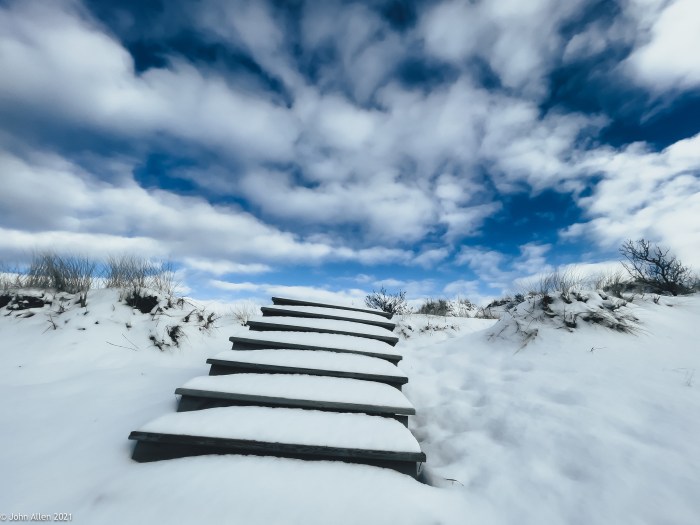
Cloud Climb by John Allen

Cloud Climb by John Allen

While this year doesn’t seem to be opening with as much hopefulness as 2021, here’s hoping that 2022 has all of us feeling like we’re walking on clouds!

John took this photo yesterday at Saugatuck Dunes State Park. See more in his Michigan 2021 gallery on Flickr.

Support Michigan in Pictures with Patreon

Waterfall Wednesday: Kakabika Falls

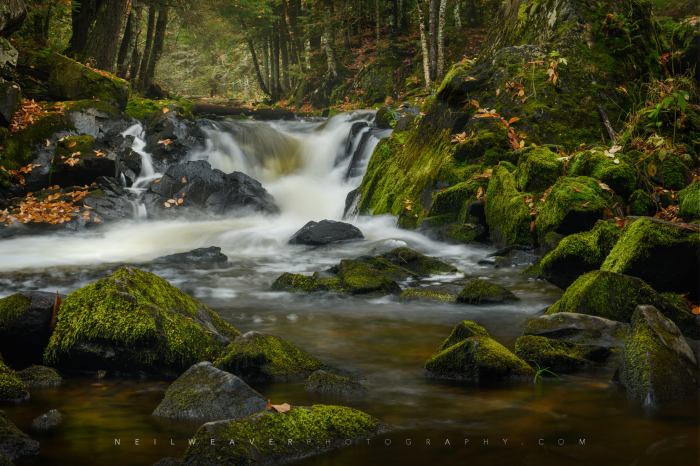
Kakabika Falls by Neil Weaver

Kakabika Falls by Neil Weaver

Travel the Mitten has a great entry on Kakabika Falls that says (in part):

The Ottawa National Forest covers more than 990,000 acres of Michigan’s Upper Peninsula and is a popular spot for outdoor recreation, camping, and wildlife viewing. The forest is also home to many waterfalls including Kakabika Falls, a set of cascades on the Cisco Branch of the Ontonagon River. These falls can be reached by a short drive north of the Watersmeet/Marenisco area, and a short, easy hike into the woods. The setting here is peaceful and there is a good chance you won’t encounter other travelers when you visit.

The tallest drop of Kakabika Falls is maybe 8 to 10 feet (most of the drops range from 1 to 5 feet), but this waterfall is more about the sum of its multiple drops than one large drop. The river makes a series of S turns here, and the trail closely parallels the river providing many great vantage points of each drop. As is the case with most waterfalls of this size, it is always best to visit in the spring or after decent rainfall. In dry summer months, we have found that there was barely any water flow here.

Click through for more including photos, map & directions from a really excellent website for Michigan travel ideas!

Neil shared that this is one of the many magical places in the Michigan’s Upper Peninsula, something that one look at his Instagram is all you need to see the truth in that! You can also follow Neil Weaver Photography on Facebook and view & purchase prints (including this one) on his website.

Many (many) more Michigan waterfalls on Michigan in Pictures!

Support Michigan in Pictures with Patreon

Over the Edge

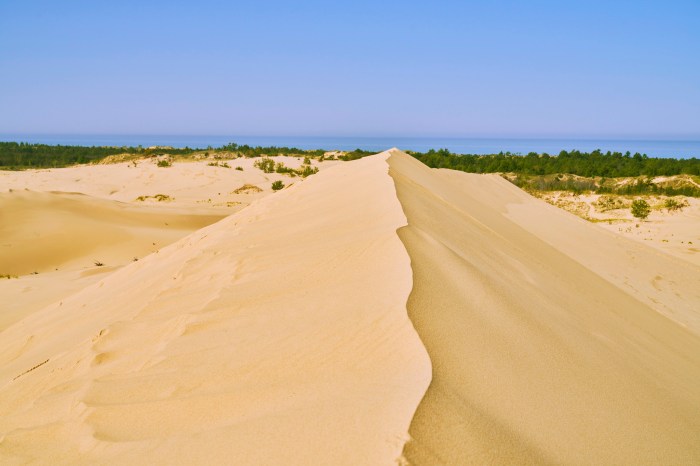
Feeling A Little On Edge Today by David Hoffman

I’m Feeling A Little On Edge Today by David Hoffman

David took this shot of the incredible edge at the Silver Lake Dunes overlooking Lake Michigan. See more in his Silver Lake Dunes gallery on Flickr! 

Support Michigan in Pictures with Patreon

Sleeping Bear Dunes National Lakeshore turns 51 today!

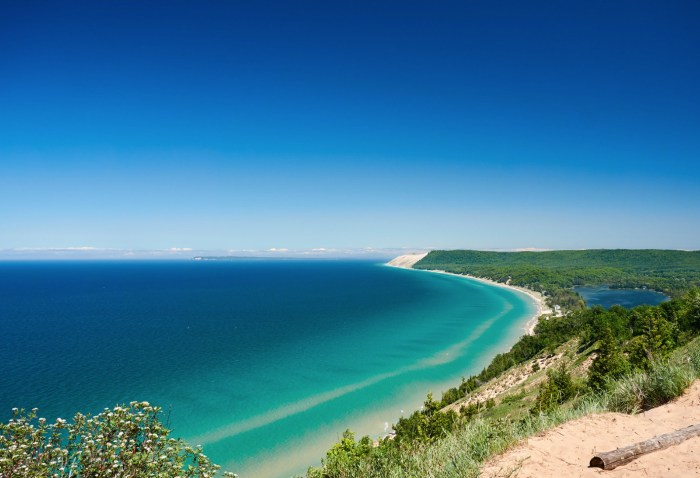
Sleeping Bear Dunes National Lakeshore by Thomas DB

Sleeping Bear Dunes National Lakeshore by Thomas DB

(via leelanau.com) On October 21st, 1970 the Sleeping Bear Dunes National Lakeshore became the third US National Lakeshore. The online book A Nationalized Lakeshore: The Creation & Administration of the Sleeping Bear Dunes National Lakeshore has a good overview of what was a remarkably contentious issue back in the day:

A Nationalized Lakeshore: The Creation & Administration of the Sleeping Bear Dunes National Lakeshore Beginning in 1919 a small portion of what is now the national lakeshore was set aside as a state park. The idea of a national park in northwestern Michigan did not surface until the National Park Service’s Great Lakes Shoreline Survey visited the area in 1958. Between 1959 and 1970 there was a continuous and controversial effort in Congress to create a park unit around the Sleeping Bear Dune. The legislative leader of the Sleeping Bear park proposal was United States Senator Philip A. Hart. The senator’s persistence and patience in the end led to the creation of Sleeping Bear Dunes National Lakeshore on October 21, 1970.
Opposition to the creation of the lakeshore was very strong among local summer homeowners. More than 1,400 tracts of private land had to be acquired to create the lakeshore. A heavy-handed, poorly planned land acquisition program reinforced the bitterness that surfaced during the decade of struggle that preceded authorization. The legacy of those actions has been twofold. On one hand the National Park Service has been vilified by many local property owners and the park staff have had to work in an environment that is unnecessarily confrontational. On the other hand, the presence of an organized local populace wary of National Park Service policy has influenced for the better the development of the national lakeshore. Local sentiments played an important role toning-down the agency’s initial plans to intensively develop the area’s recreational assets. More recently local sentiment has influenced the agency’s approach to the lakeshore’s rural cultural landscapes. Unfortunately, resistance to the National Park Service in the region has also hindered opportunities to bring more land under protection and to develop scenic drives for park visitors.

The National Park Service conceived the Sleeping Bear Dunes lakeshore at a time when the shores of Lake Michigan were rapidly undergoing privatization. Subdivisions of vacation and year round homes threatened to keep ordinary citizens from enjoying Michigan’s broad, sandy shoreline. A nationalized lakeshore along the beaches and bluffs of the Sleeping Bear made available for all what might have been enjoyed only by a select few. The cost was millions of dollars of federal funds and the hopes and dreams of hundreds of small property owners. Sleeping Bear Dunes was a tragedy for the latter and a wise investment of the former.

Indeed. You can read lots more in A Nationalized Lakeshore.

It was hard to pick a photo for this post, but I ended up going with Thomas’s beautiful shot from June of 2016 of my favorite view in the Lakeshore atop the Empire Bluffs where you can see South Bar Lake, the southern end of the main dune complex, and the Manitou Islands in the distance. See more in Thomas’s 6/1-6/3/16 Grand Traverse & Leelanau gallery on Flickr.

Support Michigan in Pictures with Patreon

Thanks for the wilderness, Congressman Dale Kildee!

Sturgeon River Gorge I by David Mayer

Sturgeon River Gorge I by David Mayer

This week longtime Congressman Dale Kildee passed away. Kildee, uncle of current Flint Representative Dan Kildee, represented Flint for over 30 years earning the nickname “the Cal Ripken of Congress.” He was involved in many efforts including some vital early childhood bills and (of course) auto industry support, but one interesting thing that I learned from writer David Dempsey is that Dale was the sponsor of the 1987 Michigan Wilderness Act which created 10 State Wilderness Areas protecting nearly 100,000 acres of old growth forest, dunes, lakes, and rivers including Sturgeon River Gorge.

Thank you Dale for your work on the behalf of Michigan’s wild places! Click for a map of all 18 of Michigan’s Wilderness Areas.

David took this back in October of 2012 in the Sturgeon River Gorge Wilderness. See more in his Porcupine Mountains gallery on Flickr.

Support Michigan in Pictures with Patreon