Michpics Rewind: Whitefish & Cranes edition

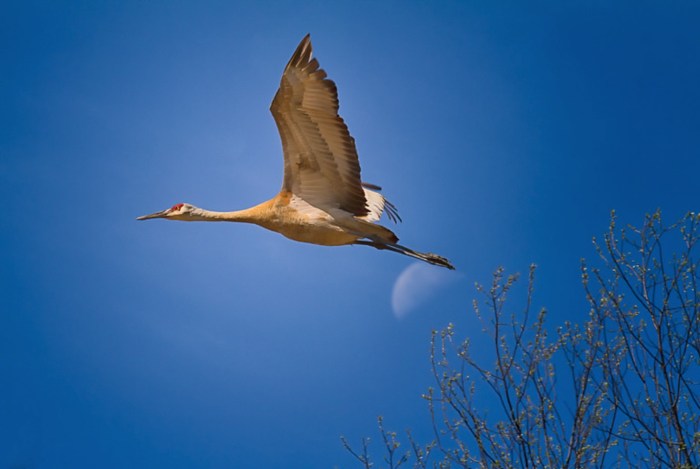
Over the Moon by Todd Bielby

Over the Moon by Todd Bielby

Here’s one of my favorite Native stories that I originally shared in back in 2013…

The 1896 book Myths and Legends of our Own Land by Charles M. Skinner relates a rather gruesome version of the tale of the origin of Whitefish:

An Indian who lived far in the north was so devoted to the chase that he was never at home for the whole of a day, to the sorrow of his two boys, who liked nothing so much as to sport with him and to be allowed to practise with his weapons. Their mother told them that on no account were they to speak to him of the young man who visited the lodge while their father was away, and it was not until they were well grown and knew what the duty of wives should be that they resolved to disobey her. The hunter struck the woman dead when he learned of her perfidy. So greatly did her spirit trouble them, however, that they could no longer abide in their old home in peace and comfort, and they left the country and journeyed southward until they came to the Sault Sainte Marie.

As they stood beside the falls a head came rolling toward them on the earth—the head of the dead woman. At that moment, too, a crane was seen riding on the surface of the water, whirling about in its strongest eddies, and when one of the boys called to it, “O Grandfather, we are persecuted by a spirit; take us across the falls,” the crane flew to them. “Cling to my back and do not touch my head,” it said to them, and landed them safely on the farther shore.

But now the head screamed, “Come, grandfather, and carry me over, for I have lost my children and am sorely distressed,” and the bird flew to her likewise. “Be careful not to touch my head,” it said. The head promised obedience, but succumbed to curiosity when half-way over and touched the bird’s head to see what was the matter with him. With a lurch the crane flung off his burden and it fell into the rapids. As it swept down, bumping against the rocks, the brains were pounded out and strewn over the water. “You were useless in life,” cried the crane. “You shall not be so in death. Become fish!” And the bits of brain changed to roe that presently hatched to a delicate white fish, the flesh whereof is esteemed by Indians of the lakes, and white men, likewise. The family pitched a lodge near the spot and took the crane as their totem or name-mark. Many of their descendants bear it to this day.

The version I read in one of my all-time favorite books, Lore of the Great Turtle : Indian Legends of Mackinac Retold by Dirk Gringhuis is pretty dark as well.

You can see more from Todd on his Flickr & view & purchase photos on his website.

Read lots more about Sandhill cranes on Michigan in Pictures

Support Michigan in Pictures with Patreon

Fox Friday: Hanging at the Den

Hanging at the Den by TP Mann

Hanging at the Den by TP Mann

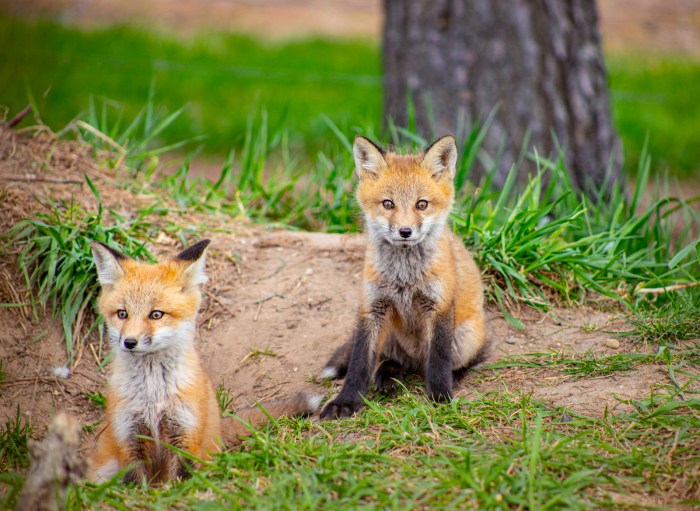
Another year, another pair of fox kits for the Michigan in Pictures family! Last year I christened a pair Oliver & Charlotte based on Michigan’s most popular baby names. Both Oliver & Charlotte have been dethroned, so please put your hands together for Noah & Amelia (#2 & #4 in the US respectively). 

TP took this photo on Sunday. See more on his Flickr!

More foxes on Michigan in Pictures.

Support Michigan in Pictures with Patreon

Blue Canary aka Indigo Bunting

Indigo Bunting by Kevin Povenz

Indigo Bunting by Kevin Povenz

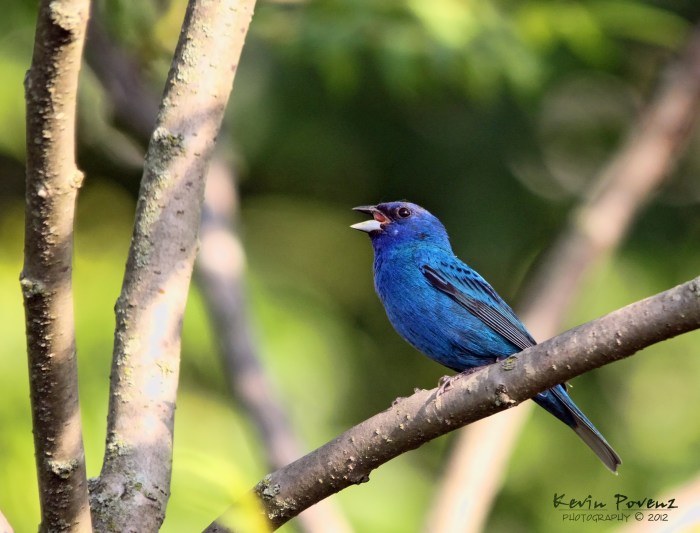
Yesterday I saw a brilliant blue Indigo bunting on the bird feeder, so let’s talk about them! All About Birds shares that the all-blue male Indigo Bunting are sometimes nicknamed “blue canaries” and known for their bouncy songs. There’s all kinds of info including recordings of their songs and fun facts like:

Indigo Buntings migrate at night, using the stars for guidance. Researchers demonstrated this process in the late 1960s by studying captive Indigo Buntings in a planetarium and then under the natural night sky. The birds possess an internal clock that enables them to continually adjust their angle of orientation to a star—even as that star moves through the night sky.

Indigo Buntings learn their songs as youngsters, from nearby males but not from their fathers. Buntings a few hundred yards apart generally sing different songs, while those in the same “song neighborhood” share nearly identical songs. A local song may persist up to 20 years, gradually changing as new singers add novel variations.

Like all other blue birds, Indigo Buntings lack blue pigment. Their jewel-like color comes instead from microscopic structures in the feathers that refract and reflect blue light, much like the airborne particles that cause the sky to look blue.

Kevin took this a decade ago at the Upper Macatawa Natural Area in Zeeland. See more in his Birds gallery on Flickr.

Support Michigan in Pictures with Patreon

Building a Backyard Habitat

Prairie by Natalie Cypher

Prairie by Natalie Cypher

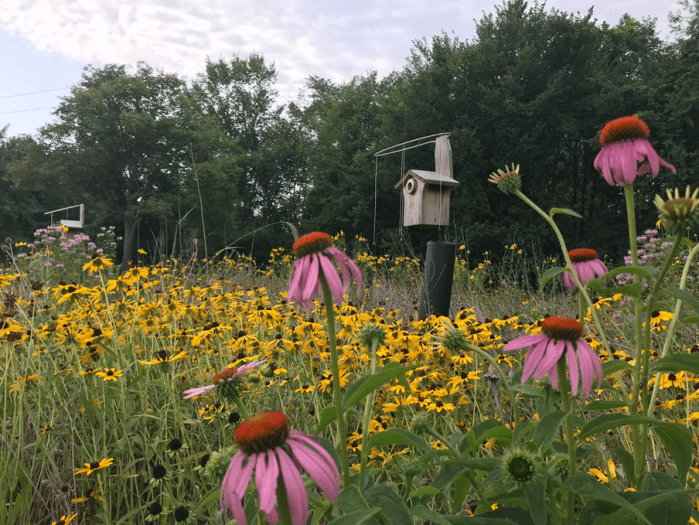
Rayna Skiver of the Great Lakes Echo has an article on the benefits of building a backyard habitat for Michigan wildlife that says in part:

A habitat can be as simple as a place that provides food, water and shelter for wildlife, said Natalie Cypher, naturalist and educator for the Michigan Department of Natural Resources Outdoor Adventure Center.

Building a habitat in your backyard can require as much or as little space as you want, Cypher said. It depends on what type of wildlife you want to attract.

Research is the first step.

“If you’re looking to provide a habitat for monarch butterflies, you have to use milkweed,” Cypher said. “Monarch butterflies only lay their eggs on milkweed plants and it’s the only food that their caterpillars will eat.”

…Backyard habitats benefit both wildlife and the people making them. For wildlife, they provide food and a safe place to nest. People benefit because of the positive feelings associated with added greenery and the presence of wildlife.

In a suburban neighborhood, a lot of land doesn’t provide habitat, Cypher said. One million acres of wildlife habitat are lost every year due to suburban development, according to the National Wildlife Federation.

“Providing a small patch of habitat can be high impact,” Cypher said.

The National Wildlife Federation reports benefits like higher percentages of native plants, indicator species, tree coverage, water conservation and wildlife presence.

Native plants use less water and sequester carbon, according to the National Wildlife Federation.

Home gardeners benefit from native pollinators such as bees and butterflies because they can increase fruit and vegetable production and help with pest control, Cypher said.

Read on for much more at the Echo. You can learn more about the Michigan Department of Natural Resources Outdoor Adventure Center & even apply for a job on their website!

More Michigan gardens & gardening on Michigan in Pictures.

Support Michigan in Pictures with Patreon

Riding the Waves: Baby Duck Edition

Riding the Waves by David Juckett

Riding the Waves by David Juckett

It’s been a while since I added to the world famous Michigan in Pictures Duckie Gallery, so cowabunga everyone!!

David shares that although these little guys were only hatched last week, they seemed to be holding their own in the waves. See more in his Birds gallery on Flickr.

Support Michigan in Pictures with Patreon

River Otters and the Detroit River comeback

River Otter by Ashleigh Mowers

River Otter by Ashleigh Mowers

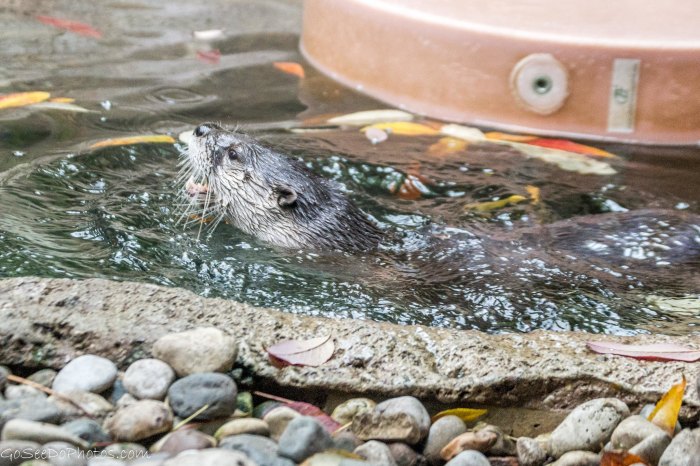
Great Lakes Now has an excellent feature on the return of river otters to the Detroit River that says (in part):

On the cool morning of April 25, doctoral student Eric Ste Marie from the University of Windsor’s department of integrative biology went out for a walk with his partner along the Detroit River prior to an anticipated long day in his lab. Much to his surprise, he saw an animal pop its head out of the water. It was too big to be a mink and, as it dove, he noticed that it did not have a flat beaver tail. Ste Marie ran out to the end of a pier beneath the Ambassador Bridge to get a closer look to check, and there it was: a river otter.

River otters were quite common in southeast Michigan, including the Detroit River, up through the arrival of European explorers and fur traders,” said Gearld P. Wykes, a historian from the Monroe County Museum System. “During the fur trade era, they were much sought after for their fur, along with beaver. Based on historical records, river otters were likely extirpated from the Detroit River in the early 1900s.”

In 1986, the Ohio Department of Natural Resources reintroduced river otters into high water quality rivers and streams in eastern Ohio. The river otters thrived. As their population grew, they began to move westward – what scientists call expanding their range. By the early 2000s, they had found a home in western Ohio, particularly near Cedar Point and Ottawa National Wildlife Refuge, just east of Toledo.

…Biologists studying the Detroit River and resource managers have been excited about the possible range expansion of river otters into the Detroit River. There have been a few anecdotal reports from citizens, but no photographic or videographic proof until Ste Marie was greeted with that ecological surprise on the morning of April 25.

…River otters are considered an indicator species, and their return to the Detroit River after an absence of more than 100 years is a hopeful sign of improving watershed conditions.

Ashleigh took this back in 2016 in Detroit at the Detroit Zoo. Hopefully she gets a shot of them in the wild! See more in her Detroit gallery on Flickr & for sure check out her Go See Do Photography website for more great pics!

More about River otters on Michigan in Pictures.

Support Michigan in Pictures with Patreon

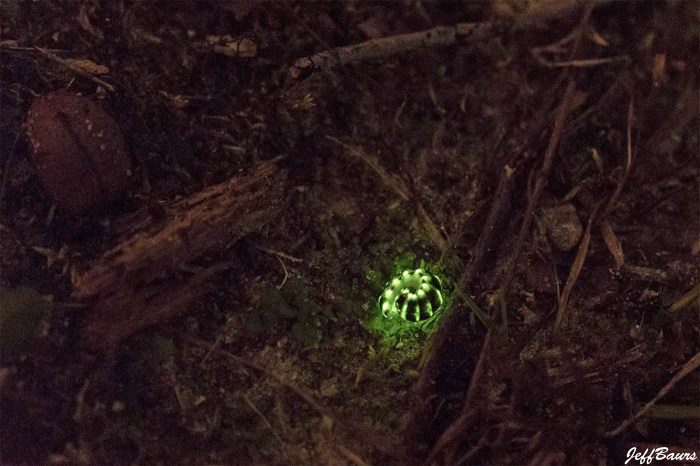
Glow in the Dark Michigan: the Railroad Worm

Railroad Worm by Jeff Baurs

Railroad Worm by Jeff Baurs

You may remember Jeff from the bioluminescent oyster mushrooms I shared last October. In any case, he’s back with another glowing critter he photographed last week, a railroad worm! The University of Florida Entomology & Nematology Department shares some information about these glow worms:

The family Phengodidae are uncommonly encountered beetles that have bioluminescent females that appear to be larvaiform (or larger versions of the immature stage.) These adult females are able to produce light from paired photic organs located on each body segment (one glowing spot on each side) and sometimes also from luminous bands that extend across the dorsal surface of the body between each body segment. Because these glowing spots along the females body resemble the windows of train cars internally illuminated in the night, they are often referred to as “railroad-worms.”

…Even though females appear to hide in their burrows during the day, they can often be detected on the surface of the ground by their glowing, immediately following a summer rain. Even though the females are bioluminescent, the females light emission does not appear to be the cue that the males use to locate their mates.

Be sure to follow Jeff on Facebook or Instagram for more including this shot of a railroad worm AND glowing oyster mushrooms!

Support Michigan in Pictures with Patreon

Fresh Cut

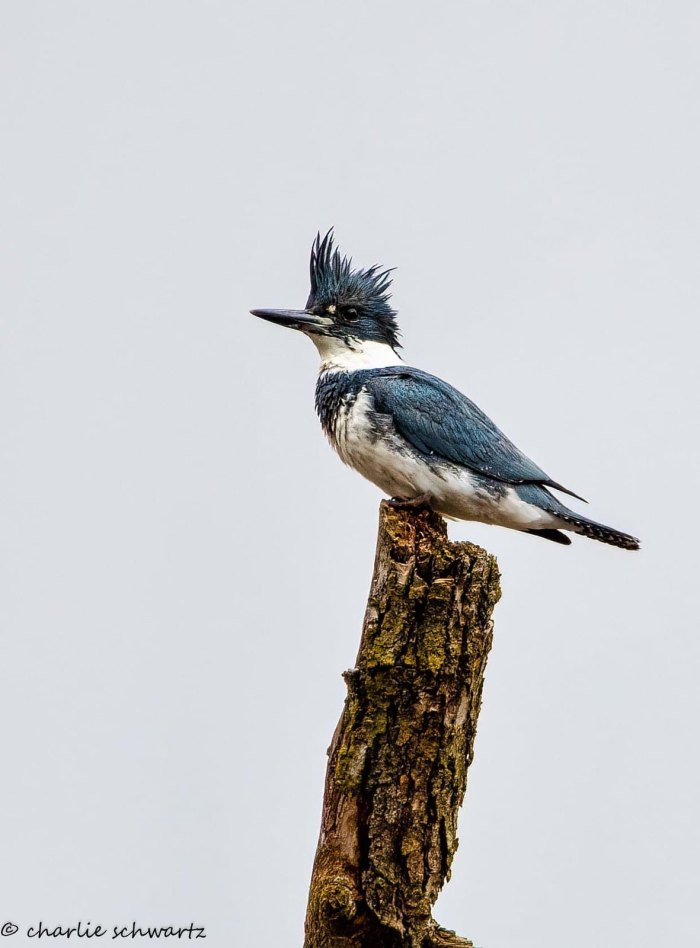
Male Belted Kingfisher by cncphotos

Male Belted Kingfisher by Charlie Schwartz

A great shot of a male belted kingfisher from last week. Definitely gonna ask him who his barber is. 😉

See more in Charlie’s Birds gallery on Flickr.

Support Michigan in Pictures with Patreon

2022 Michigan Morel Season is Here!

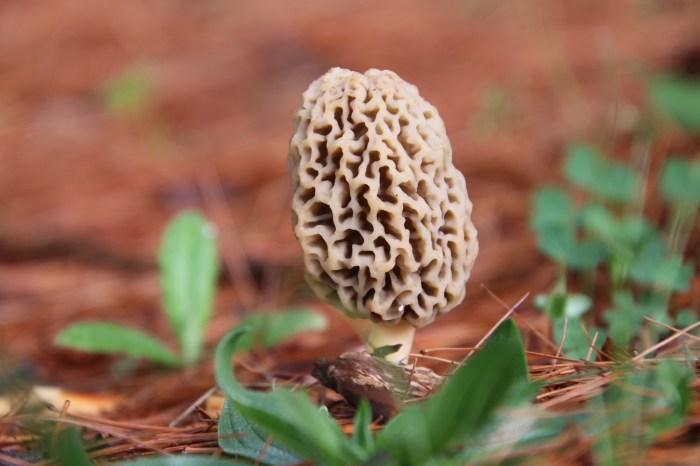
Mushrooms on Pine View Golf Course by Corey Seeman

Mushrooms on Pine View Golf Course by Corey Seeman

My Michigan morel mushroom groups are starting to light up with mushroom finds so it’s a good time to remind folks that May is morel month in Michigan!

The actual fruiting period can be anywhere from late April until mid-June depending on where you are in the Mitten & what species you are hunting. Contrary to common belief, morels are not confined to the northern part of the state – some of the best picking (such as the photo today) can be found in southern Michigan.

MOREL HUNTING TIPS

  • Make your first several mushroom hunts, whether for morels or other edible mushroom species, with someone who knows mushrooms.
  • Buy or download a mushroom guide. A good guidebook is “The Mushroom Hunter’s Field Guide” by Alexander H. Smith, recognized as America’s foremost authority on mushroom identification, and Nancy Smith Weber. There also is a very good mushroom identification booklet available on the U.S. Department of Agriculture website.
  • Be prepared to cover a lot of ground and to experience disappointments when searching for morels. Some spots yield mushrooms year after year, while others skip several seasons between crops.
  • Don’t expect to find morels easily if you are new to the pastime. Because they blend into their background of last fall’s leaves and dead grass, they are hard to see even if you are looking right at them. Your “eye” for morels will sharpen with practice, and you will need to retrain it every spring.
  • Most important of all – know what you are eating! You will need to know the difference between a “true” morel and the “false morels,” such as beefsteak mushrooms, which are poisonous. (See morel identification information.)
  • For more information on morel mushroom hunting in Michigan, visit Pure Michigan or Midwest American Mycological Information.
  • And finally, the Morel tag on Michigan in Pictures is chock full of great advice. Happy hunting!!

Corey took this on May 4th in Ypsilanti last year. Head over to his Flickr for his latest!

Support Michigan in Pictures with Patreon

Construction Zone: Great Blue Heron Edition

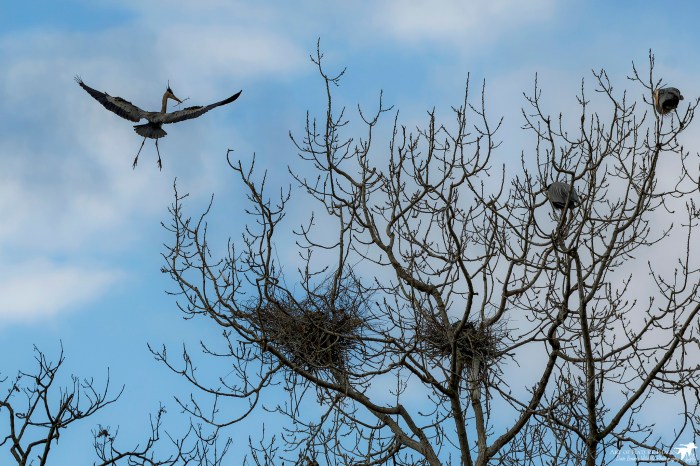
Construction Zone by David Bowers

Construction Zone by David Bowers

The roads aren’t the only place you’ll find construction projects in Michigan these days!

David got this cool shot of a heron returning to the rookery with a stick for the nest a couple days ago. See more in his Great Blue Herons gallery on Flickr & check out more pics on his Facebook.

More Great Blue Herons, rookeries & nests on Michigan in Pictures.

Support Michigan in Pictures with Patreon